Wednesday January 3 – LISBON, PORTUGAL – [Port side to dock; Drive RHS 9:00-5:30] (Capital Lisbon, population 600,000; Greater Lisbon 3MM Population Portugal population 10 MM; 350,000 cars enter the city daily and there is a metro (from the 1950’s) and a trolley bus system; land area Square Kilometers (Sq. Miles); Guide – Paula; Driver – Gilberto) Tour – Lisbon by Private Minibus Full Day (including Fatima). The first apparent historical mention of Lisbon was by the Phoenicians in 1200 BC (called Alis Ubbo) and the City has gone through Roman (called Felicity’s Julia), Visigoths (Ulixiponna), Carthaginian, Moors (Al-Oshbuna from 8th Century to 11th) and other occupations but was only part of Spain for a short period (1580-1640). From early days there has been a close alliance with the English and indeed it is one of the oldest alliances in Europe. There were 4 King Dynasties that ruled the country for some 800 years until the establishment of the Republic in 1910. During the 1800’s there was a great deal of wealth brought from Brazil that gave power and wealth to the monarchy. Despite the dictatorship of Salazar (elected as Prim Minister in 1932, ruling till 1974) which ended some 40 years ago the country is a parliamentary democracy with the President being elected by popular vote for 5 years with only one consecutive term and is the ceremonial head of state, The country is run by the Prime Minister and parliament elected every 4 years. Minimum wage is E580 a month, but minimum livable wage (eg Nurse, Professor) is E1,100-1,200 a month. A 2,278 meter long bridge (similar to San Francisco’s Golden Gate Bridge) crosses harbor and the River Tagus (Teijo) called the 25th April Bridge opened in 1966 leading to the Statue of Christ the King (similar to Rio de Janiero’s Corcovado) 28 meters high, on an 85 meter high pedestal 1949-1959.
We met our guide and driver and set out to Fatima which is a little over an hour out of town. Our Lady of the Holy Rosary of Fatima is the title of the Blessed Virgin Mary based on the Marian Apparition to three shepherd children from the nearby village of Aljustrel in 1917. Lucia Santos (age 9) and her Cousins – Francisco and Jacinta Marco had been warned in 1916 by the Angel of Peace that there would be an apparition which started on May 13, 2017 when the Virgin Mary appeared in a tree, located where the current Chapel of the Apparitions is located. By the last appearance on October 13, 1917 so many of the people had heard of the apparitions that a crowd of 30,000 to 100,000 assembled to see “The Miracle of the Sun”. From the 13th of May to the 13th of October 1917, the virgin would appear each 13th of the month in the same place, except 13th August as the children were undergoing extensive questioning and imprisonment by the authorities, as this belief was against the secular republic established in 1910, so she appeared near their town. The children reported seeing a woman brighter than the sun in white clothing edged with gold, with a rosary in her hand asking them to dedicate their life to the Holy Trinity and to bring peace to the world and the end of the (1st world) war. During the second appearance on June 13, she predicted that Francisco and Jacinta would soon die but Lucia would live long to spread the word. Indeed Francisco died on April 4th 1919 at the age of 10 and Jacinta died on February 20th, 1020 at the age of 9 due to the Flu epidemic that began in 1918. However Lucia lived on as a cloistered nun, first in the Sisters of St. Dorothy and then with the Carmelites, during which time, she had various more apparitions and died on the 13th of February 2005 at the age of 97. All there are buried in the second built church on the site – The Basilica of Our Lady of The Rosary, and were beatified by Pope John Paul II on May 13th 2000 and canonized by Pope Francis on May 13th 2017 on the 100th anniversary of the apparition. Bishop José Alveston Correla da Silva declared a miracle worthy of belief on October 13, 1930 and Pope Pius XII grants a canonical coronation on May 13, 1946 to the Image and on November 11, 1954 raised the Sanctuary of Fatima to that of Minor Basilica. All the Popes since that time – Pius XII, John Paul II, Benedict XVI and Francis have visited the site and indeed the bullet that almost killed Pope John Paul II is in the crown of the Virgin. The first chapel started celebrating services in January 1924, in 1935 the bodies of the three were transferred to the the second church and third and largest of the Church structures holding a congregation of some 6,000 people was opened in 2007.
I found the place to be truly amazing and the size overwhelming, which is filled to capacity during the key days of May 13 and October 13 each year. Last year when Pope Francis raised the children to Sainthood on the 100th anniversary, he walked among the crowds to the outside altar which is now a permanent structure since the masses have to be held outside for so many people on the key days.
We then drove back to Lisbon under the aqueduct (currently closed due to the now captured serial killer who would push people off the top to their death) past the football stadium and to lunch at the famous pastry restaurant “Pastís de Belém”, (20,000 pastries sold each day) in the Belém (Bethlehem) area of the City near the Santa María de Belém Church (Our Lady of Belém) and St. Jerome Monastery. This was built in the first half of the 16th Century from tax on pepper, in the Manueline style after King Manuel I, that has maritime rope, shells, people, animals and flora from foreign lands showing the far reaching expanse of Portuguese navigation and influence in the 1400 – 1500’s. It was from this area that all the famous explorers started on their voyages. King Manuel and his wife are buried in the very ornate church on structures held up by stone Asian Elephants which were brought back from voyages. One live elephant was given to the Pope as a gift who kept it as a pet. Vasco de Gama, (1524) the famous explorer is buried at the entrance to this church. One of the monks gave the secret recipe to the family that owns the pastry restaurant who still keep it a secret and the descendants run the restaurant today. St. Jerome is noted for his translation of the Bible to Latin and is often depicted with a lion, that he nursed back to health and often with a skull. The Church “Our Lady of Belém” (built 1501-1517) and monastery (finished in 1580) was the place of the Knights Templar who fought against the moors, but suffered a name change to The Order of Christ”, with Henry the Navigator became it’s first head in 1400. Although he never went to sea, he was a staunch advocate of the many exploration efforts and thus is engraved in the prime position at the entrance of the church above the entrance.
Our next stop was the Moorish Torre de Belém (1515-1521) or Castle of St. Vincent (Lisbon’s Patron Saint) and symbol of the city which is on an island at high tide but reachable at low tide, behind which is an amphitheater like structure to take the tidal change. This was the last of many fortresses that protected the innermost part of the harbor and St. Jerome monastery. In the adjoining park is a model of the first wood and cloth biplane “Fairey III-B – Santa Cruz”, that flew the 60 hours from Portugal to Brazil – Lisbon – Las Palmas – Saint Vincent – Saint Tiago – Penedos – Noronha – Recife – Porto Seguro – Victoria and Rio de Janiero.
The next stop was at the Monument to the Discoveries which is shaped like a ship’s (Caravelle) bow facing the river and a cross facing land overlooking a compass dial around a map of the world with all the dates and places where the Portuguese had influence or conquered all in mosaic. A very interesting and enlightening experience to see all the Portuguese influence through Africa and indeed all the way to Japan.
Our final part of the day was in the old city with its narrow winding roads and lookouts as it is built on hills, so steep and narrow that buses cannot navigate the area, only cars, walking and the trolley. At the lookout where we stopped, the trolleys became derailed and caused a major traffic jam. Fortunately we were able to get out before being stuck there for hours!
A lot of the modern city was built after the All Saints day in 1755 major earthquake, fire and tidal wave destroyed much of the city. It was laid out in a grid pattern and most of the buildings in this area date from that time. A very enjoyable day. The evening was the usual dinner Pub quiz and show, which tonight was the juggler – John Nations, who had a difficult time given the 5 meter high waves which made the ship “Rock and Roll” all night and into the morning.
January 4 (Thursday) – At Sea – A quiet day, however the waters were rough, so a good day to do nothing. I did get the message that the bus company in Lanzarote had not found the camera I left on the bus – unfortunately to be expected, so that has been lost together with the pictures and my notes. Tonight was the last Formal night of the trip and the night’s show was Hollywood nights with the Cunard Singers and Dancers.
Our Lady of Fátima – the original chapel built on the site of the tree where the apparition took place.
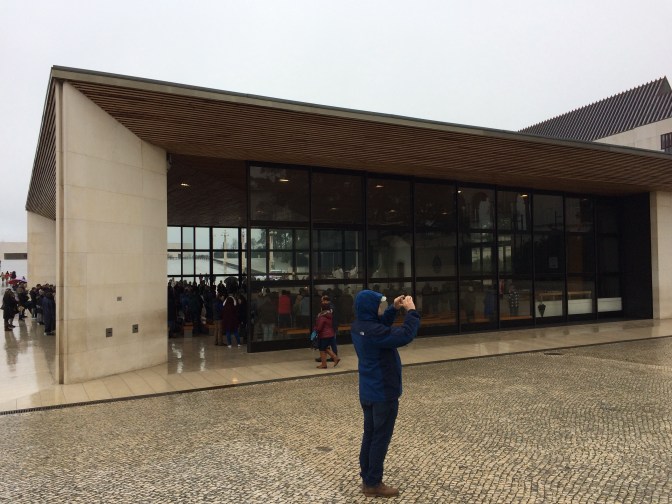
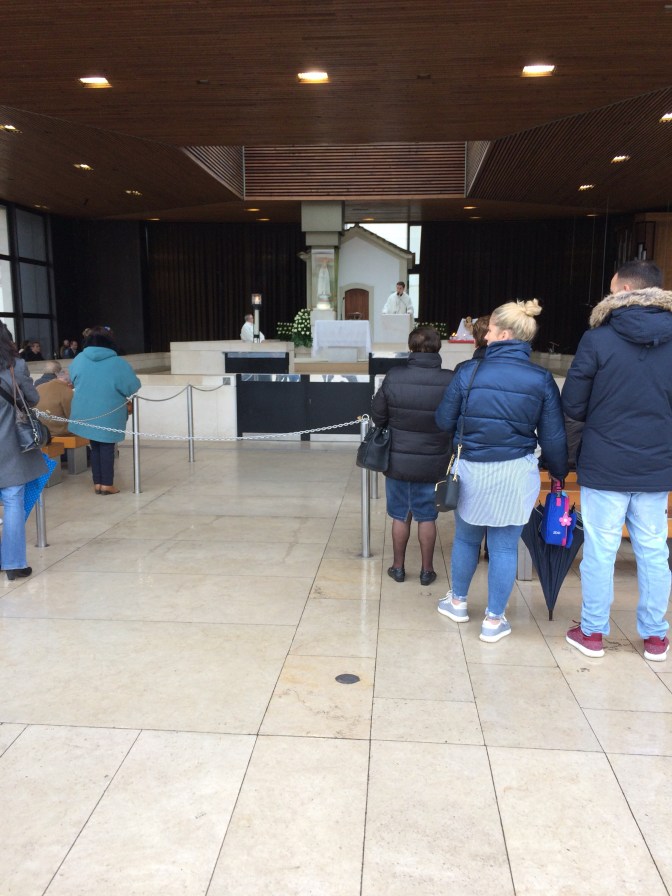
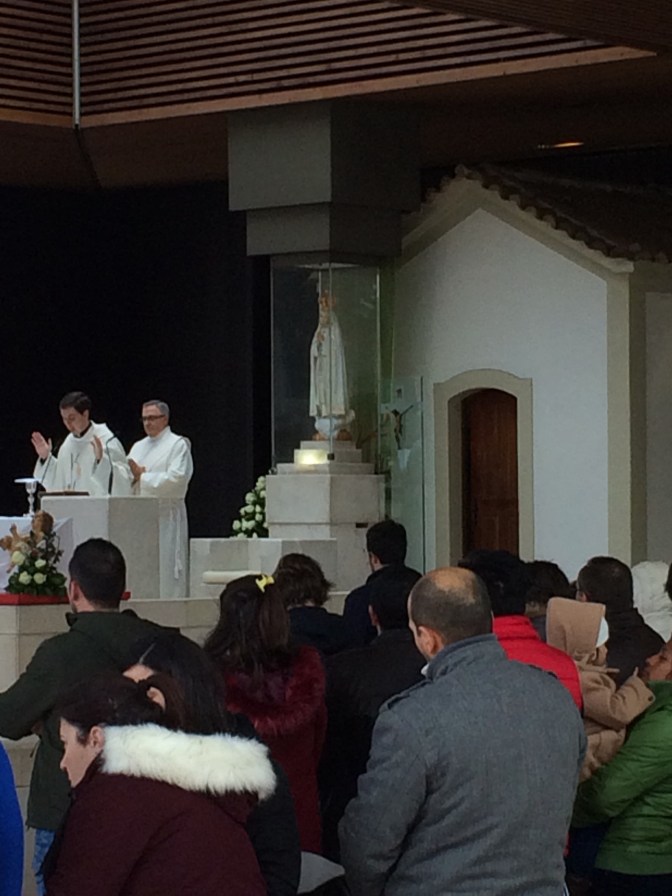
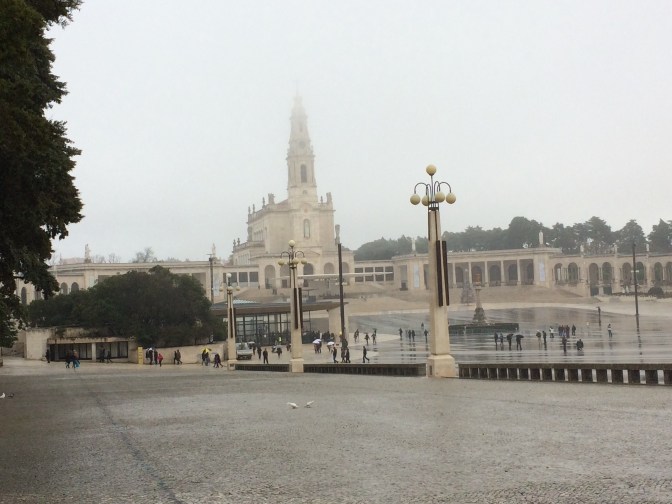
The next basílica to be built and where the three children are buried.
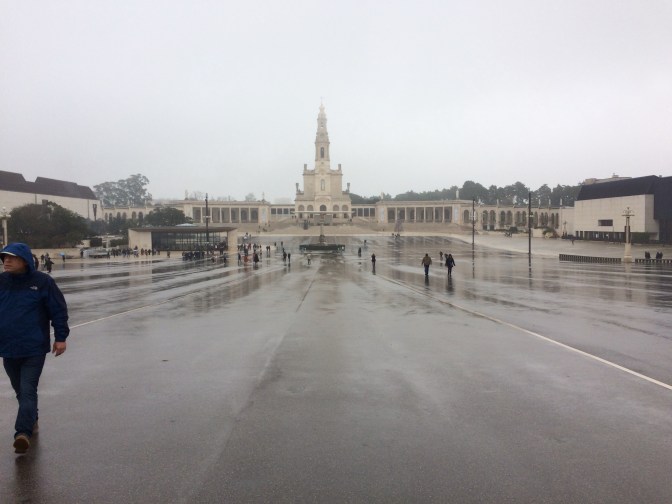
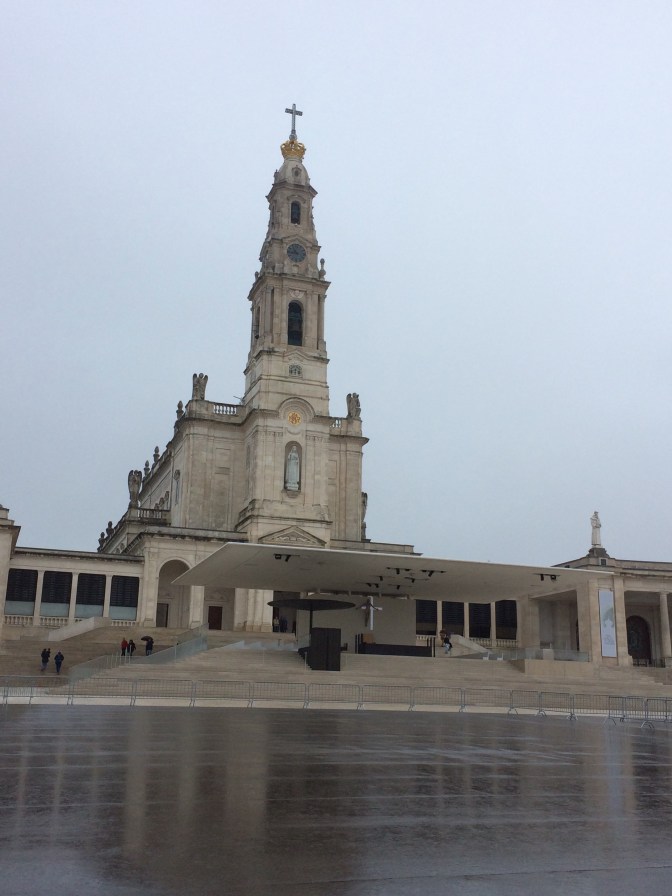
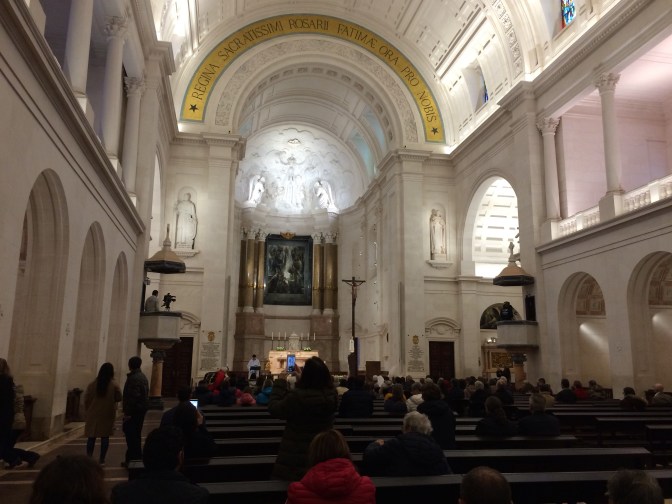
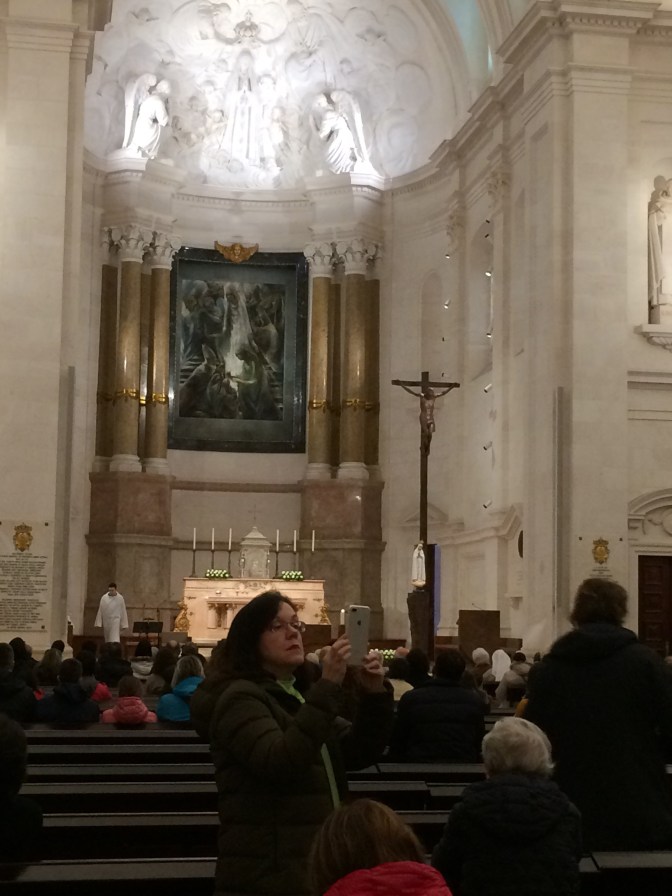
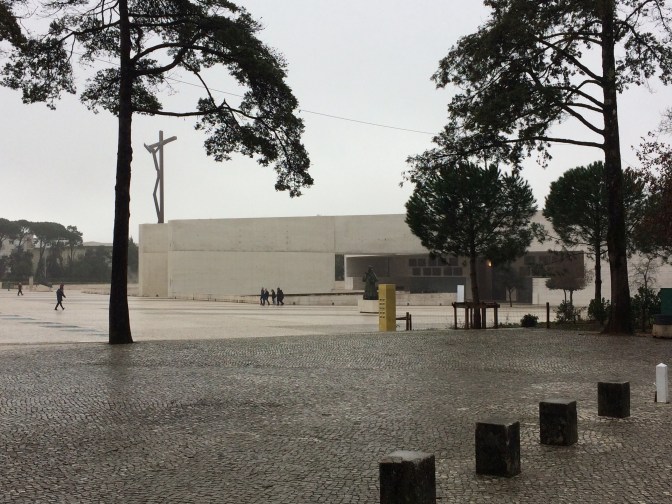
The new basílica inside and out, Sears 8,000.
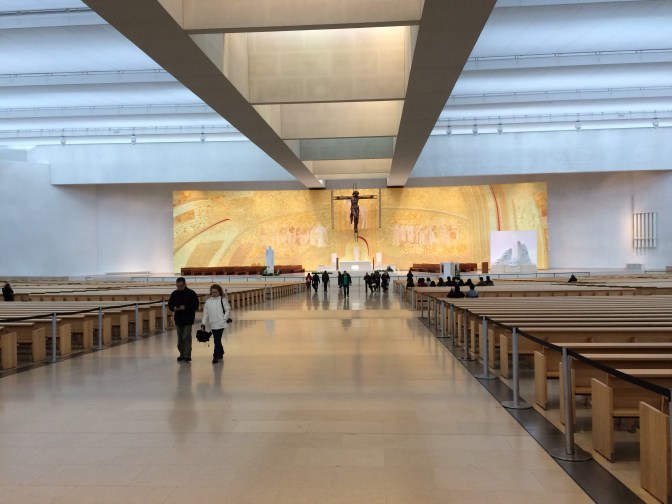
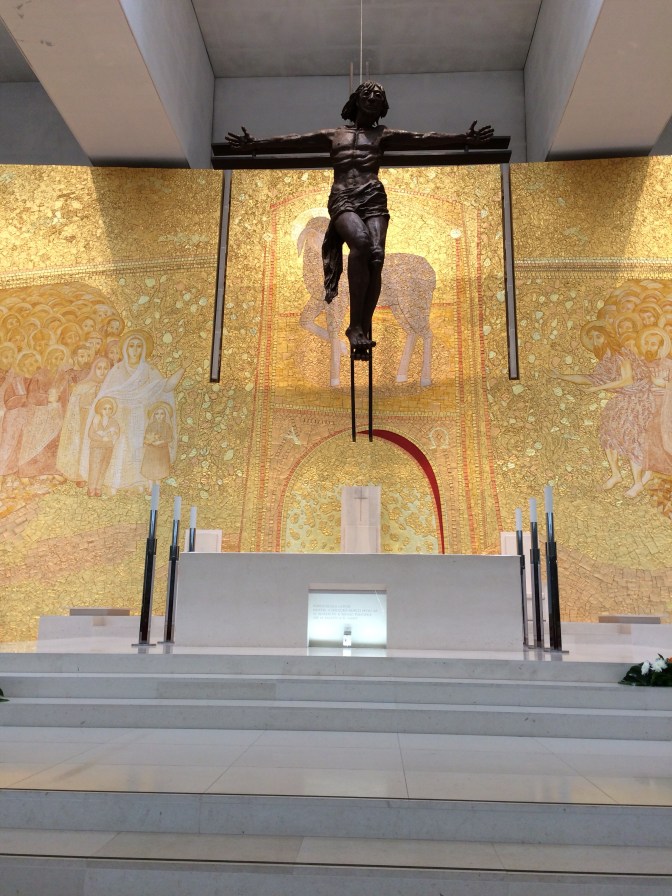
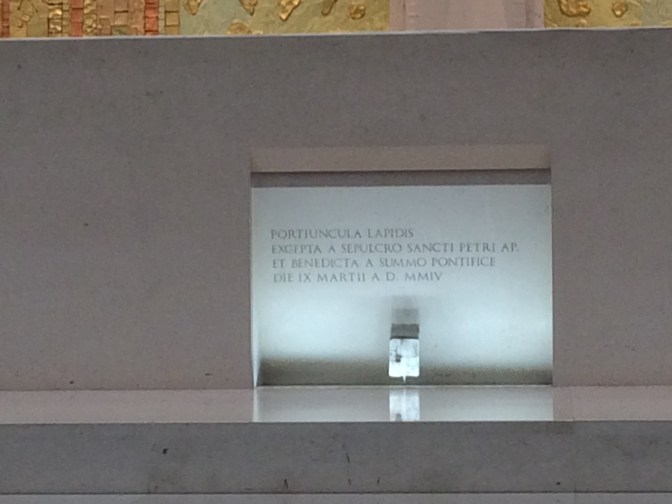
Xx

 Roger & Anne Travels