January 5, 2018 (Friday) – LA CORUÑA (A CORUÑA as is now spelled) for SANTIAGO DE COMPOSTELA SPAIN -[Starboard side to dock; Drive RHS 8:00-4:30] (Capital Madrid, population of La Coruña 300,000; Province of Galicia (one of 17 regions of Spain) population 3 million; Santiago de Compostela population 120,000 plus 35,000 students plus about 3 million pilgrims a year. Guide – Patricia (excellent); Driver – Javier) Tour – Complete Santiago de Compostela.
La Coruña was the political Capital of the Kingdom of Galicia from the 16th to the 19th Centuries and as the Regional Administrative Center between 1833 and 1982 when it passed to Santiago de Compostela. Galicia is somewhat isolated with mountains to the East and South separating it from Spain and Portugal and the Atlantic Ocean to the North and West. La Coruña has one of the largest fish markets in Europe with other key economic elements being tobacco and cigar production as well as the textile industry made famous by the local Ignacio Ortega the founder and owner of Zara clothing. We boarded the coach and headed directly out of town to the 1 hour drive to Santiago de Compostela.
Santiago de Compostela is located 39 miles South of La Coruña and is one of the most venerated shrines in Europe – The final resting place of St. James The Apostle of Jesus and brother of St. John. The ”Camino de Compostela” or solely “El Camino” is the route that many take to reach Santiago. (Santiago – Saint Iago, changed to Iacobo and eventually to James). This can be from 1 day to a week or month or more depending on the starting place. Many do the week’s walk stopping in Albergues or Paradores (Rest Houses – Hotels) overnight, before reaching the Church and tomb of the Apostle. At each location one can get a “passport” stamped to verify the pilgrim route (which can be accomplished over several months or years) and presented to get the official pilgrimage certificate. Upon our arrival we met a pilgrim who had walked from France and was only too happy to show us his passport and certificate.
The origin of the city and location, according to tradition lies in the fact that after the Crucifixion of Christ, the various apostles went to different parts of the known world to preach and St. James went to Spain. He was put to death by being beheaded in 44 AD by the Romans. His disciples placed the Apostle’s head and body on a boat in Galilee and after extensive navigation and bull drawn cart, ended up in this part of Spain where he was buried in the woods. In the year 813, the hermit Paio saw strange lights in the form of stars over the “Field of Stars” (Campus Stella thus Compostela) and after bringing this to the attention of the Bishop Theudemirus of Iris Flavia, went with a group to the site and discovered the funeral monument containing three bodies. One who had been beheaded indicated “Here lies James, son of Zebbedee and Salome” and the others, the names of his followers – Theodore and Athanasius. King Alphonse II of Asturias and Galicia ordered the first church over the site to be built and by 893 with the presence of Benedictine monks, a larger church was built and pilgrimages began. The Cathedral started to be built in 1075 and was semi completed under Bishop Diego Ximenez in time for the coronation of King Alphonse VII in 1111 (The total completion took 142 years). By which time other relics had been amassed and it had become a Cathedral with an Archbishop. It is now a UNESCO protected Heritage Site that sees more than 3 million pilgrims a year, mainly during the late Spring to Autumn period.
To see the cathedral and it’s many rooms and relics that various pilgrims have brought and offered to the church at the end of their pilgrimages, the winter months are less crowded. For example to visit the crypt under the main altar where St. James is buried, can take an hour of queuing, but was open to us to walk straight through with no wait and even stop for a prayer, without being bustled. The last two weeks leading to the Festival of St. James on July 25 are particularly busy and festive, particularly on a Jacobean year when the 25th falls on a Sunday. The plaza (del obradoiro – stone mason) is particularly festive with fireworks on the 24th at night, leading to mass on the 25th with the 4 ft high 100 pound (45 Kg) Incense Censer (Botafumidero) being swung from side to side (almost reaching the roof) in front of the high altar in the church, pulled using a rope attached to a pulley system in the roof by 8 monks, while bagpipes play.
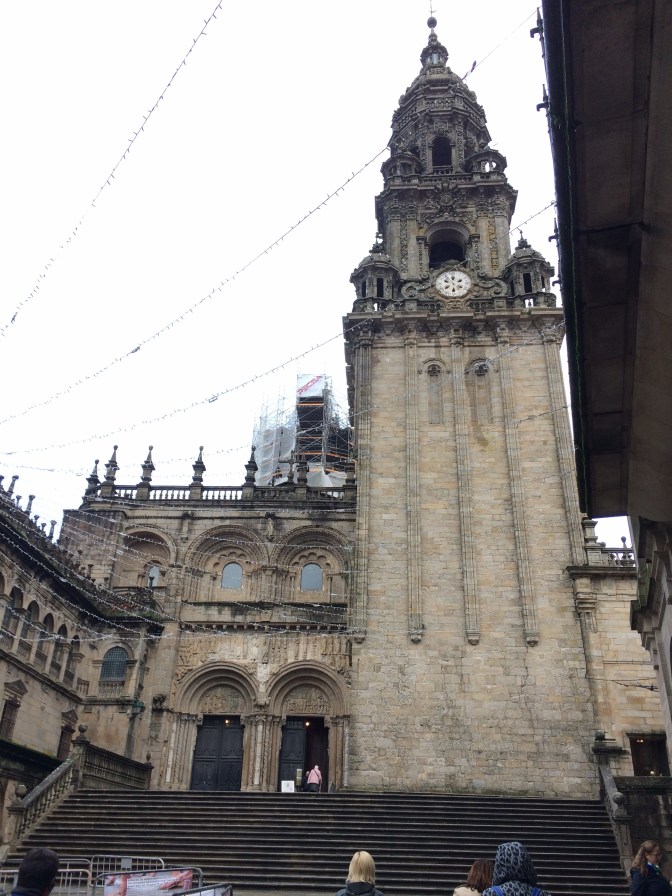
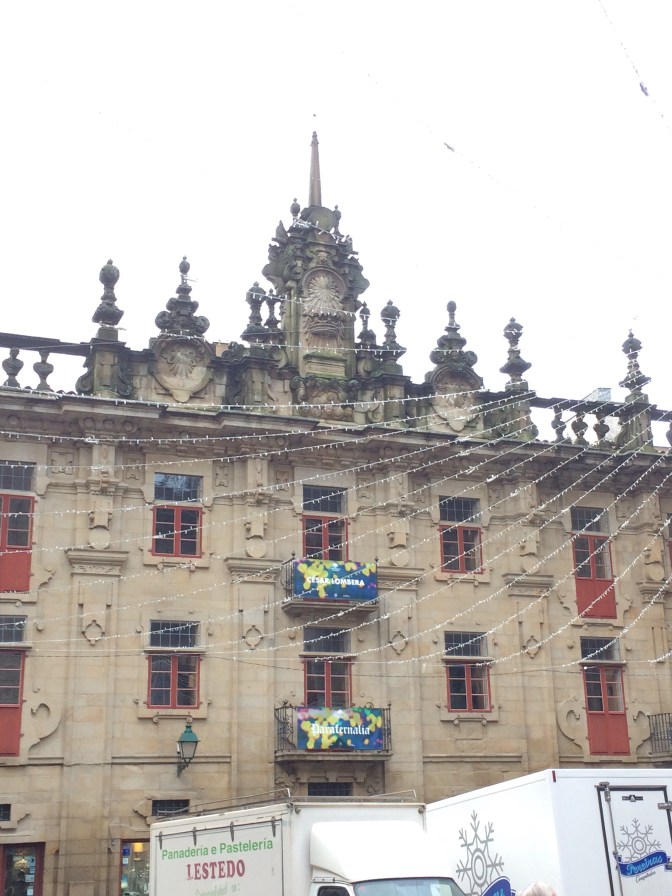
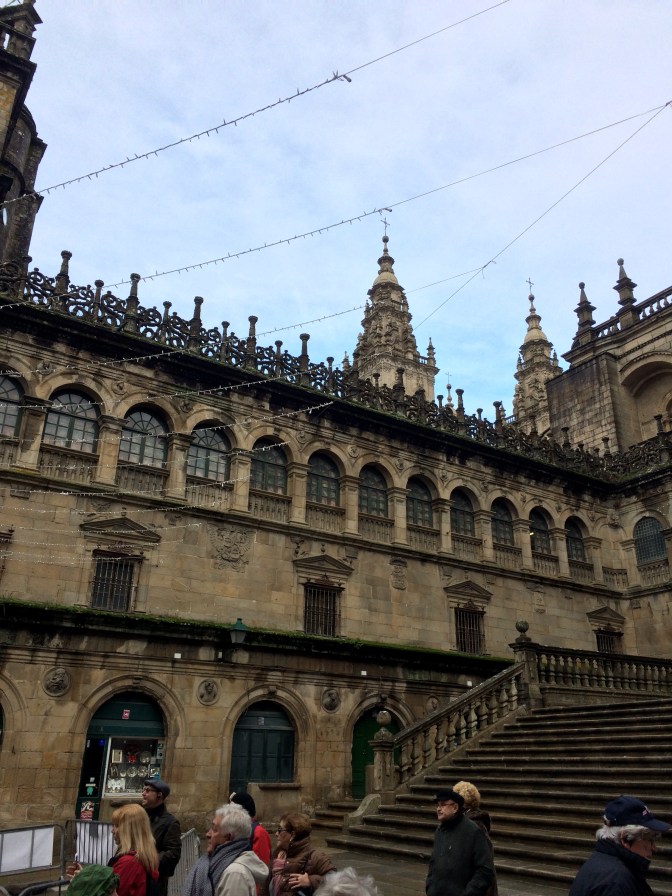
The plaza has the church on one side, the Raxoi Palace (after Archbishop Bartolommeo de Raxoi built from 1766-1772) which is now the City Hall and Ministry of Culture. To the right of the Cathedral Facade is the Parador or Hostel of the Kings (built by Ferdinand and Isabella after their pilgrimage) which was a place Commissioned to take care, free of charge, of pilgrims who could verify that they had completed their pilgrimage. The now luxury hotel, was divided into four areas, two for Men and two for women and subdivided into healthy and ill by sex. We entered the hotel and had refreshments in what was the church, still with it’s church decor, but now used as a banquet hall. The fourth side of the plaza is the College of Saint Jerome – part of the University of Compostela that has some 35,000 students and gives the town a youthful feeling. Adjoining the 3,000 Square Meter Cathedral is the Palace of Xelmirez which houses the cloister with the burial places of the various priests who have served that church, was a monastery and now has various rooms of the Cathedral museum with amazing tapestries and other relics. The “Goya” room, filled with tapestries based on the artist’s great paintings is breathtaking as are the Mythology and Flemish rooms. There are may items such as Virgen de Guadalupe from Mexico, a portable, bejeweled altar from the mid 1400 brought by pilgrims from England and many other such items.
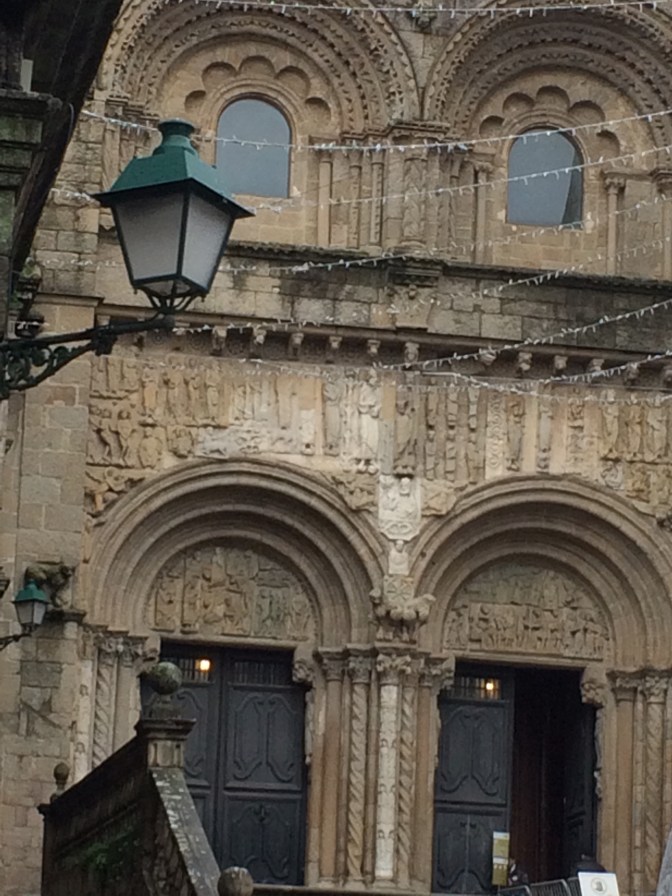
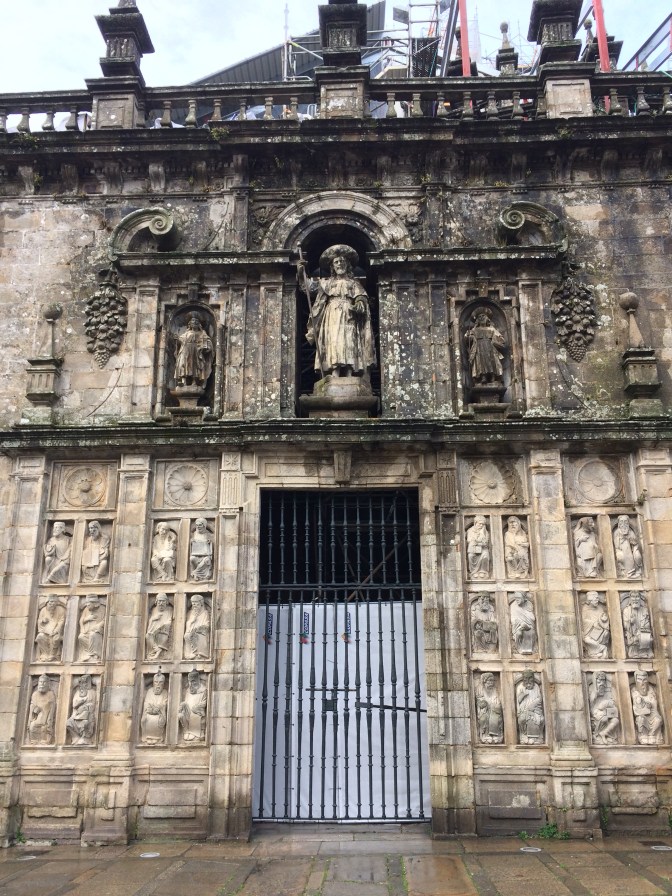
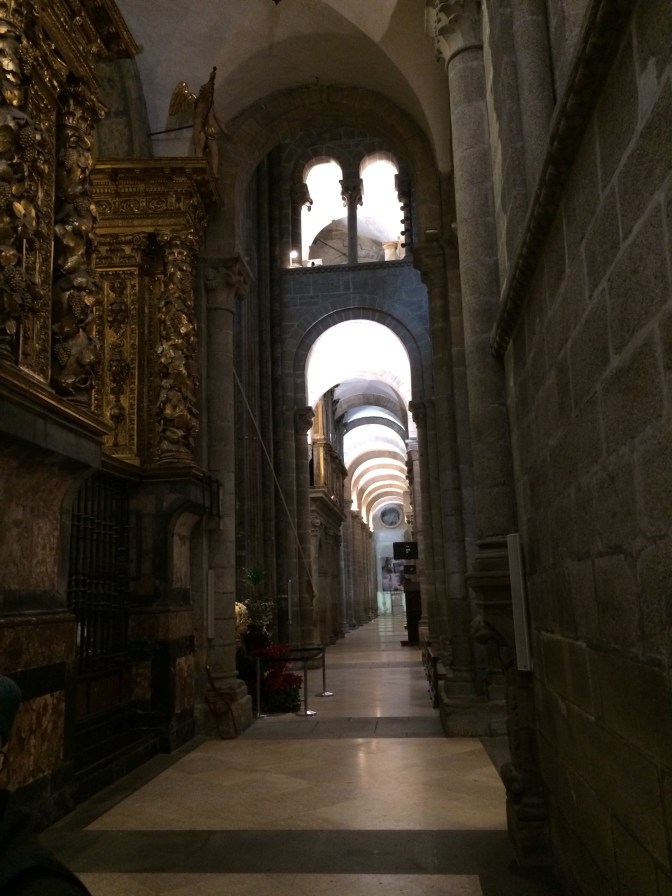
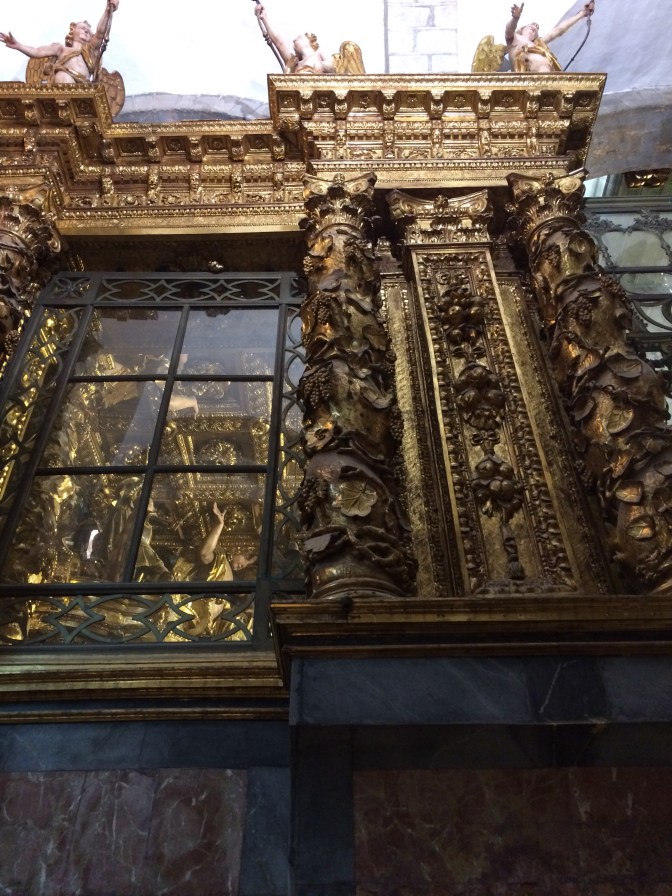
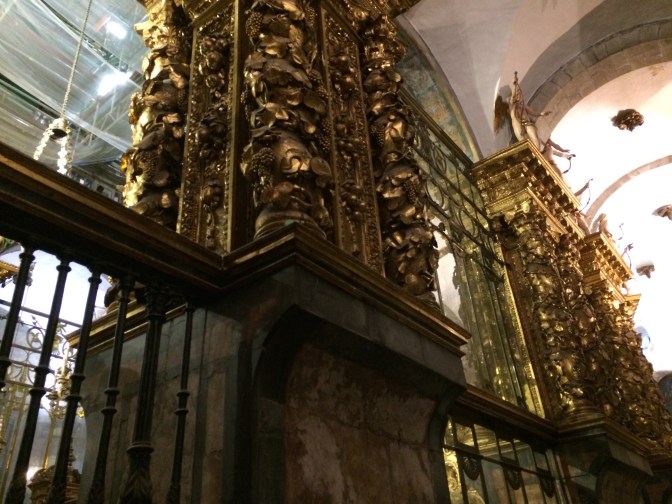
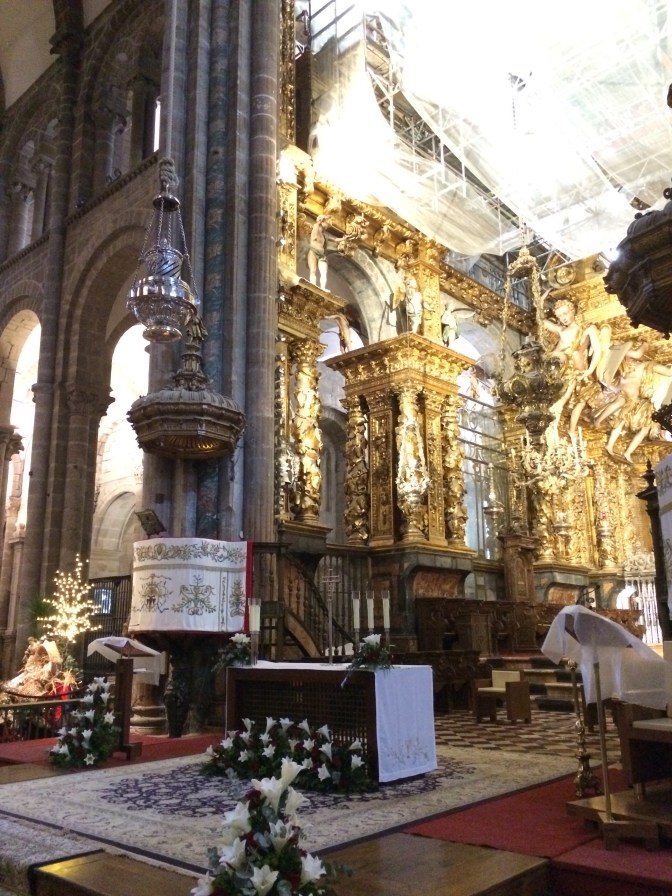
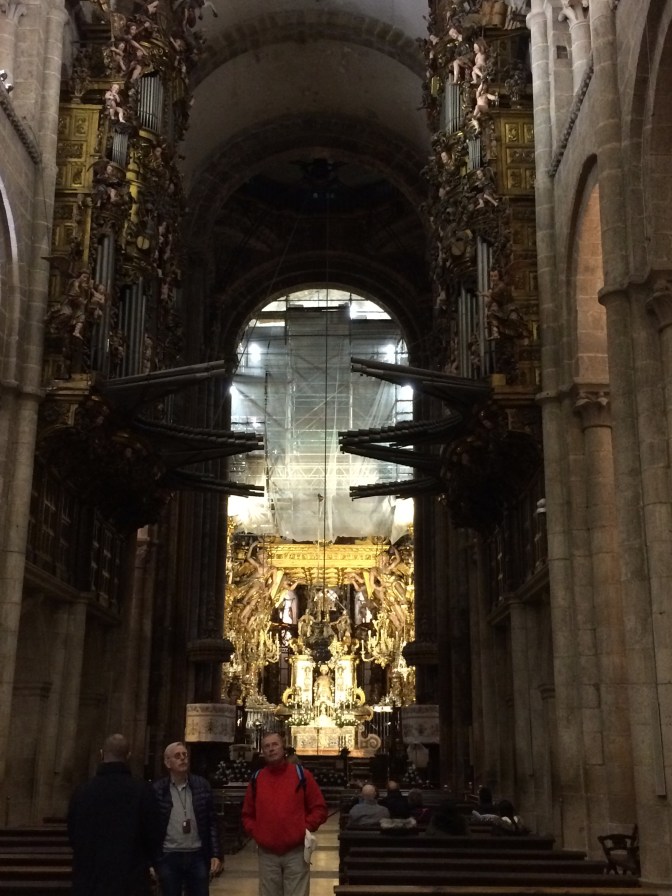
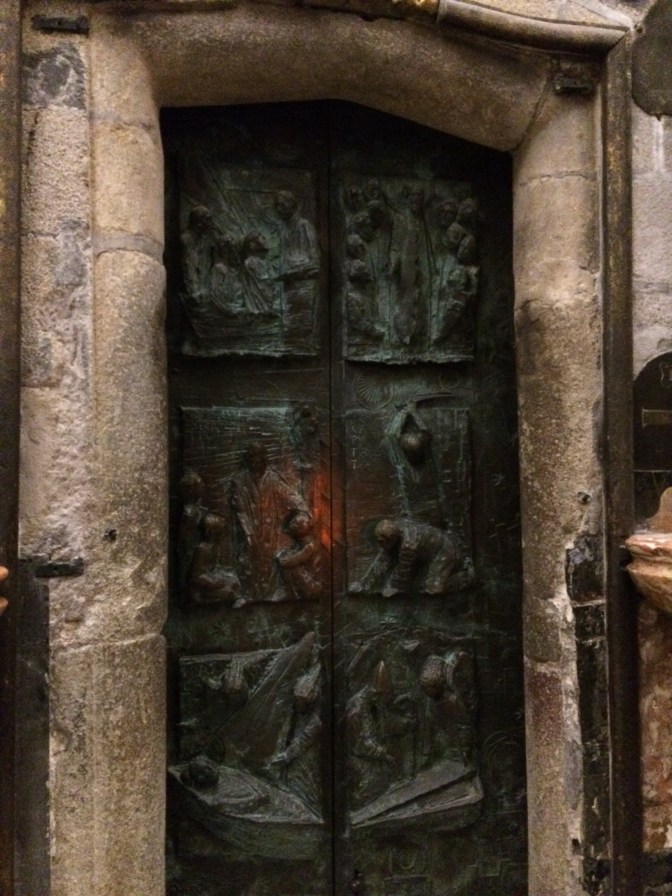
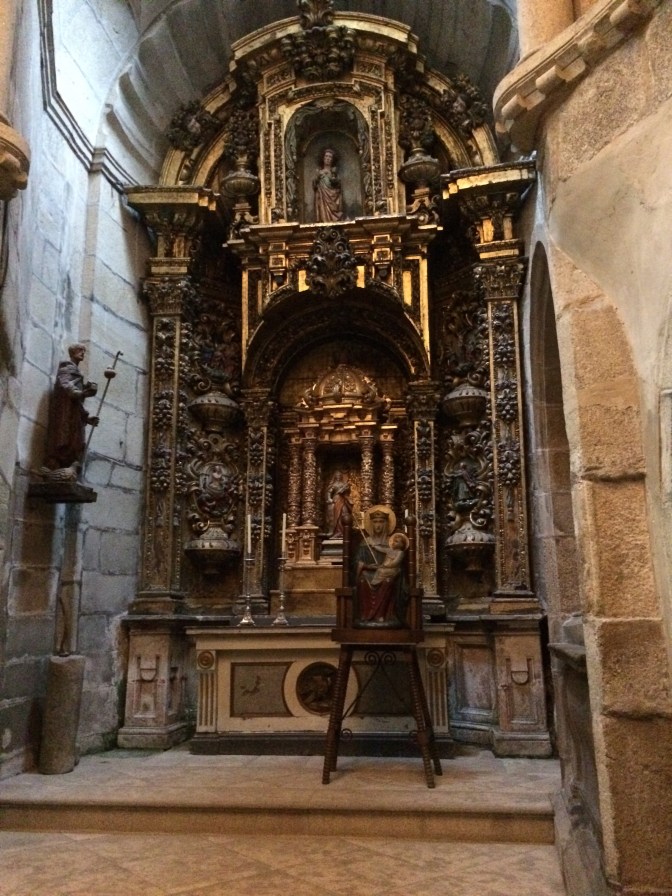
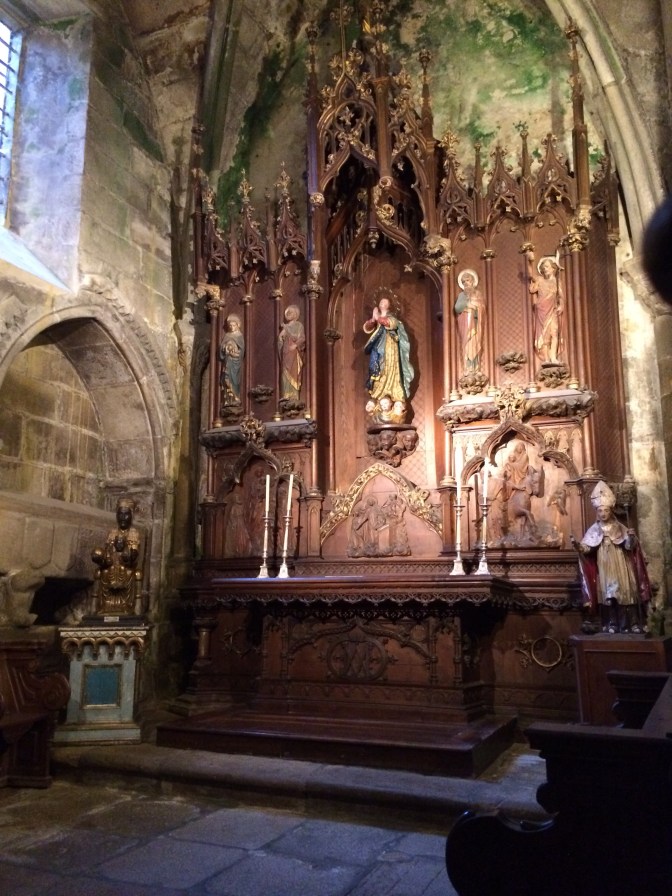
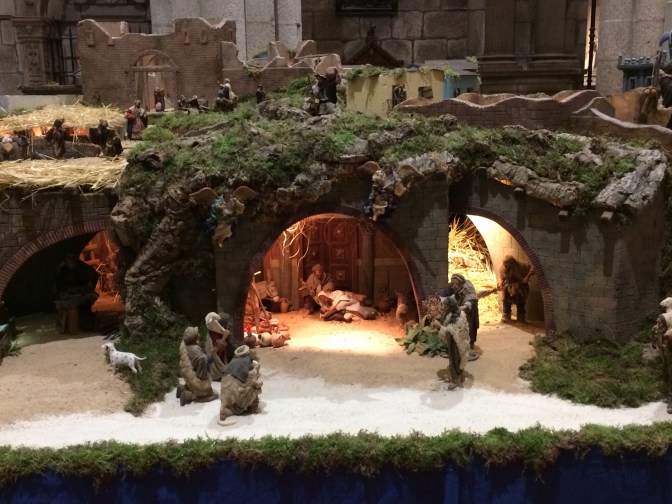
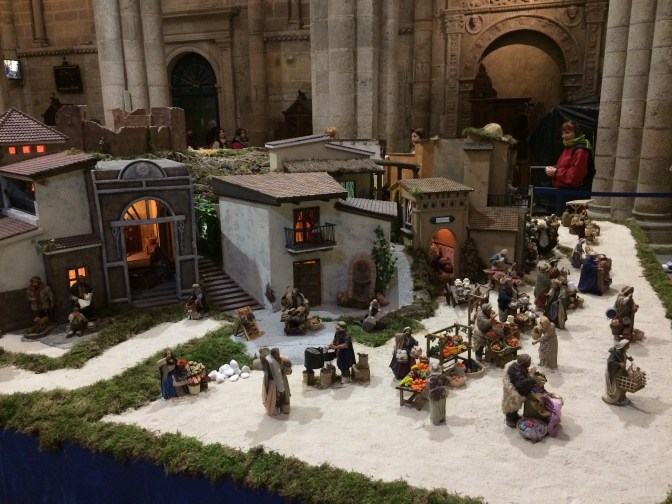
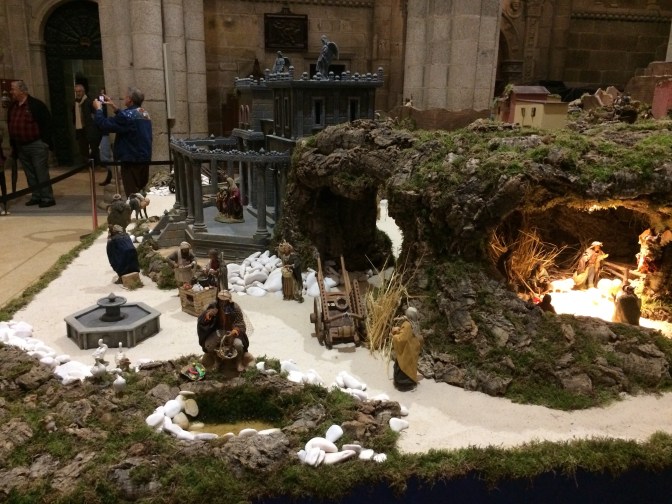
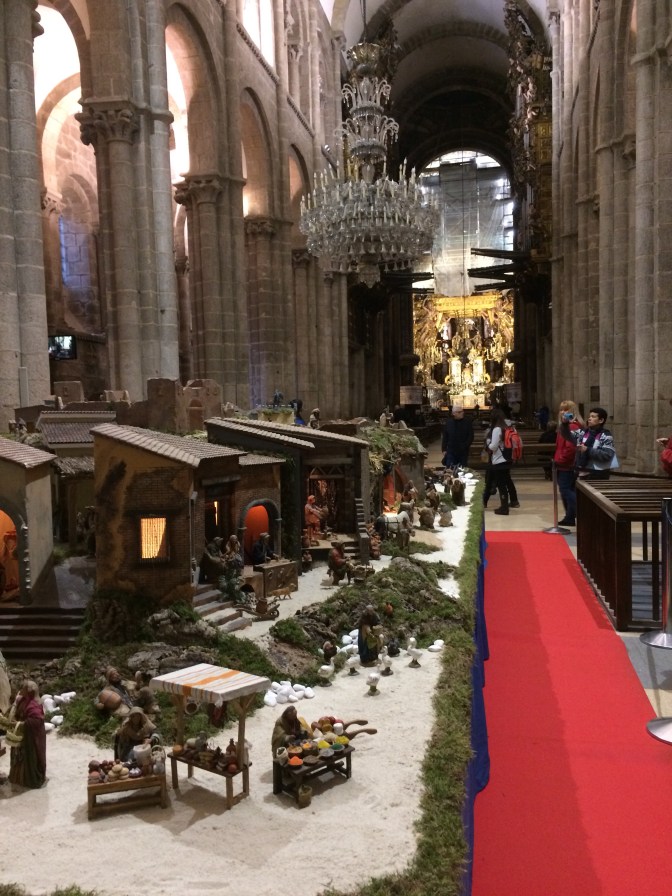
The Cathedral itself based on a Latin Cross layout with three aisles, is a mixture from the ultra ornate and opulent gold and silver, to the simple. The area around the high altar is spectacular and as would be expected, highly carved, gilded and gorgeous, with a richly costumed statue of St. James. The many side altars, vary in their decoration, but each as beautiful as the prior one. It is possible to climb up a narrow stairway to a viewpoint above the high altar to venerate the vestments of St. James on the altar and gain an amazing view of the church. The other most holy of places is descending under the high altar to the burial coffin of St. James and his disciples. The elaborate silver coffin dating from 1886 lies in the otherwise simple stone crypt. Being January 5th, the day we visited which is the before the celebrated arrival of the Wise Men, the 20 ft by 20 ft Crèche / Nacimiento was on display at the rear of the church, with it’s various scenes of life in the town of Nazareth. Each scene has animated, working pieces, like the fisherman was putting his line and bait into water, the workers were working their trades etc. As in St. Peter’s in Rome, there is a “Sacred Door, behind the Main Altar, which has carved scenes of the life of St. James, that is only used for special occasions such as the arrival of a Pope, off the Plaza La Quintana. All in all a day that we will remember for the rest of our lives, always with the desire to return.
We motored back to the ship and as we still had a bit of time before departure, went to a local, excellent restaurant for tapas. The sail away was interesting as we backed up for some half an hour before being able to turn around and head for the open sea. Again the remnants of storm Eleanor made 5-10 meter waves a bit rough. The evening entertainment was the amusing British pianist and comedian Jon Courtenay.
January 6, 2018 (Saturday) – At Sea – A day for completing blogs, packing and in general tiding up bills and other such items before a final dinner and farewell to the staff, getting pictures, 2 pub trivia events and the show with a combined Juggler (John Nations) and comedian Jon Courtenay. The big “excitement” of the evening was the announcement by the Captain that one poor passenger had become critically ill so a change of course was made towards France. All the decks were closed off to Passengers and at dinner, we saw the helicopter come in and drop the paramedics then hover and eventually came back to pick up the passenger. We were having dinner and could see the movement of the sea and even feel having the whole ship move up and down with the downdraft caused by the helicopter. The Captain told us that the rescue went well and the ill passenger was safely in a French Hospital.
January 7, 2018 (Sunday) – Disembark Southampton, Courtney picks us up and we drive to Wokingham.
January 9, 2018 (Tuesday) – Robin & Roger travel London to New York.
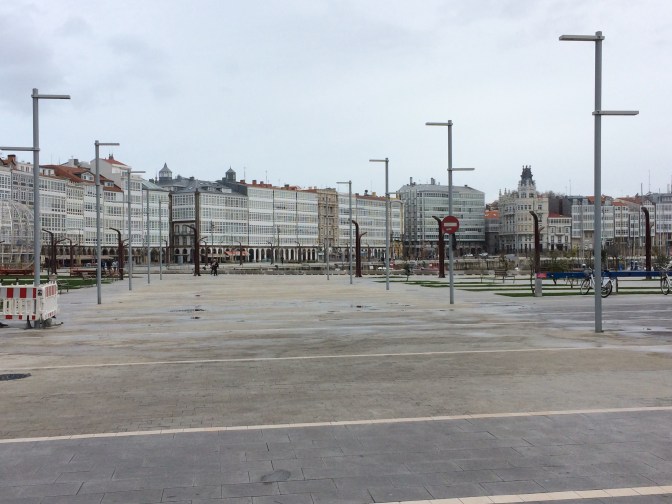
La Coruña waterside below with its glass building fronts.
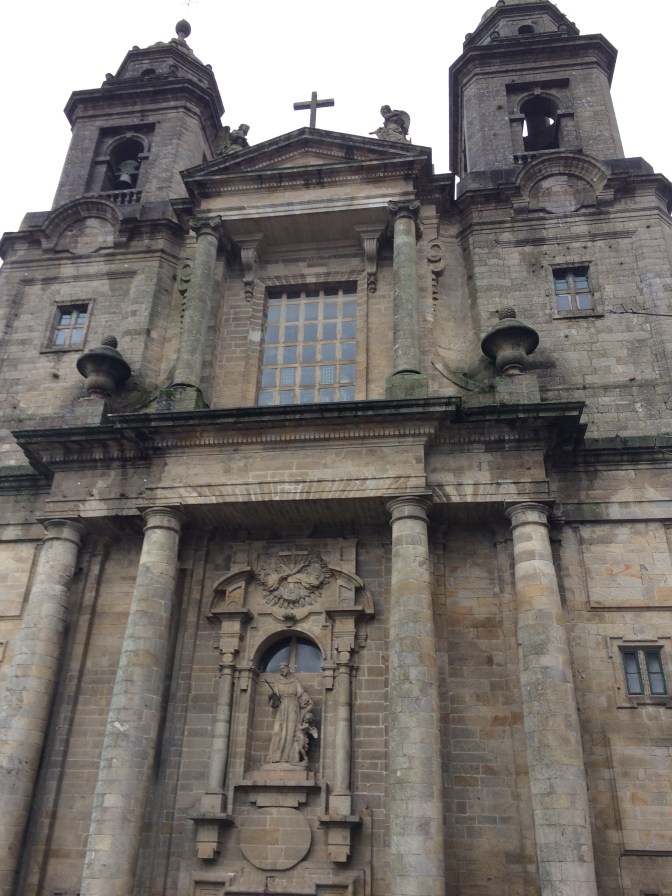
St. John the Baptist Church above near the main square.
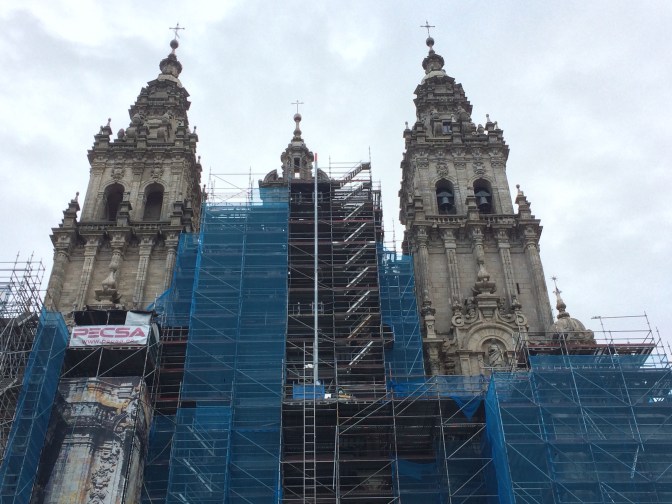
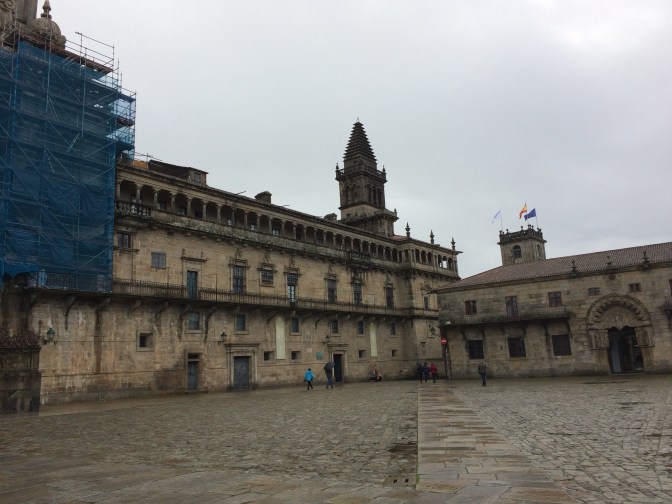
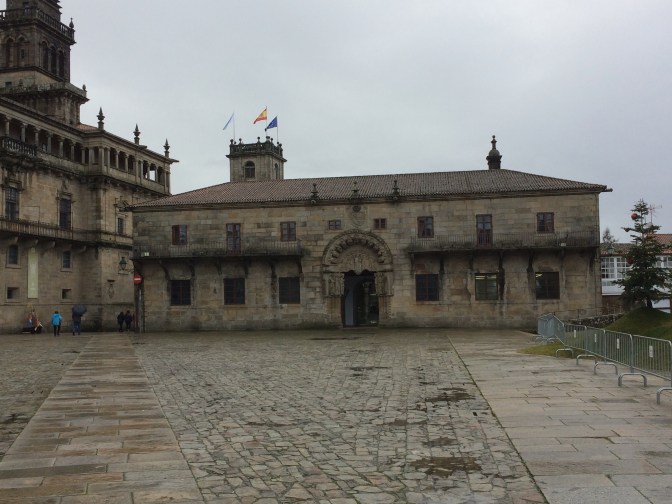
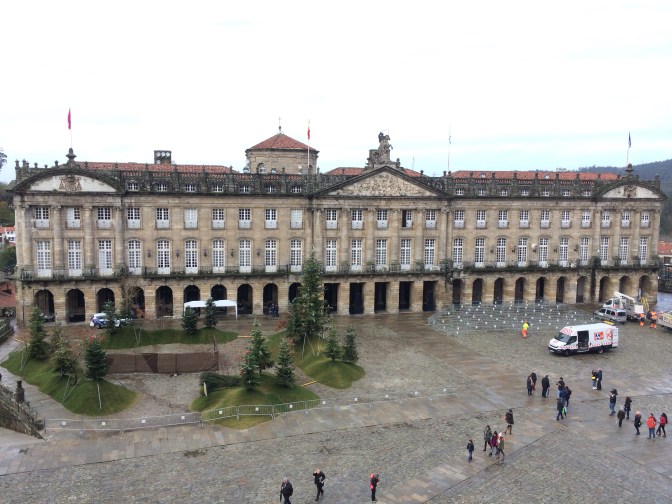
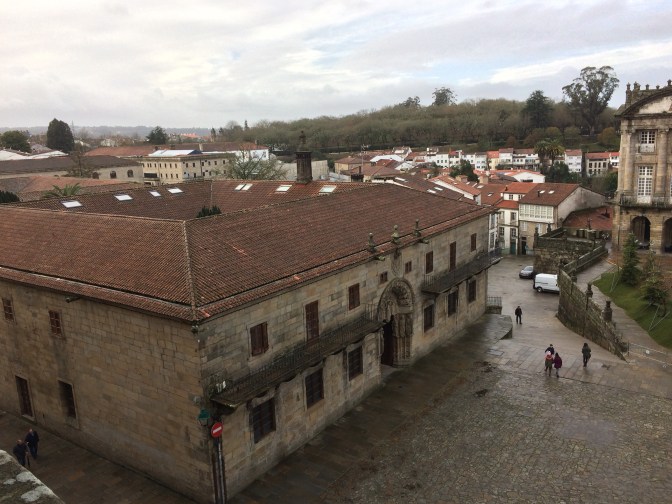
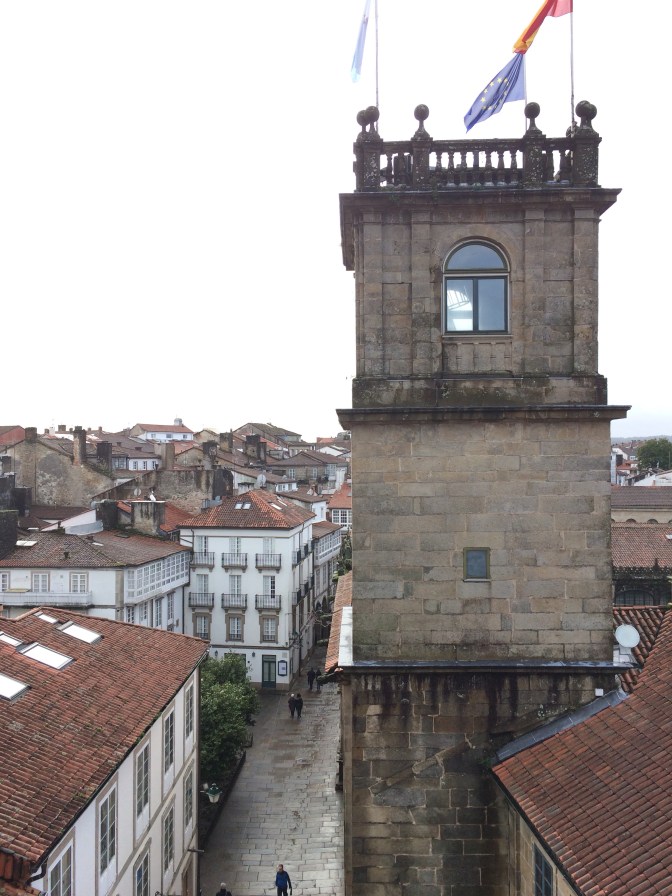
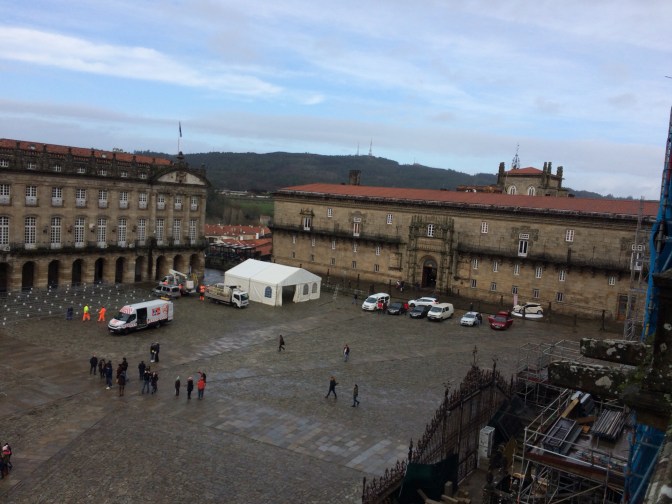
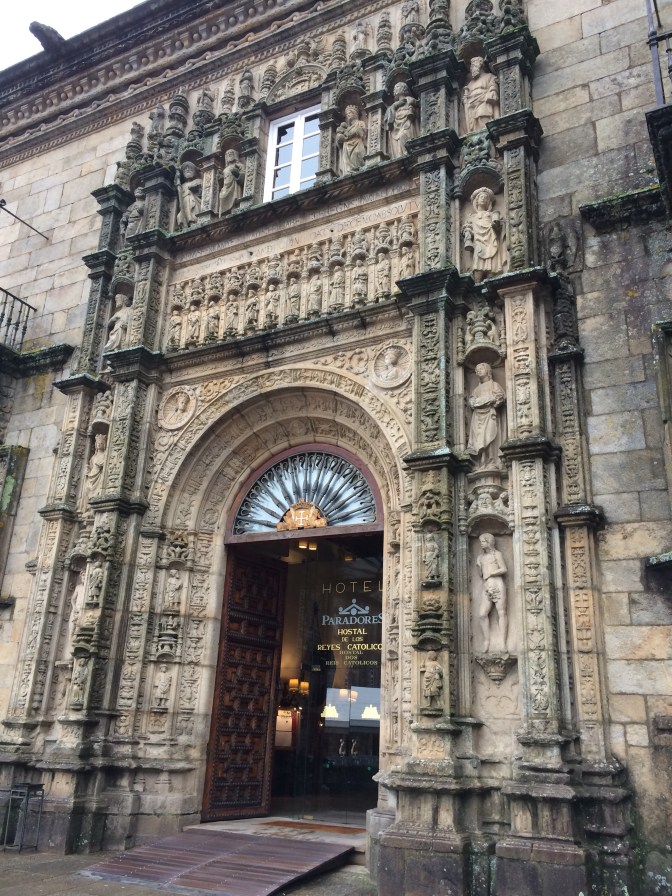
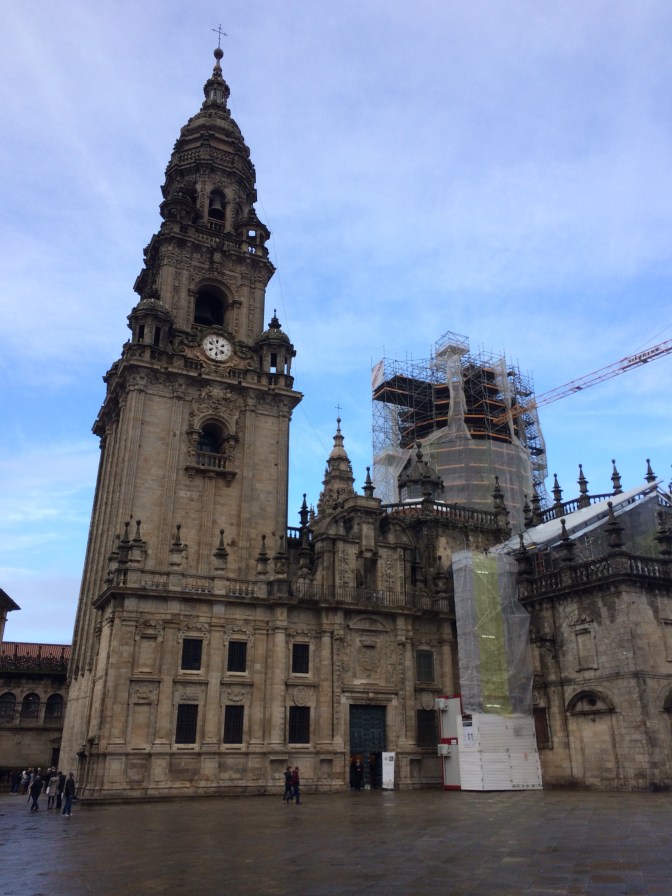
The buildings surrounding the Plaza del Obradoiro – Cathedral, under renovation, the City Hall opposite, the University with tower to the left and the Parador / Hotel with it’s ornate entrance to the Right.
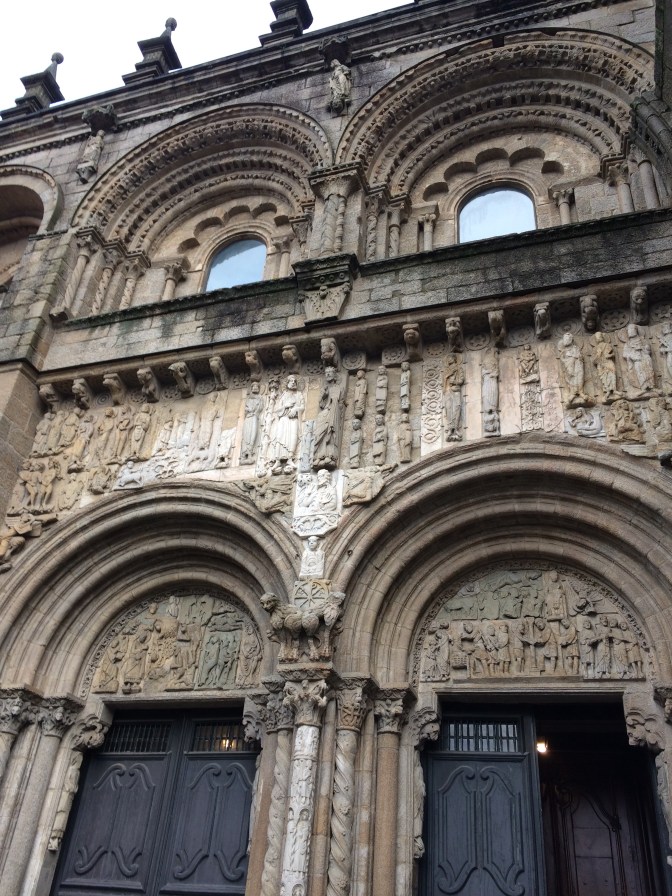
Below are various scenes both outside as well as inside the Cathedral
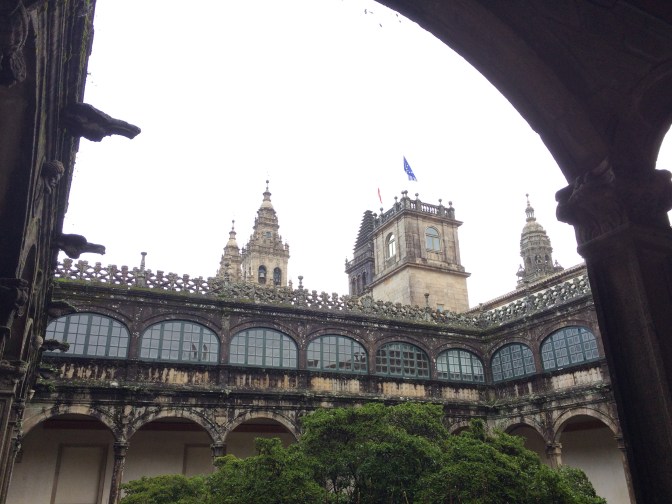
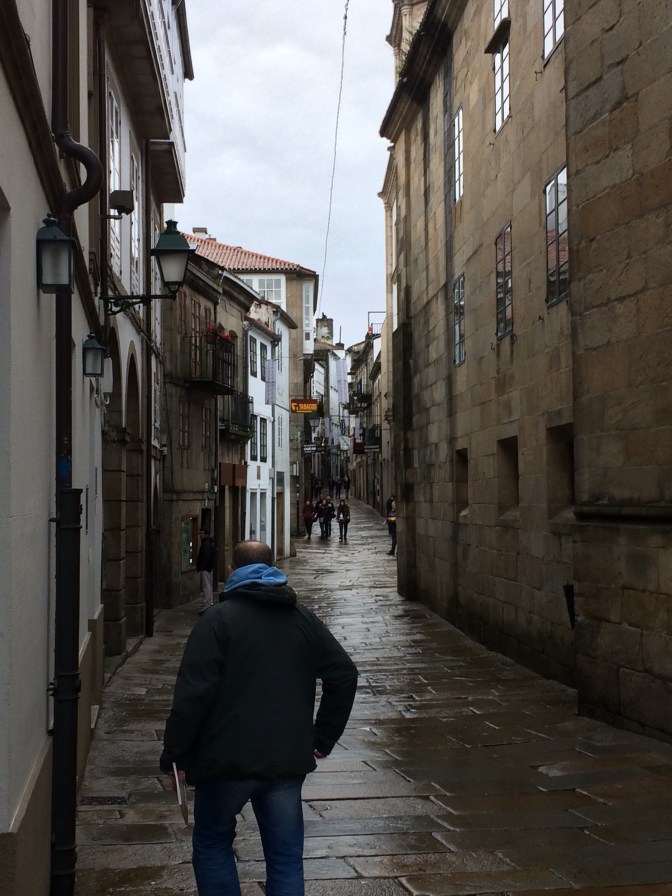
Now to the inside of Cathedral and the museum which used to be the monastery.
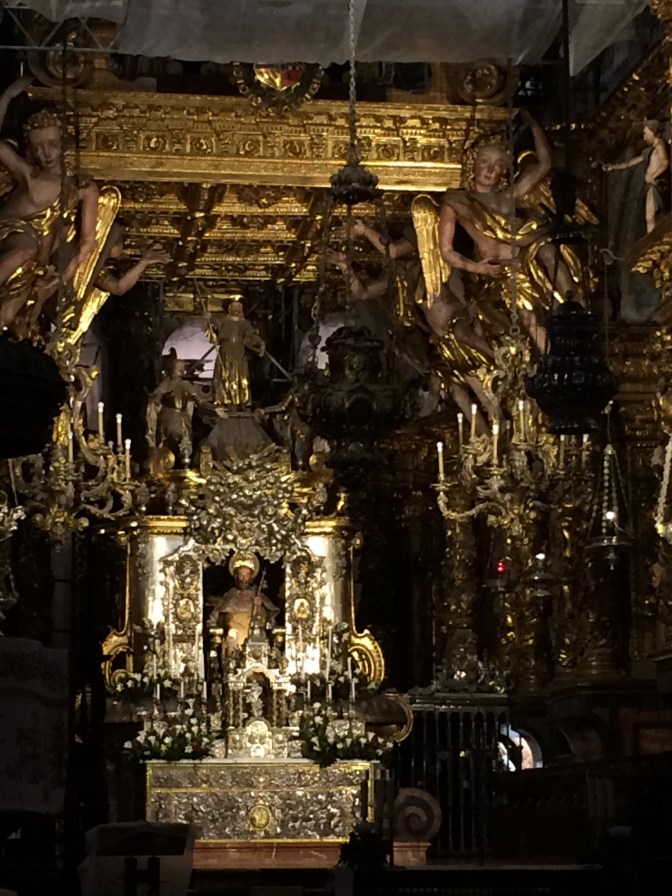
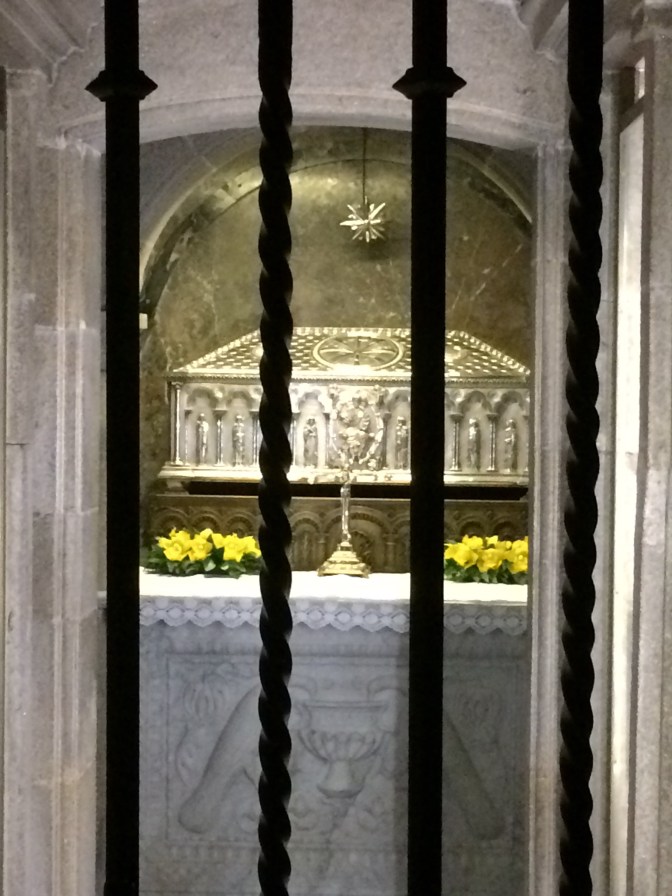
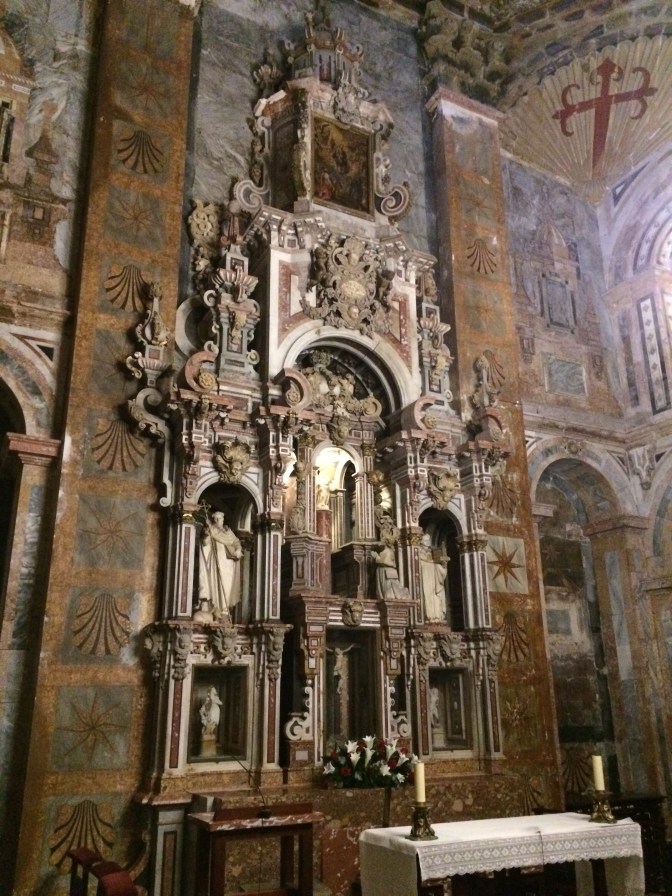
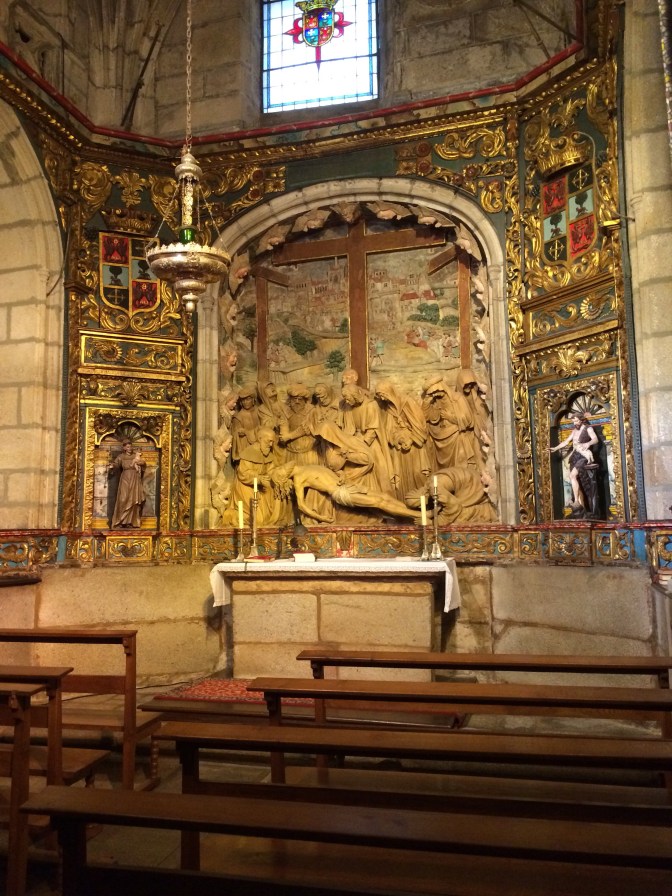
And now finally to the Nacmiento (Crèche) at the rear of the church.

END OF THE VISITS TO THR PORTS
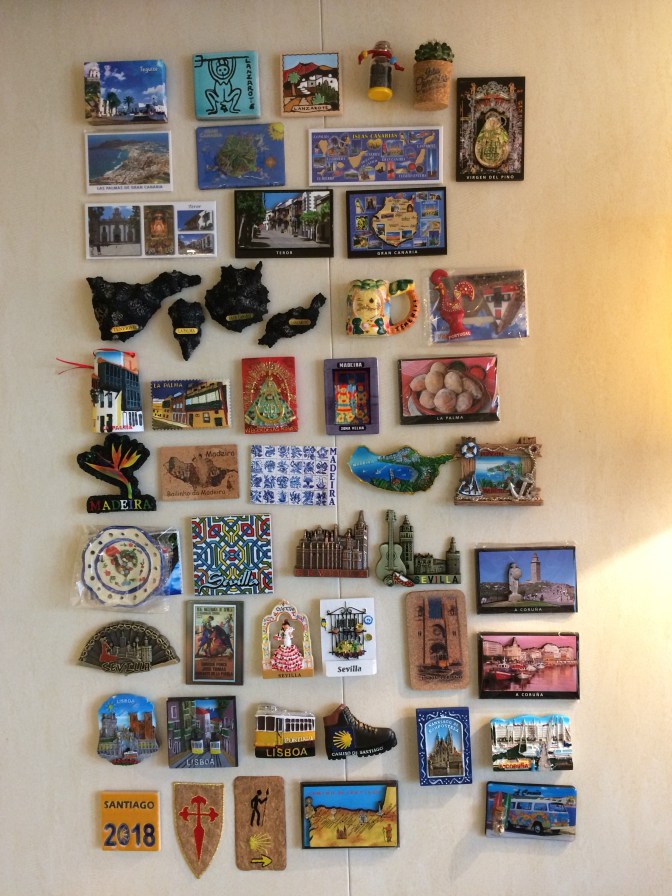
ONLY ONE THING REMAINING – THE COLLECTION OF MAGNETS:-

 Roger & Anne Travels