Sunday February 10, 2019 – Pinnawala Elephant Sanctuary – Pinnawala village, Sabaragamuwa (http://nationalzoo.gov.lk/pinnawalazoo/).
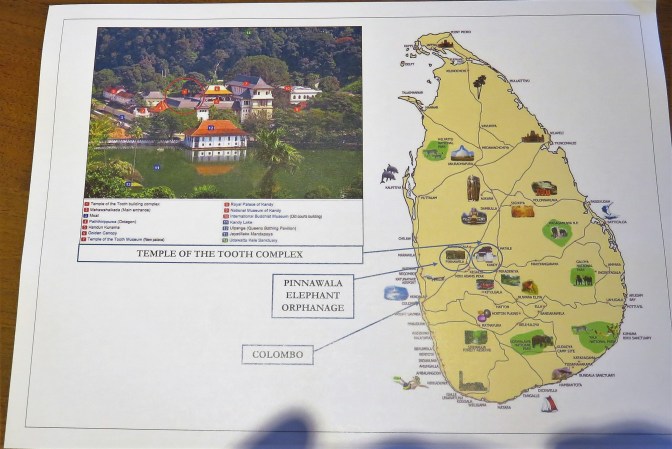
During our last day on the Ship, we could choose between a City Tour of Colombo, Trip to Kandy or to the Elephant Sanctuary located at Pinnawala village, 13 km (8.1 mi) northeast of Kegalle town in Sabaragamuwa Province of Sri Lanka (which means – Resplendent Island) on Highway B199, Rambukkana Road. This is the home to the largest captive Indian elephant heard in the world. Indian Elephants differ from their African “cousins” in that they have brown patches, smaller ears shaped like the Indian sub-continent and smaller trunks. We chose the latter and took the 3-hour coach journey (111 kilometers / 69 miles along a busy one lane each way highway with crazy driver), stopping briefly at Awanhala Hotel on Kandy Road in Ambepussa for a comfort stop. Along the way we passed various towns that seemed to be noted for a specific item as virtually all the shops sold the same things. One had Cashew Nuts, another was noted for its plastic blow up toys / balloons of many shapes and another for its wicker furniture. The good guide – Lucky – explained many things on the trip but did not overdo the constant chatter that some guides are noted for. A few items of interest are: –
- All signs are in three languages, Sinhalese on top which is spoken by the majority (69%) of the people; Tamil spoken by 18% of those who emigrated from India to work on the Ceylon Tea plantations during the British occupation and remained thereafter. It is the only place it is spoken and is a derivative of Pali language. This was in the middle position and the lowest part of the signs are in English as all school children and indeed virtually all adults speak English to some extent.
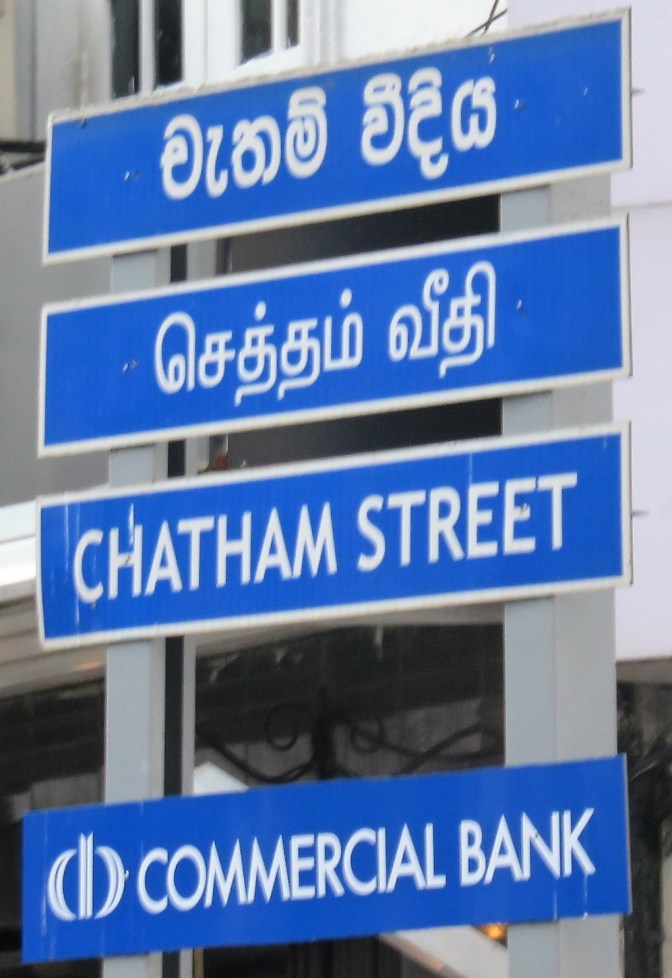
- Colombo has 25 districts and we were mainly in 1, 2, 6, 7, 8. Some are divided by religion – Buddhist Vs Christian Vs Muslim (The 3 predominant religions) while others are by ethnicity Chinese, Indian etc. and others by type of industry wholesale food providers, hotels & tourism etc.
- There are 30,000 Buddhist temples in the country dove very elaborate while others very simple roadside figures with small praying area. Monks can be as young as 8 years old but ordination cannot be before the age of 18. This young age of entering is defined at birth by astrologers who are consulted at birth and predict the life plan for the infant.
- Military service is voluntary but GCE “O” Levels are a pre-requisite.
- There were several occupations of Sri Lanka by Foreign powers with the latest being by the Portuguese, the Dutch and the British.
- Today it has an area of 65 Sq. Kms and a Population of 23 Million.
- Colombo is the largest city (5.6 Million) and the commercial hub but the legislative capital was moved 12 miles out of town to help traffic congestion to Sri Jayawardenepura Kotte in 1982.
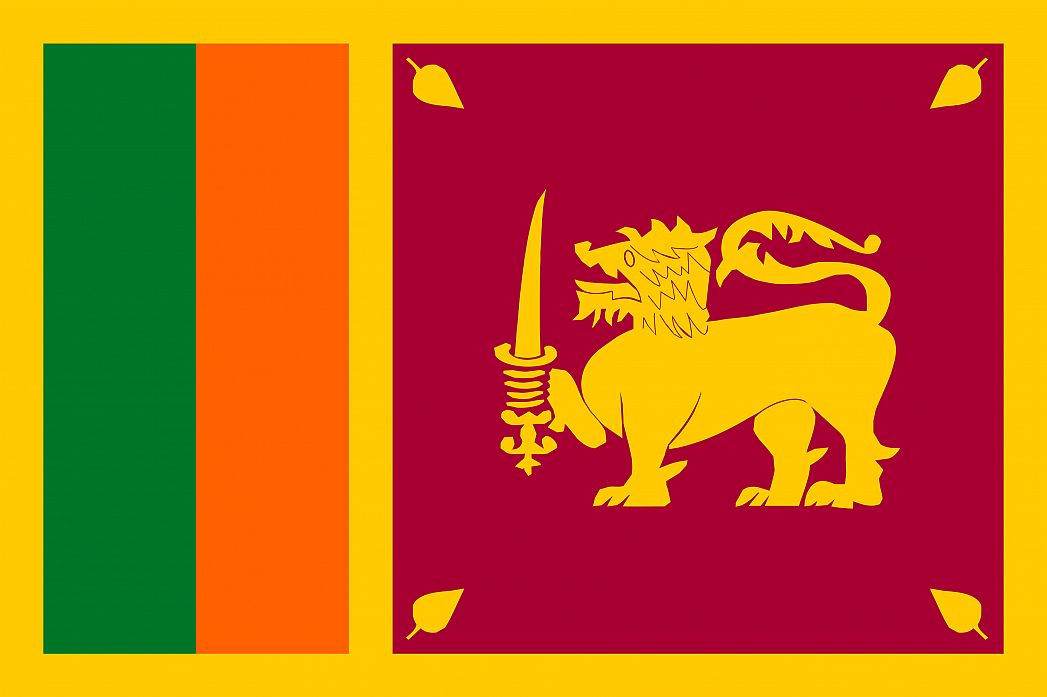
- The Sri Lanka flag was adopted in 1972 and recognizes the different religions in the country. The Yellow border / background represents the predominant Buddhism; The Green Stripe – Islam (7%); Orange – Hinduism basically the Tamil (18%); The maroon background and lion holding the kastane (a short decorative) sword represents the Singhalese sovereignty. The four Bo Tree leaves in the corners of the maroon background represent the four principal tenants of Buddhism – Benevolence / Kindness; Compassion; Sympathetic Joy and equanimity. It is the Bo or Bodhi or peepal tree (Arasa Maram) sacred Fig tree in Bodh Gaya, Bihar, India under which Siddhartha Gautama – The Buddha – meditated and reached enlightenment.
 This is not to be confused with the Buddhist Flag below which is displayed everywhere and the various colors / bars represent the various Buddhist Countries
- Sri Lanka is Home to 8 UNESCO World Heritage Sites – Kandy (last Capital of the Kings), Galle – both of which we visited; Sinharaja Forest Reserve, Central Highlands (both because of their biodiversity); The cave temple at Dambulla and the nearby “Table Top” like Mountain fortress Sigiriya; finally, the two former capitals of Anuradhapura and Polonnaruwa.
- There is an ever-increasing presence of Chinese with major projects like the Expressway between Galle, Colombo and Colombo Airport north of the city. There is also a major ($15 billion) project reclaiming the ocean in front of the old parliament and hotels.
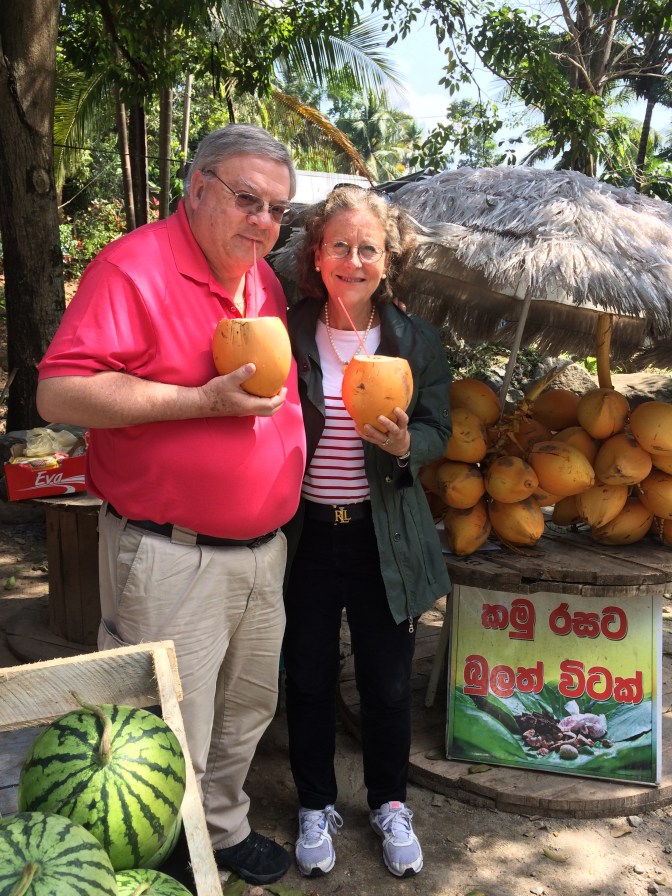
- We enjoyed stopping by the roadside and drinking the Yellow King Coconut which has more liquid and less flesh than its green cousin which is more used for cooking. Other major “industries” are Tea, Rubber, Cinnamon and Coconut oil, gems and handicrafts. The Laksara Handicraft Shops are ubiquitous and have good quality products.
- Sri Lanka is a Democratic Socialist Republic with a President being both head of State, armed forces and Government and elected every 6 years. He appoints a Prime Minister As his deputy, who heads 225 seat Parliament.
- Schooling through University or Trade school is free, as is all medical care and medications although a private pay system is also available.
When we got to the Pinnawala Elephant Sanctuary we found that it was opened by the Hon. Minister Kalugalle (Minister of Transport, Shipping and Tourism) on the 16th of February 1975 with five baby elephants (named Vijaya, Neela, Kadira , Mathlee and Kumari) that were found in the jungle having lost track of their mothers who they were following and thus orphaned and would have died if left on their own. In their early (2-3) years all they consume is mothers milk equivalent to 35 three quarter liter bottles a day (25 liters or 6.5 gallons). As more elephants were orphaned and then some of the residents became adults and had their own children that could not survive in the wild, the census grew to its current number of just under 100 elephants. It lies in a Coconut “jungle” plantation next to the “Ma oya” (or Maha oya) River. Nearby and along the river is the Pinnawala Zoo.
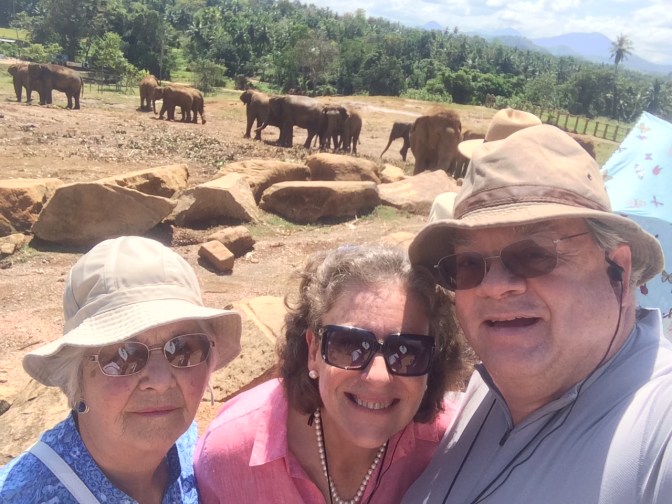
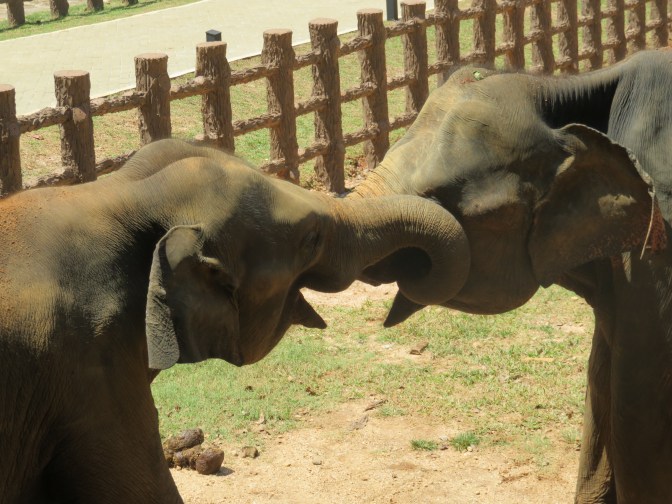
After arrival we went to see a group of some 30 elephants in an open field wandering around with nothing, but a bunch of rocks situated in a straight line between us and them. We could have stayed there marveling at the amazing spectacle of being so close to these majestic animals with no cage, no Zoo like barriers between us. The oldest “resident” is Anusha at 70 and the youngest is a baby Anurada. The leader of the group is a matriarch called Mathalee. However, the oppressive 120-degree heat with lack of shade trees to take refuge, made us move to a more comfortable enclosure where we could touch the elephant trunks and feed them fruits purchased at the place while getting some protection from the sun. A roofed shelter is under construction which will allow visitors to view the open site while getting some shade. The 50 mahouts or Elephant handlers were brilliant in the way they had a special interaction with the elephants seeming to speak their language. Some will argue that this is like a paid zoo, but despite paying to enter (locals pay about 10% of foreigners) it is a place where these Indian elephants are raised and protected as many (such as the original orphans and the handicapped) would have died in the wilds. It also provides a sense of respect for the animals living in their natural habitat.
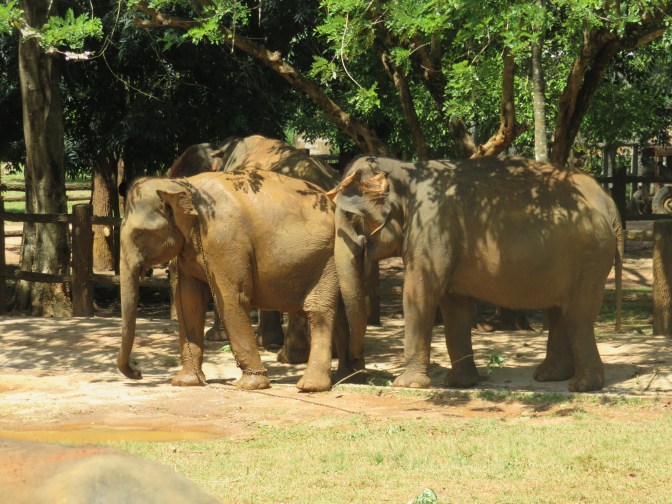
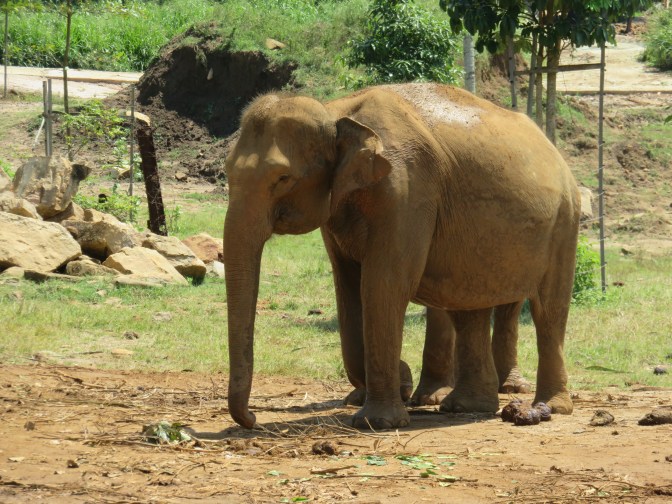
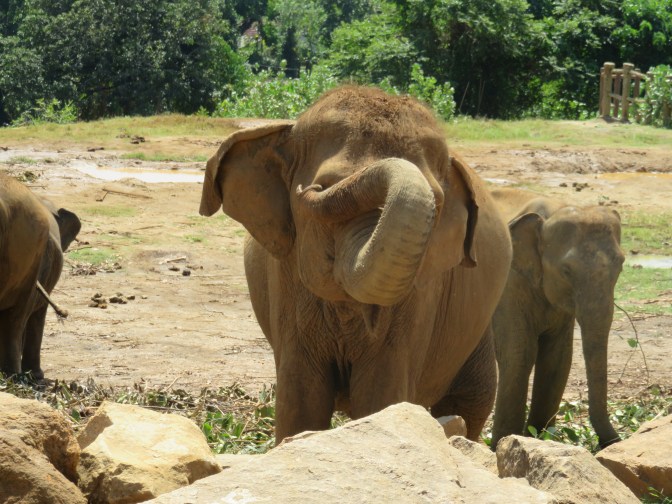
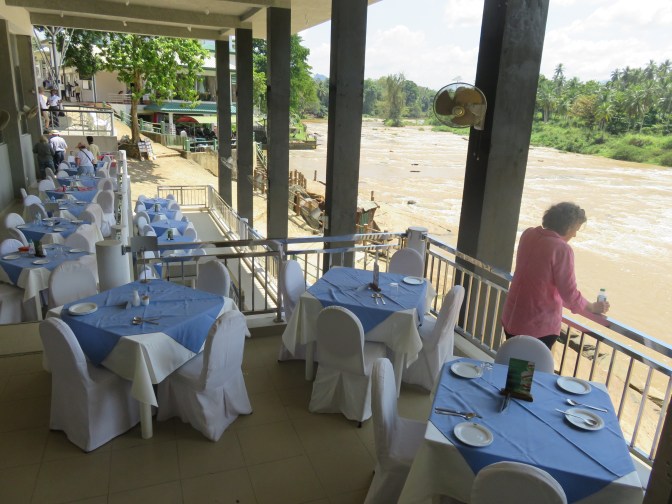
After viewing the half dozen elephants in the relative comfort of the shade, we wandered past a tourist shop lined street to the river where we enjoyed a good buffet style local lunch at the Pinnalana Hotel in air-conditioned surroundings overlooking the river and countryside beyond. The main spectacle was to be the elephants coming to the river to soak, cool down and drink part of their 350 liters (93 gallons) of water a day. They also have a healthy appetite. are vegetarian and eat 250Kg (550 lbs.) of food (jackfruit, coconut, tamarind, grass etc.) a day.
After lunch we, with many other visitors lined the street to watch the parade of elephants walking past the shops and people who were feeling them along the way, to the river. Anne and I stood by a railing and one young elephant decided to extend its trunk over my chest thinking that my camera being used to film the spectacle was food. A brief encounter but I was able to keep the camera and not have metal rolling around the poor elephant’s stomach!!! We wondered how many other extraneous items were inadvertently taken from unexpected visitors. Fascinating though to be so up close and personal with these 5-ton animals.
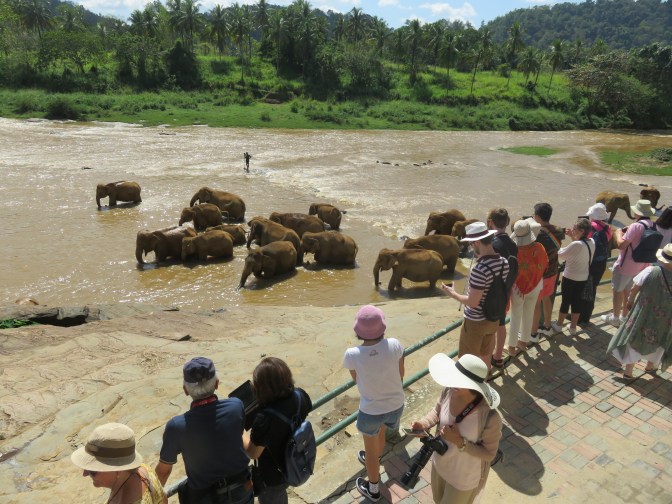
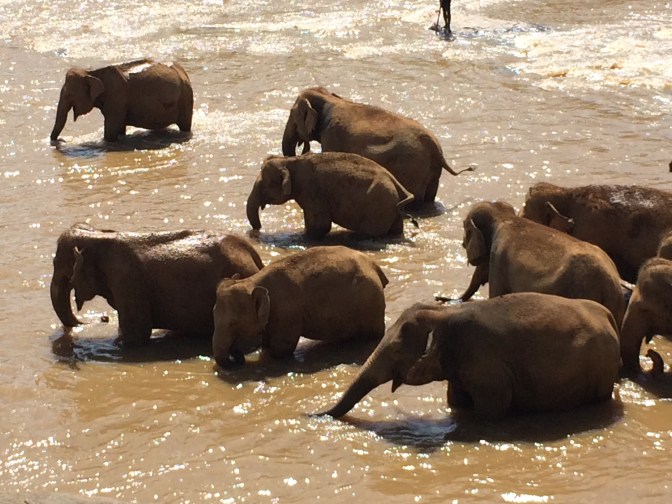
We watched as they entered the water and played, drank, refreshed, and were sprayed by a powerful water “gun” to help cool and wash them. The Mahouts were in the river and kept control of them not letting them go astray down river.
Sadly, it was now time to board the coach and head back to the ship but not before stopping at the Susantha Spice and Herbal Garden (www.susantha.spice.com). Here the guide through the garden rushed us though the explanation of the plants and demonstrations and into the shop. It would have been nice to have a little more time learning of the benefits of the different plants and less time with the sales pitch. However, we did learn various interesting Ayurvedic “receptors” and herb / plant uses. Some of the many items discussed, include: –
Sandalwood Oil and cream is good for skin health
Cinnamon oil for shivering cold, ear & tooth aches.
King Coconut Hair Tonic for Hair rejuvenation.
Green Oil for migraines & the related hangover!!!
Turmeric cream as antiseptic and skin blemish removal.
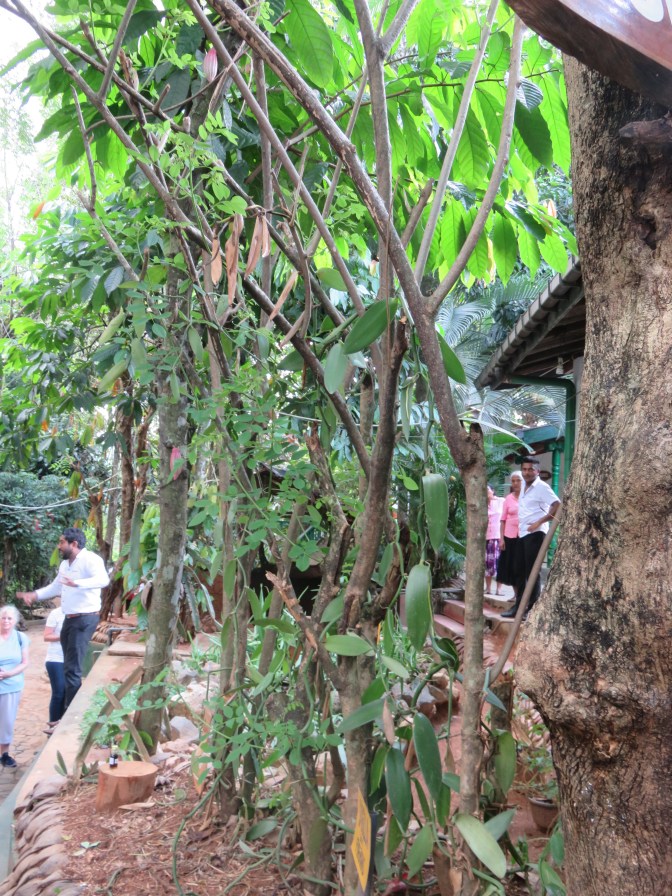
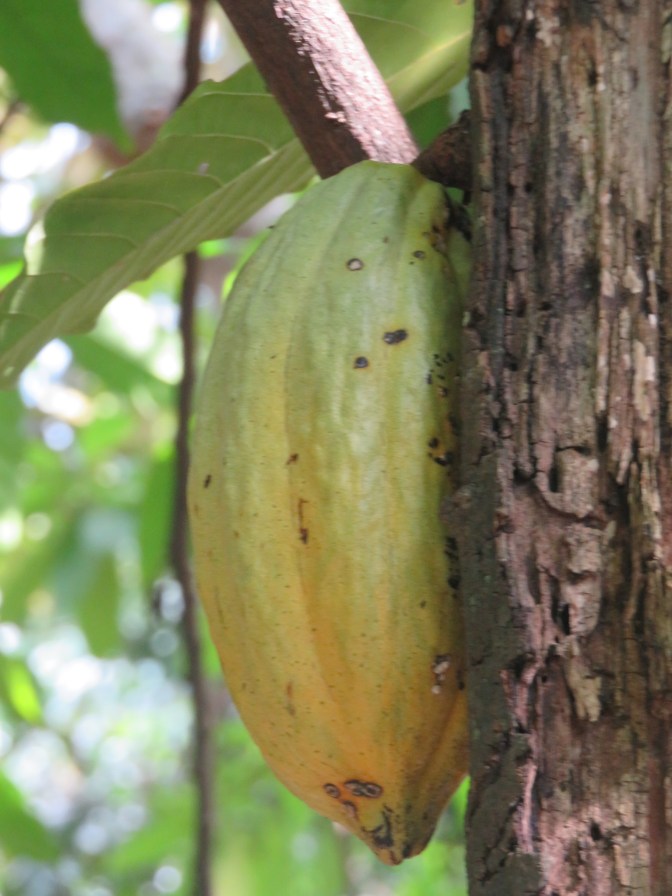
Cocoa Beans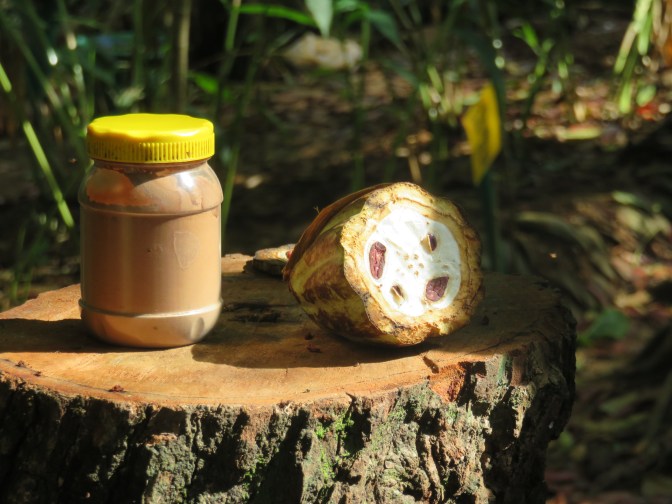
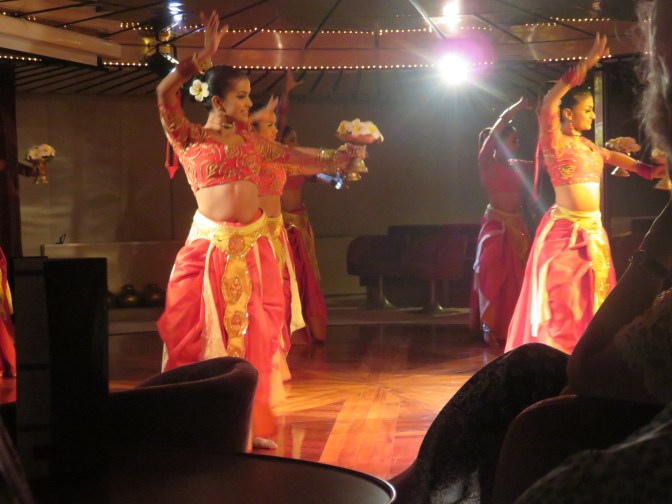
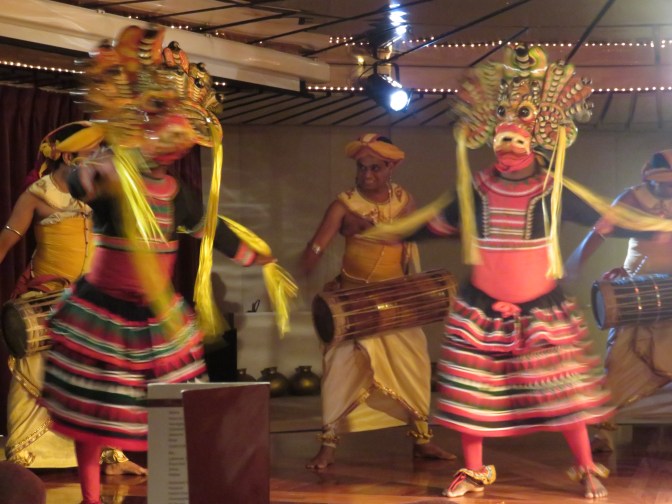
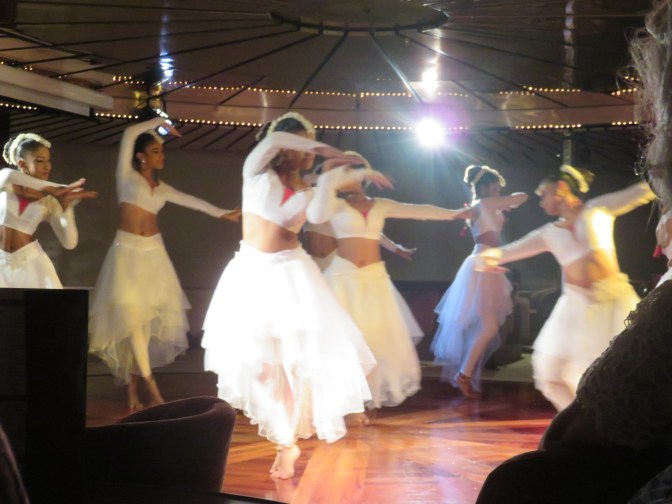
We returned to the ship for our final night, packing, and the local Folkloric Dance show by the Buttawatta Dance Troupe. A group of about 20 performers and percussion musicians that displayed some 10 different dances in colorful costumes. A great way to end the day.

 Roger & Anne Travels