Friday, January 31, 2020 – Manaus, Brazil
As the UK formally exits the European Union and BREXIT becomes effective, we arrive and tour Manaus in Amazonia.
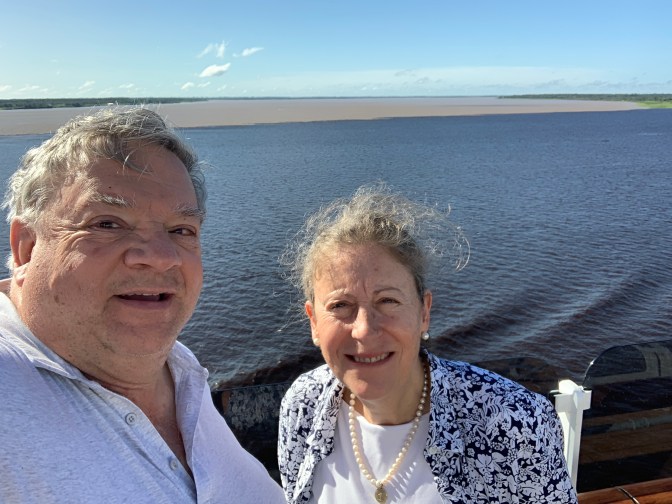
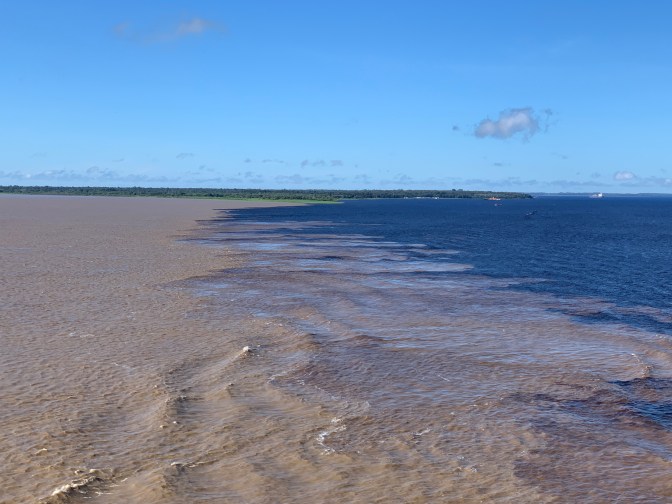
Manaus is the state capital (as of 1849) of Amazonas, the largest yet least populated state in Brazil. This City is located along a number of low gently undulating Hills and is divided by many creeks flowing into the Rio Negro which forms the water Front of Manaus. It is 1,450 Kilometers (900 miles) inland from the Atlantic Ocean. 11 miles (18 Km) North west of Manaus is the meeting of the waters where the brown Amazon river starting in the Andes of Ecuador meets the black Rio Negro and the two flow side by side without Mixing. Not many large cruise lines come up the Amazon and there were places we were only 3 meters from going aground!
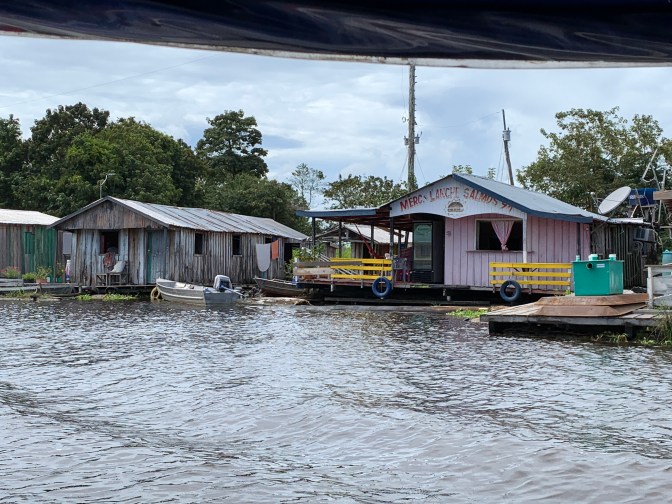
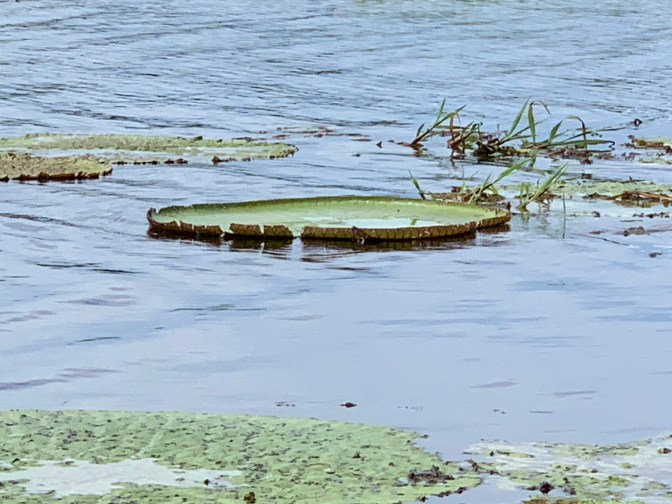
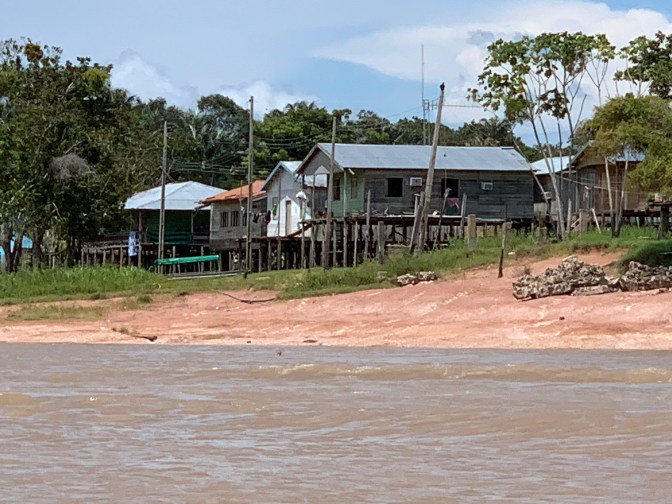
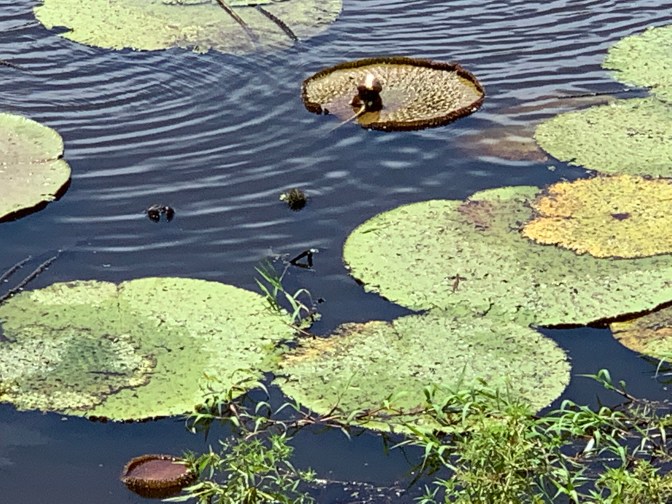
The south west shoreline is bordered for 50 miles by a vast floating marsh, which is the home of the river people whose homes are built on rafts. The marsh has much wildlife such as South American alligators, River Dolphins, Amazon river manatees, Anacondas and a profusion of water birds and birds of prey. Also here are the Victoria Regis water lilies whose pads grow to 6 feet in diameter and are the largest species of water lilies in the world.
Early history of Manaus includes the Conquistador Francisco Orellana and crew reached the meeting of the waters in 1542, but it was the Portuguese that founded the first settlement with a small Fort of Sao Jose do Rio Negro in 1669 near modern Manaus to guard against Spanish invasion. Jesuit missionaries followed and by 1809 the population had reached 2,000. By 1832 it was elevated to Town Status and on October 24, 1848 it became a City and the name was changed to Cidade da Barra do Rio Negro (The City of the Margins of the Negro River). It was changed again after a local Indian tribe and in 1939 to Manaus.
In the second half of the 1800’s, rubber brought great prosperity to the town and included the building if the Opera House, trams for public transportation, electricity and the floating Harbour given the river tides. In the early 1900’s it fell into obscurity, but by 1967 it was declared a Duty-Free zone for industrial production bringing petroleum product, chemical, electronics and brewing industries. The modern airport finished in 1976, has made it a tourist and industrial Mecca.
The floating dock, designed by a Scotsman in 1902 to deal with ships birthed of all sizes and to deal with the 14 meter (46 Feet) rise and fall of the river during the year. The pontoon is connected to the streets of downtown Manaus by a wide 150 meter floating ramp. The (British) Customs house is situated at the end of the ramp, completed in 1906 using Scottish stones brought over as ballast.
It is now an important port and jumping off point for those involved in eco-tourism to stock up for adventures into the Amazon Jungle.
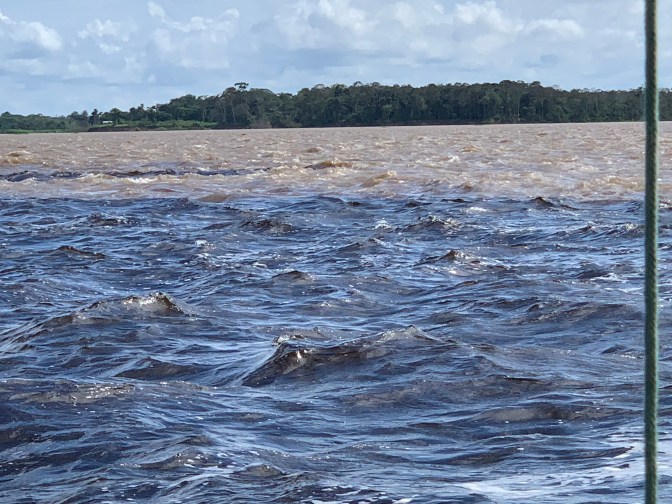
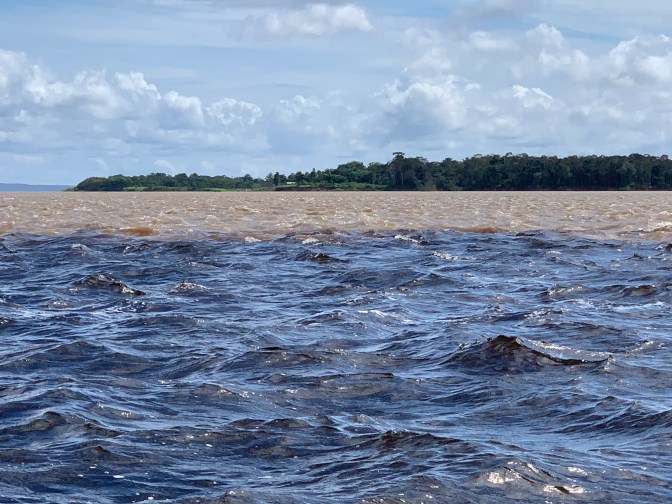
We sailed up the Rio Negro seeing the transition from the brown Amazon River to the black Rio Negro. We saw this up closer when we took the private boat ride but it is best to mention this phenomena now.
The Amazon (actually the Rio Solimöes until it meets the Rio Negro at this point, after which it is the Amazon) is brown water traveling from the Peruvian Andes to the Atlantic Ocean. It travels at least around the Manaus area at 8-15 Kilometers per hour and has a neutral pH of 7-7.2.
The Rio Negro is black because it travels at 2-3 Kilometers an hour and has a more acid pH of 4-4.5 and thus the vegetation that it picks up along the way gets partially “digested” and kept in suspension.
Where these two rivers meet near Manaus they don’t mix and a clear line between the two can be seen and run together side by side for some 15 (officially) but more like 50 Kilometers in practice, before becoming the brown that is seen for the remainder of the 1,200 kilometers to the Atlantic Ocean. There is also a difference in temperature between them as we experienced on the small vessel we took to the area. As seen above.
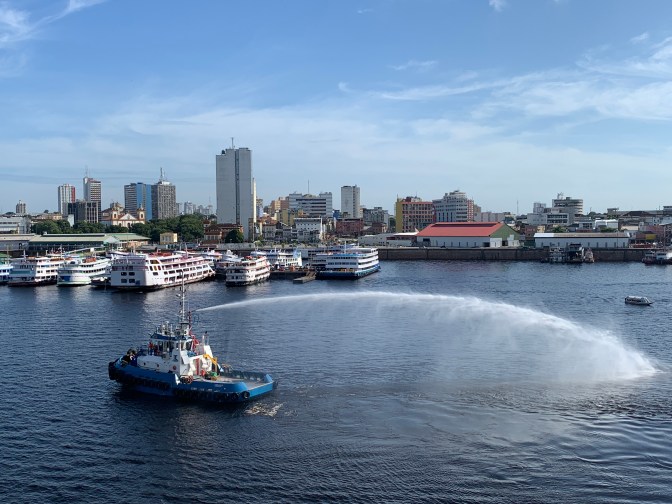
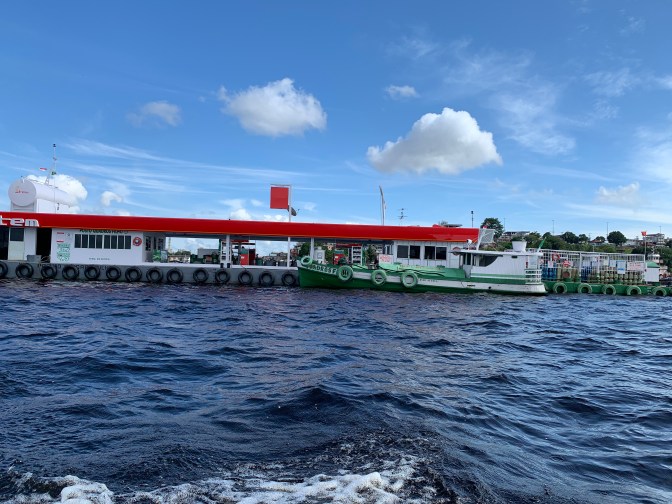
As we approached the mooring, great fanfare took place. Fire boats sprayed water spouts welcoming us, a local band of musicians and dancers serenaded our arrival and a warm Brazilian welcome was given. Not too many large passenger vessels arrive in Manaus, but there is extensive river traffic including “bus” boats that run all the way to Belem at the mouth of the Amazon and take 5 days. Some 10 floating petrol stations, different oil companies, were in the river to provide petrol / diesel to the ships.
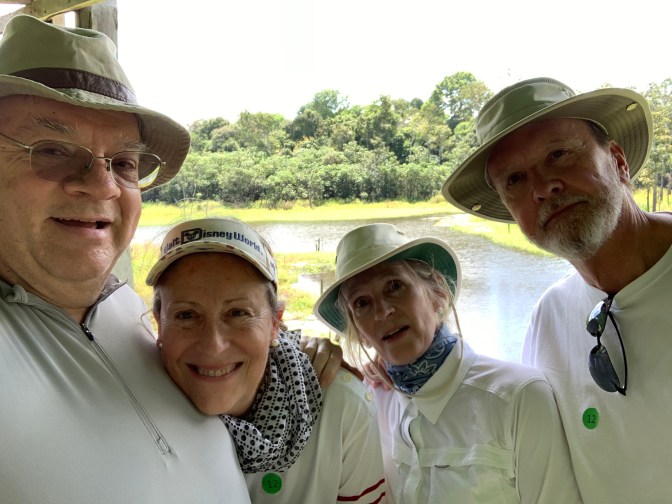
Once the Ship tied up on the large floating dock, starboard to shore at 9am, we got off and met up with our guide Marianne, who took us to the small metal, covered motorized canoe with seating for about 8 people. The four of us, the good English speaking guide and the boat captain / owner Sebastian, on our adventure for the day. We could see other passengers getting onto larger vessels for their experience in the Amazon.
Soon after we left the Quay, we stopped and saw the native pink dolphins. Legend has it that these pink dolphins are from Asia and when the continents divided some stayed on this side of the continental divide and others are in Asia. They require clay filled fresh water as is present in the river Solimöes.
Our first stop was at the meeting of the waters where the two rivers meet and flow side-by-side. It was fascinating to experience and to feel the difference in temperature of the water and see this phenomenon.
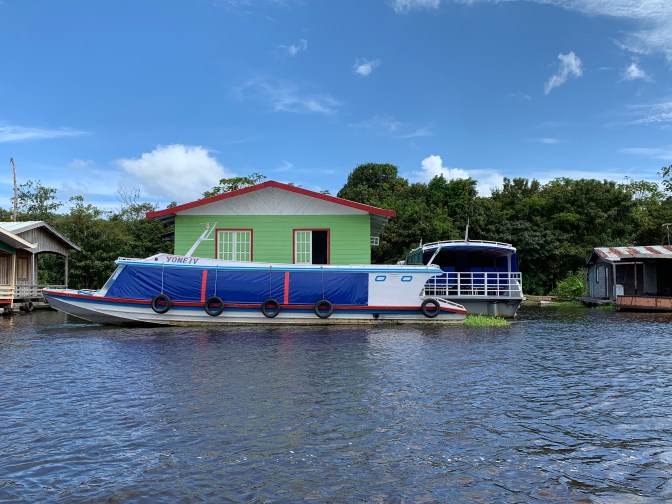
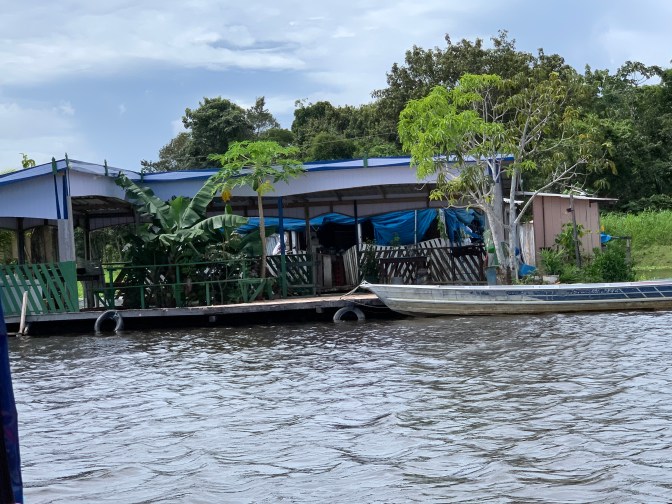
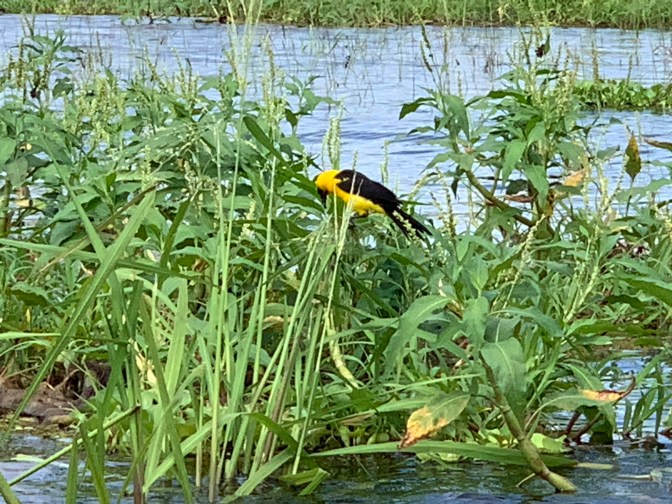
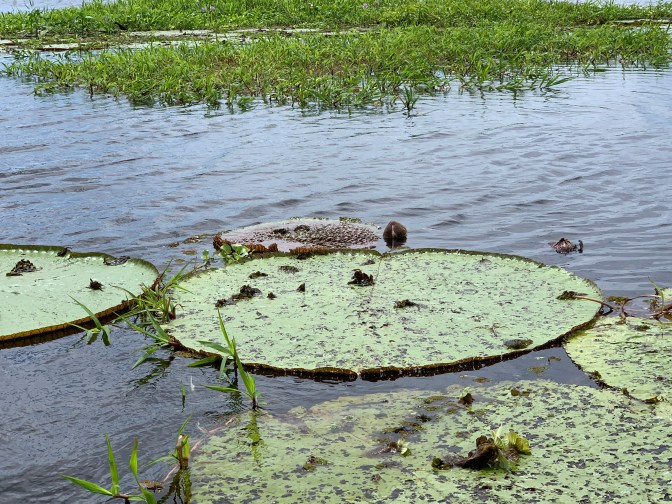
We then proceeded up one of the tributaries of the Rio Negro to see how the riberinnhos or River people live in their floating homes along the sides of the river. While on this tributary, we were able to see up close and personal the amazing water lilies that grow up to 3 feet in diameter and are called the Victoria Regia species. So named because a German explorer who was in the service of Queen Victoria so named them after her Majesty. We were also able to see some exotic birds, one bright yellow and black and the other a pair of birds with a nest on top of one of these lilies and were able to see three small eggs.
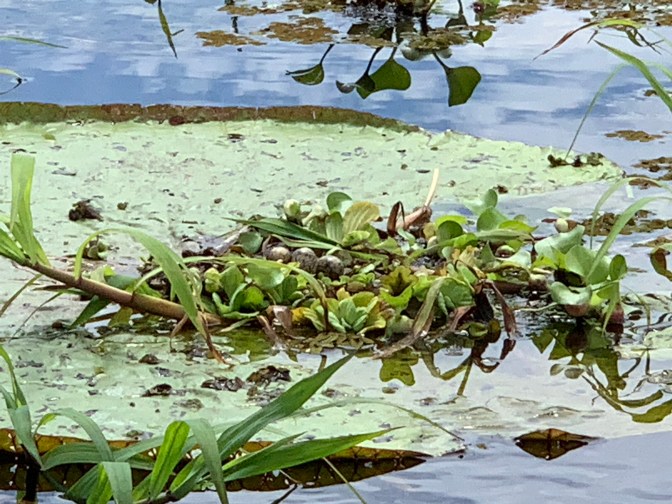
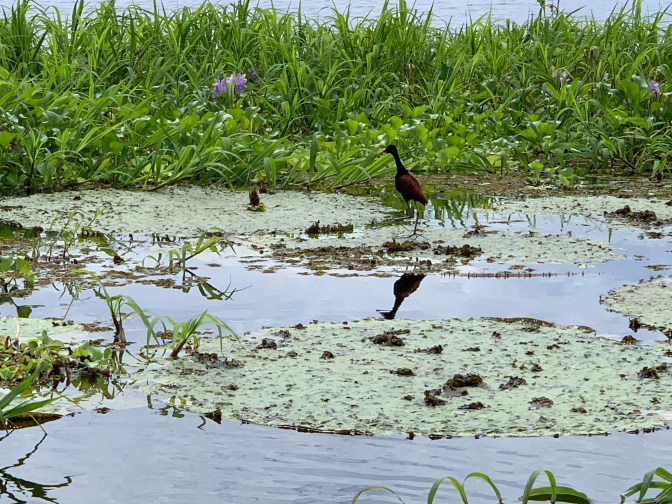
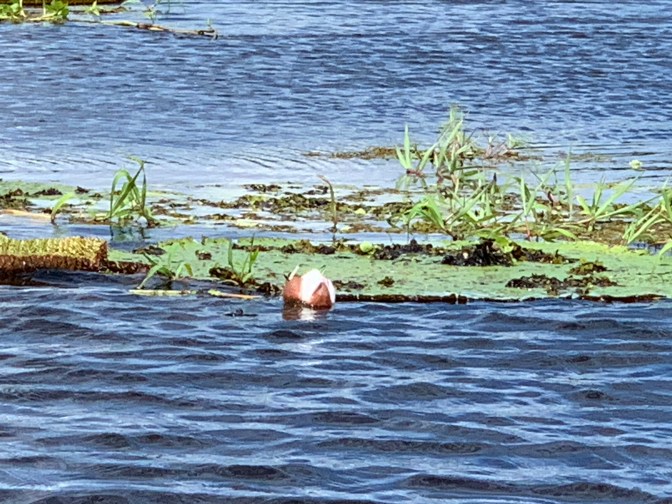
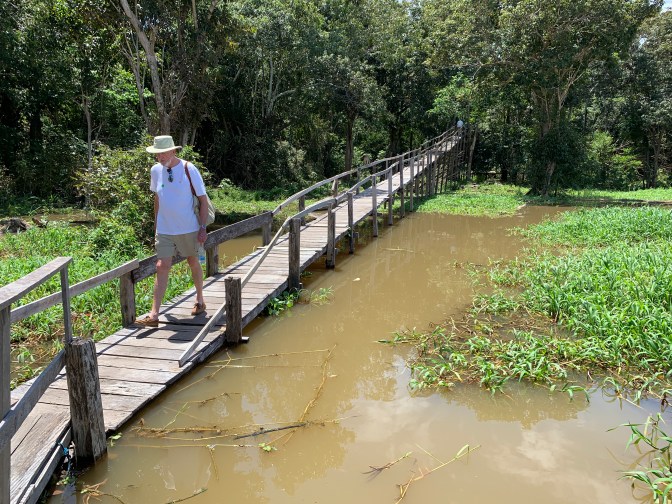
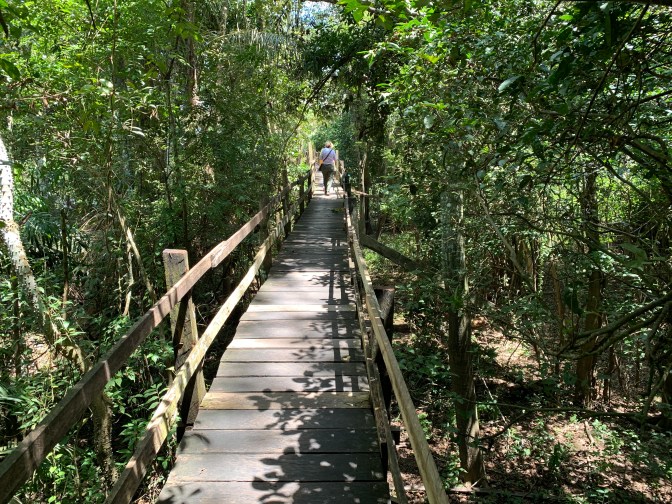
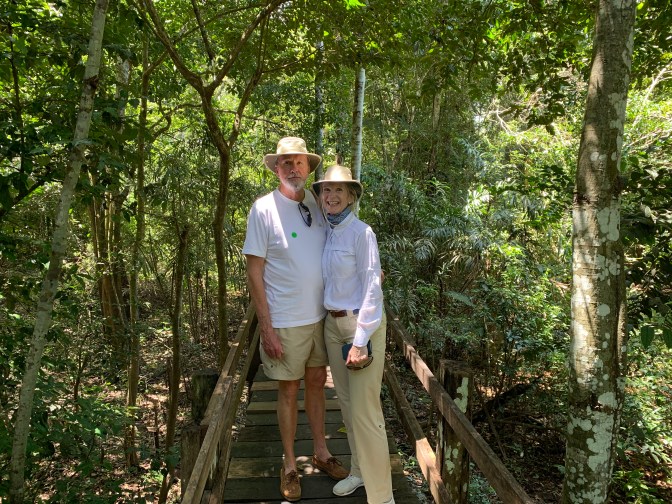
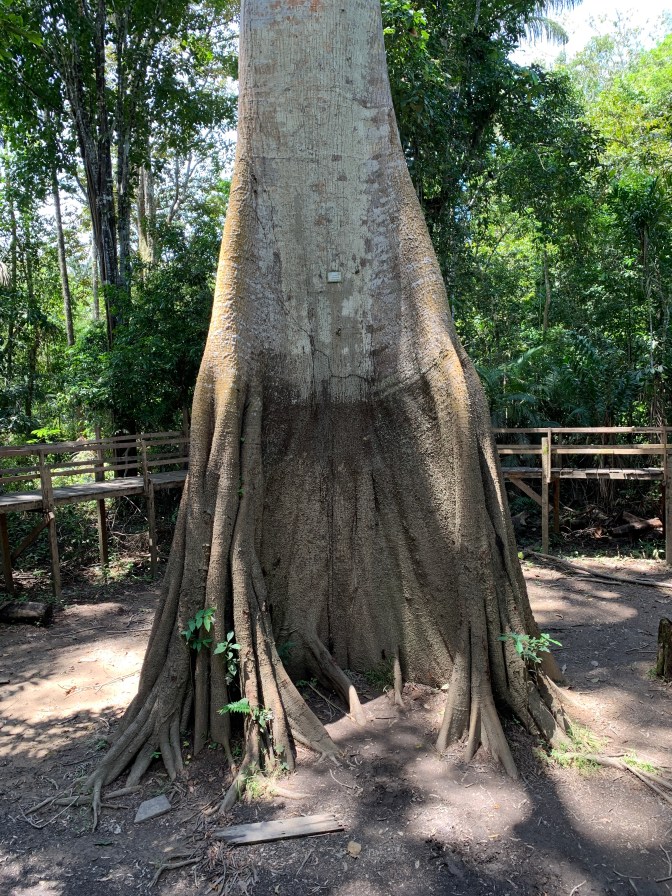
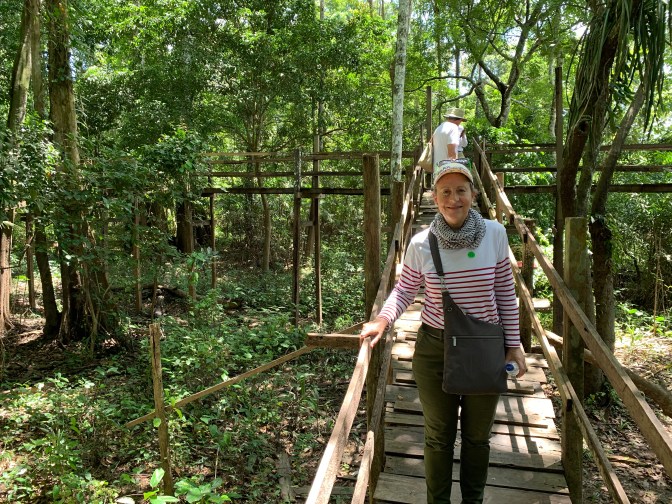
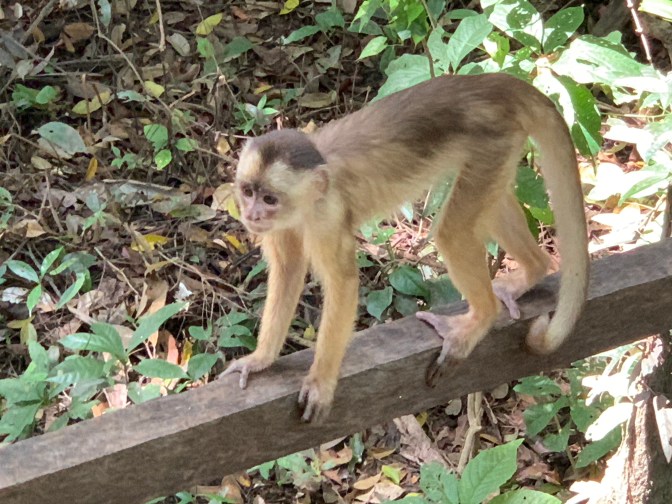
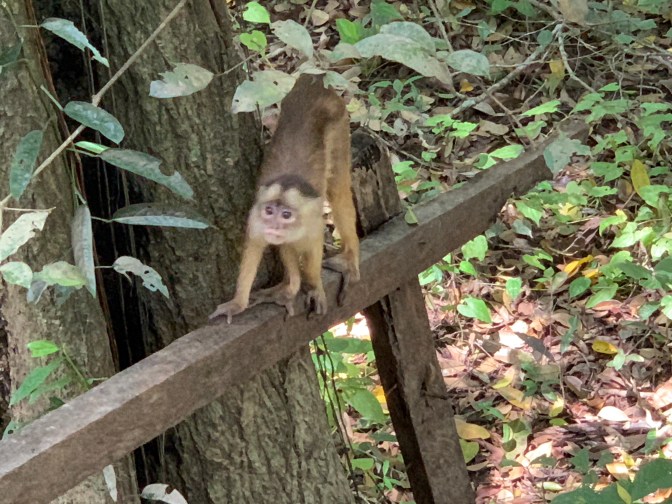
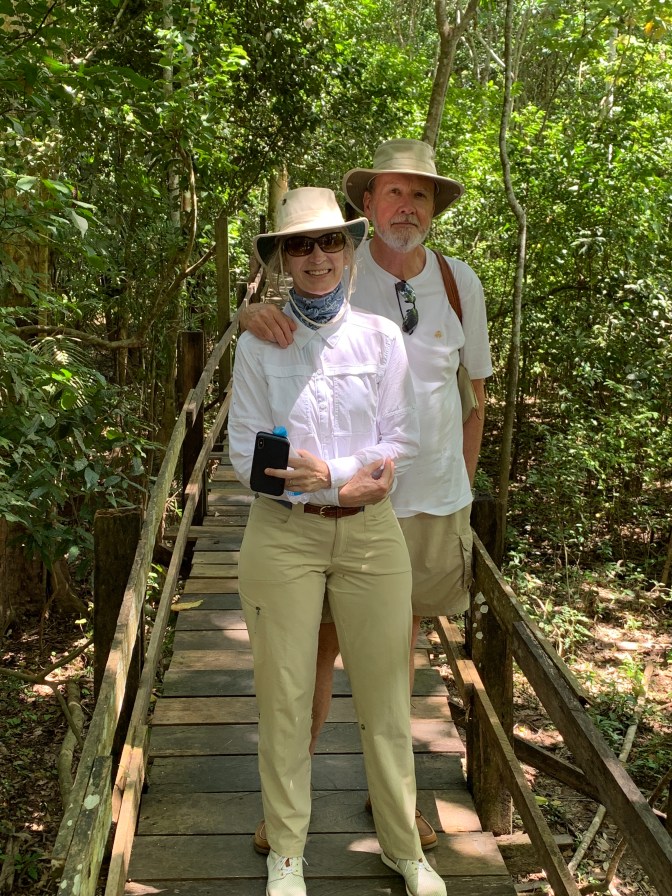
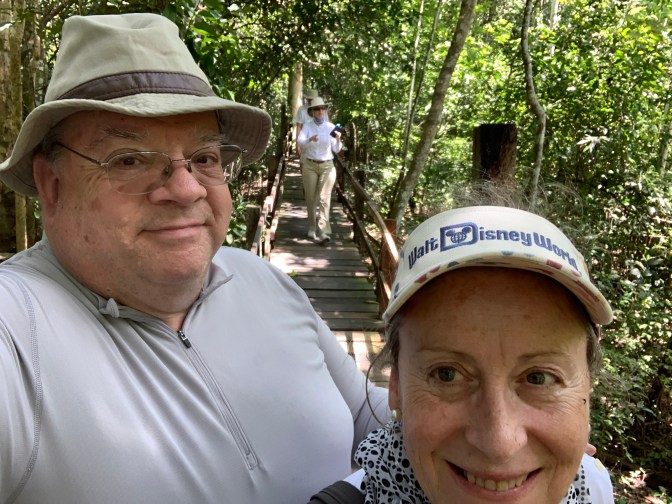
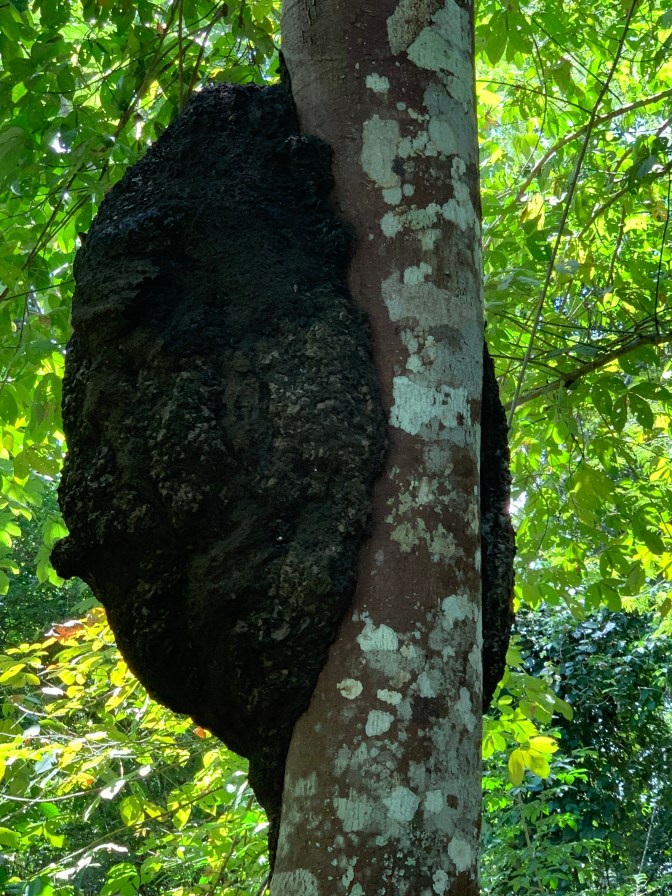
We continued the tour back up-River almost passing our ship and going up another tributary to Lake January which is an ecological park between the two Rivers. Once we got there we got off our vessel and walked for about an hour along an elevated wooden walkway about 30 feet in the air through the jungle we encountered different kinds of monkeys including a bright red howler monkey at the top of one of the ceiba trees. we eventually reached a viewing platform some 40 feet above water level where we were able to see the giant lilies and also a river alligator or Caiman who was just eating his meal of fish. While on this viewing platform we had a monkey visitor who was trying to get into our bags in search of food. Apparently the guide had a banana for her lunch in her backpack which she had put into double plastic bags yet the monkey was able to smell it and go after the banana.
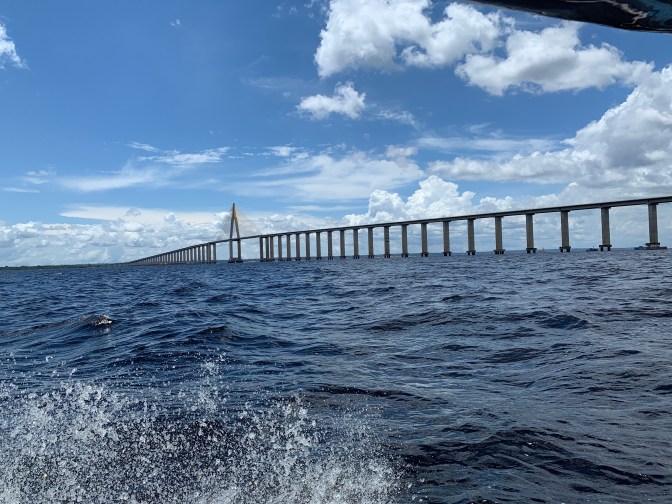
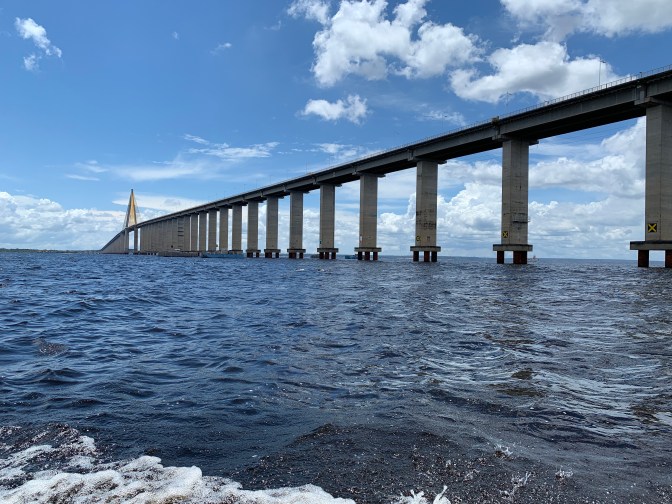
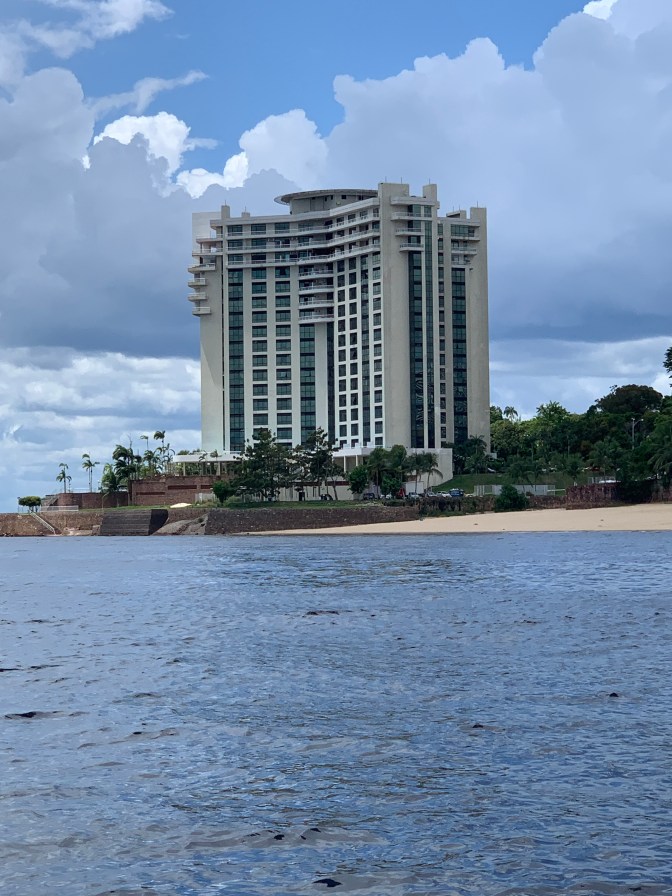
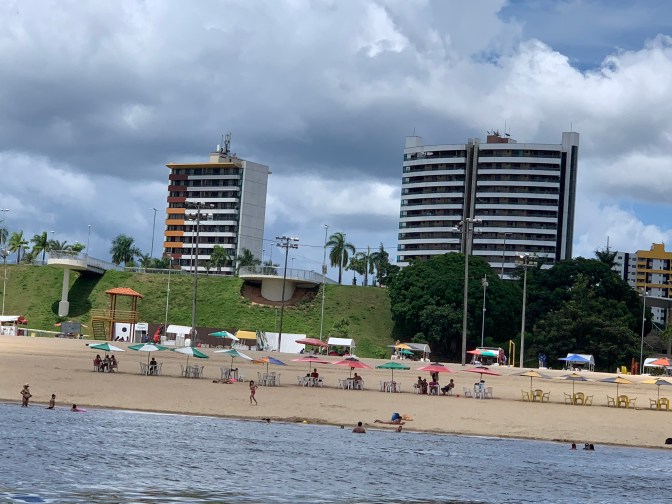
We returned to our boat and took a half hour boat ride back to the Rio Negro and past our ship up river to the relatively newly constructed (2011) Ponte Rio Negro which is 2 1/2 mile wide and connects Manaus to the fertile land on the other side of the river. We continued on to the Ponta Negro neighborhood with its upscale condominium residences and the beautiful golden beaches, before returning to the floating dock and our ship.
We bid farewell to our guide and driver of the Amazon explorers tourist guide company operating since 1965. Phones – +55-92-3434-6767 OR +55-82-99112-6333 web address – http://www.amazonexplorers.tur.br/ e-mail – reservas@amazonexplorers.com.br / Facebook.com/Amazon.explorers/.
Anne and I decided to head into town in search of a restaurant that the guide had recomended, but first went into the Cathedral – Nossa Senhora da Conceição on the Plaza Oswaldo Cruz.
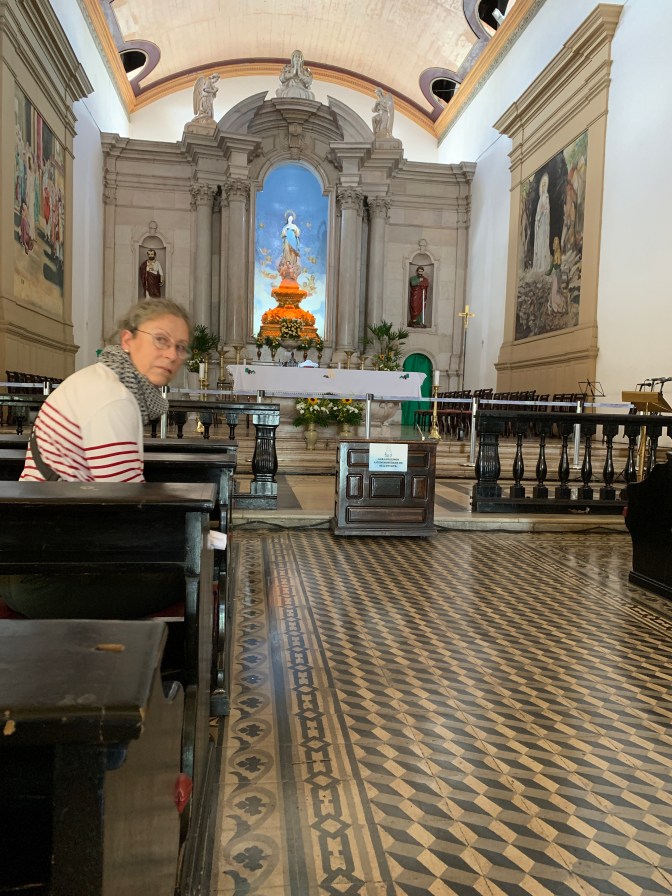
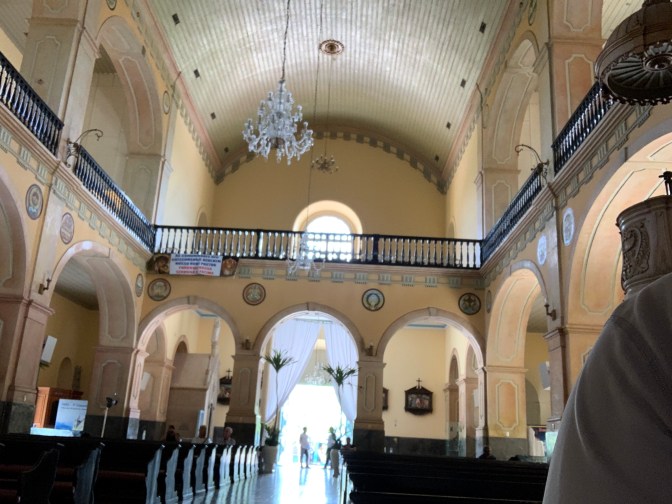
We wandered a little further up the Main Street, but then decided, due to an unfortunate personal incident, to return to the ship for lunch and siesta.
As we are in port all evening, departing in the morning, a Brazilian local music group – Raíces Caboclas Group – was brought aboard to entertain us in the evening with their local Amazonian music.

 Roger & Anne Travels