Sunday, February 02, 2020 – Santarem, Para State, Amazon River Brazil.
Santarem is located approximately half way between Belem (600 miles / 970 Km East) which is on the Atlantic coast at the mouth of the Amazon river and Manaus (450 miles / 725 Km West) where we were day before yesterday. It is 560 miles from the sea in the midst of the Amazon jungle. The Amazon River is about 15 miles wide at this point. Santarem is situated on the TAPAJOS river which is a tributary of the Amazon which is navigable for 170 miles (275 Km). Once again here we see the dark waters of the Tapajos River and the brown silty waters of the Amazon running side-by-side. It is really the first significant deep water port as one travels from the Atlantic Ocean up the Amazon. it has a lot of boat traffic as the local towns are all provisioned from Santarem. The region in and around Santarem was once the country of the Tupaius Indians. The first European contact with this group of Indians was around 1630 by the Portuguese Captain Teixeira. In 1661 a Jesuit Mission (Aldeia) was established at the meeting place of these two rivers, near the Fort established by Pedro Tixiera. In 1758 the village which had now grown around the Mission was called Tapajós and was elevated in 1848 to City of Santarem after the city of that same name in Portugal. This city today has a population of about 300,000 and the economy of the region is based on ranching, lumbar extraction, fishing, agriculture and mining. With the discovery of bauxite (and Aluminum production) and deposits of gold in the valley of the Tupaius River and the development of a Hydro electric scheme on the Curia-Una River South east of Santarem. In the 1970’s the local economy received a significant long term boost. Tourism is now an important factor in the economy. Exports include Rosewood, oil, rubber, lumbar, jute as well as Manioc (Cassava), beans, rice and Malva (palm shaped herb). The Trans-Amazonica highway, 3,107 miles in length was opened in 1973. It skirts the Southern limits of the Amazon Basin country.
We took the tour “Scenes of Santarem” with a young Civil Engineer student, Marcelo who spoke excellent English as a guide. The ship breathed port to floating dock (drive RHS) which is a short walk from the coach boarding area. The staff also included the driver Barbosa and Cunard representative Stephen (a dance host, whose function is to dance with ladies without partners) and another attractive young girl whose function seemed to be bringing in and taking out the wooden box which served as the final step of the non air conditioned and somewhat rickety coach.
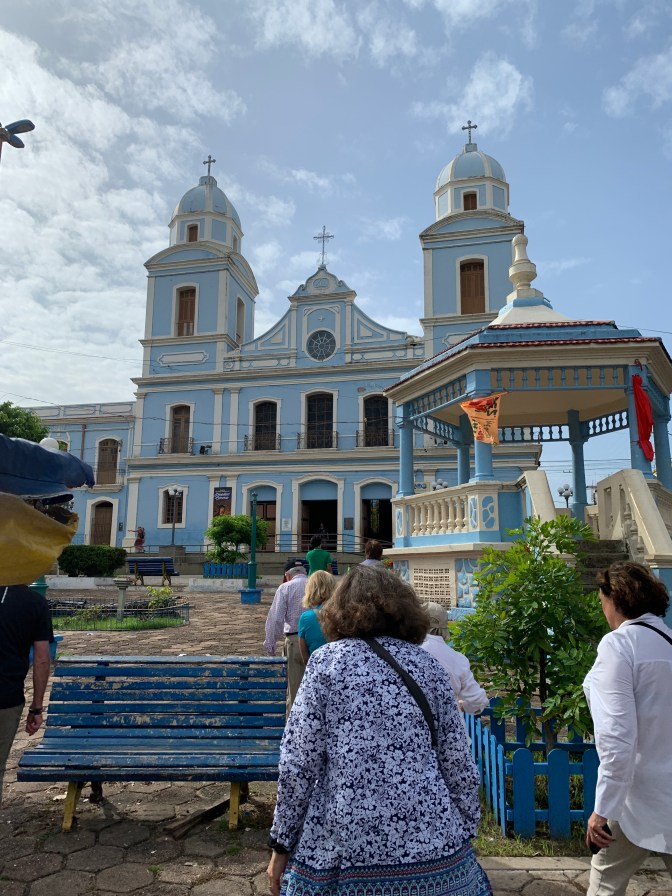
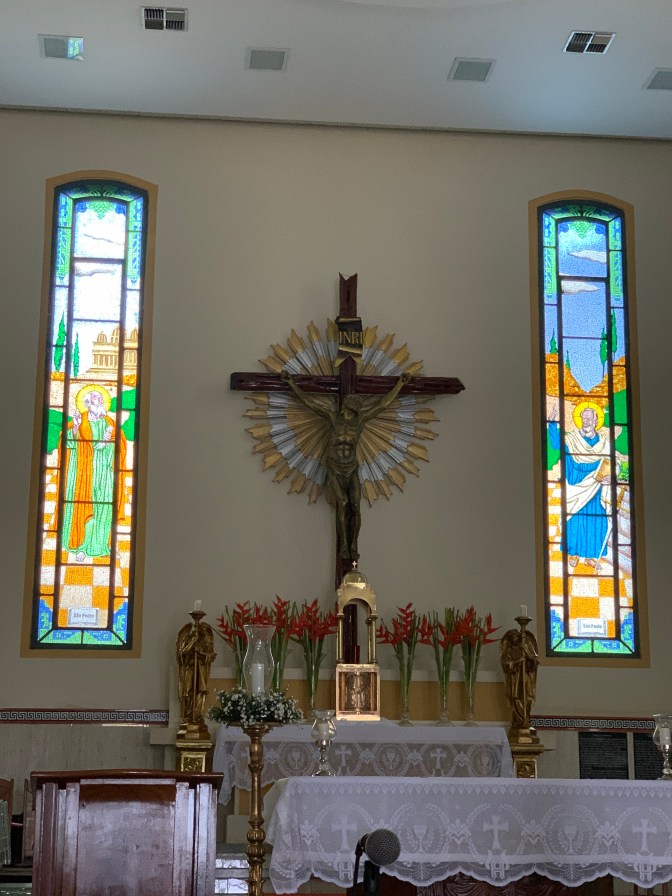
Our first stop was at the Cathedral of our Lady of Conception (Nossa Señora de la Conceição) in the Praça da Matriz. It was started in 1761 on top of an old cemetery of the Tupaius (Tapajo) Indians.The first tower was built in 1851. From 1876 to 1881 there was a restoration of the walls. From 1903 to 1933 there was a major renovation. Very recently the building was closed before a major event and the current mayor decided to whitewash all the beautiful paintings that had been a key part of the building for years and depicted local life, culture and scenery.

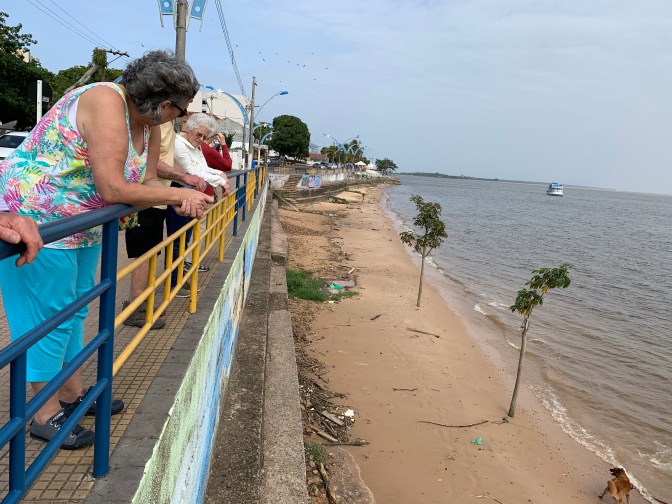
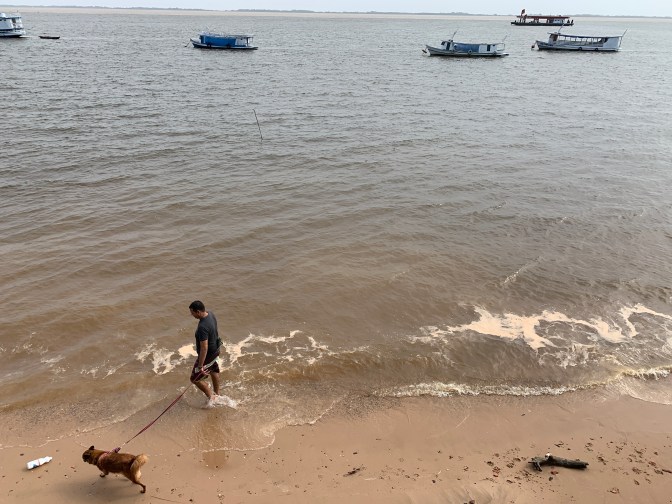
We then saw the “beach”, and the meeting of the waters and the high river wall, which is about 5 meters high due to the change of the water level in the seasons. Recently despite the wall, the buildings on the river side and street are flooded.
While there our guide told us of two different kinds of fish in the Amazon river that have peculiar characteristics. The first kind of fish tends to eat nuts that drop in to the river, thus it is advised that young boys or men do not swim in the river naked as these fish might mistake that what is floating. Apparently there are many cases of these of these unfortunate events happening where males are taken to the hospital each year even though they know the consequences. The second type of fish can smell ammonia in the water and if you urinate it will flow up the urine stream of the male or female and with the spiny exoskeleton lodge in the urethra and bladder, requiring extensive operations. Again our guide told us that he has many medical doctor friends who have told him they have to treat many patients each year with this type of fish in their urethras. on a personal note, I had read about this type of fish and seen documentaries in the past.
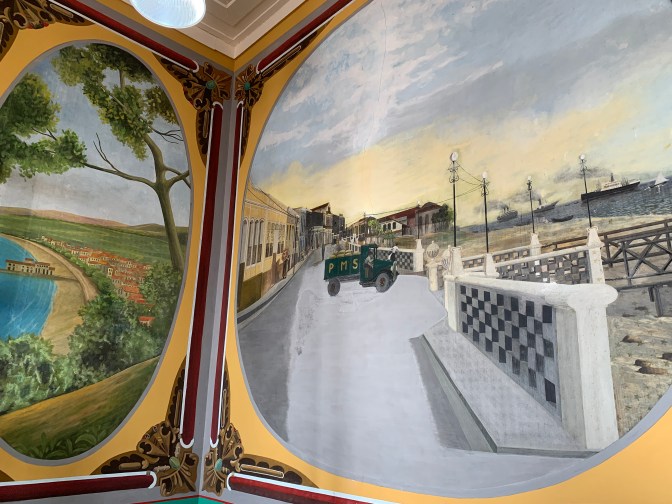
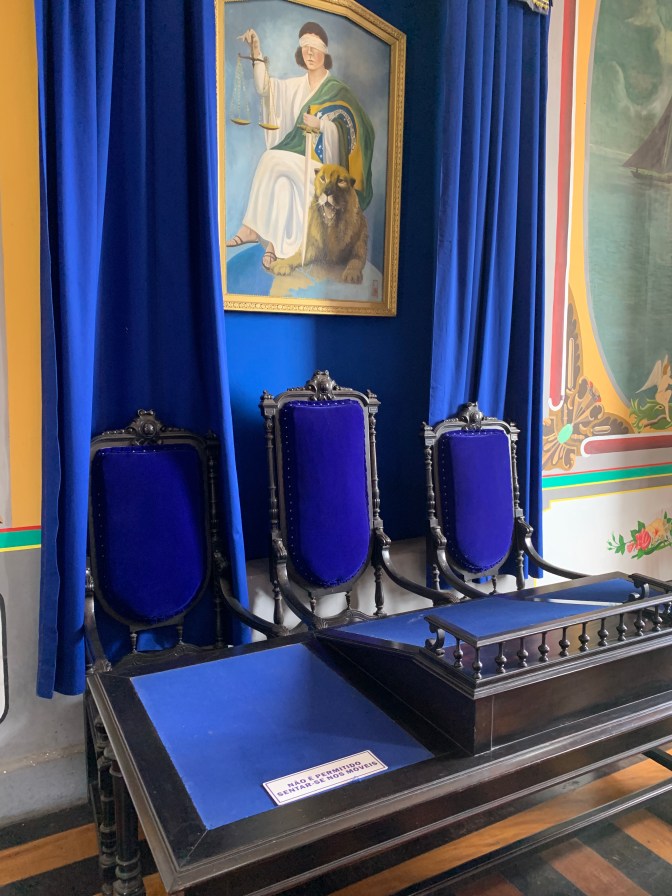
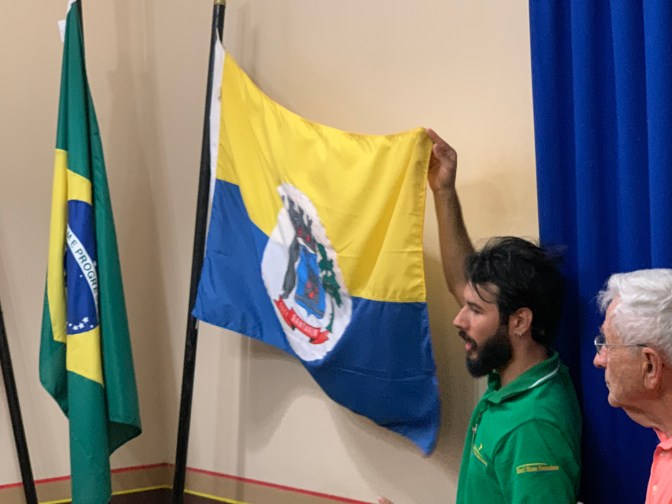
Opposite the beach area, was the museum with it’s extensive Tapajo archaeological collection (2000+ yrs old). The building was the City Hall in 1926 until the unpopular mayor was shot in his office. The museum was opened in 2015. The entry hall had pictures of all the mayors with the room on the right having terrific wall paintings similar to those that adorned the cathedral prior to the whitewash. The rooms to the left were filled with cases of archaeological clay artifacts, including ossuary bowls and figurines. It was interesting to hear that the flag of Brazil that has a central blue circle on a yellow and green background with stars in the blue circle representing the states. Above the banner is a single solitary star which represents the state in which Santarem is located as it refused to be part of the union when it was first formed.
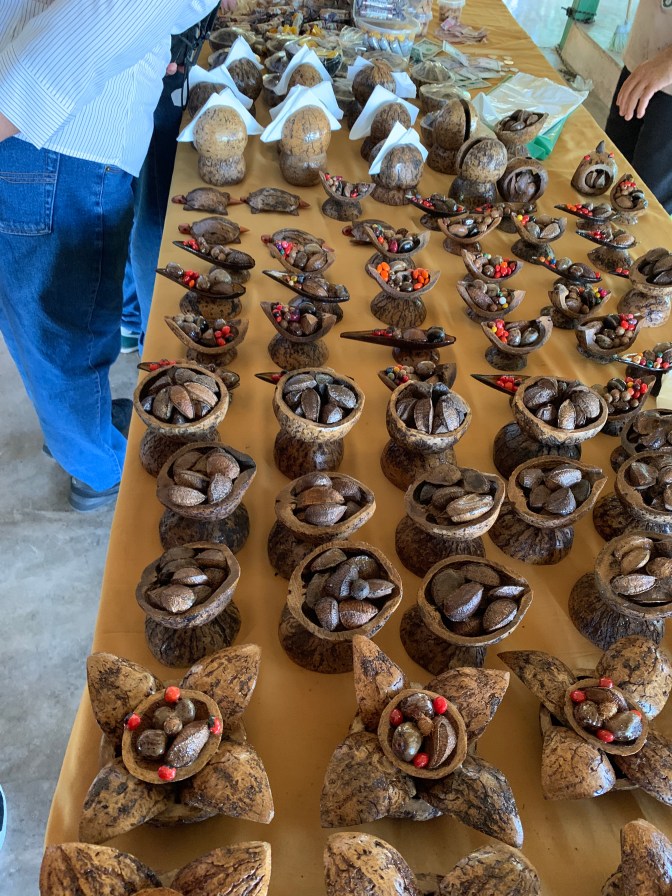
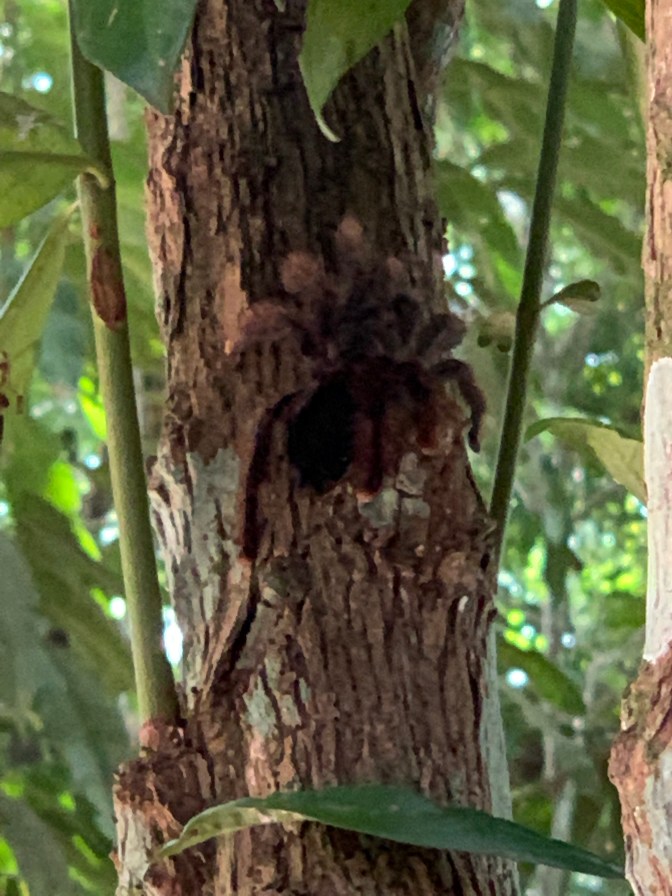
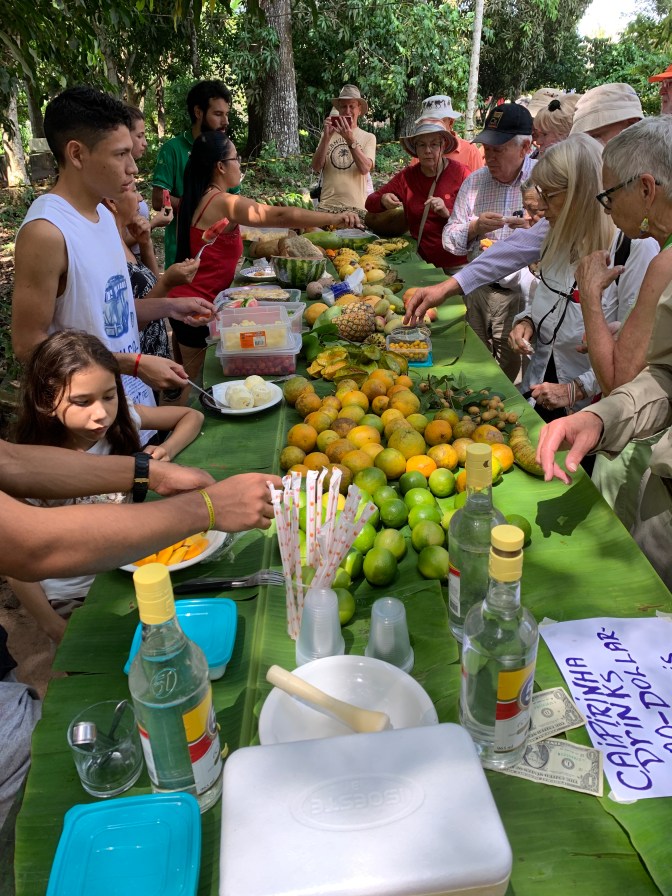
We then took the 1/2 hour coach ride to a home / mock village (Bar do Caio). Here we were shown Brazil Nuts which grow in pods similar to a coconut with it’s green and white outer area removed. When this is opened, some 20+ nuts come out of the pod. It is important not to put one’s hand into the pod to pull out the nuts as there are many animals (that can be poisonous) that bore into the pod for liquid and are released when the hard pod is opened with the aid of a machete. Many items are made from the nut and pod. The next area we saw was all the local fruits, tasting as many as possible. A tarantula climbing a nearby tree added to the feeing if being in the Amazon forest. Next was the rubber tree where we were shown how latex is “farmed” for the production of rubber. There was a collapse in the rubber industry as ecological legislation was enacted preventing the growing of rubber trees in a farm setting. Whereas in Asia they do plant farms and thus produce a lot more. Make sure you do not rest your hand on trees as we saw many poisonous caterpillars or red ants or other such animals, often not readily visible due to camouflage, on the trees or other shrubs.


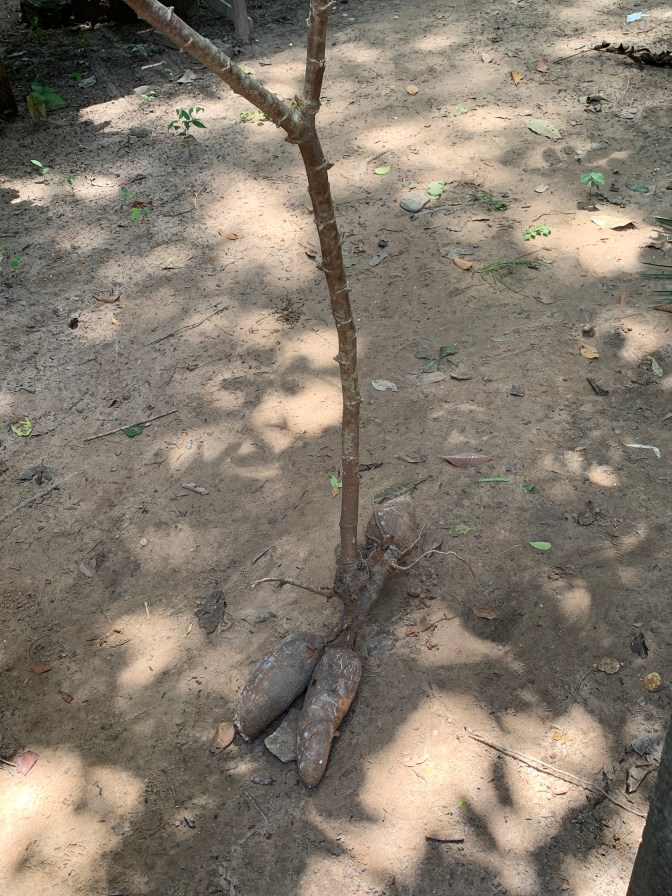
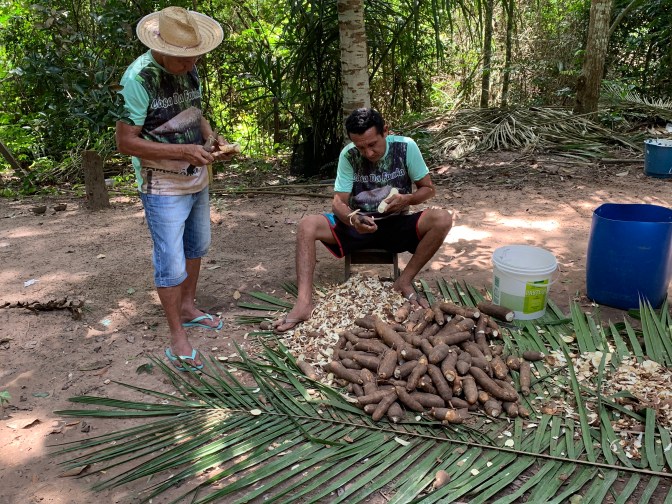
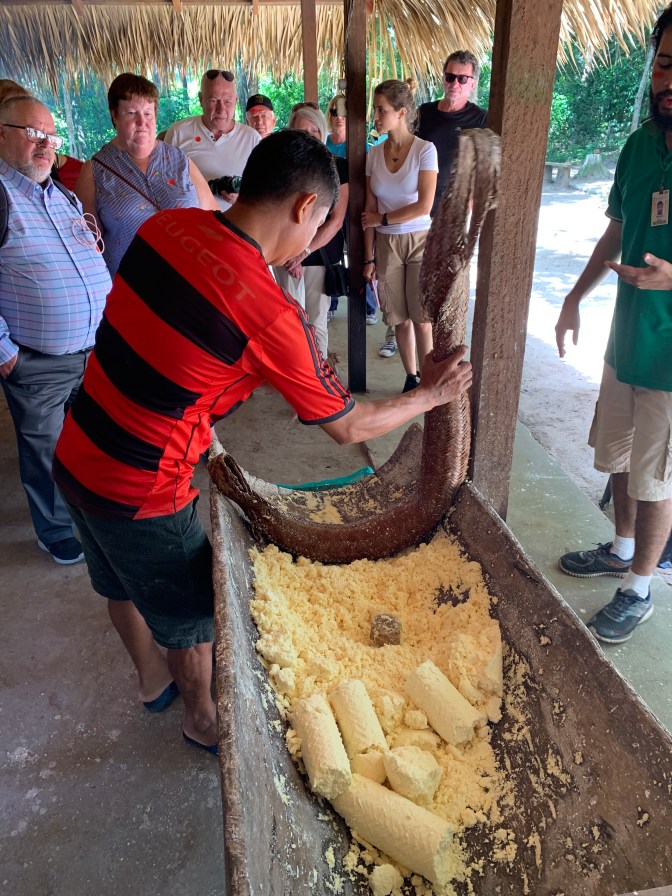
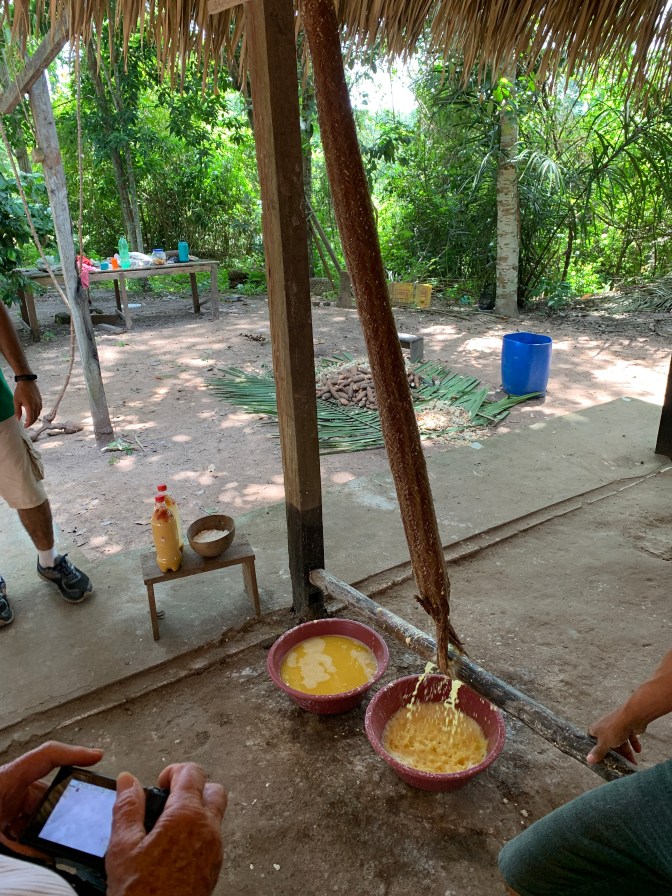
Our final area was Manioc / Cassava / Tapioca production. Here the tubers growing from the roots (like potatoes) are removed – The trees are then re-planted and grow more Cassava. These tubers are then soaked and the woody skin peeled. The peeled potato like pieces are then shredded with a manual shredder. The pieces then have to have the liquid completely removed as it is poisonous. Thus it is put into an “anaconda” – a 6 foot tubular wicker structure which is then filled with the manually squeezed chips and hung to a tree. The other end is passed through the bottom and wedged against a tree extracting the remained of the juice by sitting on the lever like pole.
The poisonous liquid is then cooked for days in a special way and the resulting “sauce” (now edible) is used as the sauce for all fish and neat dishes in the area. The liquid has small pellet like it’s that sink to the bottom which when dried (all liquid removed) is Tapioca.
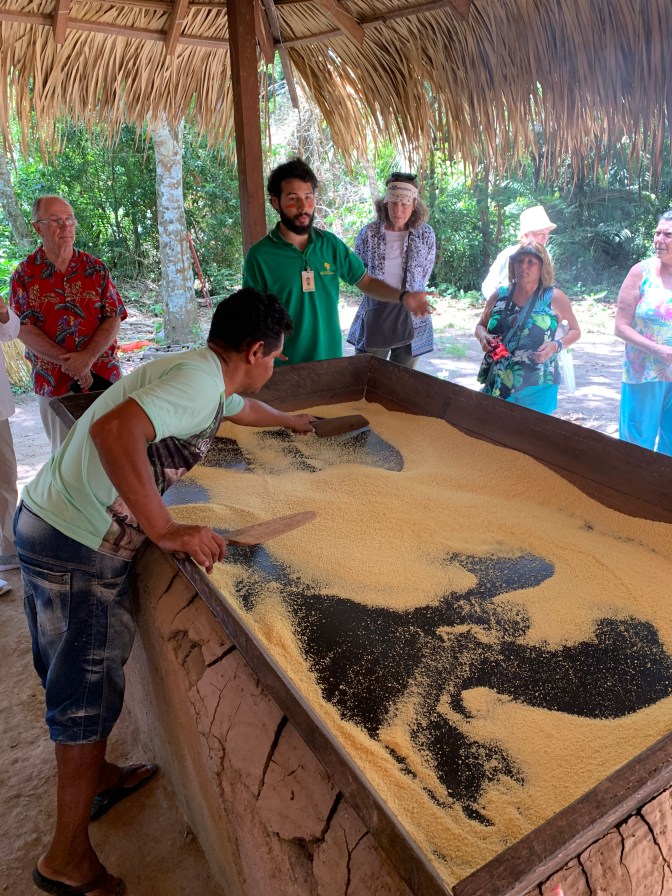
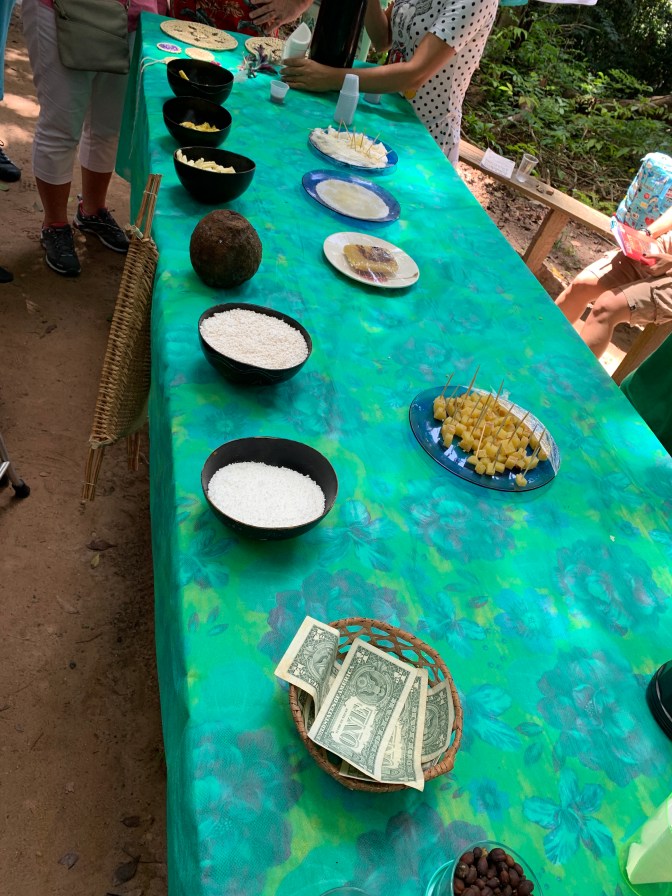
The dry remains that come from the “anaconda” press, are the sieved and placed on a 5ft X 3 ft “griddle” (metal plate with wooden fire underneath to heat it) and the Manioc is further dried until no liquid is left. This crunchy “couscous” like grain can be eaten as such or ground into flour (farina de maniaca). When “fried” with finely chopped onion and garlic it becomes “farofa” which is used as a topping on any meal containing liquid – such as beans in the traditional Brazilian dish – Feijoada.
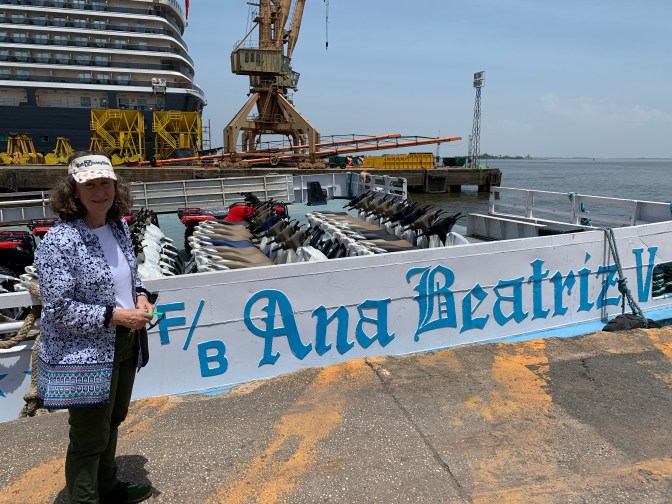
We returned to the ship where a local “river taxi” was docked with the name “Ana Beatriz” especially in Anne’s honor!!
This evening we went to the Indian “Coriander” alternate dining place and then watched part of the Super Bowl – including the Jennifer Lopez / Shakira half time show. Super Bowl Sunday where Kansas City Chiefs beat, in a tough fought match, the San Francisco 49’rs. We also watched part of the Australian tennis final which was won by the Serbian over the young Austrian in 5 hard fought sets.

 Roger & Anne Travels