Sunday, February 09, 2020 – Rio de Janeiro
A very early start to the day as we were up on the balcony by 5 AM watching the sailing into the Rio de Janiero Bay and eventual mooring of the ship in Guanabara Bay where we will remain for two days. Thus is in the Mauá Port and Square Area, near the Museu da Amanhã (Museum of Tomorrow). While the driver – Helcio Fraga (a local DJ in the clubs and private tour guide friend of our driver Luis from last visit +21-98255-9633 & +21-98611-1340 fragatour.fio@gmail.com) had suggested we meet at the Mauá Square. The ships usually dock along the 5 or 6 Almacem (warehouses) and the Square is past #1 and we docked between 4 and 5, so it was about a mile walk, but we made contact and enjoyed 2 excellent days with him. He speaks Spanish and was an English guide to the US Olympic Team in the Rio Olympics.
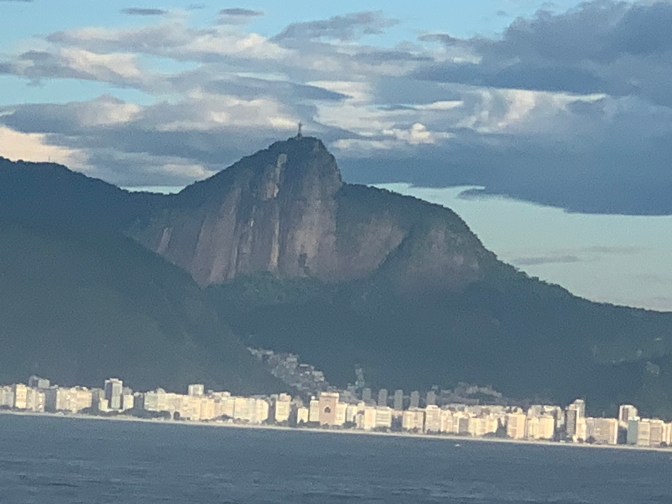
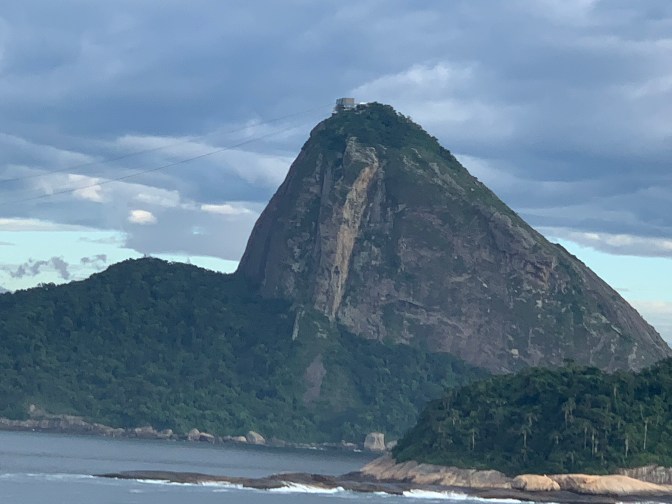
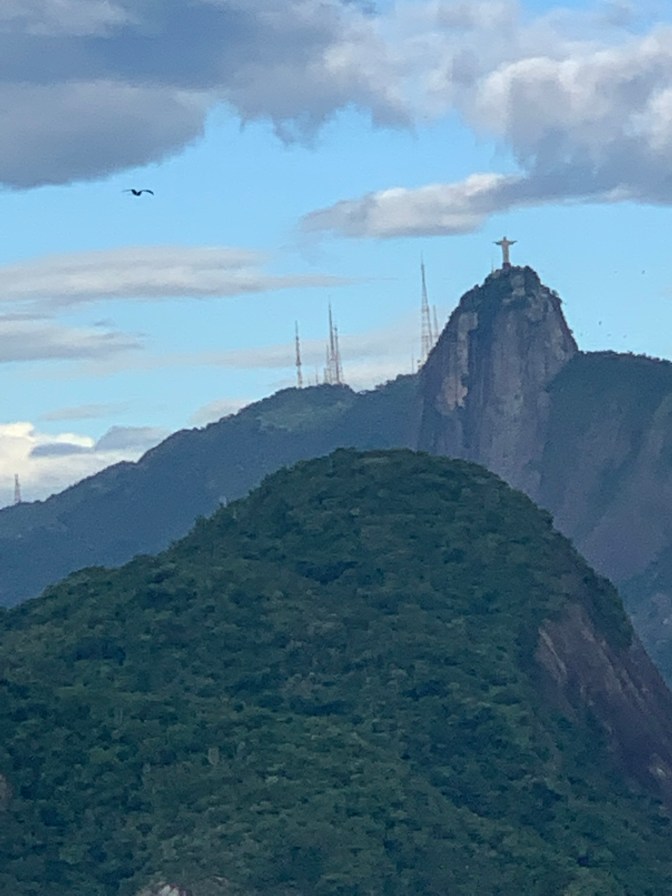
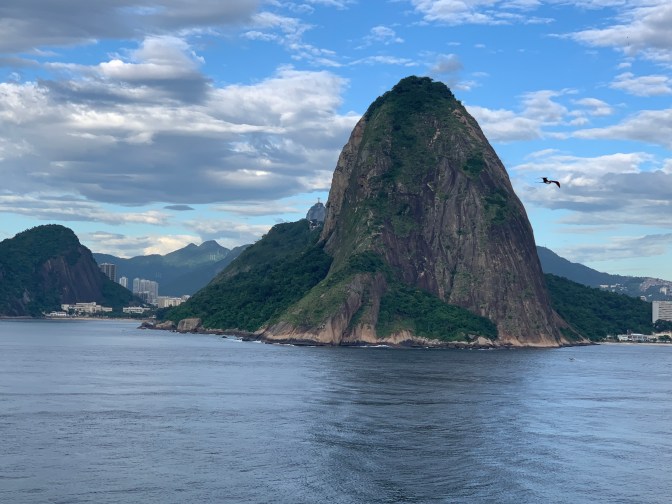
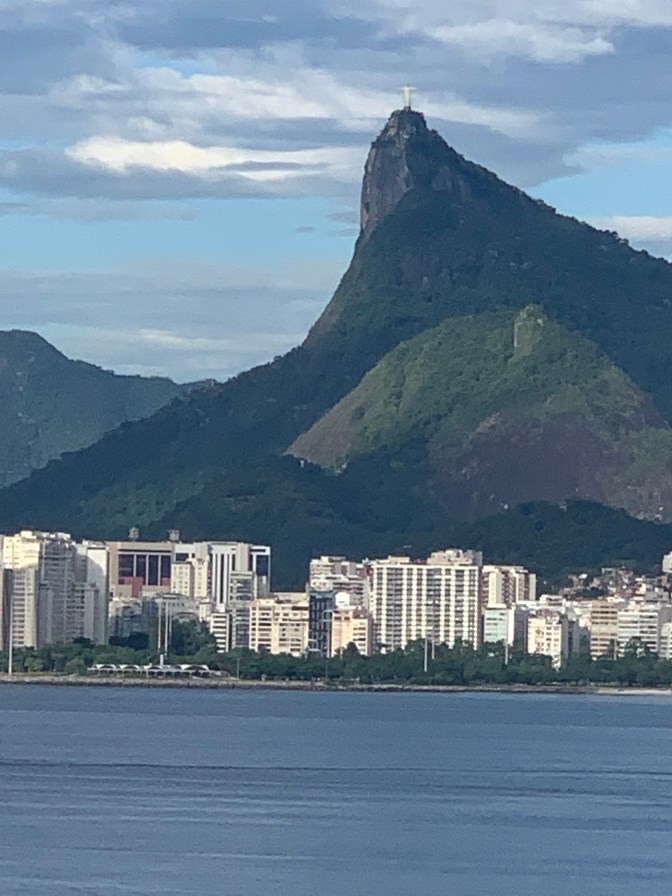
Entry into the Rio Harbor is one of the most spectacular seaport anywhere in the world and worth getting up early to experience. The only other bays I have visited of similar beauty are Sydney and Hong Kong. The initial approach was directly towards the harbor followed by a 90° turn to starboard for an amazing view off the Port side of Leblon, Ipanema, Copacabana, Botafogo bays and eventually into Guanabara Bay, keeping Corcovado / Christ the Redeemer statue in sight and passing right behind Sugarloaf (Pão de Açúcar) mountain. The cascading mountains, tropical vegetation and golden wide beaches on the South Atlantic Ocean make it a spectacular sight never to be forgotten.
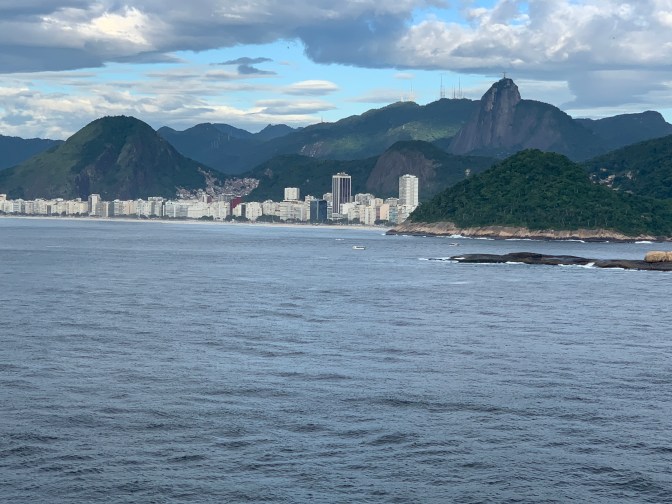
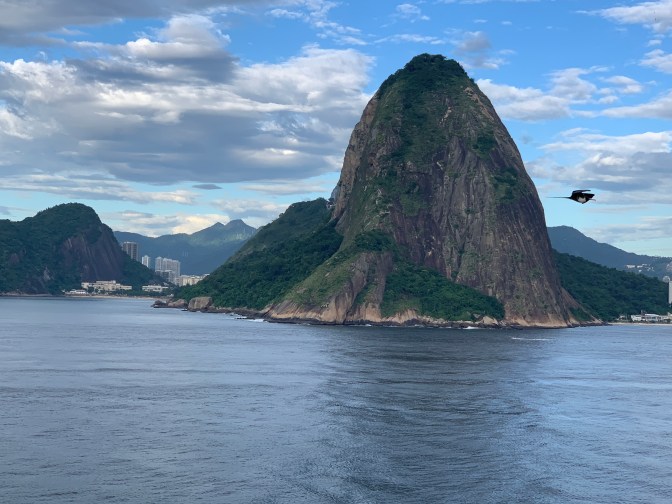
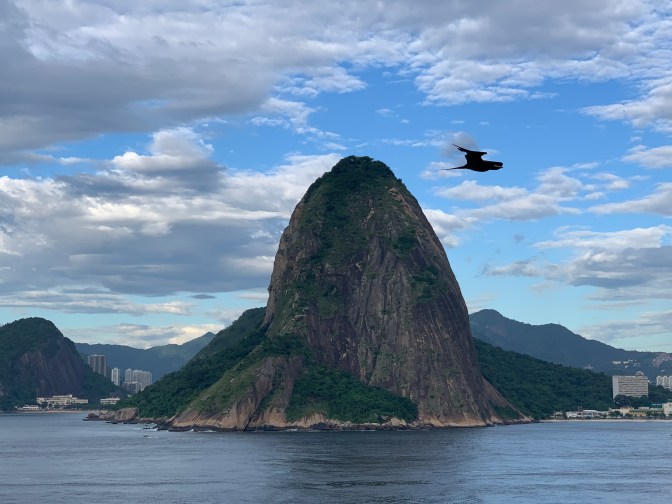
The full name of this State Capital, past Capital of Brazil (1763 to 1963) and second most populous city (6-7MM) is Cidade de São Sebastião do Rio de Janeiro. The world knows Rio as the center of (pre-Lenten) Carnaval which enlivens the city both day and night. Already we could see the Samba Stadium being readied and people in the streets already starting to get into their outfits as it is only a week away. São Paulo is the Country’s Economic center, Brasilia the Political center but Rio remains the cultural and international symbol of Brazil. While, unemployment is high and crime exists, particularly in the “Favelas” (shanty towns), it is still one of the most beautiful settings of a city anywhere in the world.
In January 1502 Portuguese Ships sailed into the Harbour which they assumed was fed by a major River estuary, thus the name – January River (Rio de Janiero). The French had settled nearby but were expelled after 2 years. The first settlement / town was settled in 1568 with Pão de Açúcar so named as Sugar, a major export, was sold in mounds of the same shape. By 1749 some 24,000 inhabitants resided in Rio and a great attraction of nearby gold, diamonds and other stones eventually made this the most important city and thus the capital in 1763.
The Portuguese monarchy (King João VI) resided here after exile in 1807 during the Napoleonic period until 1821. Subsequently, his son Pedro I (Peter) declared himself Emperor. He was incompetent spent too much time with his mistress (he built her a castle in Petropolis) and abdicated in Favor of his son Pedro II who ruled Brazil well from 1840 to 1889 during which time Rio and Brazil flourished. Both emperors were crowned in the old cathedral in Rio and used the summer home in nearby Petropolis where many of their descendants still reside today.
On 15 November 1889 soon after the Slavery ended, the monarchy was overthrown and Brazil became a Republic.
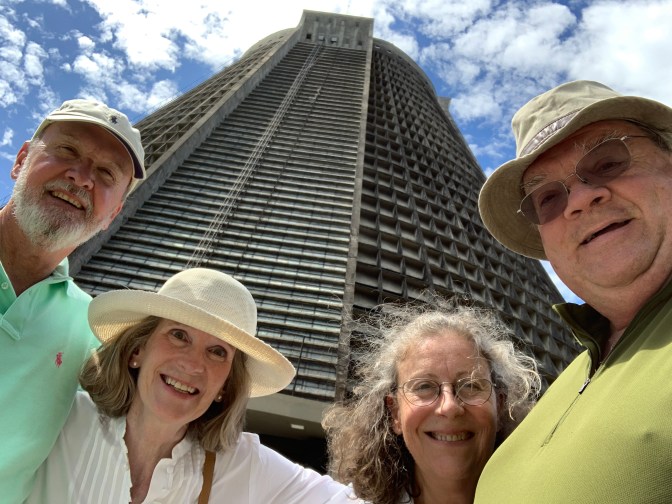
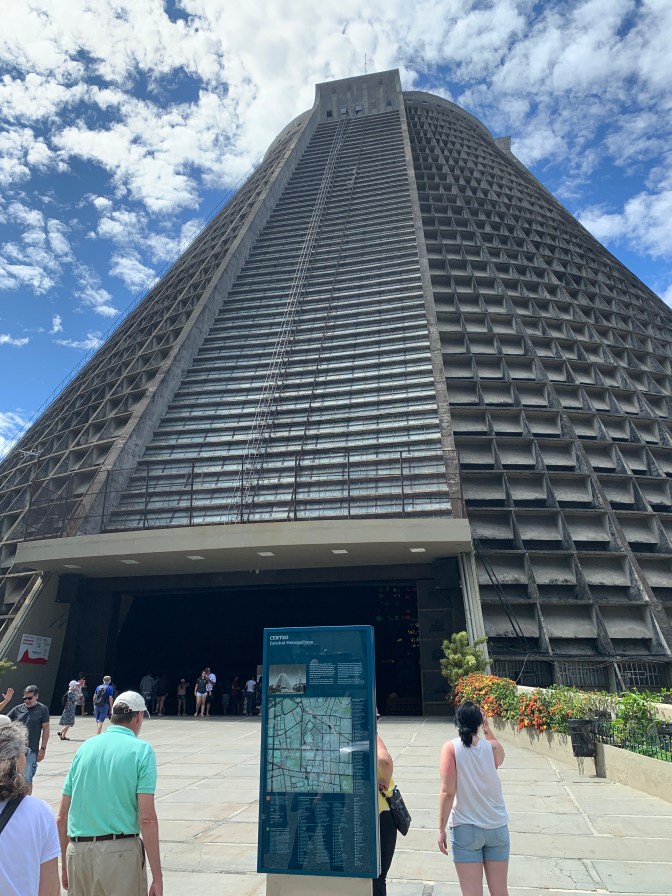
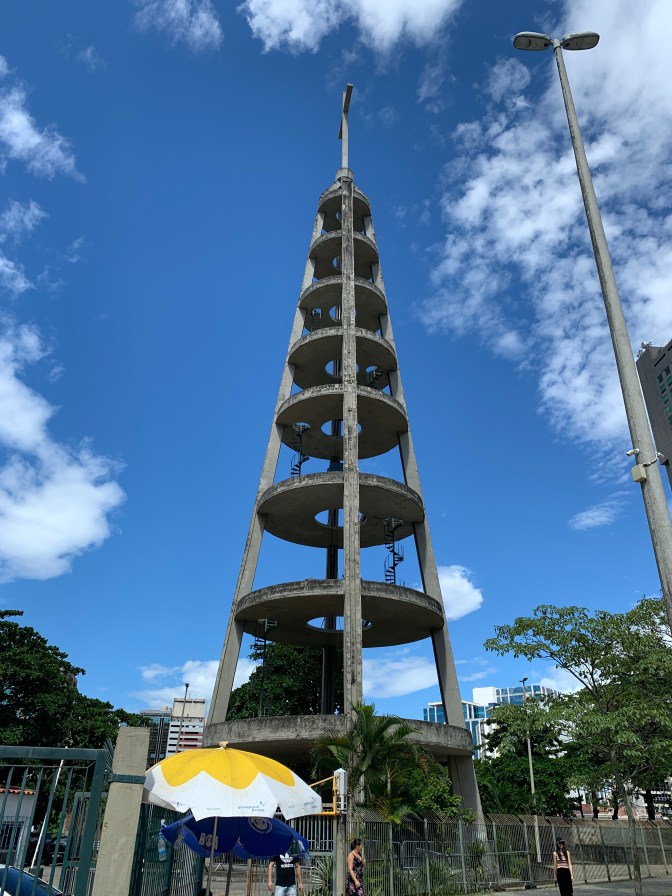
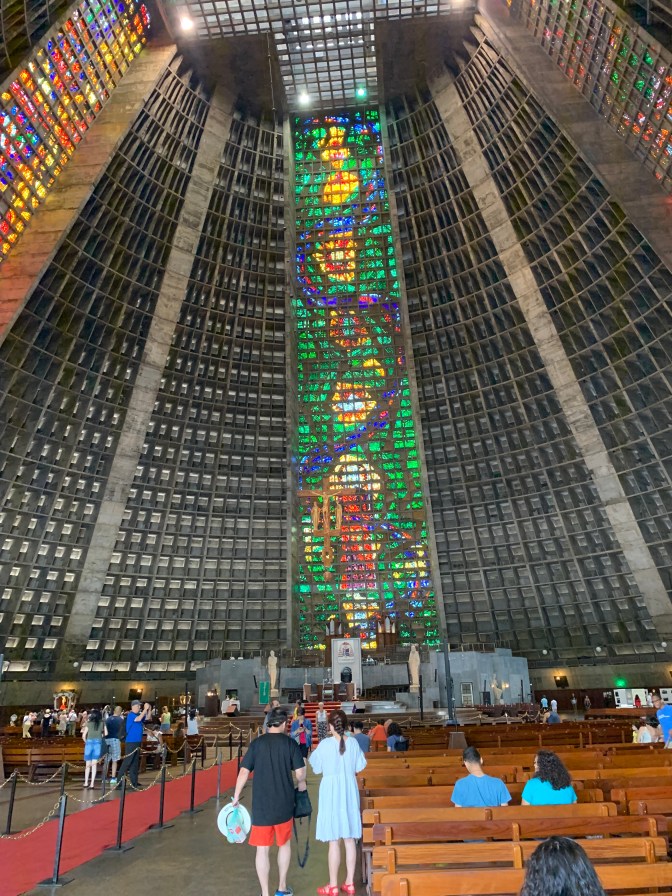
As we had our private driver we were able to set out our own schedule, so we first went through the downtown area to the Cathedral. The new Cathedral, completed in 1976 has a capacity of 20,000 worshipers, it is shaped like a pyramid 270 feet high and 315 feet in Diameter. Very impressive stained glass windows go up the center roof which is a white (natural light) cross. An interesting wooden crucifix with Christ on the cross accompanied by St. John and Mary his mother.
We then drove past the old Aqueduct to the yellow tiled steps to Ruinas Park where there was an amazing panoramic view of the city. Jackfruit trees with their massive obnoxiously smelling fruit were guarding the entrance. It was the home of Laurinda Santos Lobo where guests were entertained with music and poetry. Since 1996, the city runs this place that has an art museum. Almost next door is the Chácara do Céu museum which we did not visit.
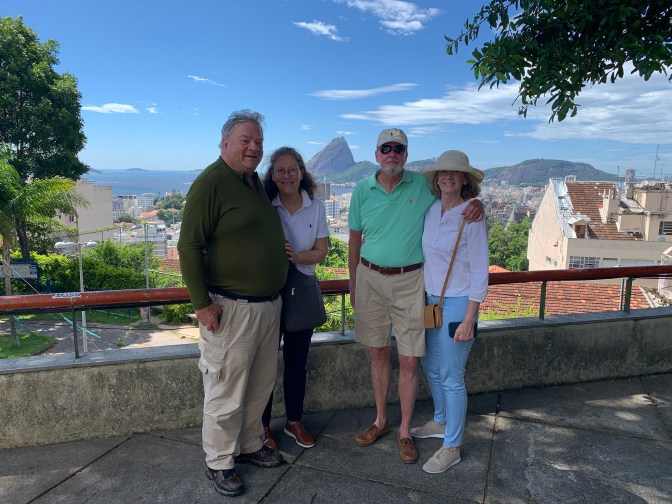
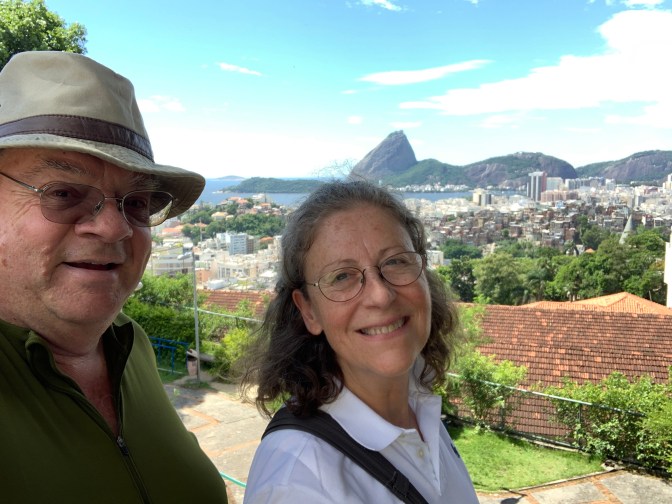
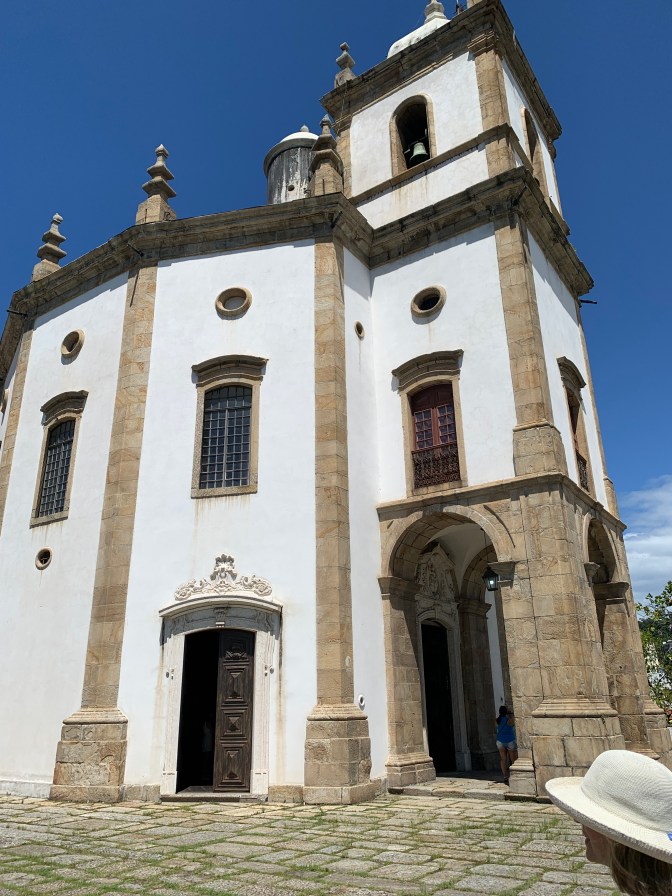
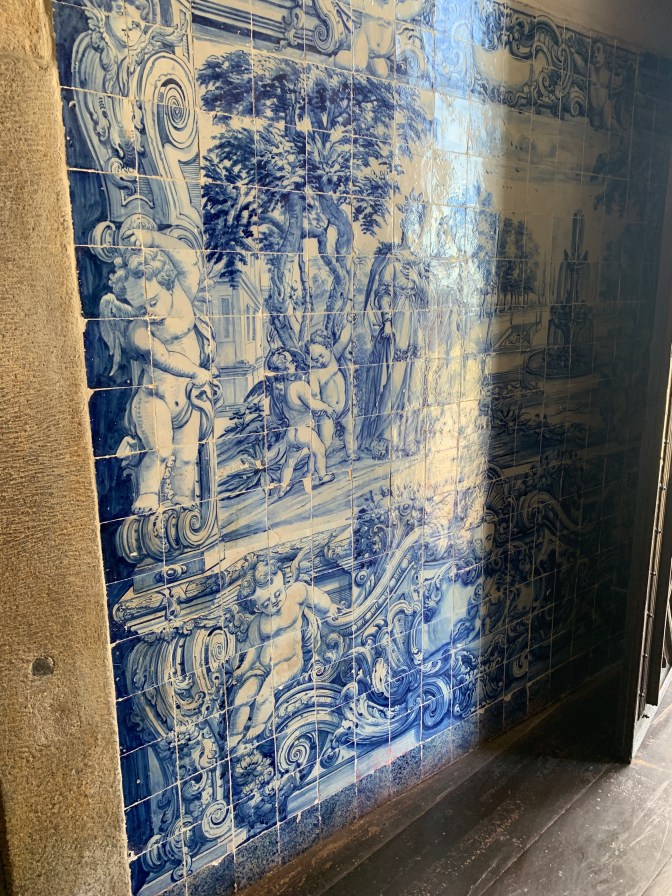
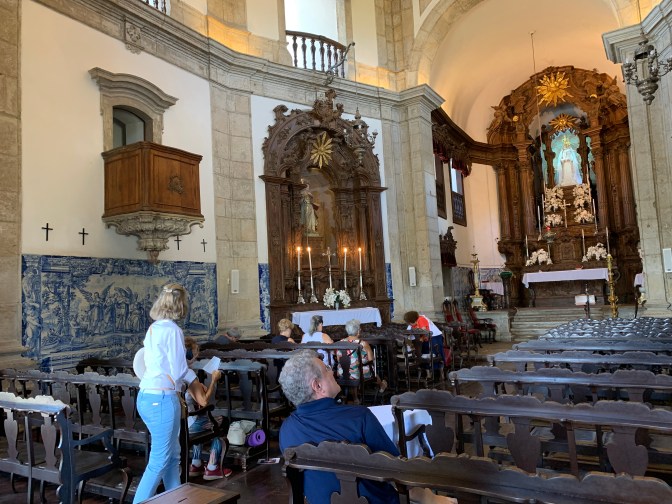
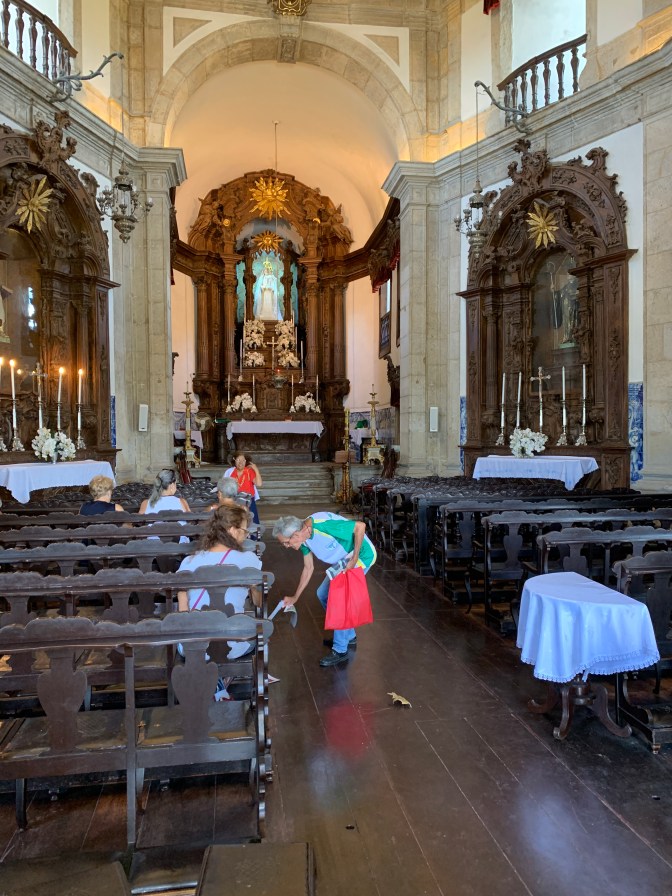
Next was a visit to Igreja do Outeiro da Glória (The Gloria Church) in the Neighborhood of the same name. A relatively simple, but elegant church with spectacular blue tiles and another great view.
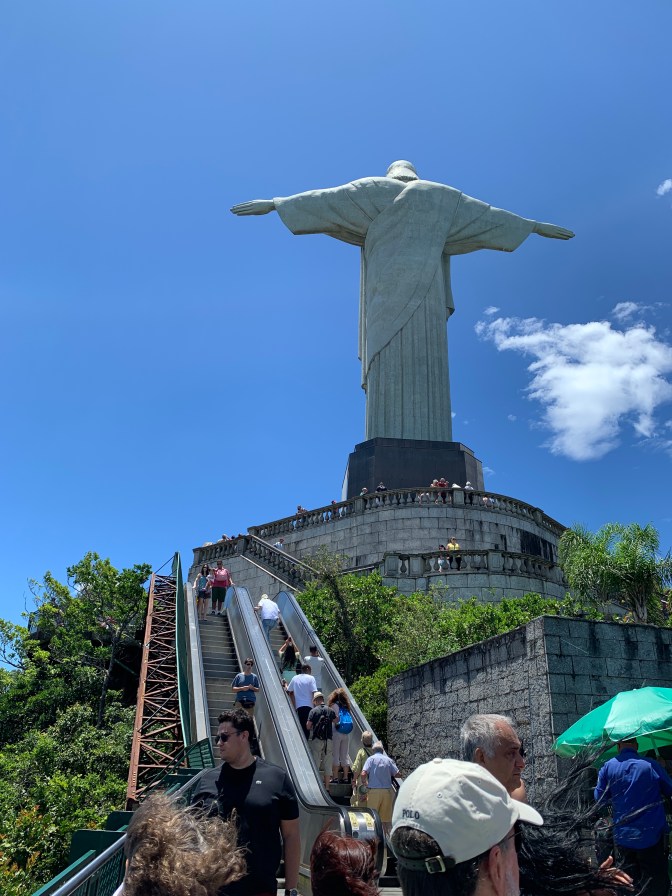
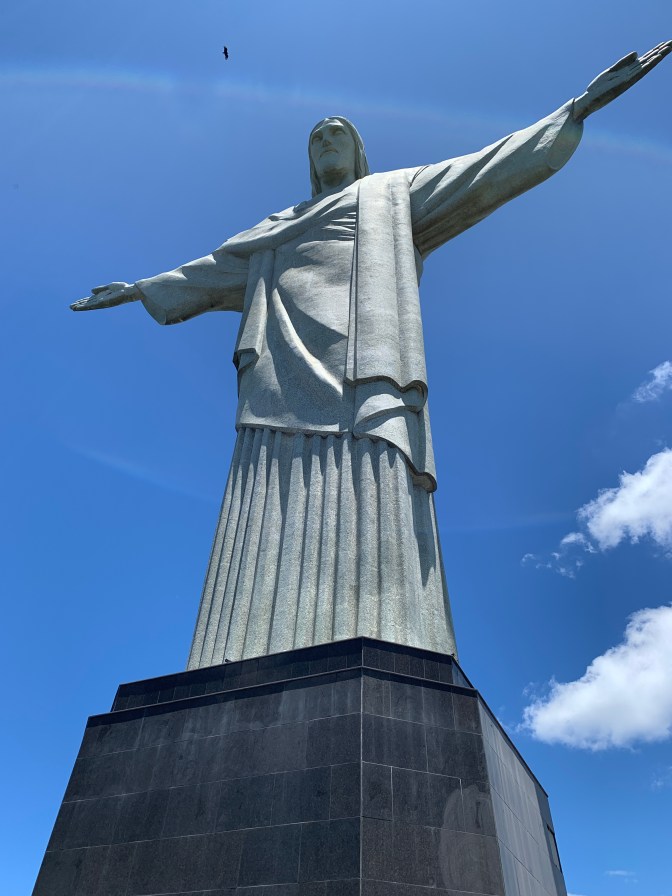
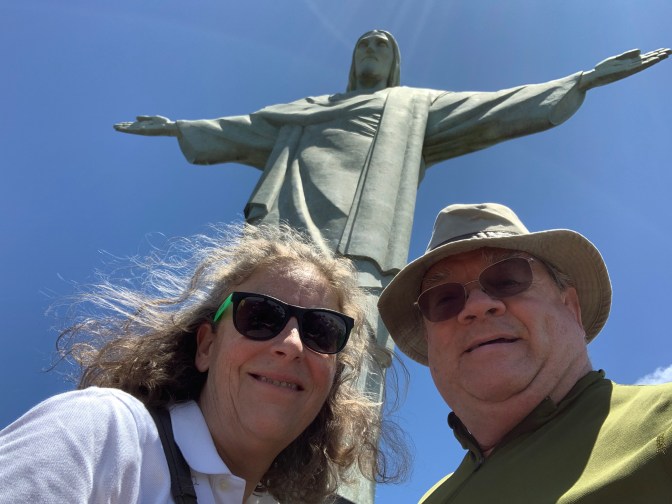
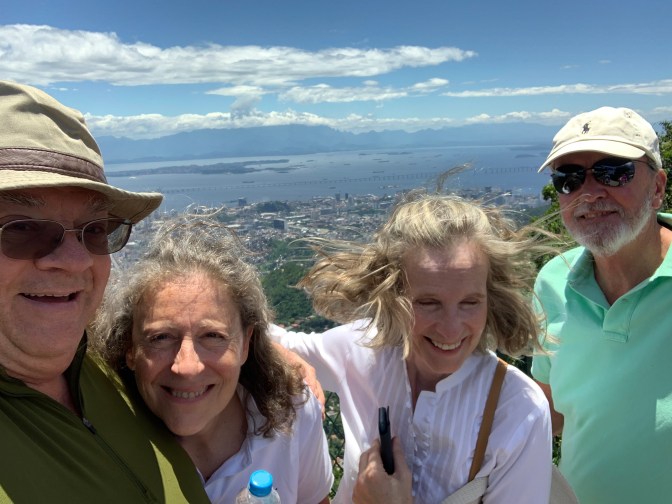
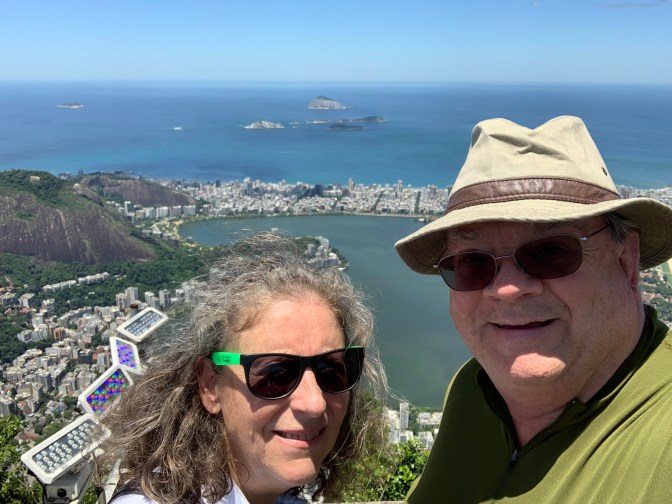
We made our way to one of the “must see” sights of Rio – The Statue of Christ the Redeemer on top of Corcovado (hunchback) mountain in the Tijuca National Park. There are various methods of reaching the top, but the best is the Corcovado Train. Others are Walking, a long way to the top of the 710 meters (2,330 Ft) mountain, or you can drive to a certain point then walk, train or minibus, or take a mini-bus to the top. The first time I went up some 40 years ago, I took a taxi to the top – which is no longer permitted! This time though, The train trip we took, is best booked and paid in advance as when we arrived at 11 AM, the next available slot was 1pm, which would have required a long wait. A word of warning here. I booked and purchased tickets for “Senior Citizens” as the four of us were all over 60. When we arrived at the ticket office, they demanded to view the credit card with which I had paid and the official photo ID that I had said I would present when exchanging the coupon for the actual bar coded tickets. It was somewhat of a surprise that the ticket collector said, that rate was only valid for Brazilians and thus we had to pay US$75.00 more to get onto the Swiss made funicular / cog-train. A big surprise!!! Nevertheless, the View of City from the top and the forest that you go though getting there, made it all well worth while. The statue itself, with it’s chapel at the base is enormous. It was completed in 1931 and is 125 feet (38 meters) high and weighs 1.145 tons. One can see the lakes, horse racing track, all the beeches, Santos Dumont (downtown) airport and indeed virtually all of Rio.
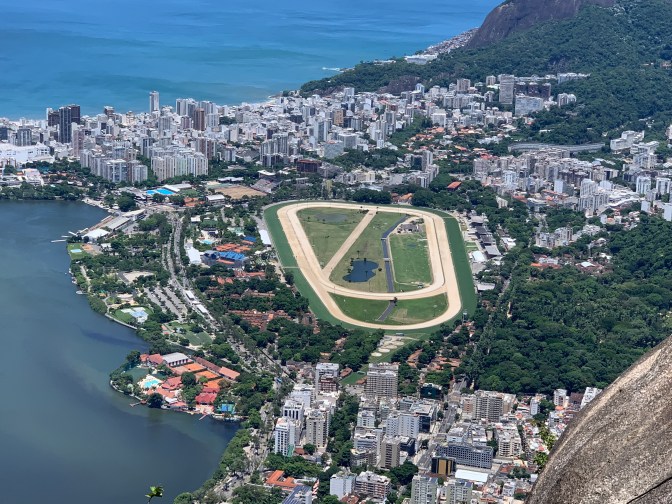
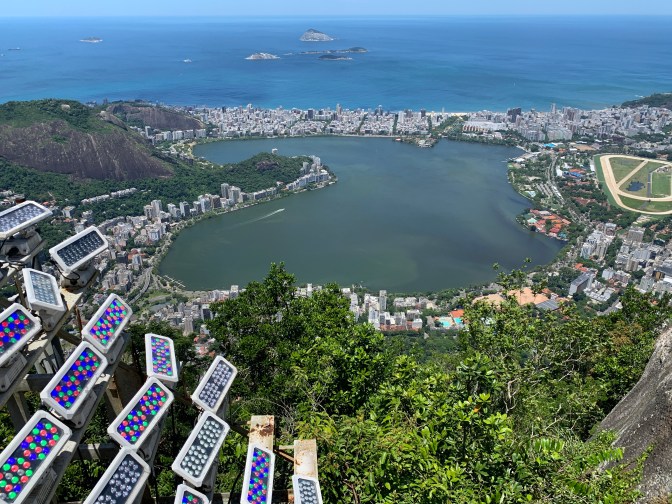
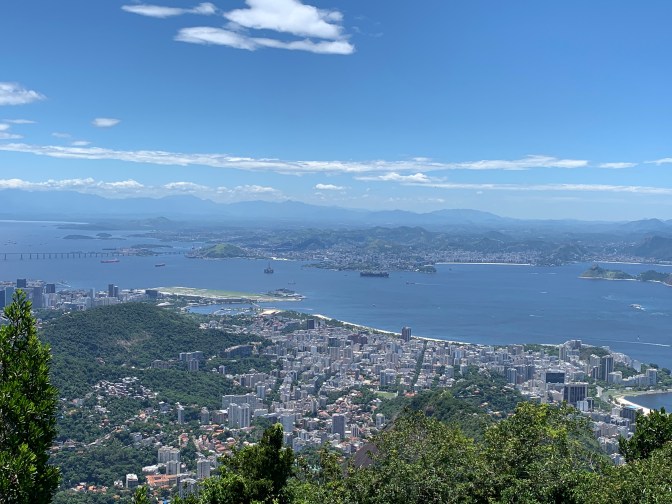
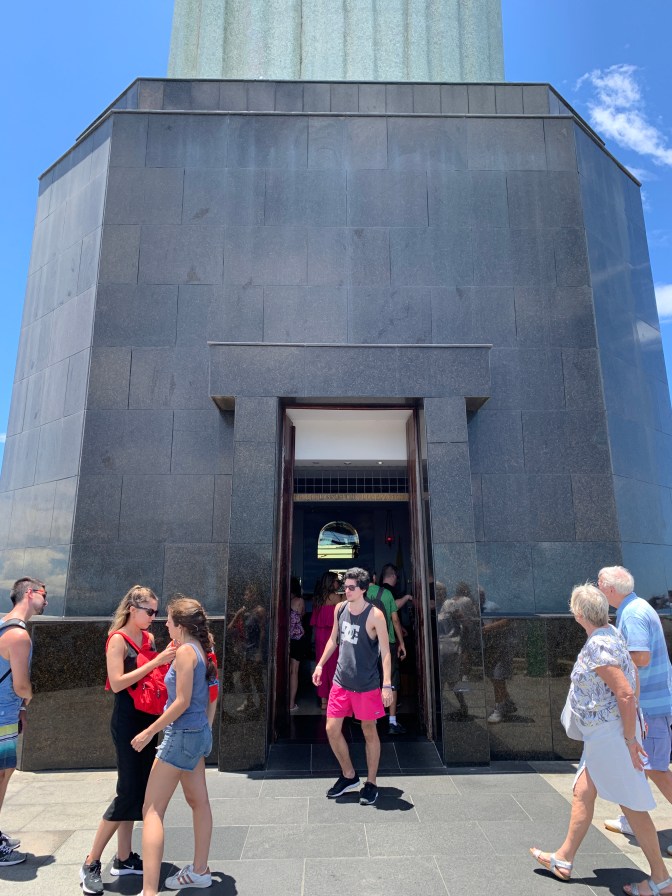
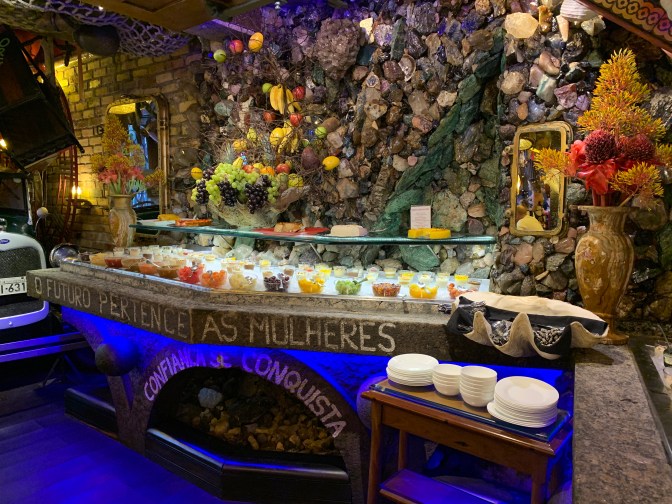
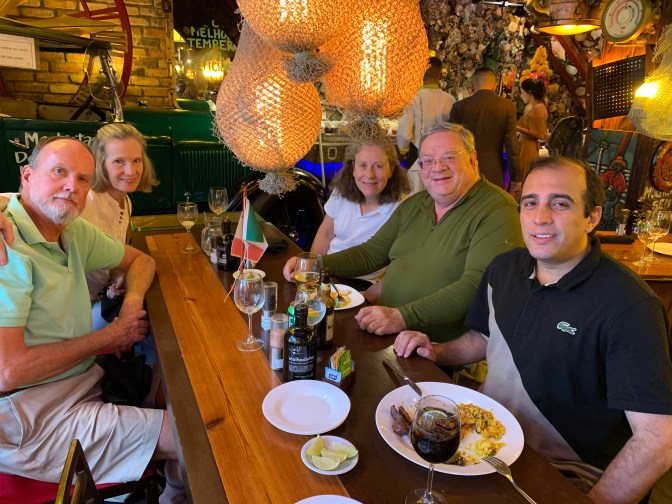
We then travelled to the Beaches – Ipanema and it’s neighborhood, Copacabana (missing Leblon beach). We had Lunch at Marius Degustare (Av. Atlântica, 290; Rio de Janeiro) a Rodizio of salads, feijoada, meat and seafood located near the 1914 Fort of Copacabana (now a military museum) on Leme beach at one end of Copacabana – https://marius.com.br/es A Pricey (US$50 pp all you can eat) but fun place with extraordinary decor. One meal there can fill you for the day.
After a delicious lunch, we took the short trip to Pão de Azucar (Sugarloaf Mountain). This gives you the opposite perspective from Corcovado. Namely, Corcovado is behind the city looking out to sea and sugarloaf is an island in the bay looking back at Rio and in the background – Corcovado. This granite “rock” rises to 1,293 feet (394 meters) out of the water. The summit (originally climbed by an English Woman in 1817) is reached by two – 3 minute cable car rides. The first, leaving from the military Neighborhood around Praça General Tibúrico just off Avenida Pasteur take you to the summit of Morro da Urca at 715 feet (218 meters) high. A brief walk, past shops (Lojas) and eating places, brings you to the second cable car which takes you the remainder of the roughly 500 feet to the summit. Tickets can be purchased at the machines at the base and different options are available depending on how “fancy” / VIP you want to get. If you have a fear of heights consider well whether you want to go the whole way. It is easy to observe the start and end of the first ride as it is over the park. The second, seems longer and steeper and is over water. Each Gondola carries 65 people plus operator, so if you feel a bit uncomfortable it is easy to stand in the middle and look down at the floor while the car is in motion.
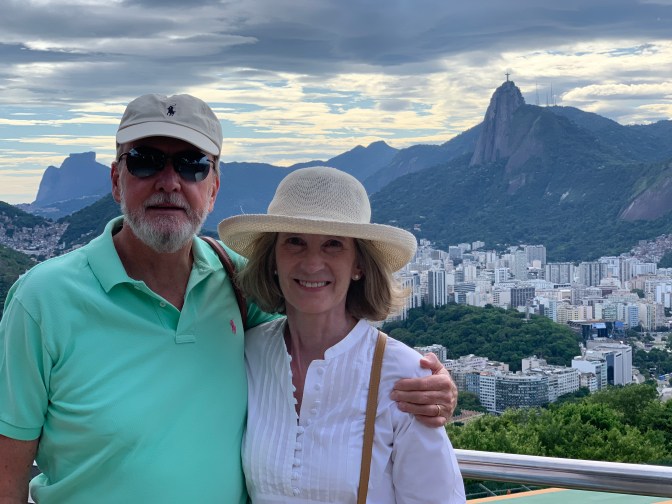
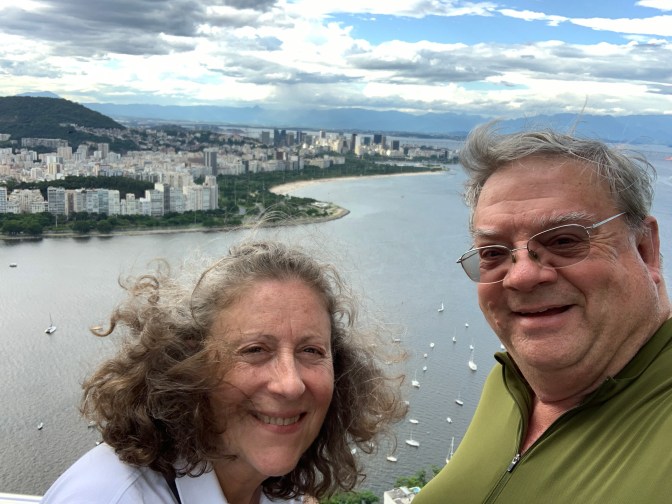
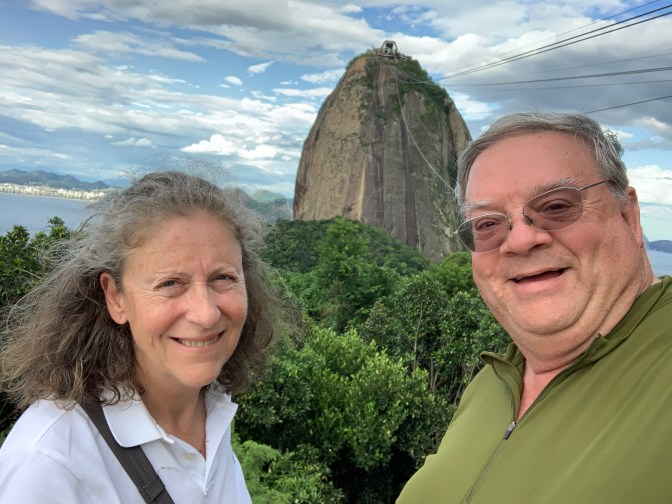
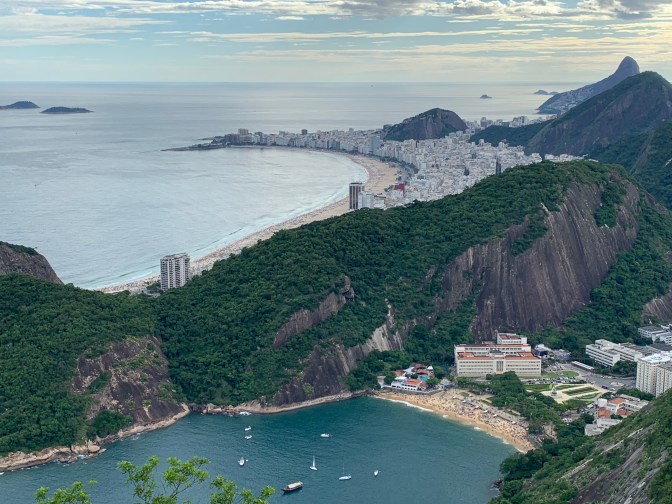
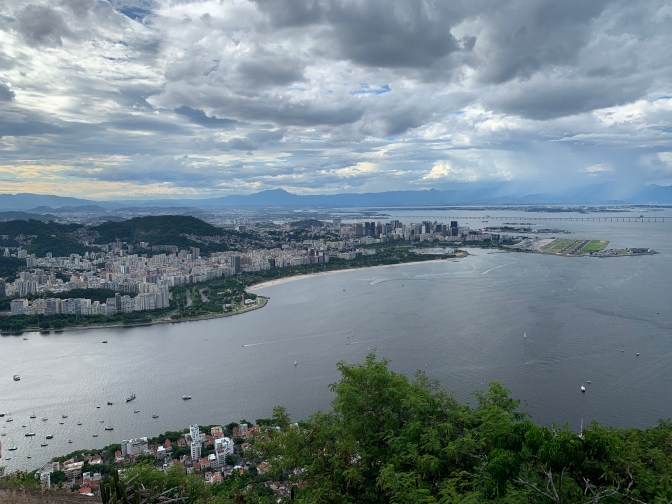
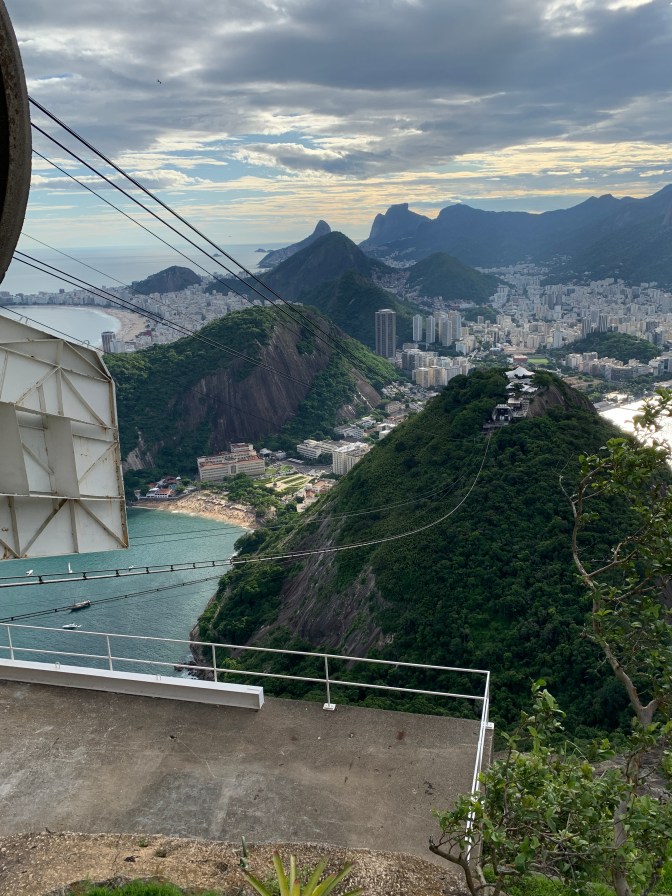
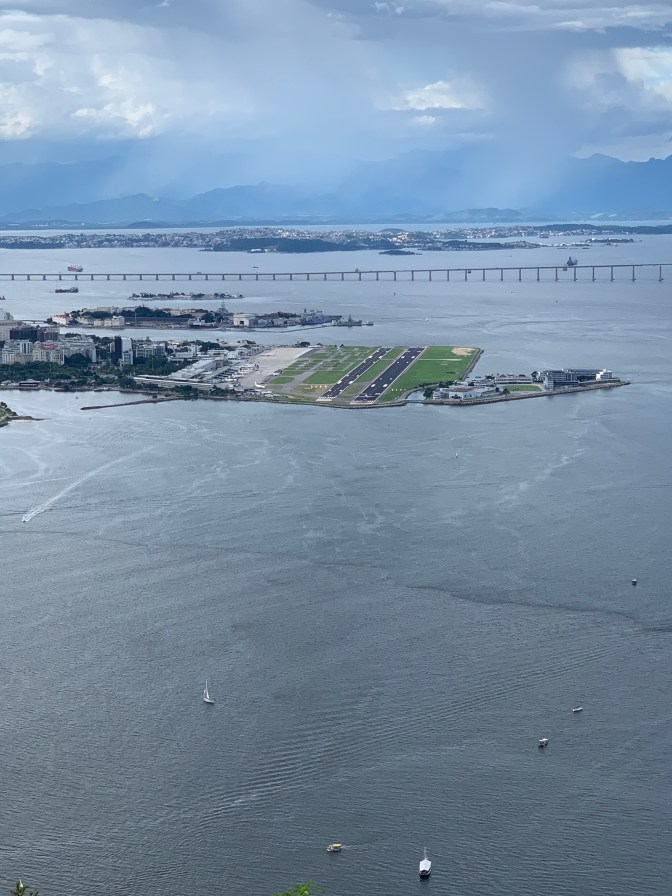
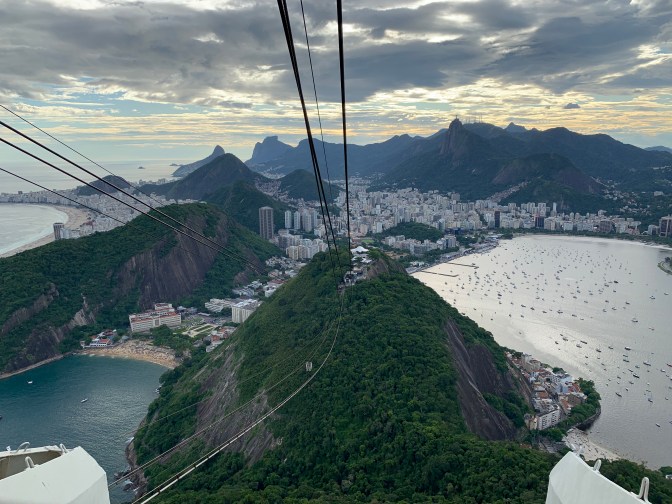
The view from the top is spectacular, with aircraft from Santos Dumont airport taking off directly towards you if the wind pattern is correct. The Botafogo bay with it’s multitude of small boats and few people on the beach due to oil / petrol pollution from the boats, is just below you. Copacabana, Ipanema and Leblon beaches and being Sunday, filled with people, are clearly visible. The city is spread out below you and the Christ Statue in the rear, make the sight a never-to-be-forgotten one. I find the best time to go up is just before dusk, when one can see the city before dark, then stay at the top and watch all the twinkling lights of the city come alive, returning after dark to the bottom.
Time had come to return to the ship as Lolita and John had to pack and we were all tired after a hot (40C / 104F) and stimulating day.
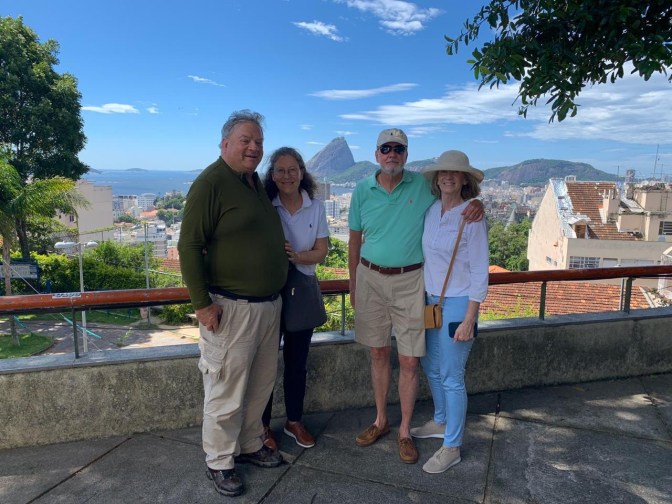
That evening we saw the excellent Samba show on the Ship – Samba Cervila – directed by Junior Cervila (Broadway – Tango Argentino, Evita, Grand Hotel); Choreographer – Patrick Carvalho (Large Samba School Chireographer) included Samba (couples dance), Mulatas (dark skinned girls) with amazing feather headdresses; The Acrobatic Capoeira (a slave disguise of a dance but actually martial arts); Gaifera and Carnaval dances.
We bid farewell to John and Lolita as they leave the ship at 4 AM to catch their flight back to Mexico. Lots of fun times during the 3 weeks we were together on this experience, but missed Diana & Nelson.
Monday, February 10, 2020 – Rio de Janeiro and Petropilis.
Helcio picked us up at the ship and we headed out of Rio to the nearby (1 1/2 hours) ”Imperial Town” of Petropilis. Unfortunately, Monday is not a good day to visit Petropolis, as most things are closed on a Monday.
Our first stop was at the old Casino which was one of the largest anywhere in the country. Of note is that one of the very religious wives of the rulers decided that Gambling was not a good thing and went against her religious teachings, so all Casinos in the country were closed. The building is now a school, a performance space and convention space which was closed for maintenance on Monday.
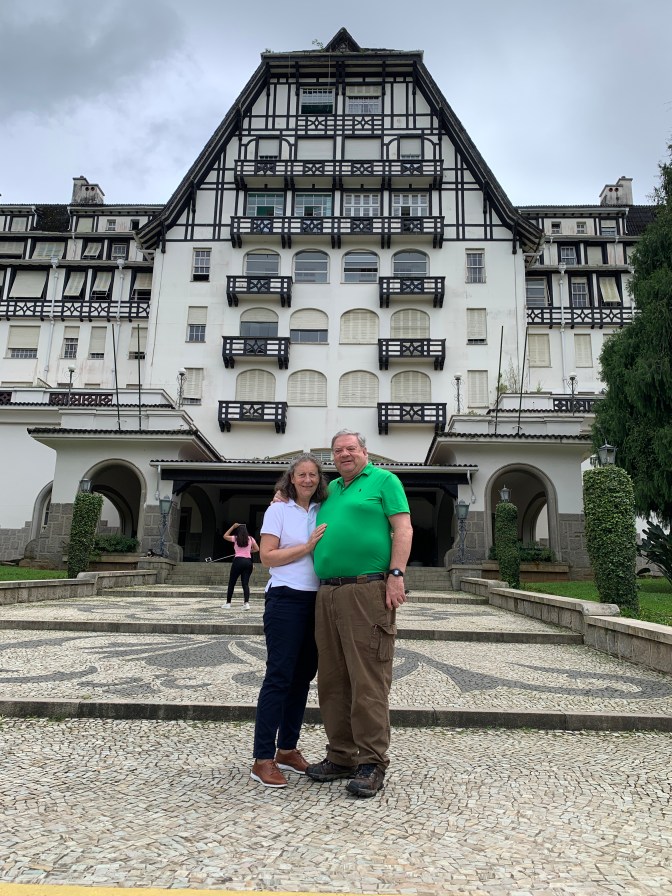
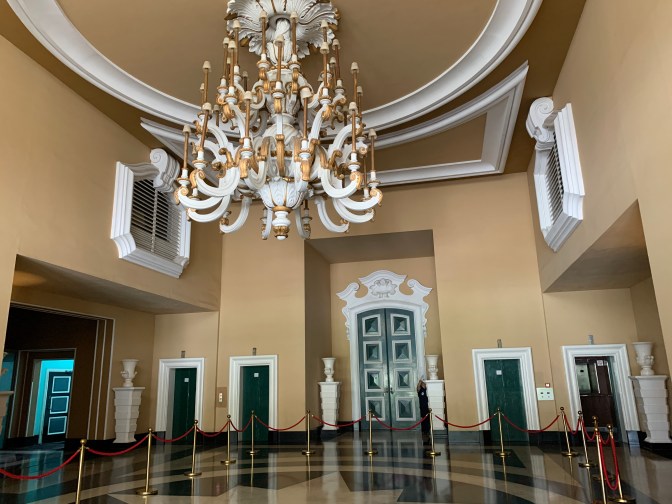
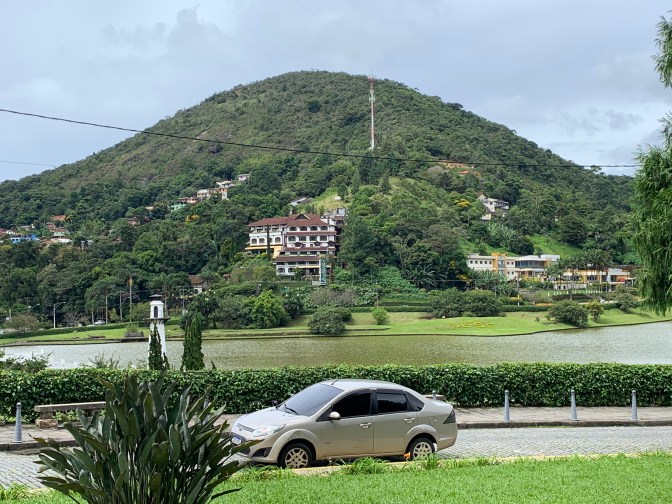
We then went to the Emperors Palace of Pedro / Peter I. Brazil only had 3 kings in it’s history. Joao who came from Portugal during the Napoleonic invasion, his son – Pedro I who was crazy and removed from office, and the grandson Pedro II who was an excellent King doing a lot of good for the country. Pedro I had a lot of girlfriends and built the palace in Petropolis for his girlfriends. It is now a museum, closed on Monday.
We then went to the Crystal Palace as a botanical garden specifically for orchids, once a year there is a large German Party as the town is full of people of Germanic origin. It was closed for general maintenance.
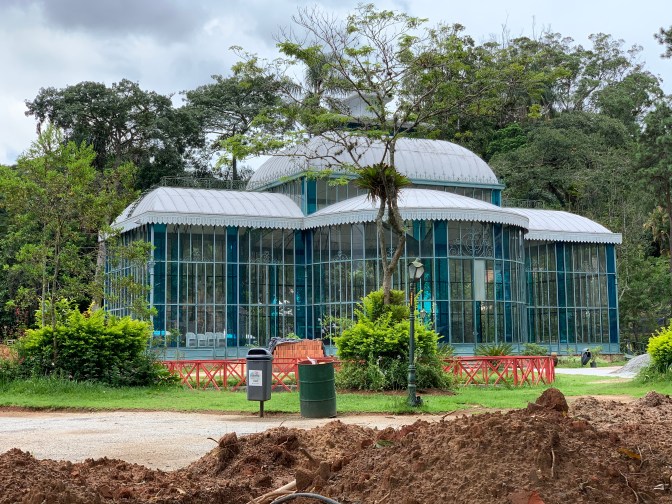
Other places we tried to go to was the Chocolate Factory – Closed; the Bohemia brewery – the first one in the country – also Closed.
We did go to the Fatima shrine at the top of the hill with a tremendous overlook of the city.
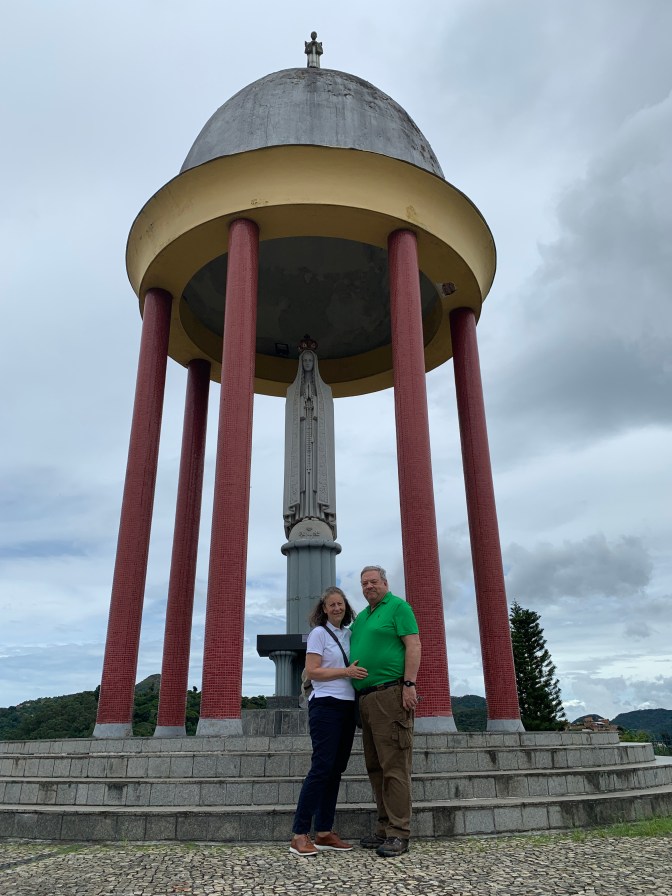
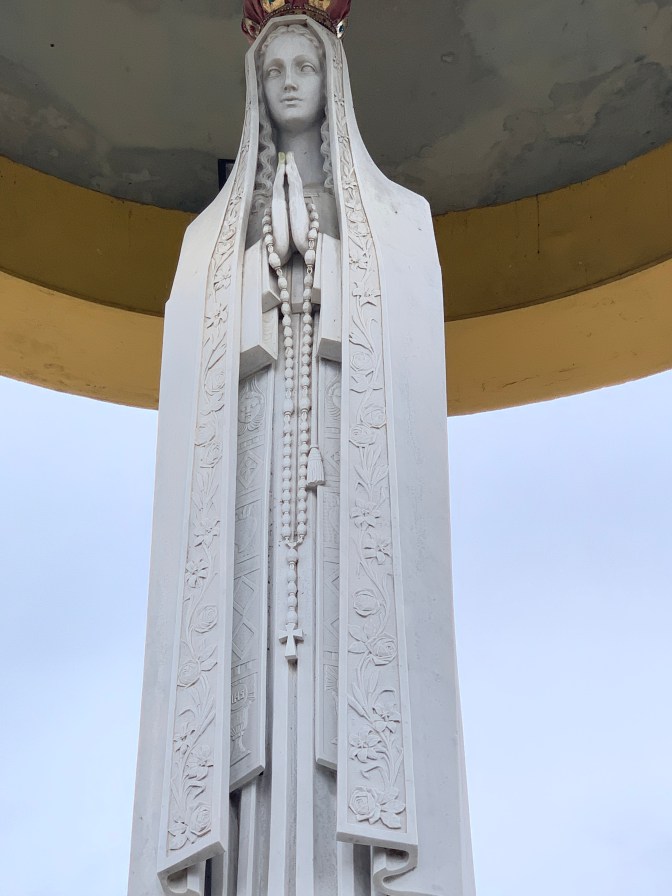
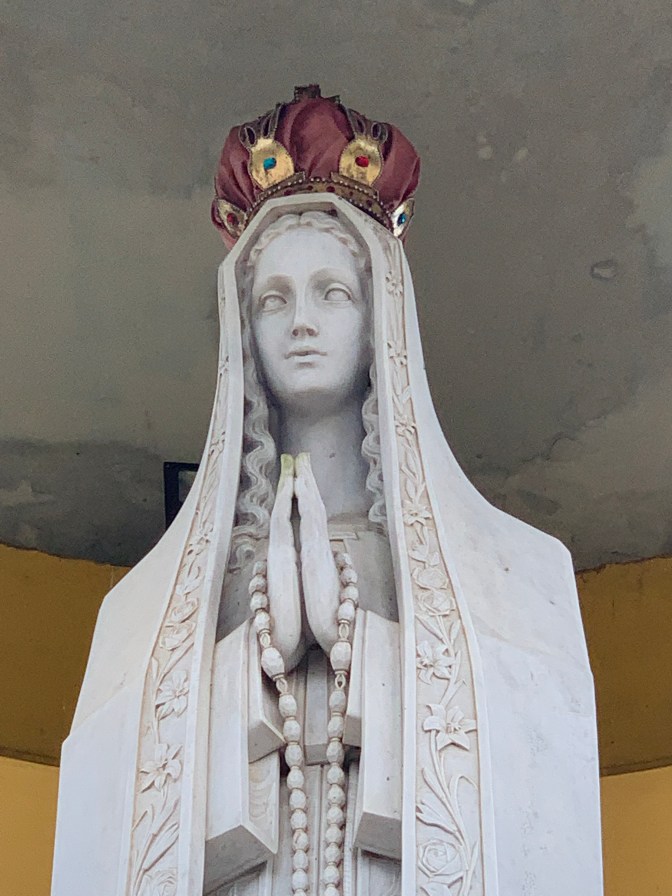
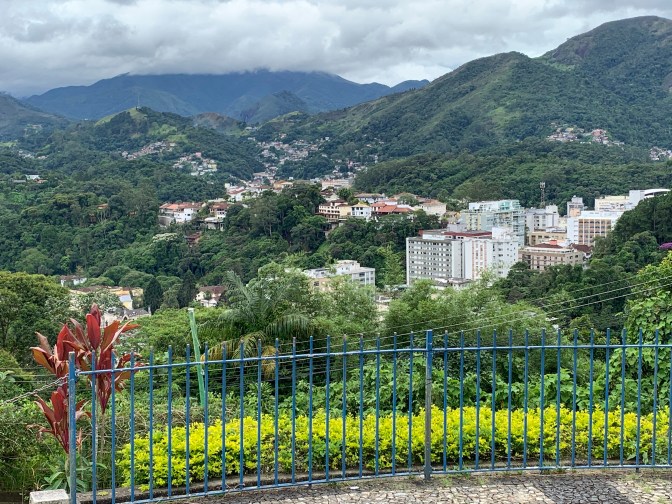
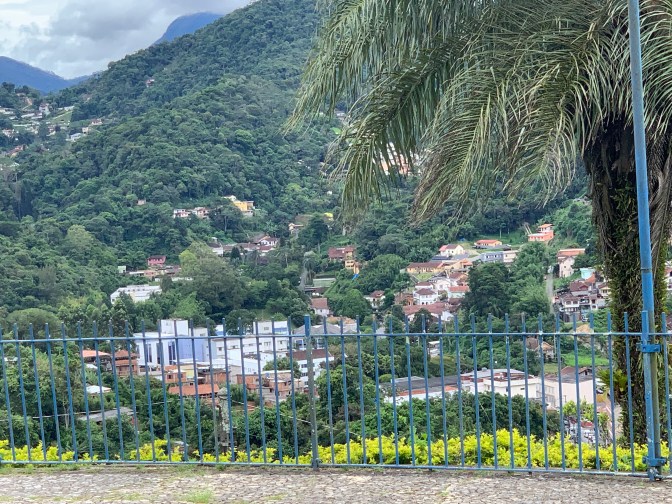
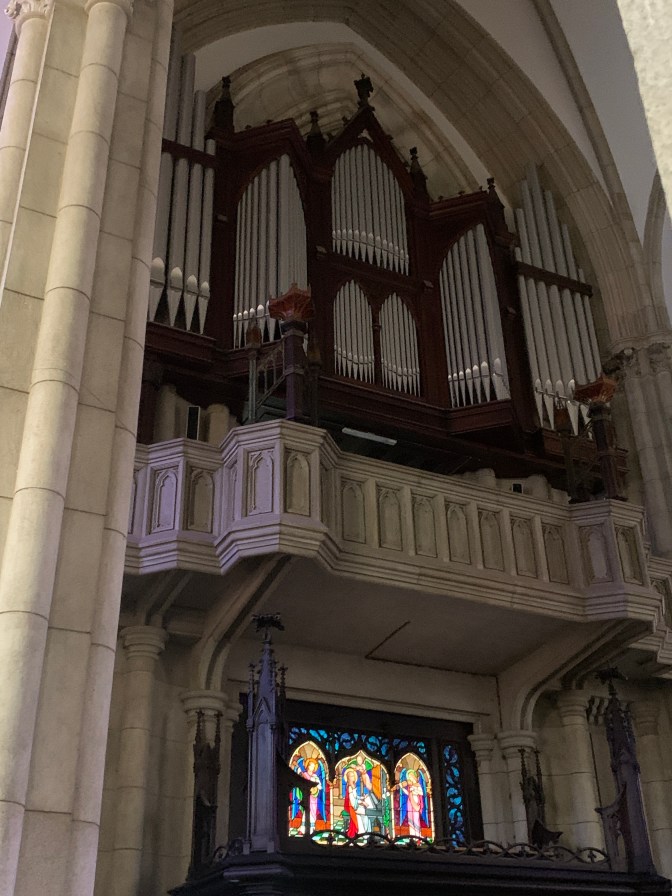
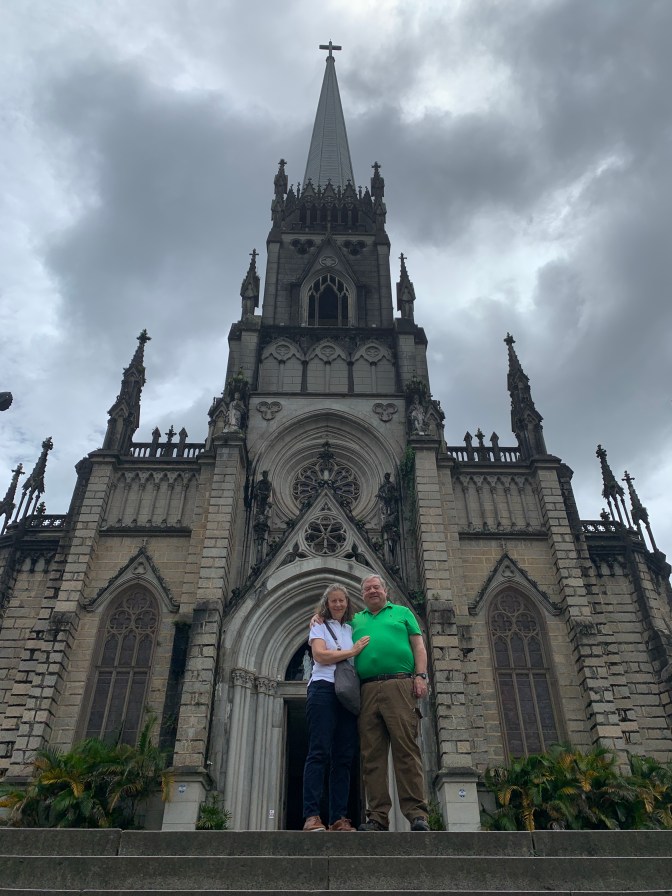
We also visited the Very nice Cathedral in the city, which was open!!!!
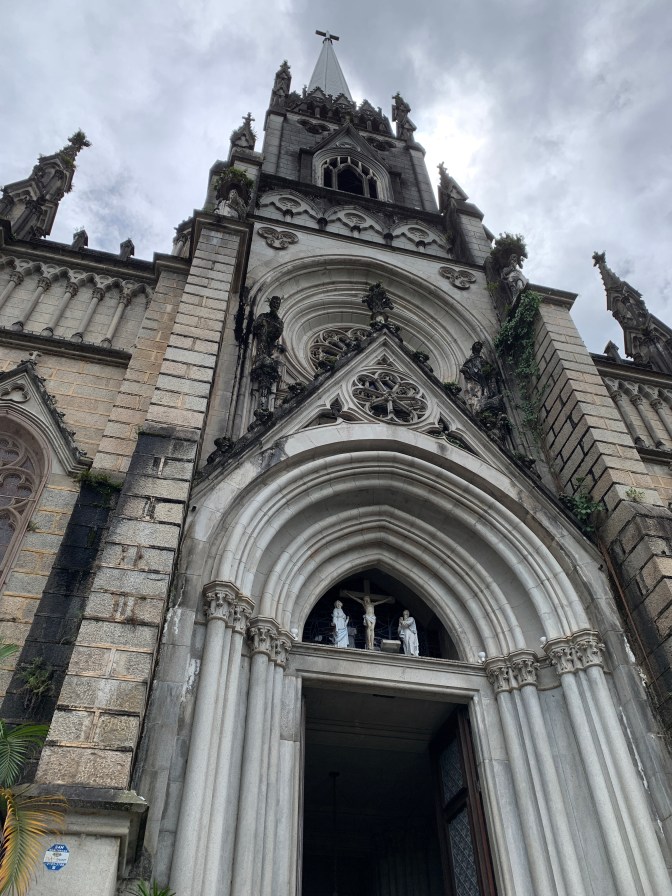
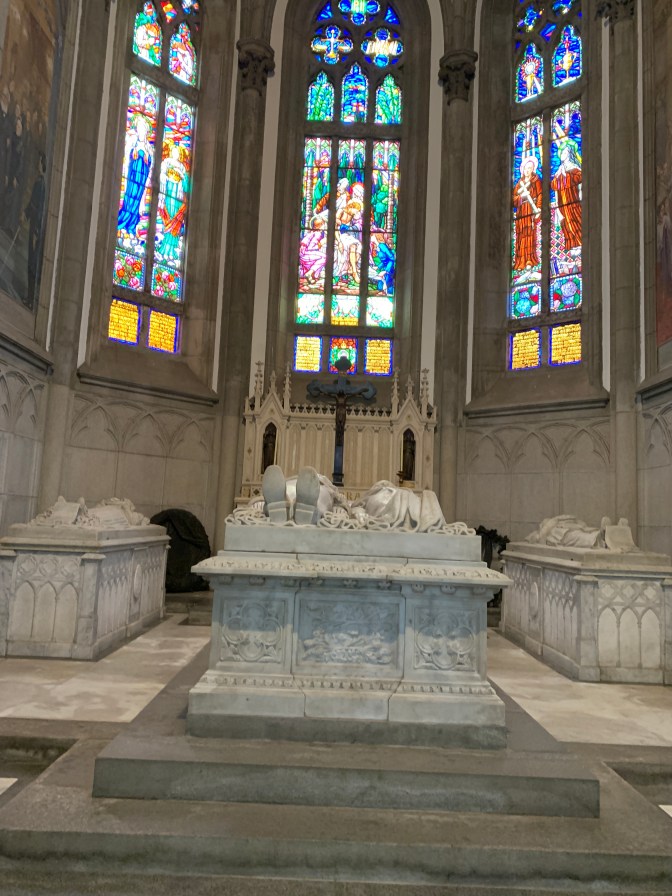
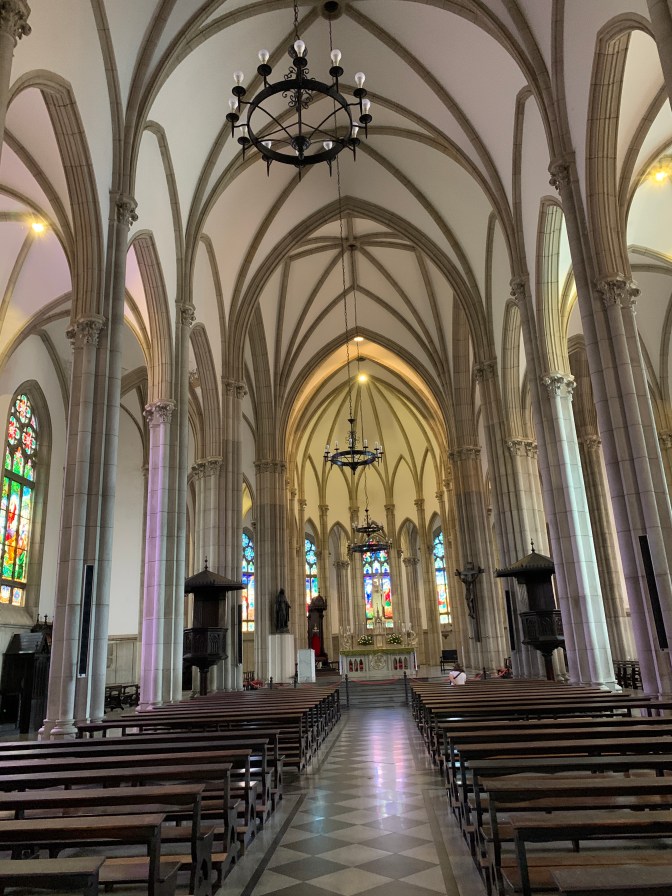
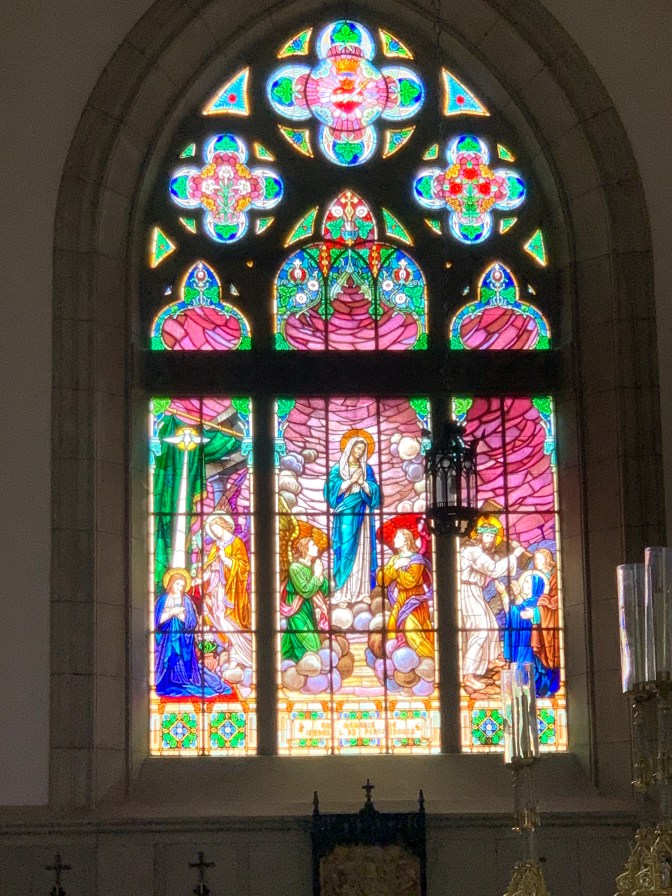
We drove past the University with its flower clock and nearby Santos Dumont house. He was the Brazilian equivalent of the “Wright Brothers” – The first aviator of Brazil. A full sized mock up of his bi-plane was on exhibit in the square near his house.
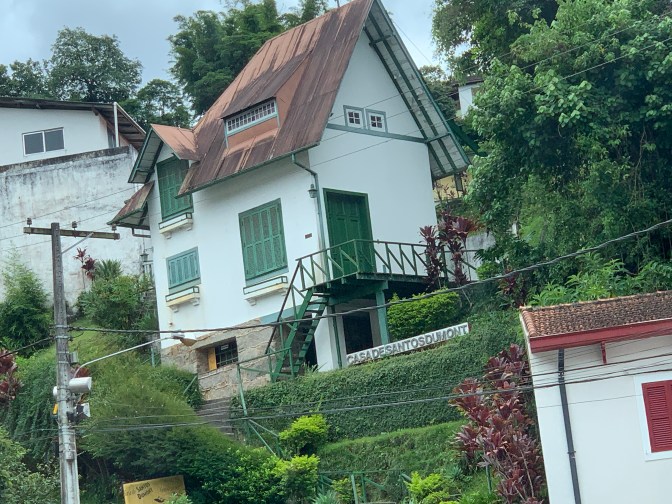
The local airport in Rio is named Santos Dumont in memory of this local hero. As we drove through the town, we were able to get a good impression of the place and is a bit reminiscent of Bavaria given the large German population.
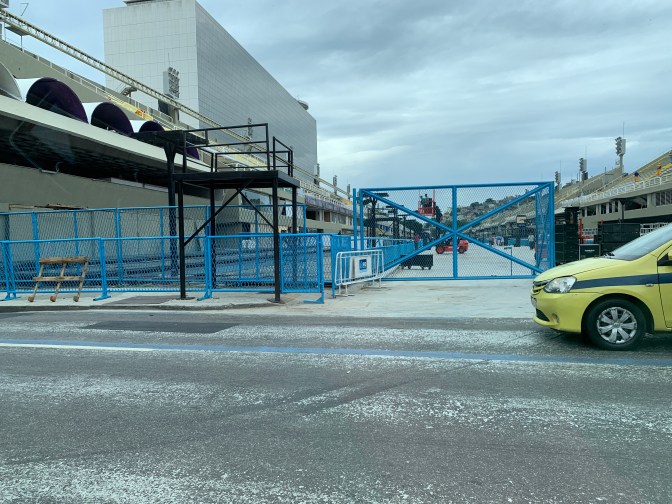
Our last brief stop was at the Samba Stadium which was being prepared for the upcoming Carnival.
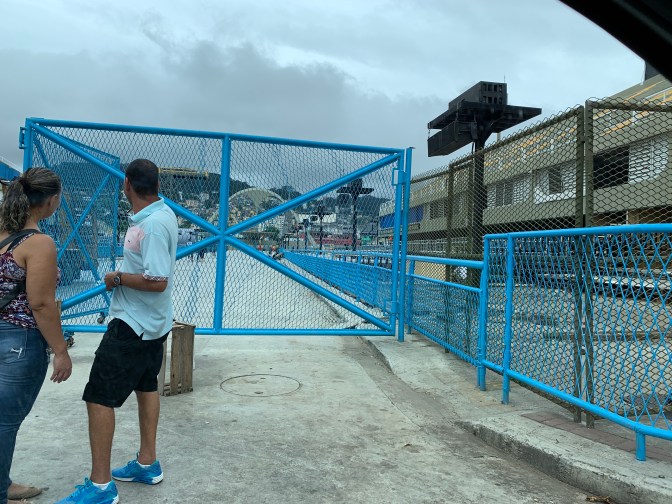
A fun visit, and definitely a place to return to, but not in a Monday!!
As we returned to Rio we stopped by a German restaurant – Casa Do Alemão (established in 1945) – a Restautant on both sides of the highway. We enjoyed a good Sausage lunch with guarana and Mineirinho (similar guarana drink) and a “mil feuilles” with Dulce de Leche (Cajeta) pastry.
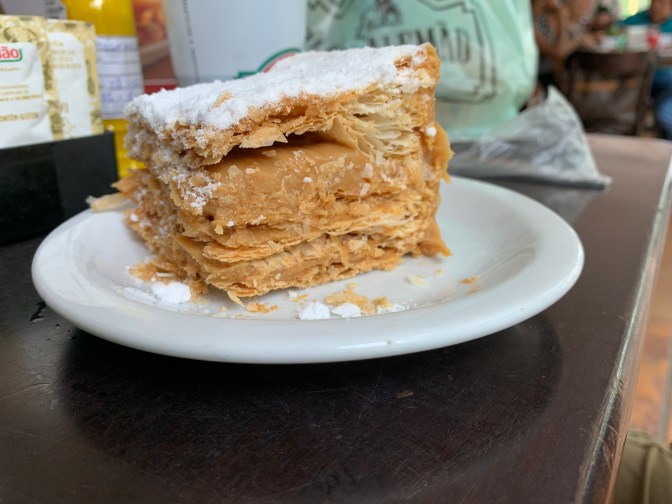
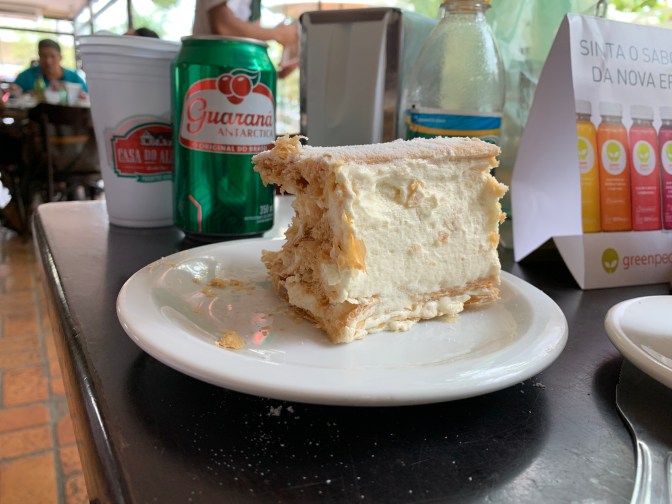
We returned briefly to the Cathedrral for prayers and then stopped near port for some Pão de queijo (cheese bread) that is a delicacy of Brazilian cuisine which we enjoy but had not tasted this visit.
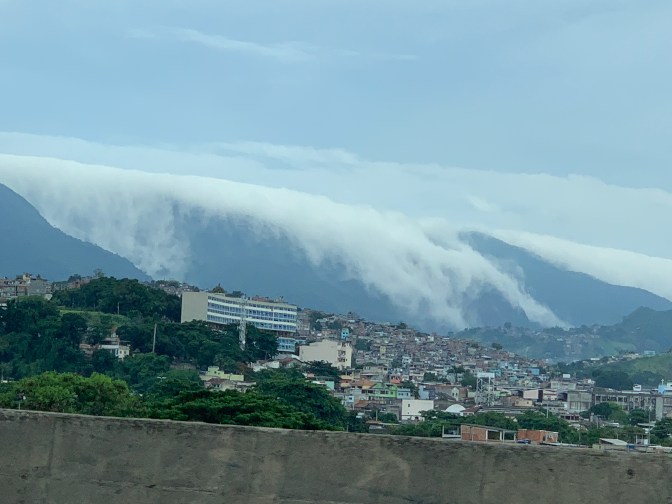
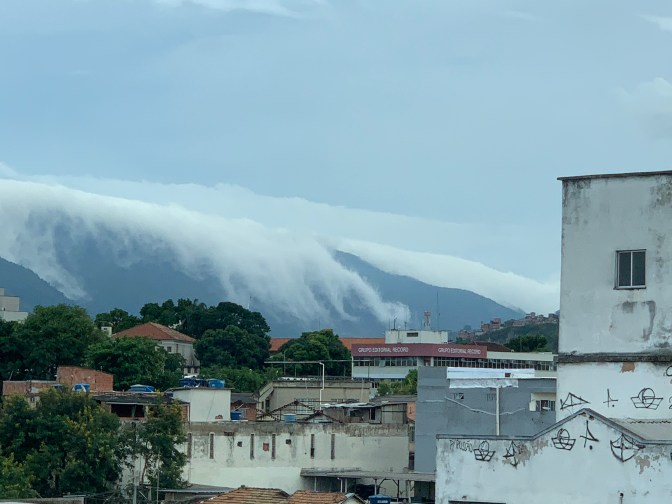
On our way back to Rio it seems like the mountains were covered in snow, but just low lying clouds. We were glad we had gone to the top of the hills yesterday in perfect viewing weather.
As we sailed out of the Rio Harbour, the evening entertainment on the ship was an Irish observational Comedian – William Caulfield – former BBC script writer and comedy presenter.

 Roger & Anne Travels