Thursday, February 13, 2020 – In Montevideo, Uruguay
Republica Oriental Del Uruguay, or Eastern Republic of Uruguay is so named as it is on the Eastern side of the Rio de la Plata, Argentina being on the Western side. To the North and West is Brazil. It is the second smallest country in South America (about the size of England and Wales). The Spanish explorer Juan Diaz de Solis sailing into the Rio de la Plata (estuary if the Parana River) in 1516 was the first European to come across Uruguay claiming the lands for the Spanish Crown. He was killed by the local tribe a few years later. As he found no gold the Spaniards list interest until they established a Fort there in 1726 to attack the encroaching Portuguese. Thus the official founding of Montevideo was in 1726 by a Spanish soldier – Bruno Mauricio de Zabala. Today it is a city of 1.8 million people (50% of the population of the country) and are mostly of Spanish and Italian heritage. From 1807 to 1830 Montevideo was occupied by British, Spanish, Argentine, Portuguese and Brazilian forces, all looking for silver (Argentum thus Argentina) and gold. As none could be found the invading forces did not feel it was worth the effort of keeping their forces there, so they left. It is the Southernmost Capital of any country in the world. The name Rio de la Plata (Silver River not as the Anglo version River Plate) was named as it was the way silver was brought from the interior. Montevideo derives it’s name from a 450 foot high hill “el Cerro” which was seen by Portuguese from their ships saying “Monte vejo eu” or “I see a mountain”. In 1918 Jose Battle y Ordoñez established the constitution which laid the foundation for all the social programs. It includes such things as 8 hour workday, paid holidays, social security for the aged, free medical treatment for all, legal divorces, nationalization of most essential industries, separation of church and state, abolition of capital punishment and more recently it was the First Nation to legalize the use of Marijuana. Montevideo is 20 kilometers long and not very deep away from the shore of the river and due to the social programs / welfare state, there are few slums or homelessness and in general the population have great civic pride.
We were met (port to dock) by our excellent private driver and Guide. If we return, we would definitely contact them for hire. Details are – Driver, Nestor Cell = 094-840-778 – Agency Carrasco Traslada +598-9612-1591 reservas@carrascotraslada.com.uy Web http://www.carrascotraslada.com.uy phones +(598) 2600-2091 or 2484-3746 or 2408-9999 or 9612-1591 or 9205-7634. The Guide was Silvana Güida – Pedro de la Cierra 3212, Montevideo Uruguay, e-mail = silvagui80@hotmail.com and Cell +598-9991-7680.
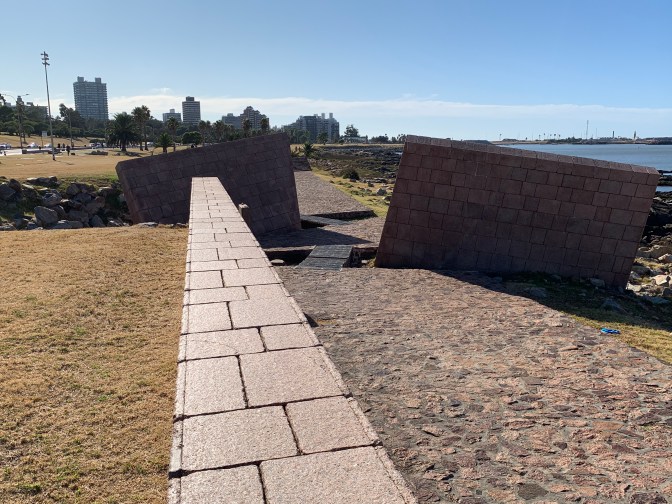
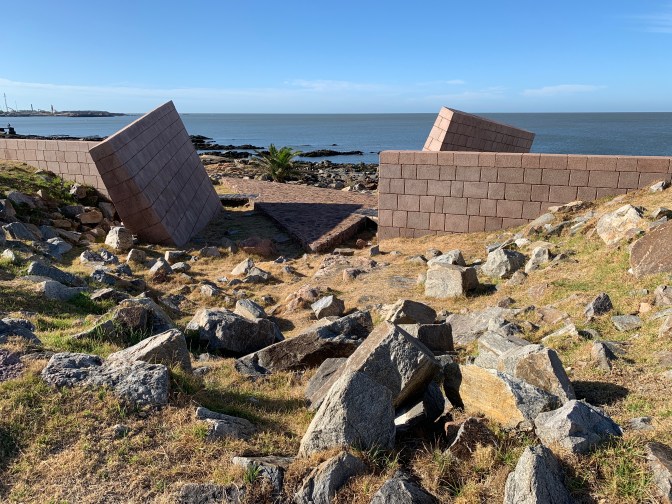
We immediately proceeded to La Rambla, which is the road along what appears to be the sea, but is actually the River Plate (actually Rio de La Plata = Silver River) because it is some 60 km wide at this point so you cannot see the other side which is Argentina. We travelled along the beaches which are on one side of the road and all the construction of luxury apartments are on the other side, so there is no construction directly on the beach. Our first stop was at the Holocaust Memorial – a brick wall structure by the river, emerging out of the ground as a straight line heading towards a brick wall to symbolize walking in a straight line hitting a brick wall so you had to go either to one side or the other, reminiscent of trains arriving at the concentration camps.
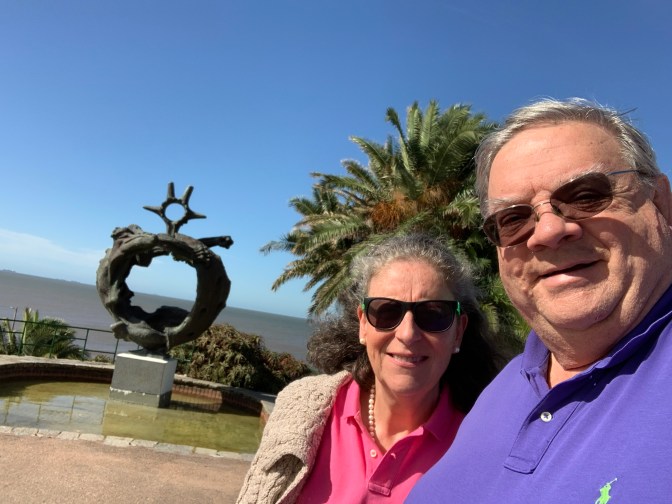
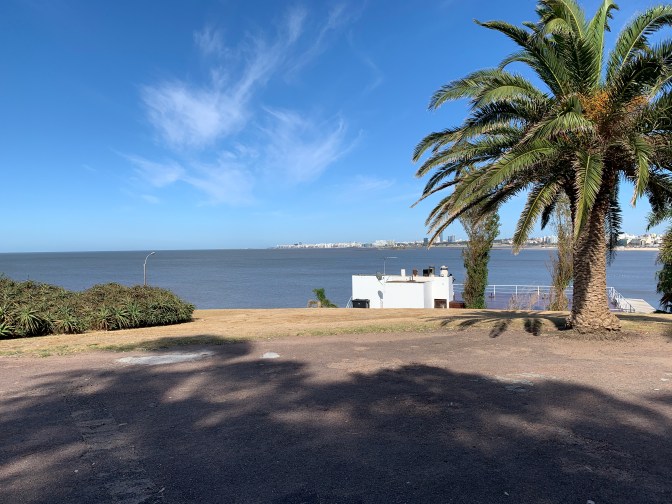
We continued along the shoreline until we reached the Plaza de Armas or “Weapons Park” where there is a cacophony of aviary music thanks to all the nesting parakeets. It is situated on the promontory with a terrific view of the beaches the coastline. A very peaceful place with a war Memorial looking somewhat like a doughnut where one side is a large wave and the other side is a human being meeting at the top as if Man and Sea are together as one in a never ending circle.
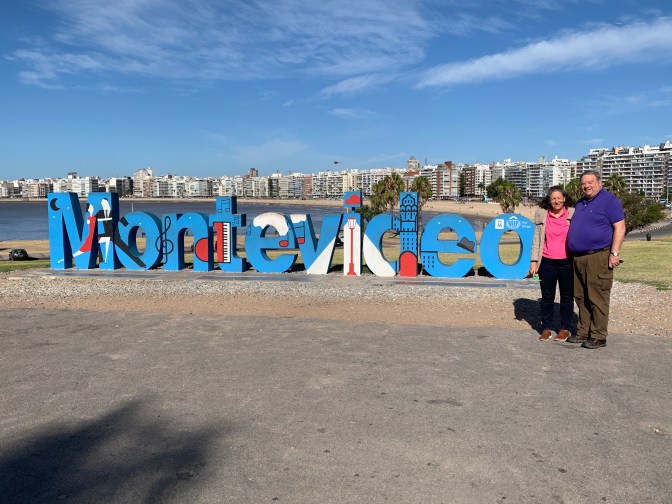
There was the mandatory photo stop at the large sign (5 ft high and 10 yards long) of “Montevideo” on a promontory with a great view of the city behind.
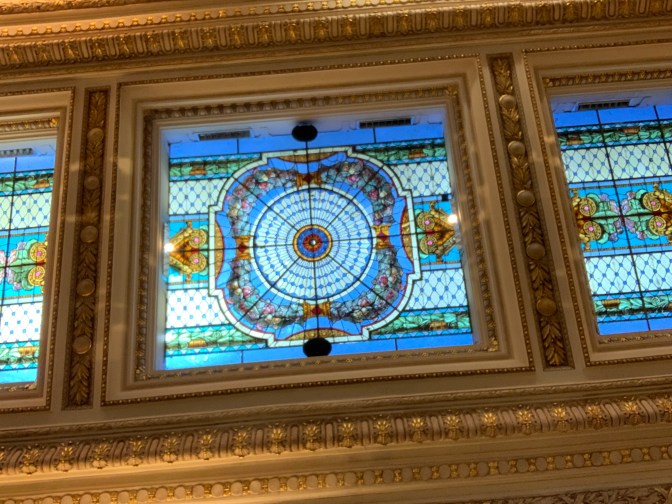
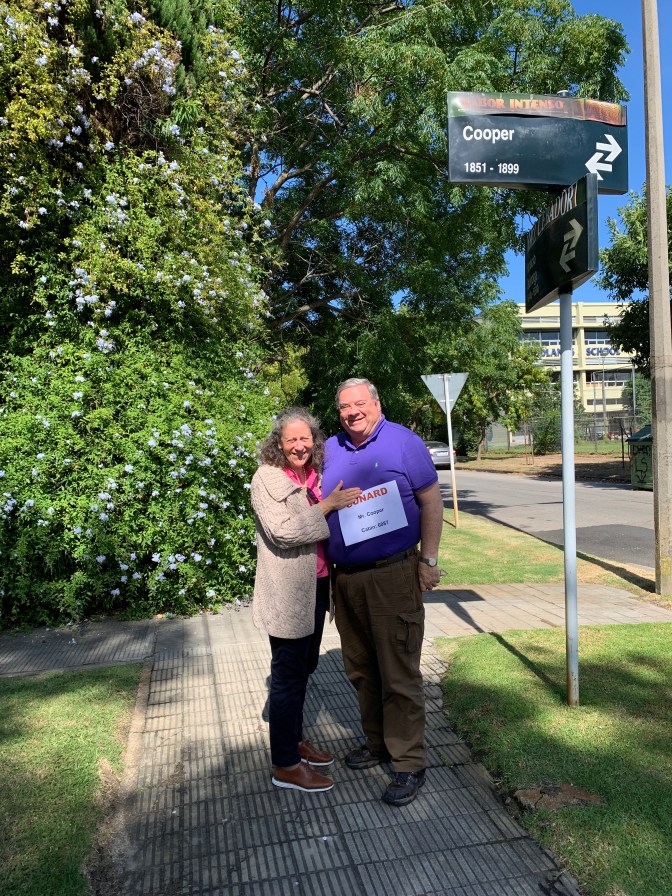
Our next stop was at the Carrasco hotel and Casino, now operated by Sofitel, a five-star luxury hotel with a very elegant foyer with Stained glass windows in the roof, full sized horses (from the days when people from the town would come on horseback to the nearby town) and a beautiful view. We toured the Carrasco neighborhood which is an exclusive area of town filled with large homes one of which is called “Cooper Street”, so we had to stop and take a picture.
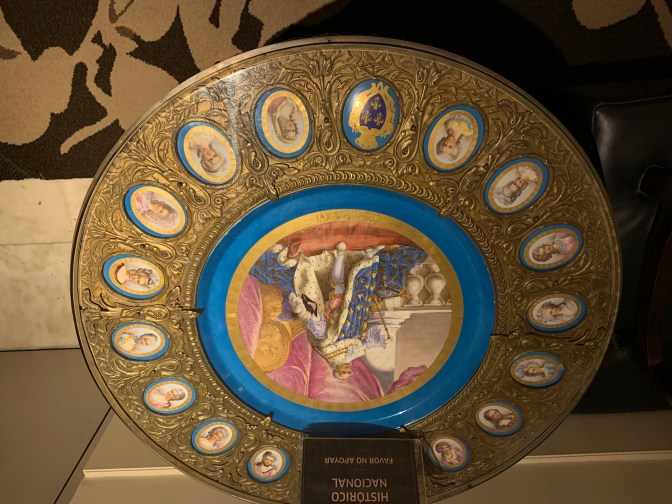
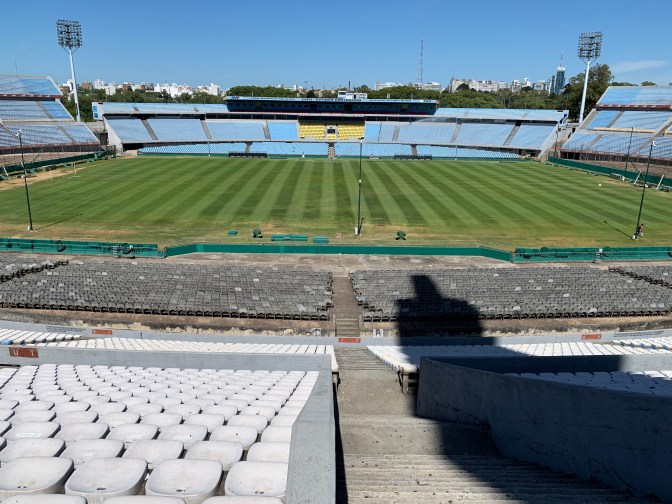
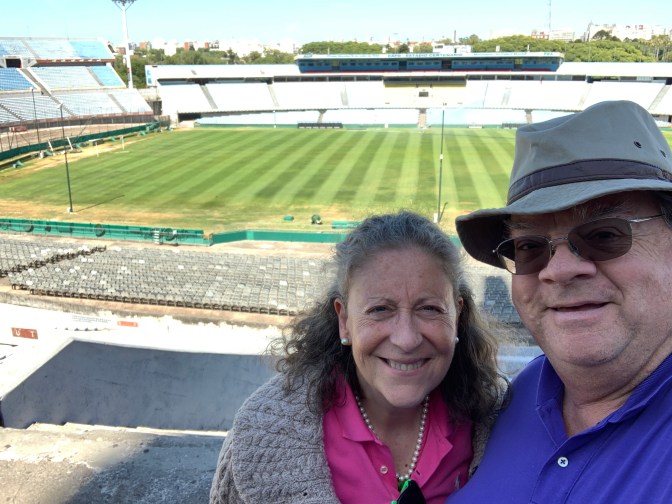
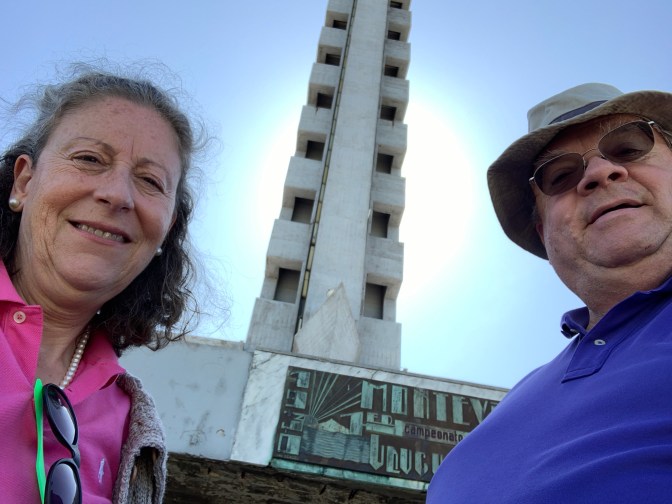
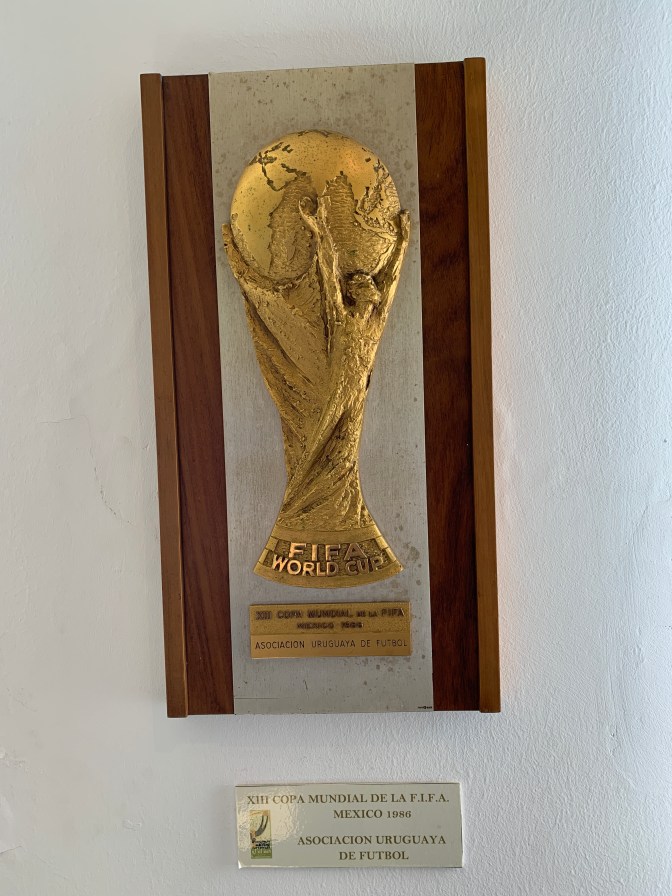
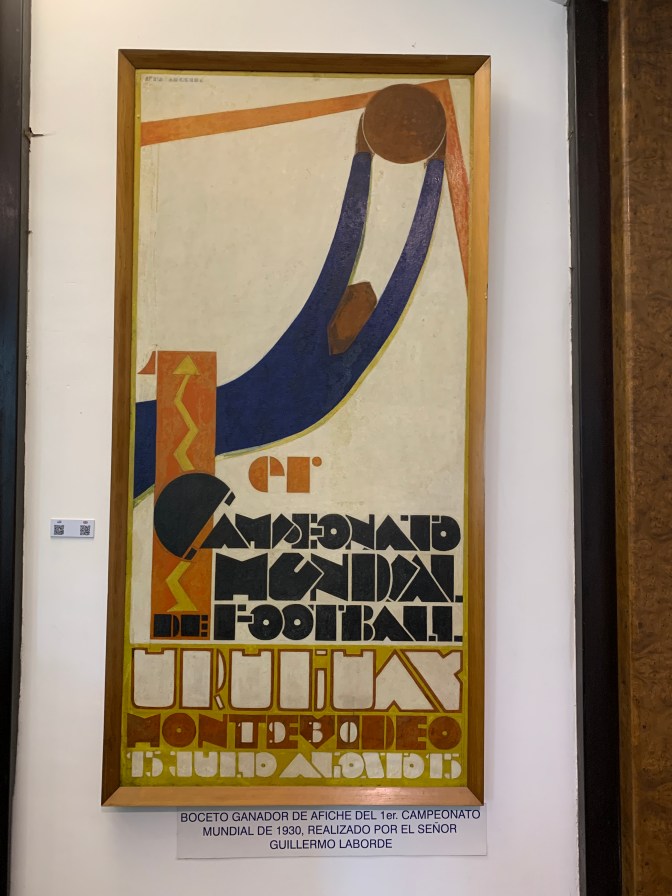
We then proceeded to the 80,000 seat football soccer stadium which held The World Cup. It now also houses a museum to football soccer with a tribute to all of the great Uruguayan players and in particular to the Olympics which they hope will be there at some point. In 1930 they were the first World Champions, so there is a display of all the cups and stars of the game.
There is a cheeky statue just outside the football stadium which is a replica of Maracana stadium in Rio de Janiero with four football players, two large ones holding the Cup and two smaller ones underneath, in a cross. The larger ones represent Uruguay and the smaller one represent the Brazilians. In the closing seconds of the finals Uruguay scored a goal and won the match against the favorites Brazil. This statue is not shown to citizens or supporters of Brazil for fear of engendering rage!!!
The statue of La Carreta, a must in all tours, is a statue behind a fountain of various oxen pulling a two wheeled cart over a road with one of the tires stuck in a rut. A man on a horse behind is guiding the group. Apparently The local artist made the sculpture in Clay, and as there was no local foundry the entire piece (some 30 yards long) was sent to Italy to make it bronze. At the time Mussolini liked the statue so much, he declared that it should remain in Italy. However, War was just breaking out and he had other more pressing things to think of so this statue was able to return to Uruguay.
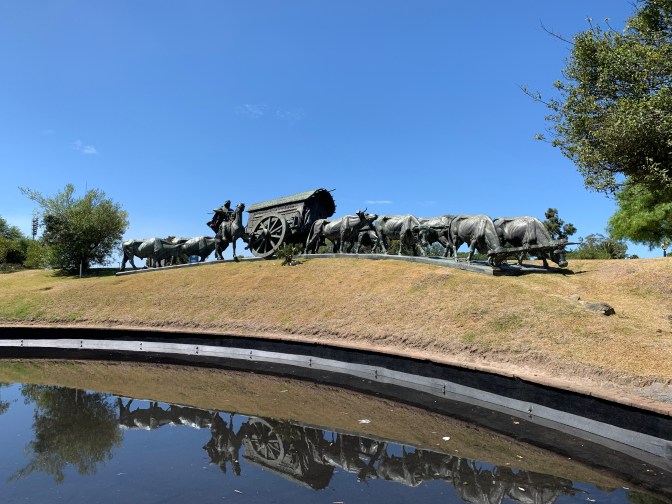
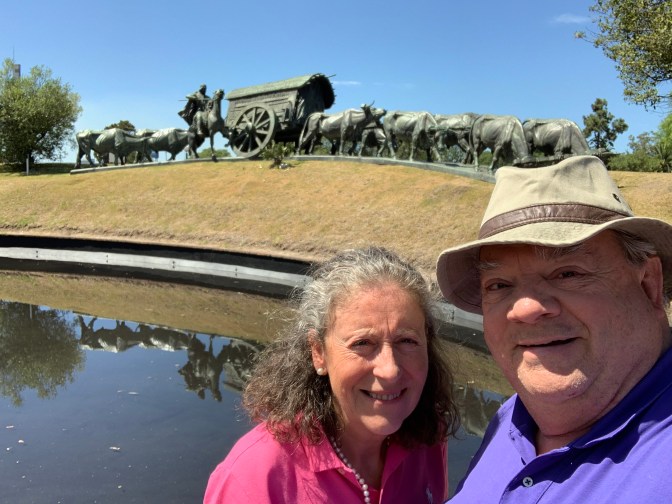
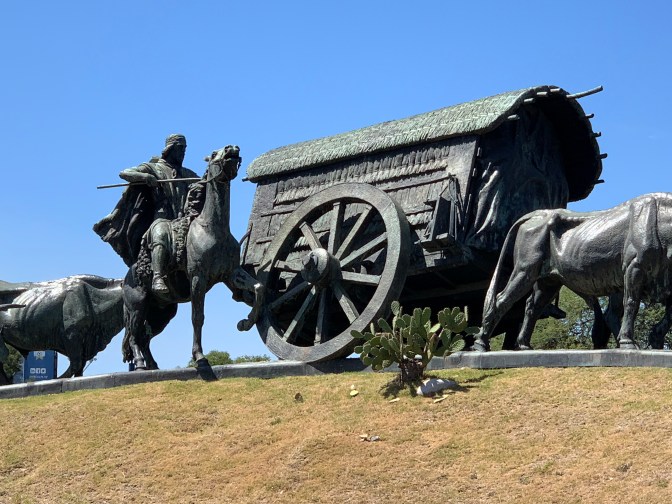
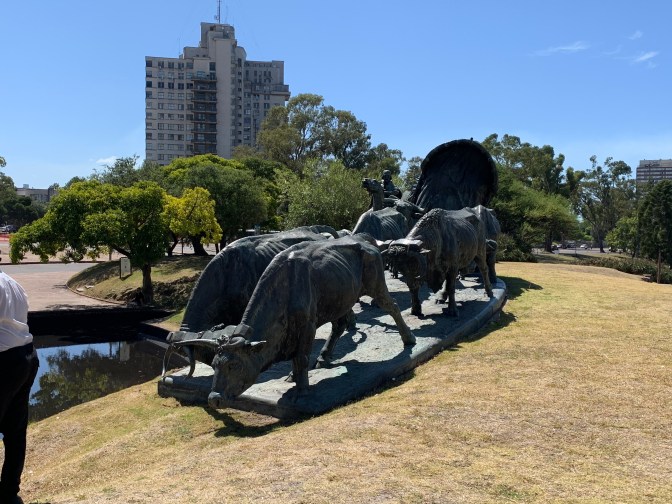
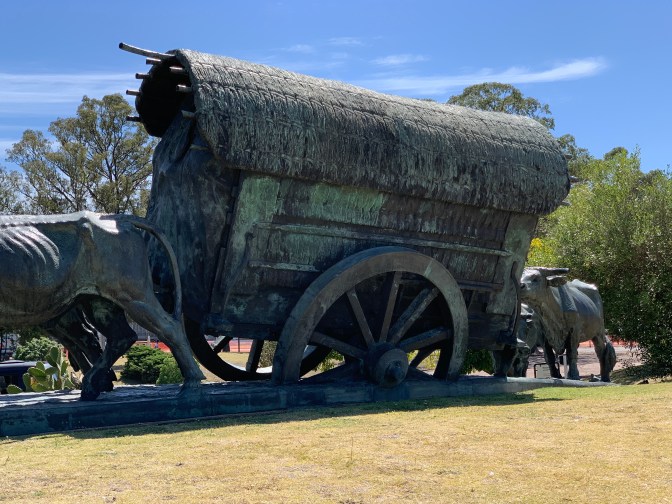
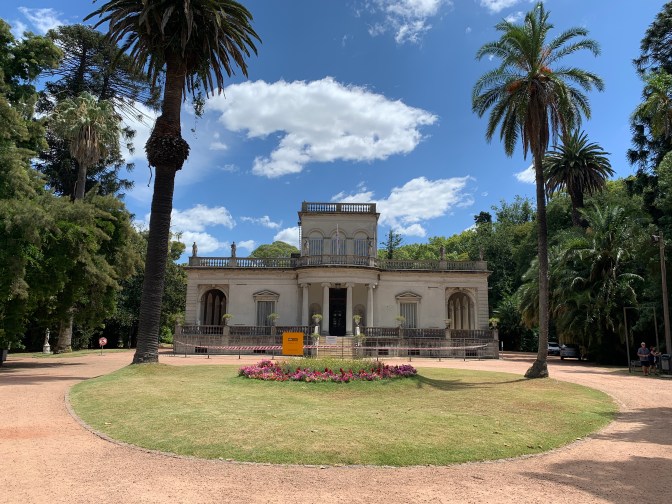
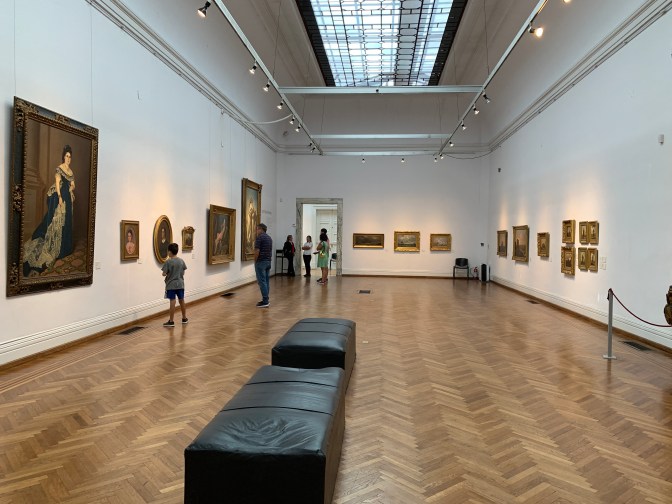
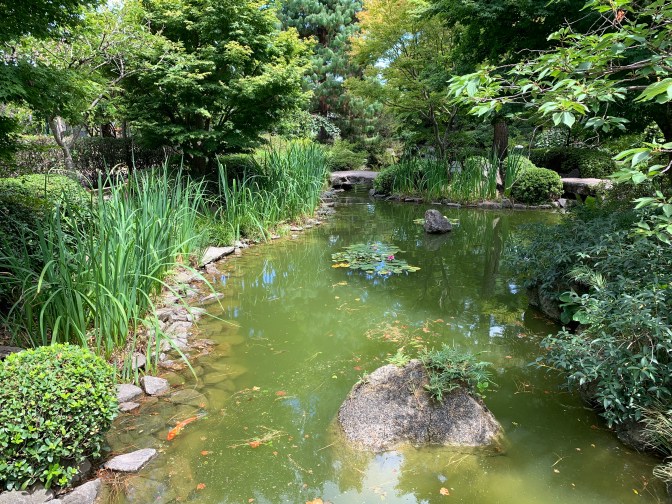
We visited Another fancy neighborhood – Prado and saw the La Diligencia Statue (stage coach sculpture) in the Prado Park and Indians – not usually visited by tourists as it is somewhat out of the center area. We also visited an old home converted into an Art museum with a lot of important paintings by local artists. In the rear of this mansion there is an intricate Japanese Garden which we wandered around.
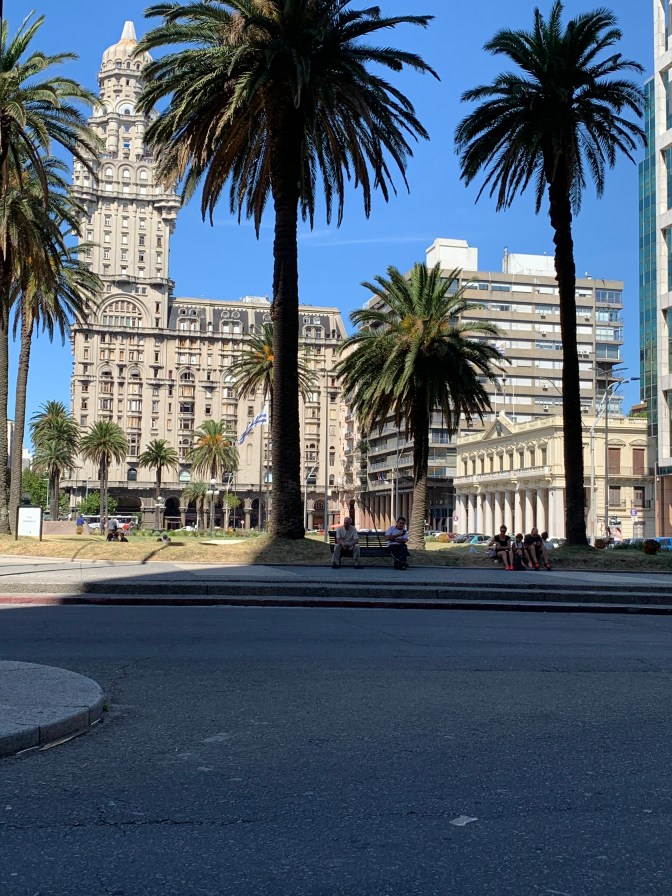
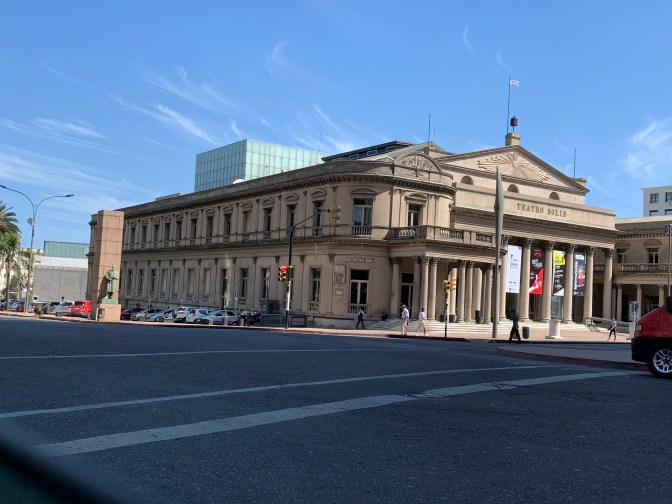
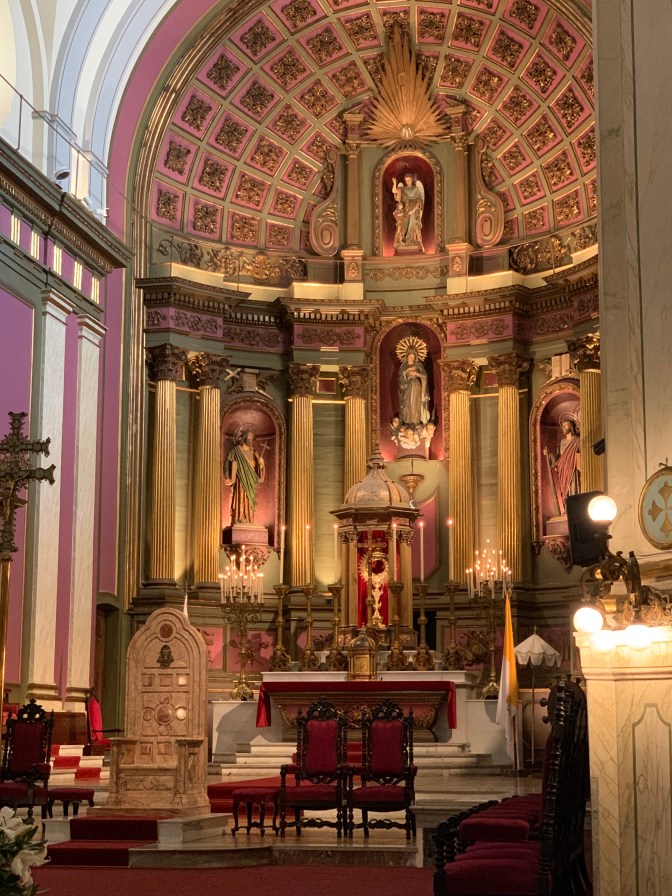
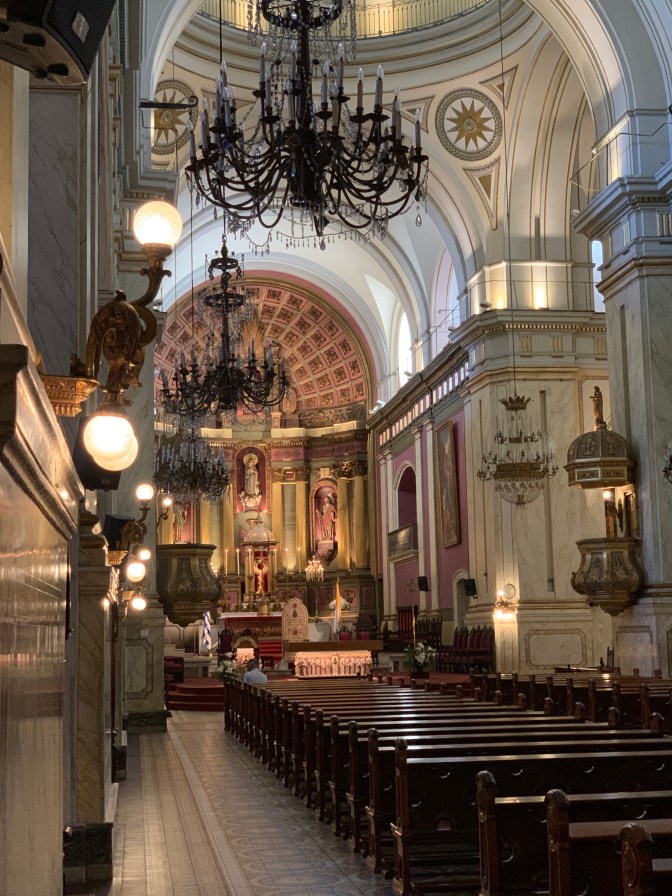
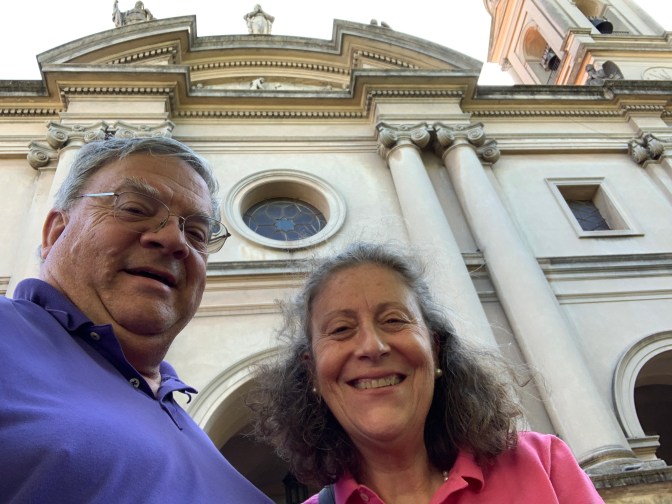
From there we headed to the main independence square with a central statue and an archway that was the original entrance to the city. We also visited the Cathedral before going to a local lunch place in town where we enjoyed Chivitos (meat sandwiches) and a local brew before heading back to the ship. A full and very good day.

That evening we attended another concert by the guitarist Fabio Zini.

 Roger & Anne Travels