Friday & Saturday, February 14 & 15, 2020 – In Buenos Aires, Argentina. The original name was – Real de Nuestra Señora Santa María del Buen Ayre named after the Madonna of Bonaria in Sardinia.
Happy Valentines Day! Argentina Drives RHS, moored Port to dock, Container Port, shuttle to terminal then tour coaches. The port is used from Nov to April as a cruise ship terminal area.
Argentina is the 8th largest country in the world and 11 times the size of UK. Buenos Aires is located in the Pampas area – Flat plain land from the Quechua language. It has 48 neighborhoods. There are 23 provinces in the country plus the capital district of Buenos Aires (BA). Perhaps one of the more famous sites is the Recoletta Cemetey built in 1822 and is where Evita Peron is buried. The Peronista party is still dominant in Argentine politics and even though they are not currently in power, they are the power behind all that happens in the country. Juan Peron, the populist dictator was elected President in 1946. His wife Eva (Evita) Duarte died in 1952 and Peron was overthrown in 1955, going into exile. However he returned as President in 1973. In 1976 a military coup occurred and General Jorge Videla was named President and a reign of terror (1976-1983) ensued. Many “desaparecidos” (disappeared ones) ensued and unrest led to the Falkland Islands (Malvinas to the Argentinians) invasion in 1982 as diversionary tactics. Britain decisively won the war and the military were removed from office in favor of civilian government Raul Alfonsin was elected in 1983, followed by Carlos Menem in 1989 and Fernando de la Rua in 1999.
BA covers 200 Sq Km and has a population of 8 MM inhabitants in the city itself but but greater BA is 12MM.
Agriculture is the main economic driver from meat, wines etc. On the 25 May 1810 the revolution started which ended up on 9 July 1816 in independence from Spain (thus the main streets of towns are 9 July). In 1852 the Constitution was ratified.
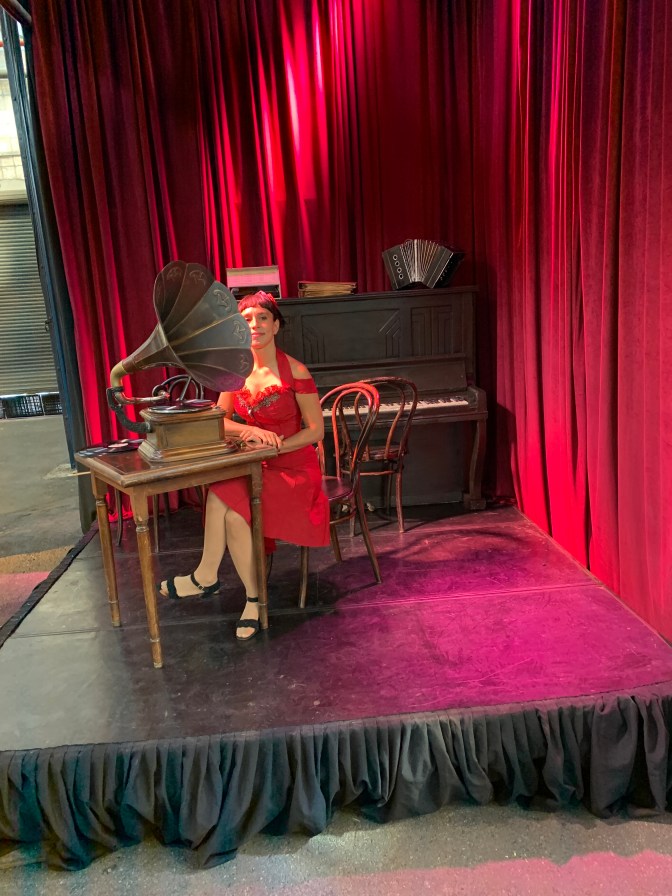
The Tango, was a dance initially amongst men only with Violin, flute and Accordion. As there were so few women, the men danced and practiced so they could get to dance with the few available women. It consists of 8 basic steps and a lot of flair!!
On February 2, 1536 the Spaniard Pedro de Mendoza arrived with the intention of establishing a permanent settlement. However, unfriendly locals drove him away. In 1580 Juan de Garay was able to form a settlement with a fort constructed on the ground where the “Casa Rosada” is now located. It remains a minor village belonging to Spain and by mid 1700’s only had a 20,000 population. At which point it became the Capital of the Viceroyalty of the Rio de la Plata region. The British tried and failed to invade in 1806 and 1806, but in 1810 on July 9th (when Spain was concerned with the Napoleonic invasion back home) that it declared independence from Spain. Six years later the surrounding provinces were also independent and Buenos Aires became the capital of the United Provinces of Argentina. Population grew from 90,000 in 1869 to 670,000 in 1895.
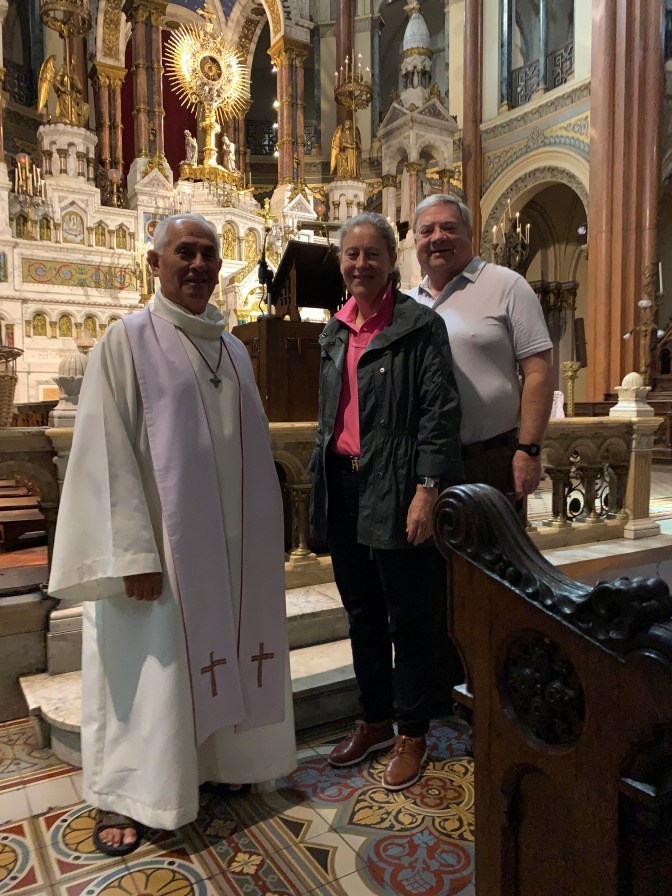
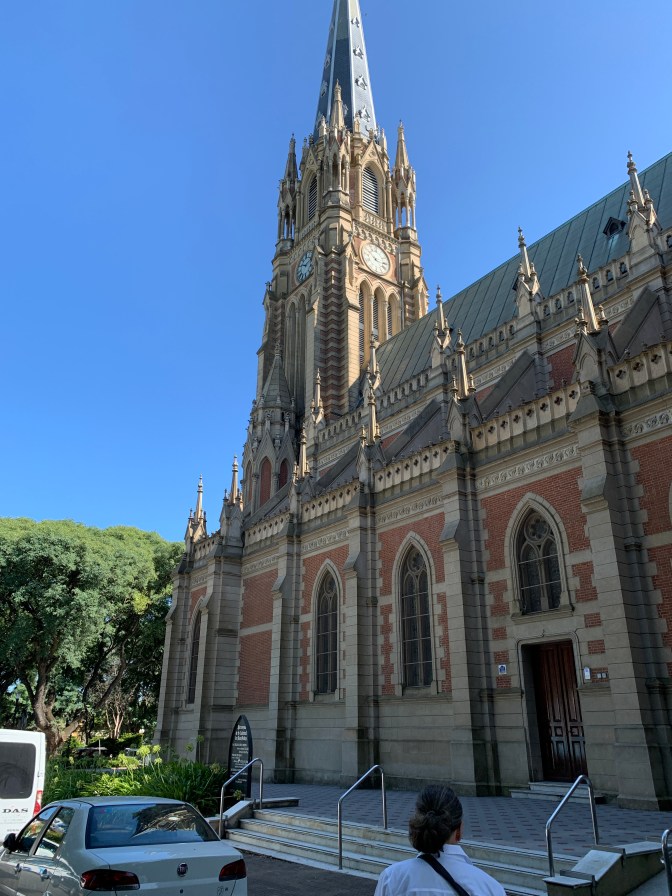
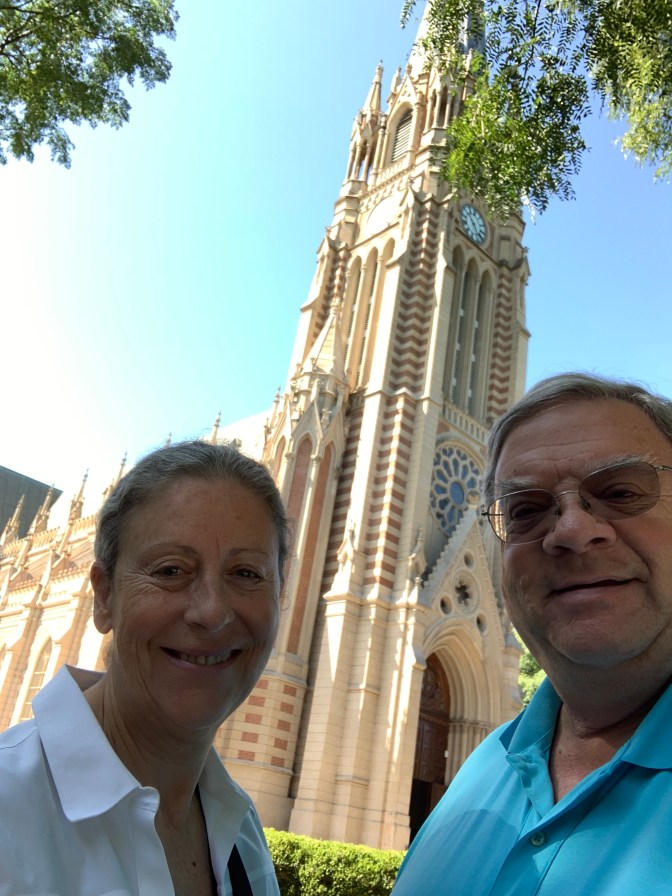
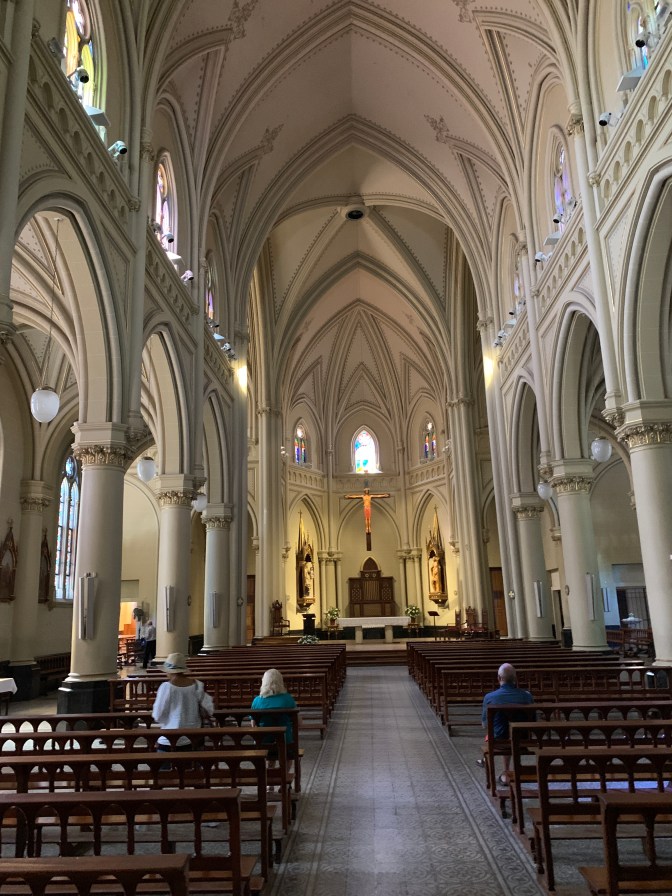
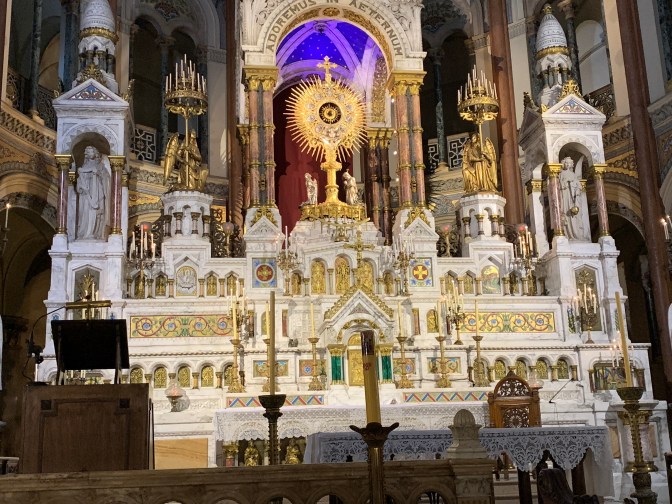
As we had both been in Argentina many times before we decided to spend the first day on our own. So we took the shuttle into San Martín park and from there it was a short walk Basilica Del Santissimo church where Anne had been a parishioner when she lived in Argentina. An interesting thing about church is that it was built in the early 1900s and the plans that were used to construct this church were the same plans that were used to build the church in New York Saint Jean Baptiste where Anne and I were married two years ago. The main church was closed for cleaning but a similar smaller church situated directly below the main church was open. We were able to spend some time there which was nice. At one point the local priest was wondering around so we spoke to him, telling him the story of the wedding. He had visited St. Jean’s and knew many of the priests that had been at the NY church. Several he knew from his time at the Holy See in Rome. So he kindly took us behind the altar, through the sacristy, up a private elevator to the main church. He showed us around the main church which was very special, and even posed with us in front of the main altar for a photograph. It was indeed very kind of father Andres.
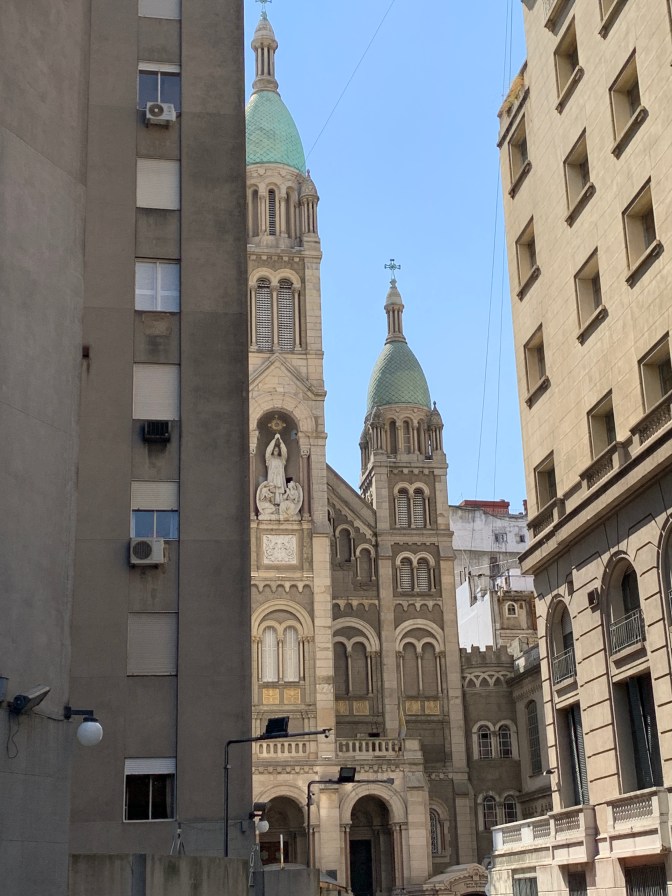
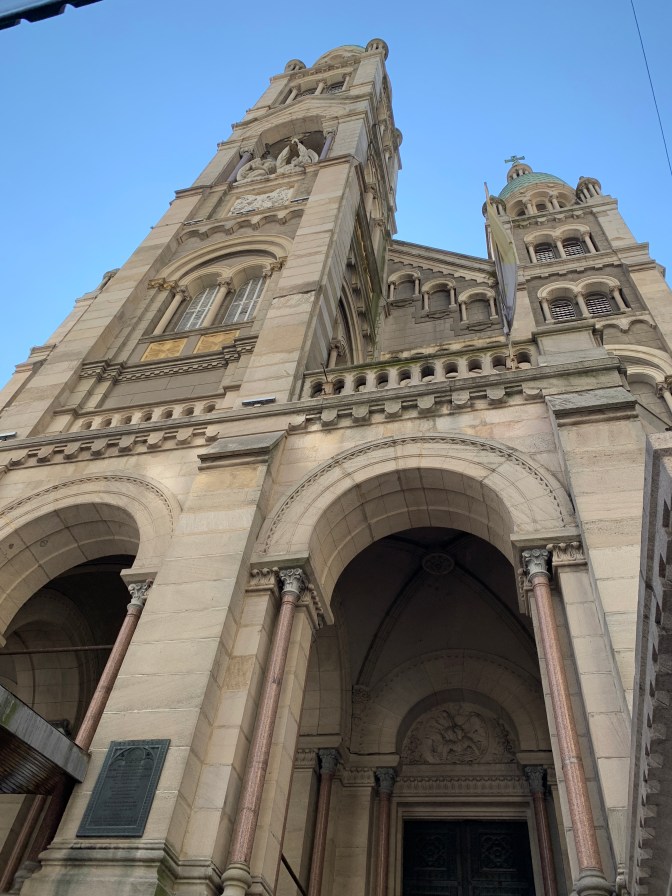
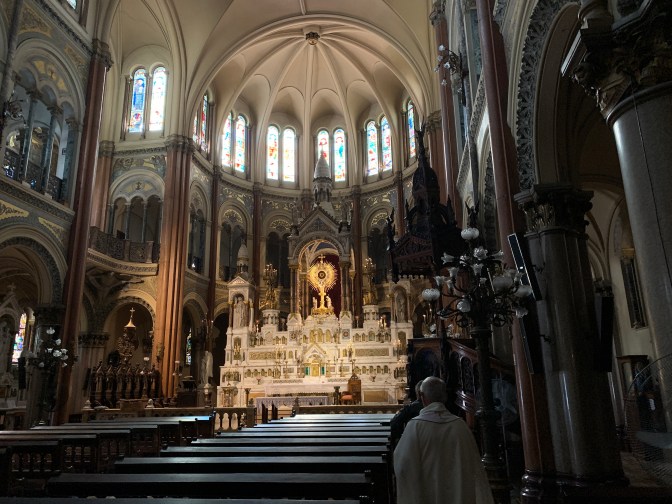
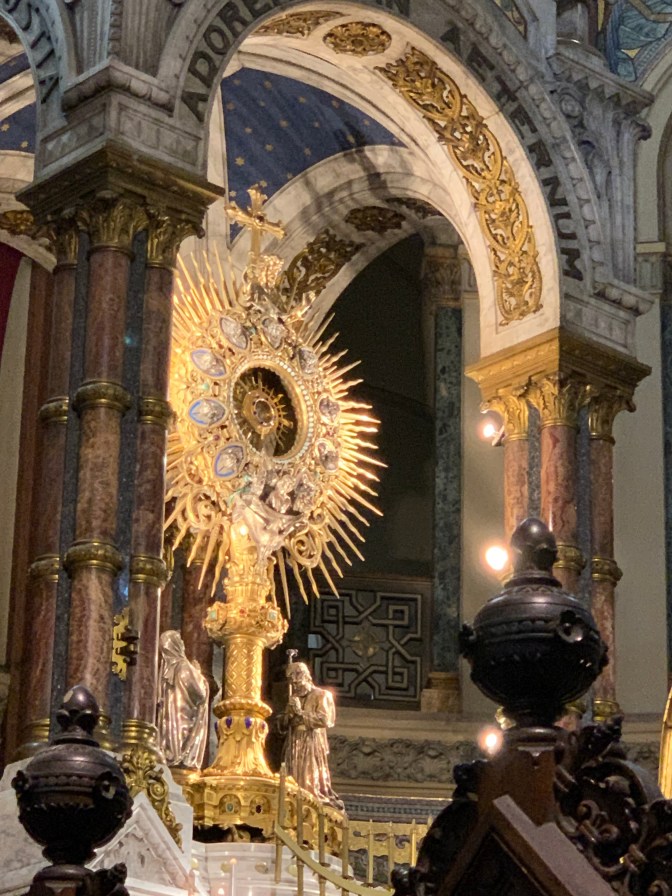
We then went to Anne’s favorite coffee shop for coffee and delicious Alfajores. Next we walked a few blocks away to see the apartment building where Anne had lived on Marcelo T de Alvear.
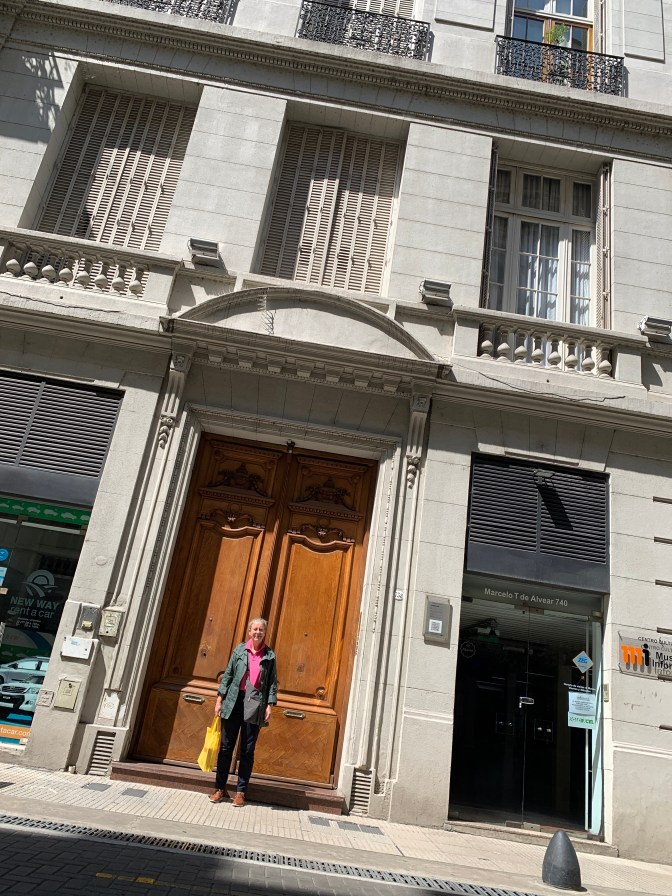
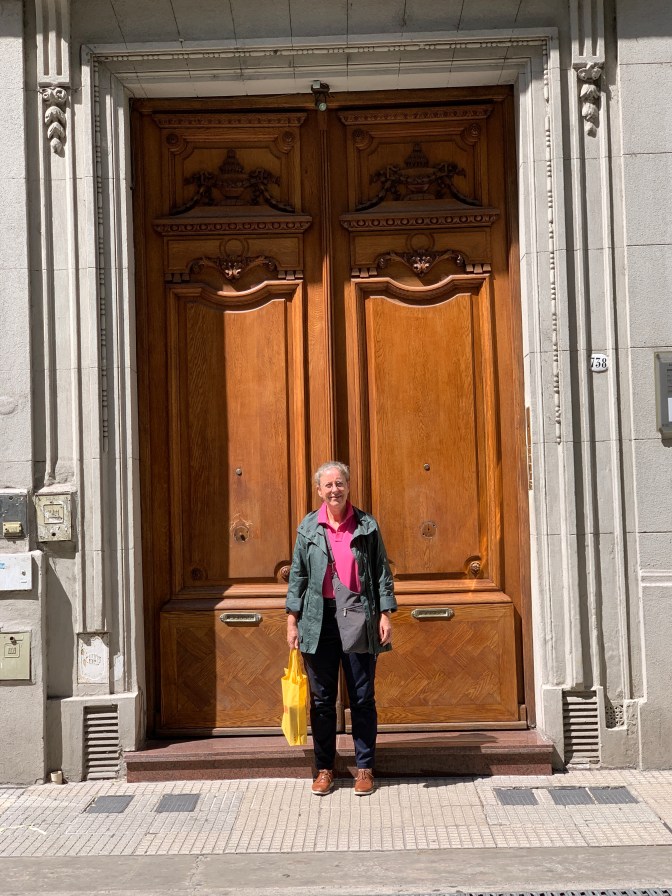
I would go to Buenos Aires on buisness (last time in 1995) and spend the time at the bank, Hotel and the odd restaurant, so Anne knew the place much better than I did.
We started wandering along the “pedestrian only” Florida Street, stopping in a few shops and in general soaking up the atmosphere.
We took the shuttle back to the ship as we had to change and be ready by 5PM to be transported to the venue for the World Party night. Once during a “World Voyage” (a voyage on the ship lasting for a couple of months or more) Cunard invites those passengers to a special event in one of the ports. We had experience this in Dubai a few years ago as we circumnavigated the earth.
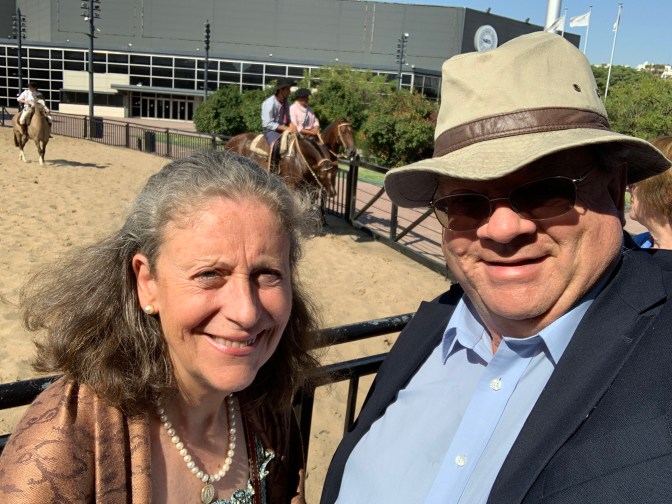
This was held at an event space that is used for conventions, trade shows the annual Agriculture & Livestock Exhibit and other such events. Upon our arrival at “La Rural” in the Palermo district, built in 1909 as a pavilion for horses. We were greeted with drinks and canapés and a horse arena with male and female riders in traditional “gaucho” – rancher garb. They were doing some barrel work and other such skill events to show off their equine capabilities. We were then ushered into the old warehouse converted into event space capable of some 2,000 people seated at tables for eating. We were about 1,000 and a raised stage in the center surrounded by round tables for 10. In the four corners were different live exhibits showing aspects of Gaucho life. We soon sat and enjoyed a “tapas” meal with excellent Argentinian wine. The center stage was soon an extensive Tango and Gaucho show. Amazing moves and graceful dancing. After which the guests were invited to dance on the platform, which we took advantage of doing. We were back on the ship by 8 PM and saw a very good tango show in the theatre on the ship.


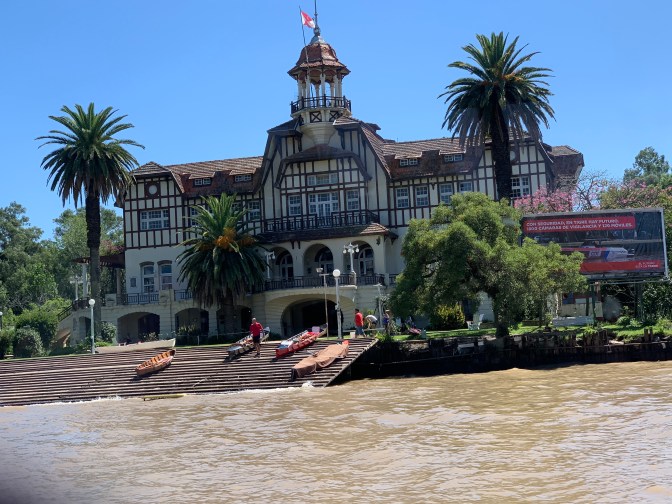
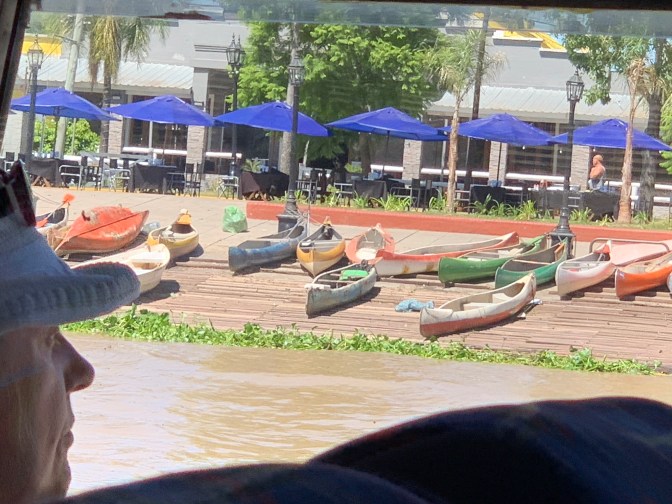
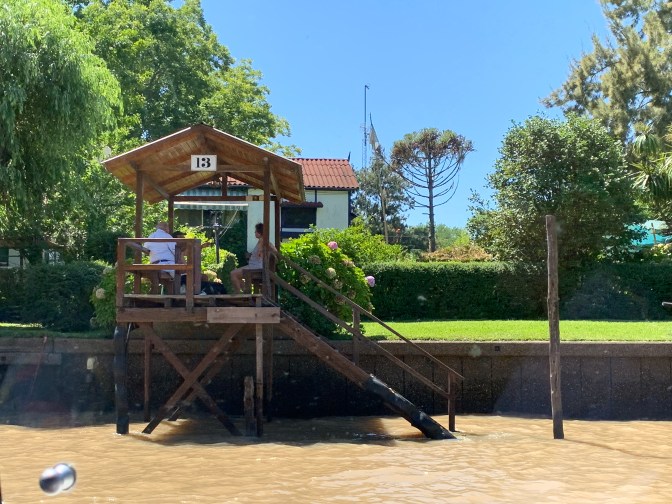
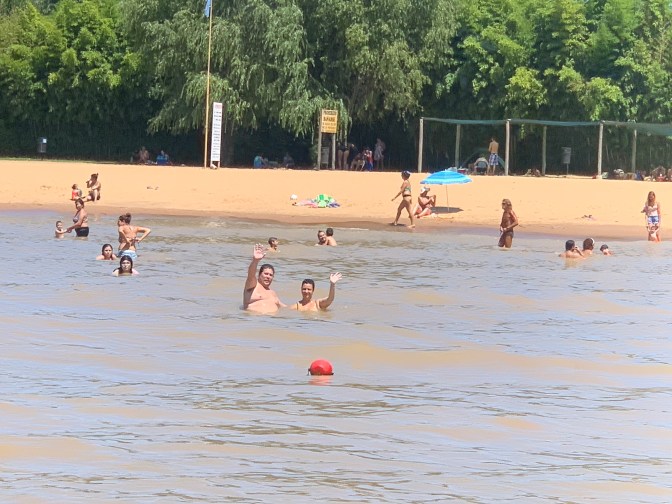
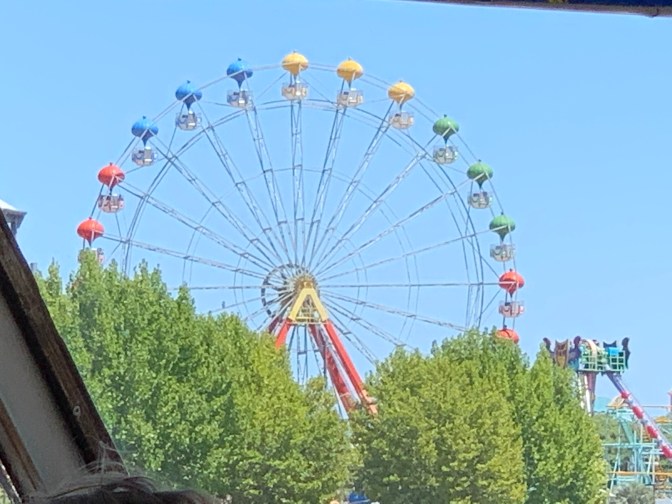
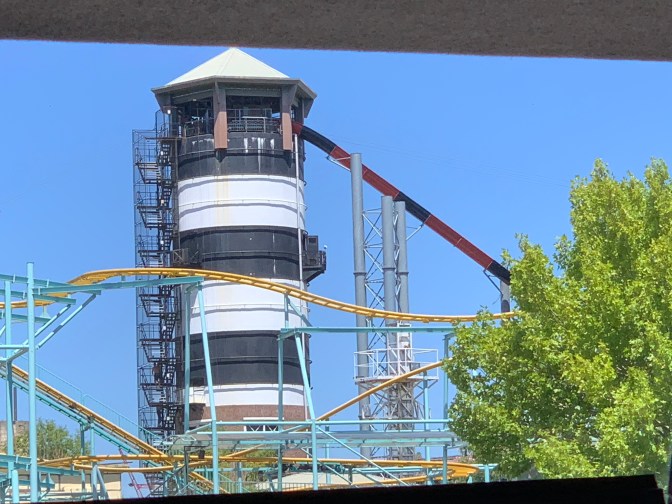
The following day, Saturday, we had a tour to “El Tigre Delta” which is an area outside of the city noted for it’s “country houses” and river living with a permanent population of 7,000 to 10,000 people. (Guide Marisa; Cunard Ruth, Driver Luciano. Coach 13) We took a boat ride along the various canals seeing the many rowing clubs, smart homes, amusement park, and daily life on the river. The “supermarket” boat would stop at your house if you put a shopping bag on your pier as well as any other needed items were delivered by boat. A fun half day. On the way we stopped at San Isidro Catedral and saw some of the neighborhoods / towns between Buenos Aires (BA) and El Tigre.

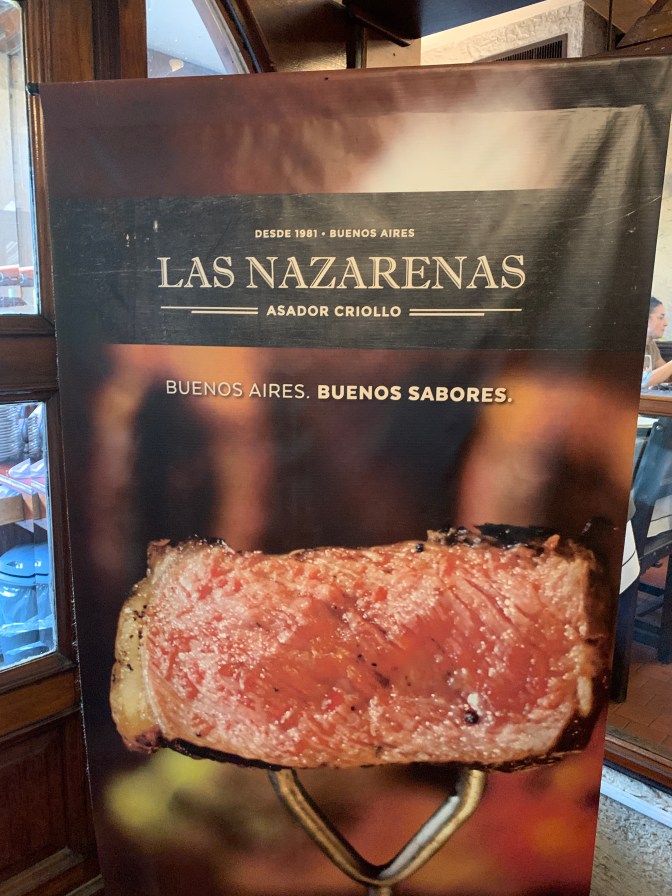
Upon our return to BA, we took the shuttle bus into town and headed for a restaurant – Las Nazarenas – that both Anne and I had been to and knew well from our various visits and time in BA. Lunch with Provoleta (melted cheese), lomo de Bife (steak), Chorizo (sausage) and Frutillas con dulce de leche (strawberry with caramel sauce) with a nice Argentine wine was absolutely perfect in all aspects. From there we returned for a little time to the Basilica and to Florida Street for some shopping, before returning to the ship.

The evening show was an “African-American” singer “The Duchess of Soul” – Teacake (yes that is her actual name). She has many Broadway Credits and 4 albums to her name.

 Roger & Anne Travels