Thursday & Friday March 5 and 6, 2020 – Callao / Lima, Peru
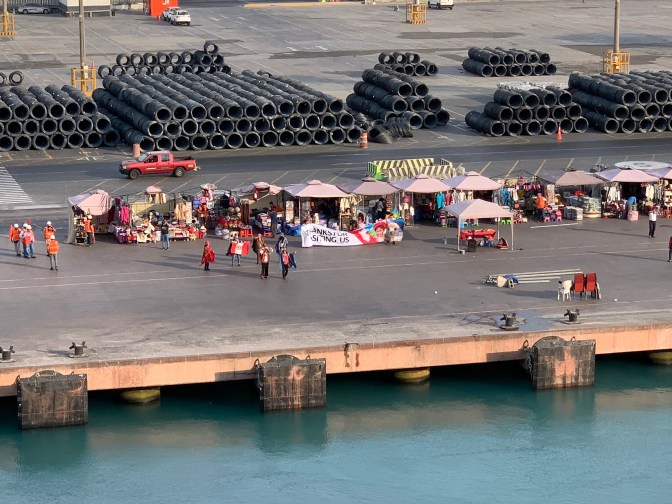
We docked in Callao, Starboard to Dock, noting that a small pop-up Craft market with some 10 shops was by the Quayside. We are to be here for two days and so took 2 full day tours.
Friday we went on Coach 5 Yellow with Patrick as the Cunard representative; Sergio the very good driver and Ofelia, the outstanding guide with 25 years experience. As we hope to return at some point, we asked her for details to use that company, and if possible her, as our guide. Details are – Abercrombie and Kent – http://www.abercrombirKent.com.pe – Agent Manager – mpizarro@abercrombieKent.com.pe Ofelia Larco cell 998-708-528 and her e-mail is ofelialarco16@gmail.com.
The second day our driver was the excellent Jorge, and the arrogant Richard who knew his stuff, but treated the driver and others like surfs and was poor at crowd control, never counting people when we returned to the coach after each stop etc. He was very good with his facts and figures, however. The below entry combines both days particularly as far as general information.
Callao got it’s name from the rocky pebbles by the sea forming a soft (Callado) sound with the ebb and flow of water. Callado shifted over time to Callao. Peru got it’s name as the Spaniards upon arrival stopped one of the natives asking where there was gold and silver. Not understanding the foreigner, they said that they needed to visit their leader Piru. Spaniards thinking that was the name of the place called it Piru which gradually changed to Peru.
Callao is an independent “state” of 800,000 people and the gateway to Lima as the Airport and Docks are both there. Callao, in and of itself is not an interesting area but is the way into Lima.
Lima has a population of 11 Million divided into 43 neighborhoods, each with it’s own Mayor and government, with Peru having a population of 31 million. Arequipa, Peru’s second most populous city had 1.2 million. December to May there are blue sky’s during summer but June to November sky’s are overcast. There is virtually no rain in Lima and amounts to 1.5 – 2 inches a year. However, rivers from the Andes feed a reservoir that holds up to a 3 year supply of water for the city. Temperatures range from a cold of 54F to a high of 100 in mid summer – February. Public transportation is a bit of a mess as there are different private bus companies that take whatever routes the feel like and wait longer than they should at stops as the drivers are paid per passenger transported. The city does have a bus line but they are overcrowded and not good. A subway / Underground service is under construction, causing a lot of traffic delays.
There are 59 archaeological sites within the city limits and 3 golf courses.
In 1978 a communist professor Abimel Guzman at the University would gather similar minded students in the dormitories at night and from there the movement known as the Sendero Luminoso (Shining Path) of terrirists was born. During their reign of terror some 64,000 people were killed or disappeared. The plan was originally to fight for anarchy and the rise of the proletariat. Families were terrorized to give up their teenage sons for the fight, threatening mothers with death if the child was not given up. The movement started in the country but In 1988 they arrived in Lima and blew up one of the electrical supplies plunging the city into darkness. He was caught and Jailed in 1992 in solitary confinement. He is 88 and only allowed 30 minutes of daylight a day. The other terrorist Group MRTA was also active during this time. At one point, disguised as waiters at the Japanese Emperor’s birthday in 1996, the Japanese ambassadorial many important people to dinner and all were kept hostage, releasing the women and frail, but keeping 72 hostage for 4 months and 2 weeks. The Red Cross sneaked in pens with cameras to the hostages and they discovered that at noon the MRTA would all play football. So a tunnel was dug from a Neighboring house and the rescuers attacked at noon liberating all the hostages
With the arrest of the leader of Shining Path and the defeat of the MTRA social unrest died down and in 1996, the US companies like McDonalds, Chili’s Starbucks etc start opening and life returns to normal.
Education & Social Services – Education through high school is free for all, but because of the numbers, two periods are established each day. The first group of children study from 7:45 to 13:45 with 40-50 per class. They then go home and the second group for the day come in and are at school from 1 to 6 PM. There are also private schools where children are in school from 7:45 to 3 PM and there are only 15 to 20 students per class. Public universities are free and good but only except 50 out of every 300 applicants there are also 32 private universities which cost approximately US$700 to US$35,000 per semester. public health is free for the poor and those that have no jobs, workers have to pay a small premium and there is all ways insurance to cover medical and also private medical care. The church provides soup kitchens for the poor from noon to three. The government provides breakfast and lunch in schools .
Finance – Personal income tax in Peru – if you earn up to US$10,000 no tax; between US$10,000 and US$20,00 8% tax and over 20,000 – 15%; VAT is 18%; tourism is tax free; corporate income tax is 27% of profits. Companies pay 15 salaries per year to their employees – 12 months plus an extra month in July and an extra one in December and one extra during the year. Minimum Salary is US$280 (Soles 930 at an FX of about 3.3:1US) per month; Teachers start about US$600; Police US$900; Government Paid Doctors US$1,200 a month, but the best paying entry jobs are in mining. Peru is rich in many minerals Silver, Gold, Copper, Lithium and natural gas. Petrol is US$ 3.20 to $4.15 per gallon and most stations have Petrol, Diesel and Natural Gas, but no electric cars. 60% of the petroleum used in the country is produced locally. Cars are imported with no local assembly. Japanese cars predominate and start at about US$25,000 whereas Chinese cars start at US$15,000.
Languages – The official language is Spanish but two other languages are also considered official in the country at least spoken is Aimara which is spoken around Lake Titicaca which approximately half belongs to Bolivia and half to Peru. The other principal language, other than English which is taught in schools is the Quechua language which is the language of the Inka empire. There are many words from Quechua, which is onomatopoeic but used in other languages such as chicha which is a fermented corn drink, and quinoa. Quechua only has three vowels (A, I, U) and was the language spoken by the majority of general populous of the highlands not only in Peru and Bolivia, but also in the neighboring countries that formed part of the Inka empire. The Inka Elite spoke Pukina (much like in the Egyptian Emoire, where two languages were spoken depending on social class – cf Rosetta Stone in Greek and the two Egyptian languages). There are 18 language families still spoken in Peru, many in the Amazon region, but many are either dead or rapidly becoming extinct.
The Inka Empire, which most people consider the predominant Peru culture had between 9 – 20 million but generally accepted to be about 12 million. At the time of the Spanish Invasion, they indeed had a very large empire. However, like the Aztecs in Mexico, the Inka were very late in the history of Peru. The rise of the Inka started in AD 1200 CE but the apogee of the Inka Empire started in 1466 and ended at the Spanish Conquest in 1532. Spanish Rule was from 1535 to 1821. Thus leading to Peru’s history really can be divided into three major periods –
1) The early settlers going back 3000 BCE / BC through the Inka until 1532
2) The Spanish Colonial Period 1532 to 1821 where a Viceroy administered, Priests were sent to evangelize, horses were sent from Spain to control the population and diseases such as smallpox and Chickenpox arrived which together with harsh working conditions in the mines, killed off between 30% to 90% of the population. Initially the population were considered “Godless Savages”, but the influence of the priesthood changed the impression of the locals to “innocents needing repentance and conversion”. The dictum “Hold your bible close to your heart, close your eyes while we take your Silver and Gold” seemed appropriate.
3) The Republic period 1821 to today. In 1821 the independence from Spain brought on a Republic, but the aristocracy still owned all the land. It was not until 1969 that there was land reform, the people gained control of the land, which they had been working, but did not have managerial and business experience. This gave rise to the radical groups – Tupac Amaro, Shining Path etc and the start of hyper-inflation teaching in 1988 to 2700%. In 1990, Fugimore an army officer and intelligence service head was elected President becoming a dictator and started the war on the terrorust groups. He had great success and was re-elected in 1995. In 2000, following a rigged election, he was re-elected. Four months later corruption and bribery were exposed on TV so Fugimori flew to China on a state visit then to Japan where he claimed citizenship and resigned the presidency by sending a fax. Extradition efforts were not successful as he was a Japanese citizen. He remained there until 2005 when he decided to return voluntarily to Peru to fun for president. On arrival, he was arrested and imprisoned. All ex-presidents are either in prison or committed suicide. In 2016 his daughter Kiko Fugimori ran for president, getting 60% of the congress but loosing the presidency, She was soon imprisoned on money laundering offenses.
Thursday March 5, 2020
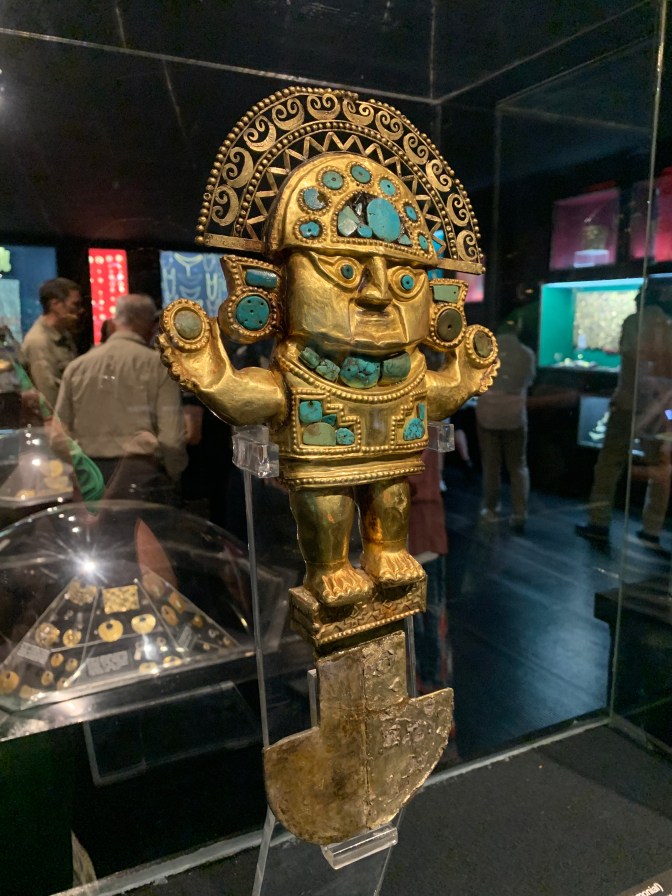
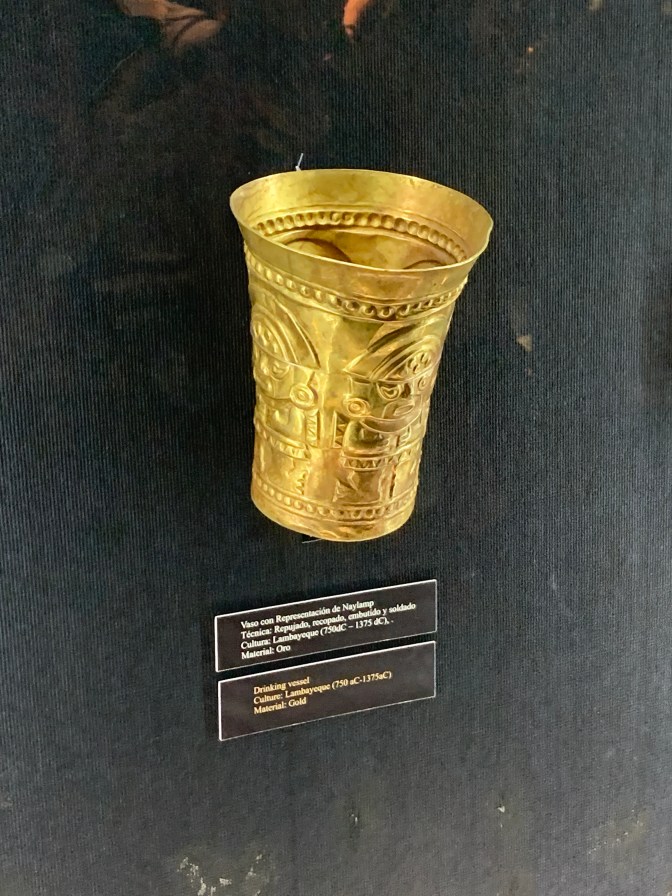
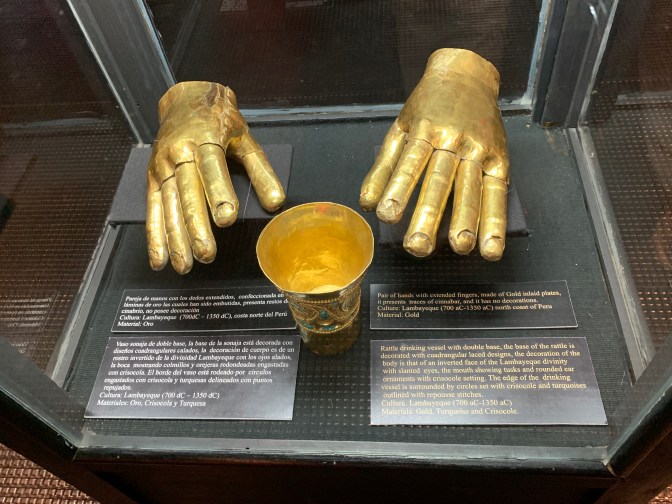
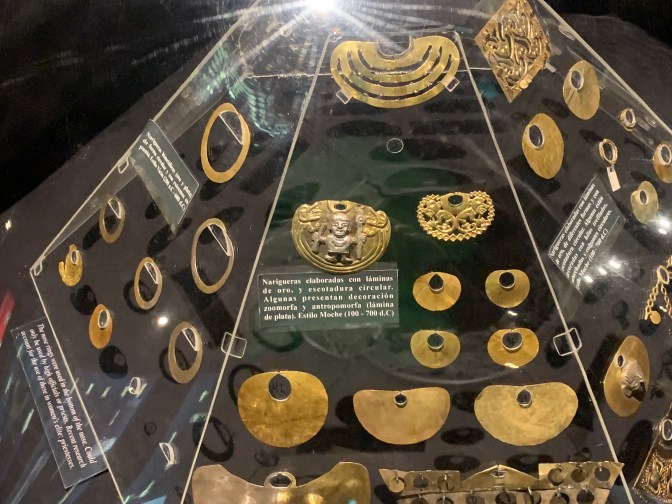
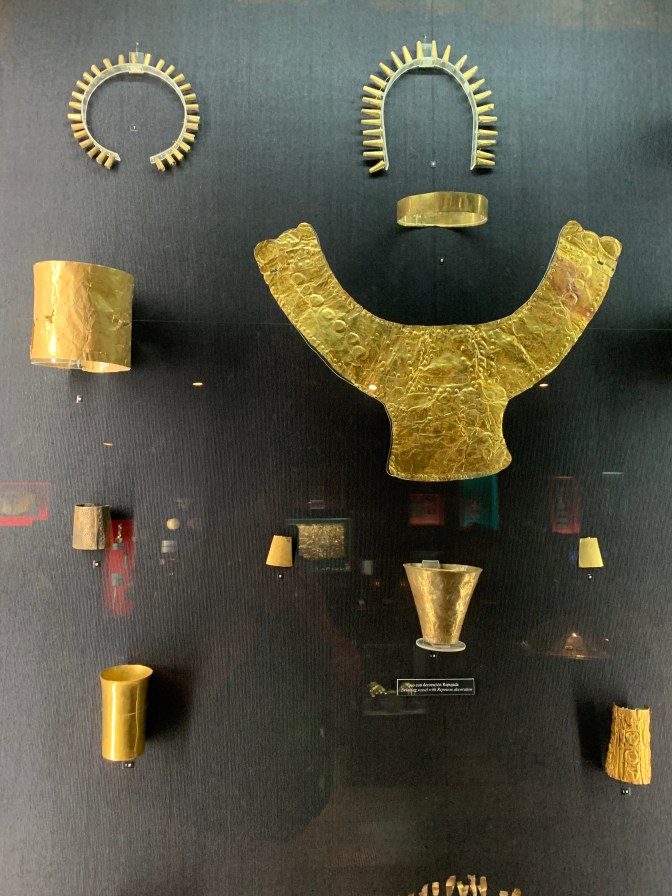
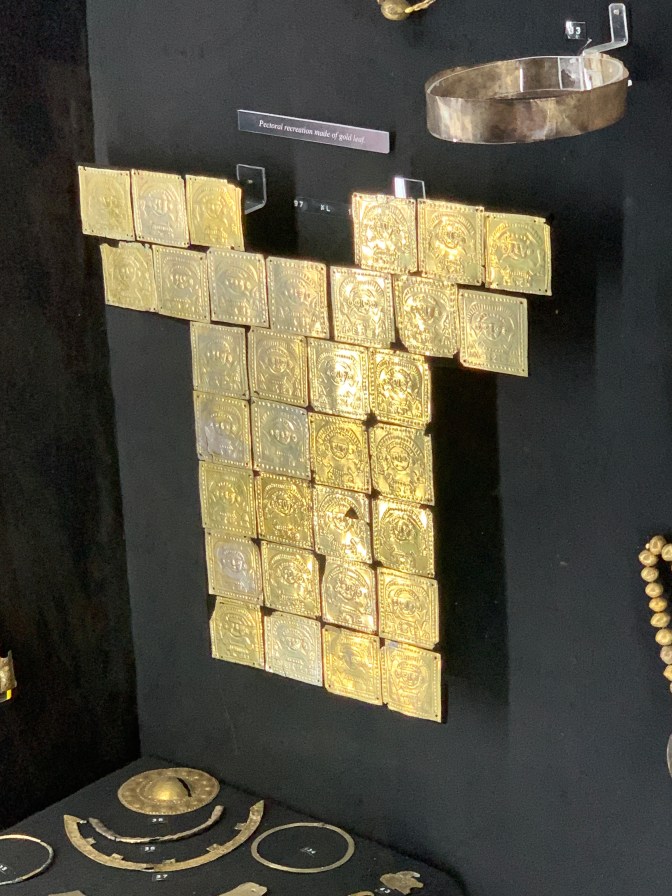
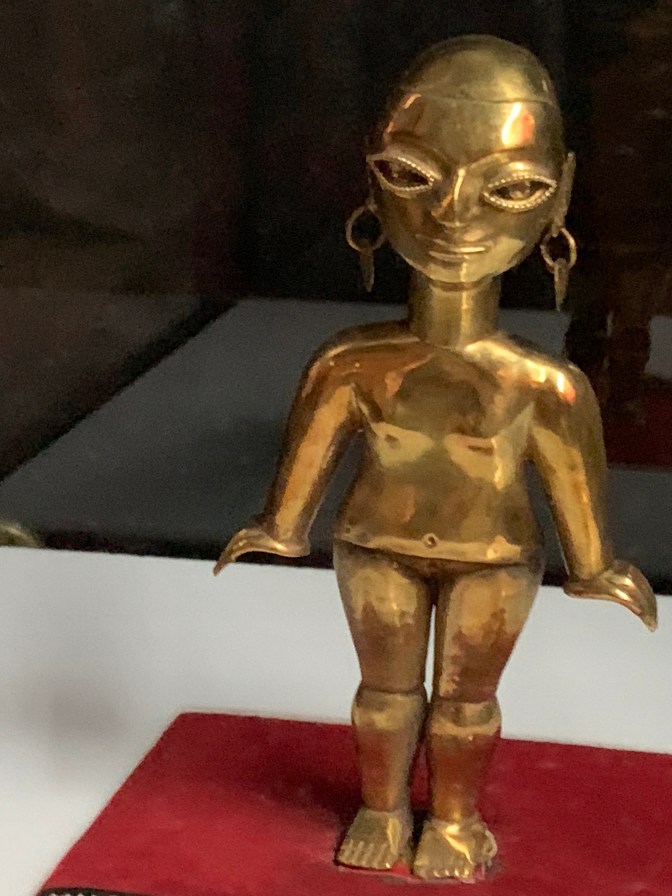
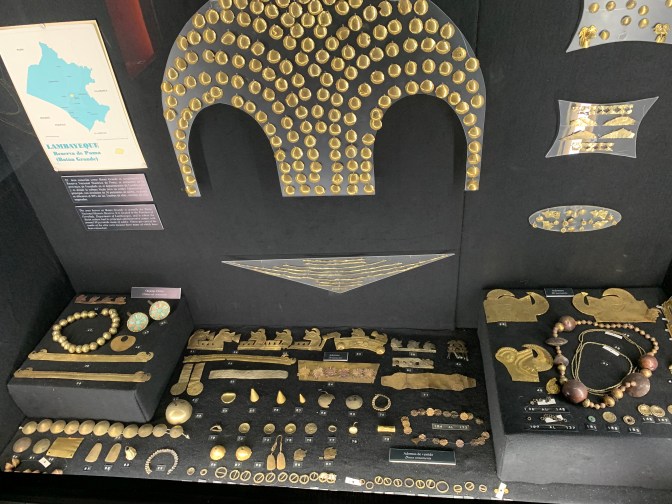
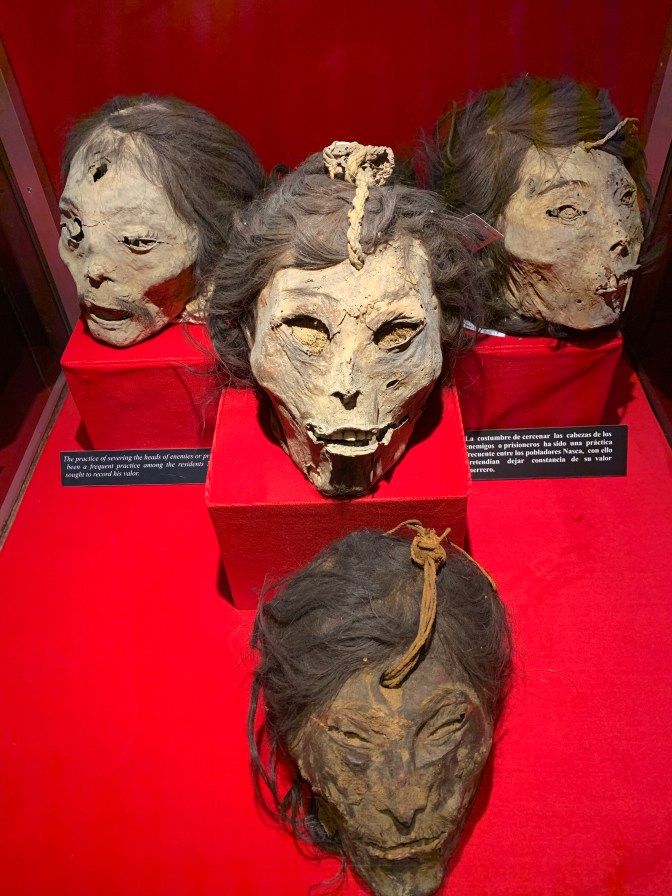
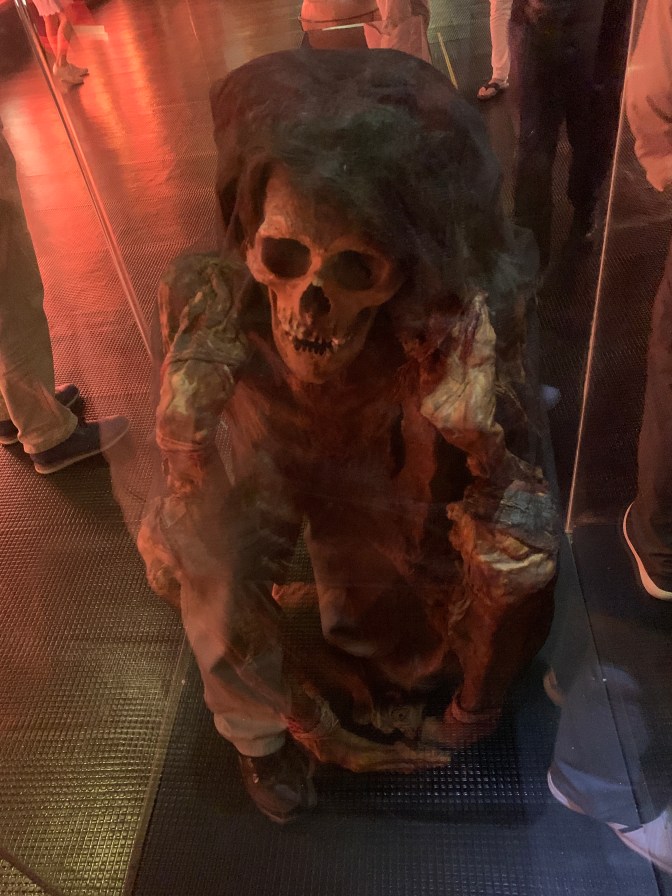
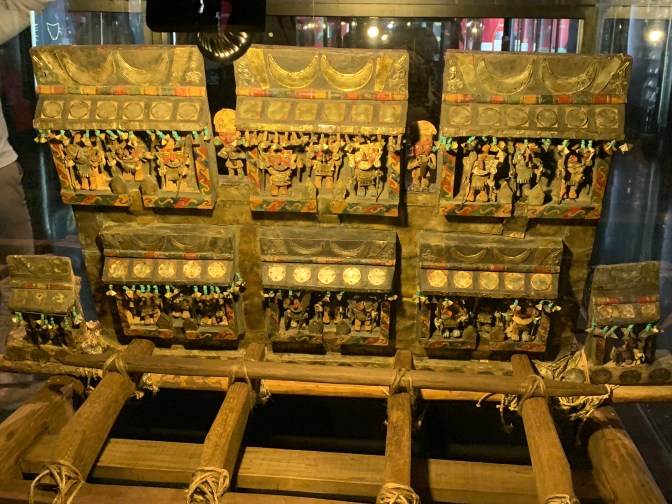
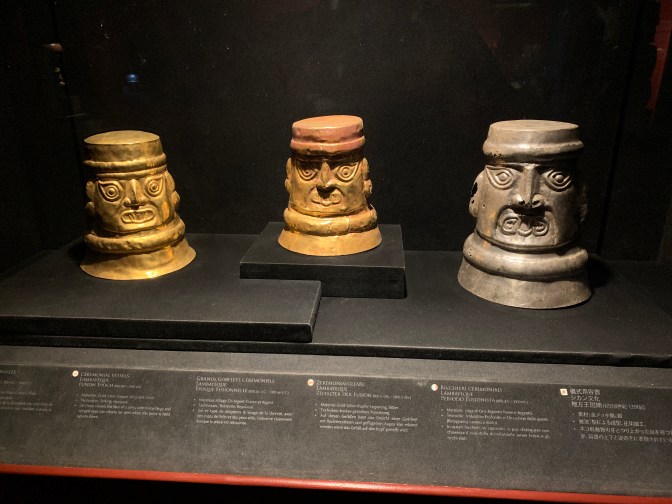
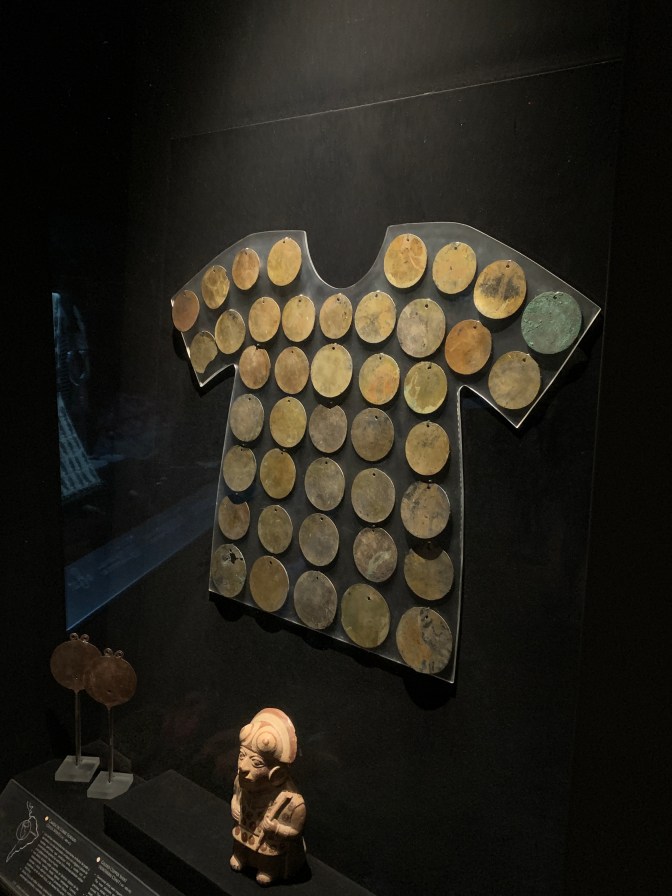
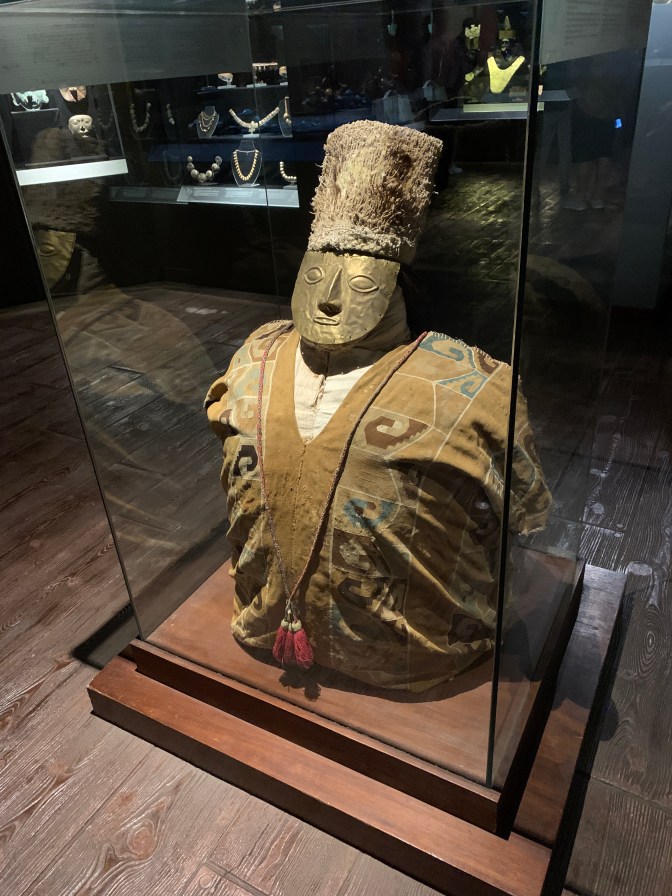
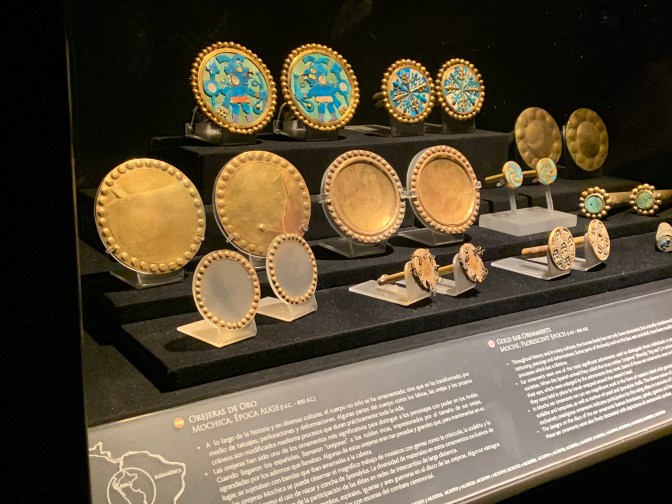
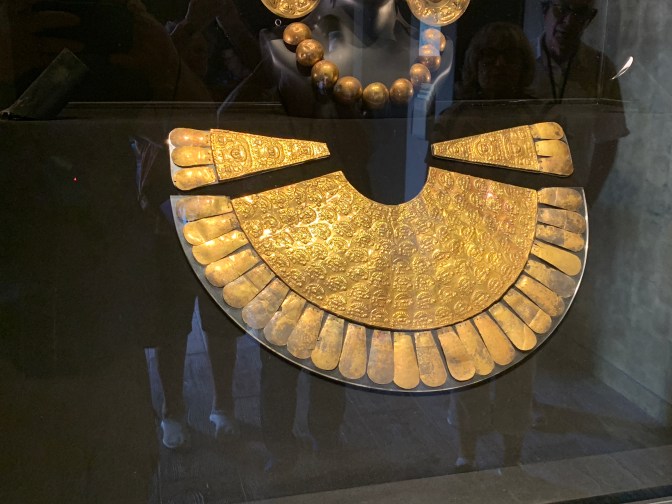
The first day lead us to The Gold Museum / The Weapons Museum. Miguel Mujica Gallo (1910-2001) was director of the National Tourist Agency, Ambassador of Peru in Spain and Mexico. Prime Minister and Minister of Foreign Affairs of Peru. He was an avid collector of weapons of war and collected some 20,000 weapons from all over the world. At one point a vendor, knowing his interests in weapons offered him a “Tumi” – A Ceremonial knife used in Lambayeque culture. He wanted to sell that gold knife, but only if he could get rid of the 36 other gold pieces at the same time, thus starting his private pre-Colombian gold collection. He amassed over 7,000 per-Colombian artifacts. In 1993, rather than distribute the collection amongst his children, he formed a foundation, donated all items to the foundation and opened the museum do ax to keep the collection together. We visited the Gold part and were absolutely blown away by the spectacular collection of so many gold pieces it was nothing short of mind-boggling. No visit to Lima should be without a visit to the museum. We wandered through part of the weapons museum on the first floor leading to the basement gold and the pieces were also amazing. To think that all that gold was not found by the Spaniards, gives one an idea as to how much gold they actually took back to Europe and melted down. The handiwork that was lost is mind-boggling!
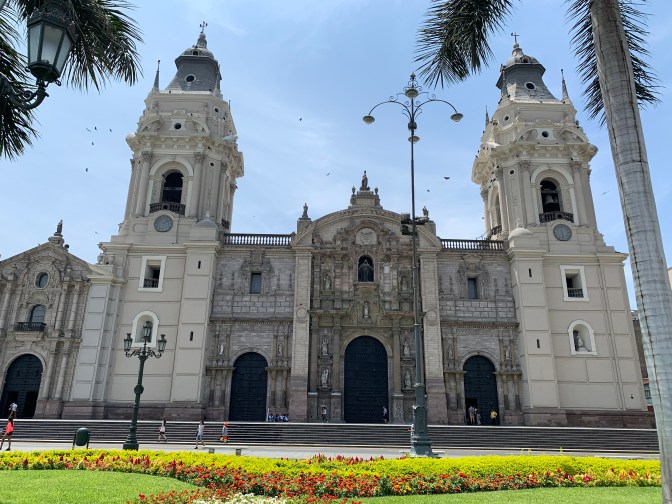
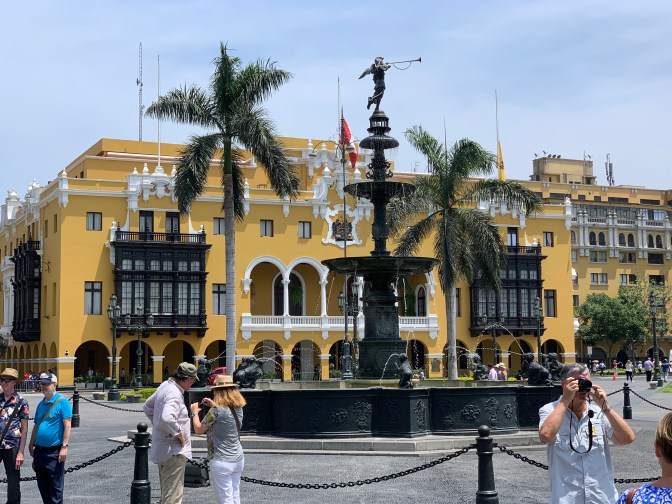
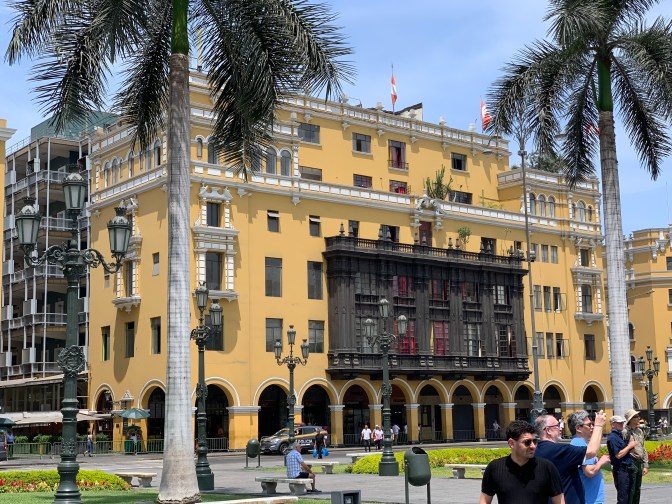
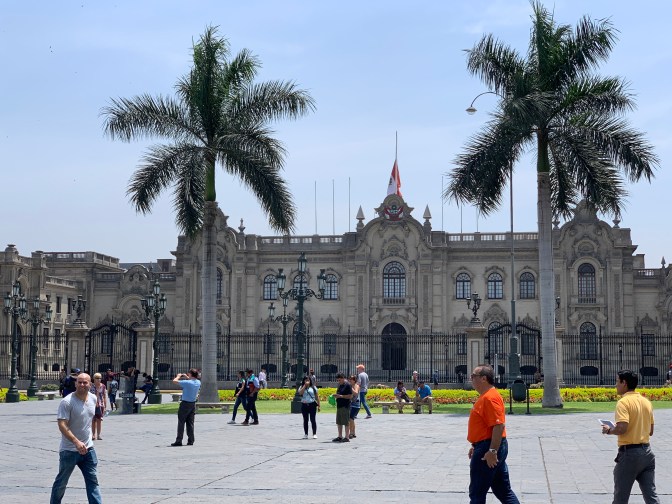
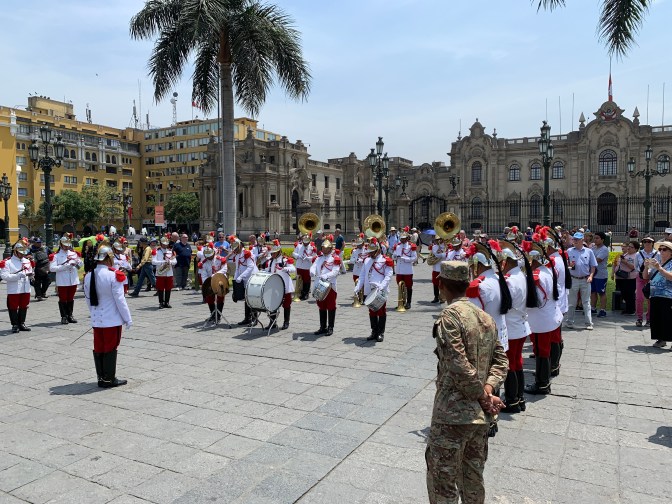
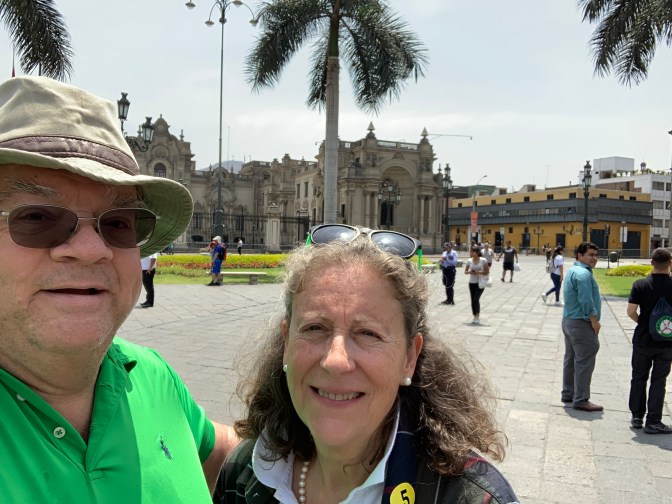
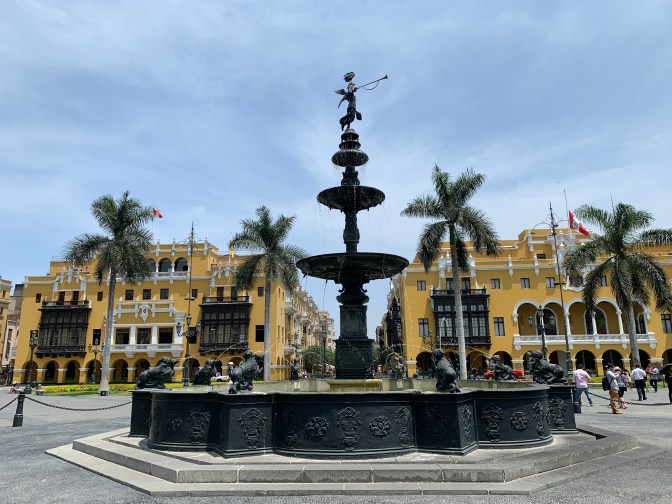
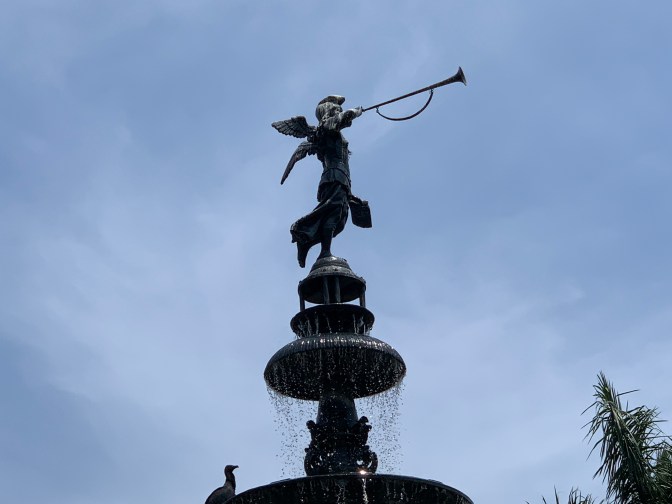
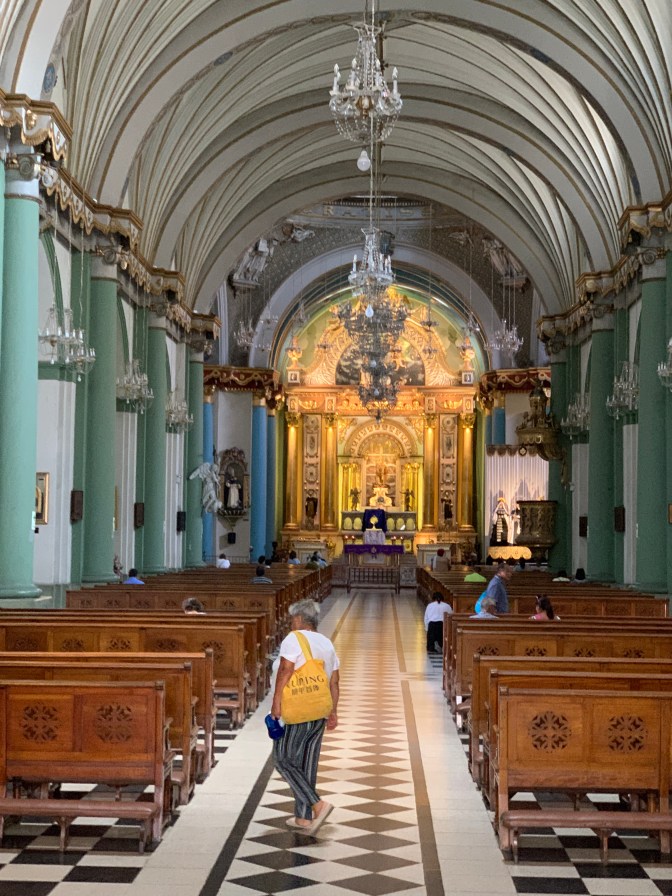
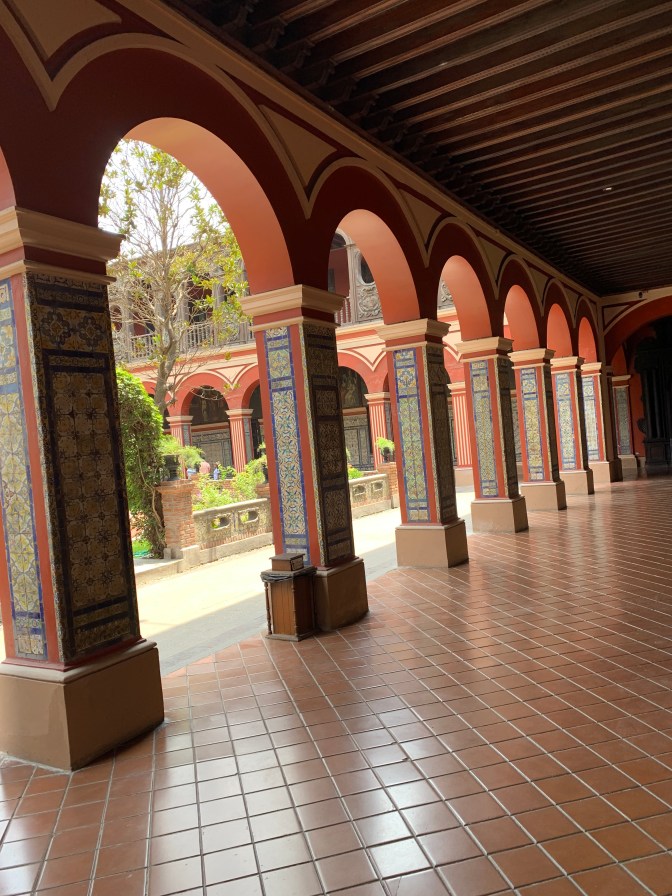
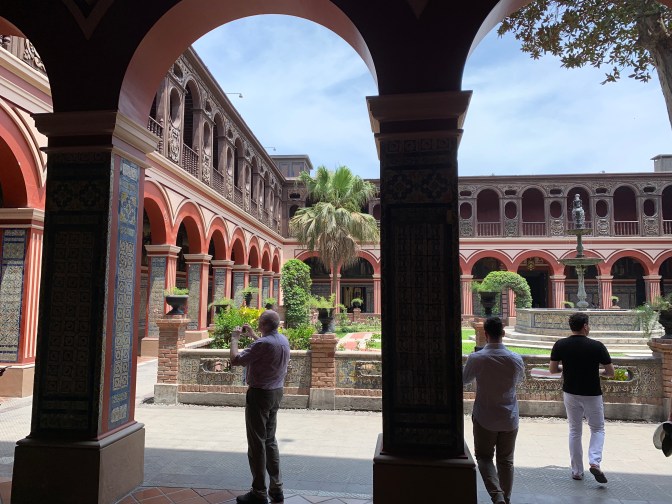
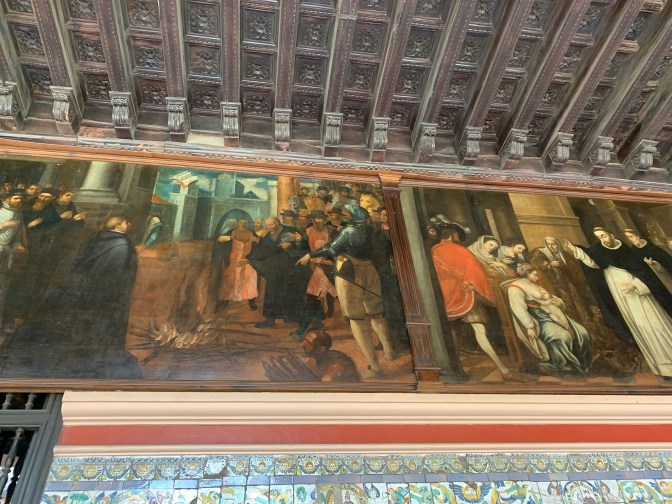
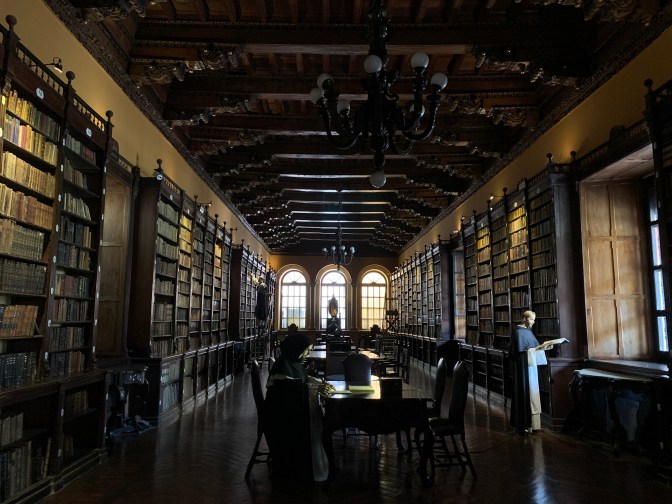
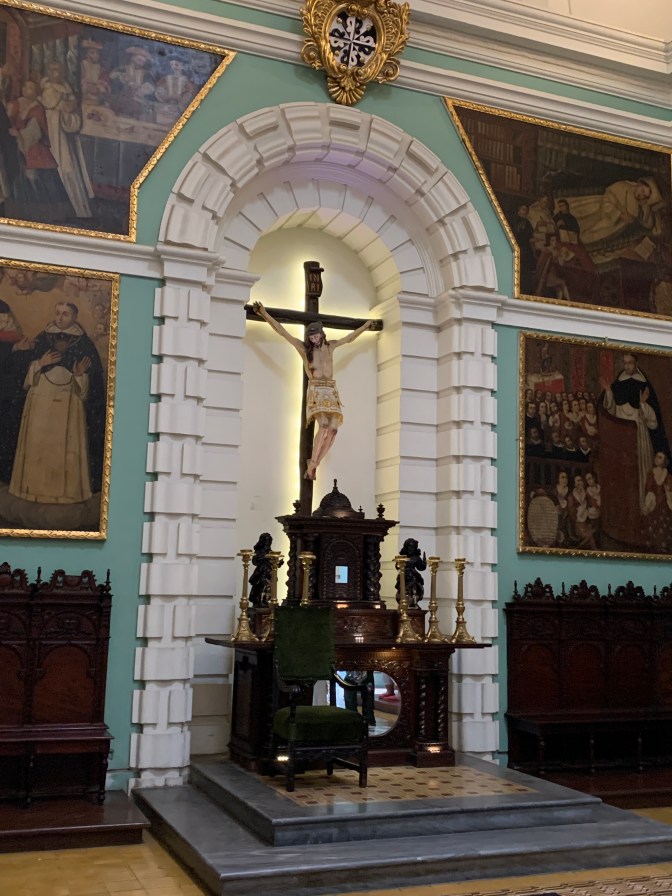
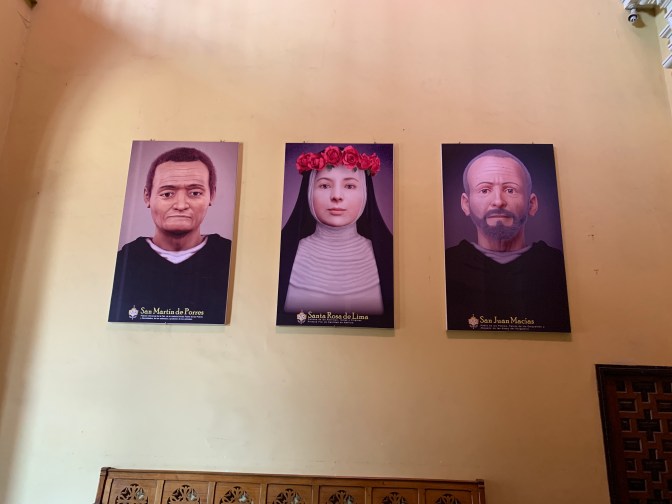
Our next stop was at the UNESCO world heritage site of the center of Lima. Here, the main square and government buildings, all colonial in construction, form a spectacular array of yellow buildings around a fountain and tree lined park. The cathedral is also spectacular as is the nearby Santos Domingo Dominican convent. We passed the oldest bar in Lima – Bar Cordano – to the Square. When we arrived we could only go into the cathedral, (burial place of Francisco Pizzaro, the Spanish Conqueror and founder of Lima) but after visiting it, we could enter the main square. Perez de Cuellar the Peruvian UN head dude today at 100, so flags were at half mast. There was the start of the changing of the guard and the military band came out and played for the congregated tourists. This few block area is closed off to the general public and restricted to tourists and people who have to be there. The Convent has a spectacular cloister and many old Spanish tiles with depictions of benefactors, geometric designs and biblical scenes. A date of 1606 was written into the tiles. The library with its thousands of books was particularly impressive. Three of the Peruvian saints – San Martin de Porres; Santa Rosa de Lima (buried in the Church) and San Juan Macias are honored there with images created from their skulls through forensic techniques.
Lunch was at “El Bolivariano” restaurant. We started off with Pisco Sour – Pisco, lemon, sugar syrup, egg white (in Chile they leave this out), this was followed by Causa Rellena – Cold Mashed potato with blended yellow peppers made into a roll with chicken salad in the center. Next was a chicken or pork Tamal with olives, Ceviche, Lomo Salteado (beef slices cooked with sauté onions and tomato.
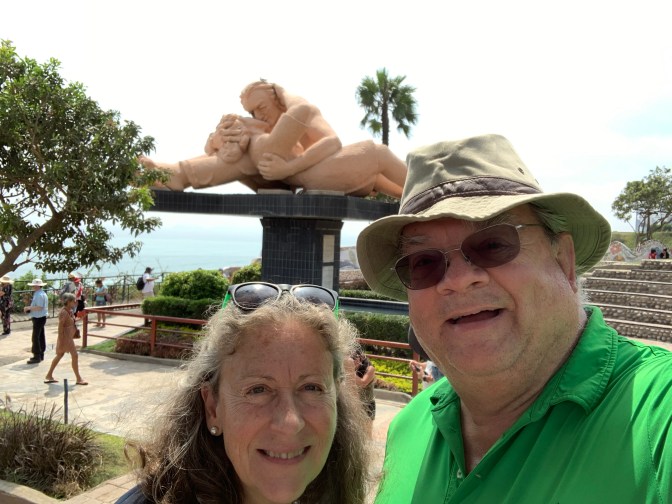
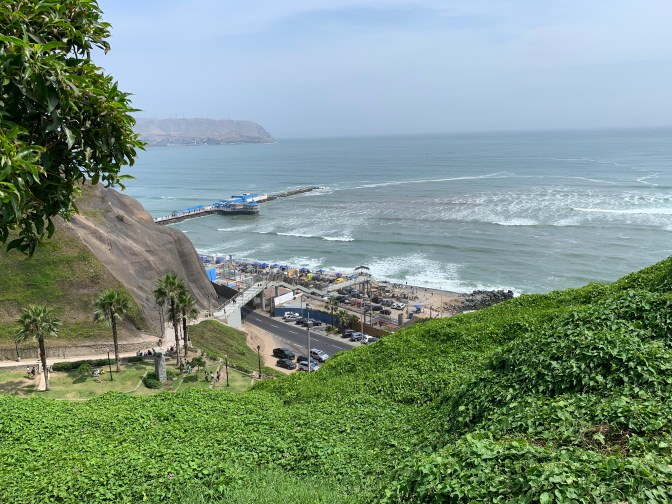
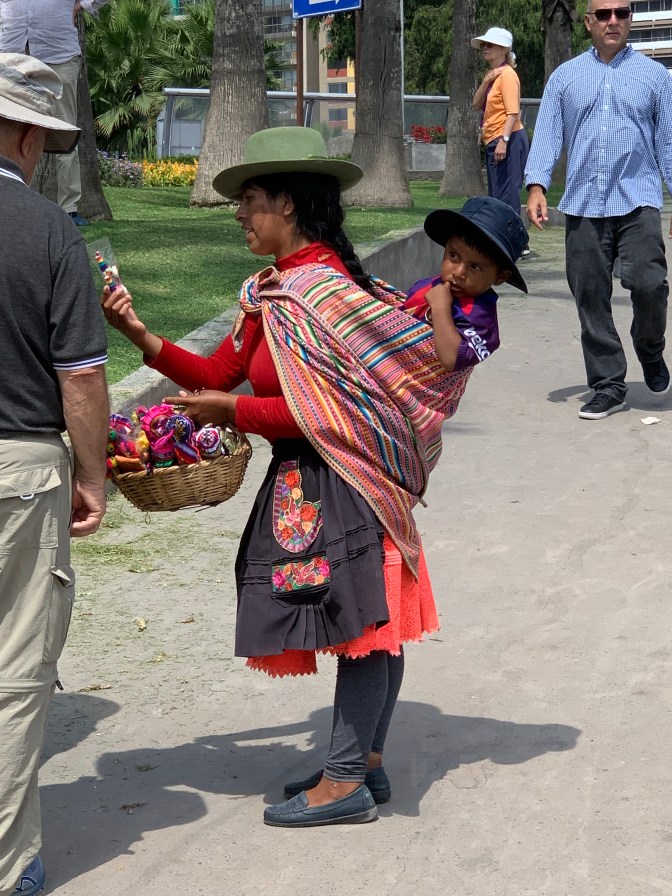
A brief stop at the Lover’s Park with it’s sculpture of a man & woman kissing provided a terrific overview of the beaches and maritime coastline before going to the Indian Inka Market. This group of shops as well as neighborhood is “the” place to go to purchase local handicrafts. We could have spent hours there but after 45 minutes which went by in a flash, it was everyone onto the bus time! We drove through various neighborhoods, saw many Tuk-tuk’s before getting back to the dock with it’s thousands of sea birds and the ship with the mooring lines filled with resting birds. We made a brief stop at the quayside pop-up shops before going in for the evening.
A Peruvian folklore dance troupe with very colorful outfits entertained us on the ship.
Friday March 6, 2020
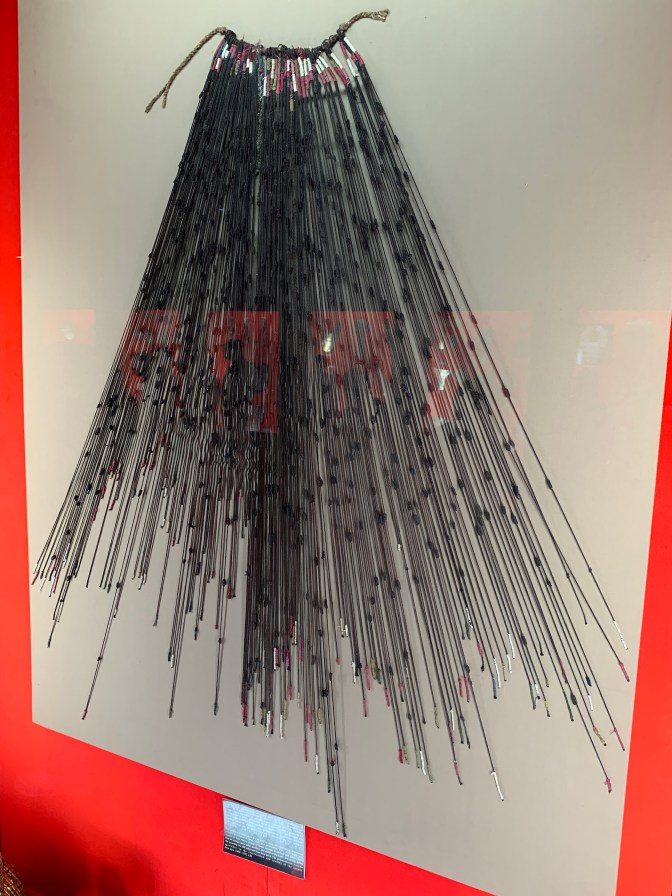
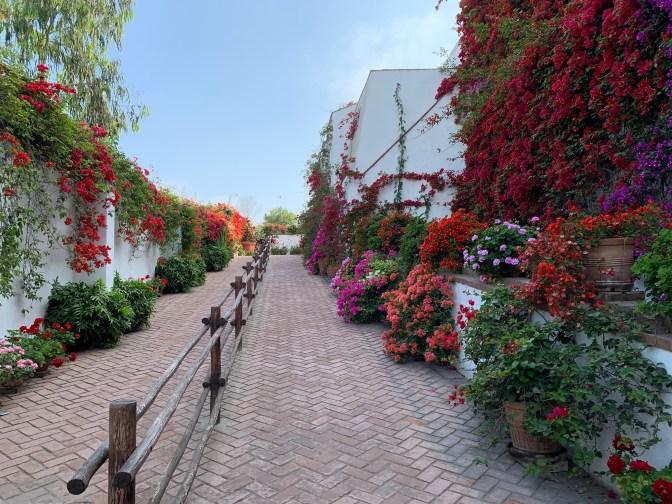
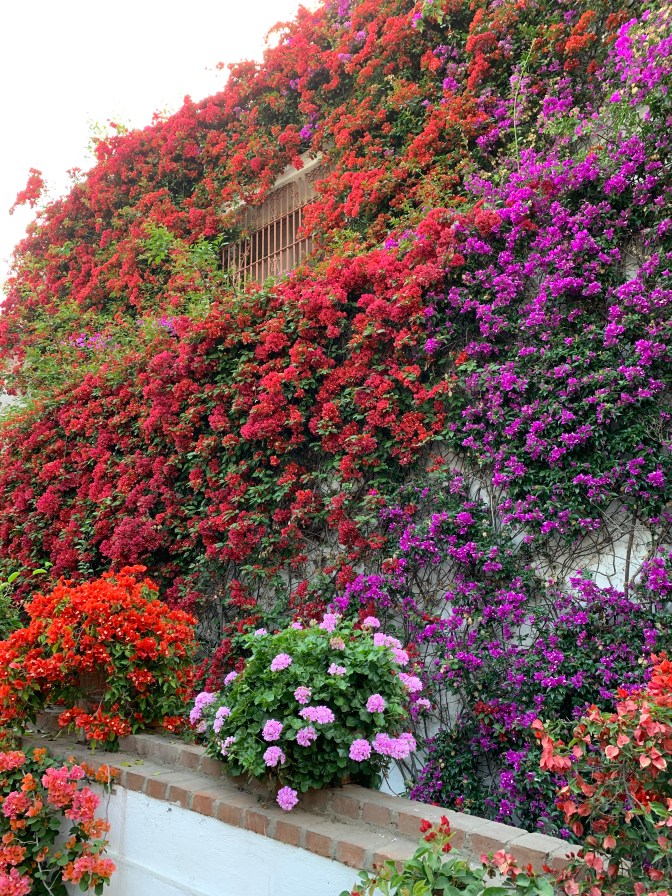
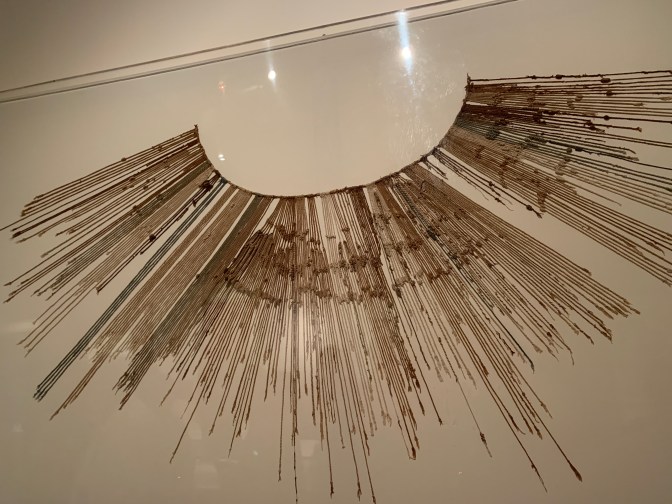
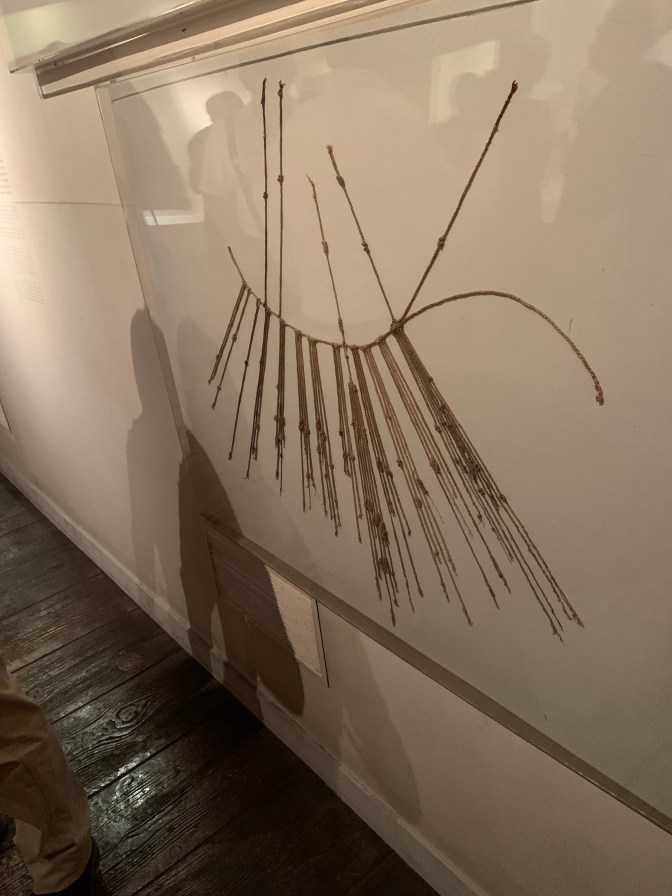
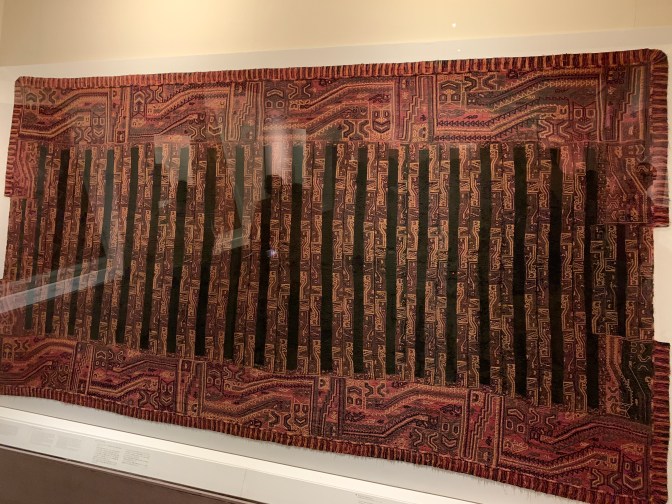
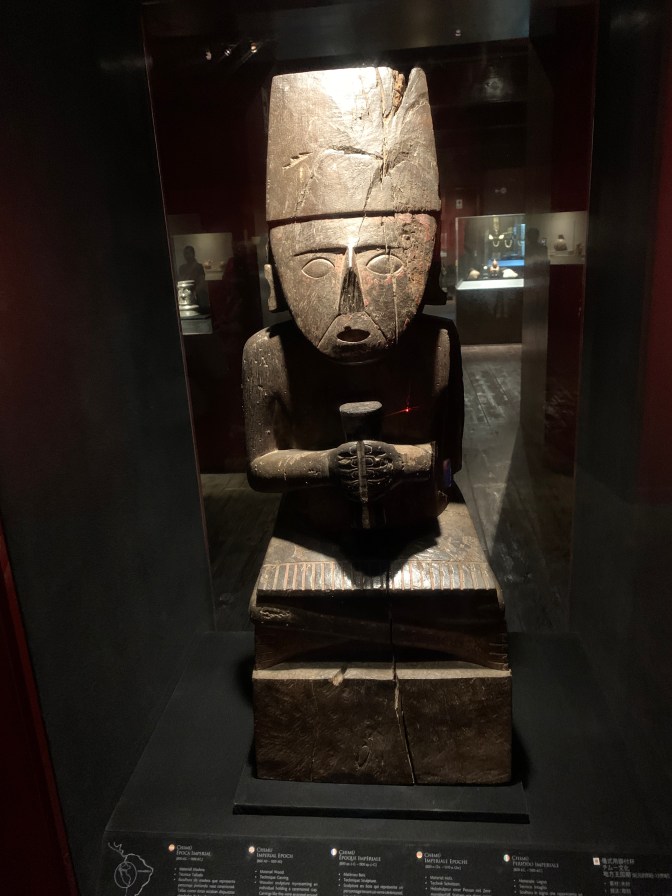
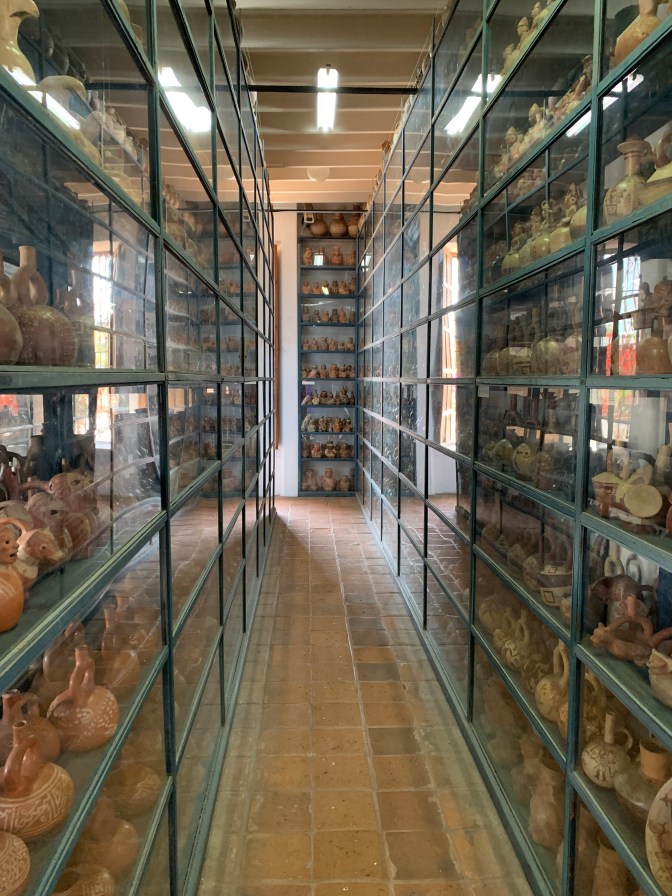
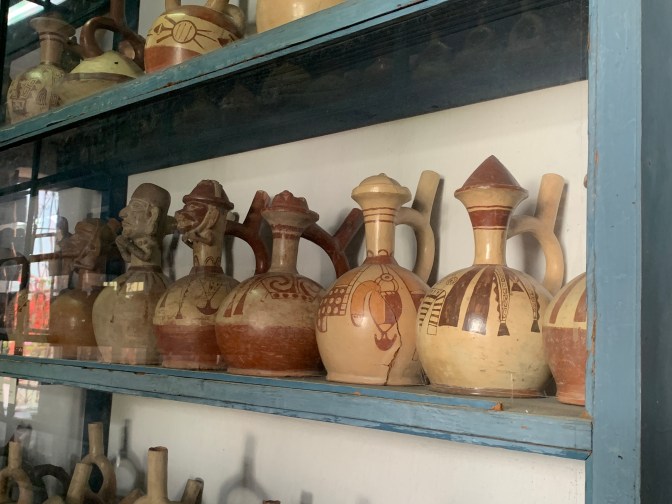
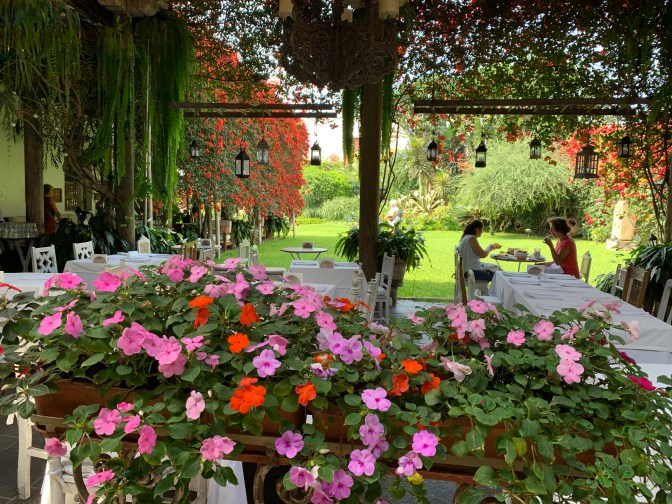
The following morning on Coach yellow 3 we set off to the Archaeological Museum / private collection known as the Larco Museum (1926). A sign outside indicated that we were 6,191 Km from the South Pole, 10,183 Km from London, and 5,883 Km from New York. As we entered, we were struck with the most magnificent show of different colored bouagmvillias all the way up the entry ramp. The collection by Rafael Larco Hoyle (1901 – 1966) was spectacular. It had Gold, not as much as the gold museum, but it had ceramics, textiles, Quipus, mummy bundles, sculptures etc. Quipus (Khipus) were the “Excel Spreadsheets” of the Inka. Through a series of strings and knots tied in groups and of differing colors, and distance between knots assisted in fair trade and accounting administration could be maintained. A separate building near the café housed a collection of some 500 erotic ceramics. A separate room held thousands of ceramic vessels stored on shelves. There were 9 shelves in every vertical case, 6-8 ceramics per shelf, 10 cases per row and some 14 – 16 rows in the room.
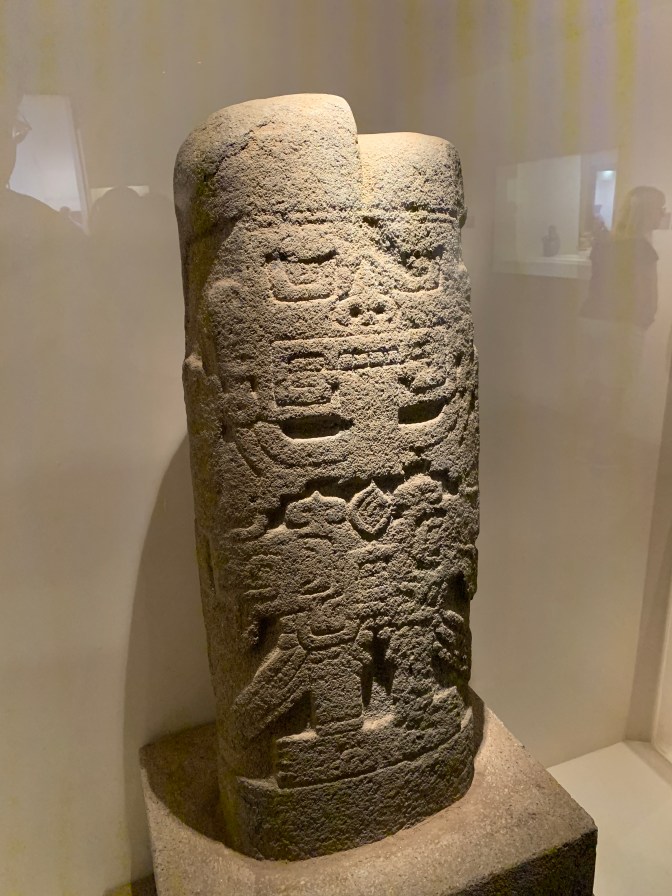
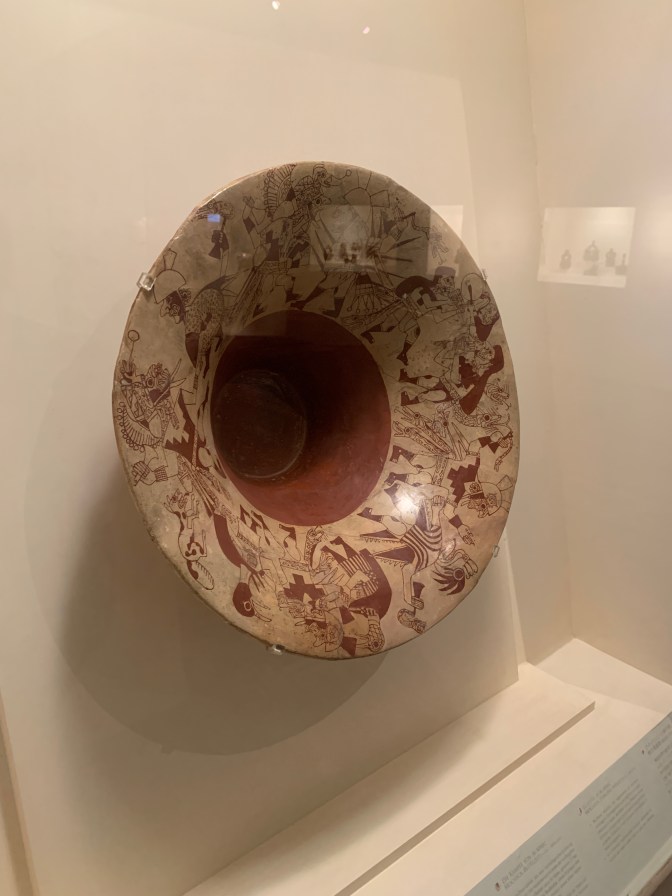
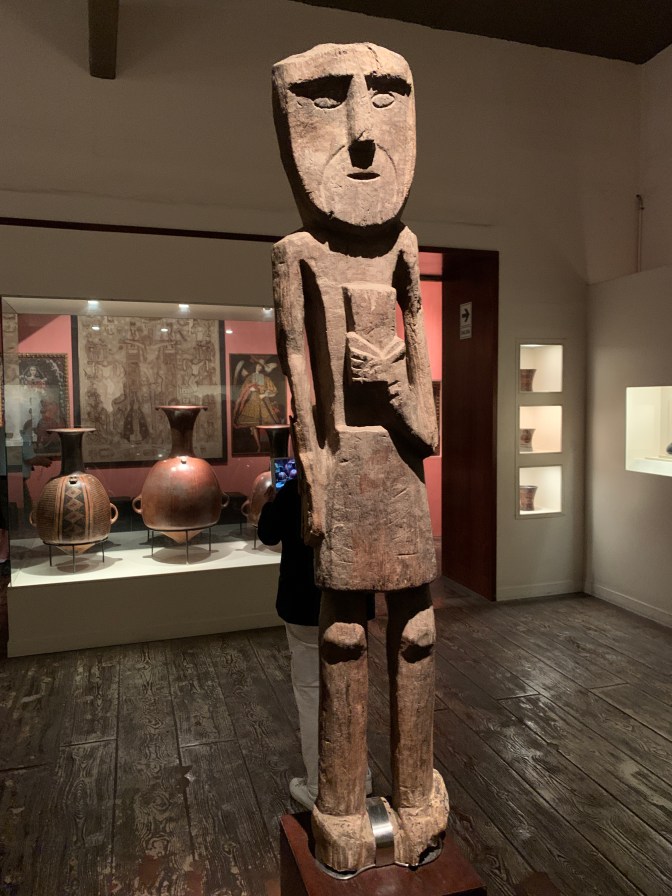
The next and main destination of the tour was the Pachacamac archaeological zone. (www.pachacamac.cultura.pe)
The site is divided into three major areas with walls dividing each area.
1) The ceremonial center consisting of the pyramid of the sun, the painted pyramid, The old Pyramid, the cemetery and the quadrangle area. This was our penultimate stop, but the most important area in it’s time. The painted pyramid is now not able to be visited and is covered due to many prior visitors defacing the walls and taking “souvenirs”. They are working on a way to allow visitors while keeping the frescos safe.
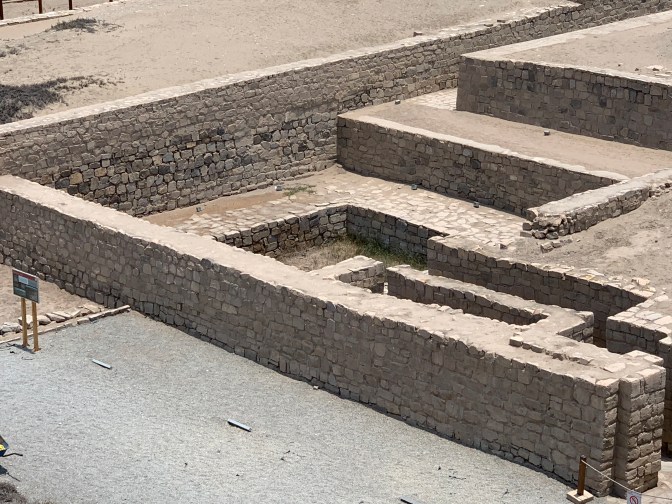
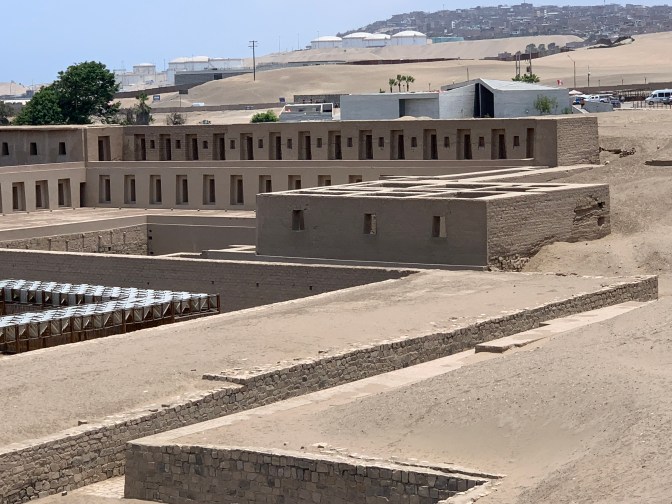
2) The Administration Area – This consists of 16 buildings each with ramps and representing one of the 16 regions and considered as if an “embassy” to the capital. When the elite travelled to Pachacamac to have an audience with the ruler, they would arrive at their respective “embassy” where local priests would come to visit. Then a 20 day fast would be undertaken before the audience was granted and started with an exchange of gifts. This prescient would consist of plazas, rooms, etc plus the common area for the fasting of the visitors/ pilgrims. It includes the palace of the last local Inka leader – Tauri Chumpi and the Acllawasi – House of the chosen girls. This is surrounded by a network of stone canals covered with slabs. This is part of an extensive water system throughout the site. Some of the canals of the site date to 1500 BCE where an important Chavin Site was located in this area having underground water canals and a high level of sophistication for the era. There is some controversy as the Archaeologist (Julio C. Telli Rojas – April 11, 1889 to June 3, 1947) working this site reconstructed (without differentiations) as he believed it to be rather than what it probably looked like. However, in the 1930’s & 1949’s this was accepted archaeological technique.
3) The third area has more simple architecture and the domestic / residential area where pilgrims would stay when waiting for the audience with the Gods / leaders.
As we entered the site going through the security, there was a museum that we did not visit however the other two busses that went to the site did visit. The first Adobe Lima complex at the entrance was a AD 200 CE to 650 CE is the oldest excavated complex with administrative use consisting of platforms and 5 rectangular rooms around a “T” form space. In the later Ychma era it seemed to be used for ceremonial purposes.
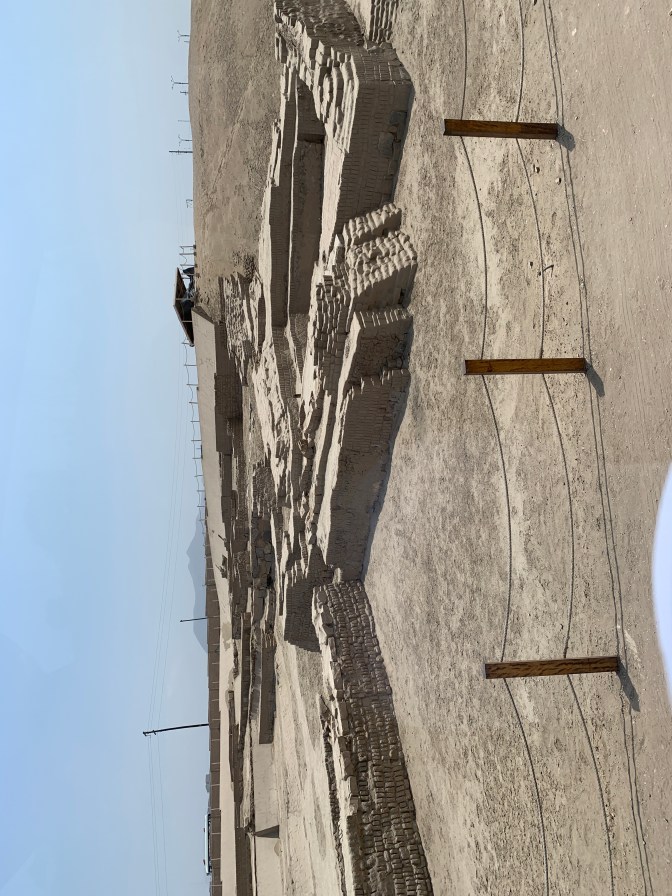
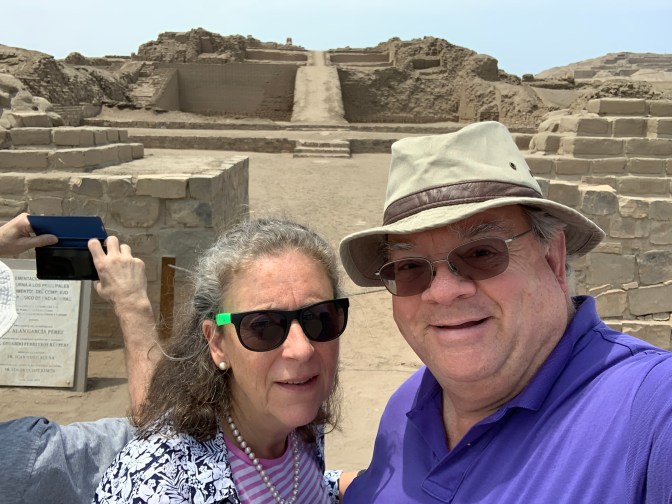
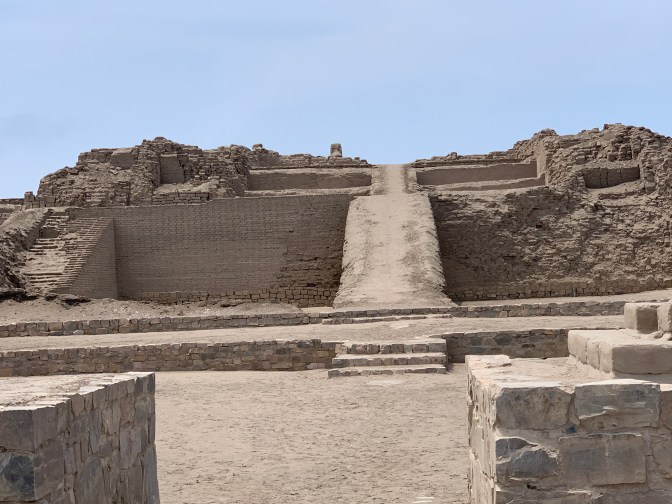
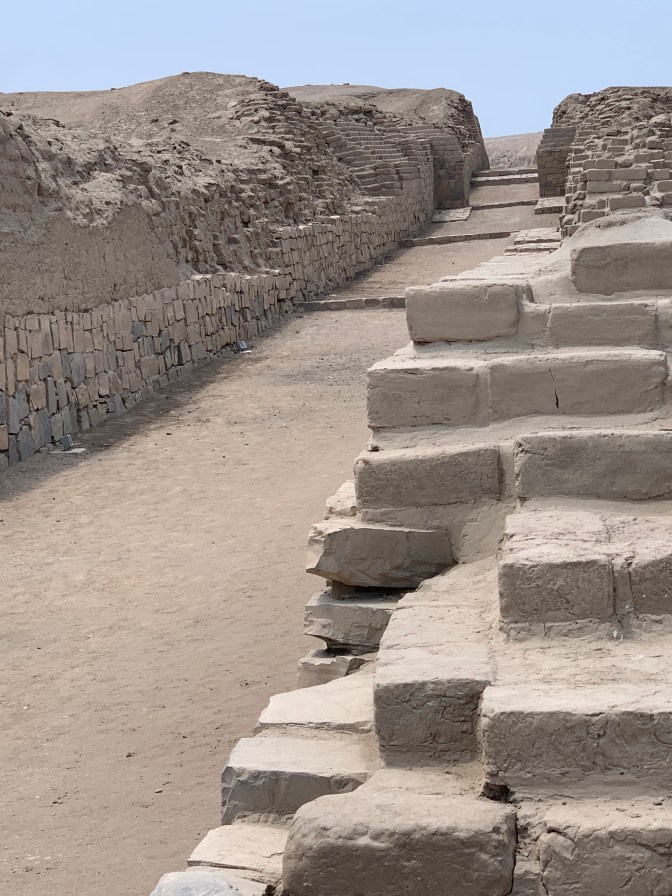

Our first stop at the elevated structure known as “Pyramid with ramp I” dating to AD 900-1470 CE which, as stated was for administrative purposes and has several overlaying platforms, accessed by a central ramp. It wasps probably a “palace” of sorts with burial chambers, rooms and storage areas. Next to this structure is one of the many Inka Trails or Roads. The North – South Street consists of tall walls of Adobe and Stone, leaving a flat 3-4 meter (6-12 feet) wide toad and 460 meters long. It intersects the East – West Street dividing the City. This was one of the most important streets connecting the various ramp buildings – Ramp Complex 4, 7 and others. This road continued to be used during the Inka era and was destroyed by a severe earthquake during the Spanish Colonial period. Part has been escalated and now visible giving us a clear picture of what these roads (similar to Maya Sacbe) looks like. Runners would travel 4-5 kilometers before being relieved for the next 4-5 Km to expedite communication within the empire. All together there are 42 Kikometers of Inka Trails dating at it’s apogee to about AD 1000 CE.
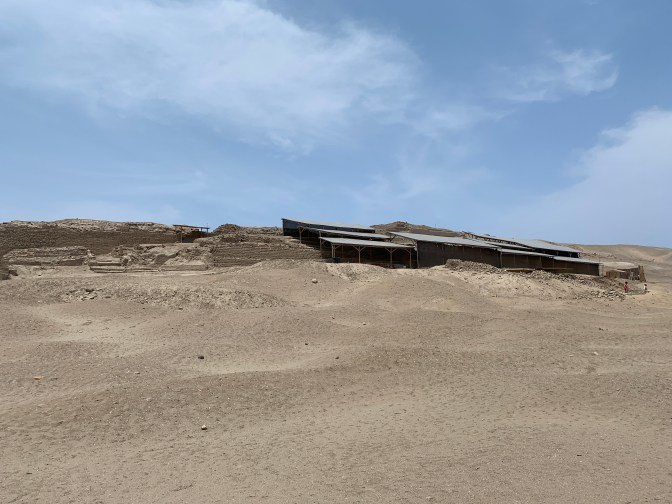
Our second stop was at the extreme South West of the site by the Lurín River – the Taurichumpi. It was on a rocky promontory near Inka elite homes and covered an area of 7,553.24 Sq Meters (81,300 Sq Ft). In 1533, the Spanish Chronicler Miguel de Estete indicates that when Hernando Pizarro was take to and stayed in this area of the city, thus it was the most important Government site at the time. About 1/2 the prescient has been excavated since work started here in 1966. In the 2006 excavations exposed two central patios surrounded by rooms. in 2012 emergency work was undertaken to sure up the area including the close by East – West Street.
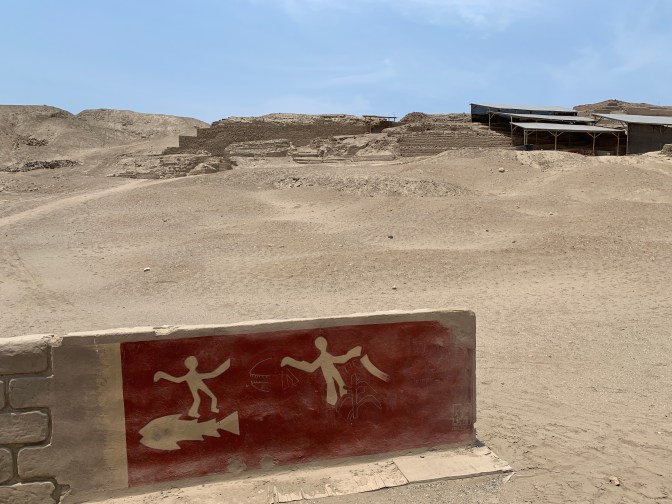
The next stop was in the ceremonial area of the Painted Temple, Temple of the Sun and Cemetey. In 1938 the archaeologist Alberto Giesecke started excavations at the Painted Temple finding an incised wooden image of The Idol of Pachacamac, but the real archaeological work did not start until 2008 when a temporary roof and covering so as to permit further work and the development of an image database. The Painted temple (AD 200 – 1470 CE) is a rectangular building of Small adobe bricks having 6 meter (18 ft 6 in) tall ramparts covered with a colorful adobe plaster depicting anthropomorphic figures, fish, birds plants etc. This was probably the location of the “Oracle of Pachacamac” until the Spanish invasion.
The Max Uhle (1856 – 1944) Cemetey busied the Painted Temple (AD 600 – 1533 CE), named after the archaeologist working the site, where vestiges of Mummy Bundles, fine funerary ceramics, textiles and other such objects in the Wari style of Ayacucho.
The final stop was at the Mamacona / Acllawasi complex (1470 – 1533) which was built by Inka to women dedicated to the Cult of the Sun and production of fine goods for the temple complex. As stated above, vestiges of prior cultures having Ceremonial functions were found here.
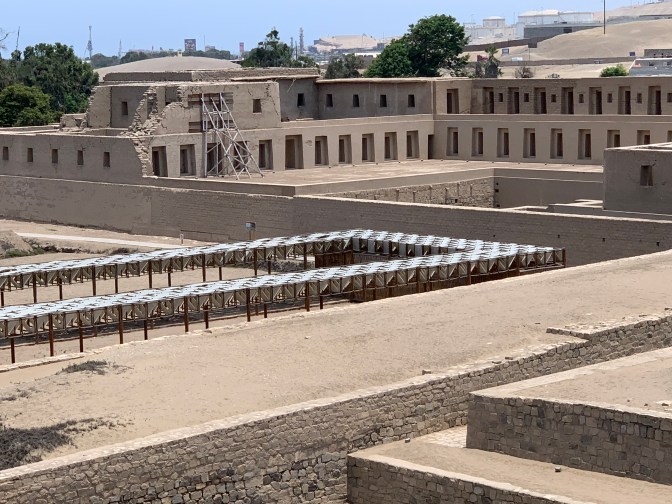
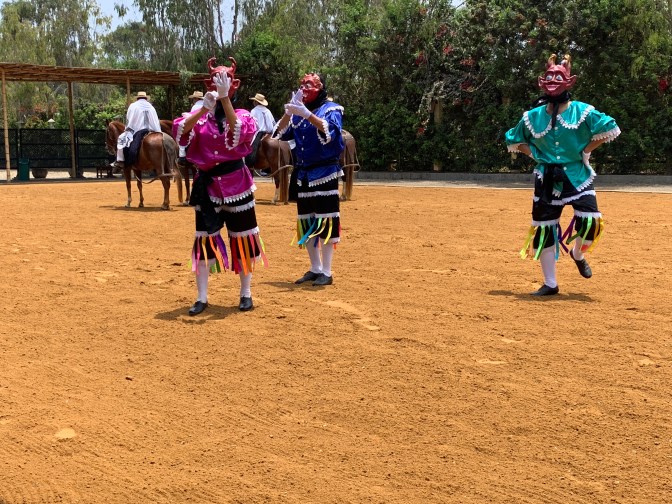
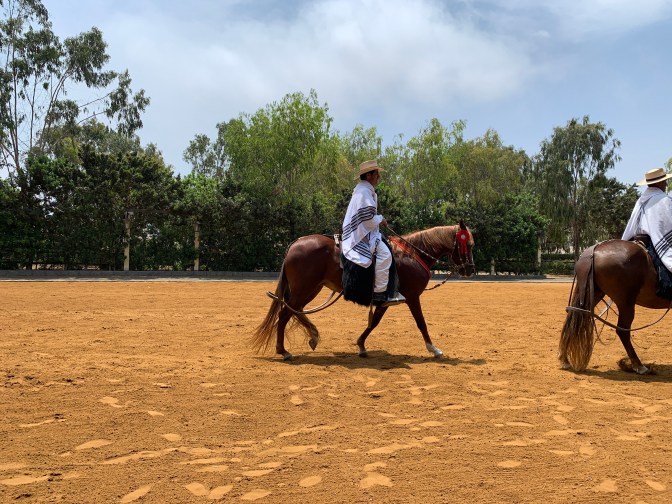
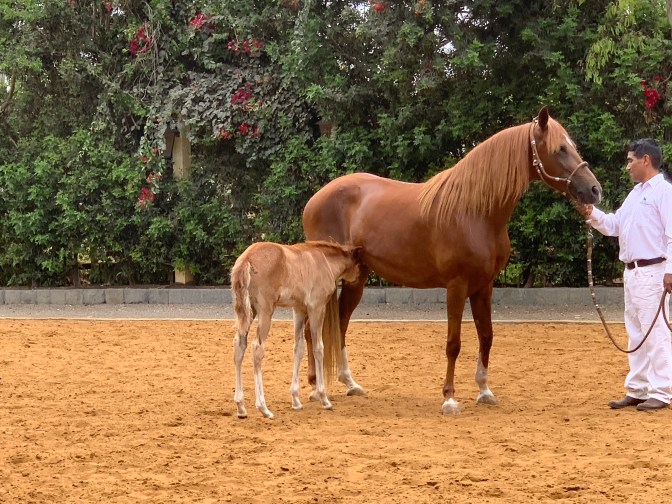
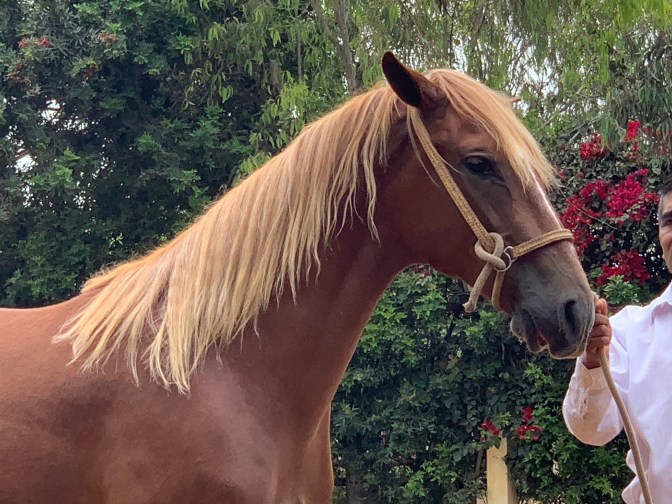
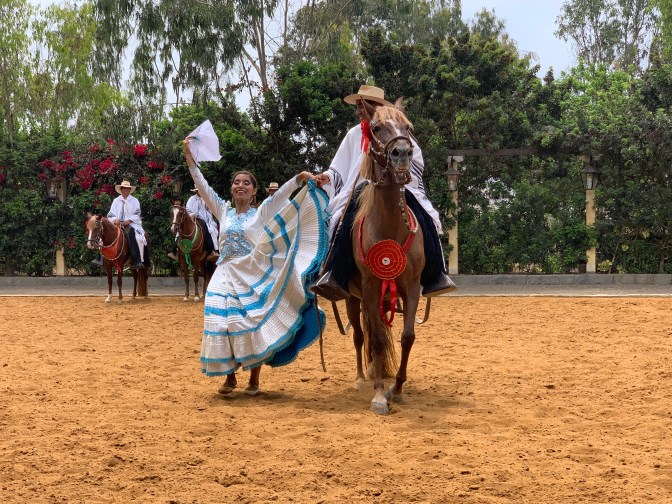
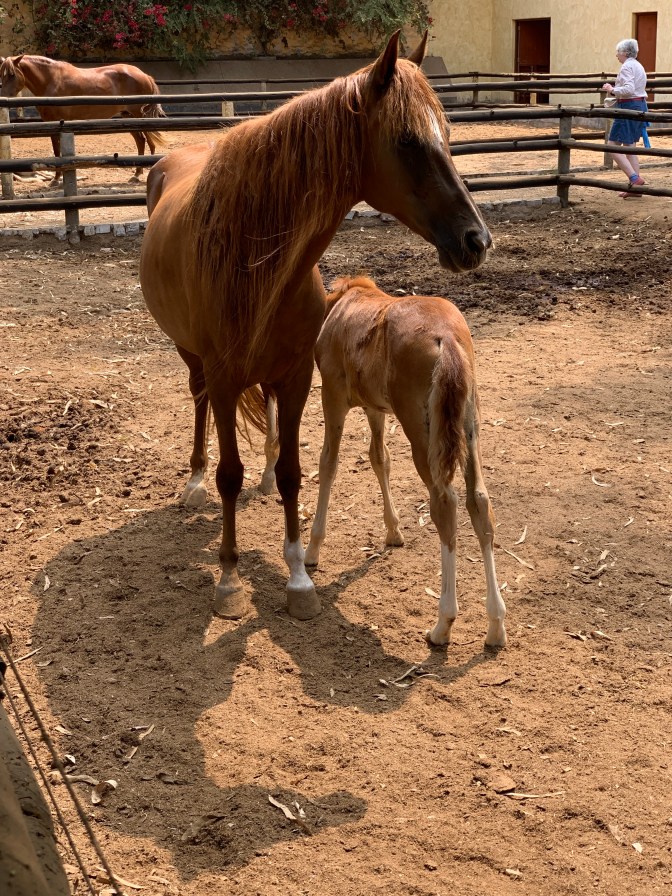
After leaving the Archaeological zone we went virtually next door to the Mamacona Hacienda for a show of Peruvian horses and lunch. A beautiful place reminiscent of the Las Mañanitas Restaurante in Cuernavaca Mexico. As we entered we were greeted by a group of three jesters in masks and five horsemen riding Peruvian horses. These horses are raised at the ranch and go for US$100K to US$300K each. Each one is in it’s own pen, other than mother and child, and look beautiful. The Peruvian horse is relatively small – 15 hands, but has a special gait where only one foot is ofc the ground at any one time thus the riders remain level with no up and down movement. We were served Pisco Sours as we entered the arena followed by Inka Cola (like Mountain Dew) and cassava to eat. The show of dancers and horses culminated in the national dance – Marinera (Lady Seafarer) of the two couples and one of the female dancers with the man on the horse.
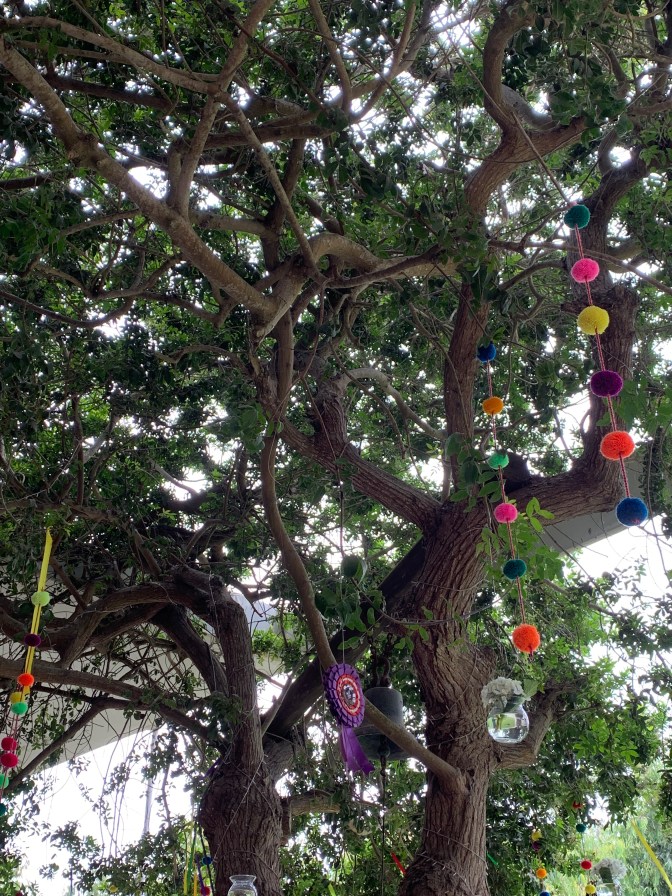
We then were let through the gates into the hacienda into the beautiful gardens and a terrific buffet lunch with the same food as the day before.


We headed back the 1.5 hours to the ship for a final look at the ship side shops before heading in for the night and the show of the evening – the multi-instrumentalist Salvatore Hasard.

 Roger & Anne Travels