Sunday March 8, 2020 – Manta Ecuador
We docked, Port to quay, in San Pablo de Manta, Ecuador’s third largest city (after Quito and Guayaquil) with a population of 300K, (16MM country).
We met our driver Paolo (coach Blue 23) and guide Andrea – A cute, bubbly, arrogant, amusing 33 year old airhead, representing Metropolitan Touring Company (Director – Alex Veintimilla +593-9999-30043; E-mail aveintimilla@metropolitan-touring.com), and we were off for our day’s adventure to Cerro Jamoncillo and Montecristi.
Although some actions were taken in other ports, such as taking temperature for boarding passengers, it was here that we were screened one by one, for the Corona Virus – COVD-19 (Corona Virus originating in December 2019). As we disembarked all port and tour staff had to wear masks and each passenger was tested for temperature, using a remote, camera type sensor. I can only assume that had they found someone with an elevated temperature, they would not be permitted ashore. Fortunately, there are no known cases on the ship and even the passengers that embarked for the third leg in Santiago / San Antonio, have been on board and thus quarantined for more than 2 weeks. Let’s hope it stays that way at least until we get off in Ft. Lauderdale.
The name of the country is derived from being on the Equator, indeed, in past trip’s to Ecuador, I have stood at 00•00 Latitude with one foot in the North and one in the South. Last year we stood in Iceland with one foot in North America and the other in Europe (tectonic Plates) and last year in Greenwich, UK at the meridian with one foot on either side of 00•00 Longitude and only a couple of years ago one on either side of the international Date Line.
However, I digress, back to Manta.
Manta is the world capital of Albacore Yellow Fin Tuna – Starkest, Bumble Bee for example are tinned here. Just before we departed later today, we observed a fishing trawler unloading tens of thousands of tuna into a variety of lorries with 3 ft by 3 ft by 3 ft wooden boxes, 10-14 boxes per lorry and we saw at least 3-4 of these lorries being loaded up, or about 500 fish per box or 5,000 to 7,000 fish per truck. Can there be anything left in the ocean??? Amazing.
As we passed various places our guide pointed out various things, such as Ecuador is an OPEC member, thus Petrol is US$1.03 / gallon for Diesel and US$2.53 for Highest quality Petrol. The local currency The Sucre was dolarized in 1999, thus dollars or the local currency are all worth the same. We passed the fish market (open from 4-11AM with US$5 / Lb for Tuna), a Shipbuilding yard making wooden boats by hand for $300K to $500K. The Spaniards, like in most of the Americas arrived in the 1500’s in search of gold snd silver, maintaining control for some 300 years. Thus, Spanish is the principal language, however the old Inka language – Quechua is now still spoken by 2-3% of population. Ecuador is divided into 4 principal regions: – 1) The Coastal area where we are; 2) The Highlands (Andes); 3) The Amazon region and 4) The Galápagos Islands. Due to it’s good weather, good medical services, nice climate and relatively inexpensive cost of living, there are many US and Canadian Retirees in Manta. There are some 4000 orchid species and 5000 hummingbird species in the country. The guide showed us samples of black vegetable “ivory” nuts – Tagua. These plant seeds when young can be eaten and have a coconut taste, but once the fruit dries, it becomes solid and very hard. The fruits have 4 or more of these “nuts” in a pod and when harvested and the brown husk removed, the 2-3 inch long nut is so hard it resembles ivory, and is carved into animals and decorative or utilitarian use. A large quantity of buttons for example are made from this hard nut and are exported around the world. The “Palo Santo” (sacred stick) tree is used in ceremonies and has medicinal and mosquito repellent properties. We used this in a Jaboncillo mountain ceremony described below.
The major Exports are Tuna, Oil, Bananas, Cacao, Coffee (which originally came from Ethiopia to the Americas in the 1500’s), Panama Hats and flowers.
Indeed the “Panama Hat” actually comes from a town near Manta called Montecristi, which we visited later in the day. These white / cream straw hats that can be rolled up for travel, are all hand made and their quality is based on the number of strands per inch. The reason why they are called “Panama” Hats is because US President Teddy Roosevelt, loved hats and when the Panama Canal was being built by the USA he had hats with broader rims made for all the workers, to protect from the sun and heat. Thus, the world got to know them as “Panama” Hats as opposed to their “Real” name – Montecristi Hats. As some point in history some of the coastal weavers went into the Ecuador Highlands and similar hats were made there. However, the “Sierra” or “Mountain” hats have a star on the top where the start of weaving occurs, the Montecristi ones don’t, and the Sierra hats typically have less strands per inch as they were more inclined to produce quantity over quality. Typically, Sierra hats can take 1-2 days each, to weave and have up to 10 or 15 strands per inch whereas the good Montecristi hats have 40+ strands per inch and thus are more costly. A good Sierra (mountain) hat can go for as little as US$30 – $50 each. At this cost they have about 3-7 rows of reeds per inch and easily completed in a day. The average Montecristi hats have 30 or more rows of reeds per inch, start at US$150 and a reasonably good one can be obtained for US$300. It should be noted that these can take 1-3 months each to weave. On average only 800 hats a year are made by all the weavers in Montecristi. The guide likened the hat tradition in terms analogous to cars. Whereas both types of cars will take you from A to B, a Ferrari will get you there in Style, whereas a Chevy will also work but less caliber. The Montecristi hats are likened to Ferrari and the Sierra ones to a Chevy. Both will protect from the sun, but one will be fancier. At one point in time, Hats were the mainstay of the Economy of the region. Recently, a movie star (Charlie Sheen) wanted a particularly fine one and paid US$25,000 for a hat. The highest quality can easy fetch US$50,000 or more each and take a year or more to weave. These hats and weavers go back 9000 years as the earliest ceramics found in the archaeological zones show these hats being used 9000 years ago. The earlier hats were weaved for sun protection with a wider brim. Some of the ladies hats from the highlands still today have a wider brim. Apart from Ecuador, the neighboring countries of Peru and Colombia also weave hats. Weaving is typically done by women who weave hunched over a form set on a stool and the chest pressing the top, holding it in place while the sides and brim are made. This is the tradition in Montecristi, whereas the highland women can sit while weaving. There is a 30 foot statue just outside the city of a woman weaving in this awkward posture. Technically and actually in reality, hats can be rolled up and stored in a box. However this is not recommended as the weave can loose it’s shape.
Later in the day (our last stop) we observed the manufacturing process, but for sake of continuity, I’ll describe it now.
A special type of reed (Junkus Sp. [like Jukus squarosus]) is grown and harvested.
1. One reed is then smashed on the ground, while holding one end. This step is to open up the reed.
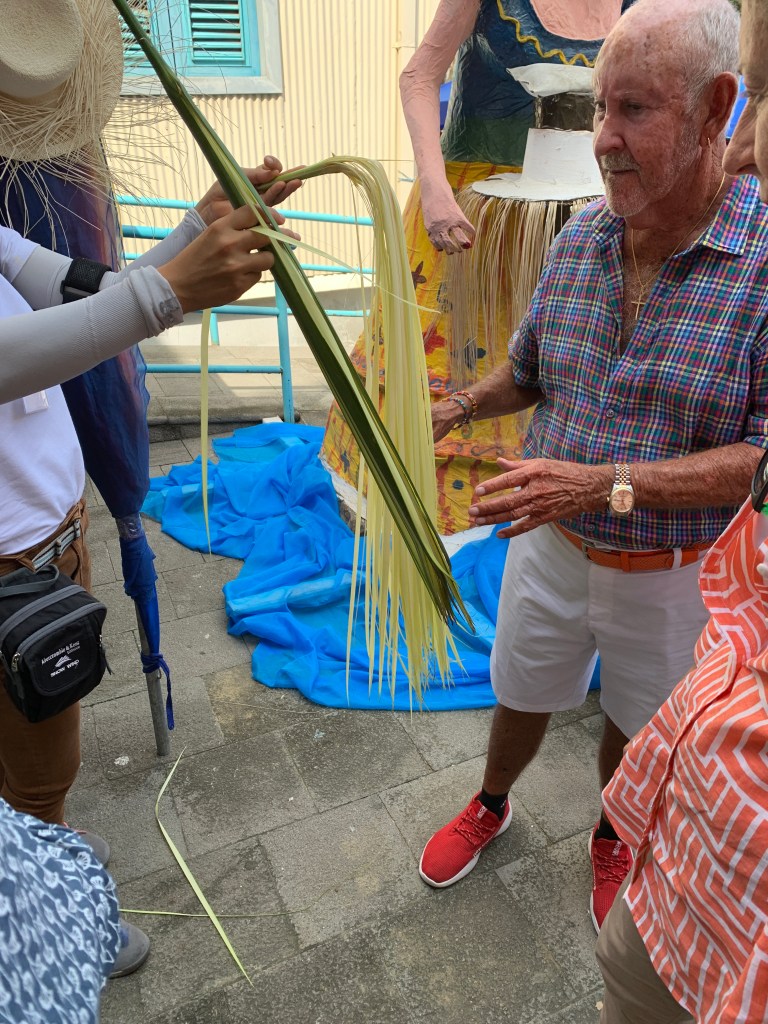
2. The woman (all the weaving and most of the process is done by Women) then gets her nail into the reed, removing all the green outside part, discarding that. The central white / slightly yellow colored inside is then split lengthwise, using her nail, into ever thinner strips, depending on the quality to be manufactured. The top part that was held when hitting the bottom of the reef on the floor, still remains together to hold all the strips together. This is later removed. Some 20 – 40 reeds are needed per hat.
3. This lot of strips held together at one end and now resembling spaghetti, are placed in a pot with some raw sulphur (2-3 kernels) and boiled for a while.
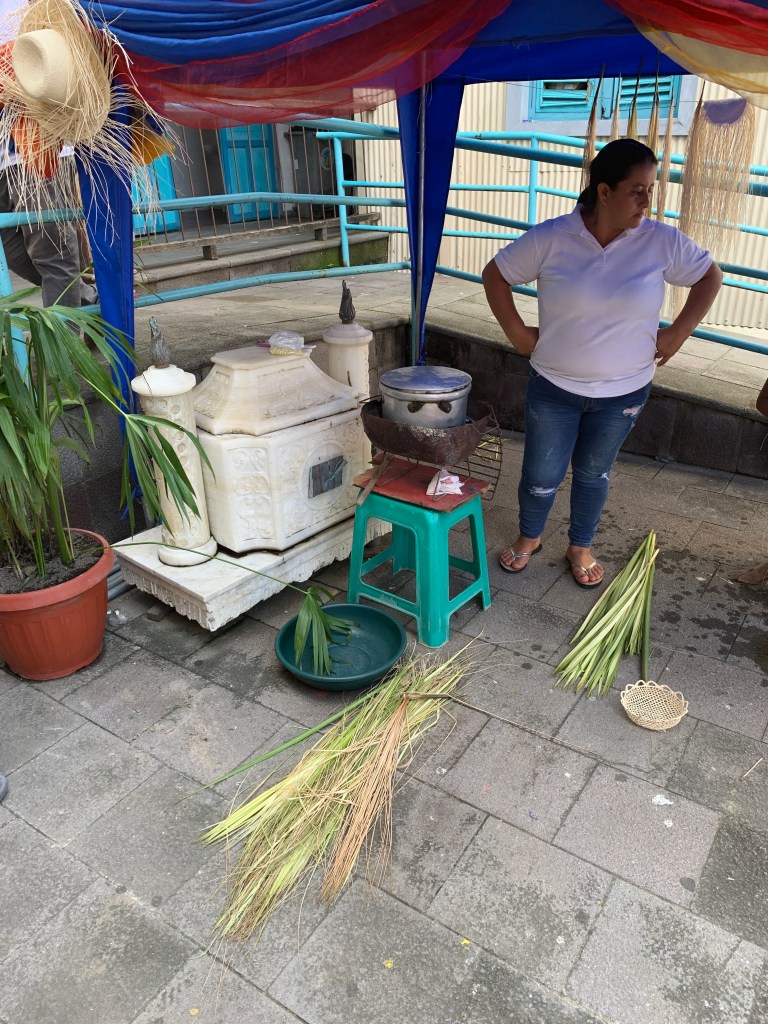
4. These strands are then used to start and weave the hat around an oval form. As mentioned this is a 1 day to 3 Month process (or more for finer quality hats) done by women in the morning hours (6AM to 11 AM). The afternoons are for performing home duties, cooking, cleaning etc.
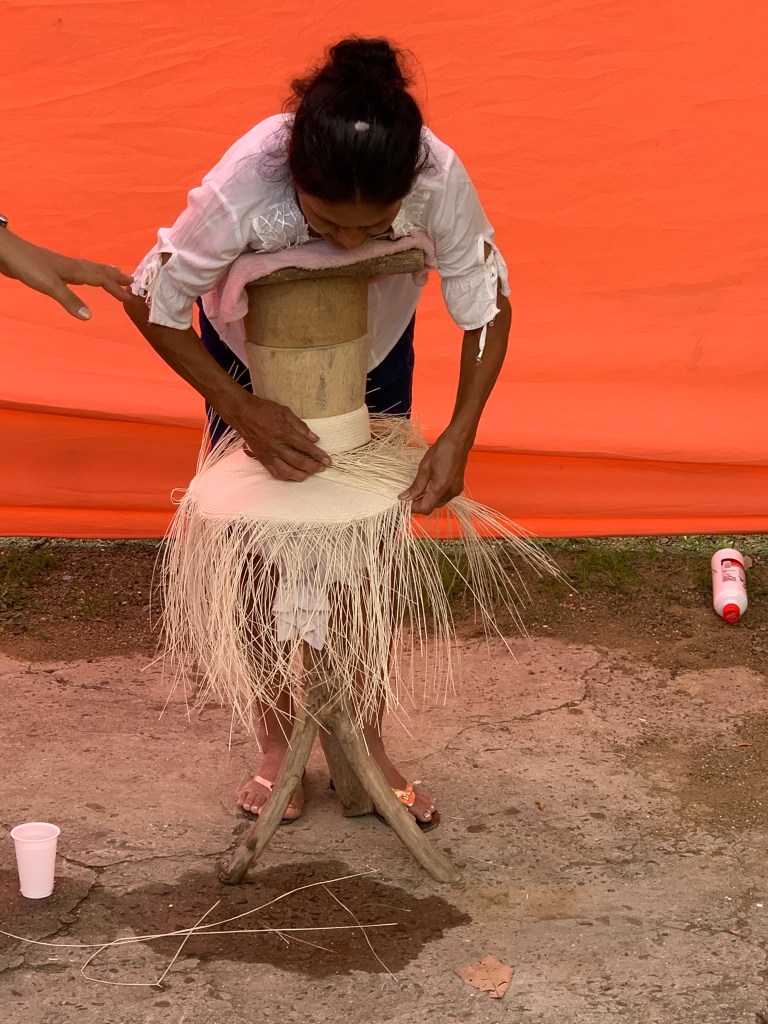
5. Once the hat is basically complete, but the various strands are still coming out of the sides, it goes to the “brim finisher”. This woman performs the highly specialized task of finishing off the sides of the brim.
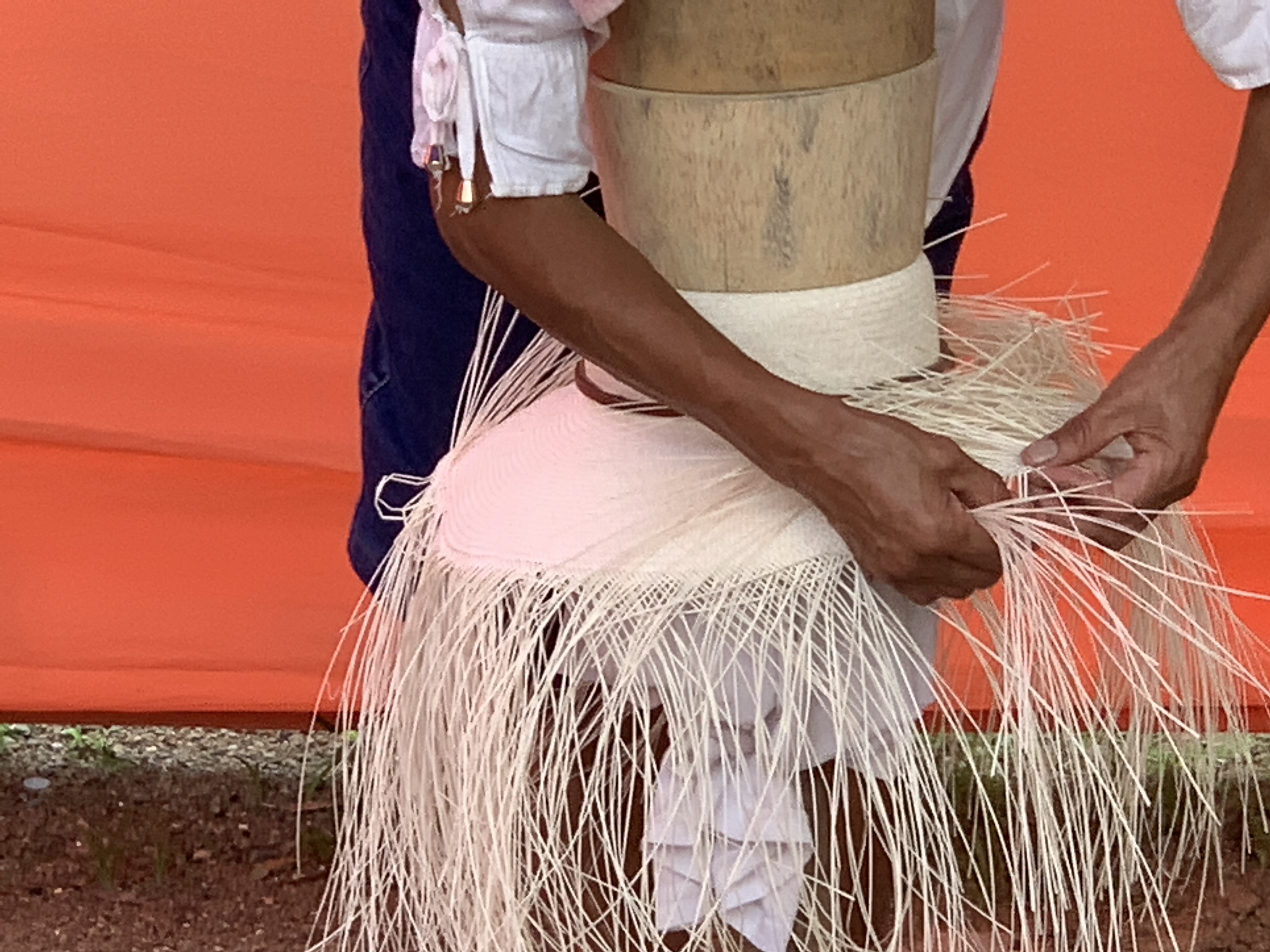
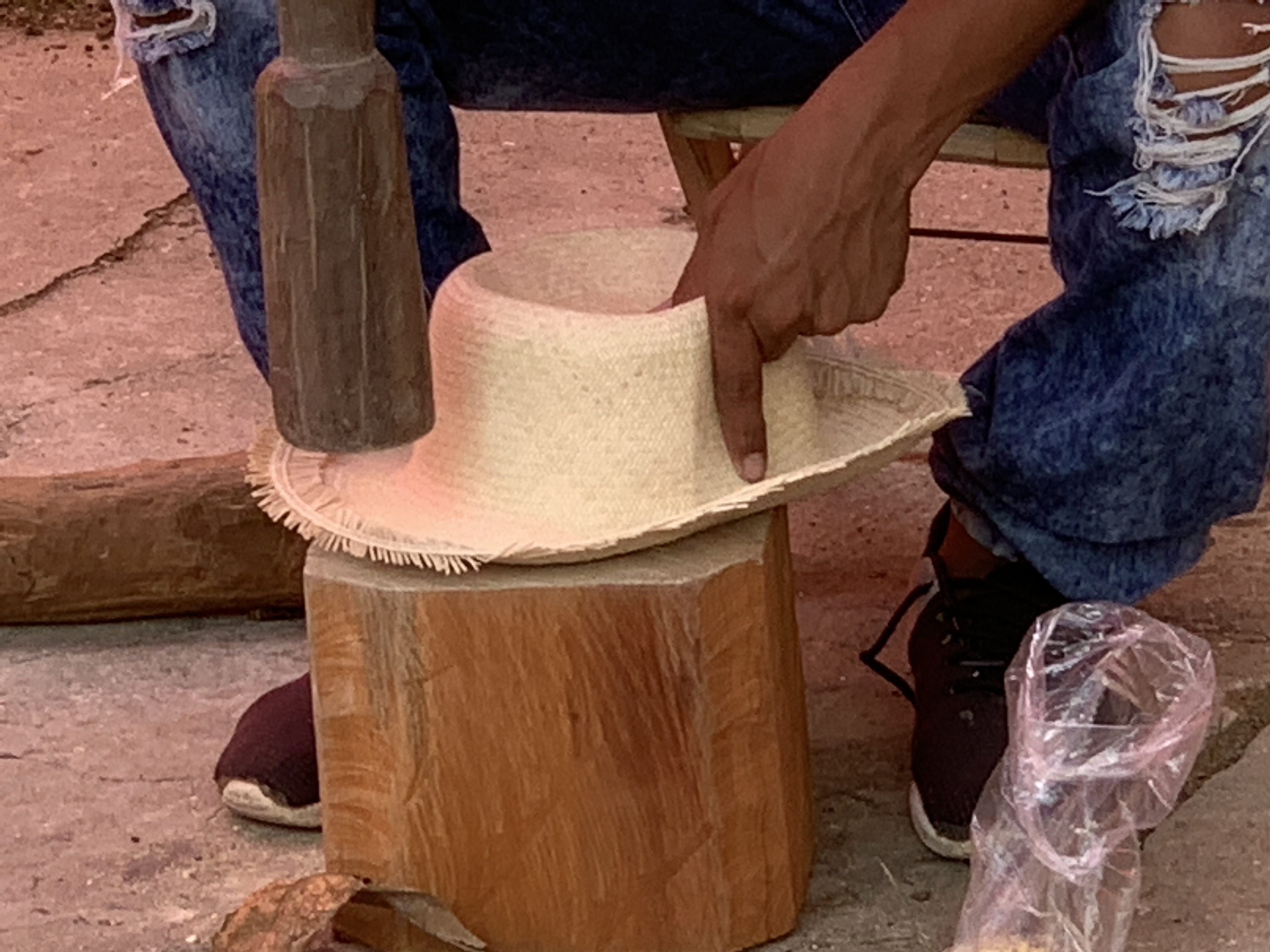
6. The hat is still a bit rough so goes to the “pounder”. This function involves using a wooden mallet (much like a pestle) to pound out the rough edges and parts over a wooden or stone base.
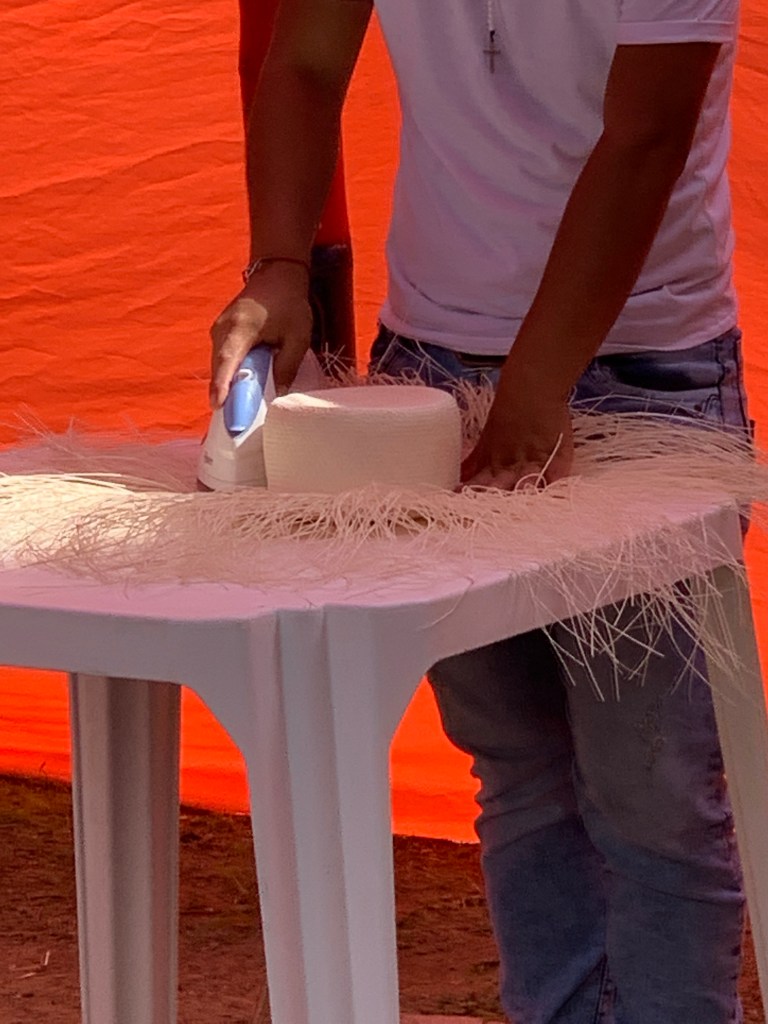
7. The hat then goes to the person ironing the sides and creases on the top using a regular iron.
8. The now almost finished hat, is watered down and placed on flats in a wooden box and left to “cure” in the sun for some days, so that it maintains it’s shape.
9. It is now ready for the men to go and sell it for the best price and to deal with the buisness aspects of the process.
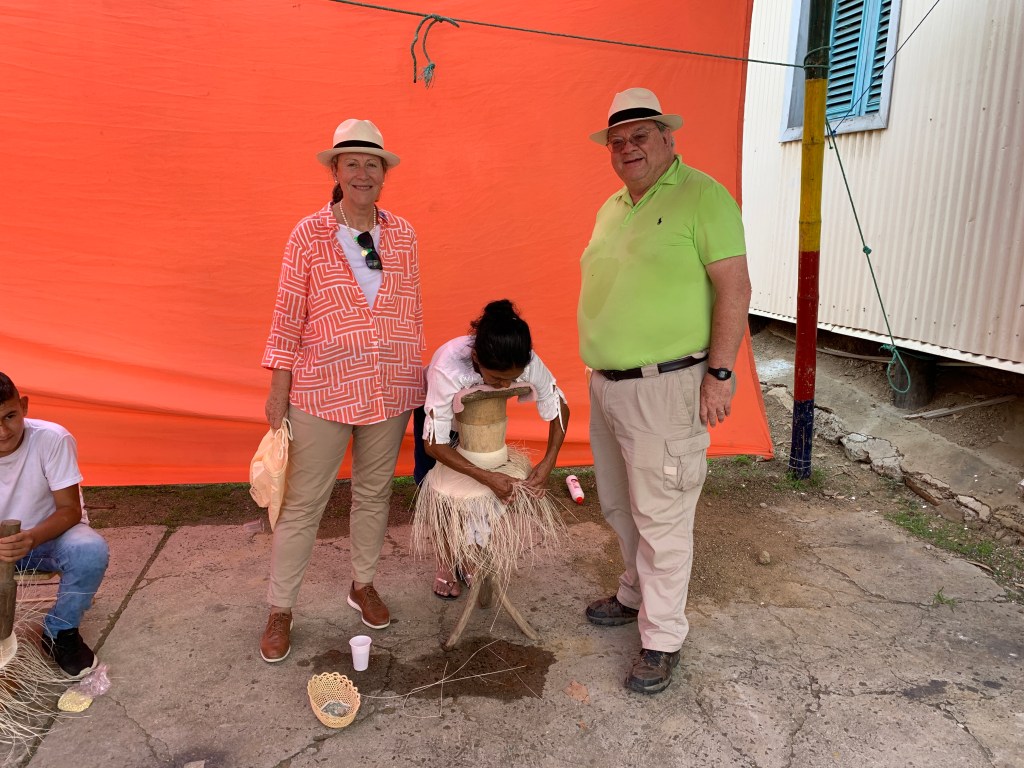
As can be seen, it is a lengthy process and thus, the best quality hats are pricy, but last a lifetime! Our guide Andrea works as a quality control expert, when not guiding, reviewing each hat and the process before they are shipped overseas. As is to be expected, we did both purchase a mid range Montecristi hat made by the weavers we chatted to and gave us the demonstration. The venue was the prior home of one of the best ex-president (according to our guide) – Eloy Alvarado – and is now an art school and center in Montecristi.
The main stop, however, was Cerro Jaboncillo OR Cerro de Hojas (Leafy – Jaboncillo mountain) Archaeological site.
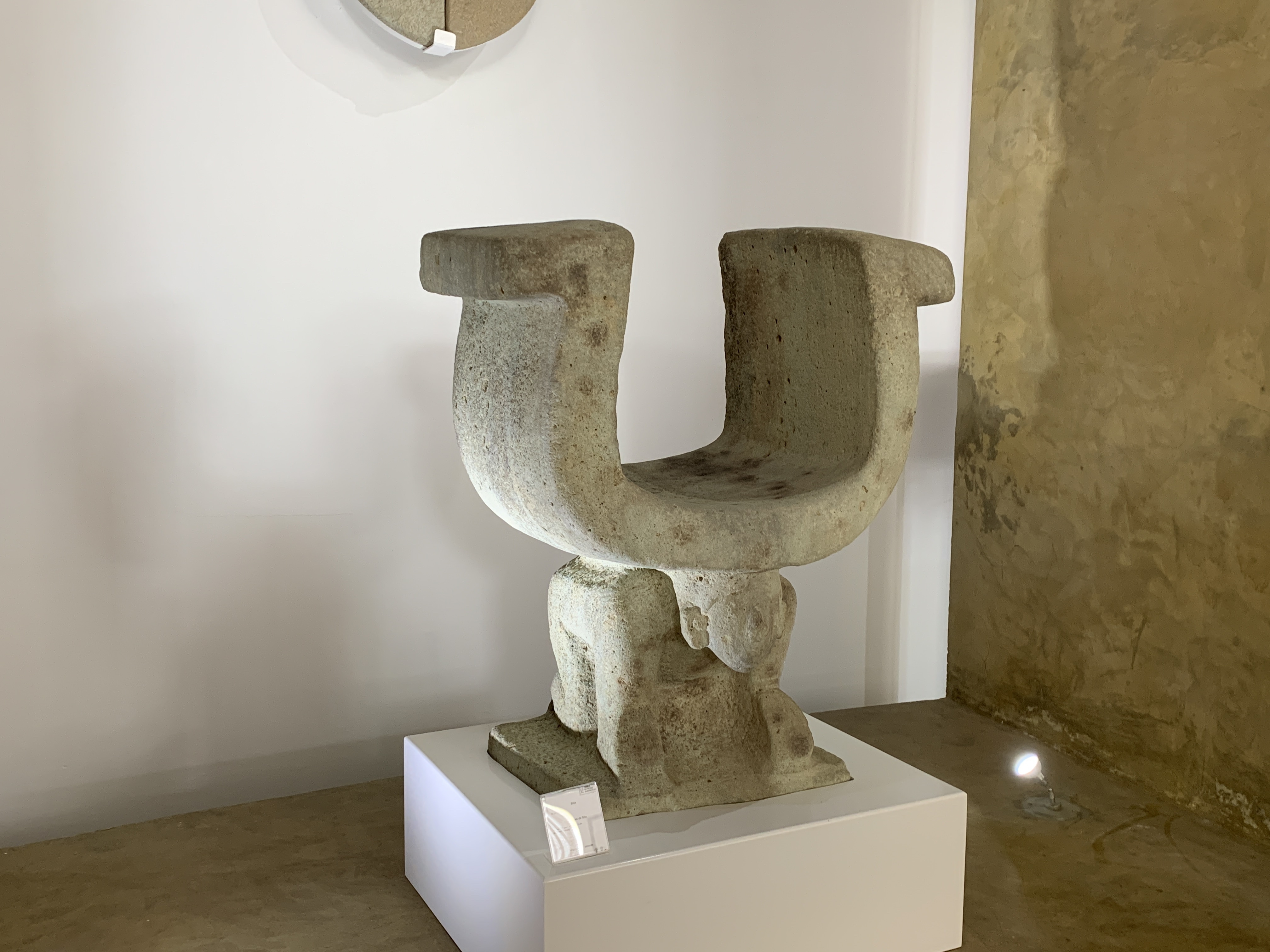
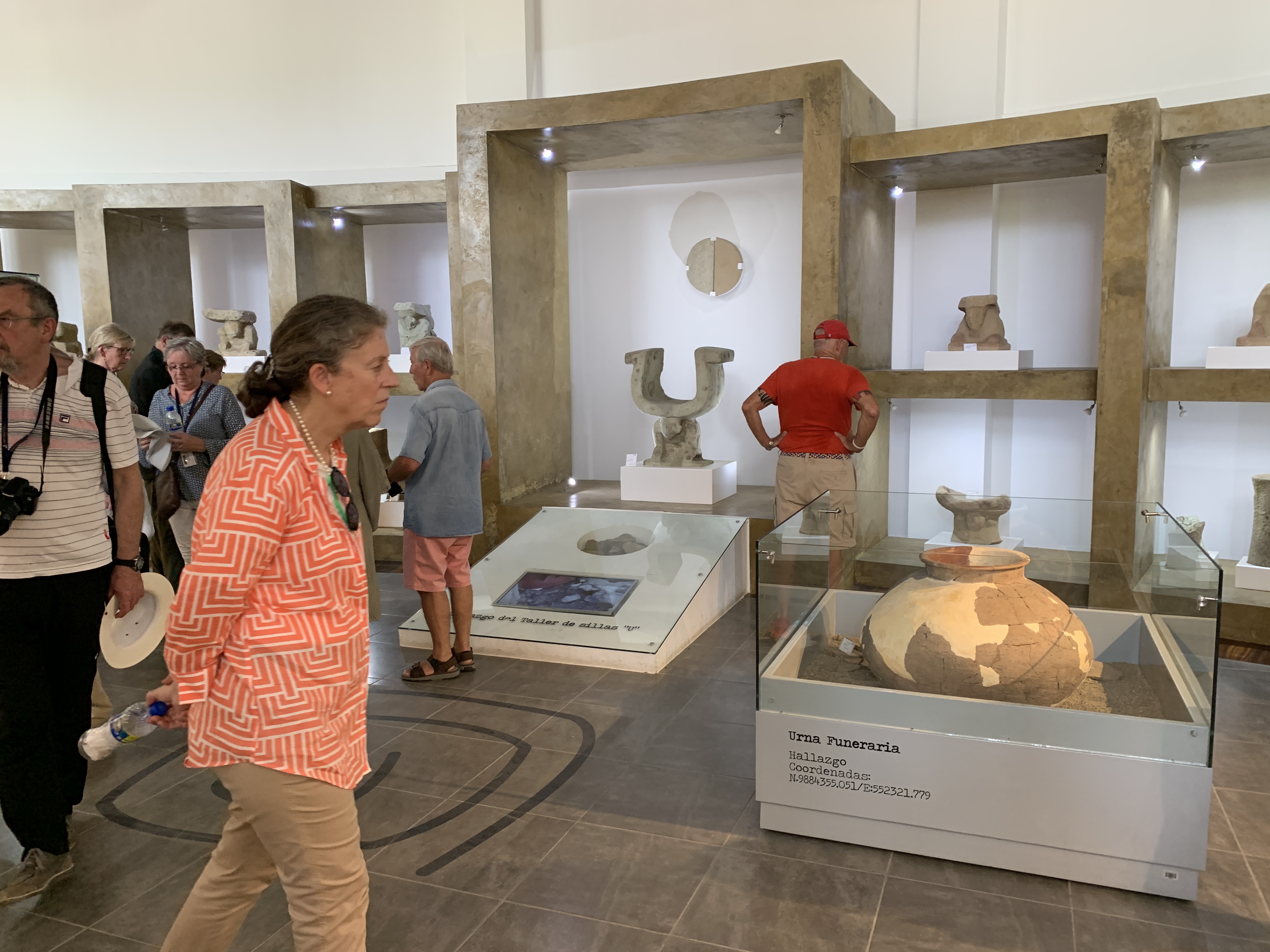
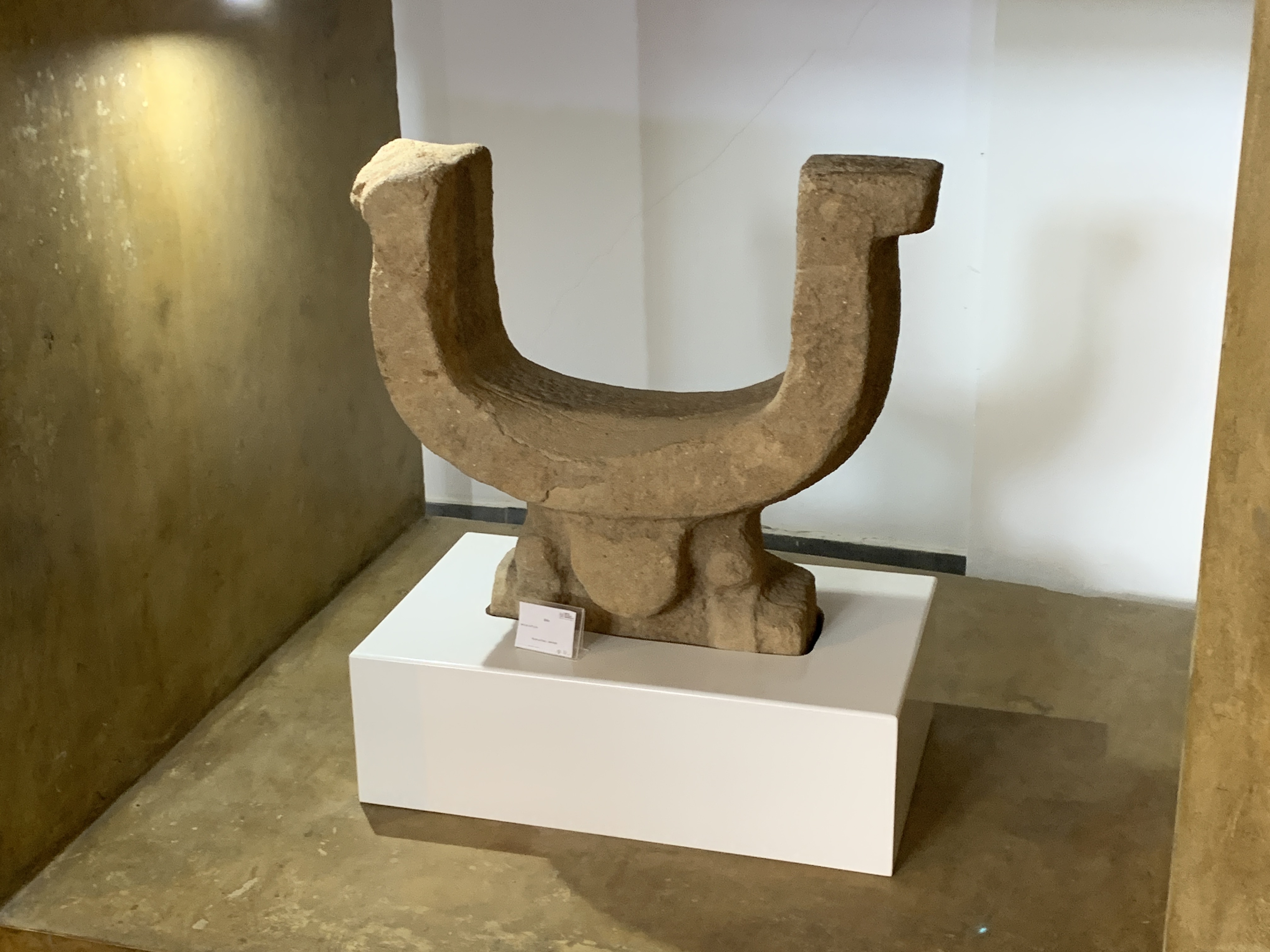
The site 30 Kilometers (18 1/2 mikes) from Manta, covers 3,500 hectares (8,350 acres) with some 600 structures on a hillside overlooking the plains and ocean with a peak at 500 meters (1,640 feet) and an average temperature of 25C (77F). It was the home of the Manteña Culture (AD 500 – 1600 CE). It is renown for it’s U shaped ceremonial chairs, which can be seen at the top of the hill. The originals were taken, as was the norm, back to Washington DC by the original Archaeologists and they can be found at the Smithsonian museum. Subsequently, others were taken and can be found in museums in France, Germany, Belgium, Switzerland, Italy, Argentina, Chile and Spain. One or two are in the On-Site Museum and others are in the process of being restored.
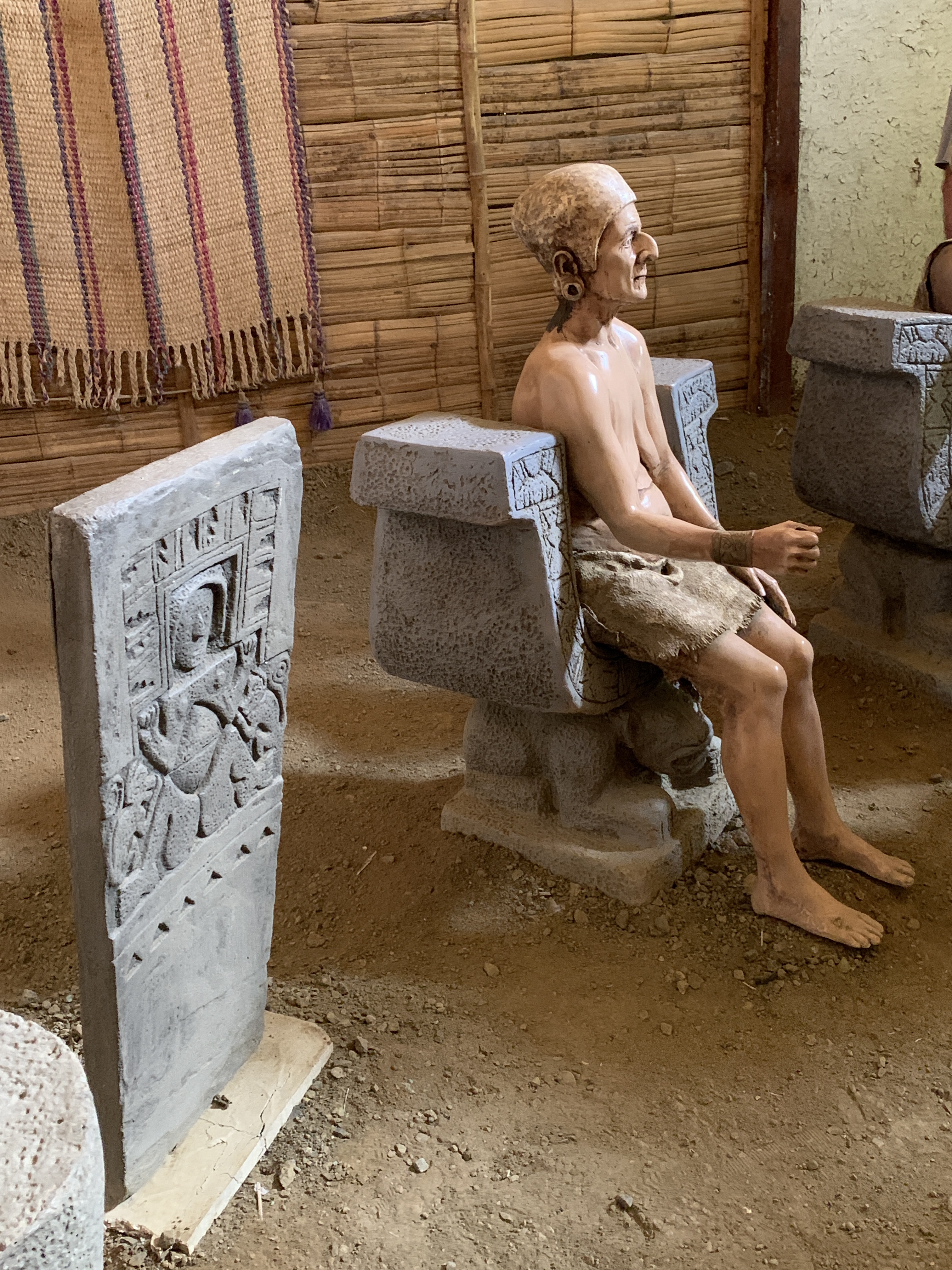
These U Chairs are formed by three parts – The Base, the seat and the sides, there is no back. Thus the U form. The base is carved with either animal or human figures depending on the rank of the person who used them, thus no two are the same.
Marshall Howard Saville (1867–1935) was the US archaeologist born in Rockport Massachusetts, who stared the work at the site between 1906 and 1910. He published his findings in a book – “The antiquities of Manabí, Ecuador” in 1907. Other visitors and archaeologists came to the site like Bishop González Suárez. Between 1917 snd 1923 the Ecuadorian archaeologist Jacinto Jijón y Caamaño who performed additional studies, came up with the name of “Cultura Manteña” or Manteño Culture. The groups belonging to the culture populated the region from Punta Island to north of Matambí. He also postulated that this was a trading, not hierarchical organization. There was not one overlord as in other cultures but were analogous in part to the European Union. Trade not politics held the disparate groups together. This concept was further refined and built upon by the Ecuadorian Archaeologist Emilio Estrada and towards the end of the 20th century by the Archaeologist Jorge Marcos who particularly found the use of currency like the Spondylus shell to aid in the trading.
The Manteño civilizations built their houses out of straw or palm leaves, or bamboo using rock foundation. Thus at the site, there were no edifices that were apparent from the archaeological period. The culture was also specialized in diving for Spondulus – a bi-valve mollusk native to coastal Ecuador – a food that was said to be of the gods and used the shell as a currency for trading.
They were such a unique culture that the Inka never conquered them allowing them to buy their way to independence with the food and shell of the gods. They were the Last pre-Hispanic culture in Ecuador. Additional information can be obtained – http://www.hojas-jaboncillo.gob.ec/las-sillas-mantenas-y-la-ciudad-de-los-cerros/
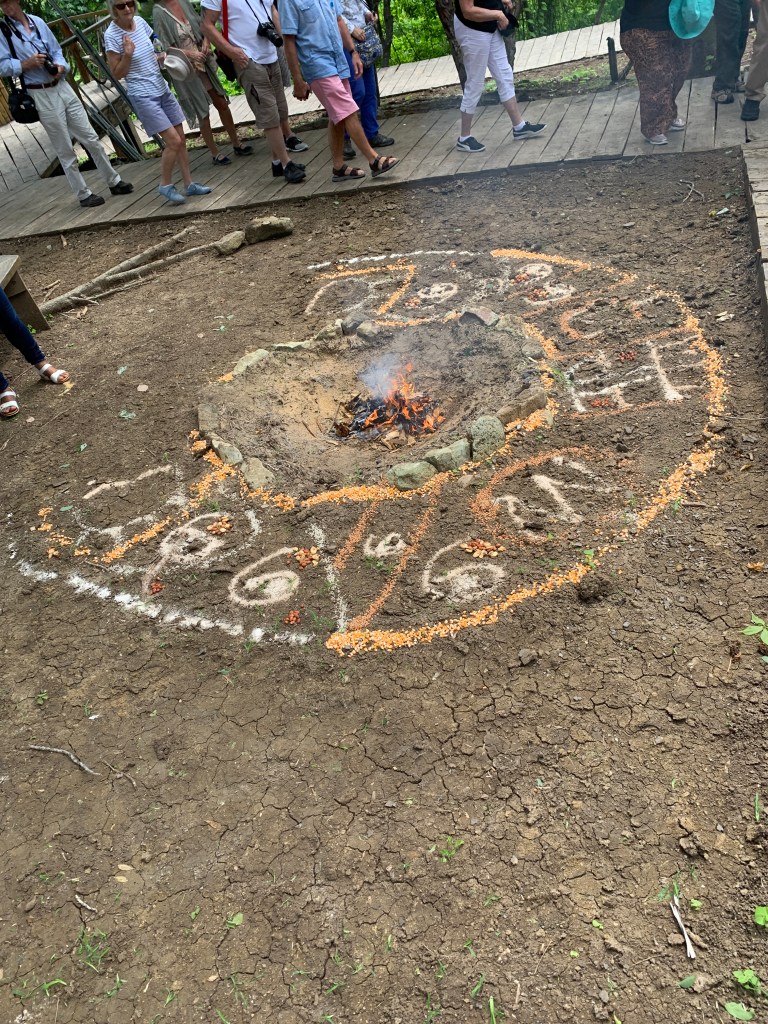
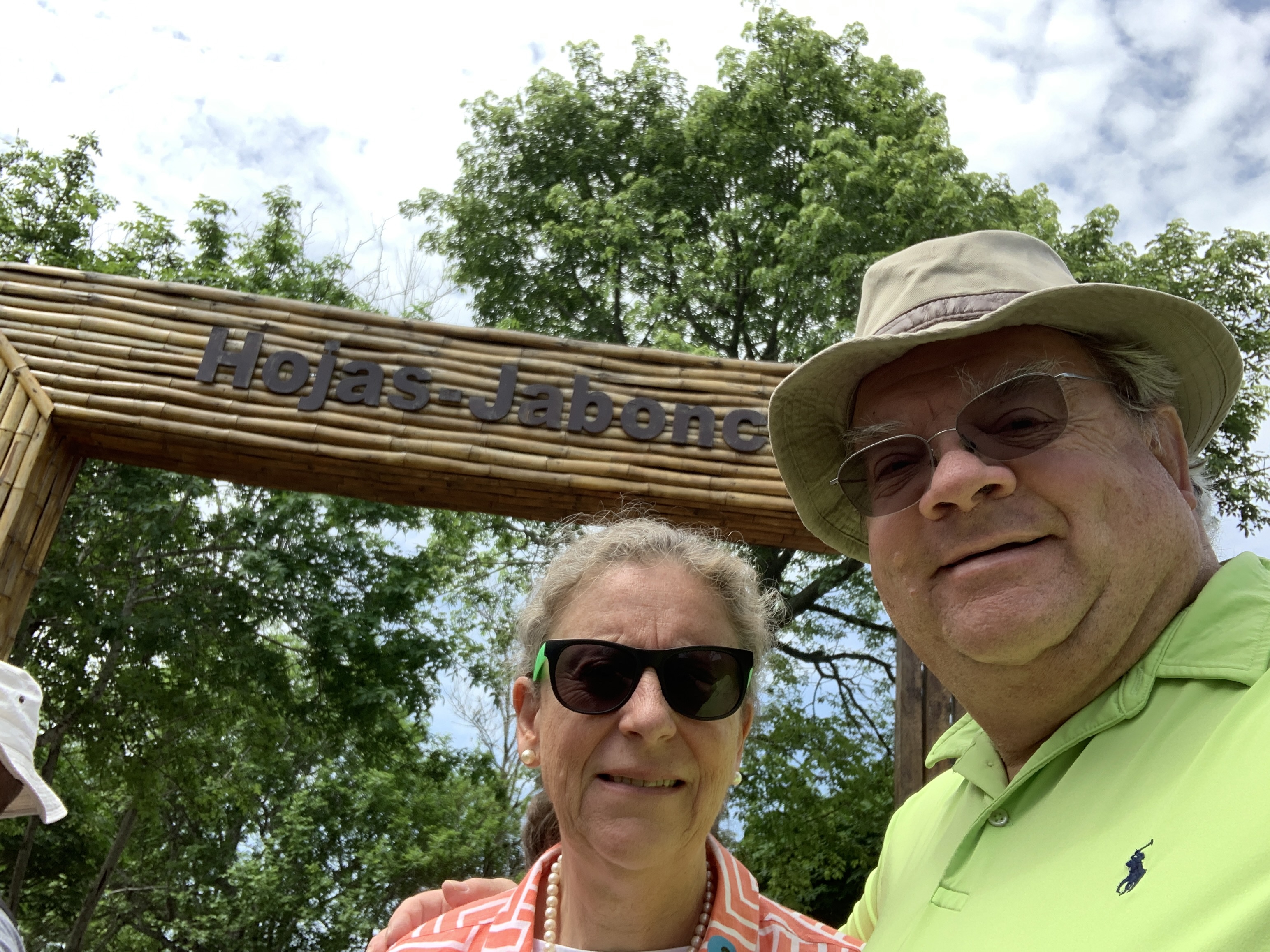
As we entered the site, clearly marked with a wooden entry portal, a local guide asked us to stand around a 10 foot wide mask drawn in the sand and using stones to delineate. A small fire was in the center. We all then had to grab a handful of what appeared to be sawdust from the sacred stick tree (Palo Santo) and throw it into the fire which lit up as if putting lighter fluid on an open flame. This was to appease the mountain deity before ascent.
The principle deity was the Sun, however there was an Emerald Green Deity represented by a green emerald (Diosa Humilla sp?) and the Manteño Huancauilco Sp? Deity.
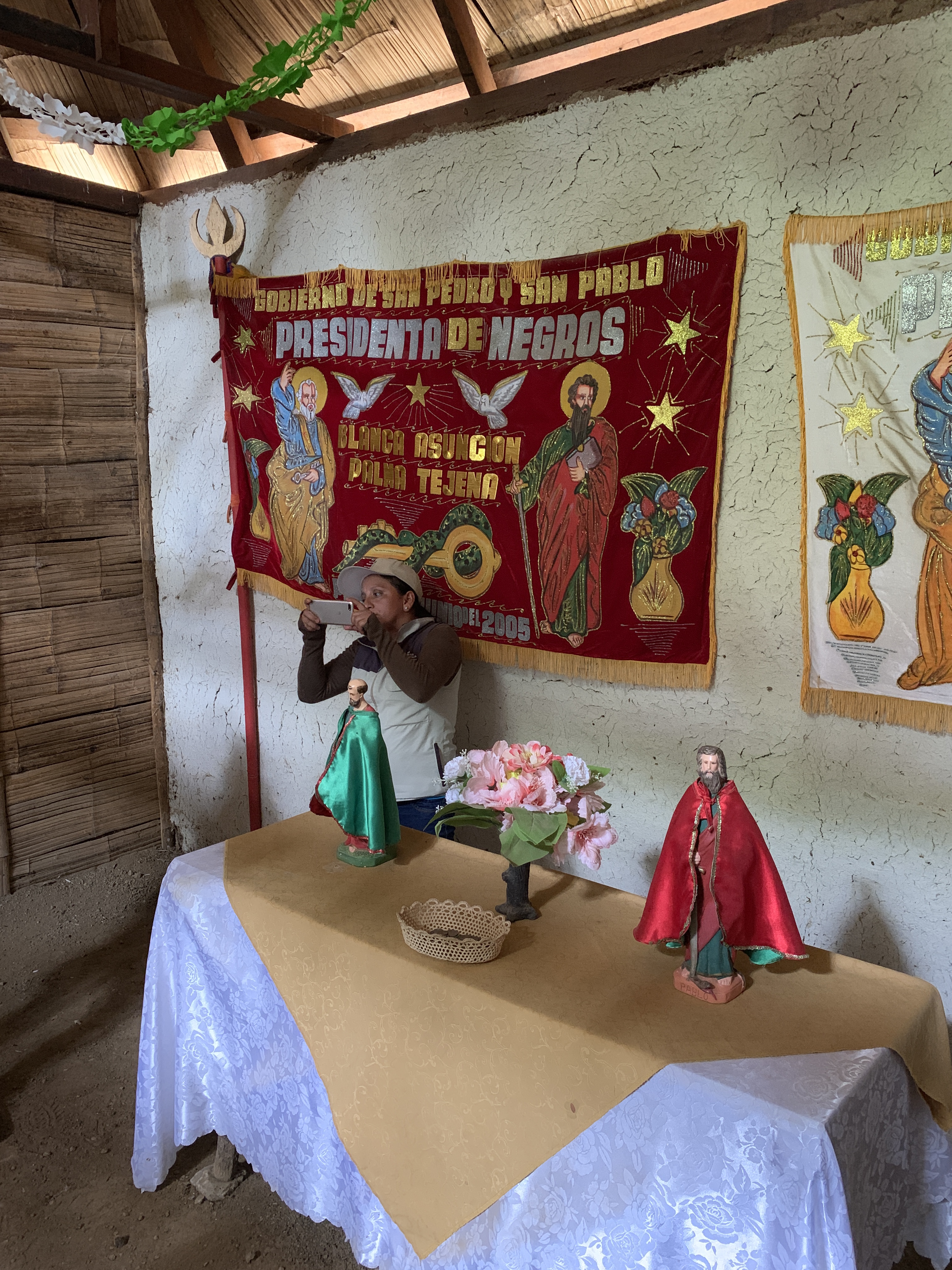
We then were ushered into three separate banana leaf roofed wooden huts each one set up as an educational demonstration. The first reflected more the current area residents and the importance of St. Peter and St. Paul to the local life.
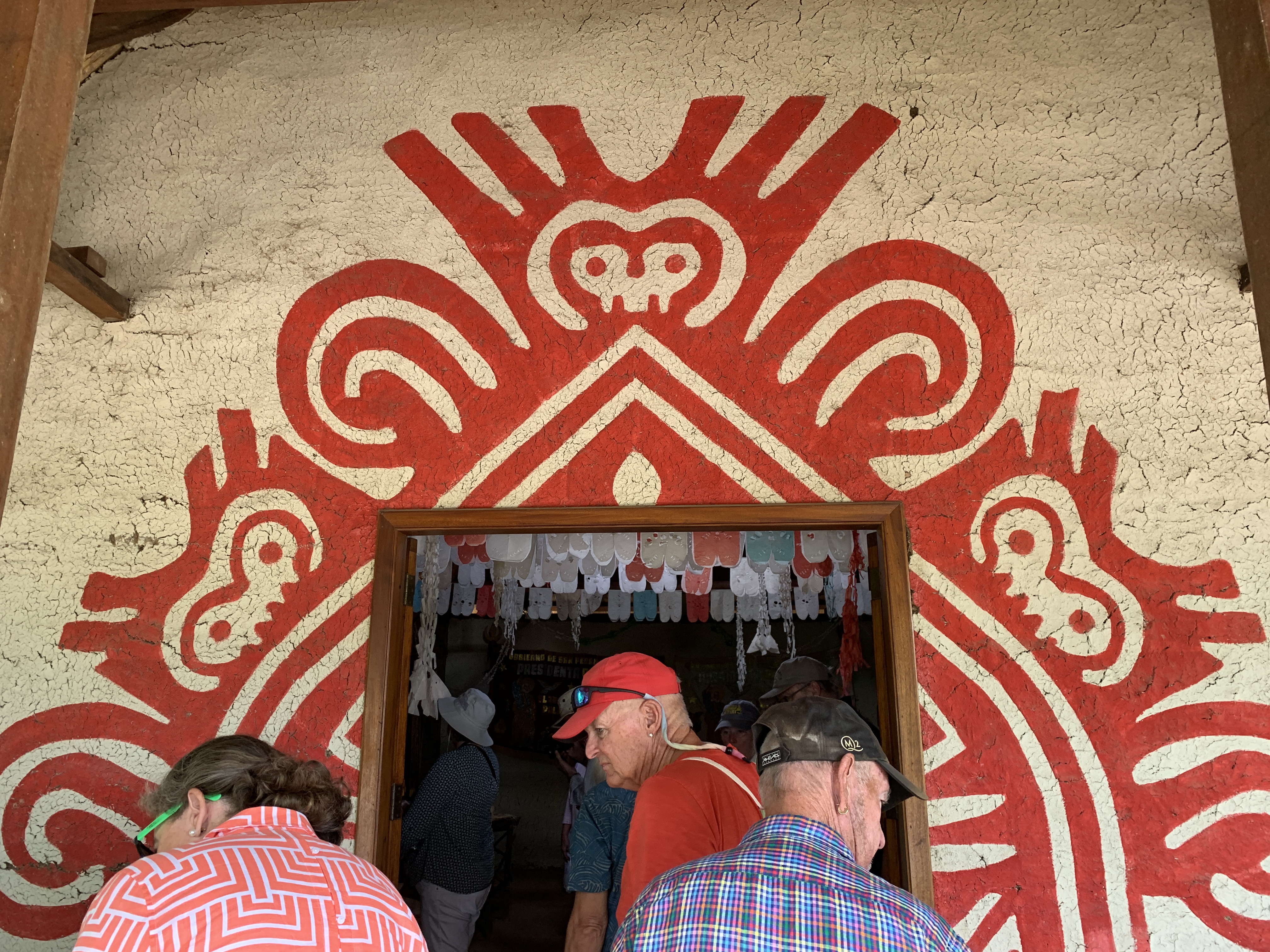
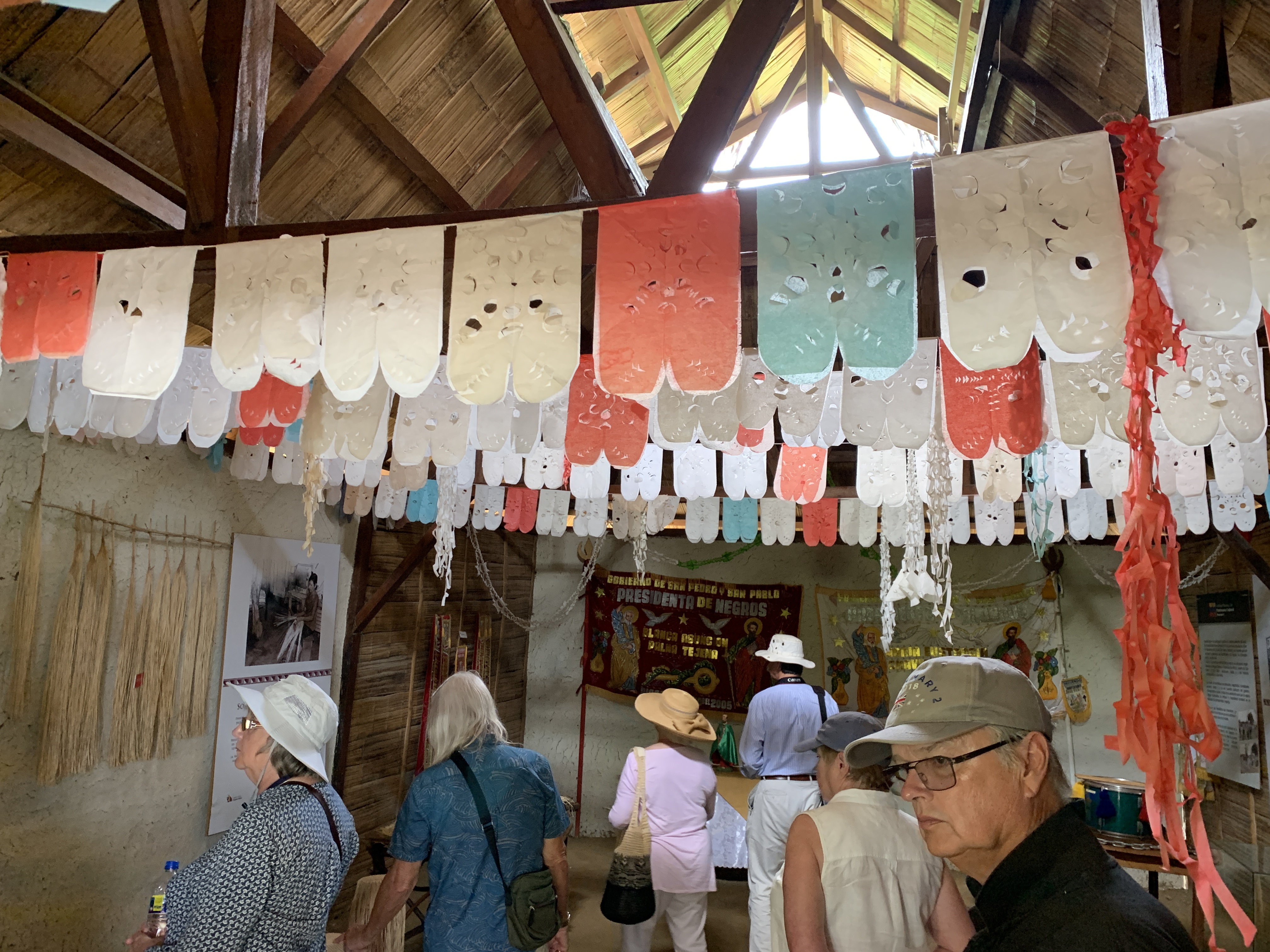
 The second hut had the life size tattooed bodies of the leaders sitting in U shaped chairs (about 100 or so are currently identified) as if discussing important matters of state with the emerald green stone as if a mace or some other ritual objects in parliaments or government chambers today, indicating that the session is taking place.
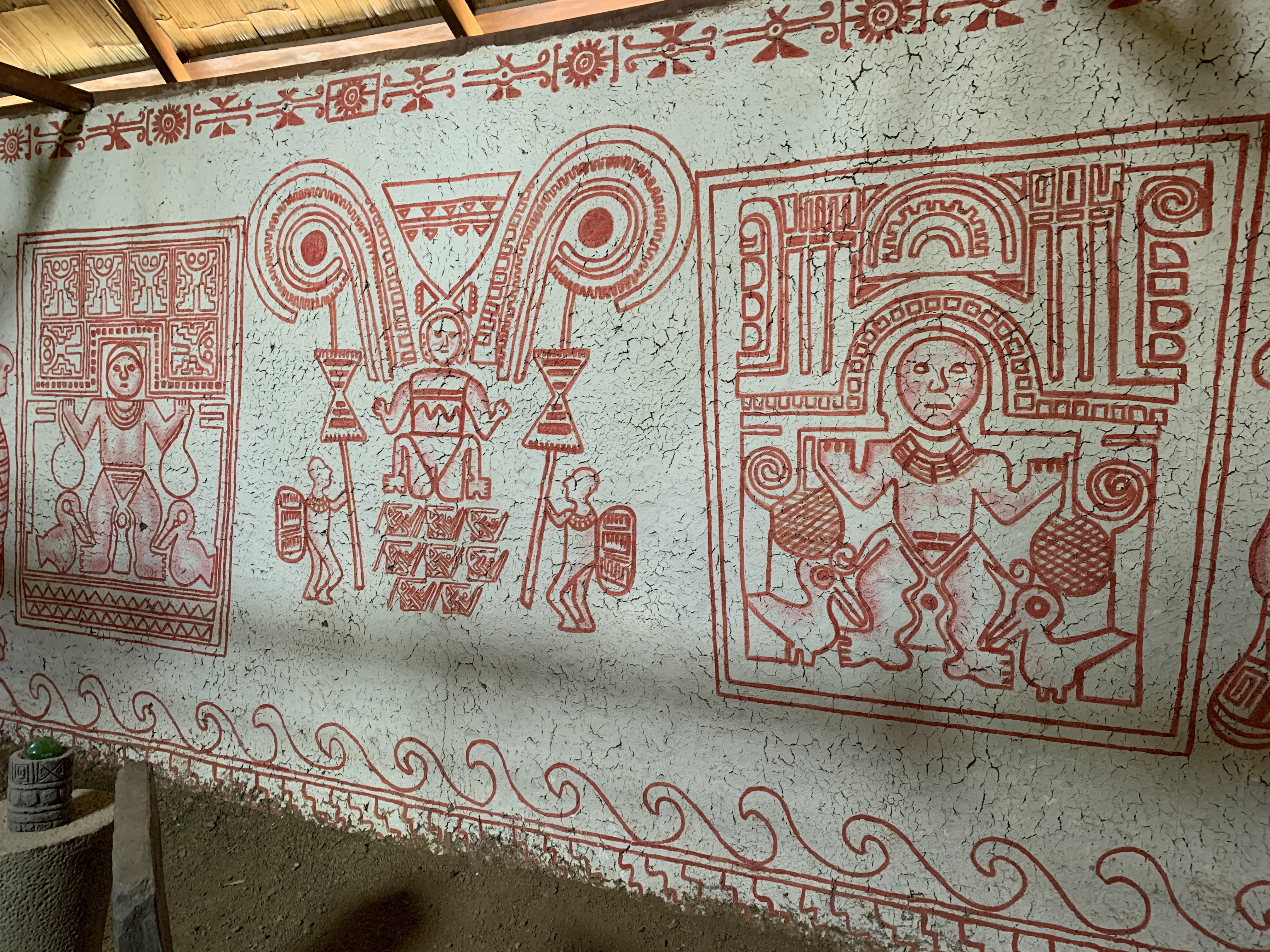
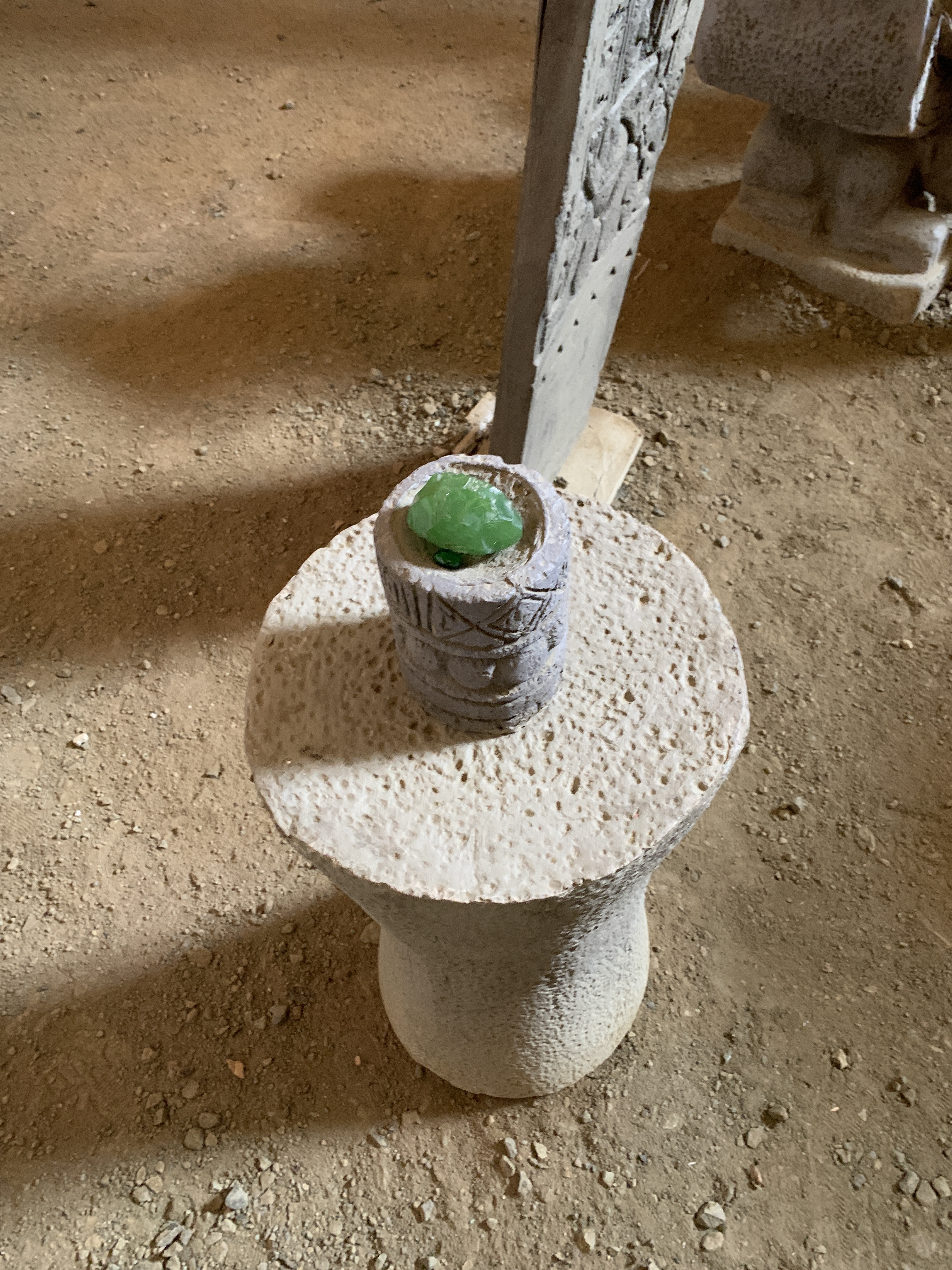
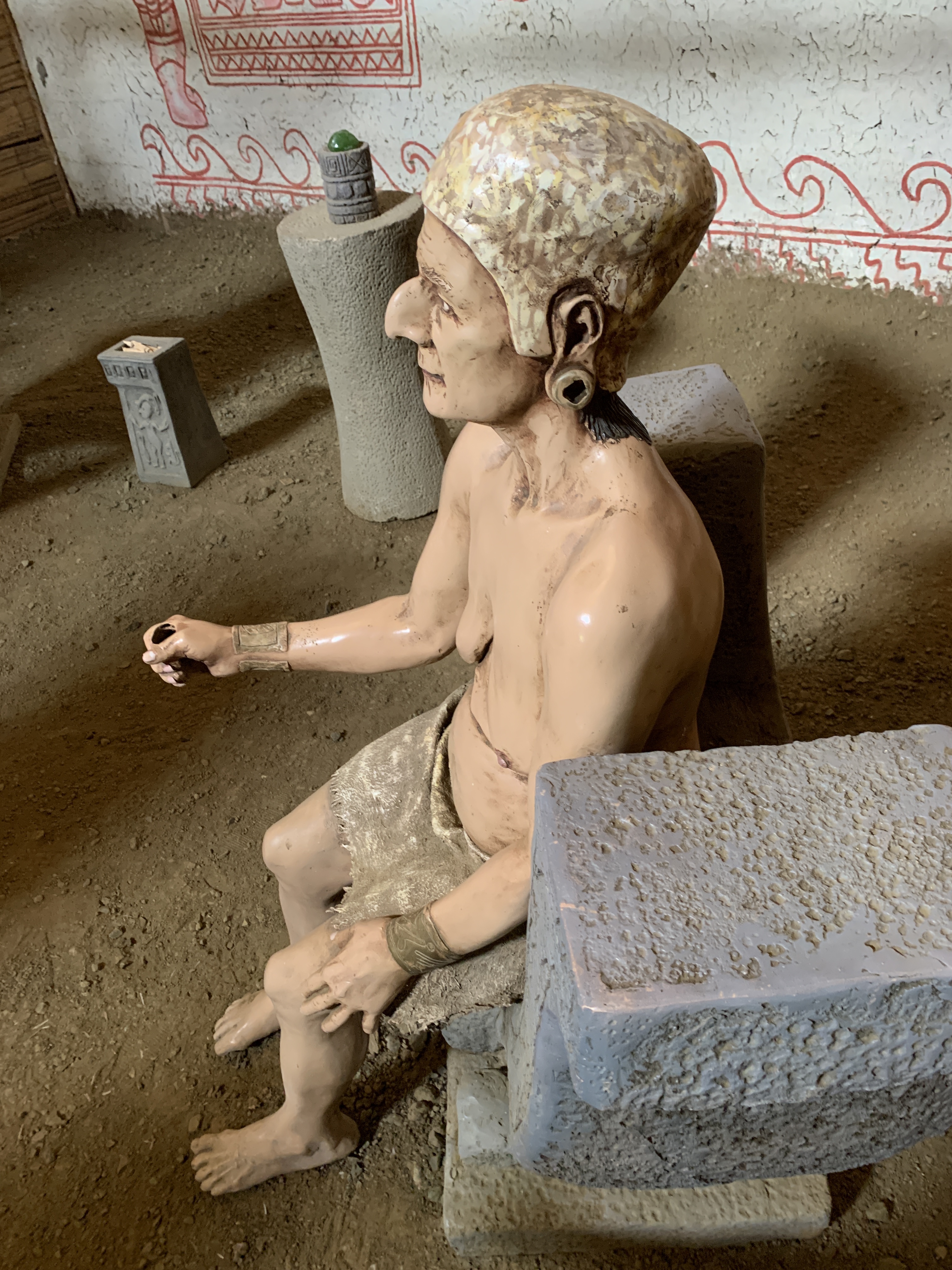
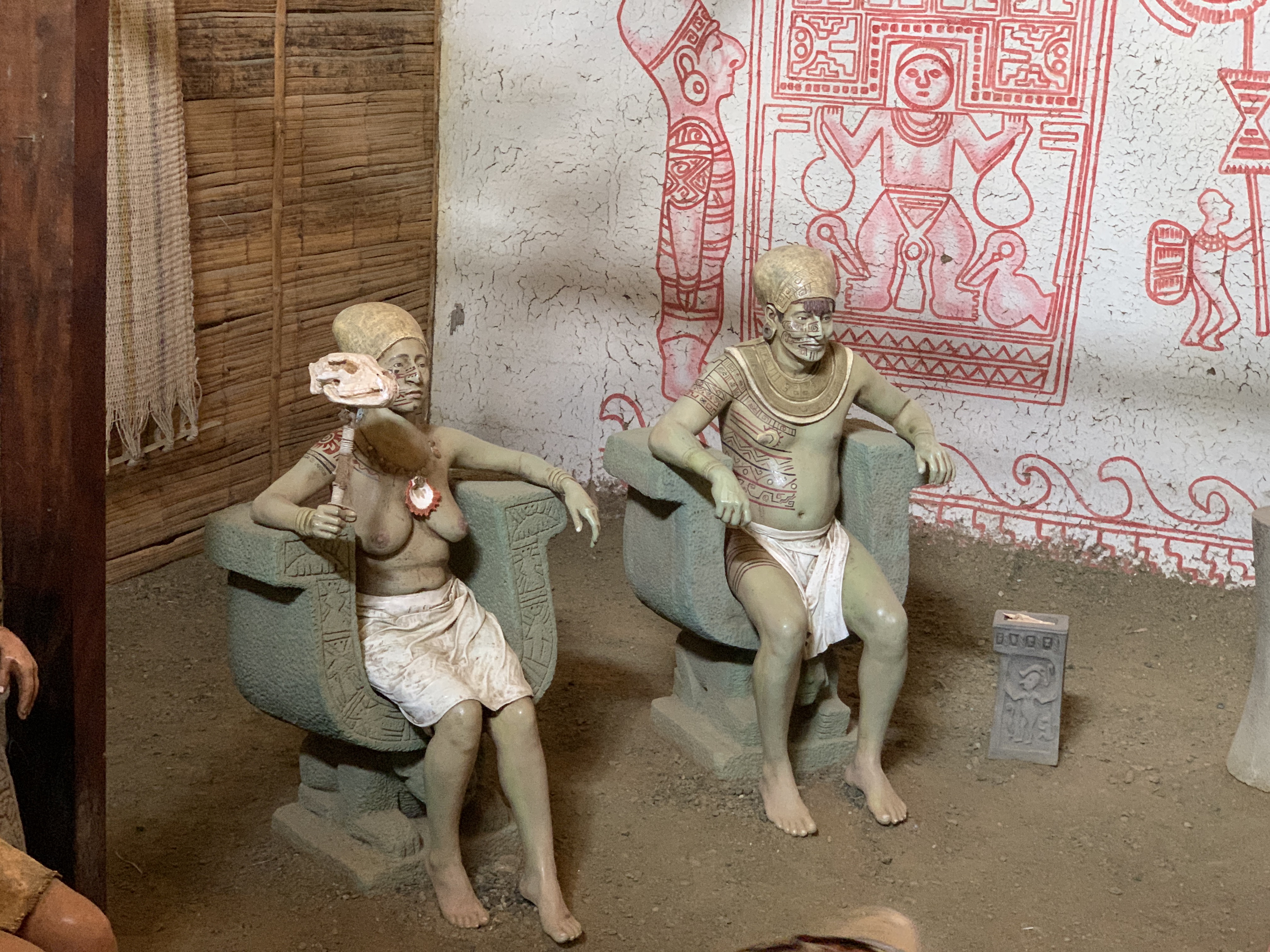
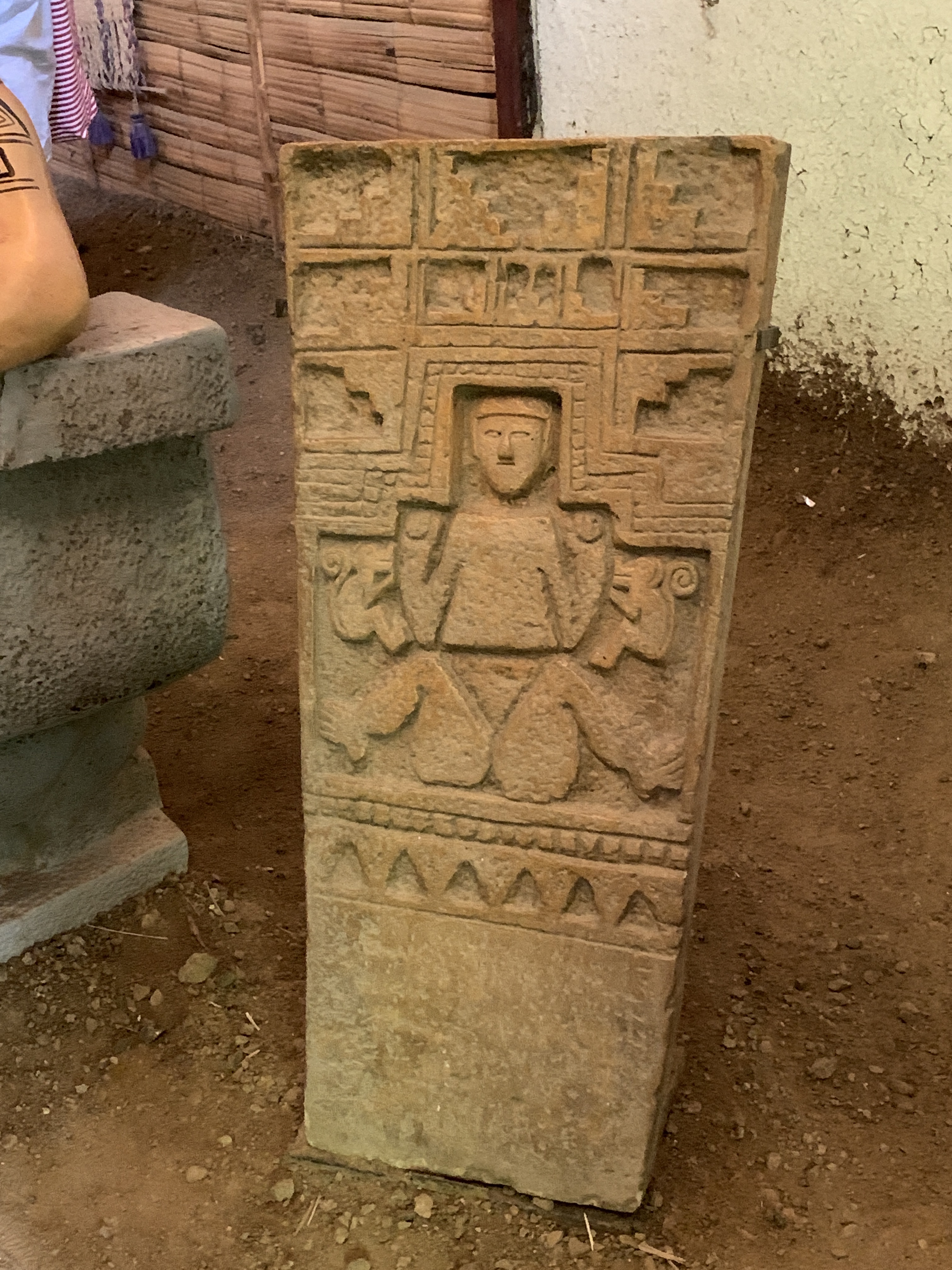
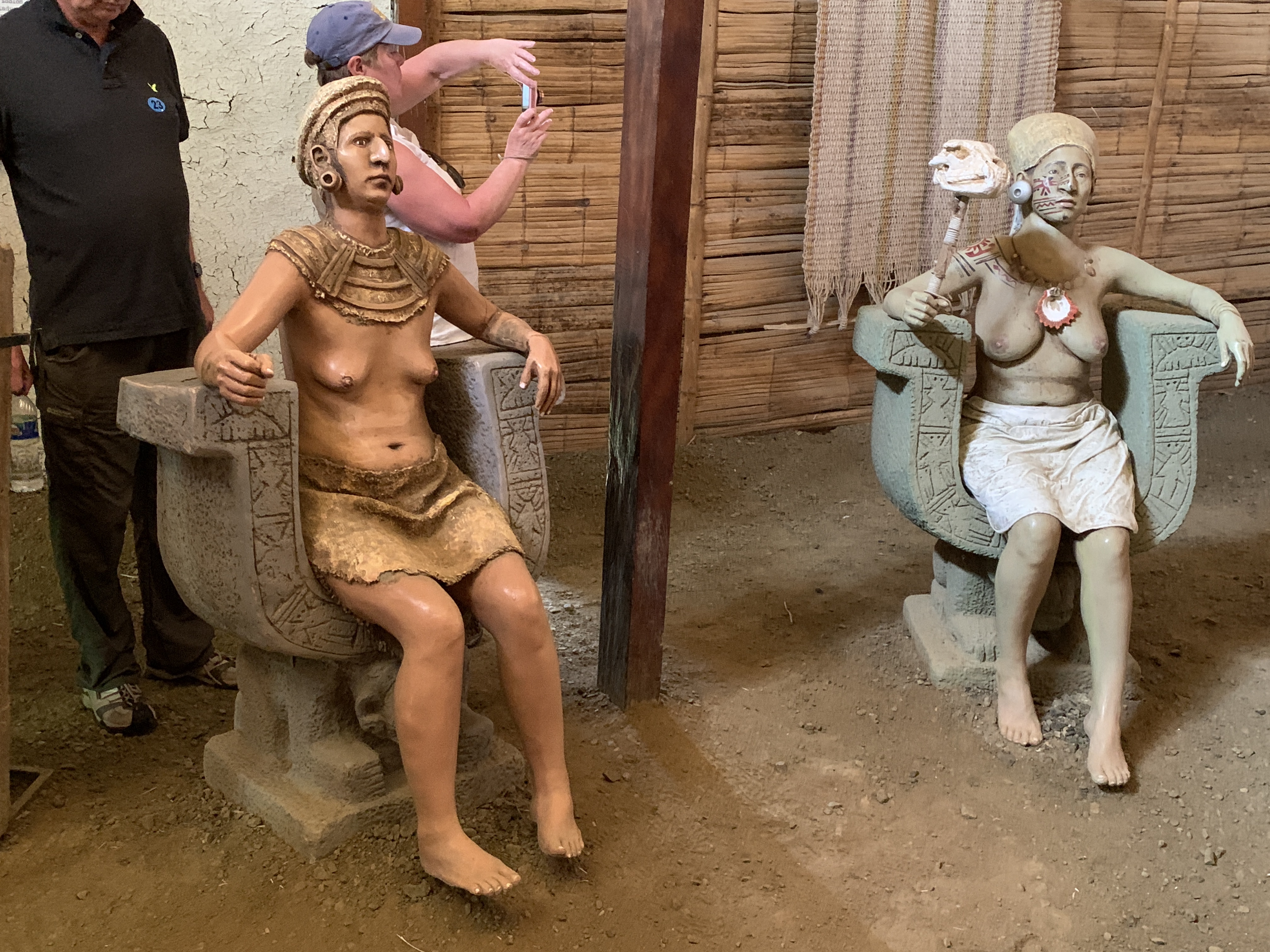 The third hut was a sand pit with hidden replica ceramics showing what it is like to be a “dirt” archaeologist in the field.
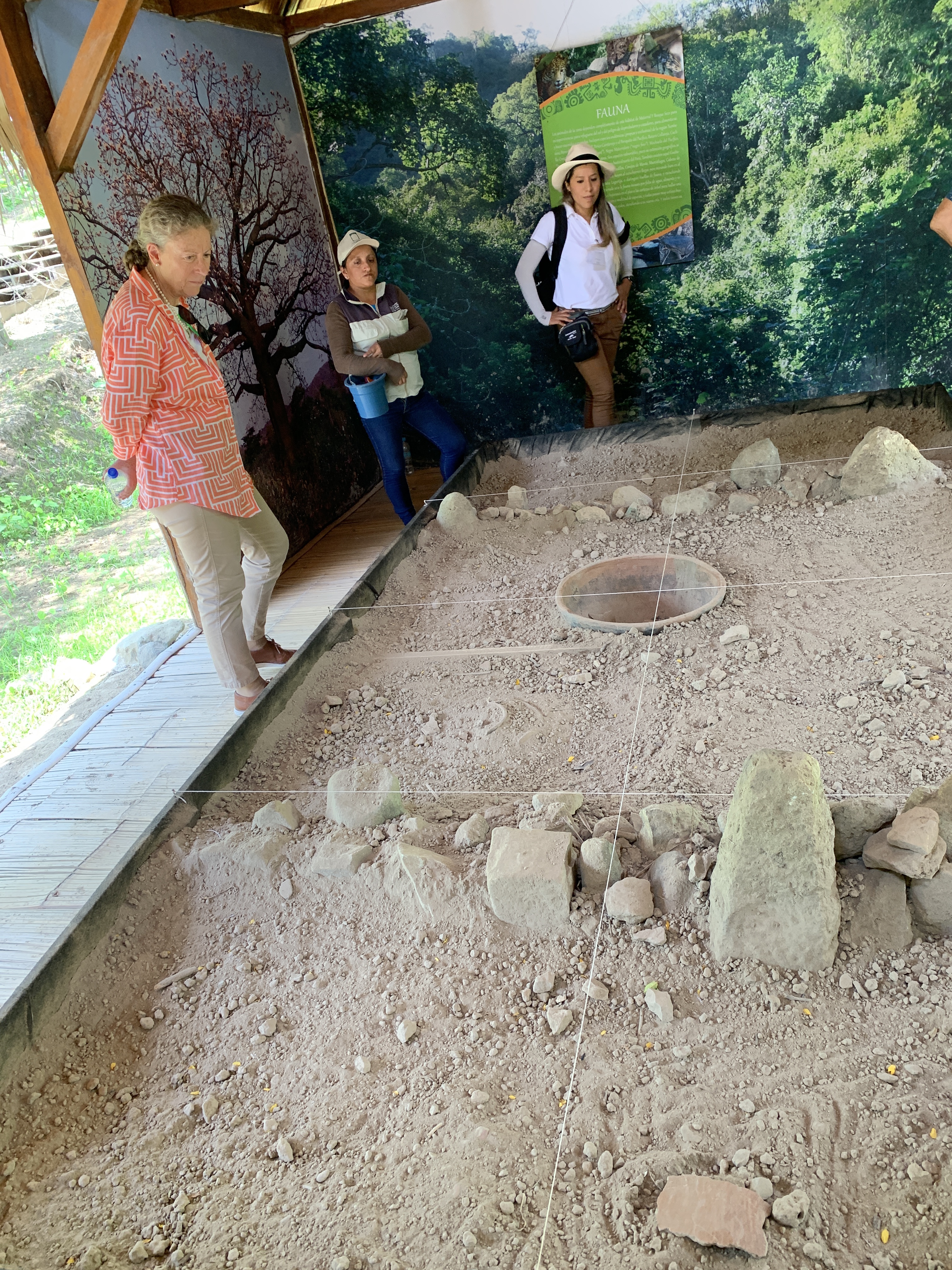
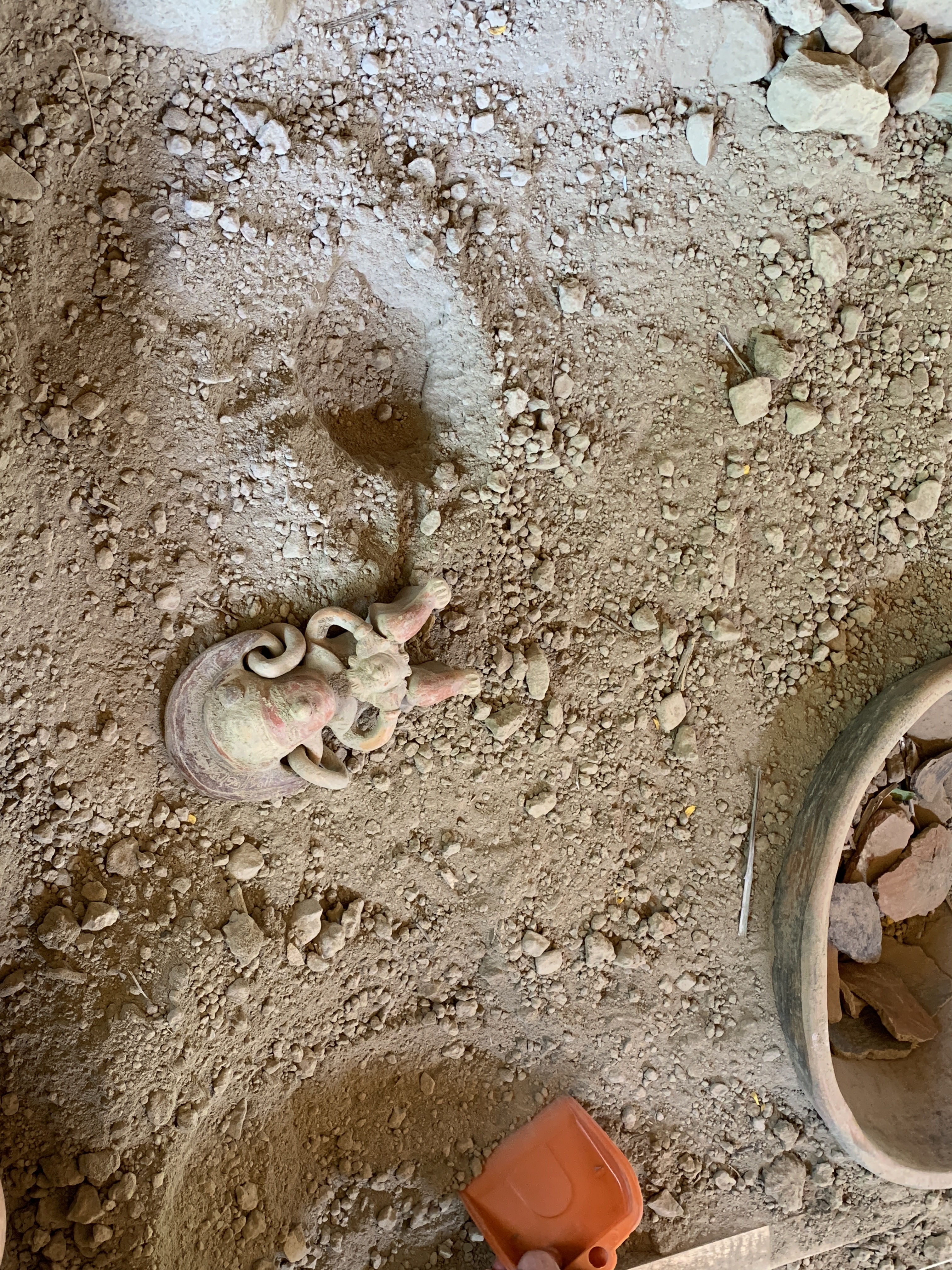
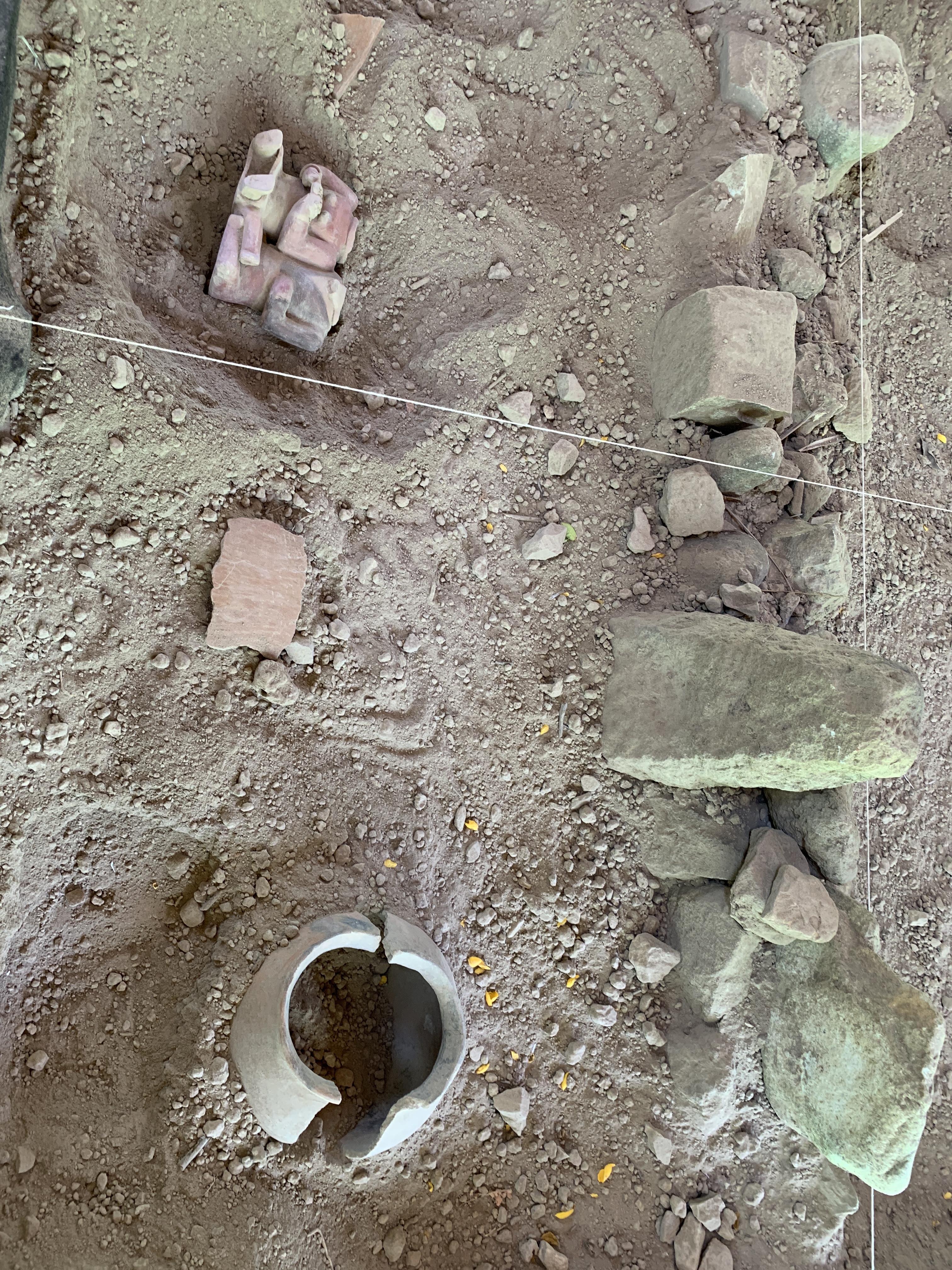
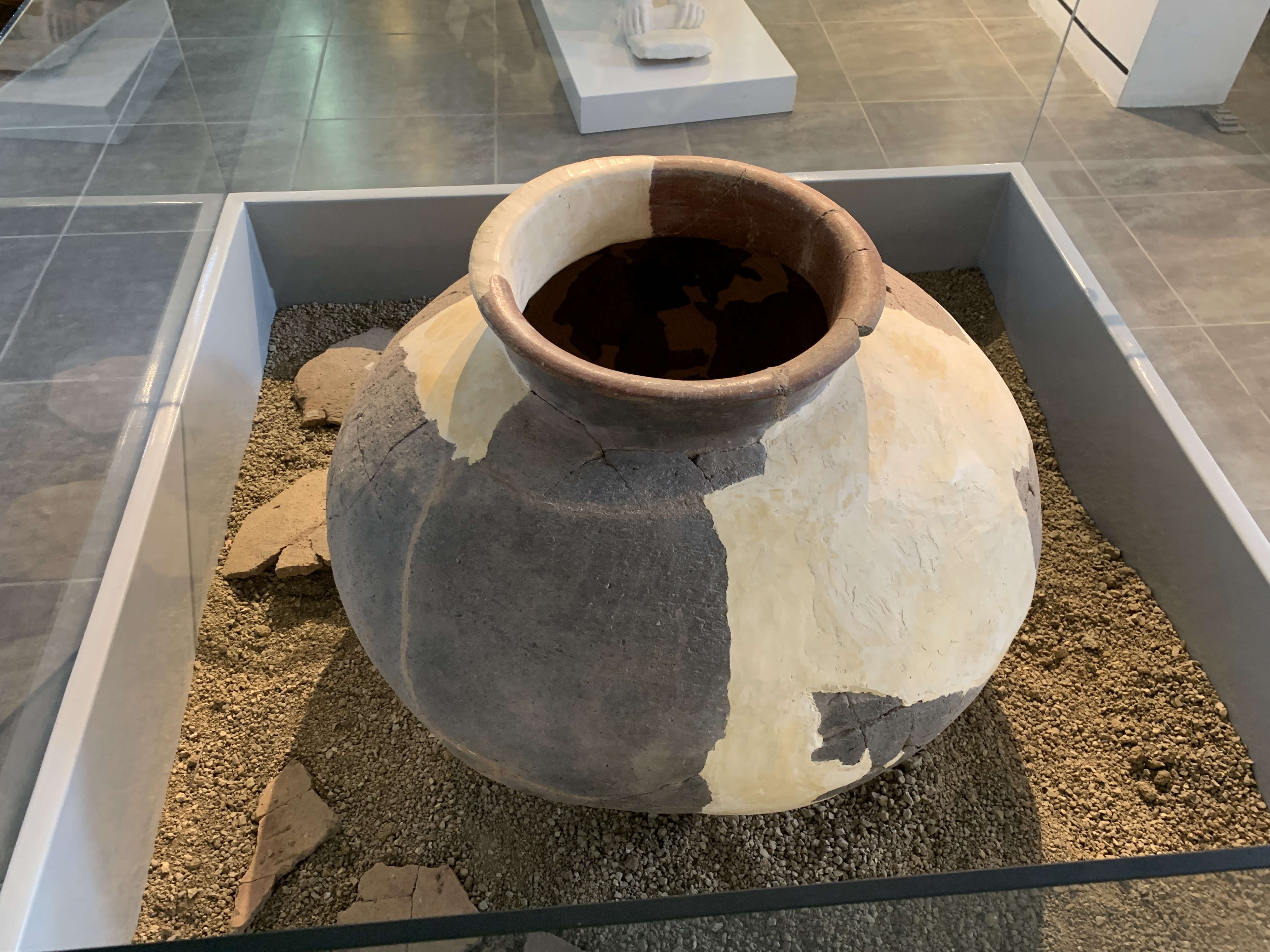
We then started to climb the mountain, initially to the residential terraces of the general population, then up through the shrubs to a middle level with underground cisterns (like Mayan Chultnes) that were ceramic underground “pots” 4 x 2 meters and a small top (like a squat wine bottle) coming to ground level. These were used for water and grain storage and a rock was placed in the top to keep unwanted dirt and animals out.
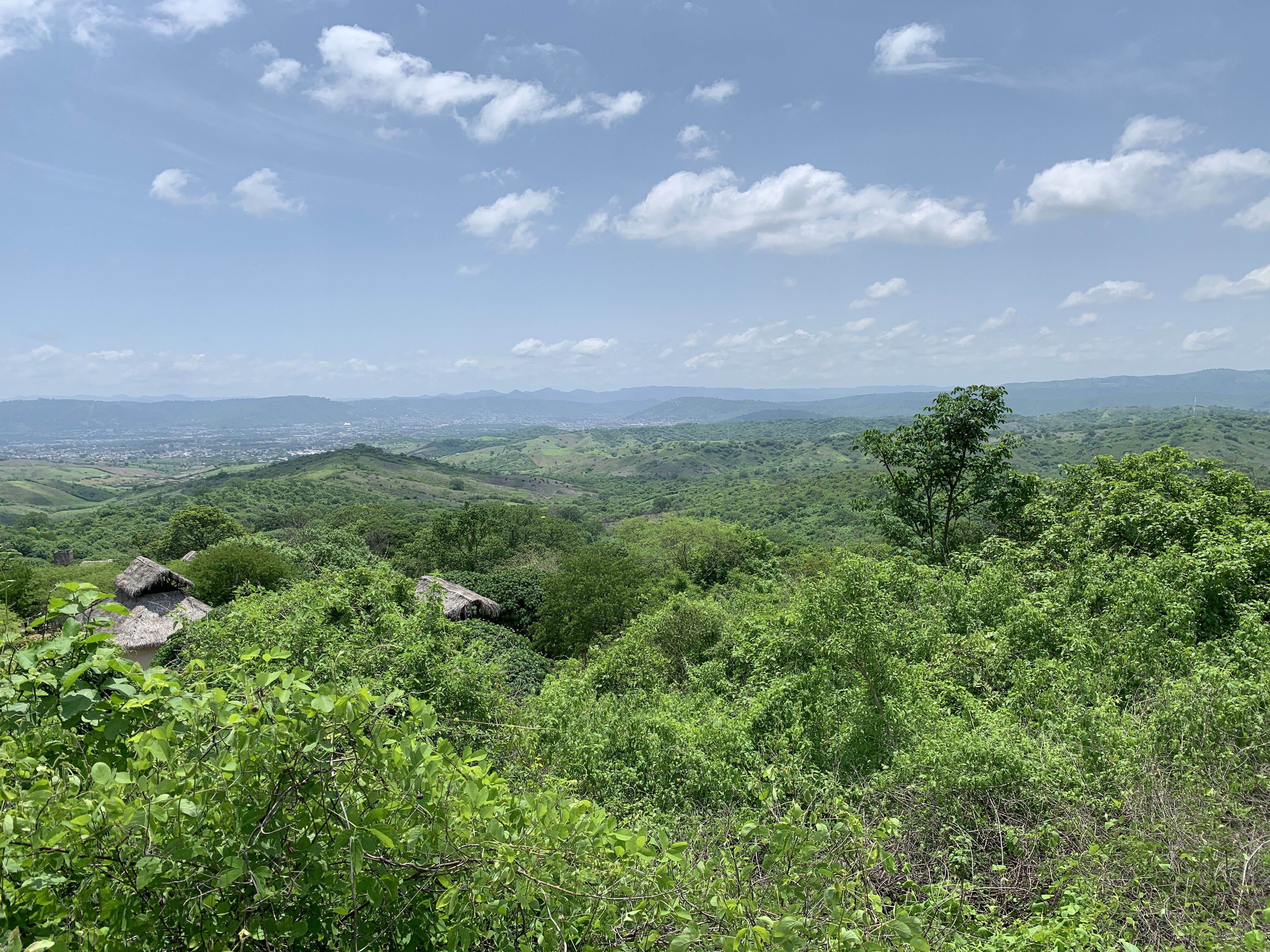
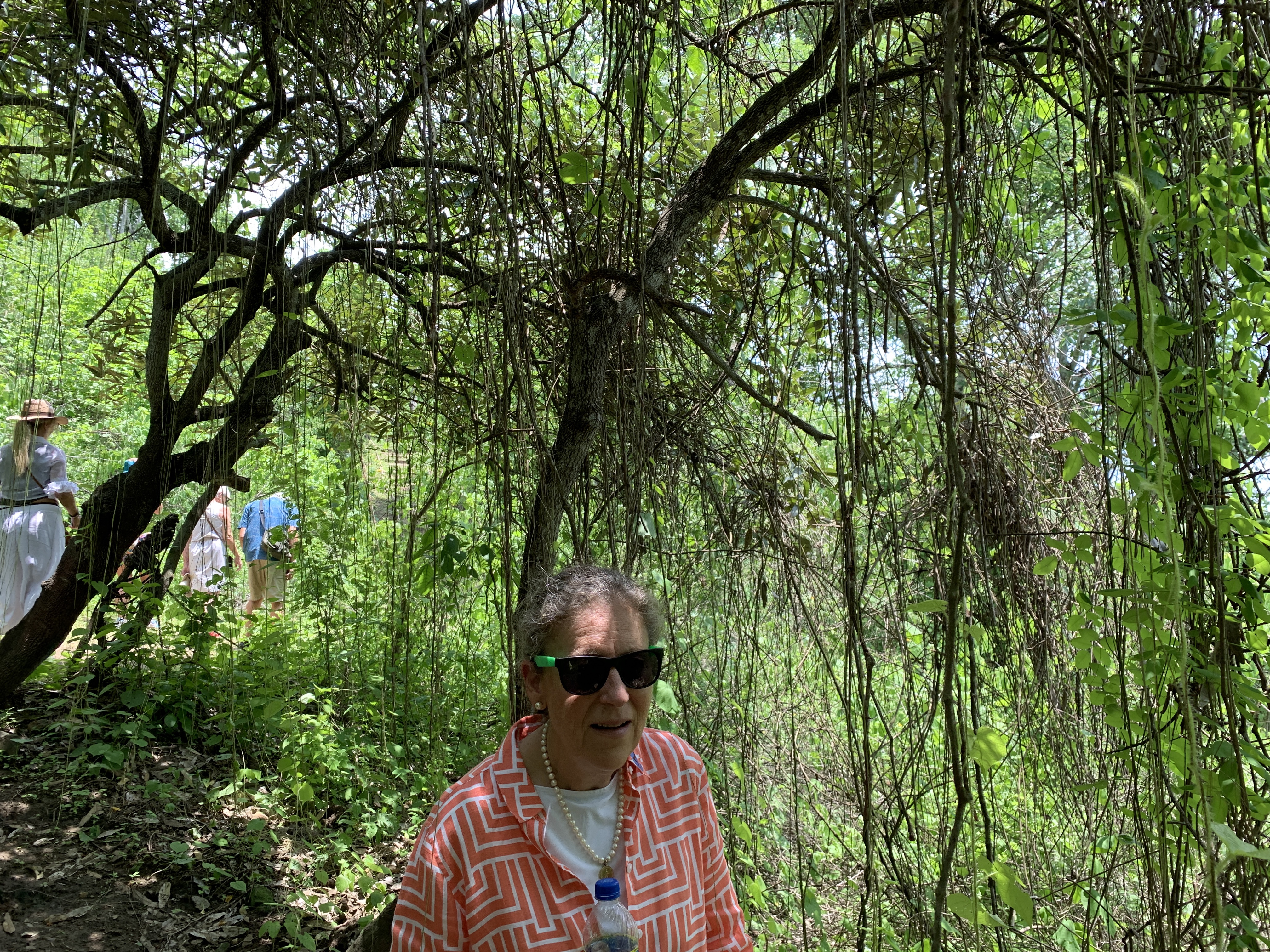
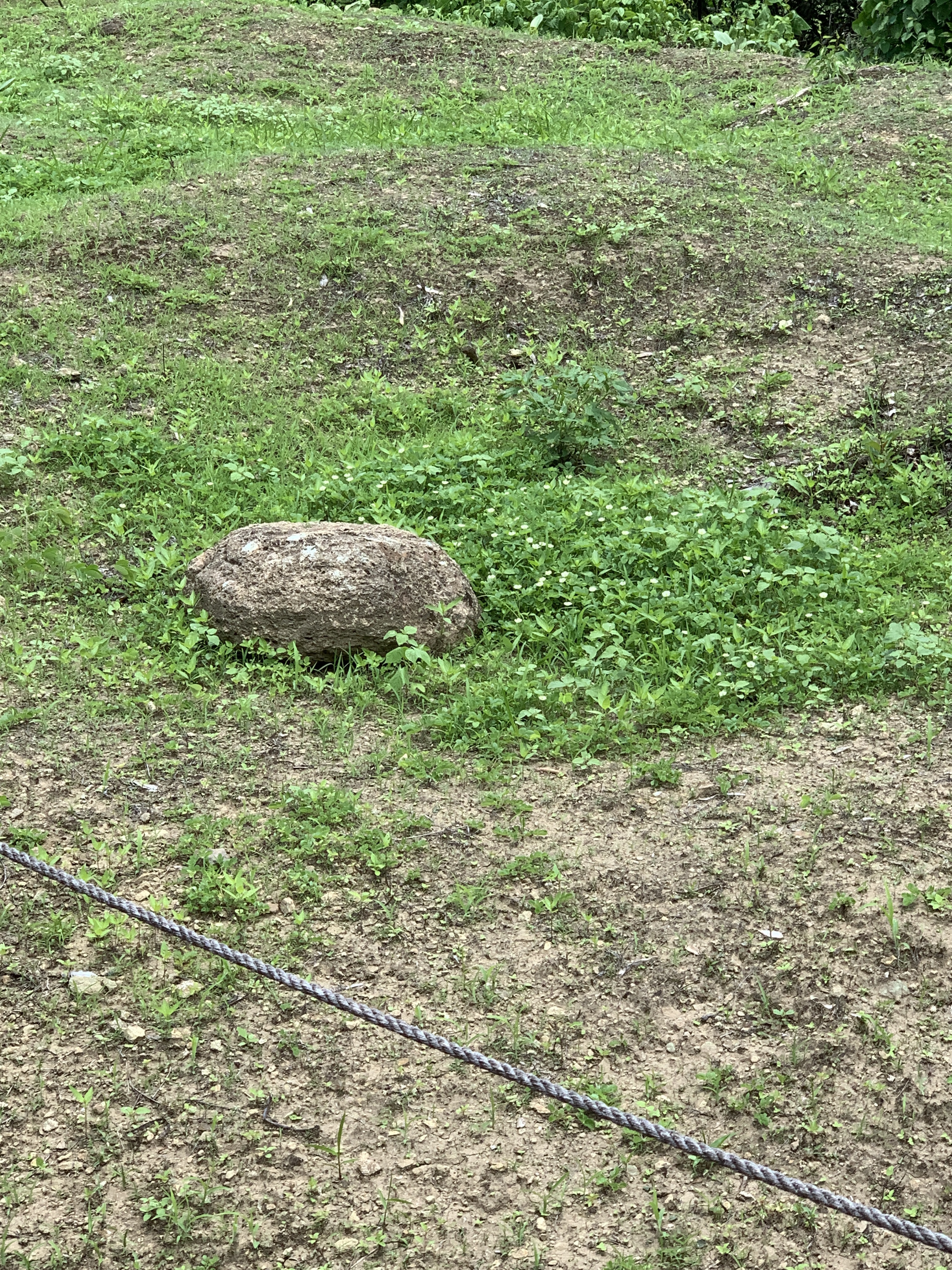
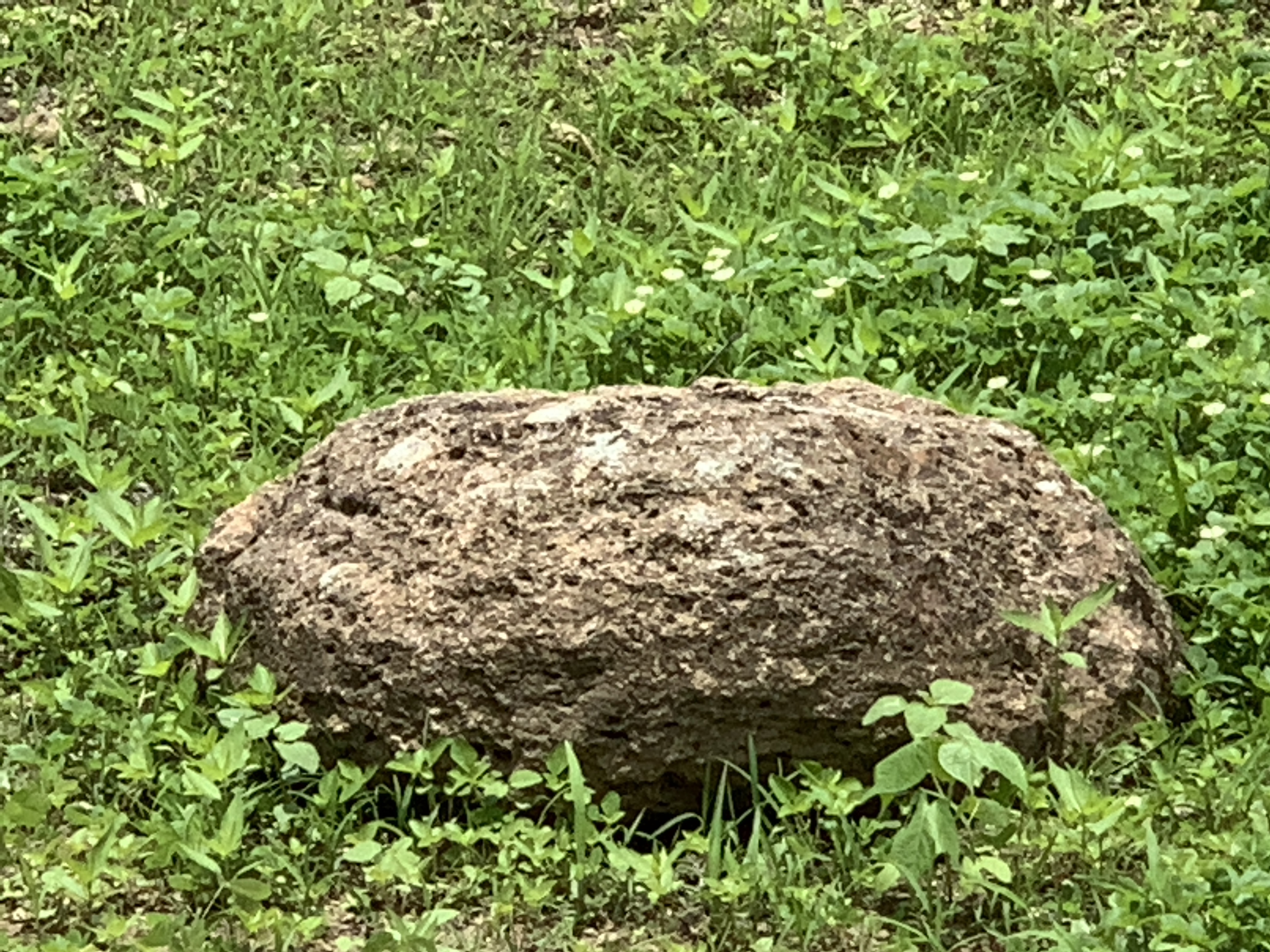
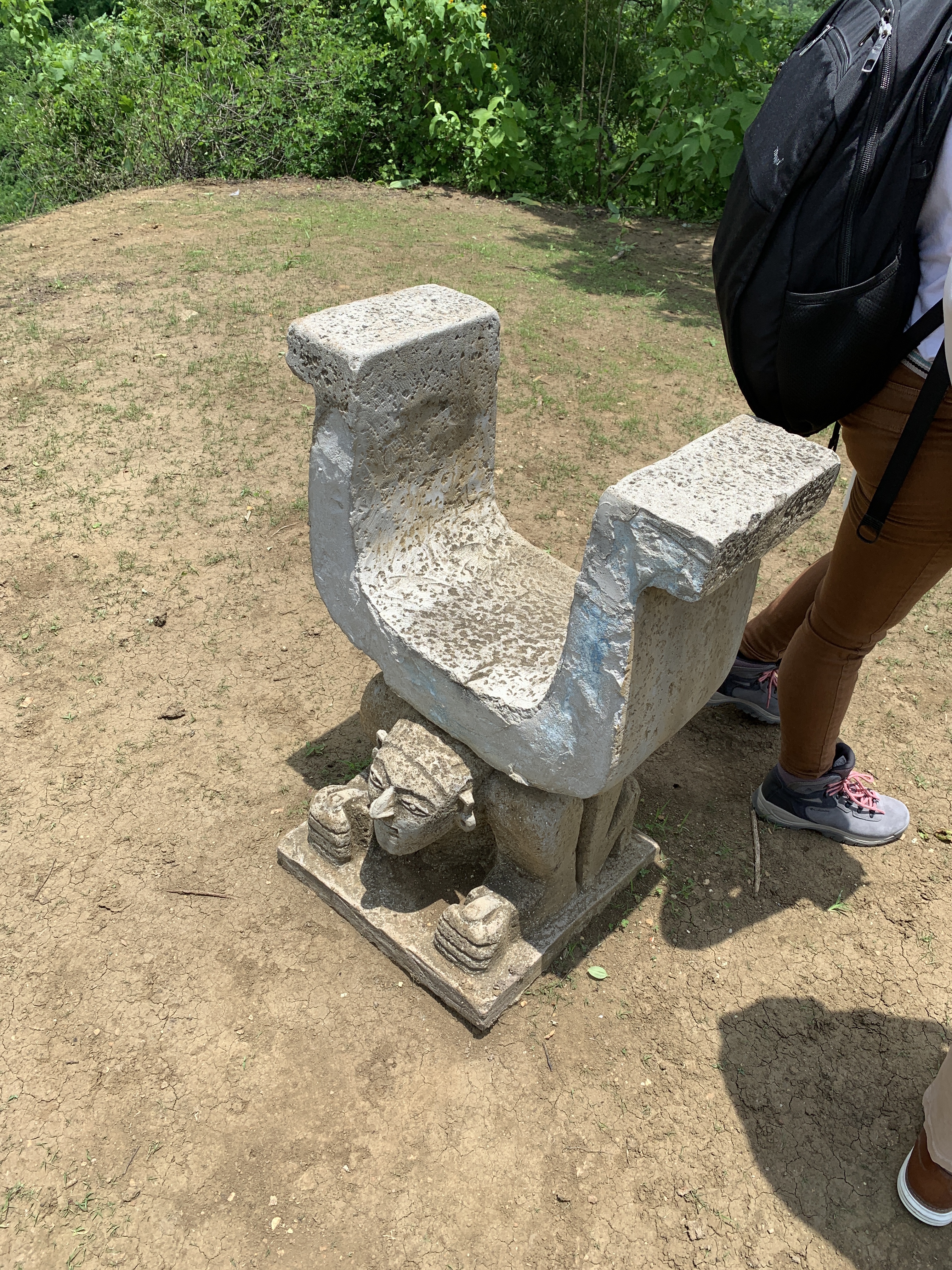
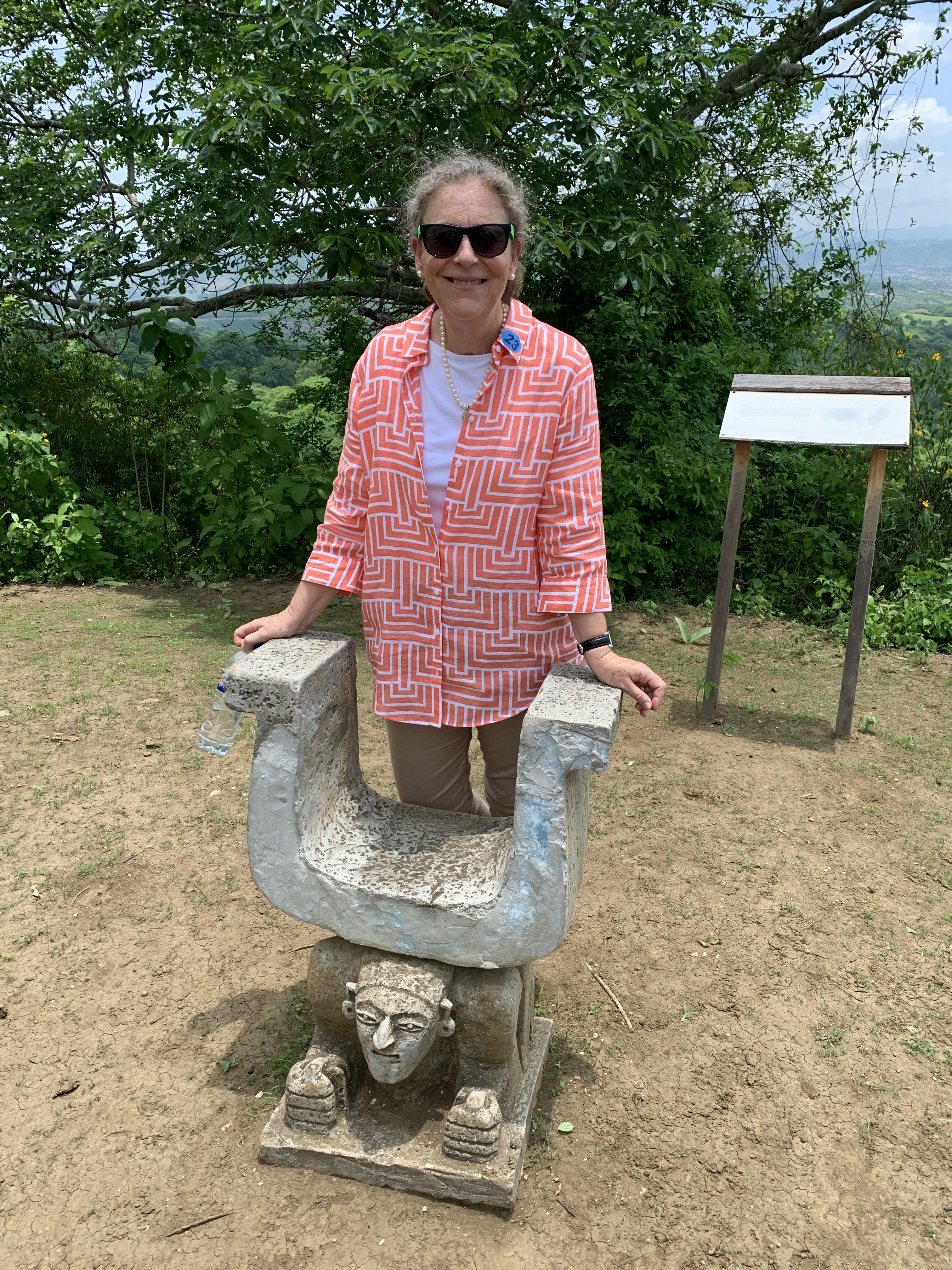
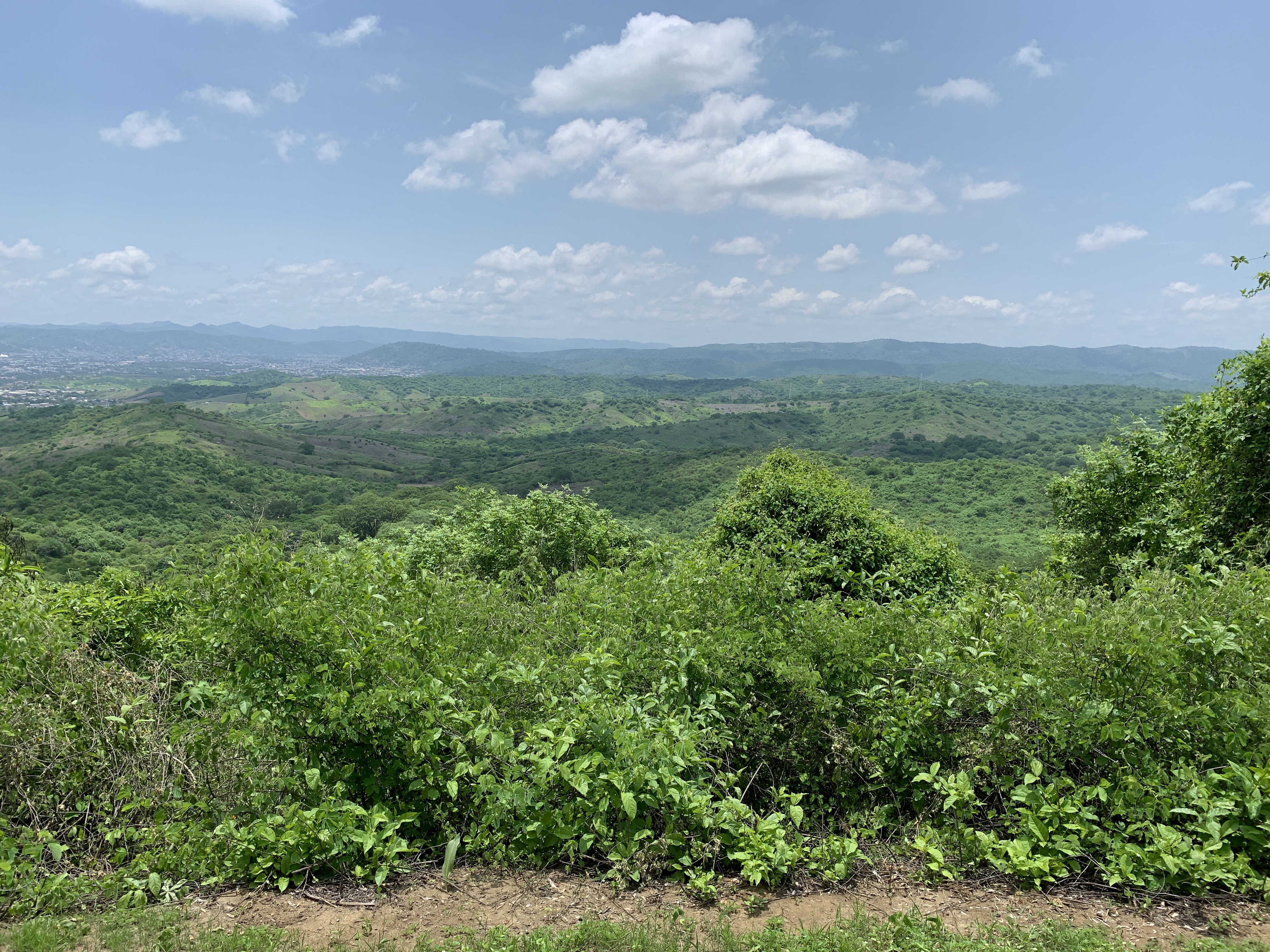
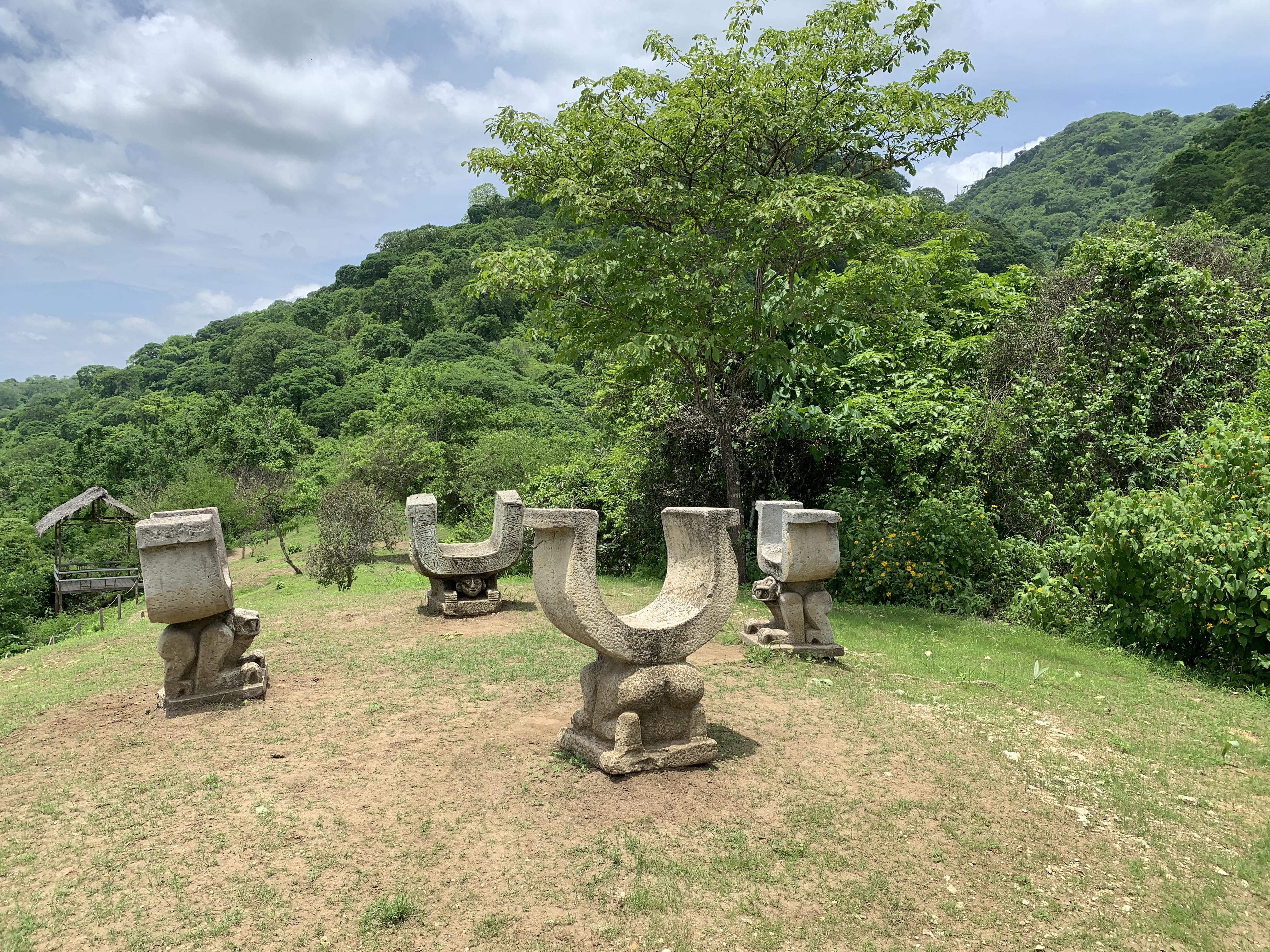
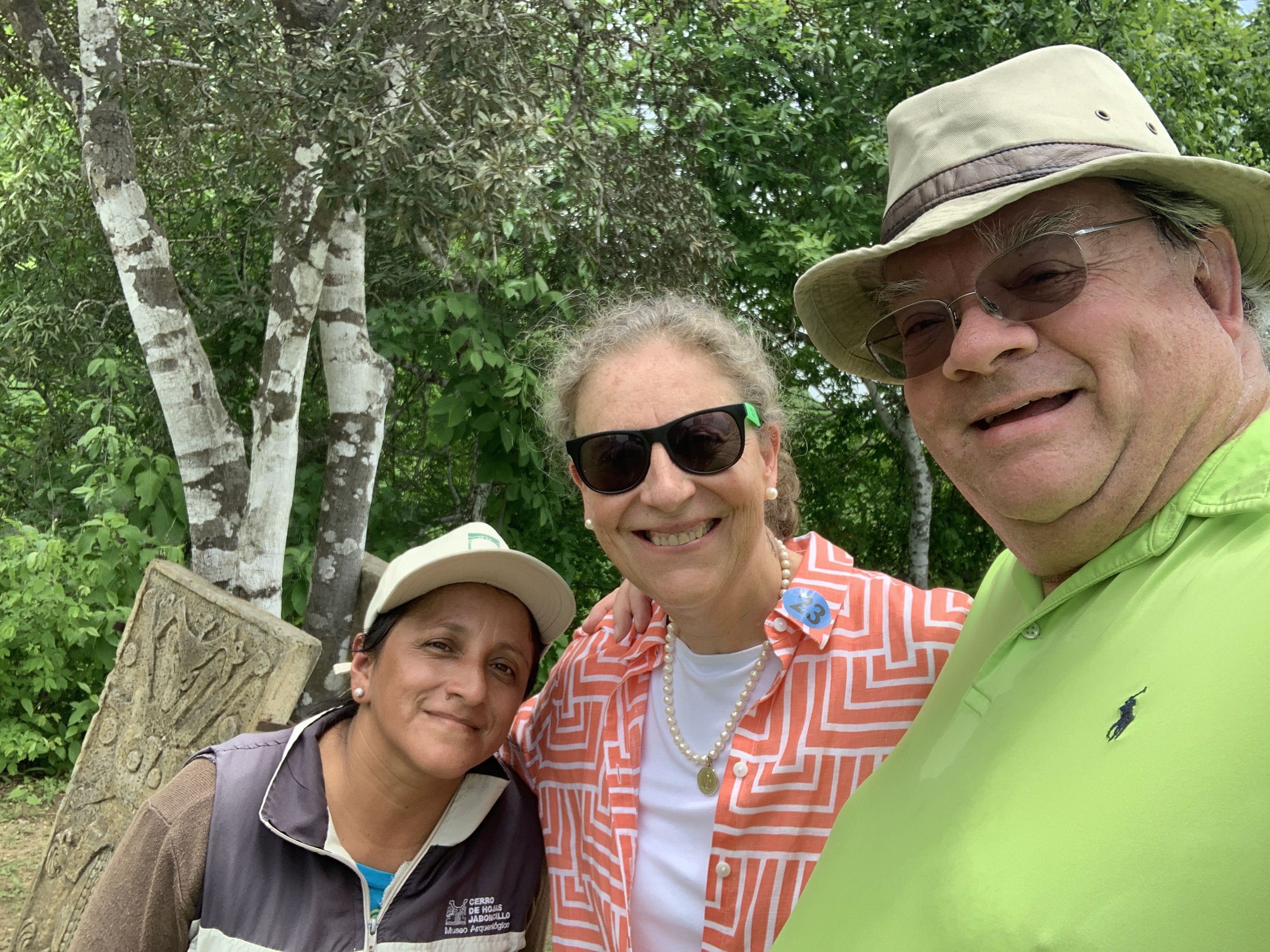
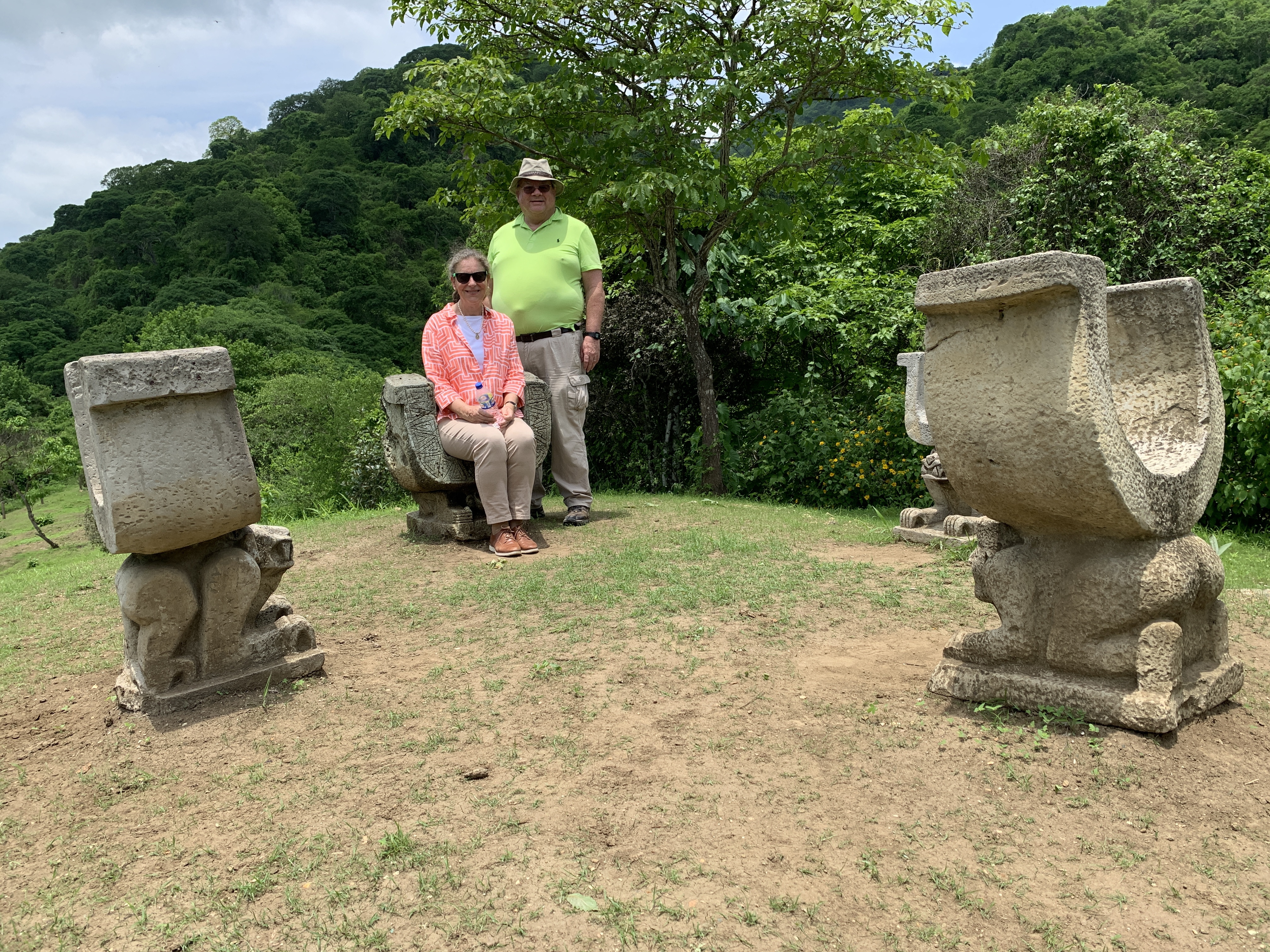
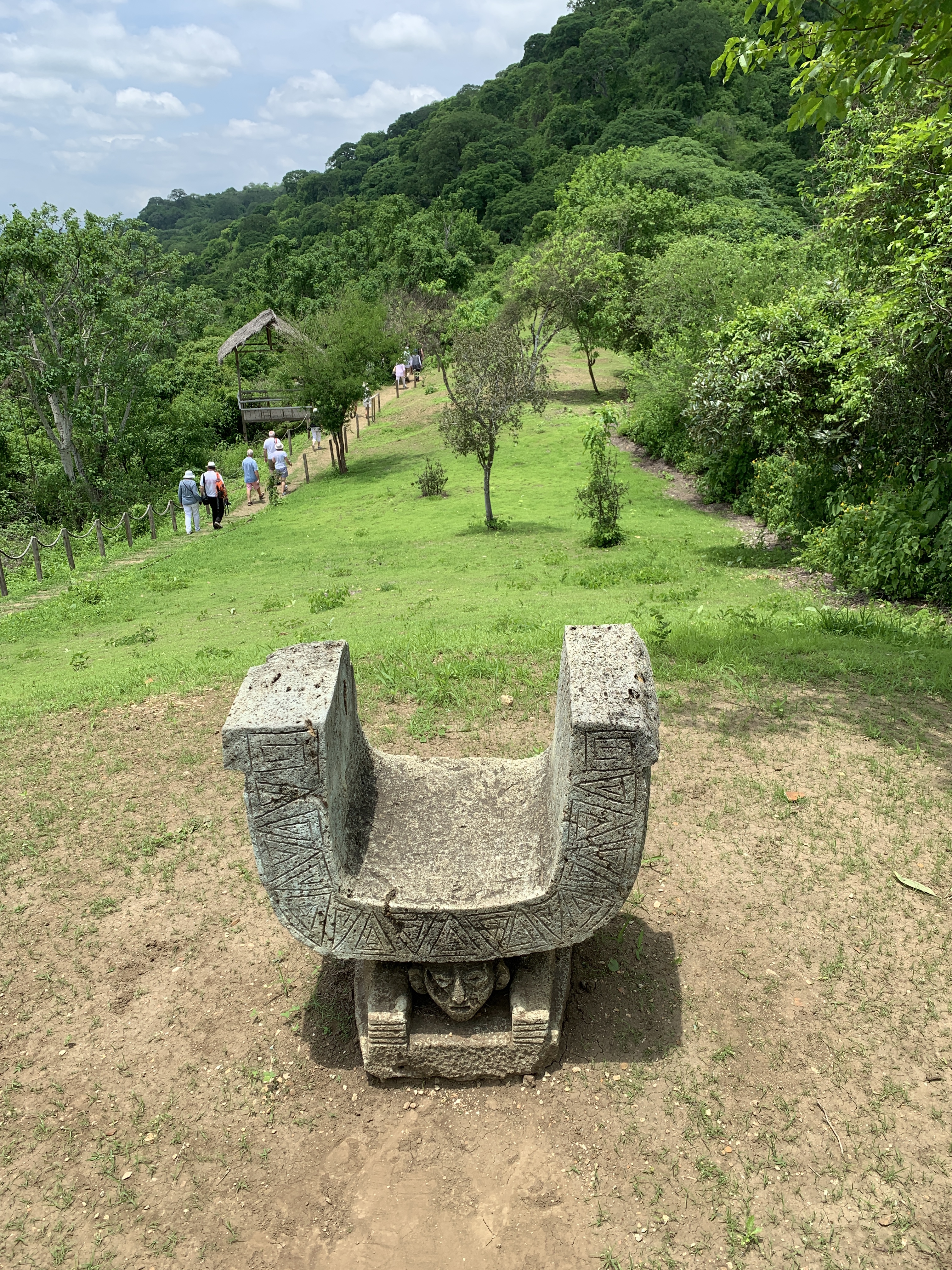
The view of the valley below leading to the ocean was ever more impressive as we continued to scale the hill. Once at the top we were greeted with the U Shaped chairs of the nobility who could keep watch over the populous and any potential invaders whilst managing the affairs of state.
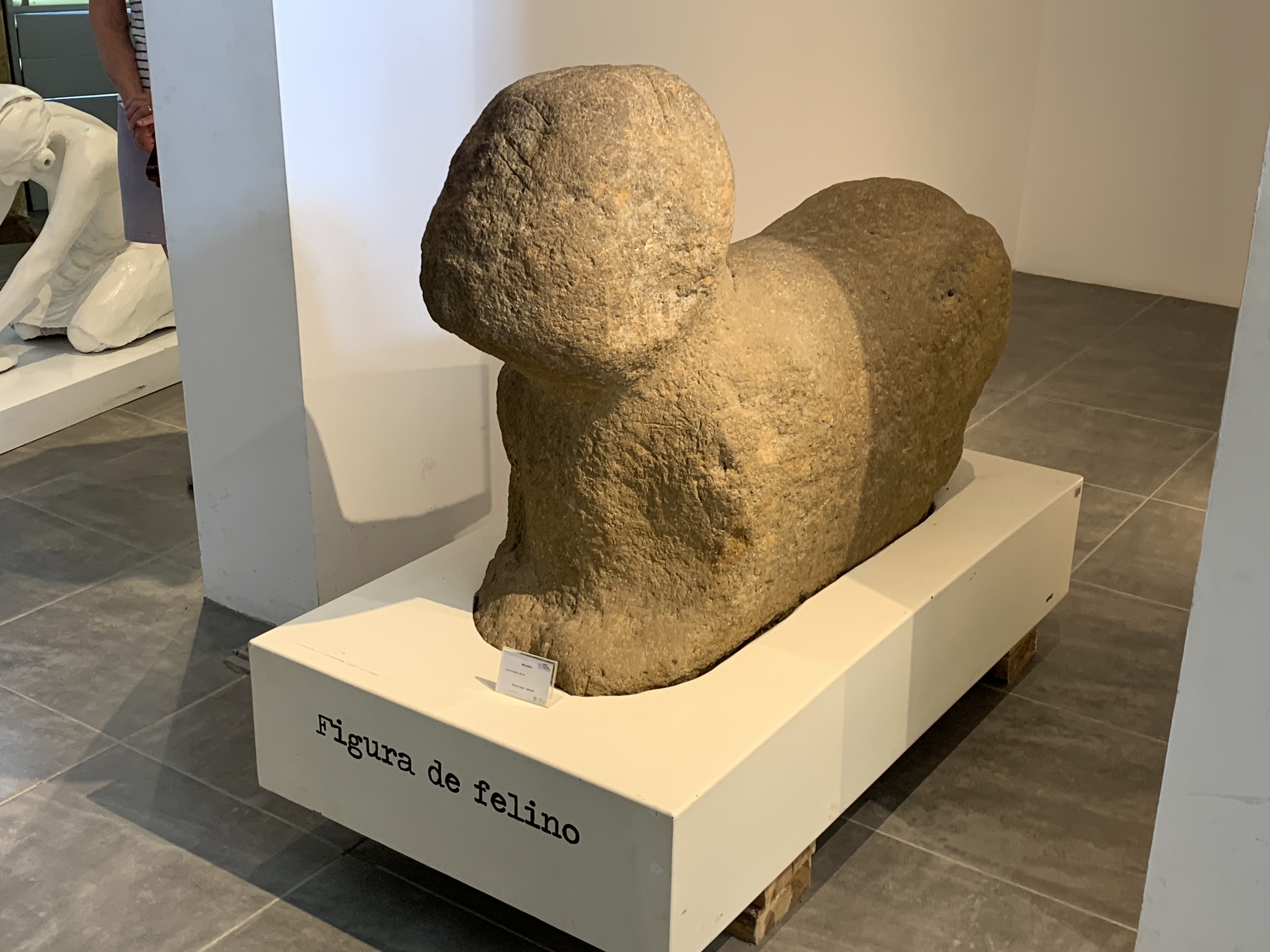
A really terrific experience and once back down we went to the nearby museum which exhibits a good number if artifacts, mainly ceramic and stone, from the site.
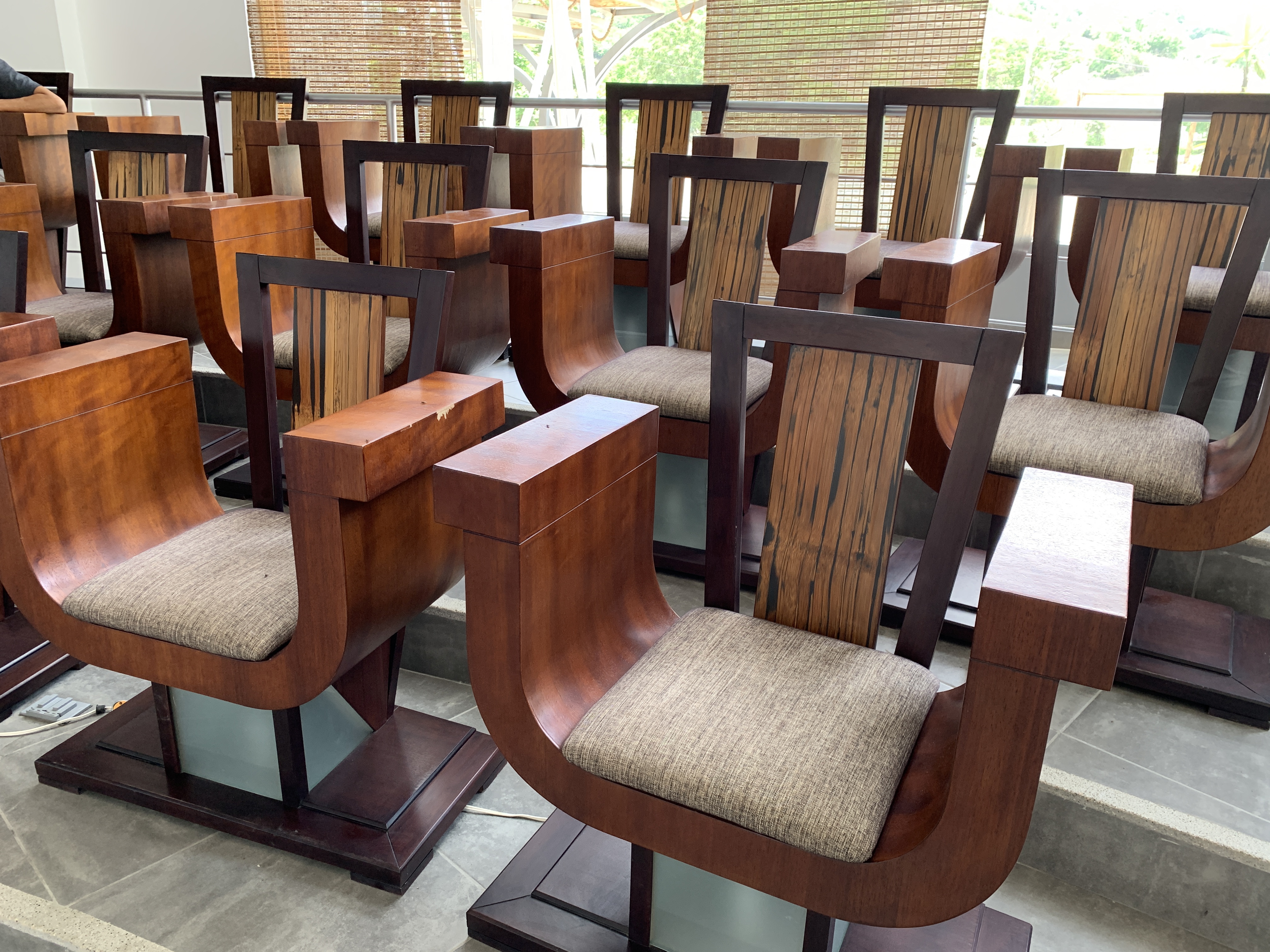
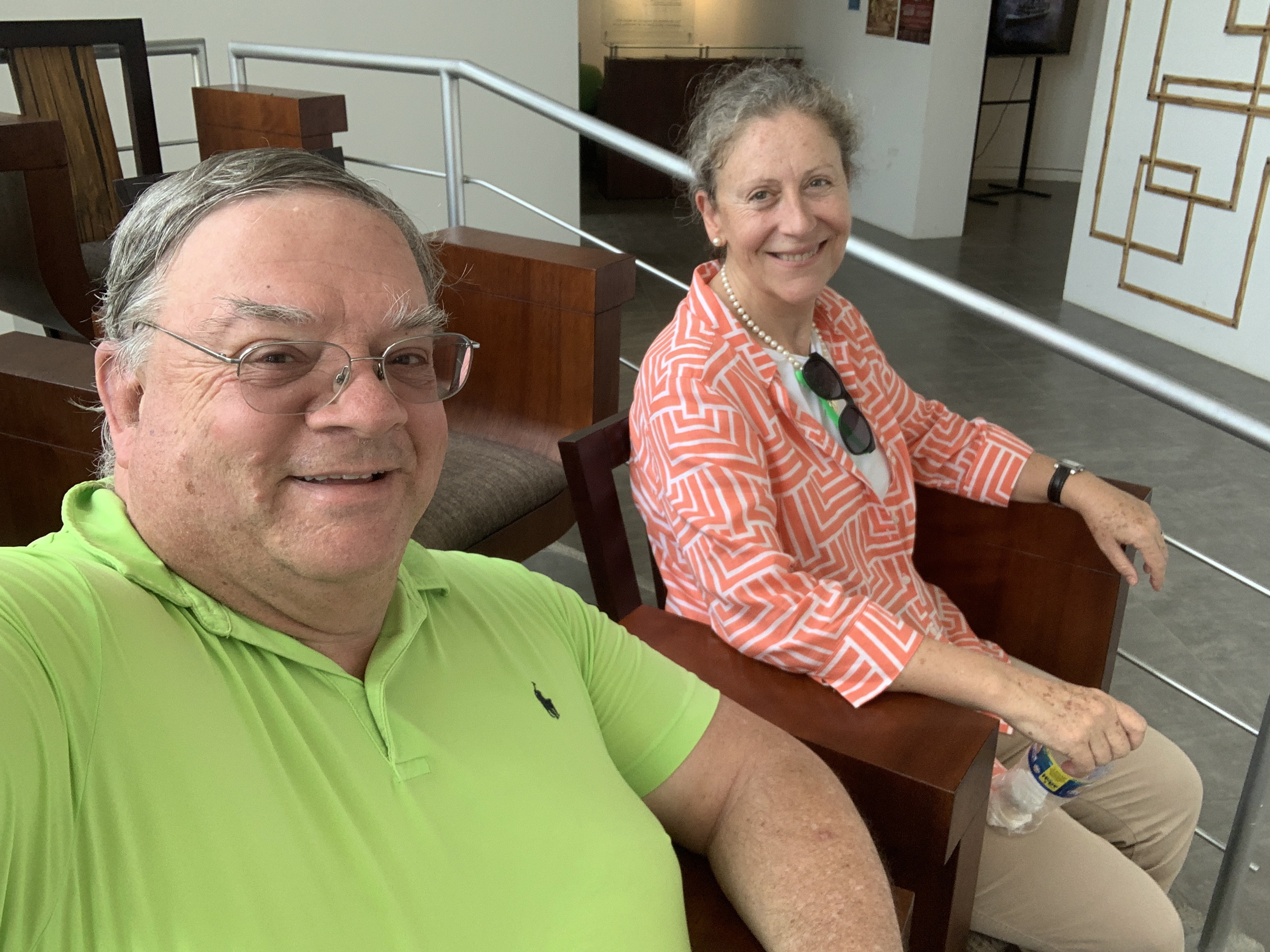
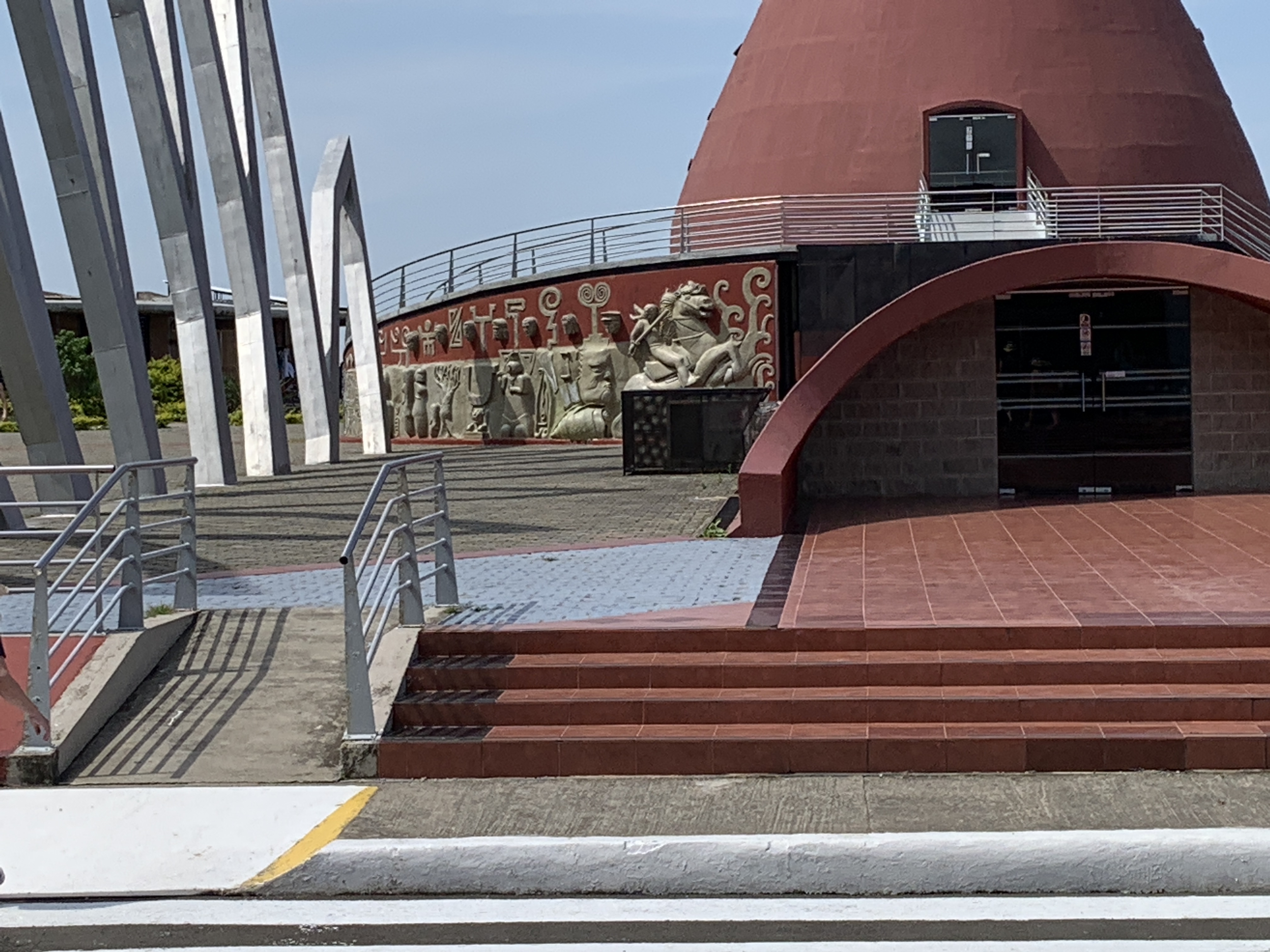
Our last stop before the “Panama” hats was the Centro Cívico Ciudad Alfaro Tatiana Hidrovo Quiñonez which was the site of the signing of the constitution of the country and is periodically used as a congressional chamber for important discussions.
All in all a terrific day with lots of excitement.
The evening’s entertainment was the Cunard singers and dancers performing a tribute to Hollywood.

 Roger & Anne Travels