Tuesday March 10, 2020 – In Fuerte Amador / Panama City, Panama
We arrived at the bay at 6AM and saw sunrise over Panama City. We dropped anchor as it is a Tender Port. By 8 AM we were ready to go ashore, but the local authorities did not come aboard until after 10:30AM! The Princess Cruise ship that anchored after us was cleared and tenders were ferrying their guests ashore, we were waiting. We were concerned that it was going to be another “No Go”, but at 11:45 the Captain indicated that we could start going ashore, however, before entering the tender, we had to go through the temperature check. Tenders moved from the Port side. We were glad that we were able to go ashore and not miss out on the adventure of the day which was to visit the Authentic Indian Village (yellow 4 – Driver Ronaldo; Guide Astrubal or Ace for short). We eventually get onto the coach at 11:45AM, hot bothered and tempers flying as the Princess tenders and us are all arriving at the same disembarkation place and we have to wait in hot cramped positions on the tender after we arrive.
We reached our coach that was to take us to one destination alone. This was a native tribe – The Ebera – that live on a tributary of the Chagras River in a community of 35 families and 107 people.
We started our coach ride on one of the three islands, that were connected by a causeway with rubble from digging the canal. It used to be completely controlled by the Americans and indeed all of the military buildings in that area and the neighboring mainland are the US military buildings, now used by Panama. It was important to have these forces to protect the entrance to the canal, initially from pirates when the canal was being built and subsequently any powers that wanted to disrupt trade or military equipment. Similar fortifications were on the Atlantic Side. The islands are now a tourist area and a yacht club.
Once on the mainland a Bio museum designed by Frank Gherey, is very evident given it’s multicolored angled sheets that form the roof. We passed a hill with a large Panamanian flag, the size of a basketball court, the container Port, shopping malls and the Jungle in the center of the city (equivalent to 280 soccer fields in size). Panama is known for it’s production of Bananas (75% of the Chiquita bananas in the world come from Panama, the rest from Costa Rica and Honduras). At it’s peak in the 1970’s, some 700 tons of bananas were exported each week. The most expensive coffee in the world – Kelina – is grown at 3,700 meters (12k feet) above sea level and takes 2 years to grow. It currently sells for US$1.029 per pound (2019 price).
There are four main areas of the 74 Sq Km Panama City and 6 million population, to visit – La Vieja dating from the early 1500’s, Casco viejo from 1673, is the main expensive area used in the daytime by tourists and at night by locals to party. The Downtown skyscrapers which is the center of the 300 banks and trade. Finally the former Canal area with the US air base and Administration & the French colony started in 1673.
From January to April the weather is Dry 90+ by day and 80+ by night. However, from April to December there is a lot of daily rain. It rains more on Carribean North side. Panama in the local dialect means abundance of fish. Shopping, tourism, banking and the Canal are the main drivers of the economy.
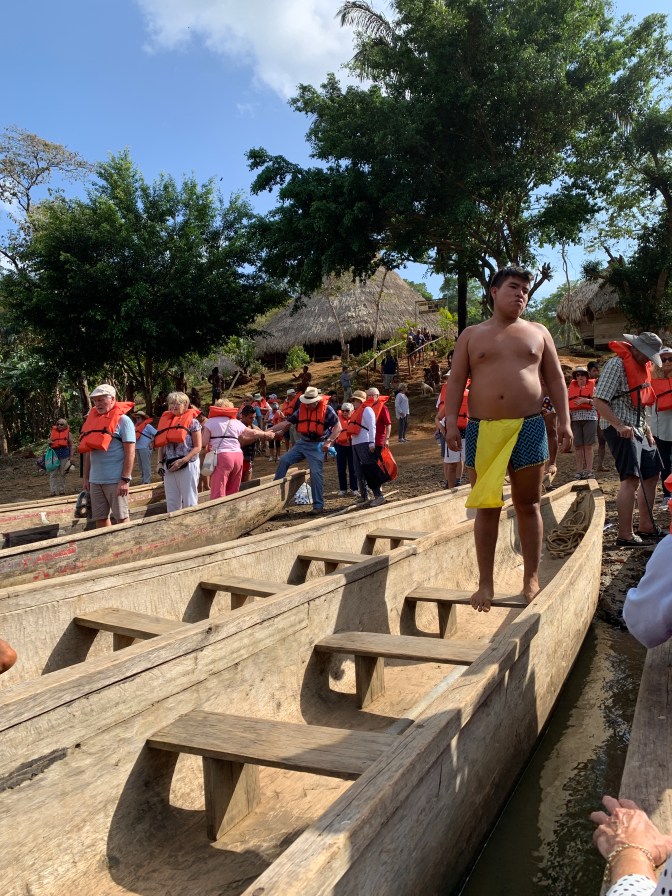
After an hour or so coach rude with the guide extolling the virtues of Panama, we arrived at a dead end that was the River. We were greeted by various loin cloth only clad men who gave us life vests and after donning them we entered the dug out canoes, some 15 to a boat. The leaking vessels were soon underway with the aid of a native with an outboard motor at the rear of the canoe and a “spotter” at the front giving hand signals.
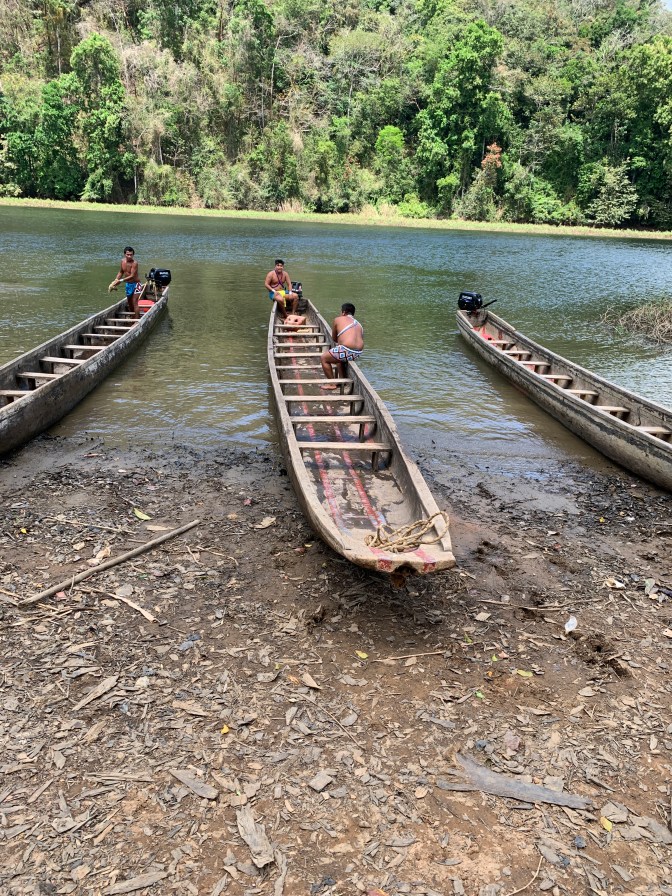
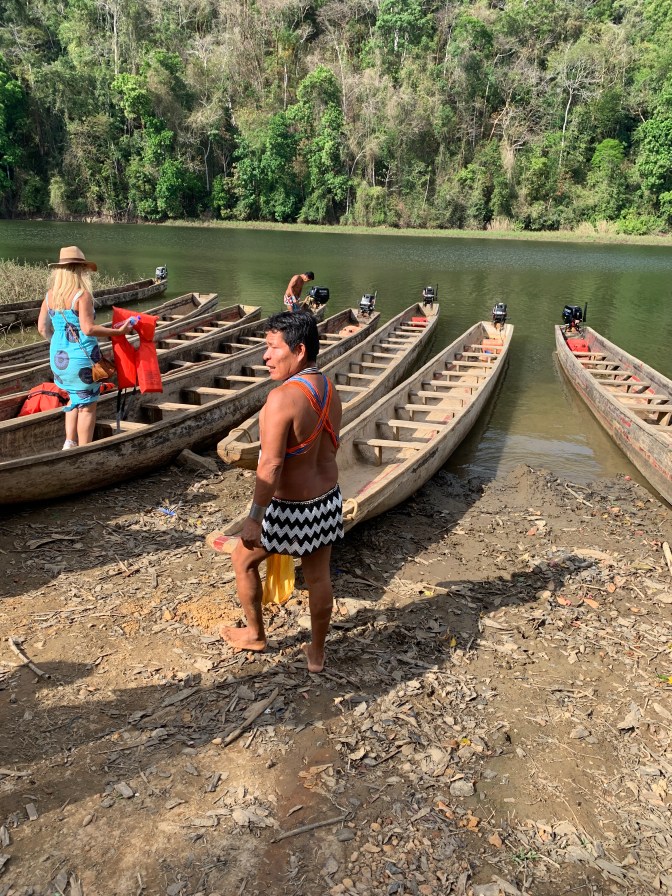
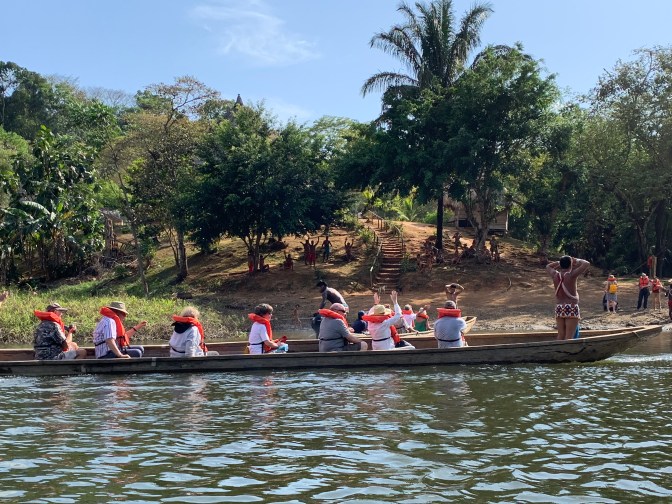
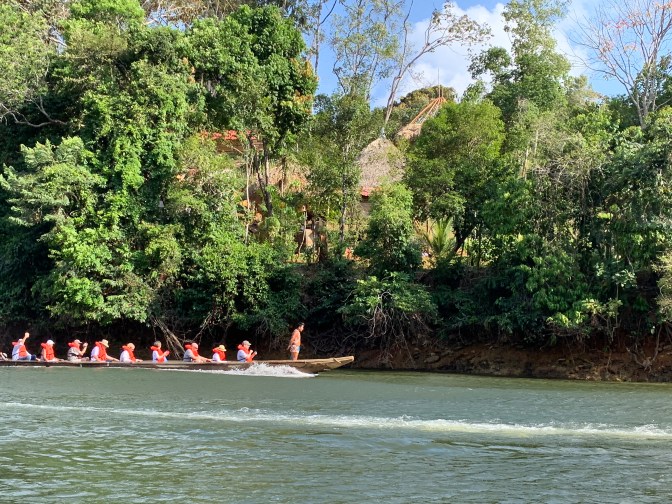
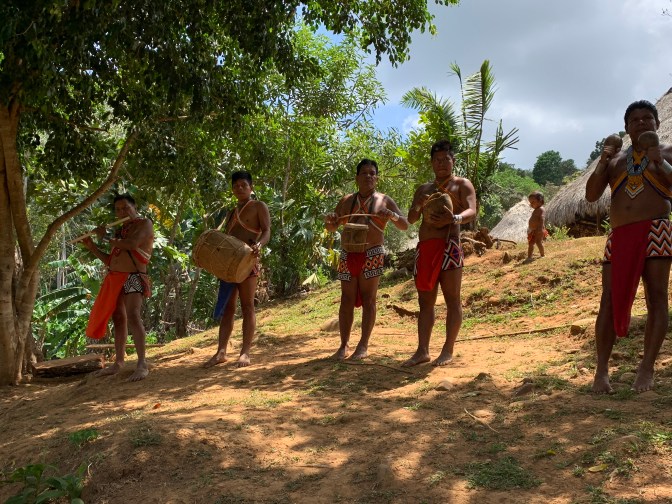
Some 20 minutes later we arrived at the landing where we were greeted by a small band of the native tribe playing percussion based music.
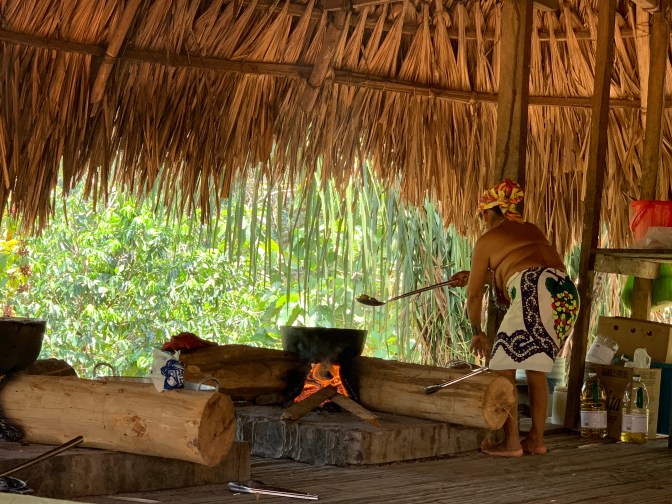
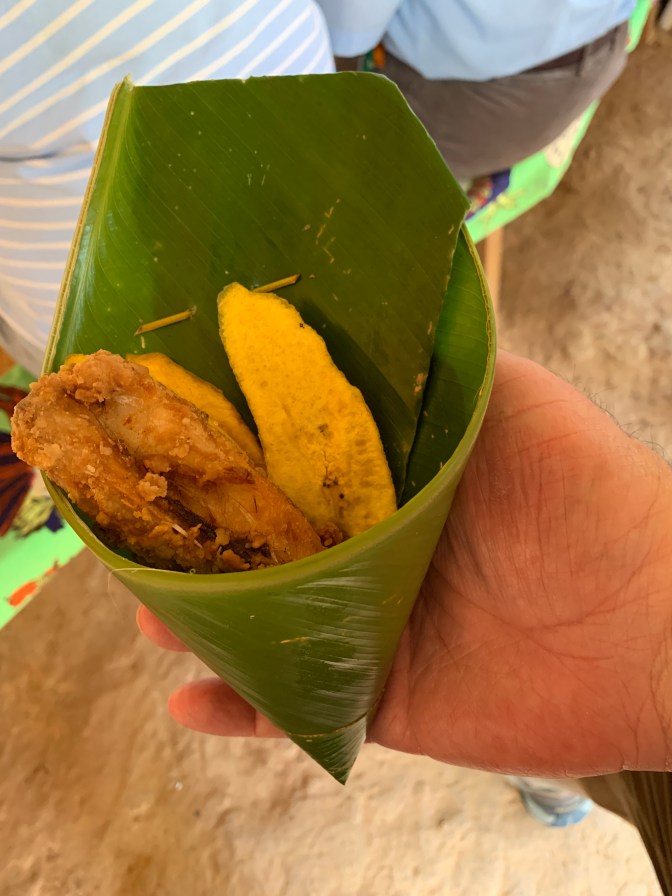
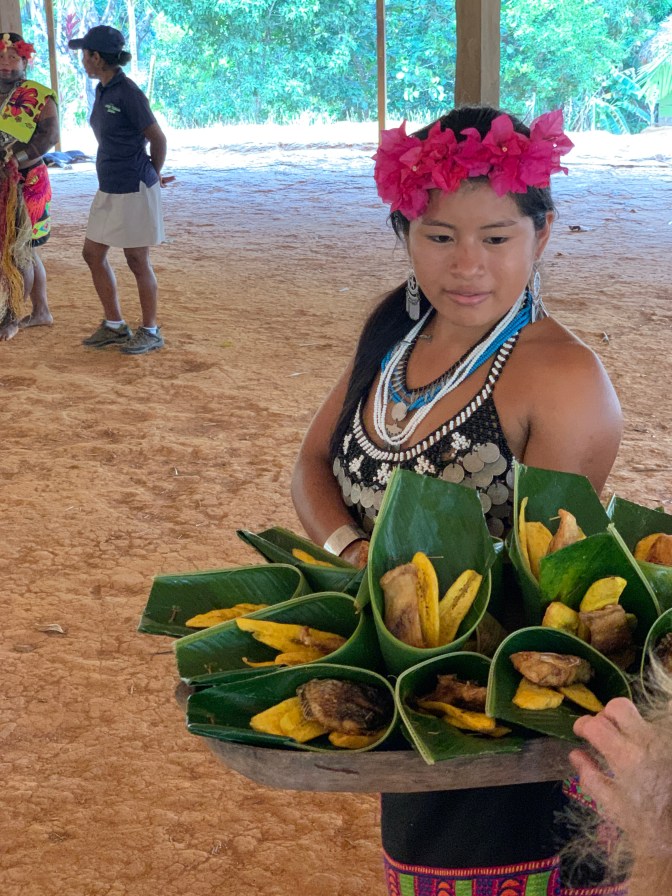
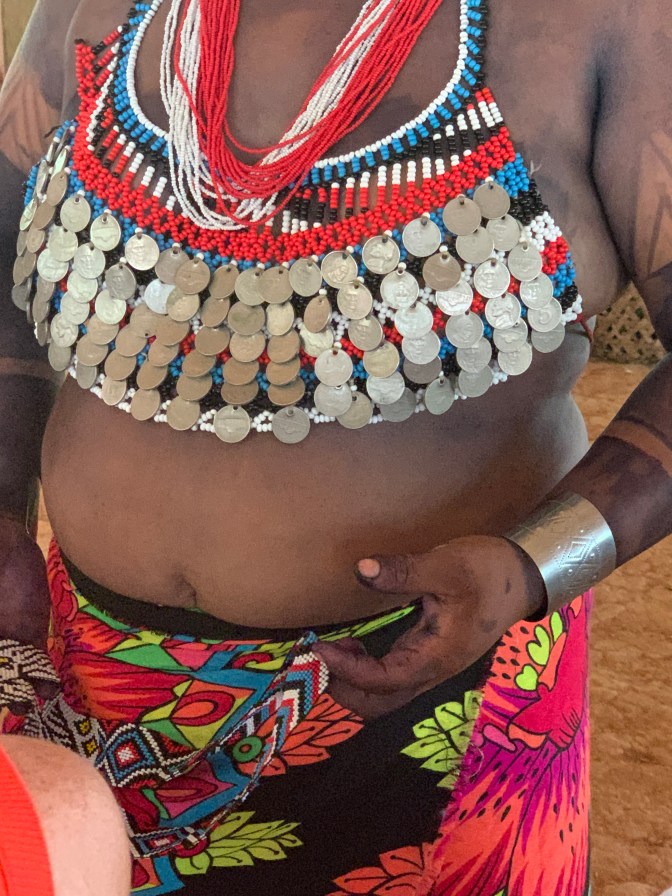
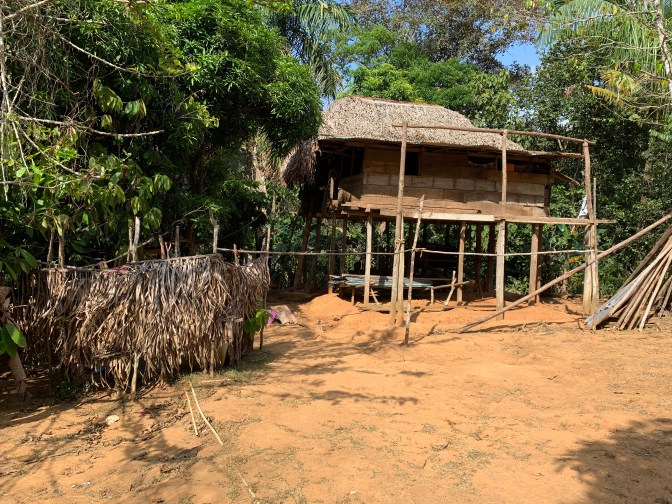
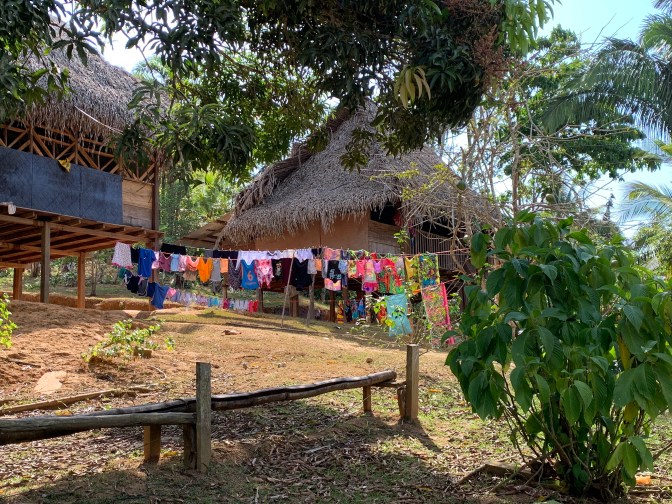
Climbing the hill to the first level, a large wooden hut with palm frond roof had 35 stalls, one for each family, selling their native handicrafts. This is now their livelihood, making handicrafts and selling them to tourists at an equivalent of US$1 per day of Labour. We then walked further and on the left was a sort of raised communal cooking hut featuring 3, 18 inch diameter logs in star form that held the large pots. A wood fire in the center heated the oil filled pots used to cook our Plantain (banana) and fish lunch served as finger food in folded banana leaves. The folding formed a flattish cone and the food items were carefully placed in the middle.
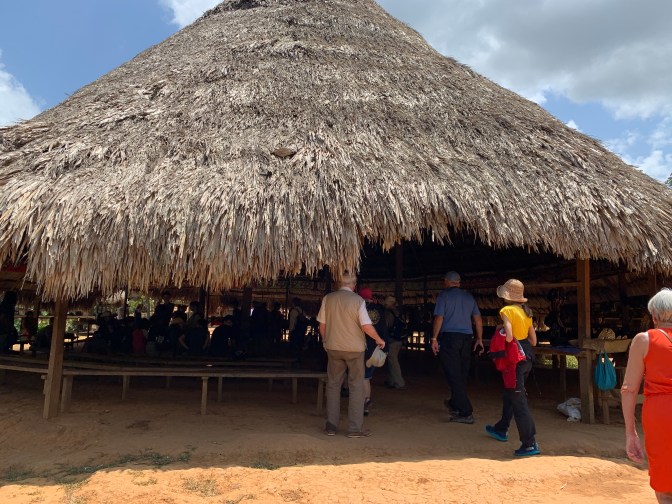
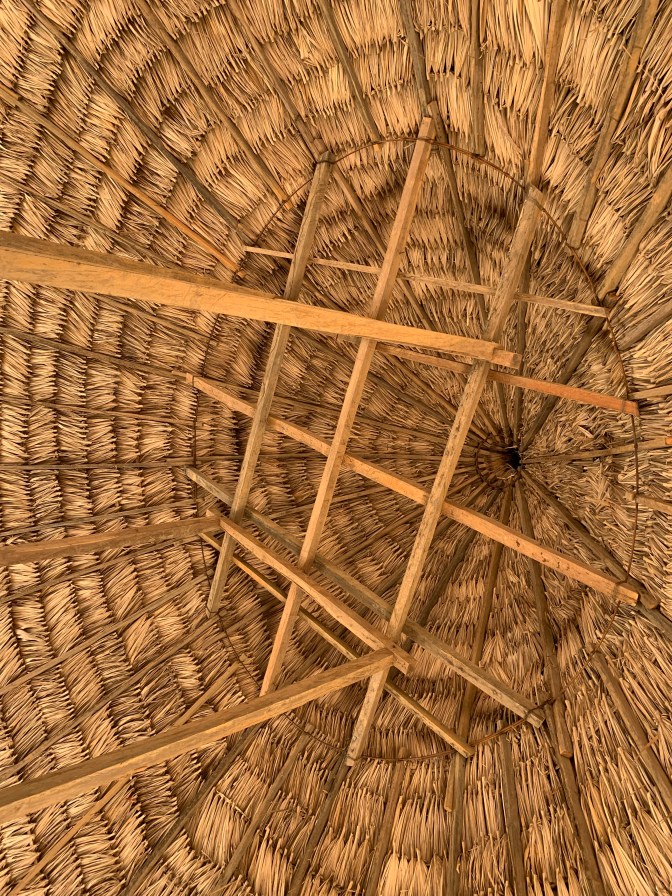
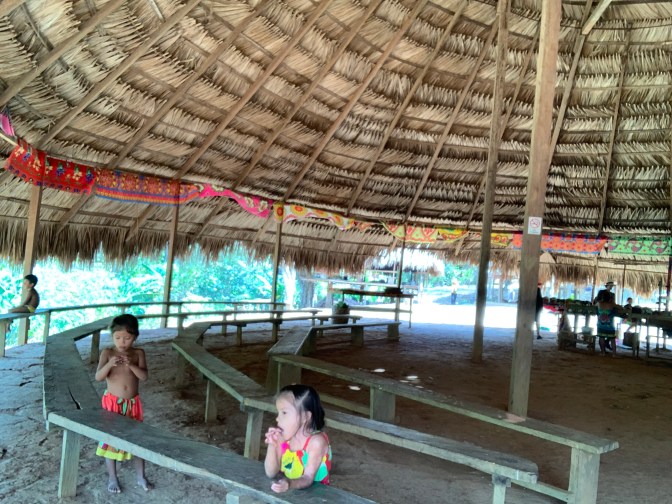
Another identical to the first large “performance” / meeting wood structure with 30 foot high conical dry palm frond roof and open sides, had a semi circular 3-tiered set of benches which allowed some 100 or so people to sit. The tribal chief greeted us and gave us a history of the tribe, they used to work wood, building canoes and other such utilitarian items before the Country government prevented them from the continued deforestation. Thus their only mode of survival was to open their home to tourists like us, for the “dry” season, selling their handicrafts and telling their story in words and dance.
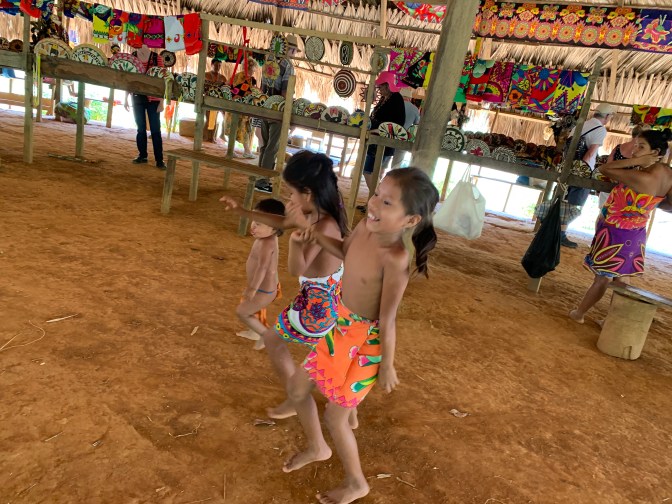
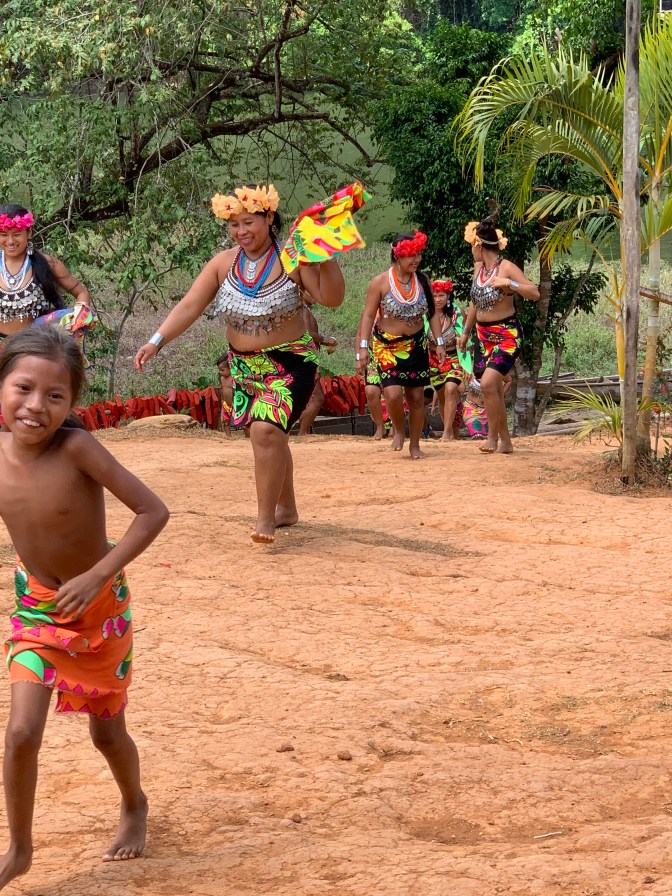
Indeed after the explanation, in Spanish, translated by our guide, a series of local dances were performed by the women, initially, then by the men and finally all were included together with some of the audience. We were served food, then allowed time to wander around their village wherever we wanted to go. The only restriction was that we were not permitted to enter any of their homes. Many of the older residents only speak their own dialect, but the government sends a teacher daily to a one room school house to teach the children in Spanish so most of the young are fully bilingual in their language as well as Spanish.
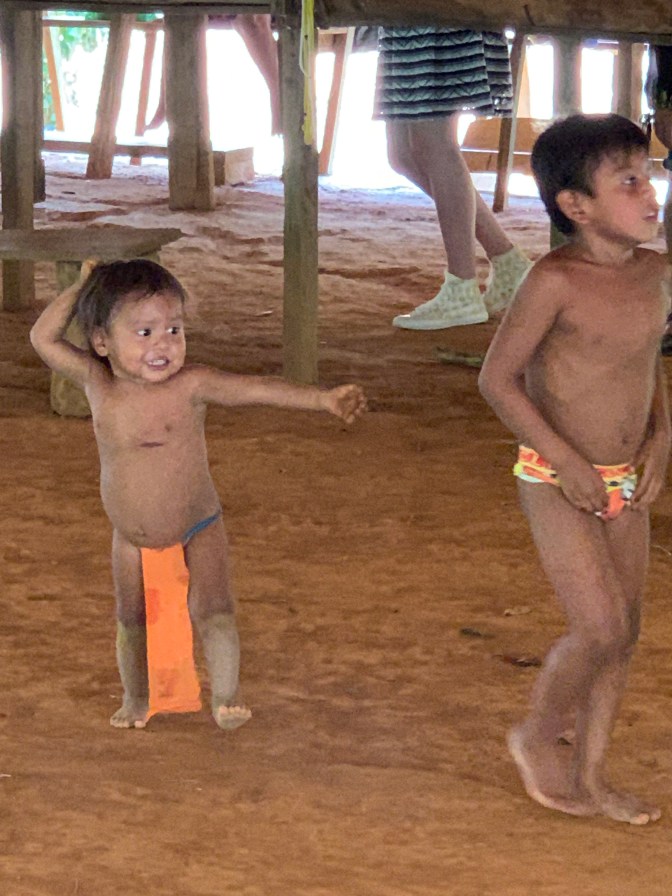
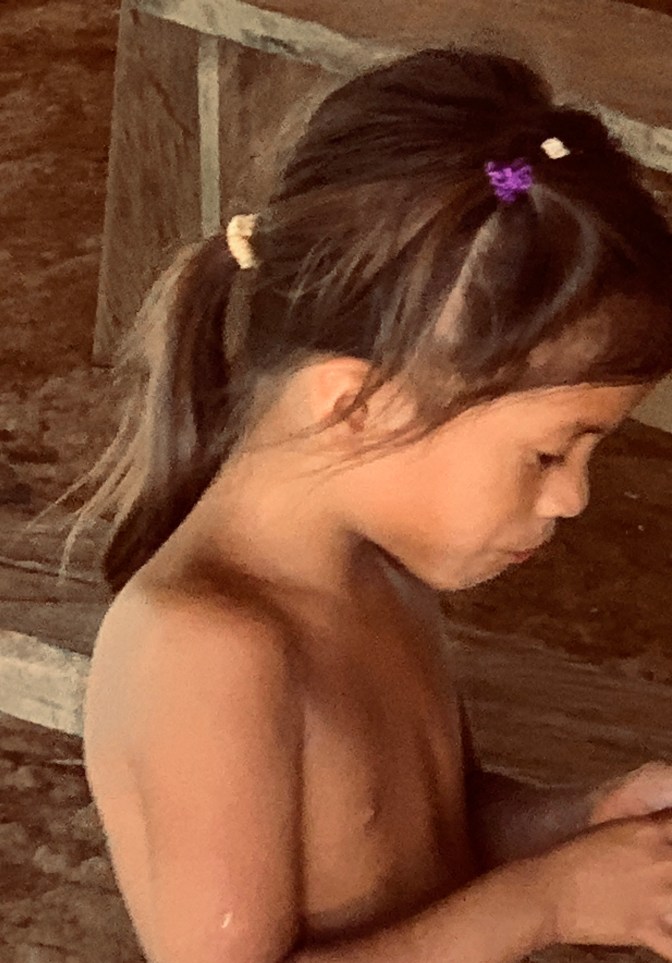
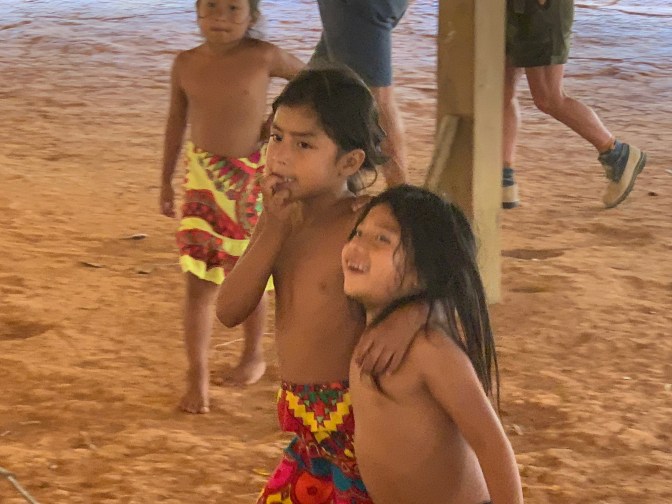
The children were left to run around, participating, or not in the events of the day, but all seemed happy and big smiles.
It was truly an honor for us to get a glimpse into the native population’s way of life. They have their own elected chief who sets rules, resolves issues and in general is the ruler of the tribe for his appointed time.
Too soon, it was time to return to the canoes, the coach and back to the port to take our tenders to the Queen Victoria. A really fabulous day and very enlightening and educational.
Dinner and a brilliant show with the Latin pianist and American Operatic vocalist lead us to a very fulfilling albeit tiring day. An early night was called for as we had to be up early the next day to fully enjoy the transit of the Panama Canal.

 Roger & Anne Travels