Saturday February 04, 2023
An early entrance into the Muscat harbor brought us alongside, Starboard to dock, but Port to the city view. Driving was on the Right and we were on the tour bus 6 “Muscat Impressions” with the good guide Nabil Ibrahim (mobile +968-9902-5553; email:- comeoman@gmail.com; Facebook come_2_oman).
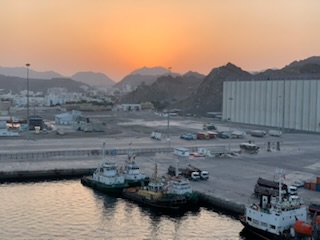
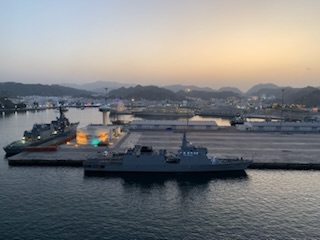
After leaving the Port district of Muttrah which is based around the old part of town and has a nice small semi circle shape with 2 of the Sultan’s yachts (one seemed like a small cruise liner), and 2 military ships, we headed up the hill to the main part of Muscat, the newer part. As we traveled, the guide gave us some additional bits of information which we did not hear in Salalah. Namely it is the only country in the world that starts with an “O”. It had 3,000 Kilometers of coastline. As the prior Sultan loved opera, there is an 1,100 seat opera house with a 500 ton organ made in Berne Germany, with a Sultan box and when he could not attend, a closed link to his residence allowed him to see the show. It remains to be seen whether the new Sultan likes opera as much. There are only 2 outright Sultanates. In the world – Oman and Brunei. The Sultan is the absolute ruler. It is very safe place with ritually no crime. The new sultan is going through a similar situation to King Charles III in England , namely taking over from a successful and long reigning predecessor. The term “Bin” or “Bint” (for Females) denotes “Son Of” or “Daughter Of”, so your full name is – your first name; son of your father; son of your grandfather; surname. The exchange rate is 1 Omani Real = US$2.60 or 10 UAE currency.
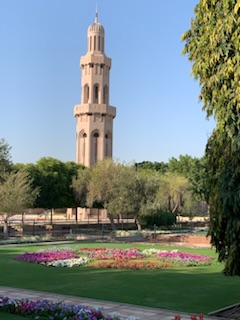
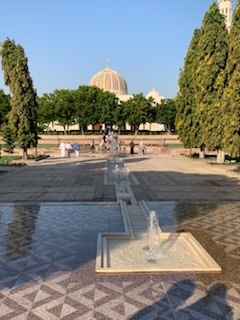
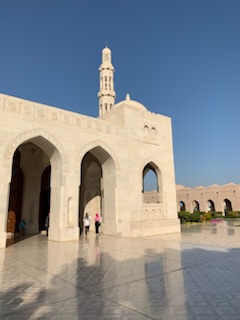
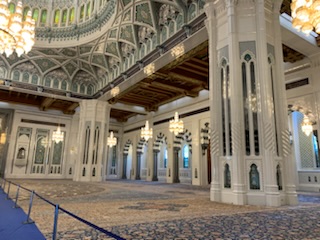
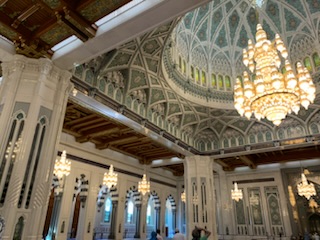
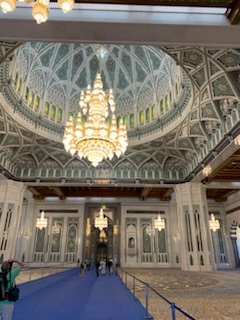
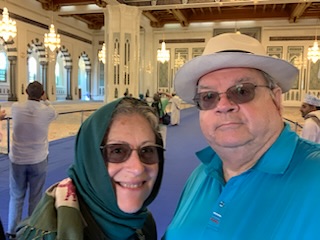
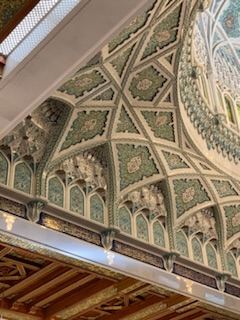
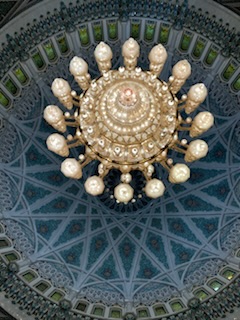
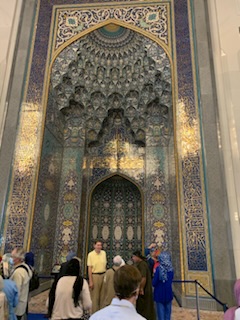
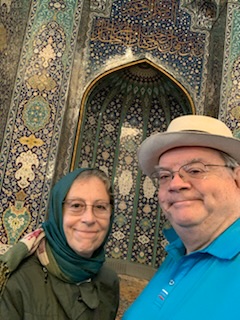
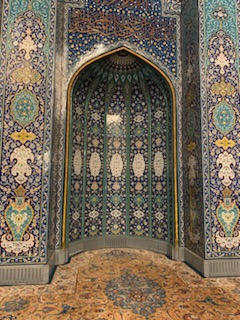
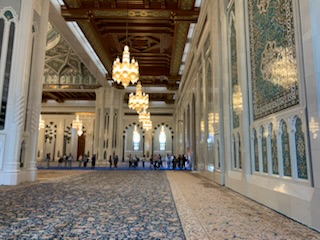
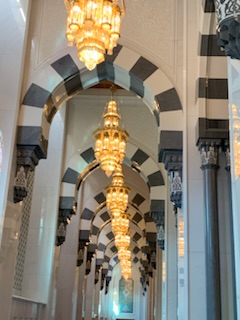
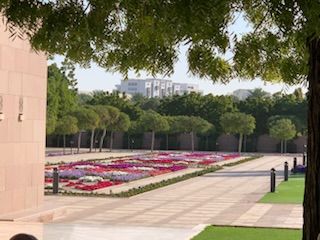
Our first stop was the Qaboos bin Said Mosque. A very large and beautiful Mosque with 5 minarets (after the 5 pillars of Islam), one is 90 meters high and the other four are 45 meters high. It can hold up to 20,000 worshipers and was opened in 2001 after 6 years of work. There are two chambers, the women’s prayer hall, which we did not visit and the larger men’s prayer hall. The reason for the difference in size is that women can pray at home as they take care of the children and small children are not allowed into the mosque at prayer time. The men must go to the mosque to pray five times a day. The reason for the separation of the sexes in the prayer halls and the absence of small children is that the worshipers kneel shoulder to shoulder and there should be no distraction between the worshiper and the prayers to God. The central chandelier in the men’s hall weighs 8 tons and was made in Germany with Austrian crystals. The 28 color carpet in that hall weighs 21 tons and took 600 women 4 years in Iran to make. It was transported in pieces and assembled in the building. The overall blue themed color is reminiscent of the Blue Mosque in Istanbul. We both felt it was more beautiful than the even bigger and more elaborate Abu Dhabi mosque. The central focus of the mosque is always the curved niche in the center wall that faces Mecca. It is the shape of a large semi-circular niche as the imam or spiritual leader faces Mecca while leading the prayers and in the days before microphones, this shape allowed the voice to be heard by the worshipers in rows behind the leader. The “pulpit” where the leader delivers his message faces the worshipers and is to the side of the niche. No images are allowed so all is decorated with writing the messages of the Quran.





As we have come to learn there are two main segments of Muslims – Sunni and Shi’a. Sunni are about 85% of the Abrahamic Islam religion whereas Shi’a are about 10-15% and are mostly in Iraq, Iran, Lebanon and Bahrain. Sunni’s believe that the Prophet Muhammed did not appoint a successor, however, before his death in 632CE there was the election of the first companion – Abu Bakr, who became the first Caliph (632-634CE). On the other hand the Shi’a’s also believe in Mohamed, the Quran, but believe that Mohamed’s family – the Ahl al-Bayt (people of the household) including their descendants have spiritual and political authority over the community and specifically that Mohammed’s cousin – Ali Bin Abi Talib was the rightful successor of Mohamed. Over time the theological and judicial aspects of the two have further segregated and there are other smaller sects. In Oman, all are treated equally and there is no discrimination between the two or even other non-Muslim religions.
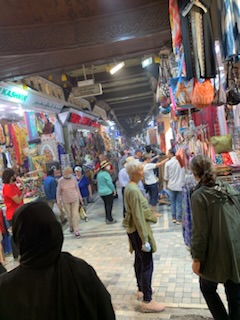
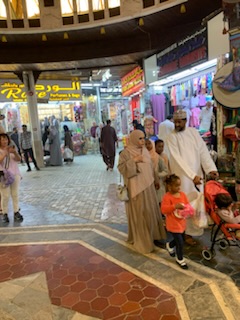
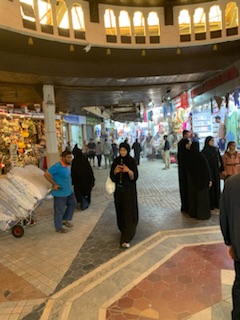
After leaving the mosque we returned to the port area where we went to the Muttrah souq. This bazaar has a bit of everything from incense to clothes to practical and ornament art articles. We unfortunately only had time to see the first few stalls before having to move on to the next stop. We hoped to return later that afternoon, but time did not permit.
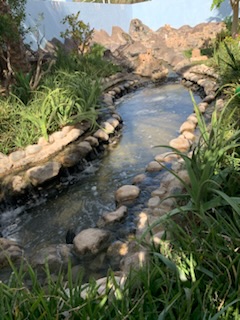
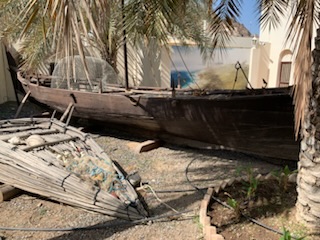
The next stop was the old private house of Sheikh Ali Bin Juma (Sheikh Al Zubair bin Ali’s father) in the 19th and 20th centuries. The family had collected a number of clothing, weapons and other such items from all across Oman and they turned their home and collection into the Bait al Zubair museum. The entrance was guarded by decorated ram sculptures, and men’s and women’s clothing, wedding outfits, weaponry, coins ad stamps and many other items were on display. To the side of the house is a model of the town of Muscat with flowing water passing through it. A coffee shop is set up in the entrance of what is a private house which we visited. It is interesting that all houses in Muscat cannot exceed 4 stories and must be painted white or a light color. Khaki colored buildings are all army or government offices. Also there is an ordinance about cleanliness – If your car or outside of your house looks dirty or scruffy, you can be fined. Littering can cost you one night in jail! Like Singapore, which has similar rules, both are often cited as the cleanest cities in the world.
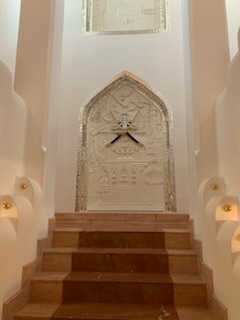

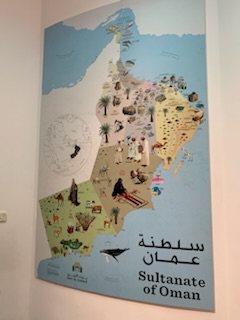
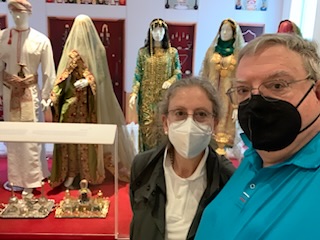
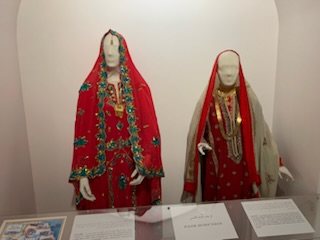
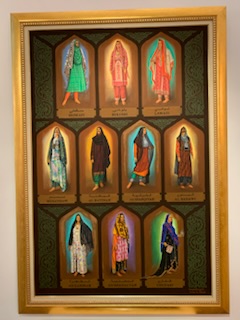
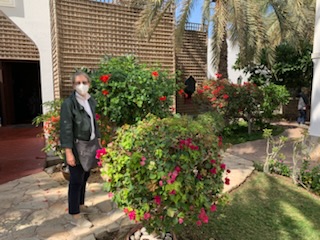

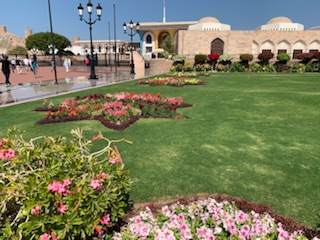
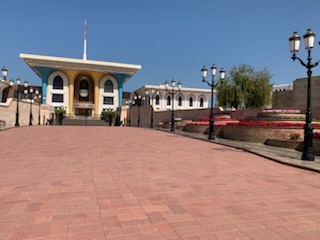
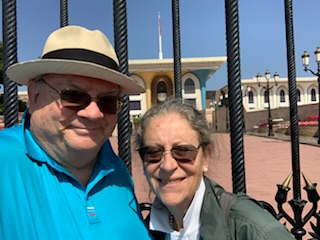
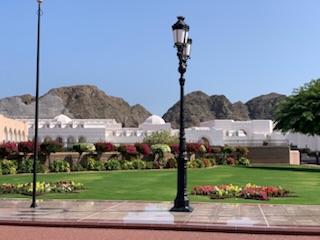
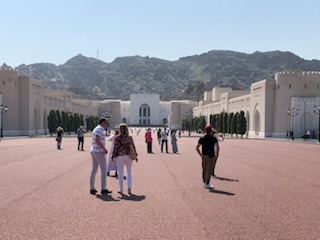
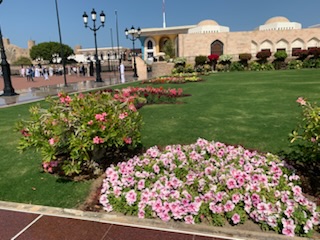
After leaving the museum we had a brief photo stop outside the Sultan’s Palace Ain the Fort area originally built by the Portuguese next to the harbor. By which time it was time to return to the ship, but on the way the guide showed us how to tie a turban around his head and mentioned that after 20 years of working for the government one can retire and that at 60 all must retire at which point the government provides 80% of your last year’s salary as a pension for the remainder of your life.

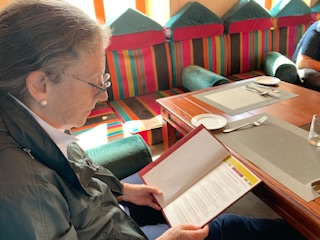
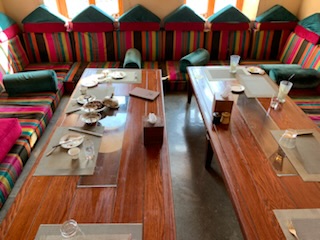
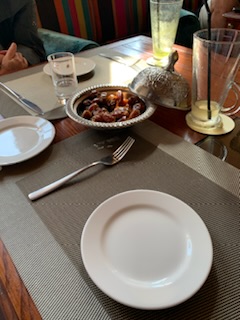
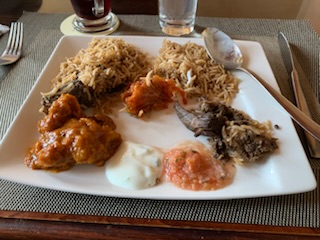
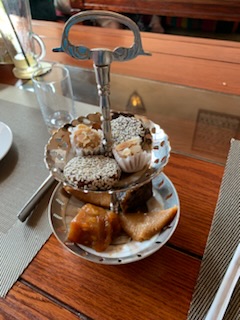
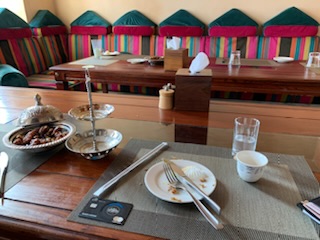
When we got back to the ship, we asked the guide if he knew of a good restaurant, frequented mostly by locals, in the port area. He recommended “Bait Al Luban” (literally the house of frankincense) (phone +968-2471-1842; mobile +968-9457-9457reservations@baitalluban), that was close to the entrance of the port. We asked him to join us and ended up having a terrific meal and found out a great deal more about him (Aeronautical Engineer studied in the UK and works 5 days a week at the airport), the customs of the country, religion and enjoyed a truly local Omani meal sitting at low tables seated on cushions. If we return to Oman we would hire him as a private guide. The meal consisted of – Starters = Eggplant Clouds (roasted eggplant in a yogurt sauce and olive oil); Awal Salad (salted Shark with onions and tomatoes in a lemon garlic vinaigrette); Mini Mishkaks (palm skewers of chargrilled lamb, chicken, squid and prawns in a spiced sauce with tamarind “gravy”; Main Courses = Shuwa with Qabuli Rice (marinated meat roasted in an underground fire pit and served with Qabuli rice and lemon garlic sauce); Thareed Latham (Rakhal bread soaked in a stew of slow cooked meat and vegetables); Qabouli Latham (rice in a meat broth and spices and small bits of meat); and for desert Omani Delight (Rose Water, Ghee, Sugar, nuts jello), Mushed dates with sesame seeds, date jelly paste (like Mexican “ate de Guayaba”) and to drink Karkade (Hibiscus tea) or Ginger twist or Lemon Mint tea.
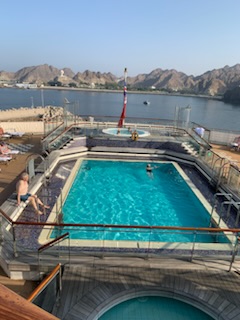
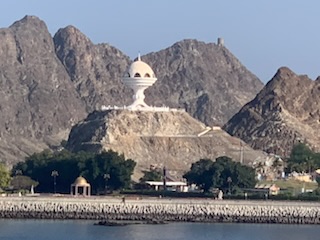
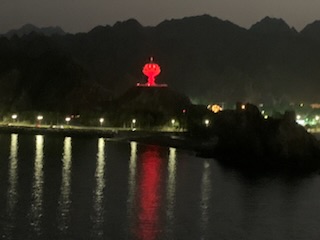
We walked back to the Port, through the gates, where there was no-one to stop or see us and as we were walking to the ship an already full shuttle bus came to our rescue and took us to the ship. We watched the beautiful sail away from the top deck, past the statue of the incense pot which changed colors from red to gree to white and then past the sea side of the Sultan’s palace and out to a dark sky made light by the moon and stars, We did go to the evening entertainment – Samantha Jay who had played at King Charles III’s 60th birthday and many other times at the palaces. She was exceptionally talented and jumped from the violin to the piano to the clarinet to the base horn without missing a beat and playing each brilliantly. The end of another very exciting and fun filled / educational day.


 Roger & Anne Travels