Sunday February 12, 2023
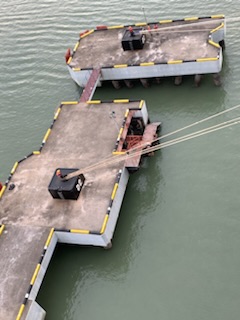
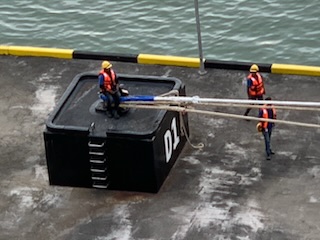
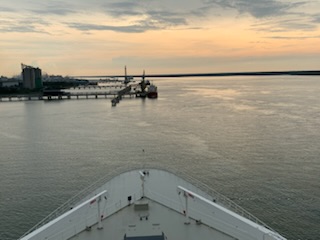
We arrived early this morning , port to dock and as previously stated because of the British influence, they drive on the left hand side.
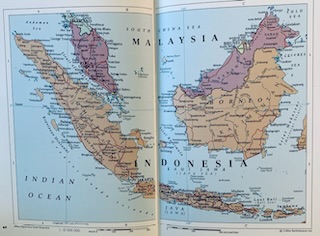
Officially it is the Federal Territory of Kuala Lumpur (KL) and is the ceremonial, legislative (Parliament) and judicial Capital of Malaysia as well as the home of the monarch of Malaysia. A new capital is developing as a planned city Putrajaya – officially the seat of government since February 1, 2001 – following the model in Brazil where the capital was moved from Rio de Janeiro to the planned city – Brasilia. KL as Kuala Lumpur is affectionately termed, occupies an area of 94 sq miles with a population of about 2 million (33 in all Malaysia). However in the greater KL area there are 7.5-8 million inhabitants. It was established in 1857 as a town due to the tin mining activity in the area and served as the capital of The Sultonate of Selangor from 1880 to 1978. It then became the Capital of The Federation of Malaya , then Malaysia since 1963. It sits at the confluence of two rivers – the Sungai Gombak and the Sungai Klang. It was established because it was the furthest point up-river for tools and supplies to go by boat, closest to the tin mines. Tobacco farms were also established in the area mostly with people from Sumatra and later rubber (latex) production became an important economic factor in the growth of the trading center that KL soon became. Many Chinese, Indians and local Malay as well as British made KL a true “melting pot” of nationalities. When Malaysia gained it’s independence from Britain on the 30th of August 1957 the ceremony taking place at midnight in the center of the British area of town (near the Cricket Field), with the first Prime Minister of the Independent Malaysia – Turku Abdul Rahman. There are 11 States in “Western” Malaysia and 2 (Sabah & Sarawak) in “Eastern” Malaysia (on the island of Borneo).
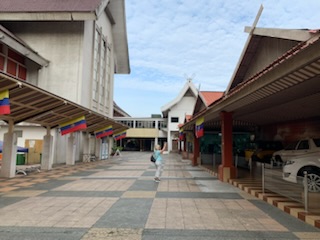
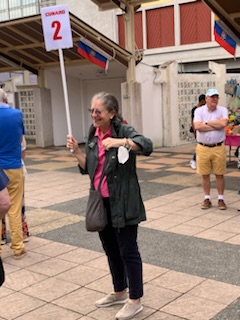
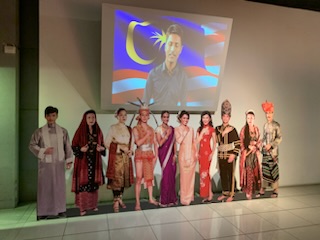
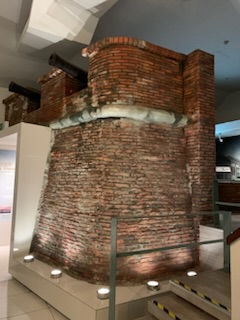
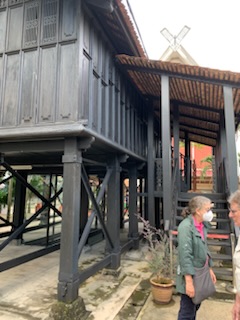
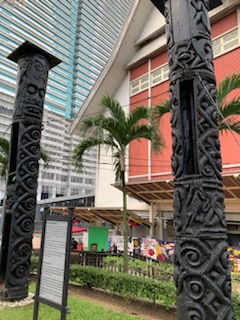
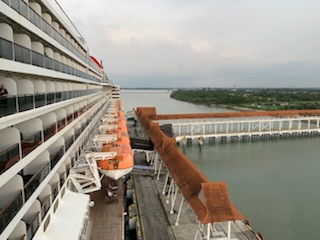
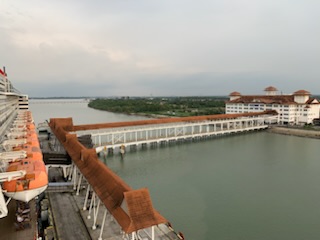
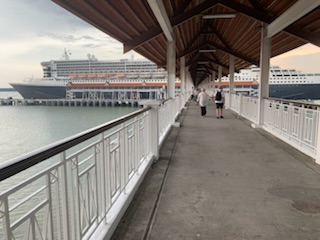
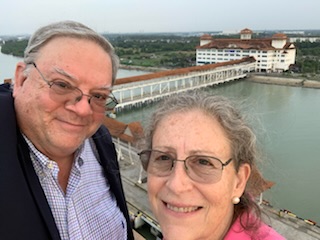
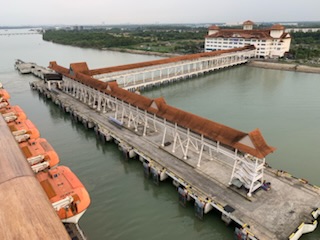
Our Malaysian guide of Chinese origin was a small lady – Ho Sulipa. She was a bit difficult to understand at first but she was very enthusiastic and energetic. She introduced us to the Driver – David of Coach 1 to do the tour “Best of Kuala Lumpur”. KL is about 1 1/2 hour’s drive from Port Klang, where the ship docked at a nice terminal that had a long covered pier out to very long elevated and covered walkway to the access unit onto the ship, similar to the movable ramps they have at airports to access aircraft. We had been warned that there was a Gran Frondi New York 2023 KL International bicycle marathon taking place in the city so the schedule of activities were changed to avoid road blockages. It is about a 1.5 hour coach ride from the port area to our first stop in the City of KL – The National Museum Muzium Nagara. It was officially opened on the 31st of August 1963 and was on the site of the previous Selangor Museum which was built in 1906. After entering under the white arch, the first exhibits show historical coaches, vehicles and trains. Entering the main building, there was a large 2-storied hall with four display rooms: two up, two down; leading off the central Hallway. One hall was mainly devoted to the dress customs in the various regions of the country. Another was devoted to the Independence and the flag that was raised at 12:01 AM on August 31, 1857 at the Sengalor (Cricket) Club now called Dataran Merdeka – Independence Square (which we later visited). Another area focused on colonial rule, by the Portuguese, the economy of tin and rubber that were the initial economic factors. The final room was dedicated to the pre-history dating back centuries, and even to the early evidence of human activity 10,000 years ago. Exiting the main museum building we were shown the Kelirieng of burial poles. These black, round hollow poles (like totem poles with no cross structure) are the final resting place of deceased ancestors. Upon their death, the individual is placed underground and after the body has decomposed the remaining bones are placed inside the poles as if an ossuary. This is analogous to the Buddhist practice in Viet Nam of burying bodies in rice paddies, then resting the bones in an ossuary in the gardens of the relatives homes. The final exhibit was a house on stilts which many of the countryside natives inhabit today.
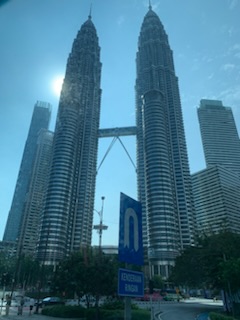
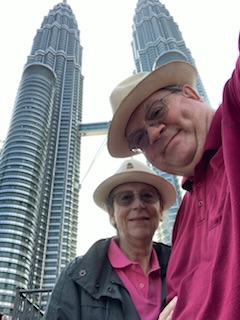
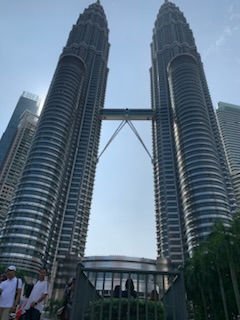
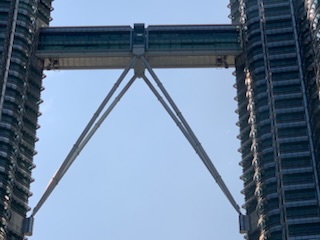
Back on the coach we continued to our next stop which was a brief “Photo Stop” in front of the Petronas Towers (PETROleum NAtional). This iconic twin tower structure with a hallway bridge between the two is the modern symbol of KL. The towers were built for the employees of the National Petroleum Company, who occupy one full building and half of the second building. The remainder is leased to international companies. The 88 story buildings rises to 1,483 feet high and from 1998 until 2004 they were the tallest buildings in the world. They still are the tallest ‘twin towers’ in the world. (www.petronastwintowers.com.my). We did not go up the towers although it is possible to go to the bridge and also to the top observation deck.
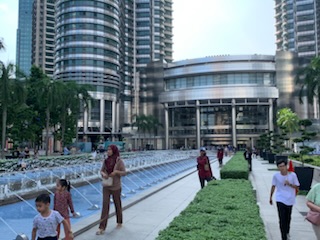
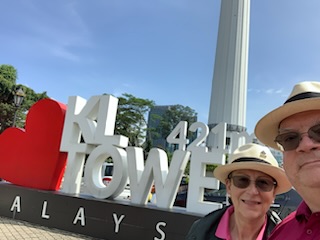
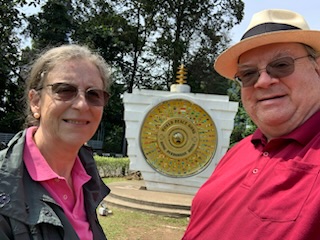
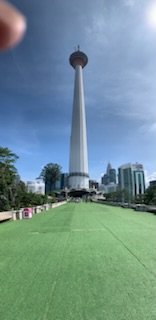
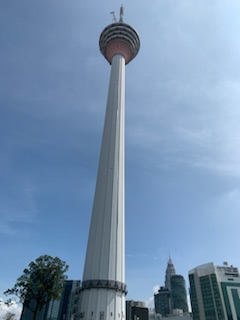
So we went to the KL Tower which is the communications tower and did go to the observation level. It is the 7th highest tower in the world reaching some 431 meters (1,381 feet). The tower has 6 stories, one is a revolving restaurant, and was completed in 1994. The roof of the pod is at 335 meters (1,100 feet) and the rest is the antenna. Once a year there is a BASE jump from a platform at 300 meters where individuals jump off the top with parachutes. The entry area has a nice Persian style (from Isfahan, modern Iran) mosaic wall. In less than a minute one is whisked up to the observation deck where there is a 360 degree view of the city with all the shops, facilities and lifts in the center. The KL tower (www.menarakl.com.my) is located in the heart of a million year old primary forest – the only city in the world to have such a forest in the center of the city. When the tower was constructed a retaining wall was built to protect the 100 year old jelutong tree (Dyera costulata).

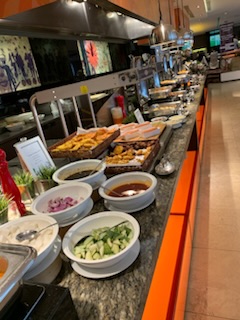
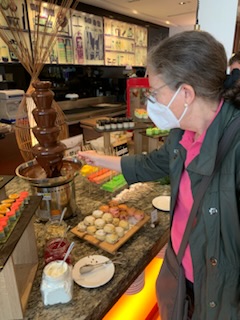
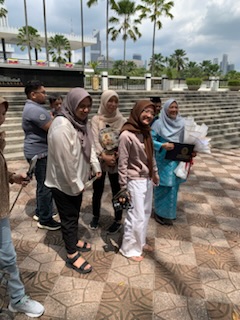
It was now lunch time so we went to a very nice hotel for lunch at the Melting Pot Restaurant of the The Concorde Hotel. Just as we were walking in we noticed a fancy vehicle and some well dressed locals. The guide informed us that it was the Sultan, his wife and family that were going into the hotel, one assumes for lunch or some social occasion. Additionally at the rear of the restaurant there were many young ladies all dressed in full hijab, obviously bringing presents to what we assume was either a birthday, a wedding shower or some other celebration. We were certainly where the action was happening that day in KL!! The buffet lunch was excellent from the mini kebabs, to stuffed long hot peppers, to curries and a lot of other local dishes. They also had hot dogs and hamburgers! Yes, McDonalds and other such US fast food eateries were present as we drove through the streets. A chocolate fountain with fruits and marshmallows was a very popular pudding / desert!
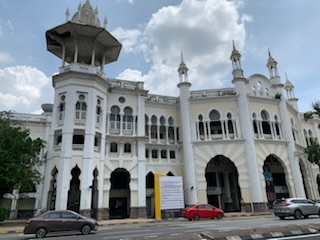
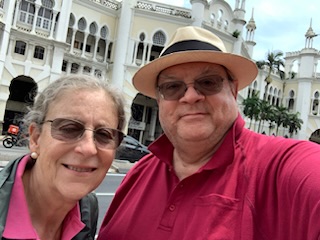
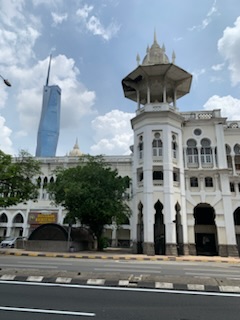
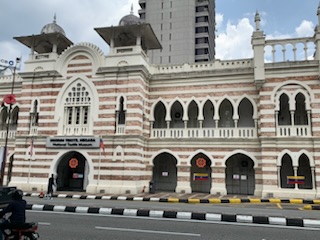
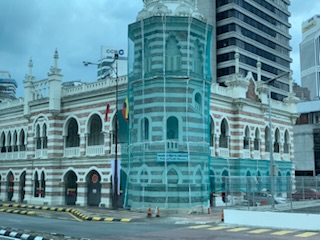
Returning to the coach, now well fortified, we proceeded to stop near the Mosque, the Old Cricket grounds and the Railway Station and walked between each. We first saw the old (1910) British built, moorish style, keyhole arched entry-ways railway station on one side of the street and on the other of similar design, was the offices of the railroads. The station is now used for the city transport – monorail and other commuter & urban rail transport. Next to this building was the Textile museum, under renovation, but distinguishable by it’s red and white facade known as “Blood and Bandage” as it gives the impression of white bandages holding back the red blood seeping through.
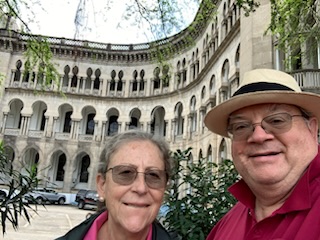
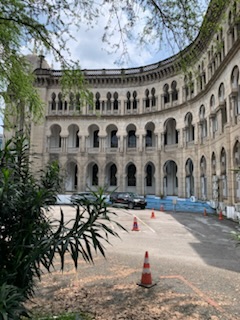
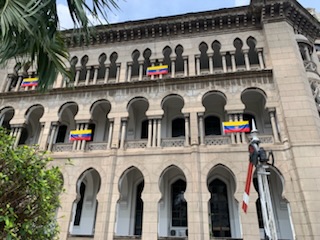
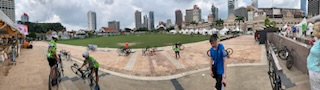
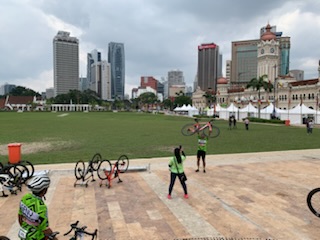
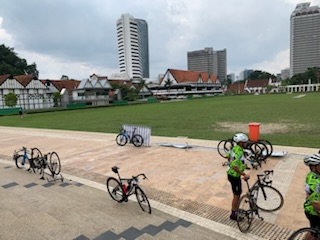
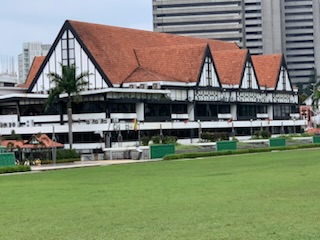
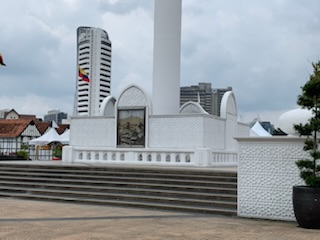
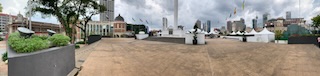
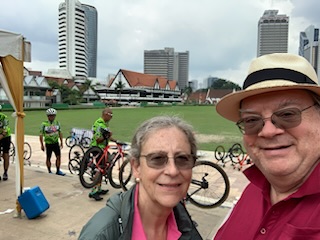
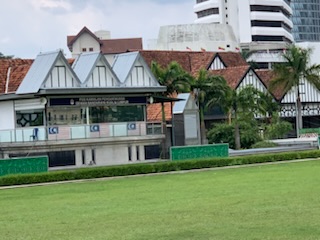
We then walked over to Independence Square which has an obelisk style structure to commemorate independence from the British in 1956. It is located in the center of what used to be a very British area, with a central Cricket pitch, Tudor house structures around the central area as well as old British Banks and other such buildings.
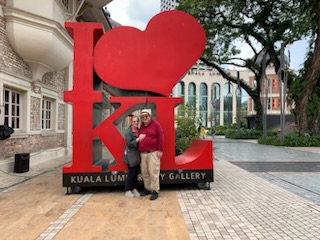
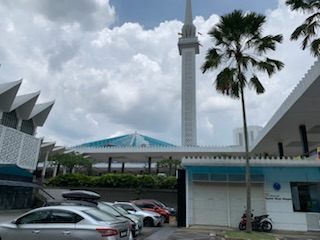
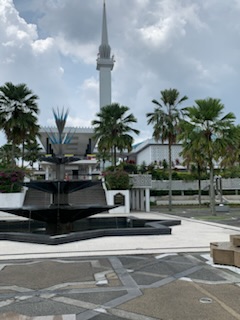
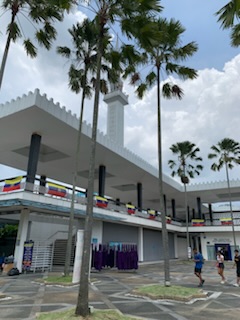
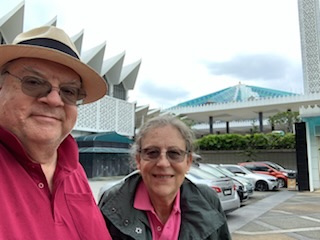
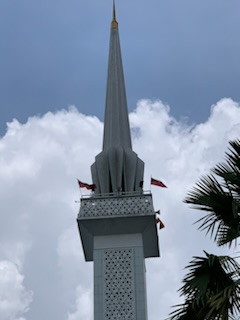
Our final stop on this walking tour was the “Blue” National Mosque. So called because of its extraordinary roof. Most mosques have a dome and 1 to 5 minarets with 5 marking the 5 pillars of Muslim belief. This mosque has a blue open umbrella-like central “dome” and the minaret has a closed umbrella holding up the speaker from where the imam’s words are transmitted to those that cannot make it inside he Mosque. This was built in 1985 and holds 1,500 people for daily worship. We were about to enter when we saw a sign “Closed temporarily to non-Muslims”, it was time for the call to prayer, so we could not enter. Unfortunately last time I was here in 2016, a similar thing happened, it was a holy day and there was great activity with throngs around the Mosque so we were not allowed in then either.
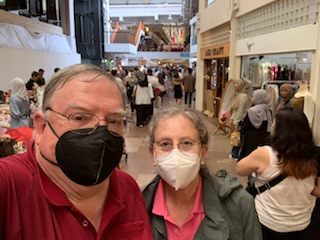
Our final stop in KL before returning to the ship was a brief stop at the Central Market. This used to be a market for foodstuff, but now it is a 2-floor “shopping mall” type place with many shops selling mostly souvenirs, but the upper floor had a lot of clothing so locals as well as tourists could be seen shopping. It was all too brief (we had been promised 45 minutes, but it ended up being 30) so very little shopping was achieved. We were soon on the coach for the 1 1/2 hour drive back to the ship.
After watching the sail-away and a quick bite, we saw an amazing Malaysian performer – Shaene, who is a really amazing harmonica (“Pocket Piano”) player. She played a tiny one – 1 inch long; a Blues Harmonica and a regular one and was captivating based on her amazing mastery of the instrument.


 Roger & Anne Travels