Tuesday March 14, 2023
We docked, port to dock, with a very fancy International Cruise Terminal and joined Dominik, an excellent guide in a red cap and the driver John on bus 6 for the tour of Melbourne.
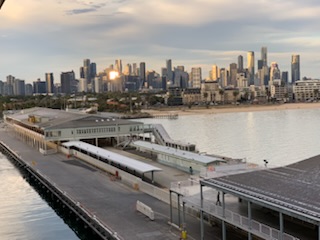
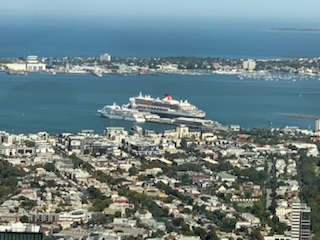
Even though overnight I had Zoom meetings, so with 3 hours sleep, we were up early to see the entry to the port of Melbourne. A very narrow opening to the sea, followed by a meandering river type seaway, leads to the second largest bay and harbor in the world. We moored after doing a 180 degree turn so as to have the bow facing the departure direction, on the port side, at the modern cruise terminal and thus the “other side” had the main view of the city, next to another smaller cruise vessel – the EUROPA (Hapag-Lloyd). We were excited to see this 5.8 million population city that seems to be driven by sports and the arts. A planned city (by Robert Hoddle) with the Central Business District (CBD) being organized in a rectangle with very wide streets in an exact grid pattern and a multitude of parks. Many high rise buildings could be seen from the ship in the heart of the CBD. As Melbourne is on a flat area it spreads out tremendously and, we felt in it’s own way, very charming with very pleasant people.
We had hoped to meet with one or both friends who live here, one from Mexico who moved to Melbourne and the other a theatre performer whose show we had produced in New York. However, the former could not get off work and the latter was in the USA, so we booked whatever tour we could get at the last minute. It turned out that we got a terrific view of the city with an outstanding guide, Dominick and his driver John.
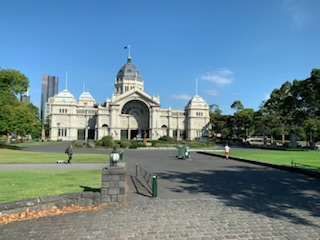
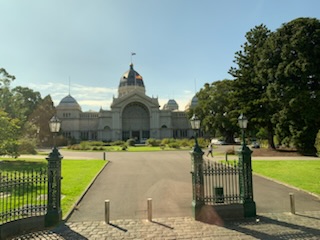
Melbourne is the capital of the State of Victoria and it’s largest city and situated on the Yarra River. It was founded not as many of the Eastern Australian City as a penal colony but rather it was settled on August 31, 1835 by a group of free people, mainly farmers, from Tasmania. They found their way into the bay and went about 4 km up river until they found fresh water. This is where the Central Business District (CBD) of Melbourne is located today. It became a crown (English) colony in 1837 and named after the British Prime Minister at the time – William Lamb, 2nd Viscount Melbourne. Aboriginal groups of the Kulin nation have been living in this area which they know as Narrm, for the past 40,000 years. What made Melbourne into the major city it became was the Victorian Gold Rush of the 1850’s as gold deposits were found nearby. This brought a lot of settlers, as well as a lot of wealth and growth. At it’s height, 7 tons of gold were produced each week and this went on for the best part of 15 years. After Australia became a nation on January 1, 1901, Melbourne became the capital of the country until it was moved to Canberra in 1927. Greater Melbourne is a grouping of 31 municipalities. It has many landmarks like the Royal Exhibition Center, built for the 1880 International Exhibition, and was used as the location of the first parliament of the country, a hospital during the wars and now is the home to exhibits like the gardens show. Melbourne is a major center of arts and sports. It hosts the cricket at the Melbourne Cricket Club, the Australian Tennis Open, the Australian Gran Prix auto racing and is where Australian Rules Football was born in 1859. One of the main stadiums holding a hundred thousand people is always packed and has been host to 140,000 for a concert. Other sports venues with 50,000 or more are always packed. It seems like there are a lot of people who not only are interested, but actively go to the sports venues to see the games live. It hosted the 1956 Summer Olympics.
The CBD is a planned city, forming a 1 sq km rectangle in a grid pattern with the shorter streets running North / South and the longer ones East / West. When in 1837 the plan was made, wide streets were created, initially to heard the sheep and now to ease the traffic and free trams cross the district. The planners also made sure that within a 10 minute walk, all residents could find a park, so with wide streets in a grid pattern and parks, it gives the city a terrific benefit to all. There are 250 kilometers of tram tracks and some 650 trams help move people around the city, which is the biggest tram system in the world. All trams in the CBD are free.
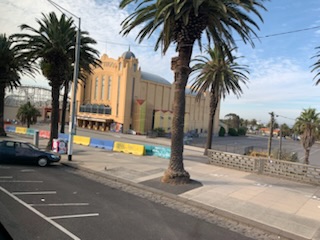
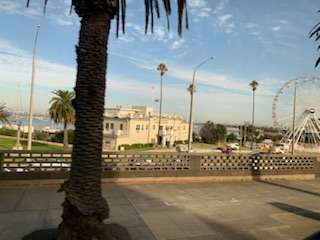
We passed many of the early Victorian Houses with balconies in the St Kilda beach neighborhood where the Royal Melbourne Yacht Squadron is located and which became center of the action of the 1956 Olympic Games Sailing was located. The Luna Park “Fun Fair” (similar to the one under the Sydney Harbor Bridge in Sydney) with it’s traditional wooden roller coaster built in 1912 still gives thrills to local families at the weekends.
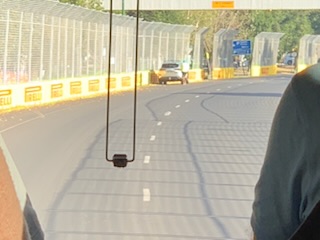
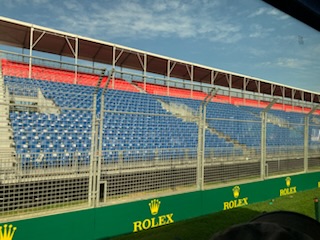
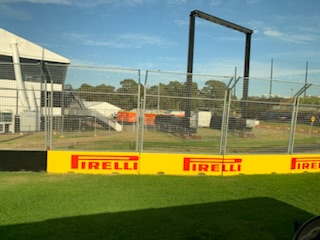
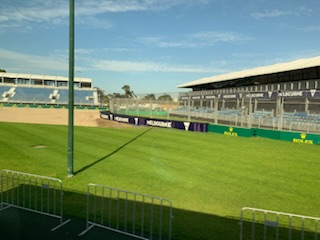
The first fun part of the day was when we turned a corner and started driving on a ring road around the lake that is being set up for the Australian Gran Prix Formula One car race on April 2nd. The stands for the public, fences and stopping areas as well as pit stop were all being set up and signed for the usual sponsors were already in evidence. We drove for a couple of miles around the track which gave us a fun idea of what the drivers would be going through at 300+ KPH (we were doing 60 KPH at the highest speed!!!).


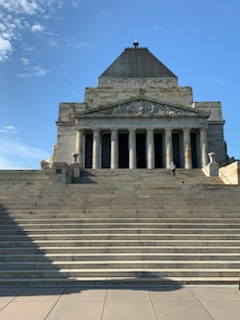
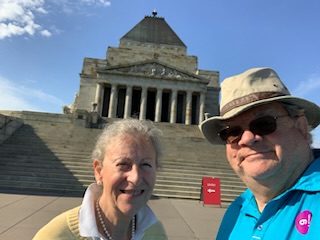
Our first stop however, was the War Memorial known as the Shrine of Remembrance. It was built in 1934 to honor those 60,000 Australian men (19,000 from the State of Victoria) who lost their life in (1914-18) World War I. It was later expanded to include those lost in World War II and particularly those lost in Gallipoli of the ANZAC troups remembered on April 25th each year.


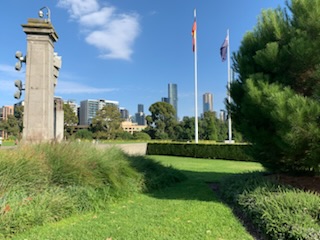
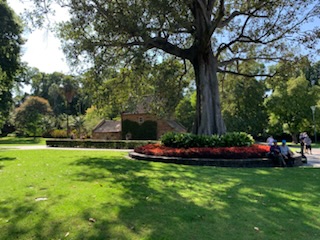
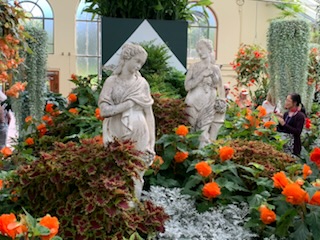
The next stop was at the Fitzroy Gardens, a 26 hectare garden space, set aside in 1848 and became the Fitzroy Gardens in 1862. There are many grassy areas, trees and the area we visited has two main features as well as the information center and facilities. The two places are the Conservatory (greenhouse) with a spectacular array of colorful plants providing a true optical oasis amid the sea of gree (grass) that surrounds the building. Magpies roamed the Gardens. The other feature was “Cook’s Cottage”. This was constructed in 1755 in the town of Great Ayton in England and was the home of the parents of Captain James Cook. Cook mapped the coast of Australia in 1770 from Pt Hicks in Victoria to Possession Island in North Queensland. In 1934, the cottage came up for sale and a wealthy local philanthropist bought the cottage, had it dismantled brick by brick and reconstructed, together with its kitchen garden in Fitzroy Park. Three gentlemen in period dress showed us through the small home and gardens and told us the story of the family.
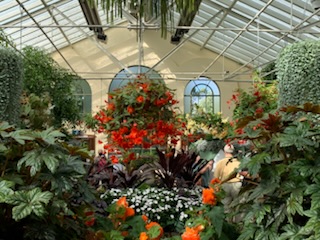

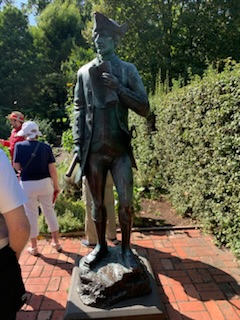
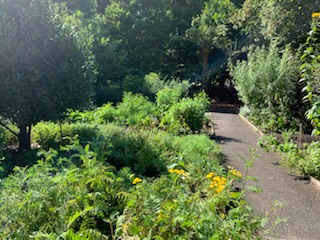
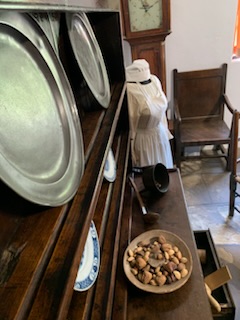
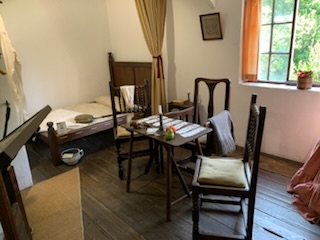
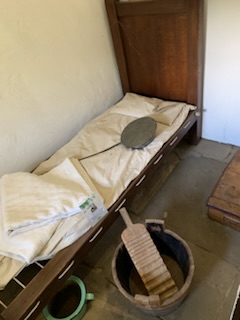
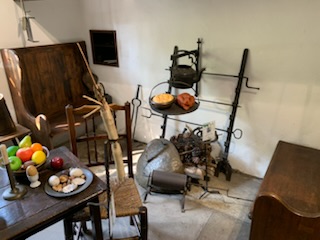
We then were given free time to roam the gardens, but we passed. Near the gardens was the Roman Catholic Cathedral of St. Patrick’s, so Anne and I walked up the hill and visited the spectacular cathedral with its dark stone facade and gardens. A stepped waterfall ran the length of the entrance access path and two statues, one to St. Francis of Assisi (1181-1226) and the other of St. Catherine of Siena (347-1380) stood on either side of the gardens as one entered the side of the Cathedral. A beautiful worship space with a major organ and even an image of Our Lady of Guadalupe was by the main altar.

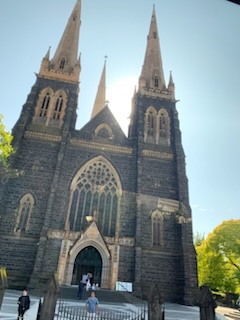
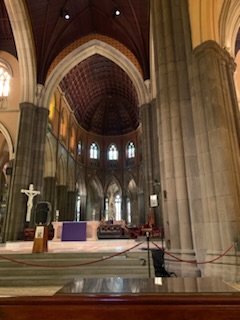
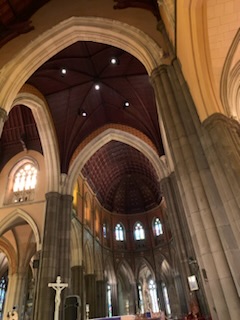
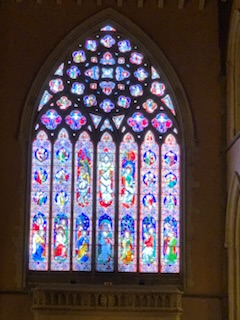
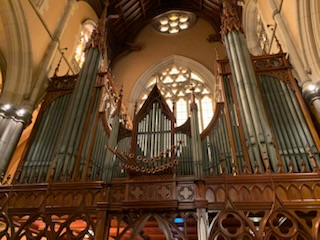
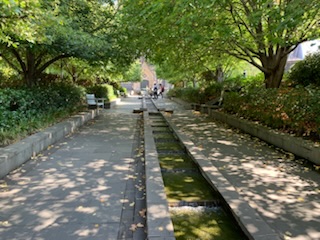
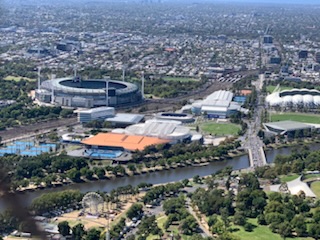
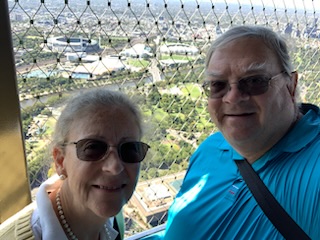
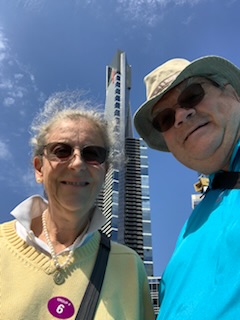
Back on the coach we drove past the Melbourne Cricket Ground stadium which seats 100,000 people, the tennis venue, the “Rectangle” (Rugby, Aussie Football etc) games stadium (as opposed to the Oval Games Stadium (like Cricket). Our final stop in the heart of the CBD where we went to the top of the tallest tower, Eureka, to the observation sky-deck, where we got a truly spectacular view of the city cementing in our minds the various areas we visited on the coach.
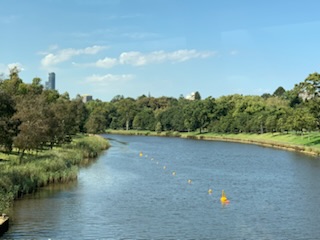




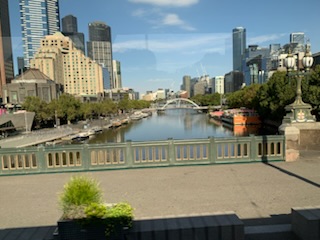
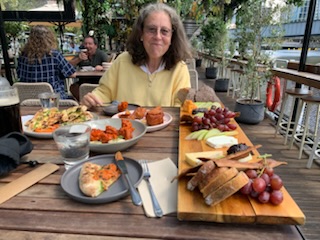
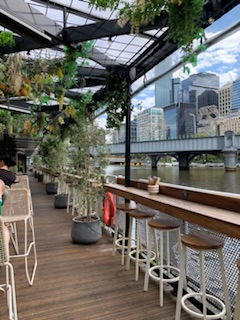
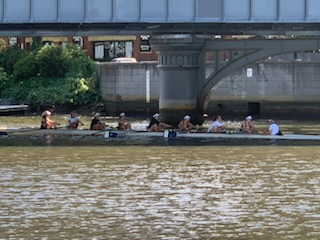
We advised the guide that we would be staying in town and finding our way back to the ship on our own using the shuttle bus. We asked if he recommended any restaurant and he sent us across the Yarro river to an Italian restaurant – Brunetti. When we got there it was a sandwich type place with an extensive bakery, but not what we were looking for. So we retraced our steps, walked back across a different pedestrian bridge across the Yarro to a place we had seen along the river. We enjoyed a terrific Tapas type lunch with cheese board, halloumi cheese, spicy chicken wings and flatbread with pesto and chile sauces at Yarra Botanical, Southbank Promenade, Southbank VIC 3306 as we watched the 8 person skull and water taxis that resembled trams going up and down the river.

After some further wandering we caught the shuttle and returned to the ship. The evening entertainment was a really different and superb duo of acrobats / contortionists with a Moulin Rouge type theme – Suzie Q & Toby J – Cirque de Rouge ‘A high-flying Love Story’

 Roger & Anne Travels