Friday March 17, 2023
Today, after a short transit from Kangaroo Island, we arrived in Adelaide, the capital and largest city in South Australia which was established on Proclamation Day – December 28, 1836 (in the local Karnataka language it is called Tarntanya). We have now been to 4 of the 6 States and Northern Territory and just missing Western Australia where we will be in a few days and Tasmania, which we will not visit – next time!
We docked by the Cruise Line Passenger Terminal, port to dock, and soon were off to do our half day tour “Adelaide Highlights” with Ms Bronwin, the guide and John the driver on Coach 2. We were to first head through the city and out the other side to the top of Mount Lofty also known as The Hills which was to give us a great view of the city. We would then return to the city driving around a bit and end up at the Museum.
Adelaide was named in honor of Queen Adelaide (wife of King William IV 1792 – 1849) and stretches from the coast to foothills of Mount Lofty 20 kilometers wide and stretches 96 kilometers long from Gawker in the north to Sellicks Beach in the south. It was a planned city by ”Free” people with Col. William Light being the founder and designed the city on the River Torrens (Karrawirra Peri – Red Gum Forest River – in Karnataka) in a grid pattern with parklands all around the central core. The last native Kaunas language speaker died in 1929. It was founded as a “Free” City where free people were free to practice any religion and live freely. Edward Gibbon Wakefield while in prison in England for attempting to abduct an heiress came up with the idea of free people having land to work with favorable government loans so as to keep land values high enough to be unaffordable by journeymen and laborers. Funds raised would be used to bring workers out to help the landowners and thus avoid having the convicts that other Australian cities were founded upon. Due to the “Free” nature of the city, many different people with different religions, so there are many churches. It is known as the “City of Churches” and indeed we saw many different churches of different denominations.
We drove through the city and out the other side up to the top of Mount Lofty which at a height of 710 meters (2,330 ft) is the tallest point in the area and affords a great view of the city. It is a steep climb up the motorway and on the way down, lorries and coaches are restricted to the left lane and a maximum of 60 KPH. Driving in excess of that causes a fine to the driver of $7,000, loss of license and a $20,000 fine to the company and loss of permit. These serious terms are due to many accidents. As we were close to the top, there were many luxury homes and at the top is a lookout and a column to Matthew Flinders, who named the mountain on March 23, 1802 during his circumnavigation of Australia. To the west there is a view of the Adelaide plains and to the east is the Piccadilly Valley where there are various wineries. Adelaide is known for it’s wines. Unfortunately, as we reached the summit, a cloud / fog came in and we could not see anything, which was somewhat disappointing. As the day went on, we were told by the people who did the afternoon tour, the view was exceptional.
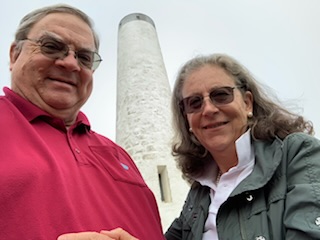

Our View from the top of Mt. lofty overlooking Adelaide!!!
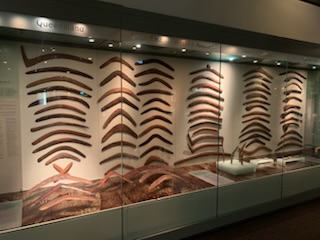
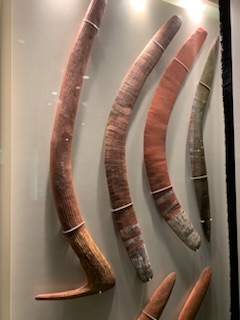
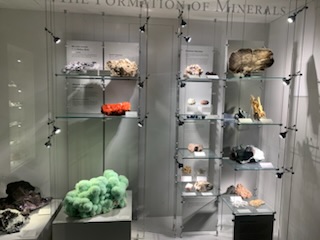
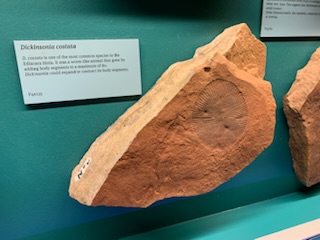
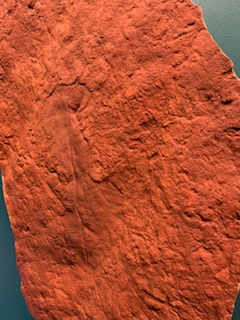
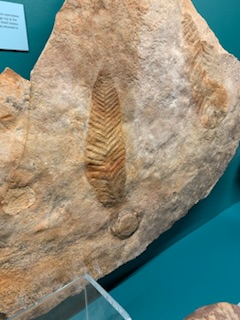
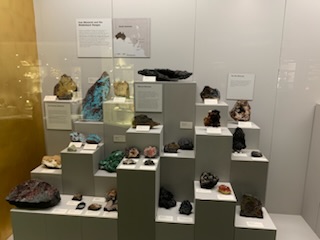
We then returned to the center of the town and the guide who seemed like a nice lady, but a bit confused and appeared to be more of a housewife who was showing friends around her city as opposed to a true professional guide, stopped the coach and said we were getting off here and going to the museum. Fortunately, there was a person from the ship that kept things more or less in order, so when we got off the coach we advised her that we would be taking the shuttle back to the ship and not returning to the coach. This gave us as much time as we wanted to visit the museum. The first two floors of the South Australian Natural History Museum (established 1856) were dedicated to Aboriginal Art and had some stories, in their own words, of some of the artists. There were various other collections, including an Egyptian Room, which seemed out of place. The mineral collection and exhibit was particularly good and apart from the Aboriginal area, the one tat was particularly outstanding was the fossils of animals dating back millions of years, The collection was from the Ediacaran Geological Period which lasted 96 million years and was between the Cryogenian Period 635 million years ago and the Cambrian Period 538.8 million years ago. It was a period best known for the earliest multicellular organisms with specialized tissues. The museum has a large number of these fossils, which was truly amazing.

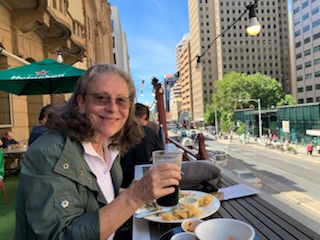
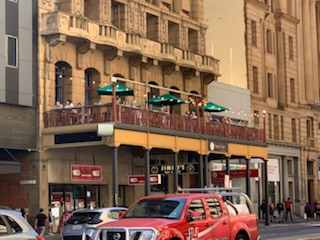
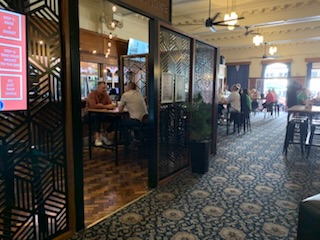
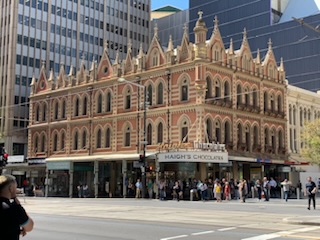
After the enjoyable visit to the Museum, we wandered the streets looking at different things and eventually settled on a restaurant on the upper floor of a building overlooking the street. It turned out to be a terrific find as it was an Irish Pub and as it was St. Patrick’s day, we enjoyed some pints of Guinness, a terrific lunch and watched the world go by below us as the pub got filled with locals. We were the only non-locals in the place. Definitely a place to go back to. It was the home of the South Australian Tattersalls Club and we were in the historic Tattersalls room established in 1917. It is also known as Harry’s Balcony Bar on Grenfell (www.harrysongrenfell.com.au; Phone +08-8231-3951; located at 12 Grenfell Street, Adelaide, SA 5000) and below was Jimmy’s Bar and Grill. The building was established in 1879.


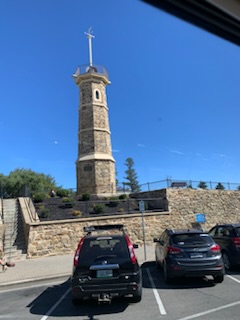
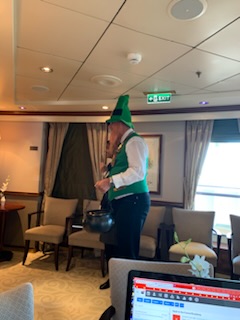
After a good lunch we headed to the Shuttle bus to take the 40 minute ride back to the ship. Unfortunately 2 shuttle bus coaches were “lost” so there was a substantial queue even though it was 2 hours before the last shuttle. We eventually got onto the third coach to arrive and the queue at that time went to the end of the block and 3/4 of the way down the side street. So we were lucky to get back to the ship. After dinner with another Guinness, we attended the show “Boys in the Band” a young 3-man group performing songs of the “Boy Bands” (including the Beetles) of the past. We then went to the Queen’s Room where a male Irish duo “Two Sheets to the Wind” was performing Irish songs, which we enjoyed for their first set which was about an hour.
As a final note, we found Adelaide to be a nice city, but nothing special. Certainly we enjoyed ourselves after we left the tour as the weather improved and we were lucky to stumble on a nice lunch place.

 Roger & Anne Travels