Thursday June 08, 2023
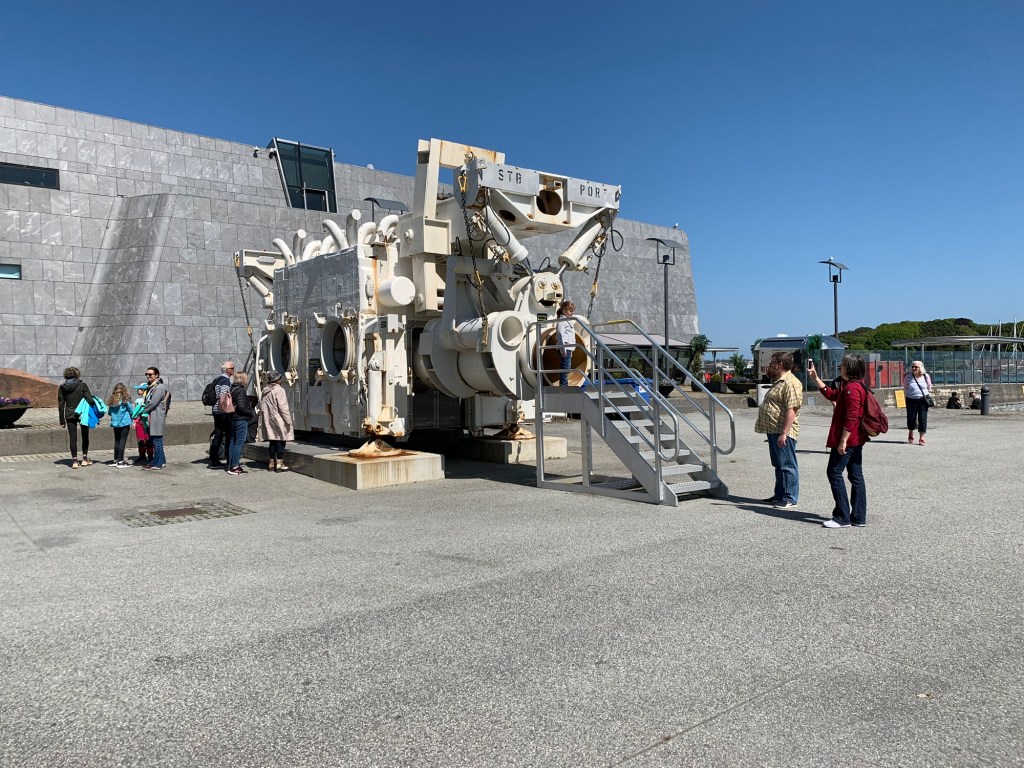
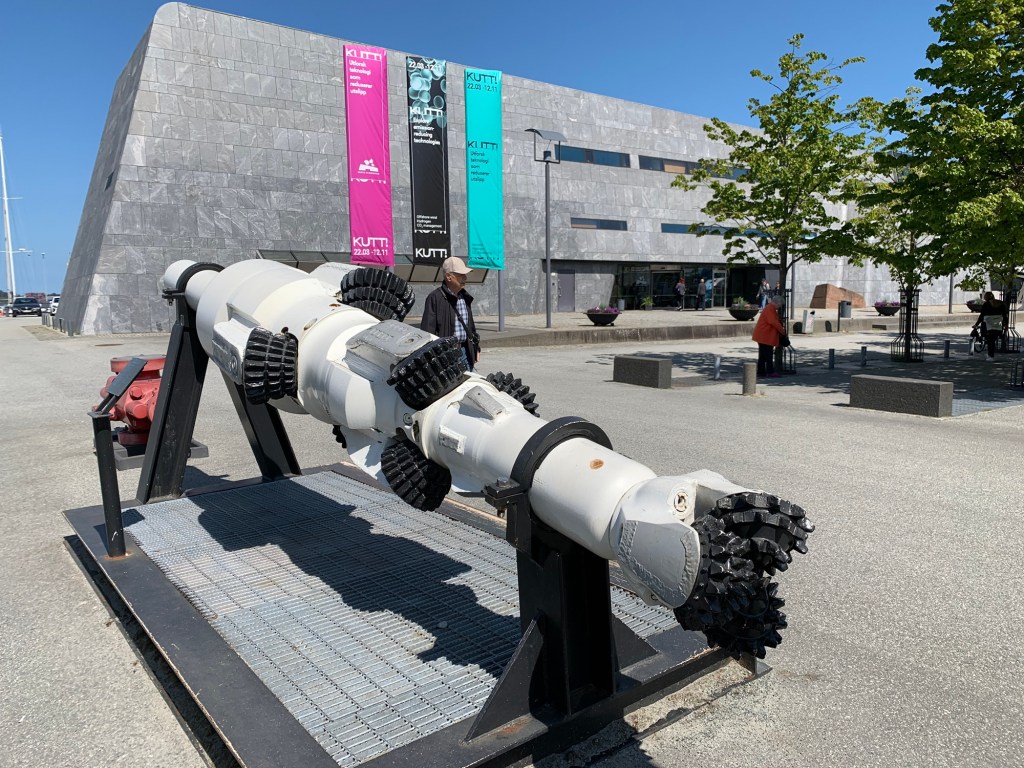
We docked in the port city of Mekjarvik just to the North-West of Stavanger, which is made up of a series of islands connected by bridges and at one point was considered the European Capital of Culture. Port to dock, Commercial port with lots of oil drilling equipment onshore. Drive RHS, tour #2 – Fjords by RIB.
The official founding of Stavanger is dated to the completion of the cathedral (Stavanger Domkirke) in 1125 but traces of the early settlements date back to the end of the ice age 10,000 years ago, and certainly by the 9th / 10th centuries, it had a strong military and economic presence. By 1100-1300 it was a flourishing market town. It became a center of religious administration starting with Bishop Reinald (from Winchester England) who started the construction of the cathedral in 1100 CE (AD). This continued through the Protestant Reformation (1536). The city’s core central area consists of separate single family homes dating to the 18th and 19th centuries. It was officially established as a municipality on January 1, 1838. It now consists of a group of islands that together form the municipality. In 1867 a portion of Hetland became part of the municipality; more of Hetland was added in 1879 and this continued in 1906 and 1923 with the final part being added in 1953 and by 1956 all of Hetland and Madia became part of Stavanger. The last portions to be added on January 1, 2020 were Finnoy and Rennesoy. It is nicknamed the “Oil Capital” (Oljebyen) due to the many oil rigs all around the area at sea and thus it’s most important economic activity. It is the 3rd/4th largest city in Norway (depending on how you define city size – Metropolitan area vs city) with a very large population growth in the 1950’s – 1970’s due to the oil with Equinor (the Norwegian Oil Company) having it’s headquarters here. It is one of the most expensive cities in Norway and often ranks in some publications as the most expensive in the world. We did find that a few magnets and a couple of shot glasses amounted, in the street fair to US$75!!
The tour started by boarding the coach, no guide, just a driver that took us on a 20 minute ride into the town of Stavanger, where we were dropped by the Concert Hall and greeted by a tour company operator for our 10 minute walk to the dock. Once there the 24 of us were received by the two skippers of the 2 RIB (Rubber or Rigid Inflatable Boat). We were to put on what appeared to be warm wet suits, but these were insulated and worn over clothes. This was to keep us warm and as they were in fluorescent yellow, easy to see if we were dumped inadvertently overboard. All our carry bags were left in a secure bag on-shore. Once we had also donned the live vest, we were ready to board the RIB. Six in three rows in front of the captain and controls and 6 behind the captain also in three rows. Once in our perches, we put on goggles and gloves and thus attired we were ready for the adventure that was to be – Lysefjord by RIB.
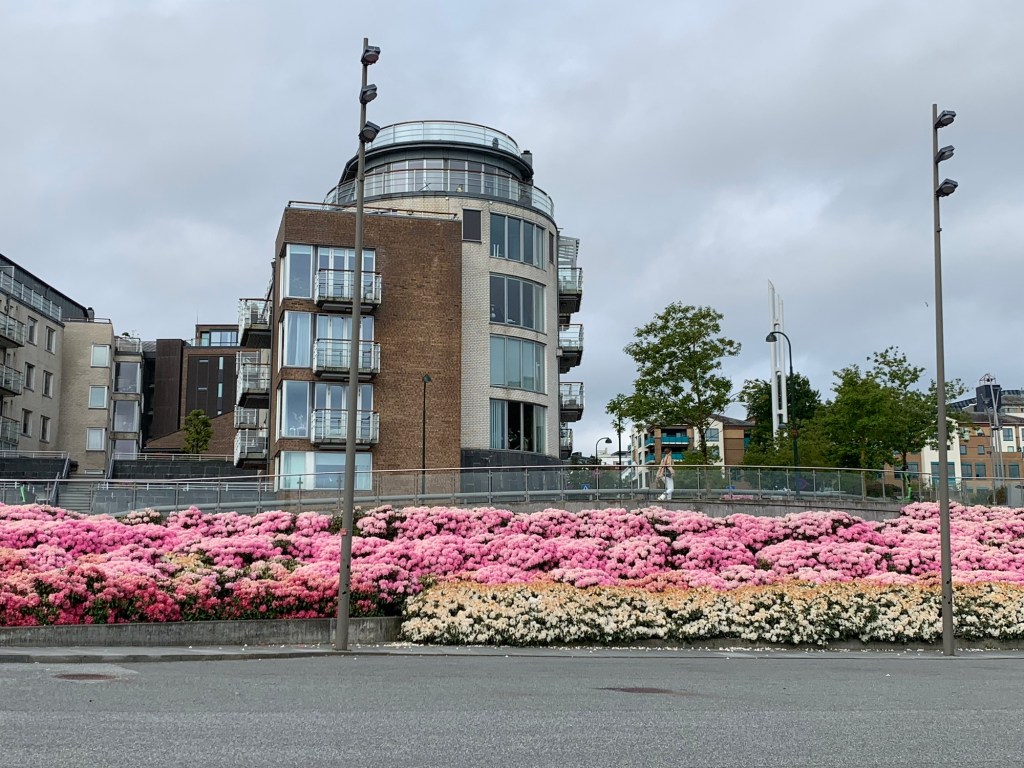
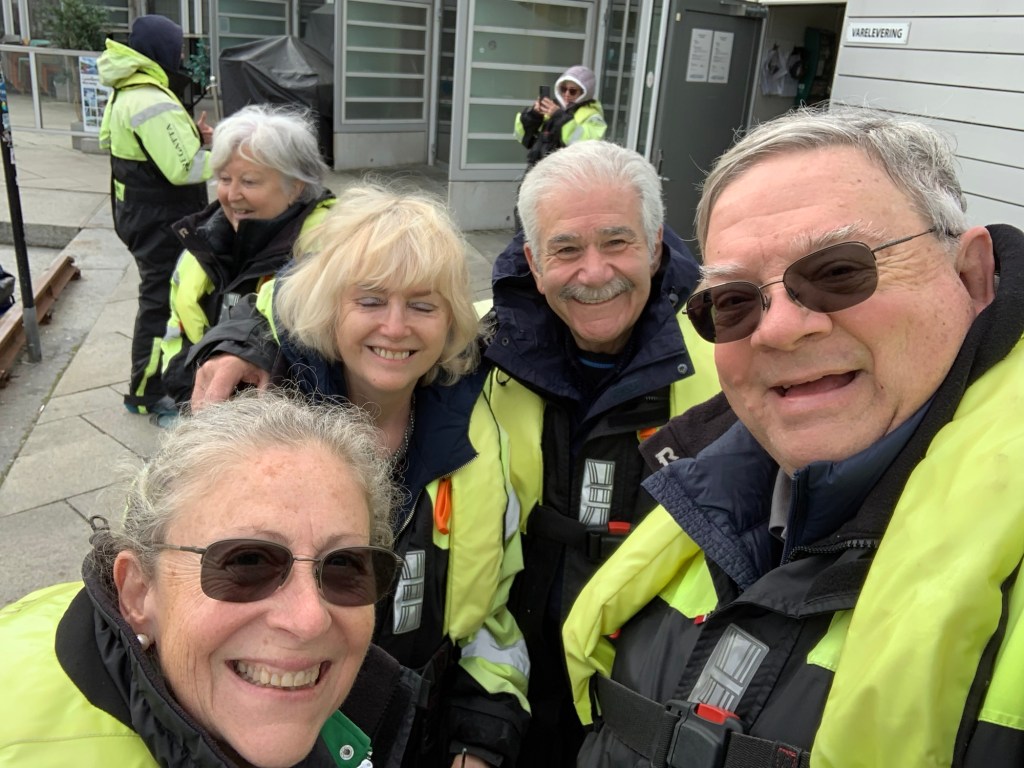
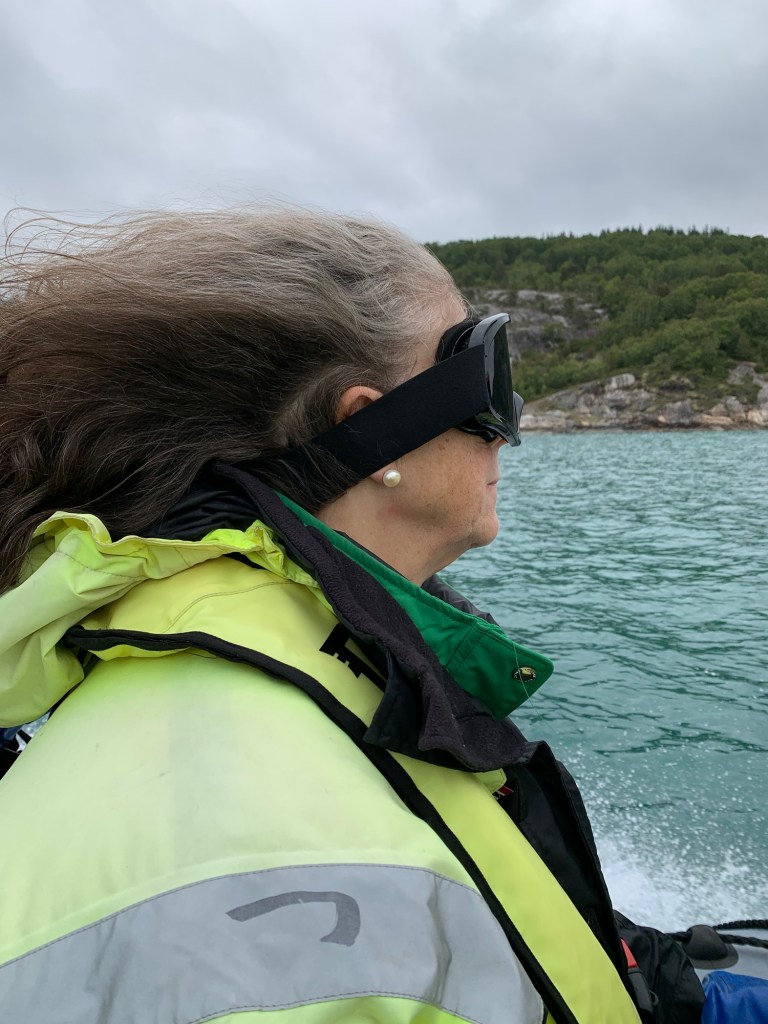
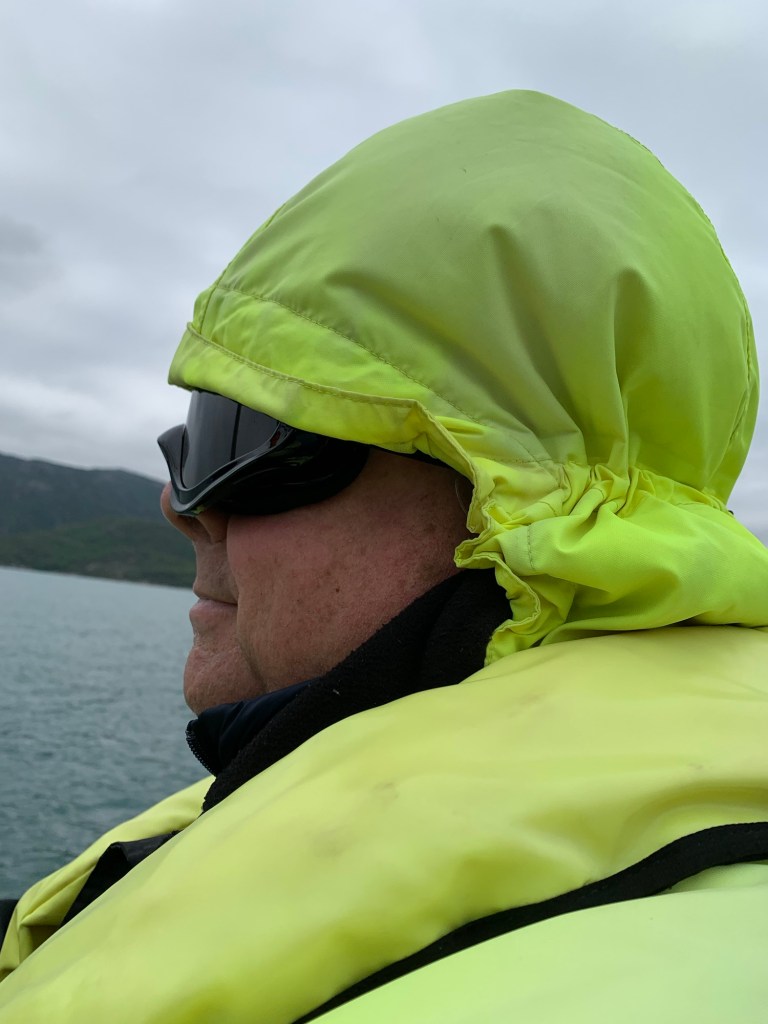
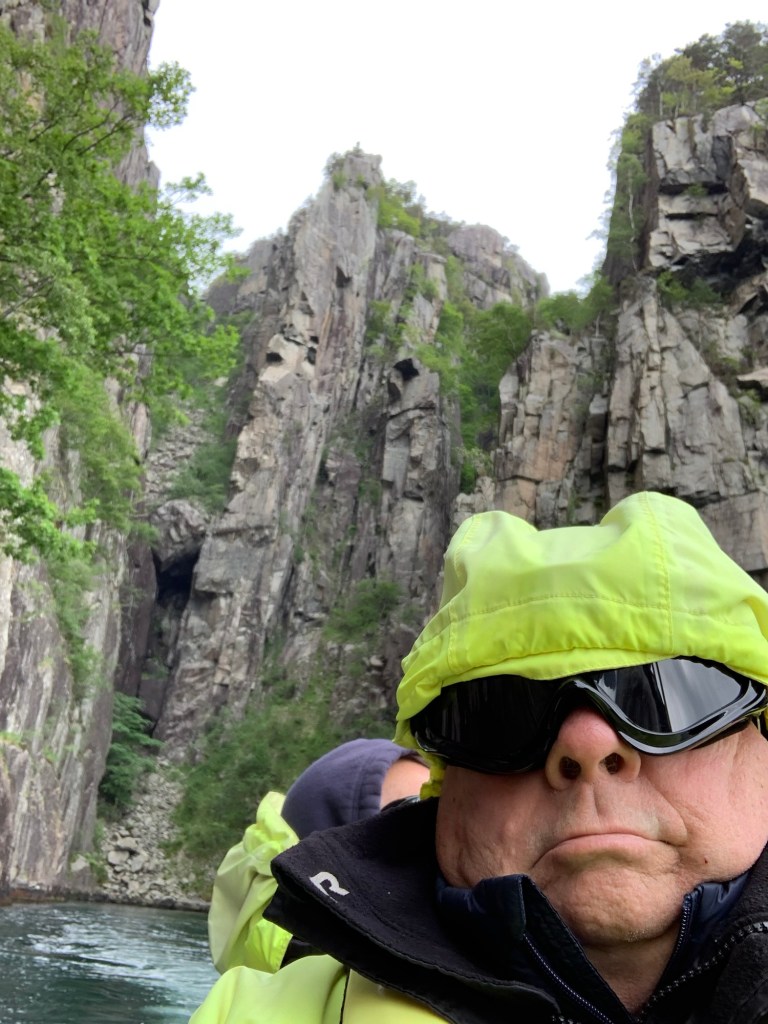
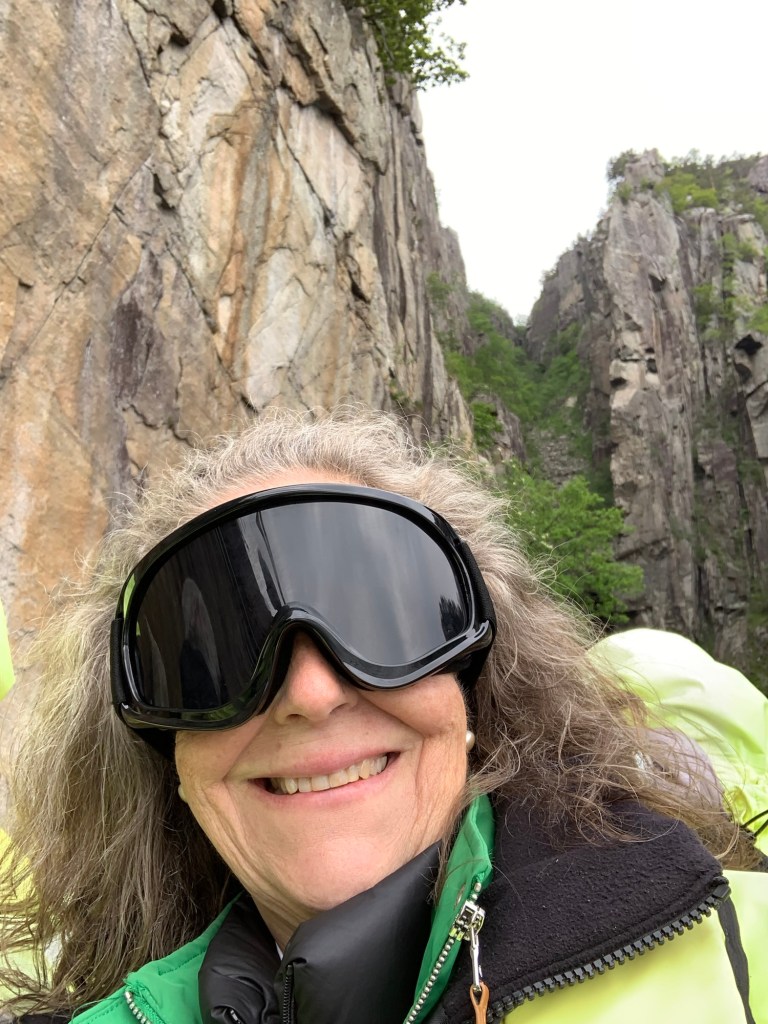
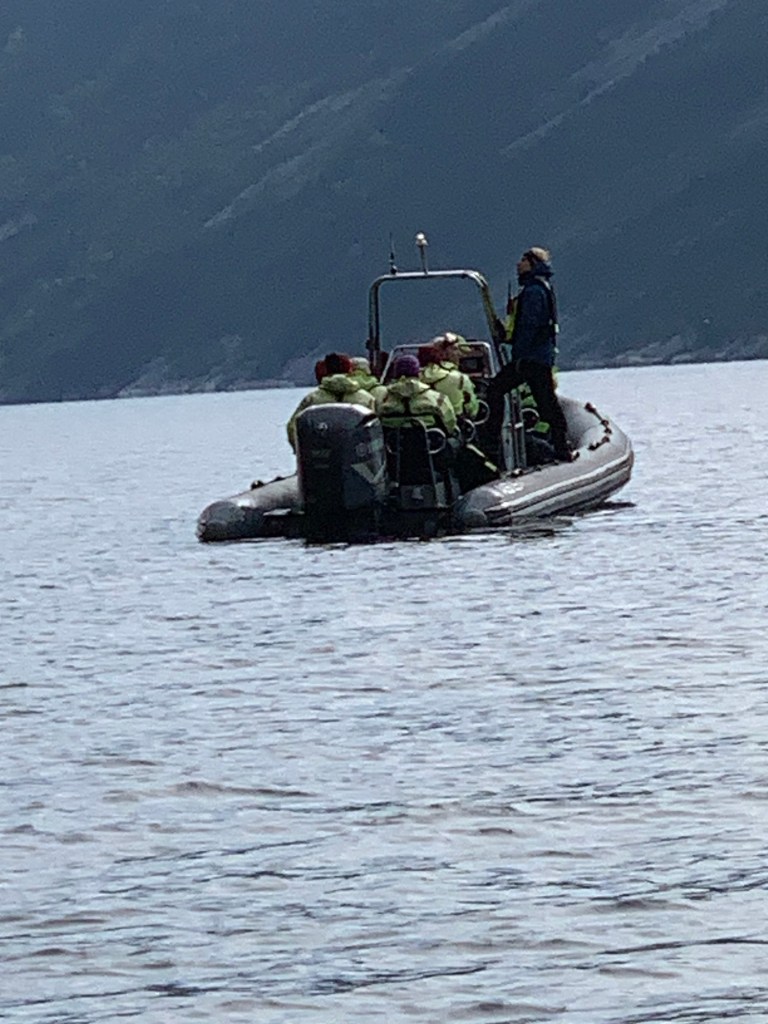
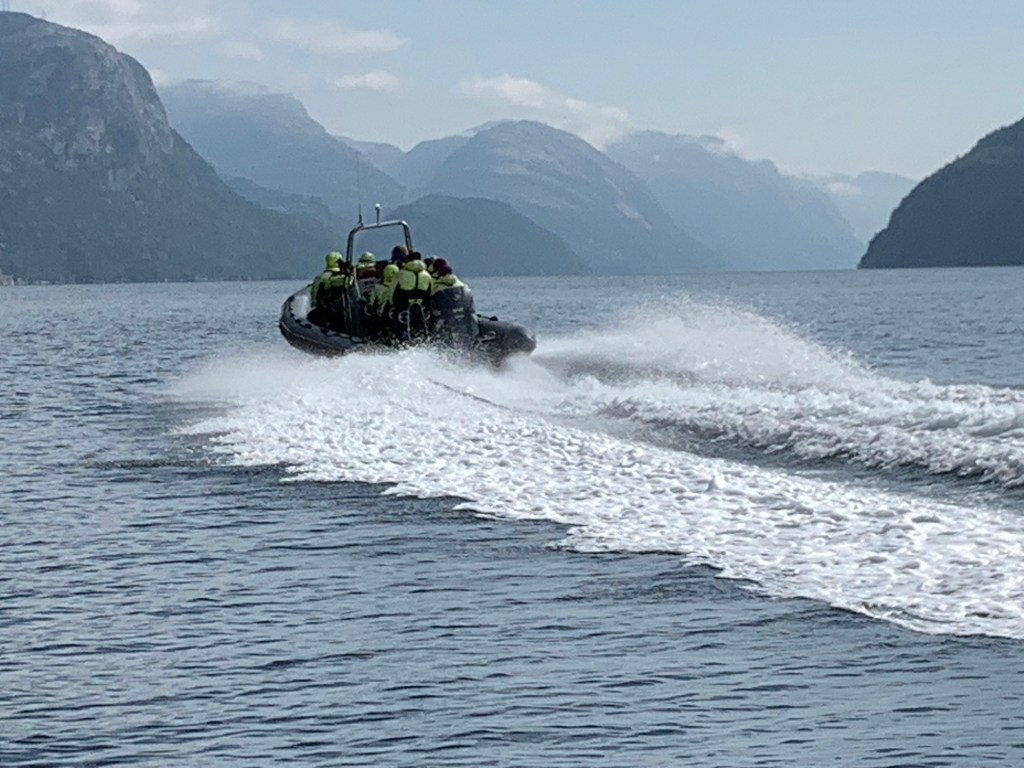
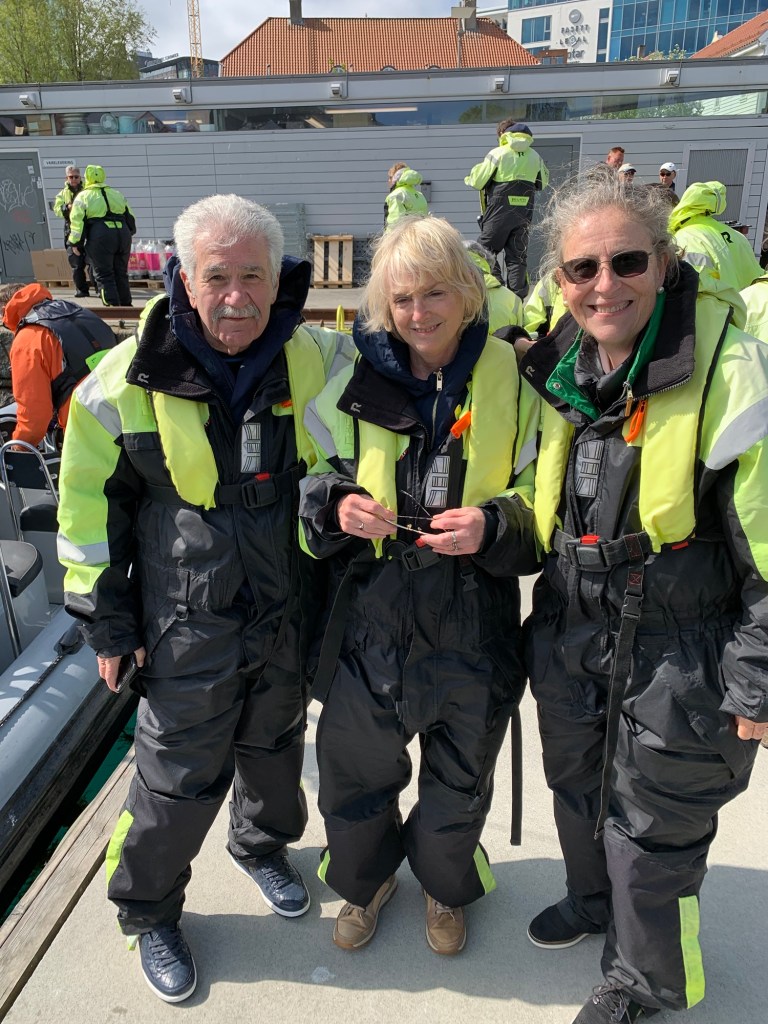
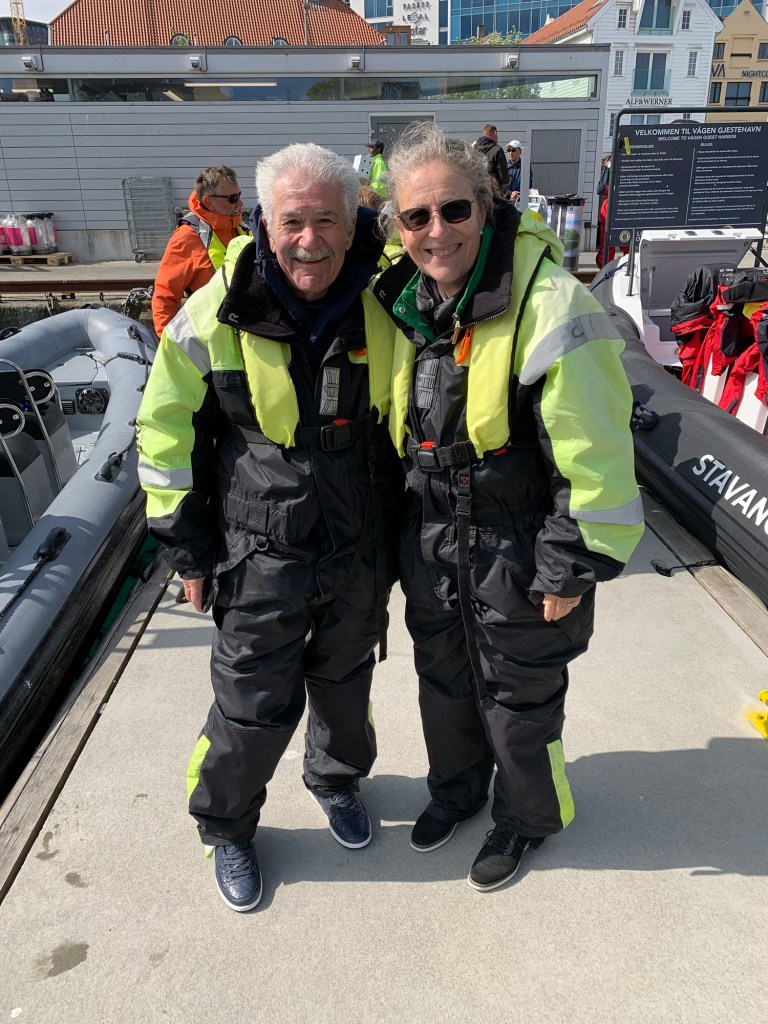
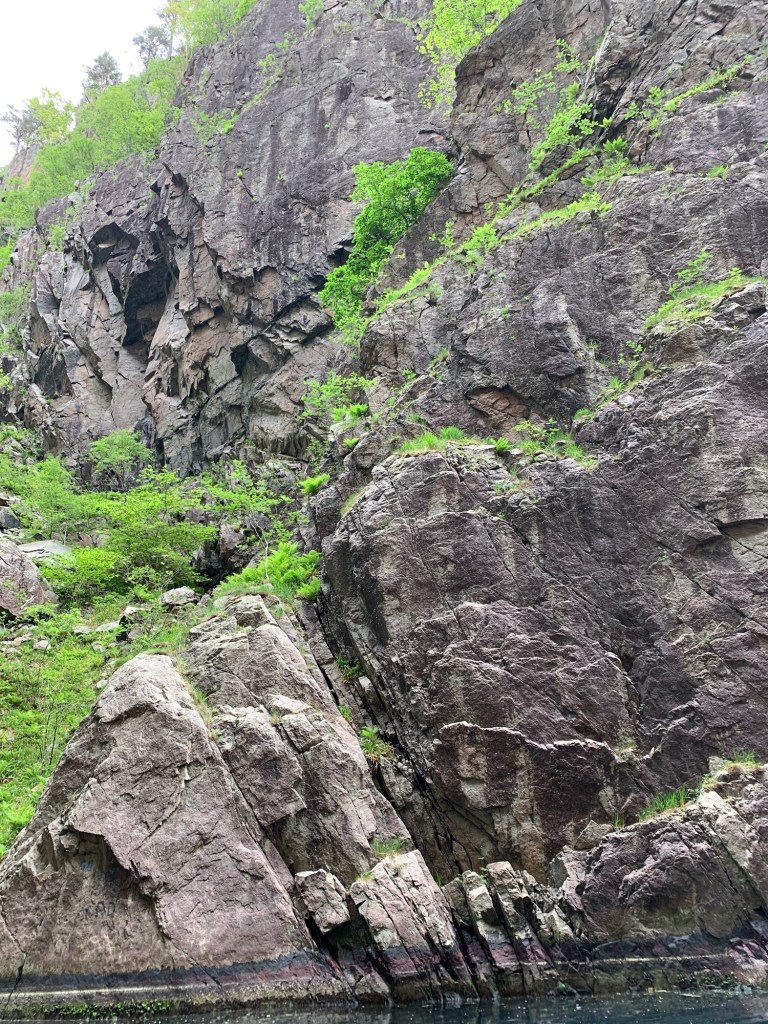
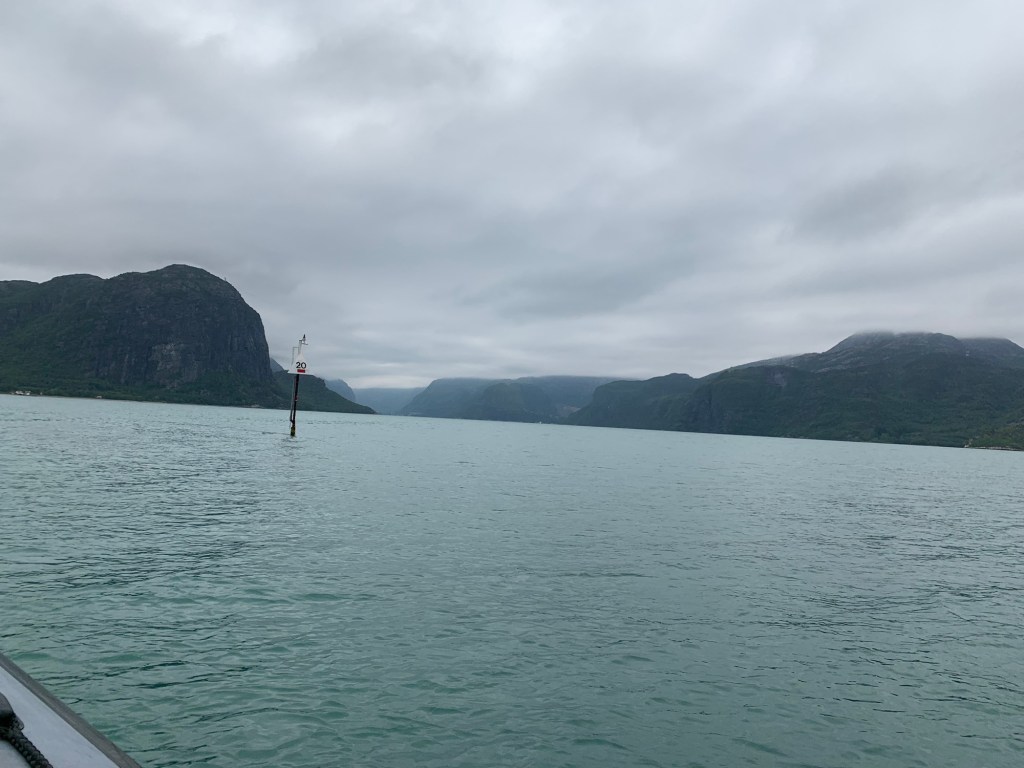
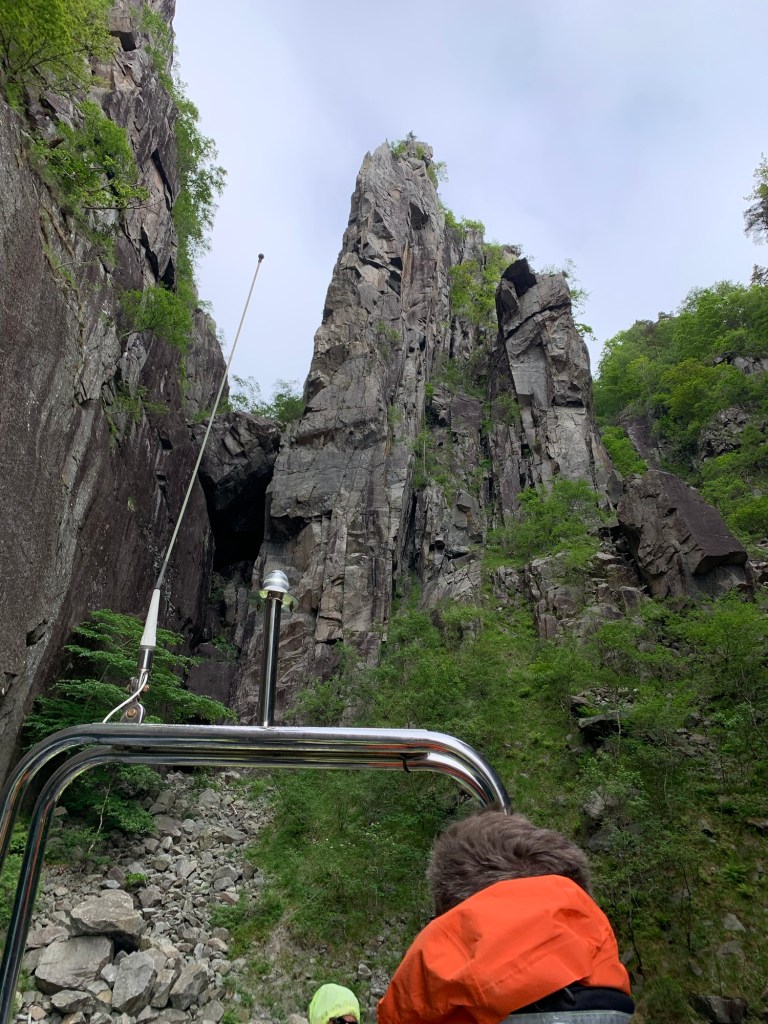
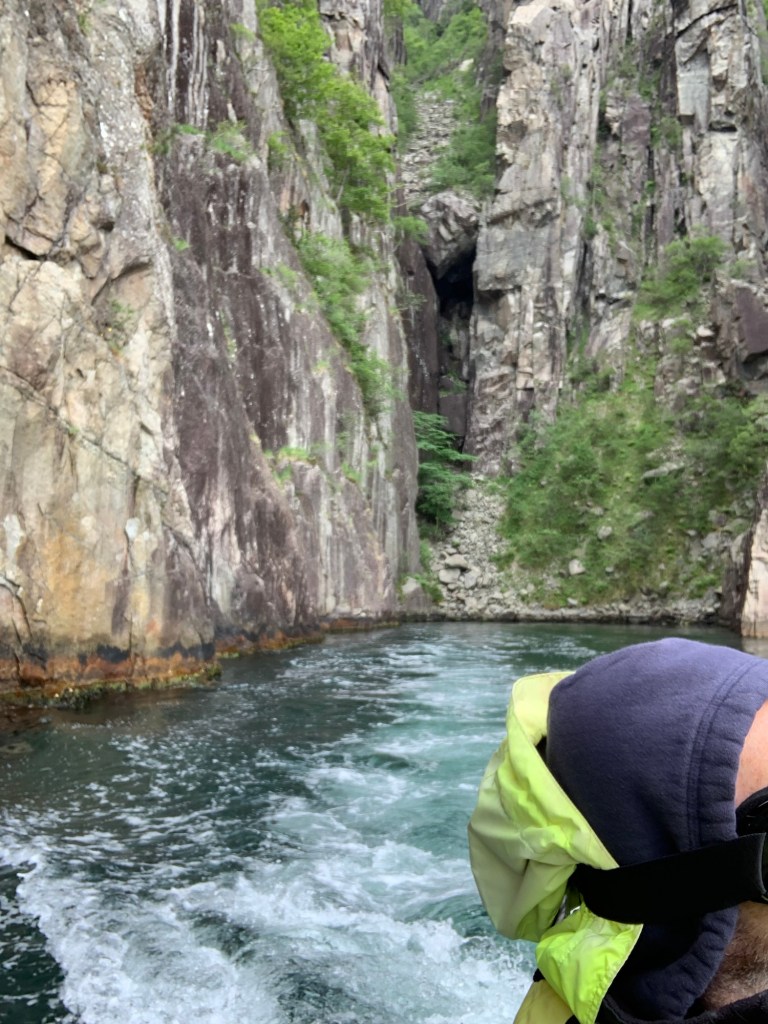
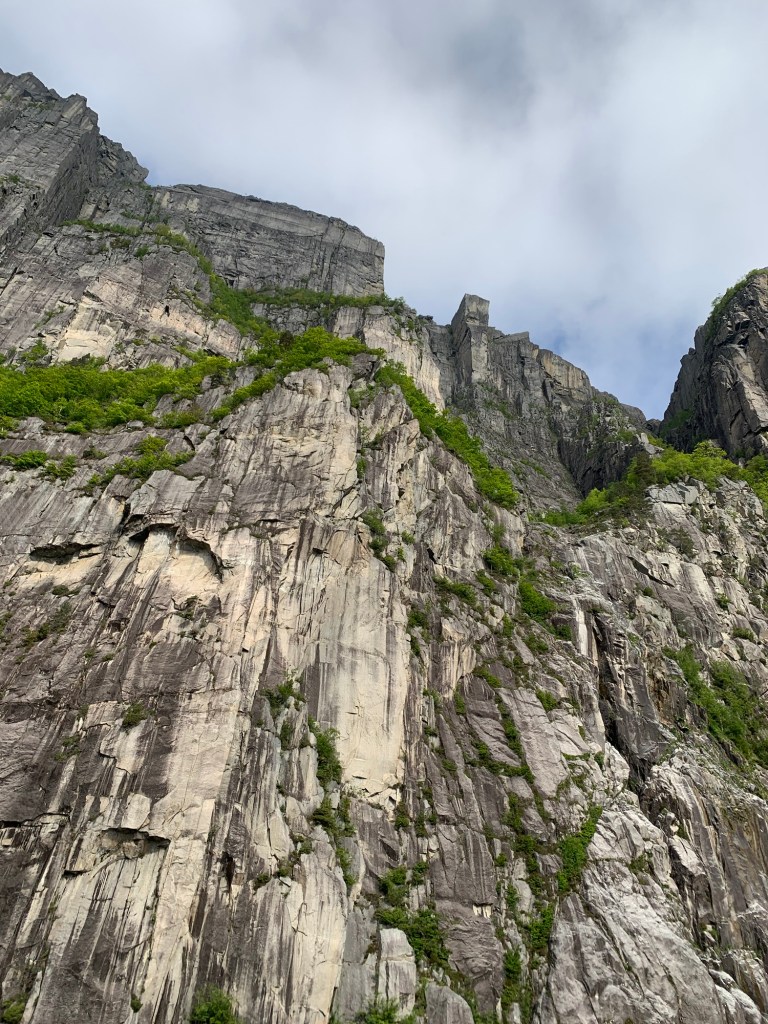
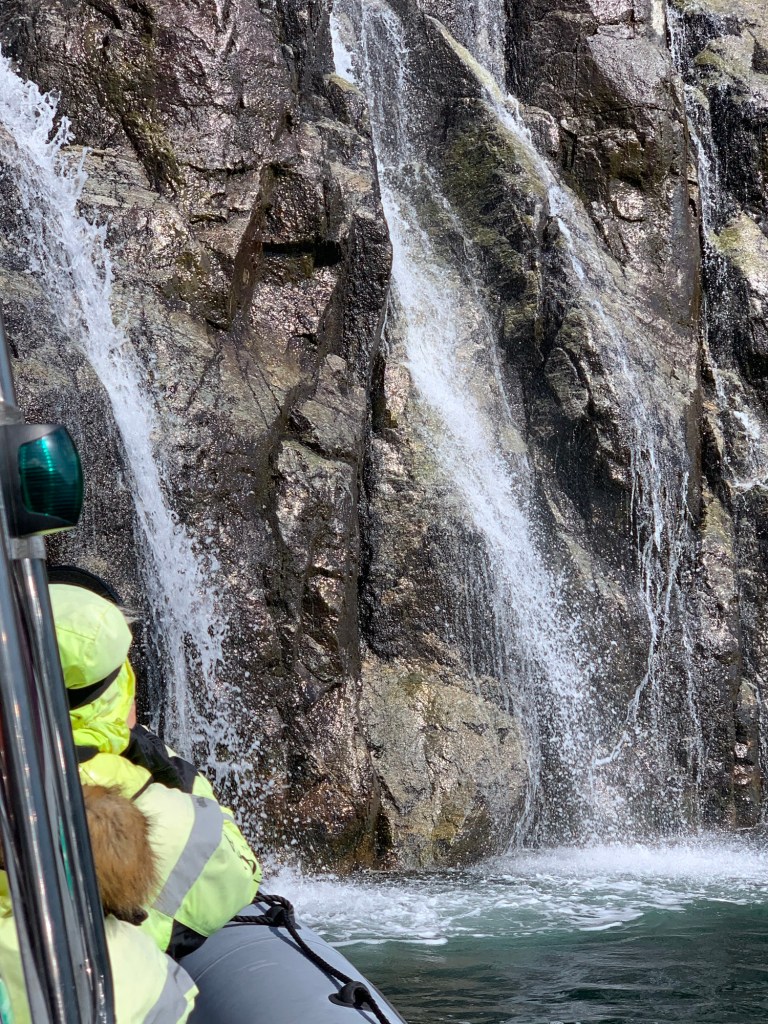
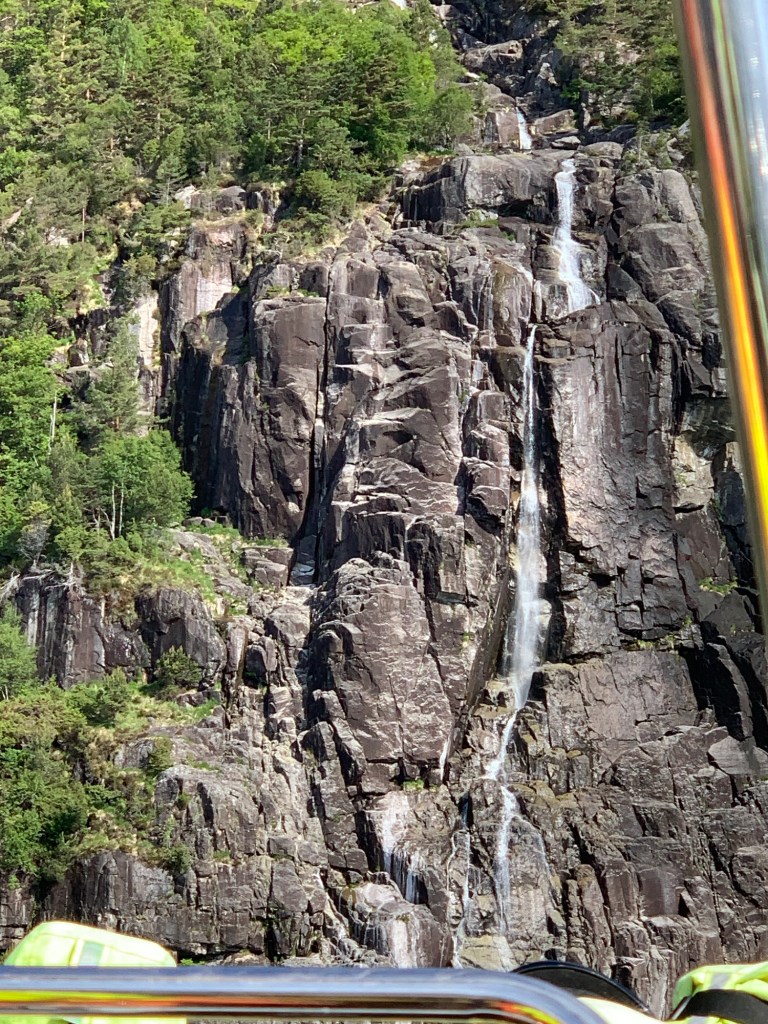
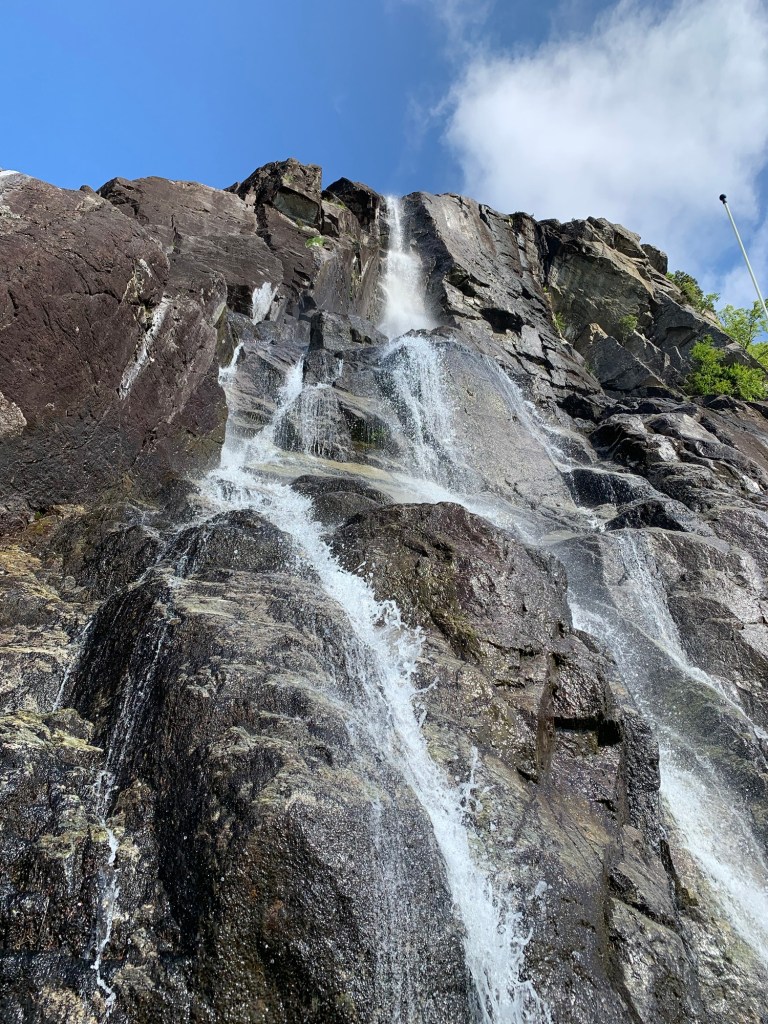
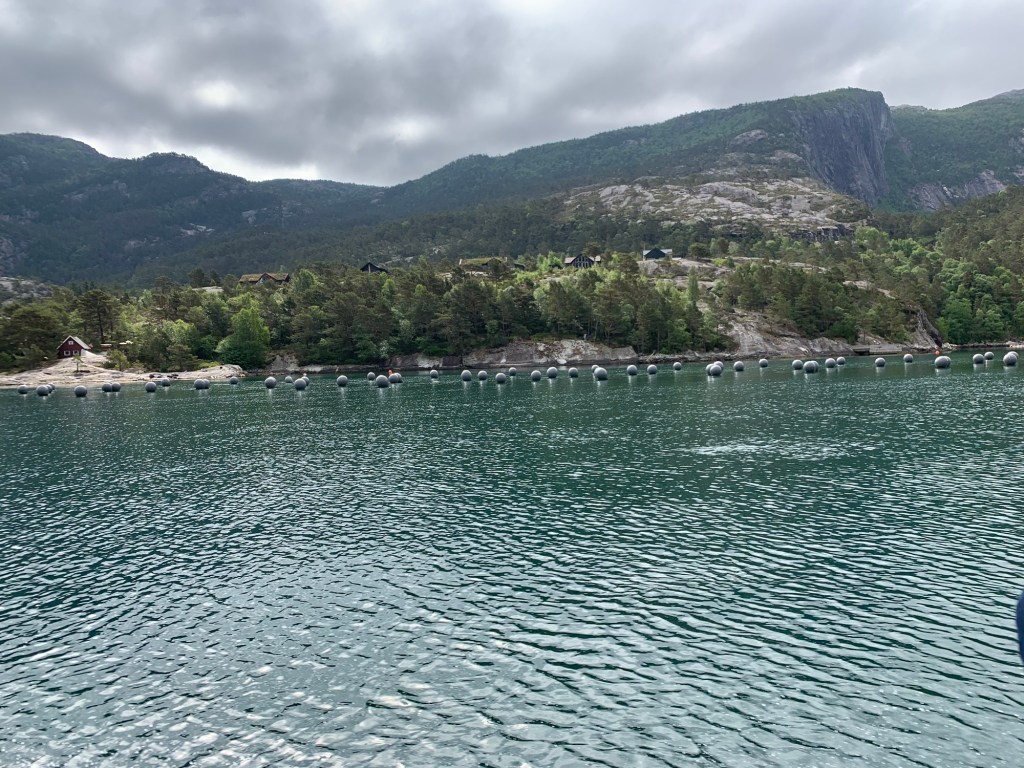
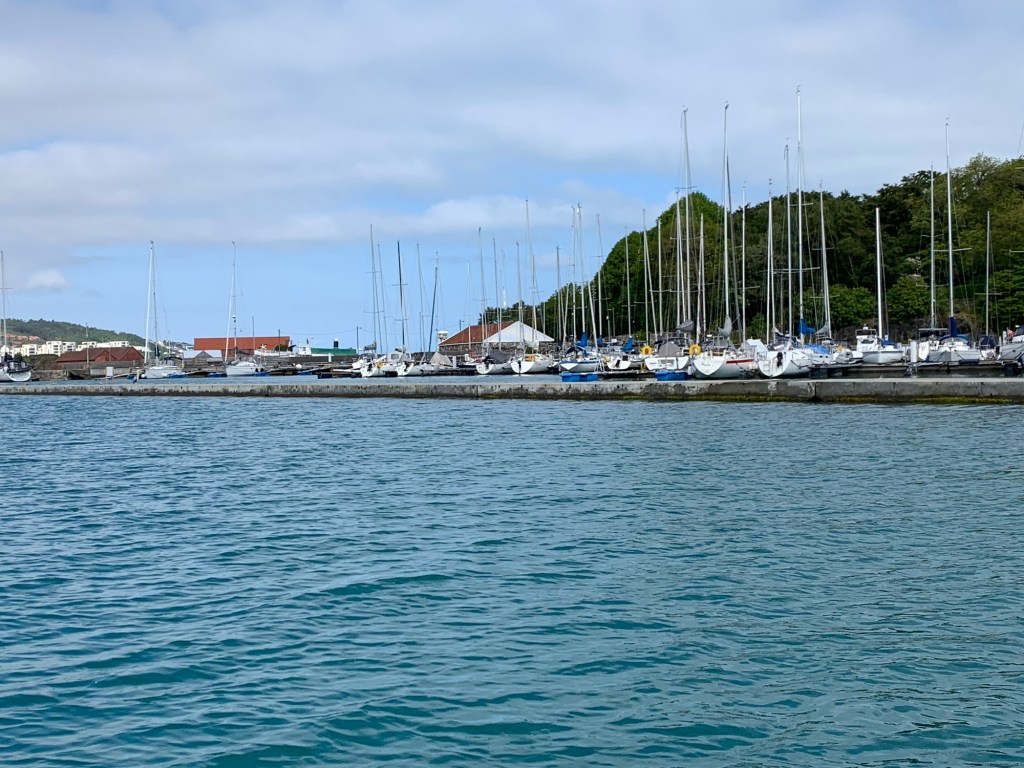
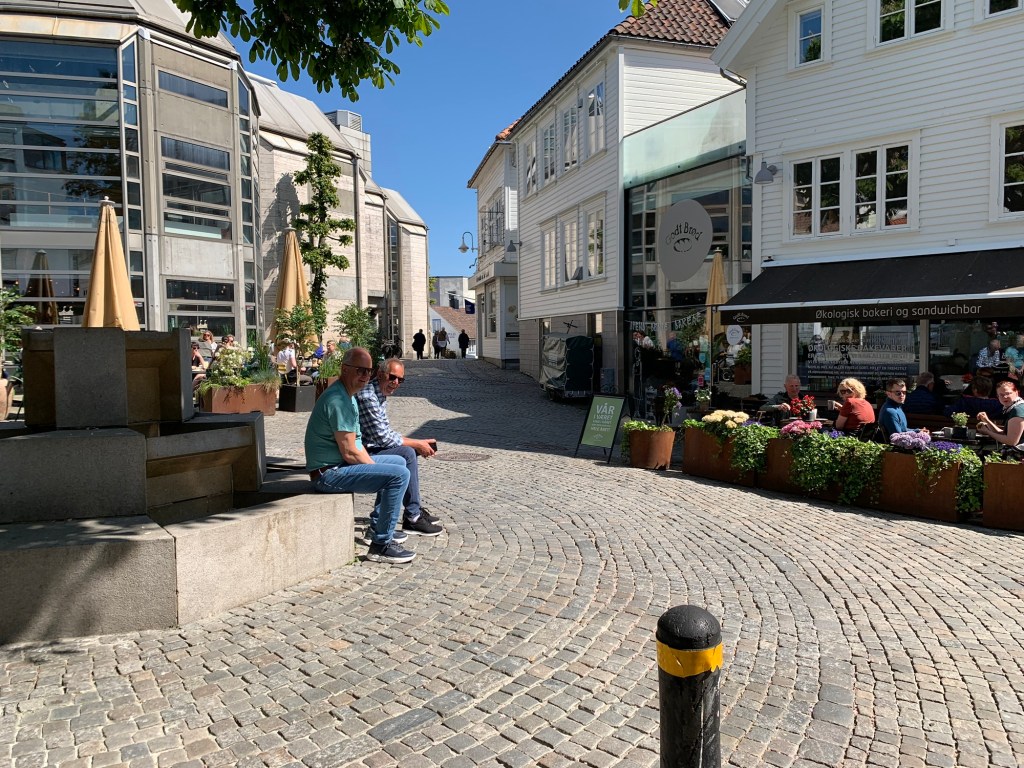
The harbour is charming with typical Norwegian housing, boats of all types and shops / restaurants geared to tourists. As soon as we exited the harbour, the captain said, OK we’re off. With that he turned the 2 large outboard motors to full throttle and we were skimming / bumping over the water at 30-35 knots. Bouncing over the wakes of other vessels and deep cuts left and right bringing the side some 30 degrees off the surface. After some 20 minutes he slowed down and pointed out the salmon farms, large circular structures that have netting above where salmon are grown, in the sea until ready for harvesting. There are many of these all up and down the coast of Norway. We soon sped off, following the cures of the fjord with it’s dramatic views until we reached a very tall set of rock walls some 50 stories high, in an inlet. Here we could make out a cave where a convicted prisoner held out and avoided detection by police. Going close to the side of this rock formation felt like you were a fly on the water, given their rugged and steep formation caused by erosion over the millennia. Our next stop was Pulpit Rock, a formation on the rock-face that resembles a pulpit. One gets a terrific view from the fjord or one can access it after a 4 hour hike only to stand on it and look down at the water. Well worth the view from the water and it is slowly disappearing. We continued on along the side of the rock-face until we got to a beautiful waterfall, called Whiskey Falls by the locals. It is so named as when there was prohibition in Norway a monk living above the falls had a still and would produce whiskey. One day the authorities were about to raid the operation when he got advance word and disposed of all the whiskey down the falls, allowing the fish a wee dram for the night and foiling the authorities! Retracing our steps past still more salmon farms we returned, exhilarated, to the port after an exciting and spectacular 2+ hours.


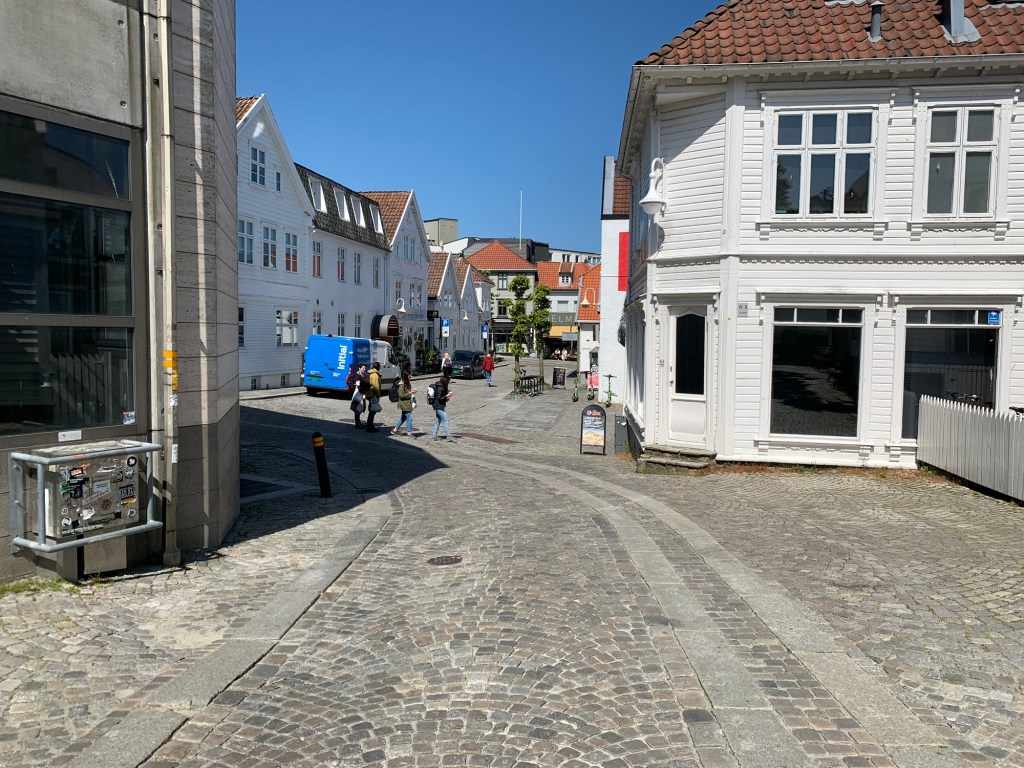
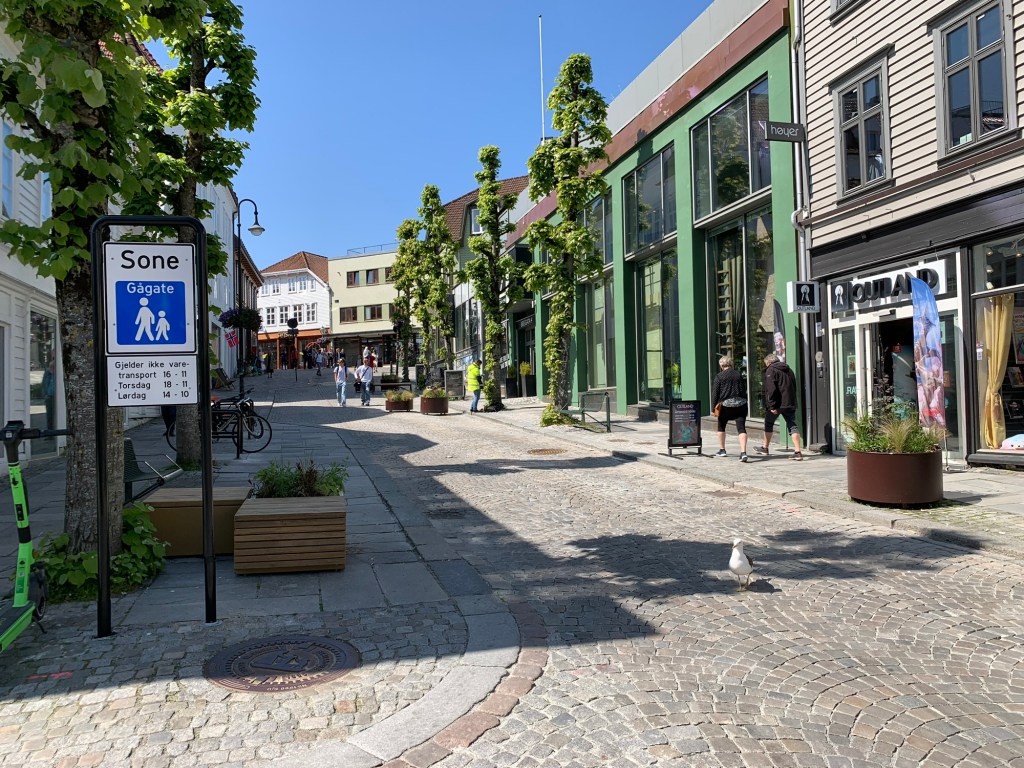
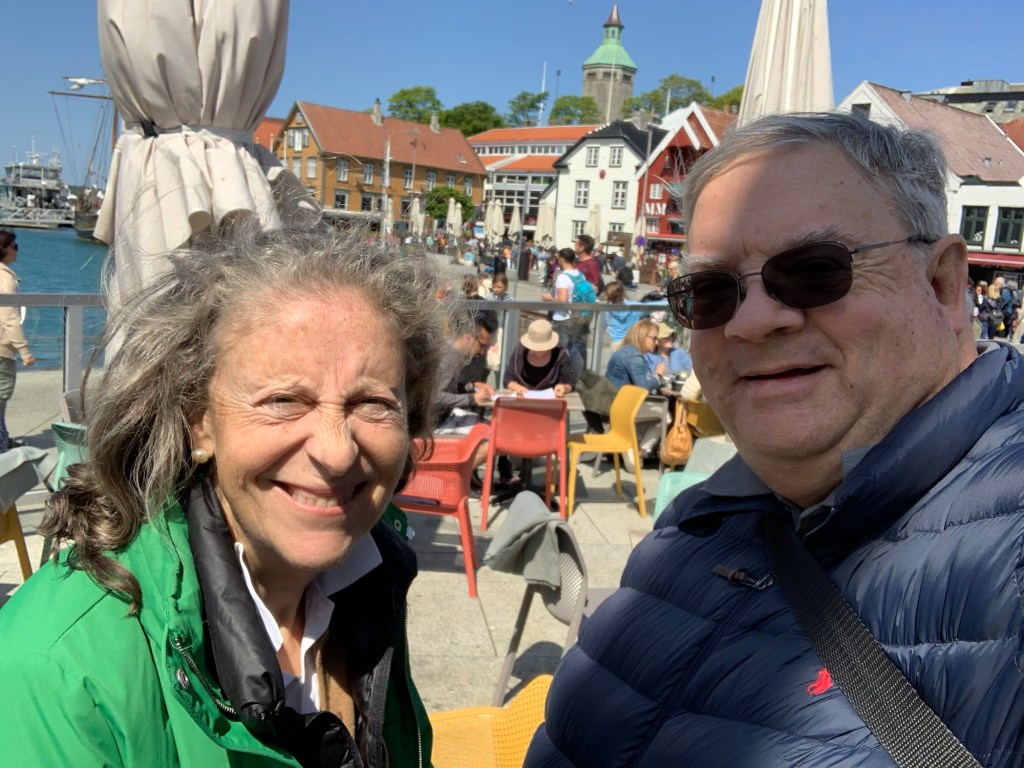
We stopped for a hot drink and then agreed to meet at a certain fish restaurant by the water for lunch. We wandered through the street market, where we found a Peruvian vendor who gave us tips as to where to go to maximize our time before lunch. We saw the colored houses section, unfortunately the cathedral is closed for renovations, but we went to the Oil Museum, bud did not have the time to go through it, but did wander through the old town and the swan lake Breiavatent, where there are many swans in a picturesque lake. Back at the water-front we enjoyed a nice lunch outside, before heading back to the ship. We opted for a light snack in the cafeteria, watched the show – a funny English comedian – Mike Zany, before retiring for the night.

 Roger & Anne Travels