Saturday June 10, 2023
We arrived early in the Buksnes Fjord bay of the Lofoten Island archipelago (www.lofoten.info) where we dropped anchor as we were to take tenders into Leknes and spend the day on the islands. We were soon of for our full day tour with lunch of West Lofoten going all the way to Å – a small fishing village that is a cod and fishing museum with a bakery, shops and where we had lunch. It’s name is a single letter, the shortest name of any town and means inlet. The guide was an Italian Pablo, transplant (his ex-wife is a doctor in the only hospital in the Island and spoke 7 languages, and the excellent driver (who spoke English) was a native of the area. It is indeed quite a challenge to drive a large coach along these very narrow sinuous roads and he did a brilliant job. The day from a weather standpoint was “picture-perfect” – not a cloud in the sky, bright sunshine all day and warm enough to wander around without a sweater or jacket, although not for long. It was 13 degrees C. Apparently it is the first sunshine of the day and the locals all indicated that such a weather day occurs 2-3 times a year. We were exceptionally fortunate. It was Anne’s and Diana’s birthday, so we feel it was a great omen for a spectacular year for both of them.
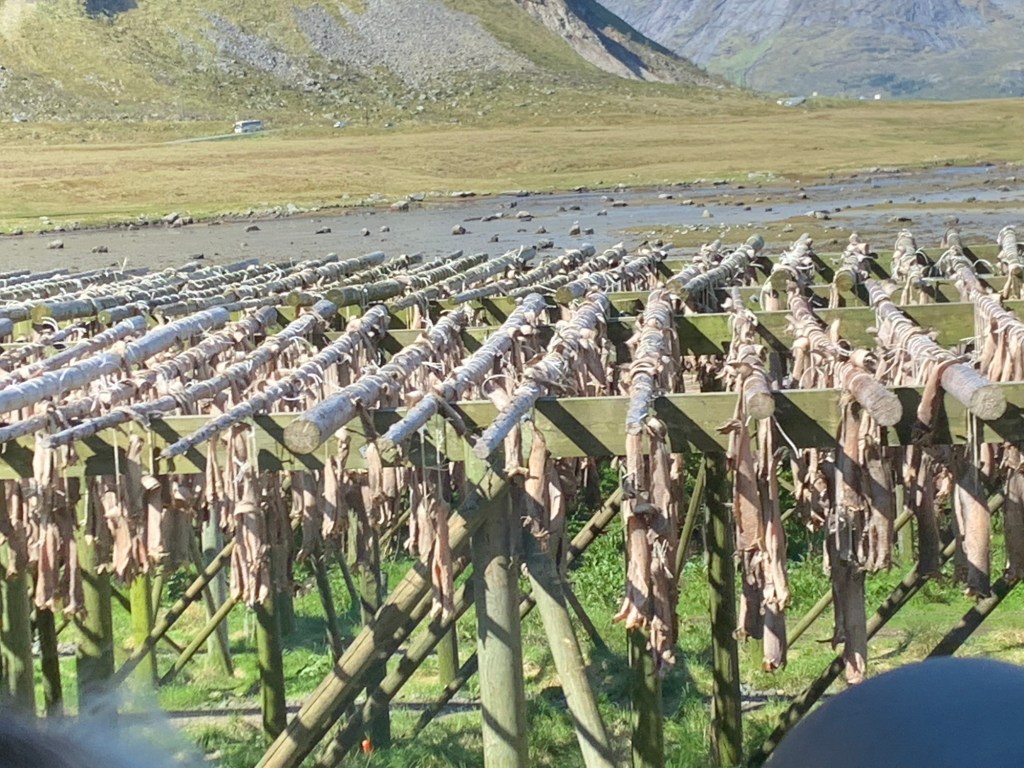
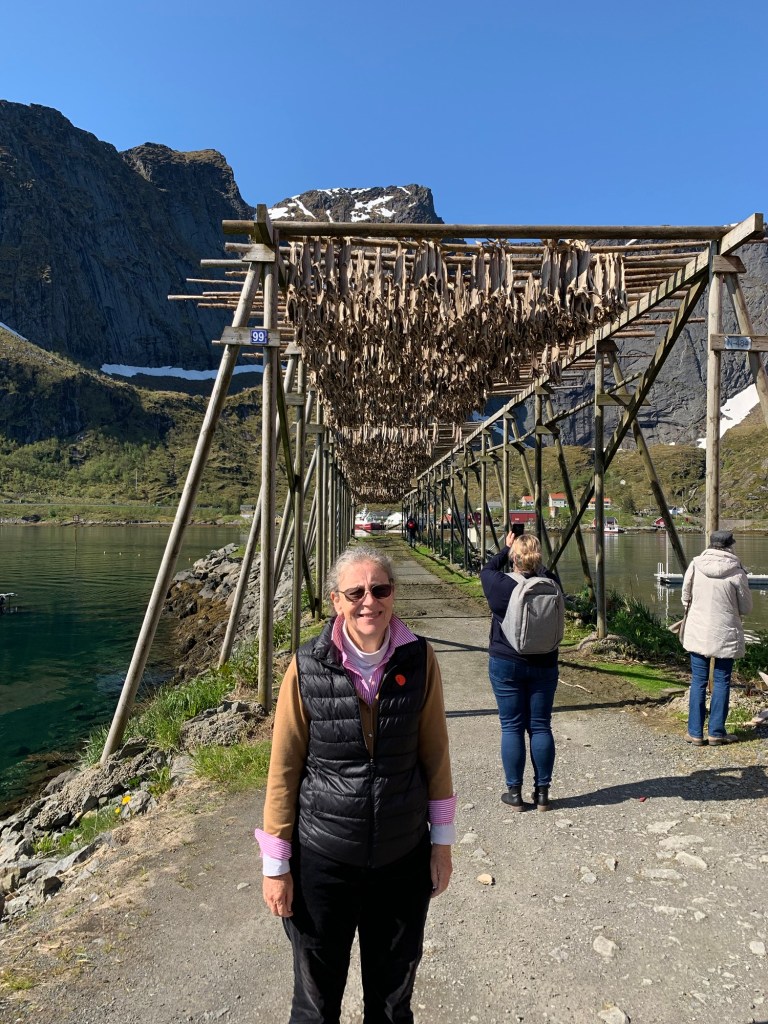
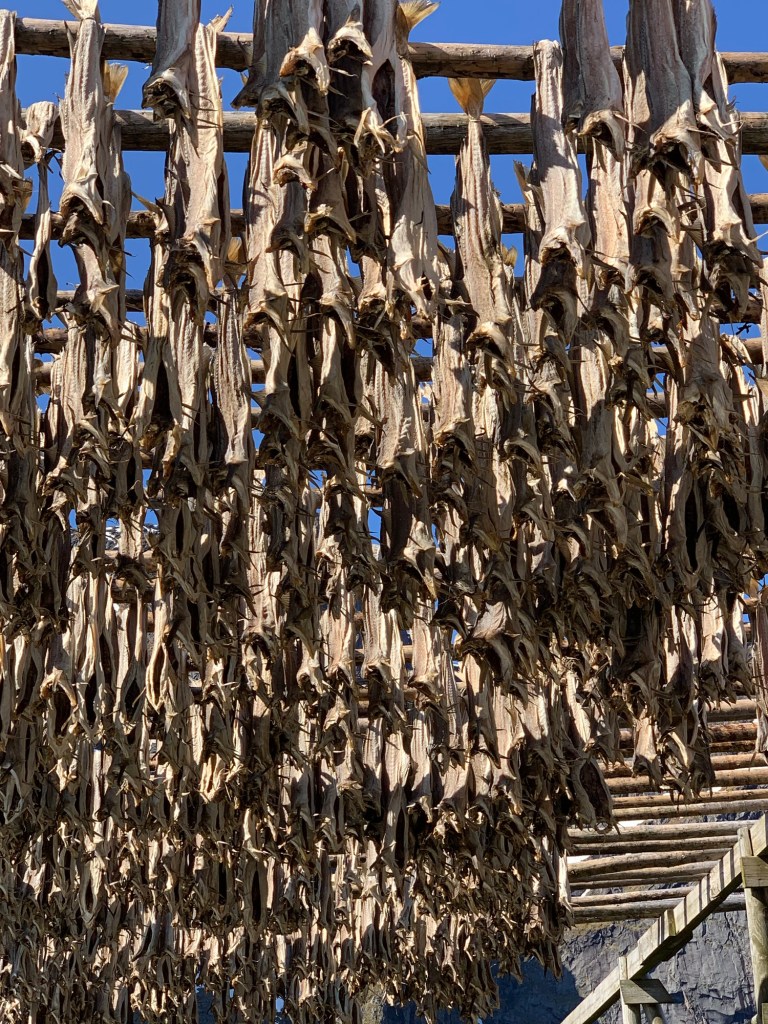
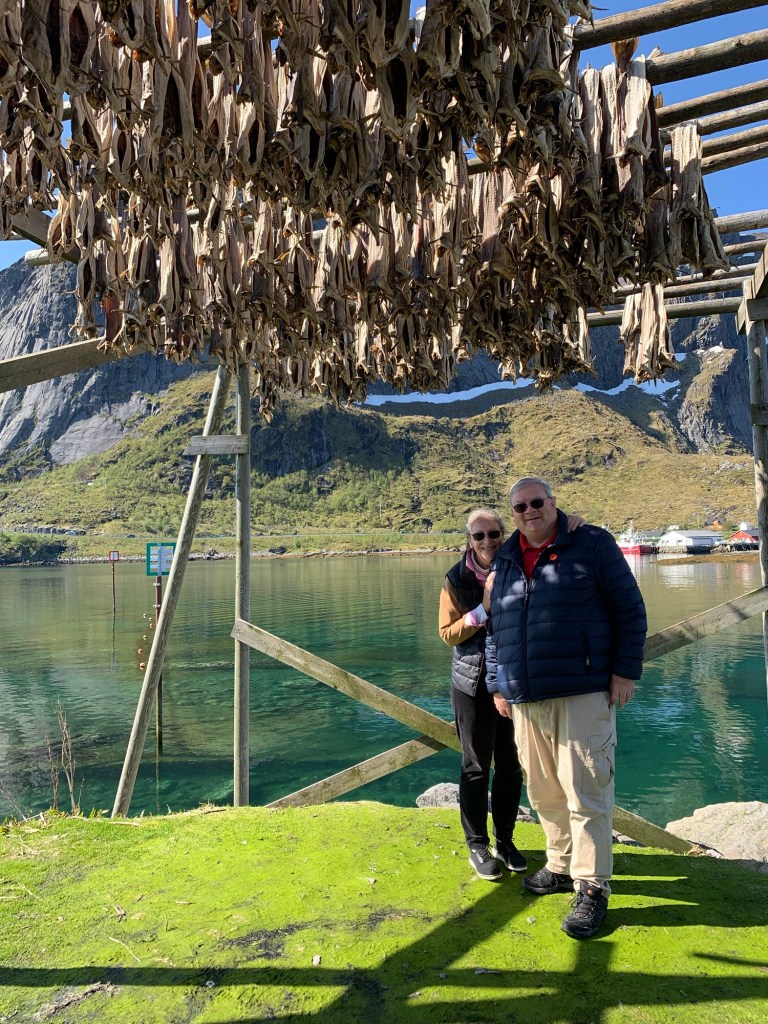
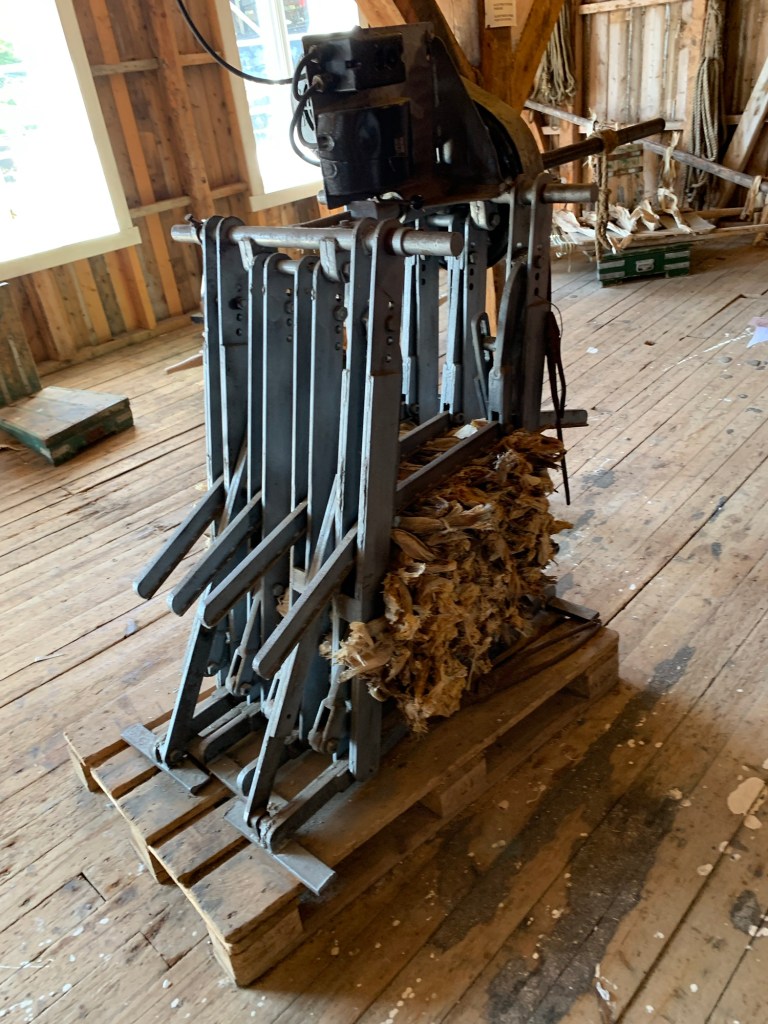
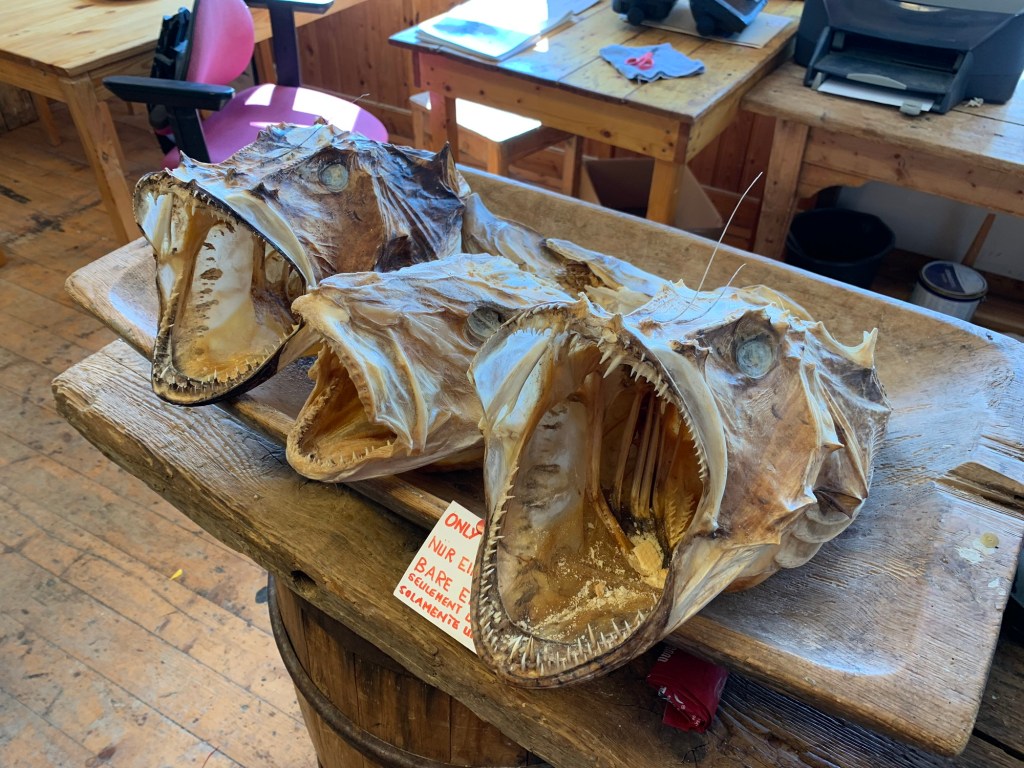
Lofoten is an archipelago district of Norway with spectacular and dramatic mountains, peaks and bays. There are two principal towns – Svolvær and Lekens and numerous “villages” / clusters of houses in an area with a population of 100. There are 24,000 people that live in the various islands and 35,000 sheep as well as cattle, horses and other animals. Some of the principal islands in the area are – Austvågøya, Vestvågøya, Flakstadøya, Moskenesøya, Gimsøya, Værøy and Røst. The name Lofoten comes from the Old Norse “ló” meaning “Lynx” and “fótr” meaning “foot” as the island chain looked like a Lynx’s foot. Other etymology makes more reference to the Aurora Borealis. There is some archaeological evidence of settlements dating back to 10,000 years, but more likely about 5,500 years ago with significant human and livestock dating to 250 BCE (BC). The Viking Museum which we did not see, has an 83 meter long (272 feet) longhouse and many archaeological finds from the late Iron and Viking ages. The islands are known for their Cod fisheries as Cod fish migrate to this area to spawn. During the fishing season in winter, large numbers of cod fish are caught and put up on wooden racks to dry. By April some 400,00 Square Meters of Lofoten is covered by drying codfish, resulting in some 16 million Kilograms of fish that are 80% protein and dried, weigh 80% less than fresh.. Today, we saw many of the racks being emptied and the Cod put into buckets for further processing. Once processed, (dried, graded and placed in 50Kg bundles) they are called “stock-fish”. These are exported to Italy (Top quality) and to Spain, Portugal (as Bacalao – Medium quality) and the heads are exported to Africa (Ghana) where they are boiled for a long time with cow’s knees and spices and are a high protein staple of the local diet.
An interesting mostly unknown fact about this area, was that during the Second World War a raid in March 1941 in by the Norwegian / British troops yielded a German code book and parts of the Enigma machine which permitted the Allies to decode German messages.
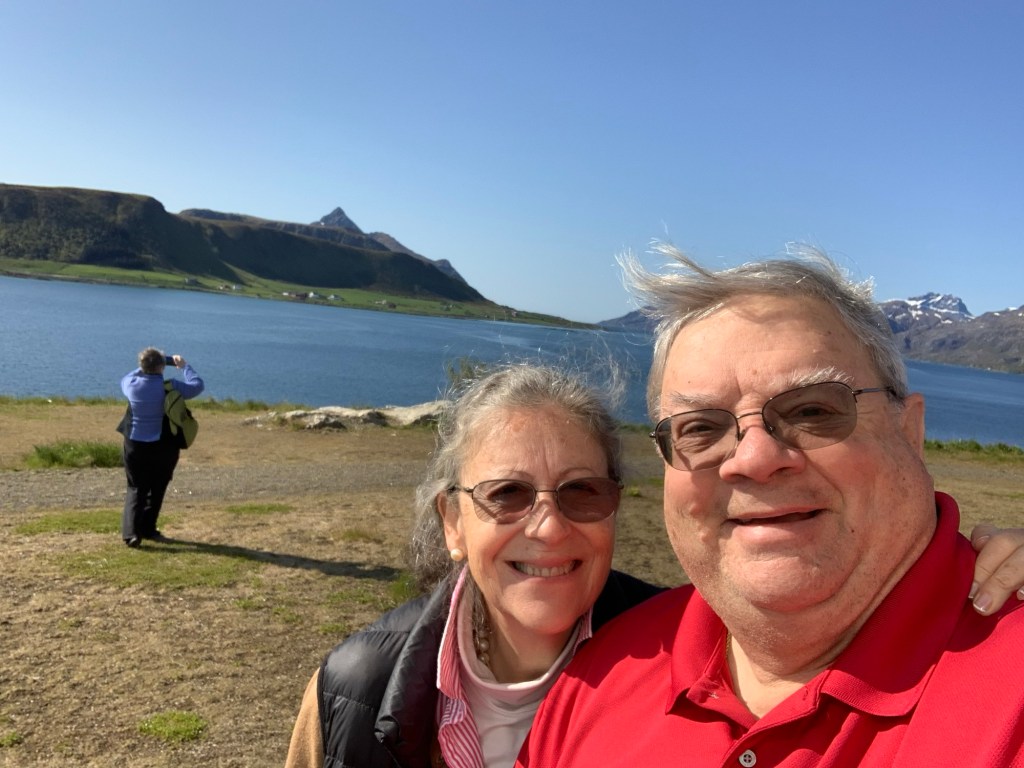
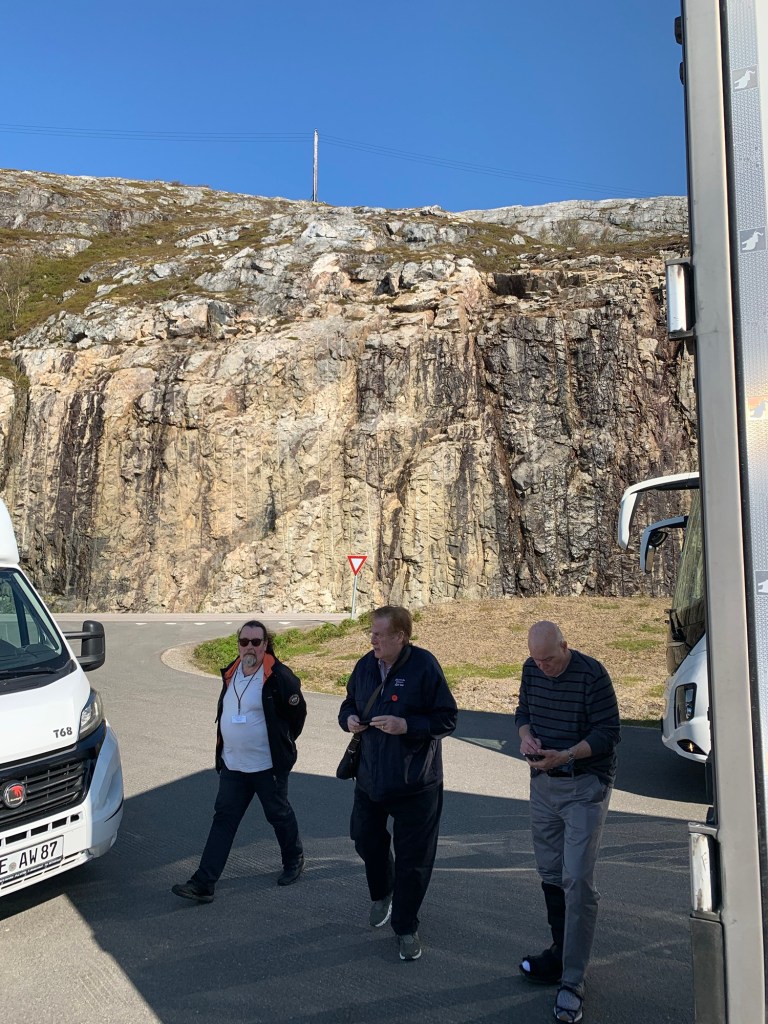
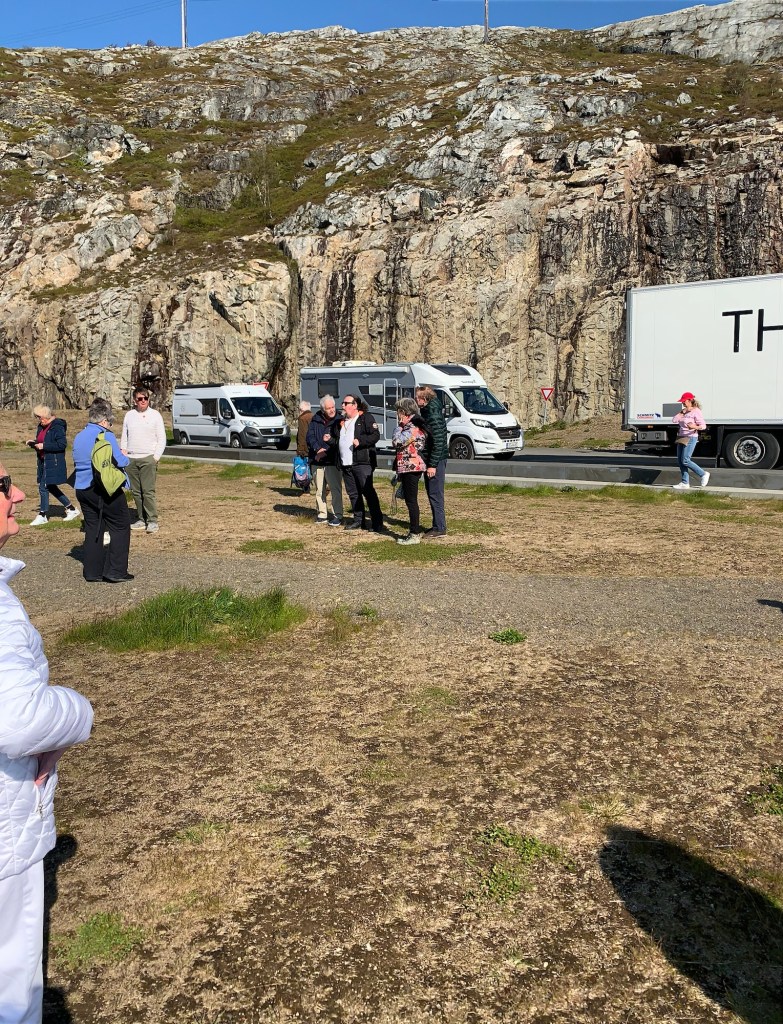
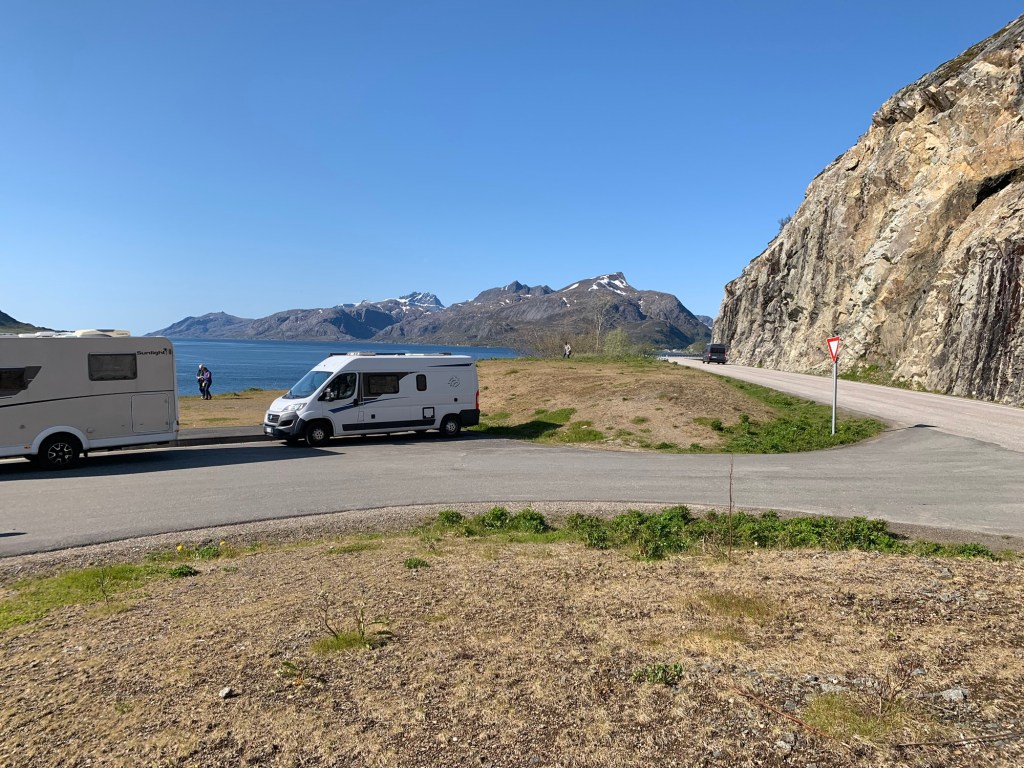
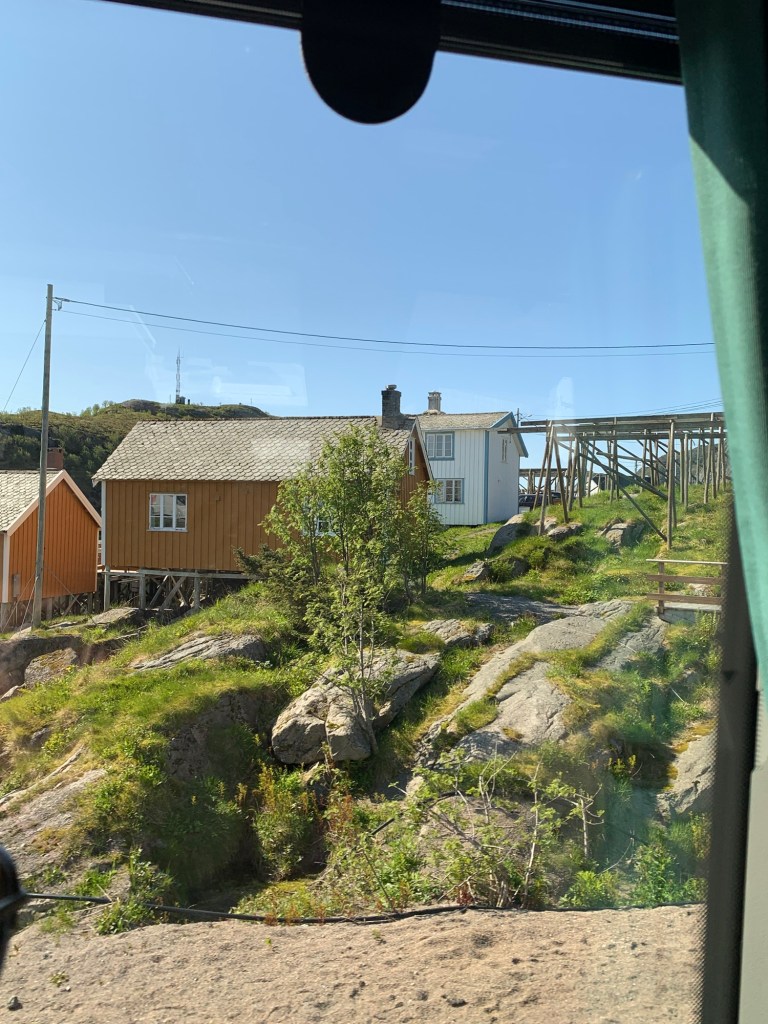
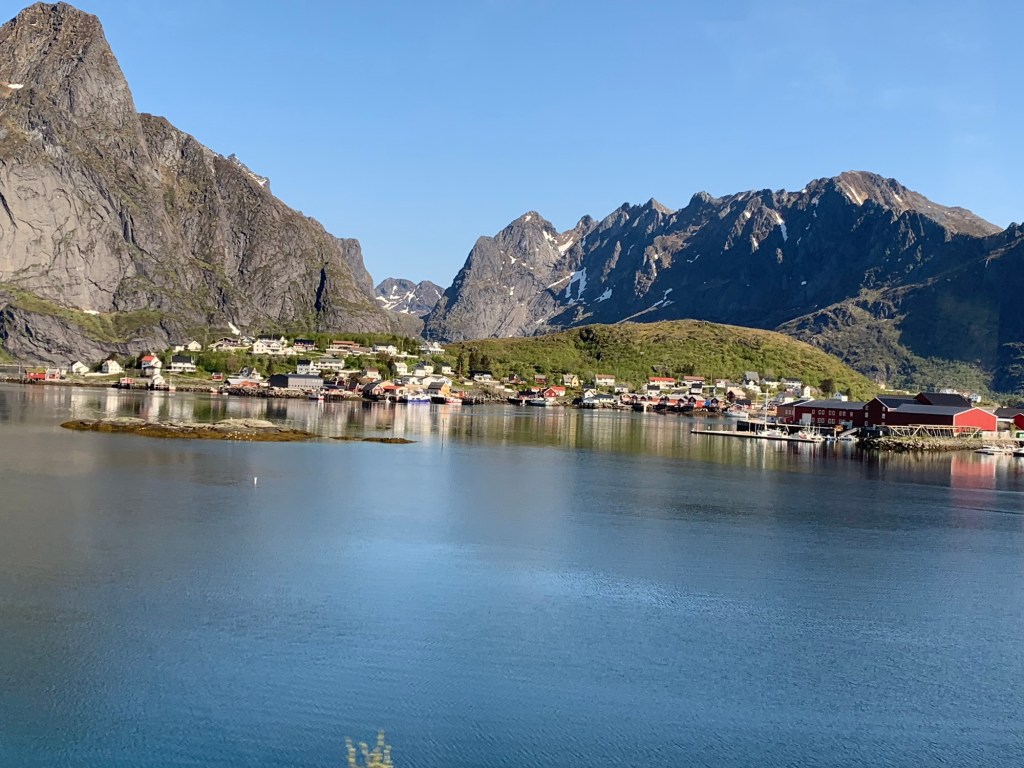
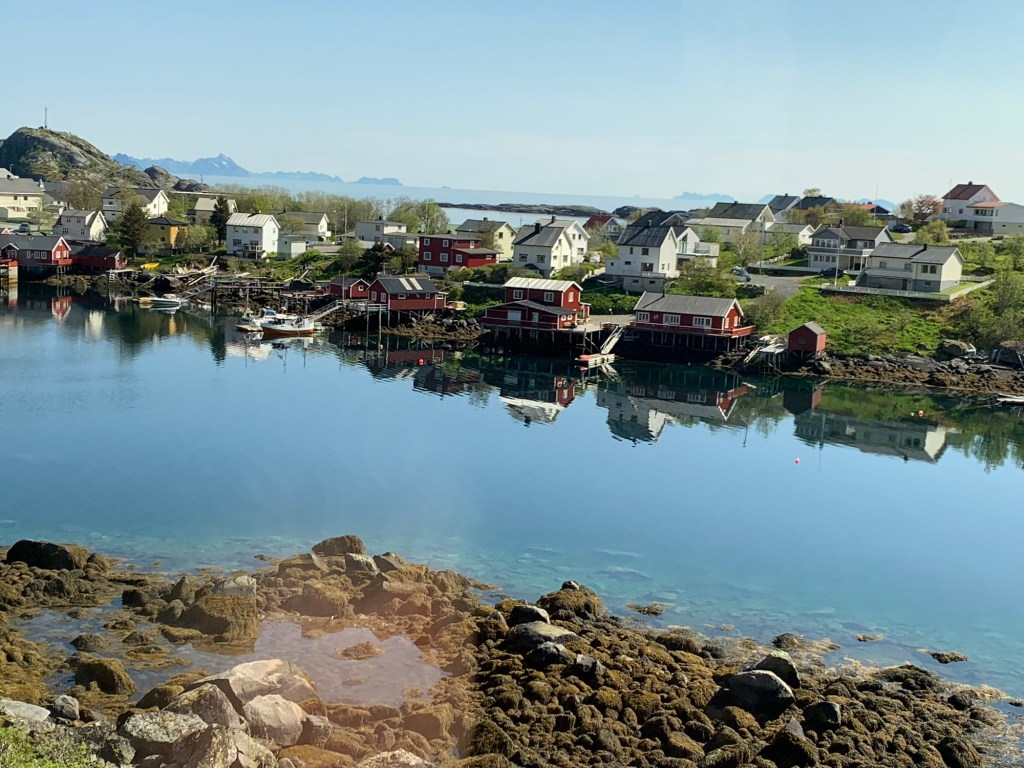
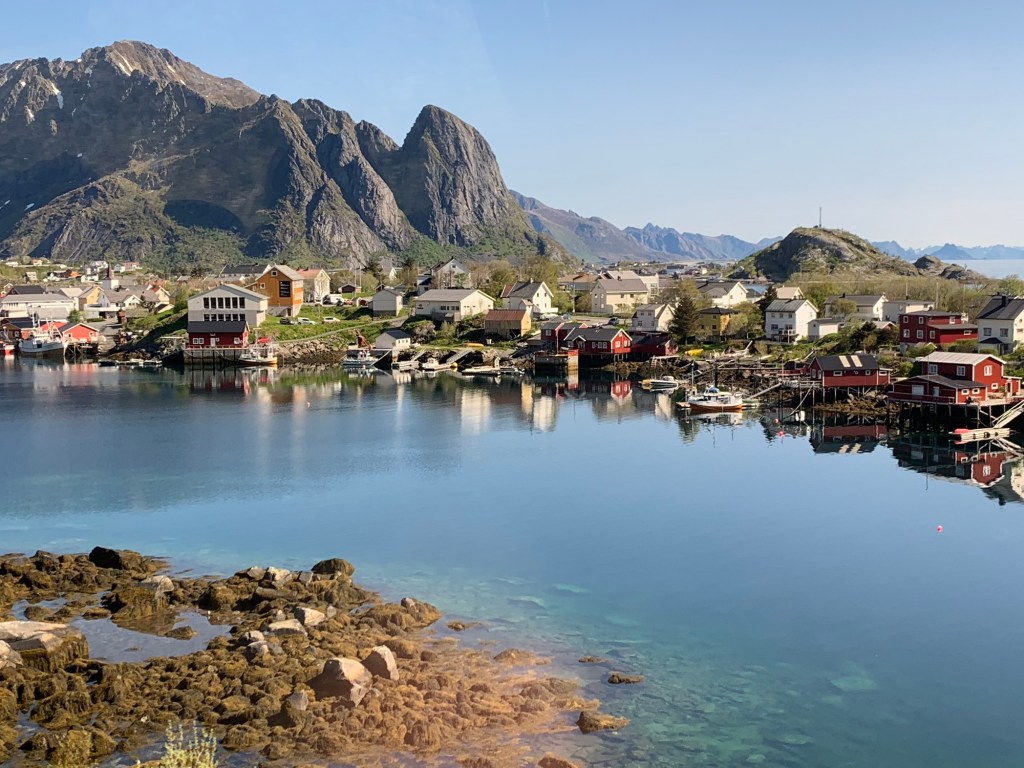
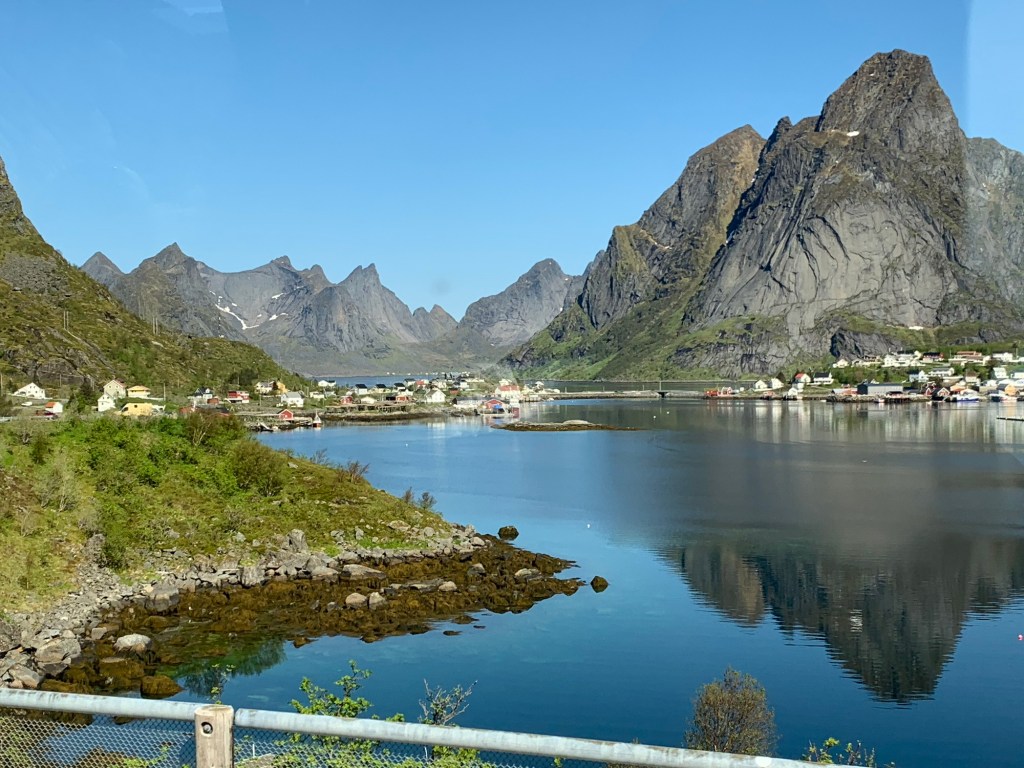
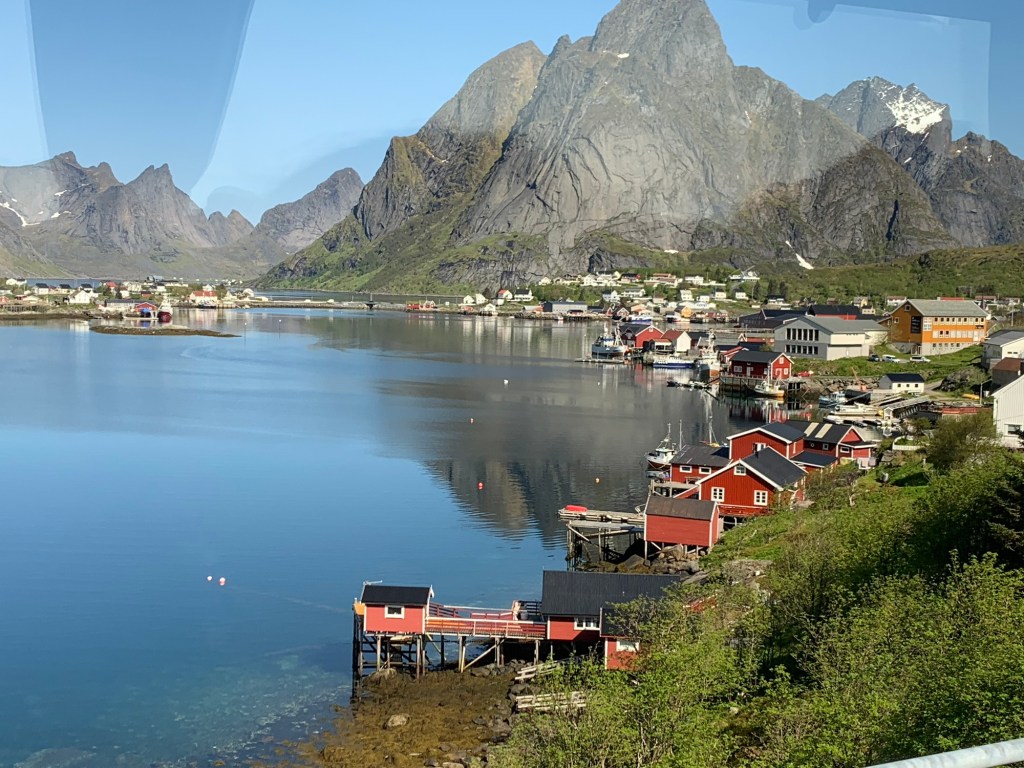
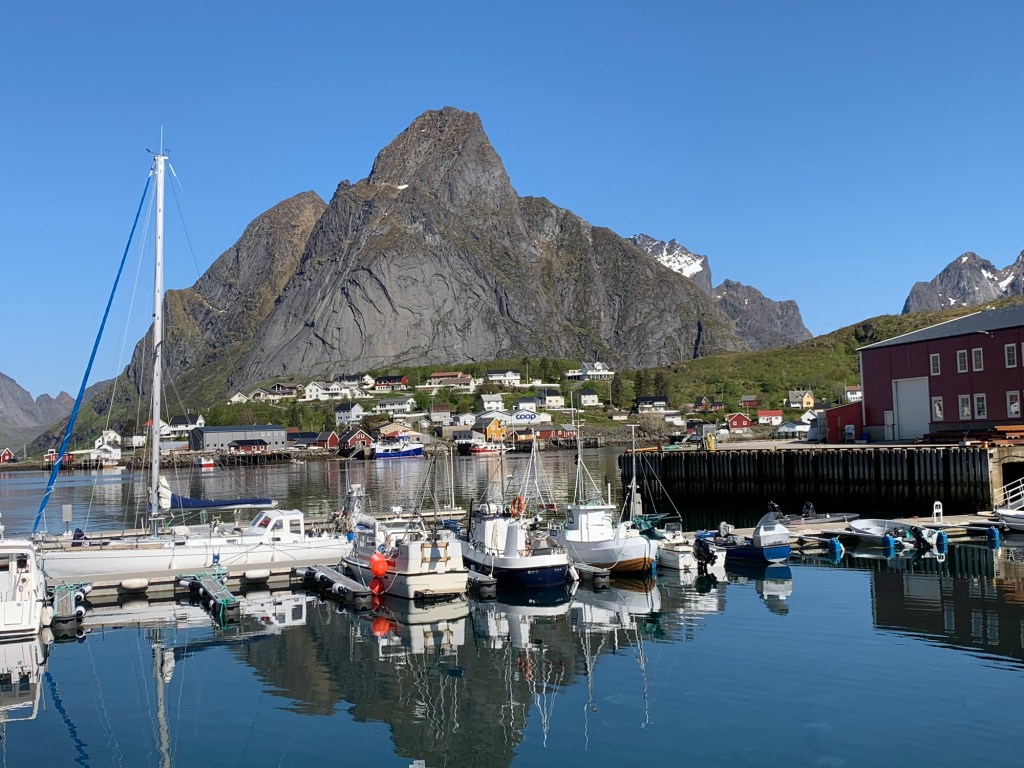
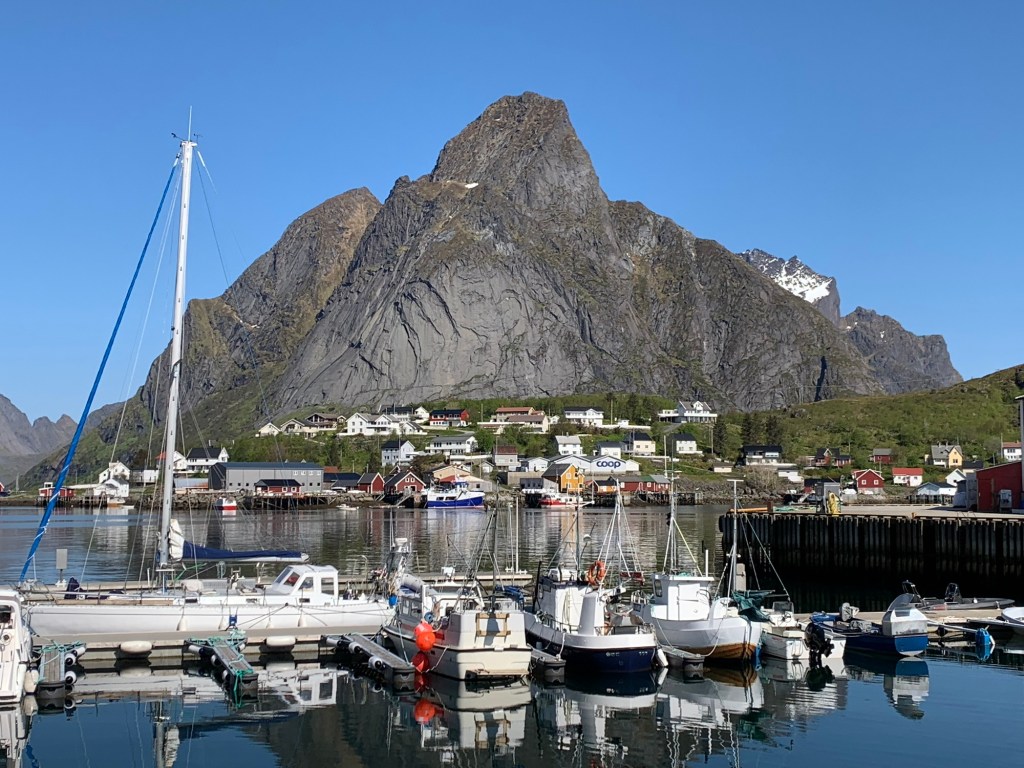
We took E10 past the “international horse racing ‘stadium’ “ (international as 2 Swedish horses once competed on this oval ground with barbed wire fence around a little lake) and headed on our way to Flakstadøya Island where the driver lives, past Ramsburg where one of the mountains resembles a Troll face, with it’s legend, onto Moskenesøya island and the gorgeous village of Reine past Sørvågen which boasts two mini-supermarkets ending in Å where we spent a few hours before retracing our steps back to Lekens, stopping briefly at the surfing beach and the oldest church on the island with a Russian style Onion Dome, where our driver was baptized and married.
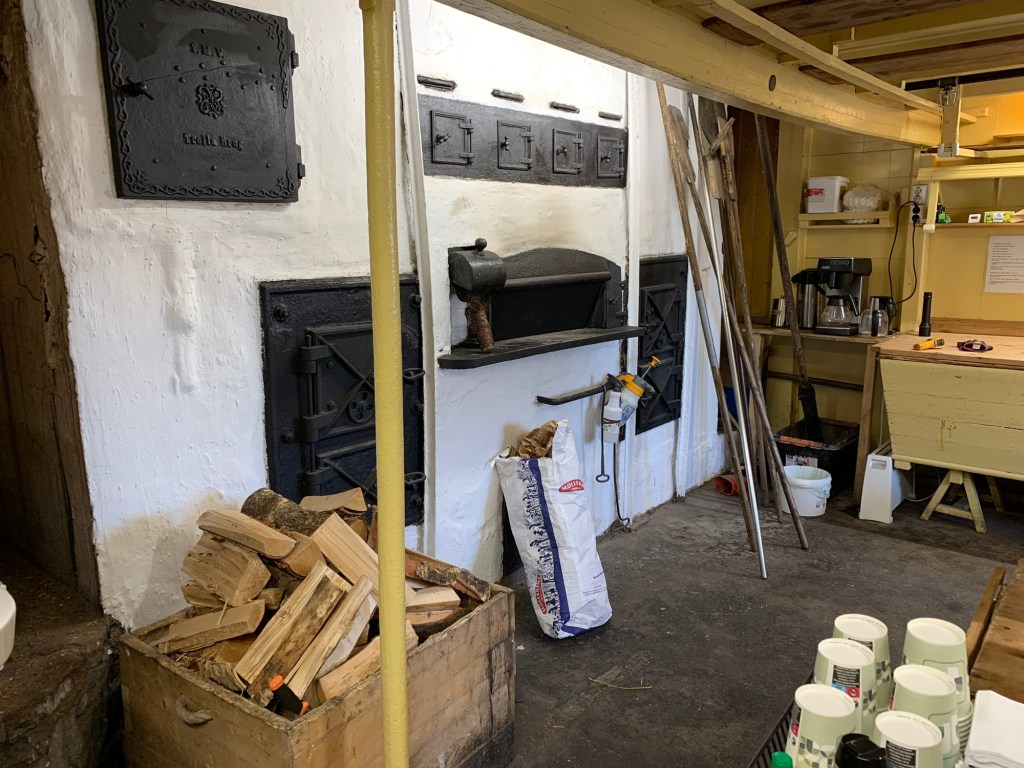
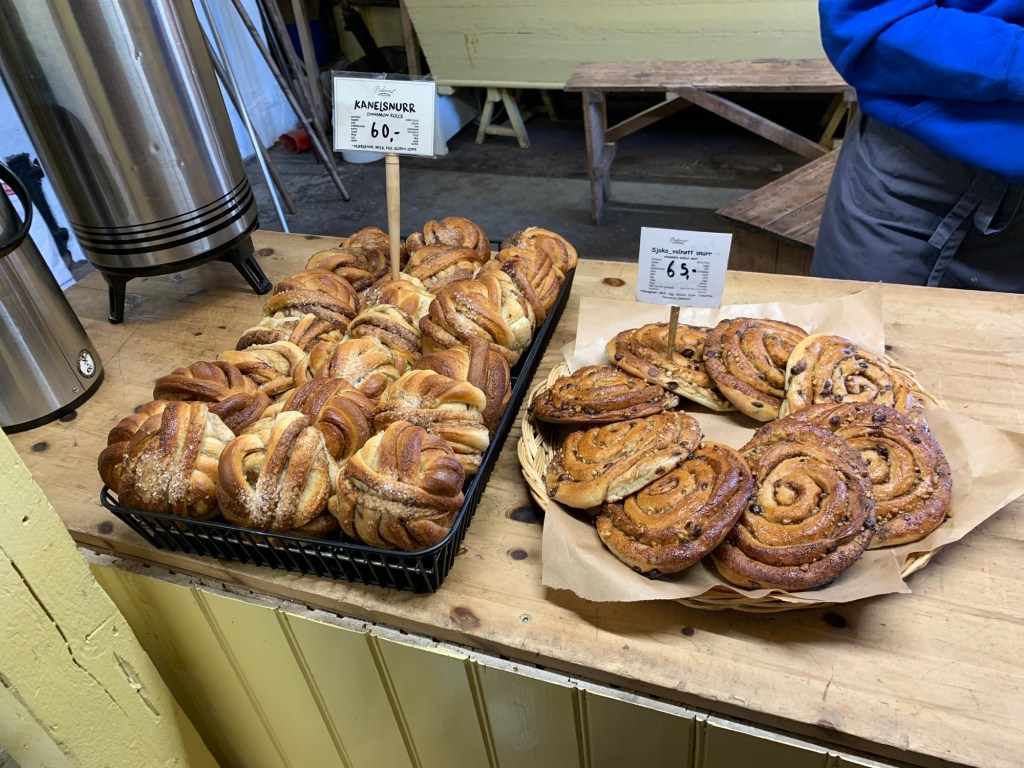
The “Onion Dome” church in Flakstad was built in 1780 and restored in 1938 and the story goes that a Russian vessel ran aground and the locals helped to set it afloat after taking off a lot of the cargo which was a hardwood. Once afloat the Russians left the wood for the village as a way of thanking them. However there was no carpenter in the hamlet. Fortunately one of the ship’s carpenter’s fell in love with a local lady and stayed off the ship and built the church, but with an “Onion Dome” steeple as was his custom. Perhaps the highlight from a picturesque fishing village standpoint was Reine, which National Geographic and other publications put in the top few places of things to see.We spent a short time there wandering the streets and seeing the cod-fish racks and hamlet with a small mini-market. There were many campers wherever parking permitted and on the roads as there are no hotels, only a few Bed and Breakfast places and some cabins for rent. The hamlet of Å was terrific. We decided to do exactly the opposite of the other guests on the two Cunard coaches and start at the bakery where we enjoyed delicious cinnamon buns made daily there in ovens dating back to the 1800’s and some hot chocolate and Kokos Baller – a coconut / chocolate exterior with marshmallow interior – at outside tables in the sun. They gave us the receipt for the buns:-
Mix together in a stand mixer bowl:-
⁃ 500g White Flour; 75g Sugar; 7.5g Salt; 6g Cardamon; 25g Yeast;100ml Milk; 150ml Water and 2 eggs. Mix the dough then add 75g Butter and mix until you get an elastic dough. Let stand 30 minutes.
⁃ Roll out the dough into a rectangle on a floured surface. Mix the filling – soft butter, ground cinnamon and sugar and spread evenly across the dough. Roll up the dough and cut the roll into 1 cm slices, let rise in a warm place 30-40 minutes.
⁃ Bake rolls in a pre-heated oven until browned 15-20 minutes.
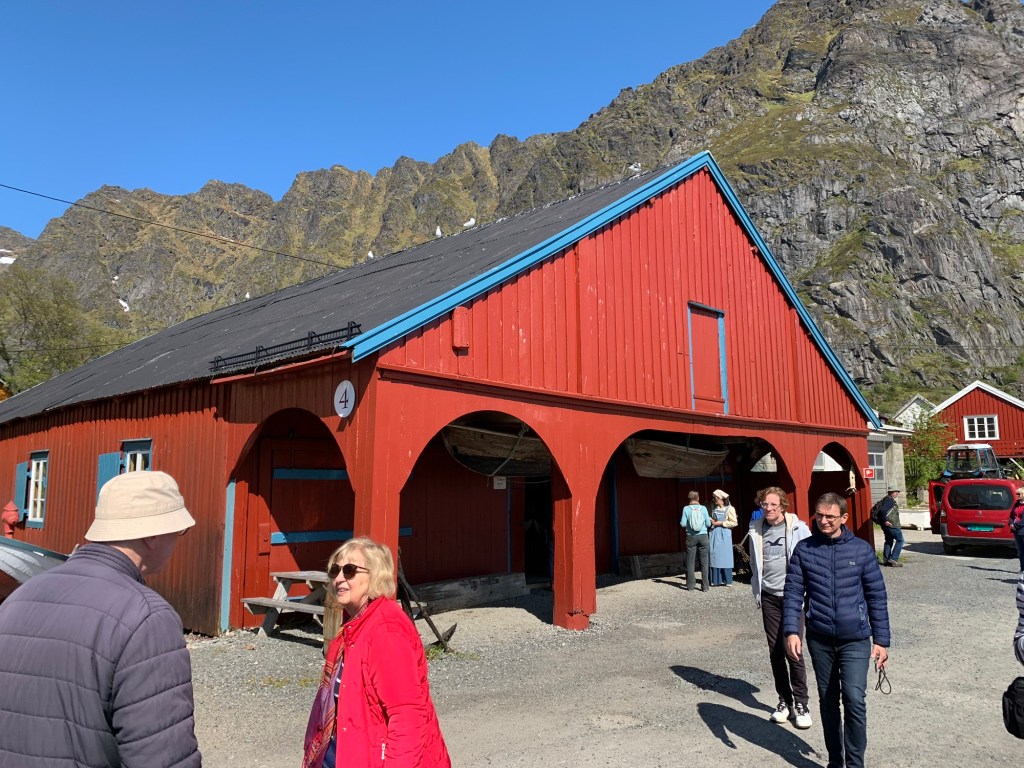
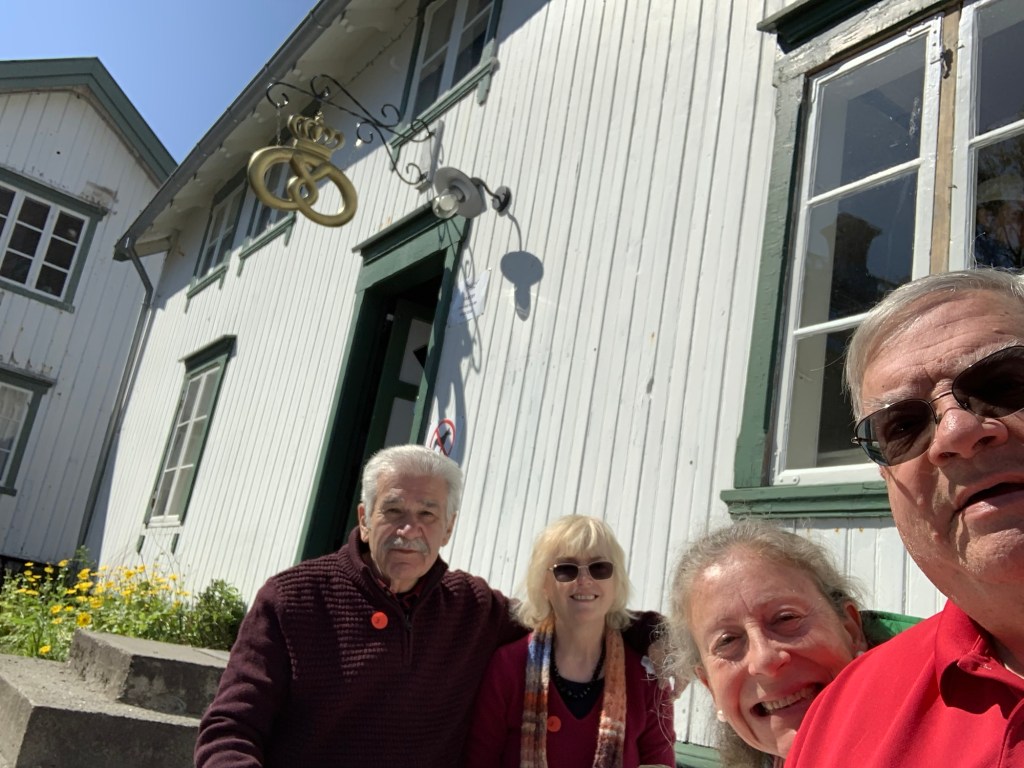
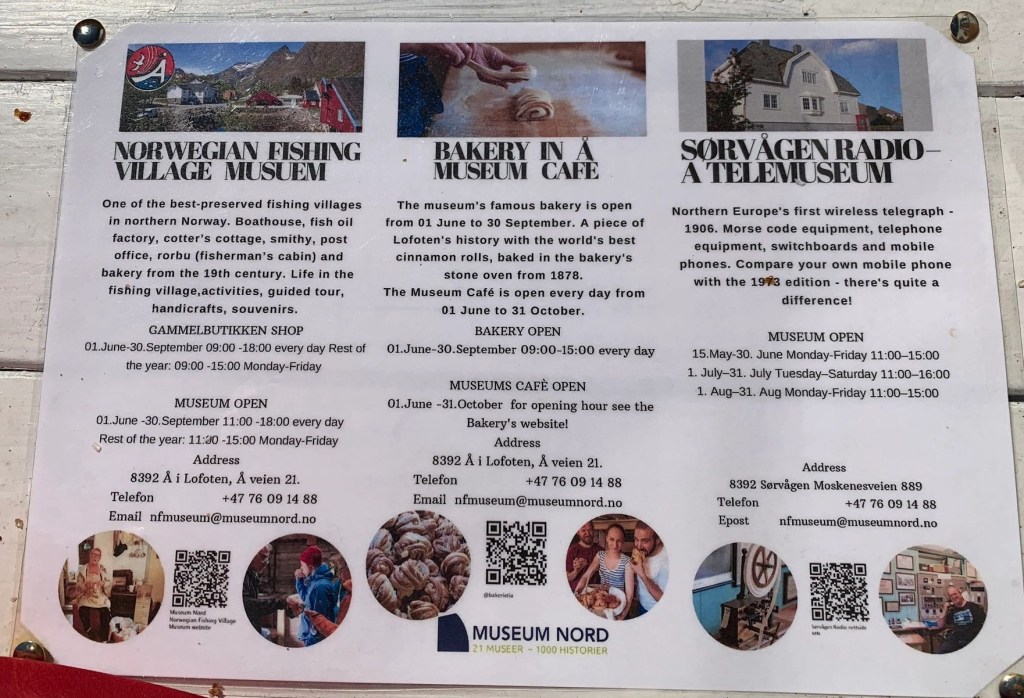
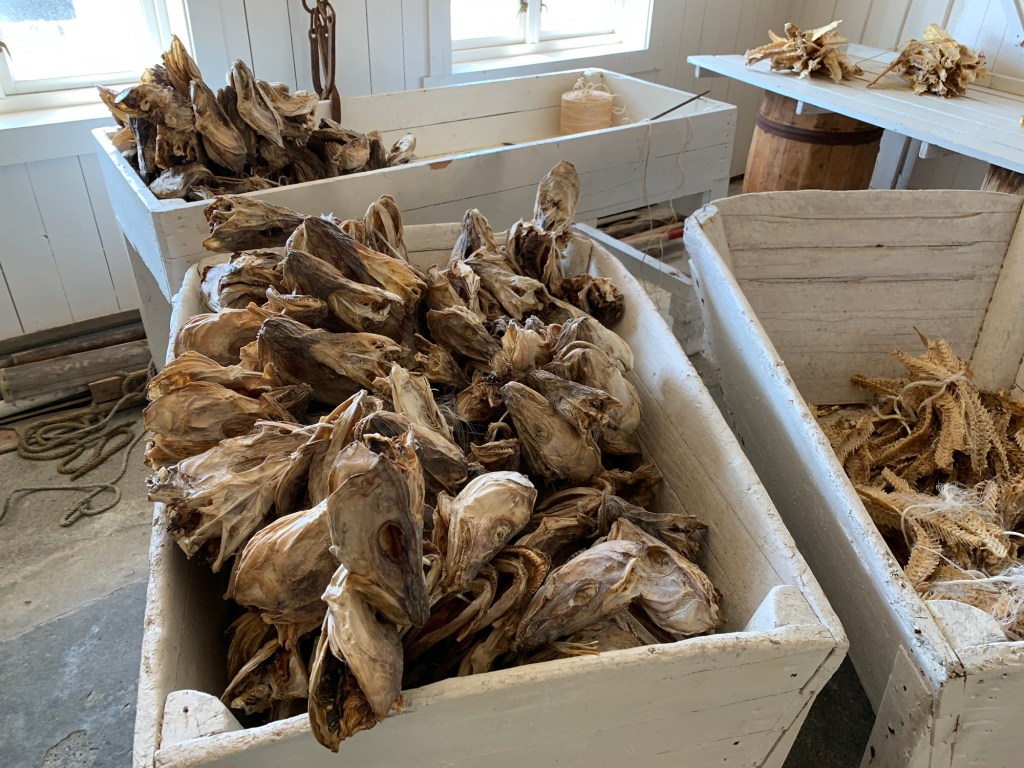
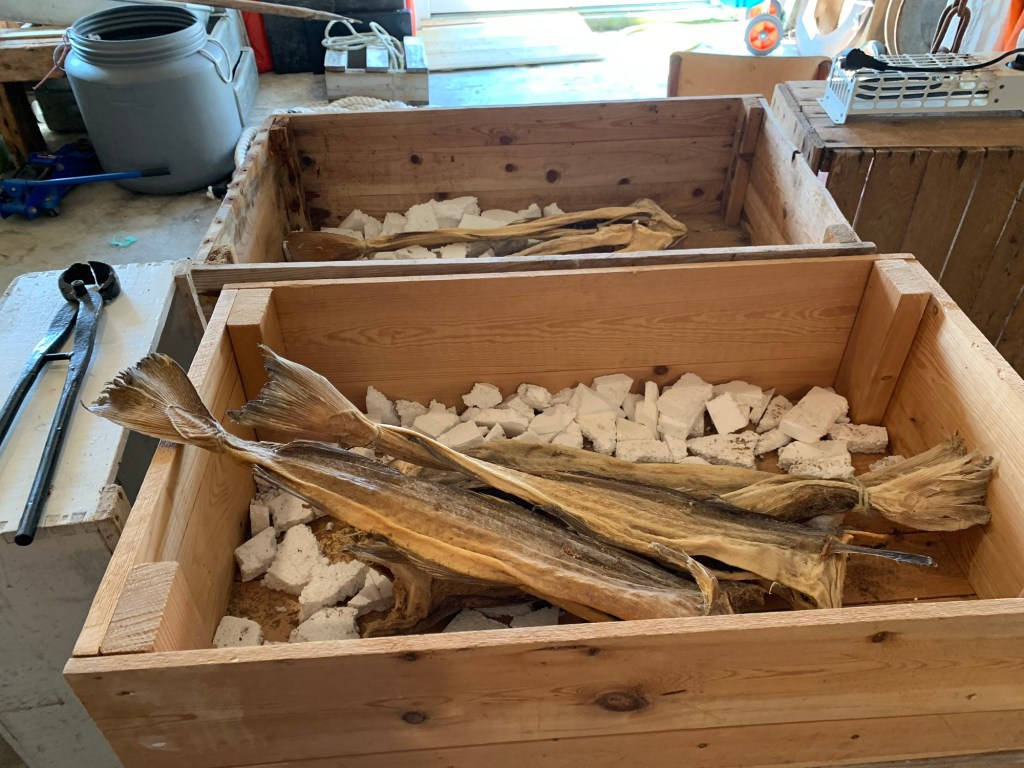
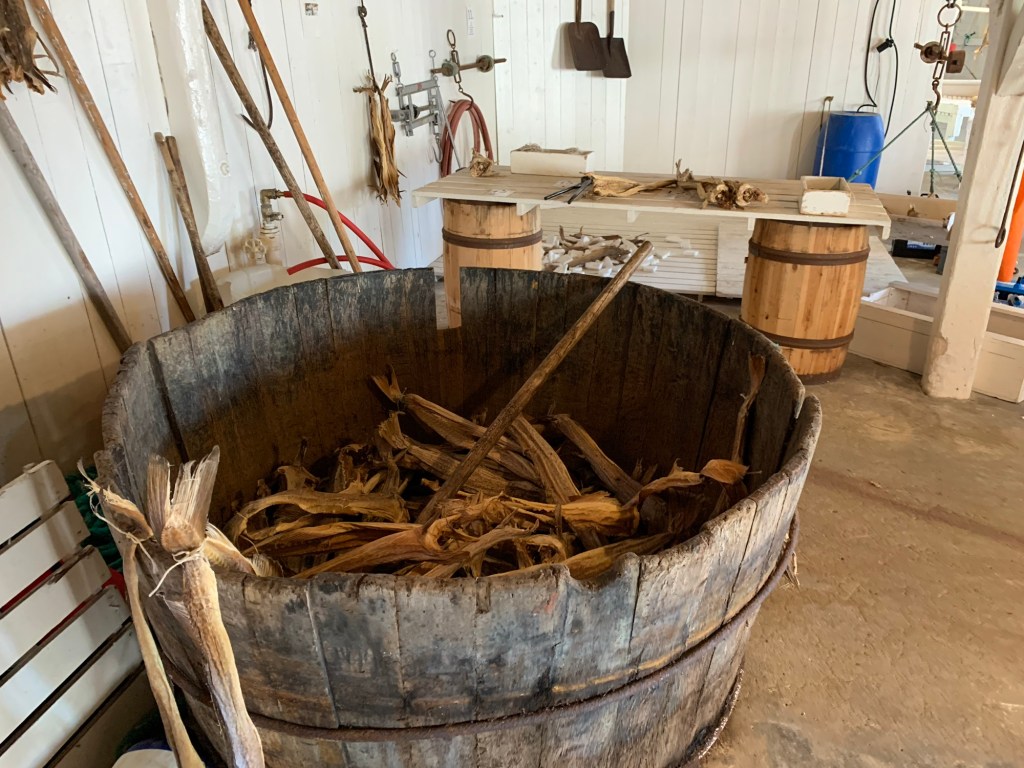
We then visited a shop and finally went to the cod museum – unique in the world. Lunch was at the Brygga Restaurant on the Brygga wharf, established in 1934. It was on two levels overlooking he water and a good buffet lunch was served. We did not leave until after 2:15PM so did not get back to Leness to catch the tender until 4:30PM even though the “Last Tender” was advertised as leaving at 4:00PM. As we were on a Cunard tour, the tender waited for us and all got aboard safely.
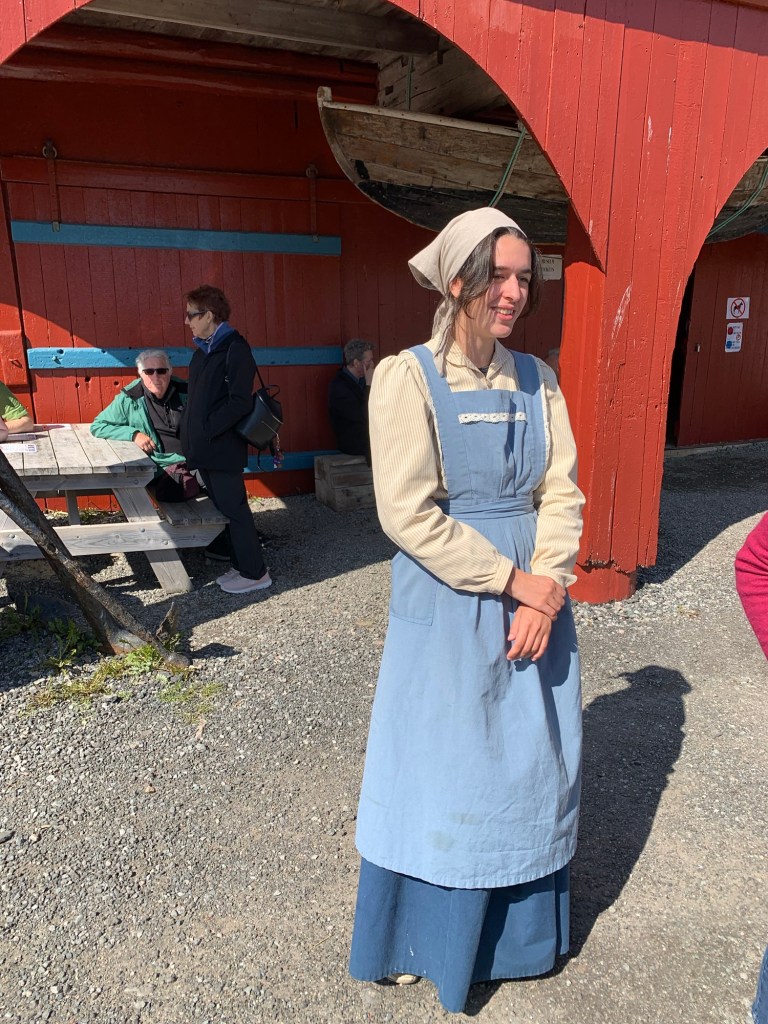
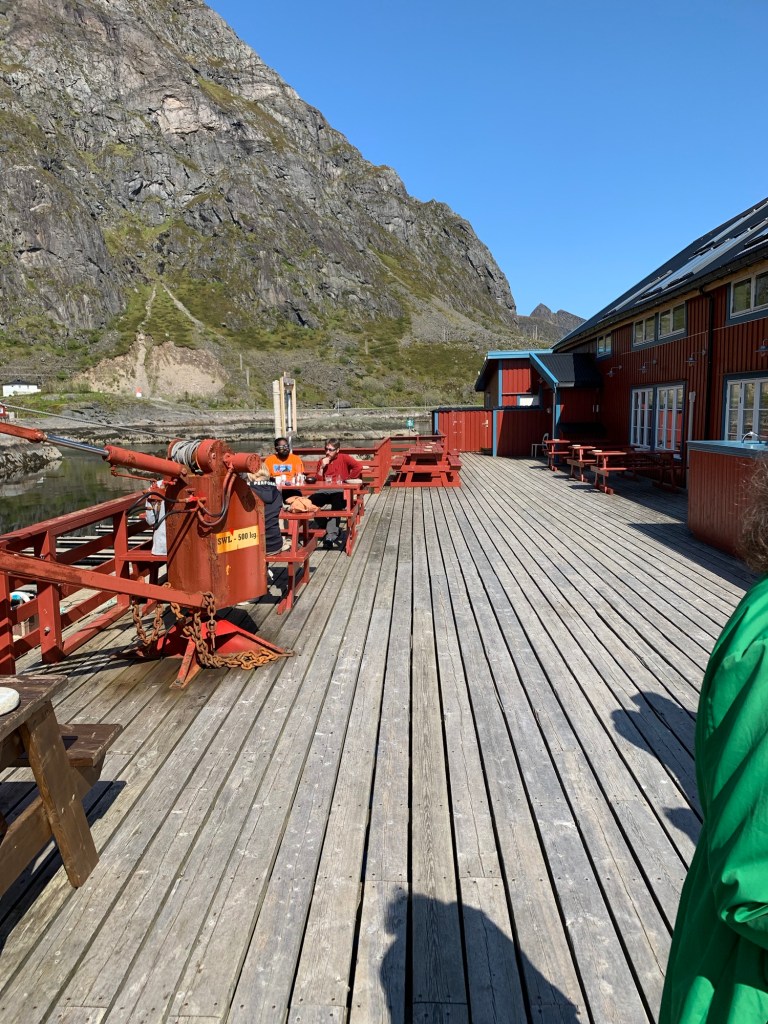
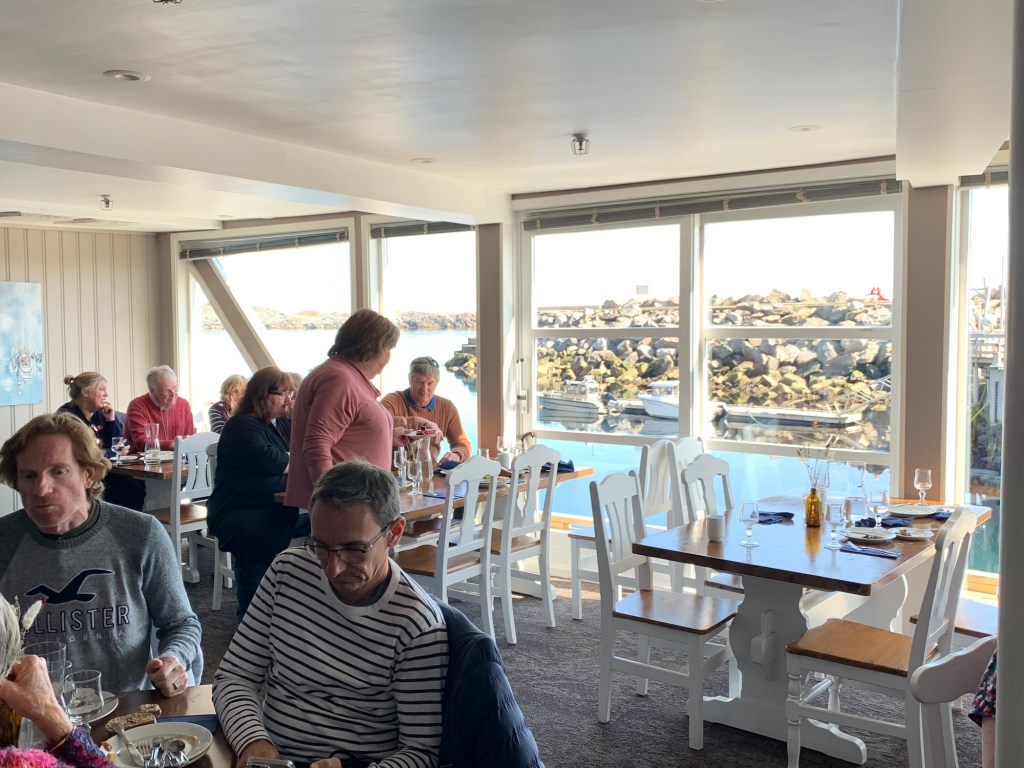
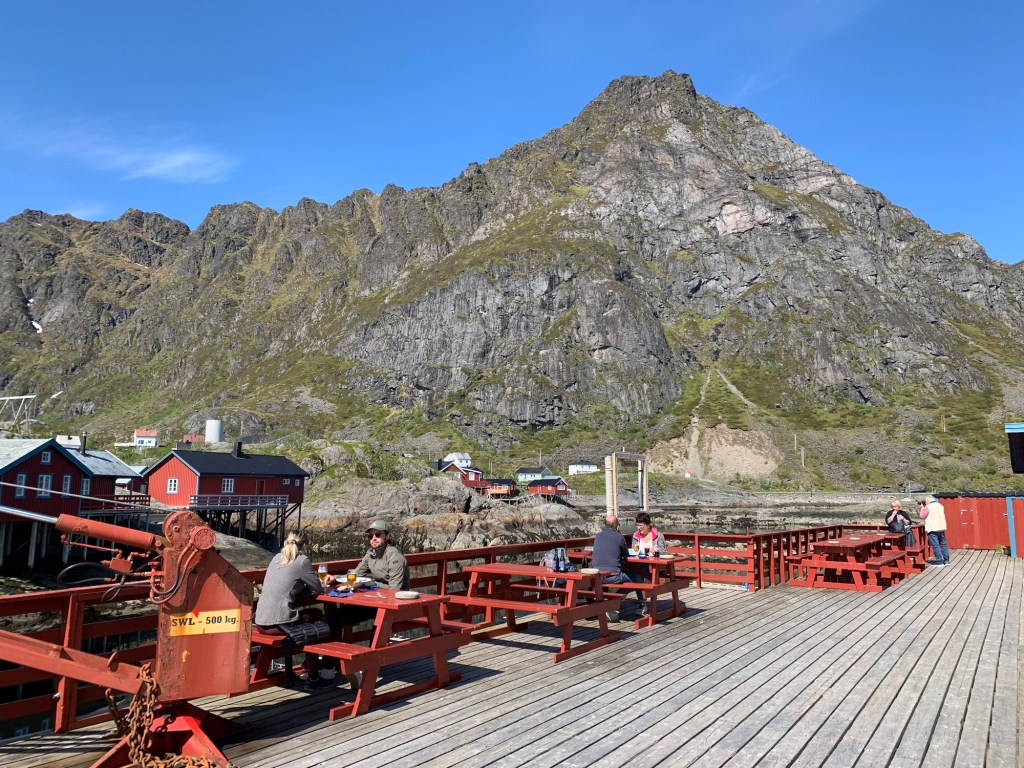
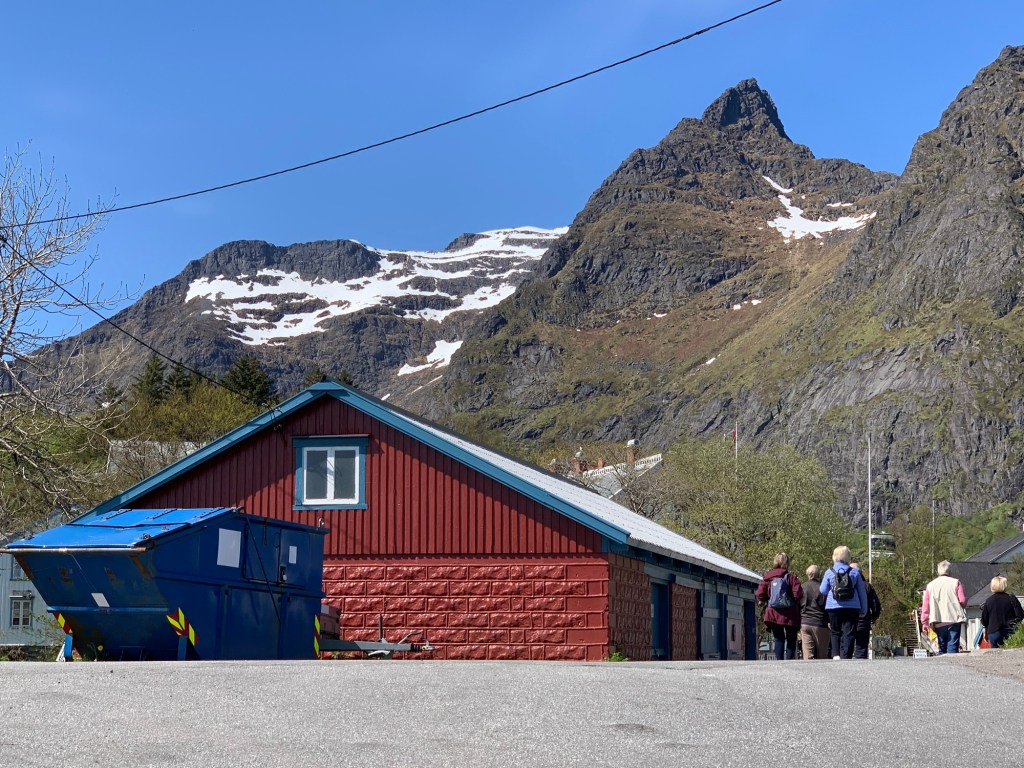
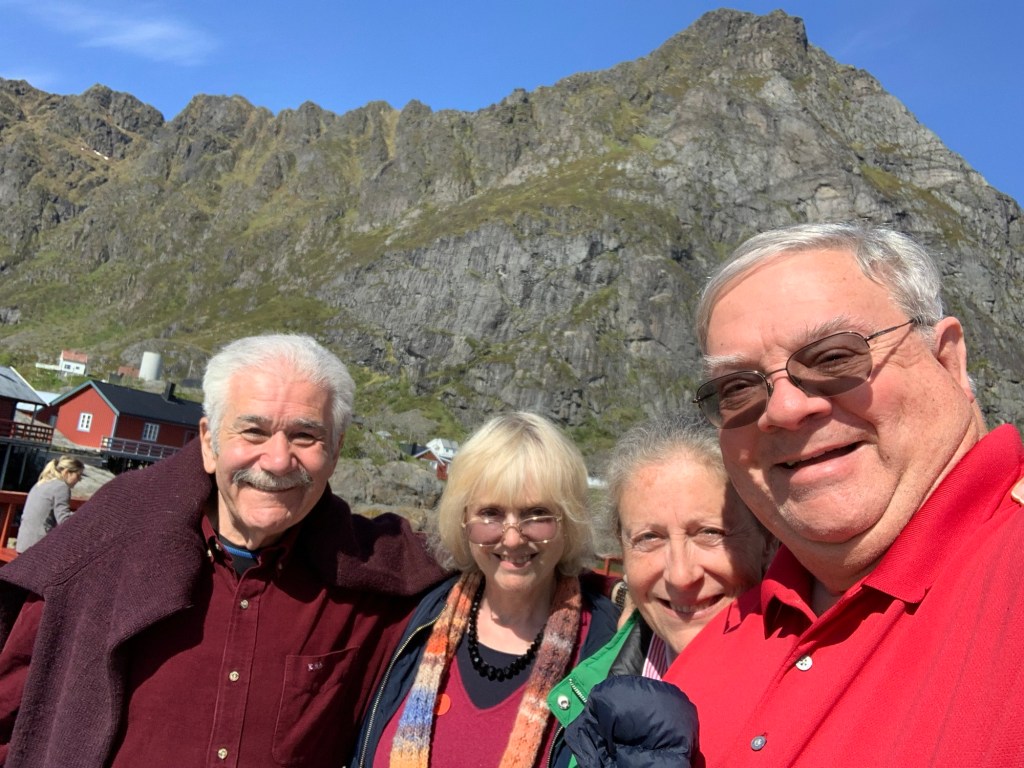
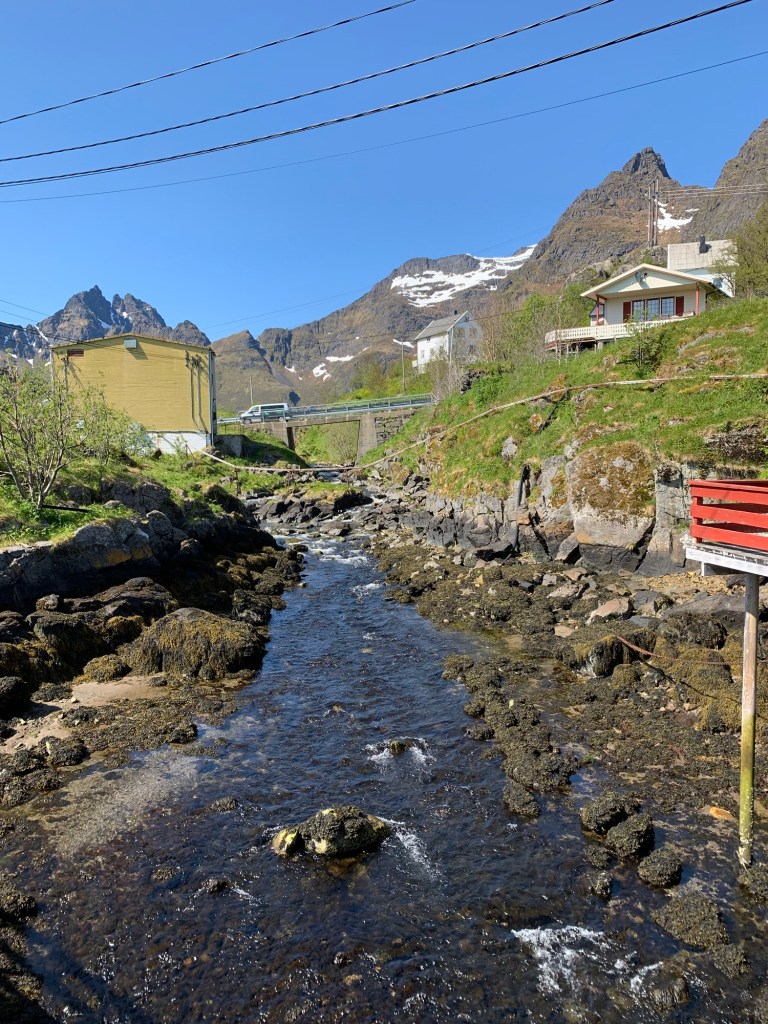
Each corner that we turned was even more spectacular than the last. It is truly one of the most picturesque places one could hope to see anywhere with the snow capped mountains, dropping vertically to the pristine fjords and lakes, the verdant countryside and Red or Ochre or white houses and barns. A definite must for all to see and definitely take the “Wonderful West Lofoten and Lunch” tour.
Returning to the ship we enjoyed a cup of tea, changed for dinner and attended the evening show with the combined orchestras and the Cunard singers paying tribute to music from the Cinema.

 Roger & Anne Travels