Sunday May 5, 2024 – La Coruña, Spain
Our day began early as we arrived at the first port of call for the Queen Anne, which was the Galician Port of La (or A) Coruña in Northern Spain. The Galician language is still used but unlike other parts of Spain where it is more of a political tool, here it is just another Latin based language (not Celtic) that is taught in school, used by locals, but Spanish is the main language. It has some vestiges of Portuguese dating back to when Galicia and Portugal were one country.
We docked Starboard to dock, RHS drive and for the first time, no tour tickets were given out. We were informed that we had to be at bus 12 at 9:30 AM for the tour “ Walk the Pilgrim’s Way”. We were to drive to a certain location in the coach, then walk 5 kilometers of the “Way” – the road taken by pilgrims that walk for miles to reach Santiago the Compostela Cathedral and thus the tomb where the mortal remains of Saint James reside under the main altar. After completing the walk we then drove to Santiago and visited the Cathedral before taking the 1 hour Coach ride back to La Coruña and the ship by 4:30 for a 5:30 departure.
We boarded Coach 12 and greeted by the driver Fidel and the excellent guide – Emma and after the 40 people on the tour were well seated we made our way to the small village of Saleada and the restaurant – Raxeria Esquipa Parrillada to pick up a “picnic lunch” (baguette with jamón serrano and a bottle of water) and visit the toilet before the walk. The meal was to be consumed there at 10:00 AM or after / during the walk as eating on the coach was prohibited.
On the travels in the coach, the guide told various interesting stories and piled us with facts and figures, some of which are:-
1. In Galician there are 1 million cows and 3 million people.
2. There is a big white building near the port with three bells on top. It is one of various tobacco factories. In earlier times tobacco was brought over from the USA and made into cigarettes, and sold on the black market. The authorities and monarch soon got wind of this and made it legal thus getting taxes and creating many jobs, principally for women, as they had smaller fingers to better roll cigarettes.
3. The main food is beef based and it is very difficult to find a vegetarian meal. Indeed at restaurants, vegetarian means no cow, but pork, chicken, eggs etc are all vegetarian food!!!!
4. The early settlers in the 14th century to the area planted a lot of eucalyptus trees, which abound as they were fast growing and produced the wood for the wood products industry, mainly paper products.
5. After the death of Jesus, his apostles went to different parts of the known world and preached Christianity to the local population. St. James, the brother of John came to this “end of the world” area of Galicia. When the belief was that the world was flat the Atlantic Ocean was the end of the world. After many years, he was not able to convince that many people so returned to Jerusalem and was the first Apostle to be killed / beheaded there. Years later his remains were brought back to Galicia and buried with a small chapel. However the woods grew up around the site and eventually a bishop entered the woods and spent 3 days without food or water looking for the remains. A lightening strike led him to the location and over time a Cathedral was built, his remains buried in the crypt and today some 450,000 people walk the pilgrimage. In early days the Cathedral was not the end of the pilgrimage, but the water’s edge at Finisterra and picked up a scallop shell to prove that they completed the walk. Thus today the signs all have shell symbols.
6. There are 4 types of pilgrims – A) Those that do it for religious purposes as a penance. The majority of the pilgrims are of this type. B) False Pilgrims that are very poor and take advantage that along the way people must open their homes to food shelter and wine. This type of false pilgrim does it just to get these benefits as they are homeless . C) As punishment, where these people had to walk in chains the entire length. If prostitutes were found taking advantage of the pilgrims, they had their noses cut off as punishment. D) The final group are very rich people, who feel that they should do the walk but instead hire, for pay, a person to do the pilgrimage for them. Today mostly all are in the first category. The pilgrimage can be done usually walking, but we saw many people doing it on bicycles and a few do it on horseback, but have the issue of what to do with the horses at night.
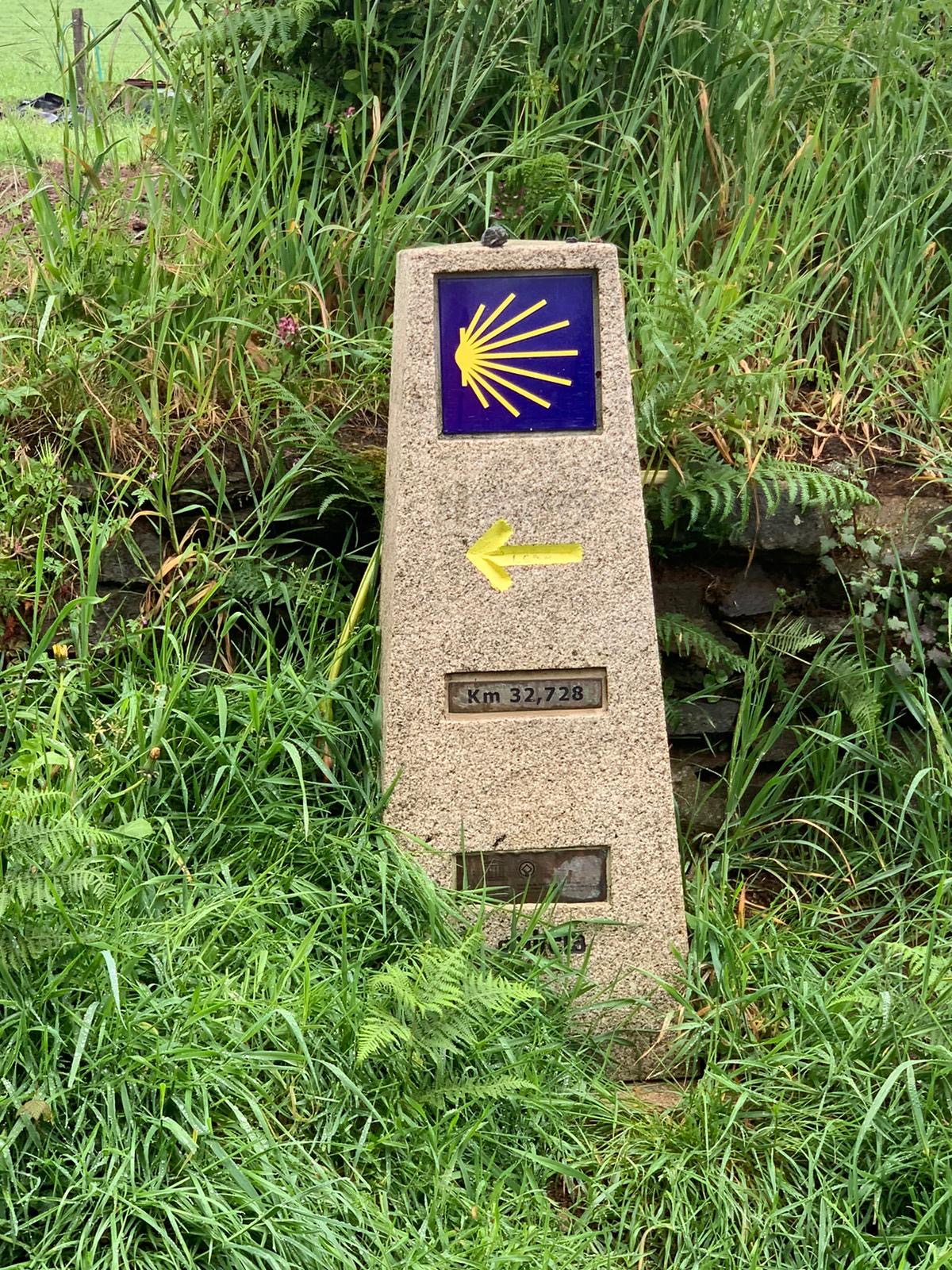
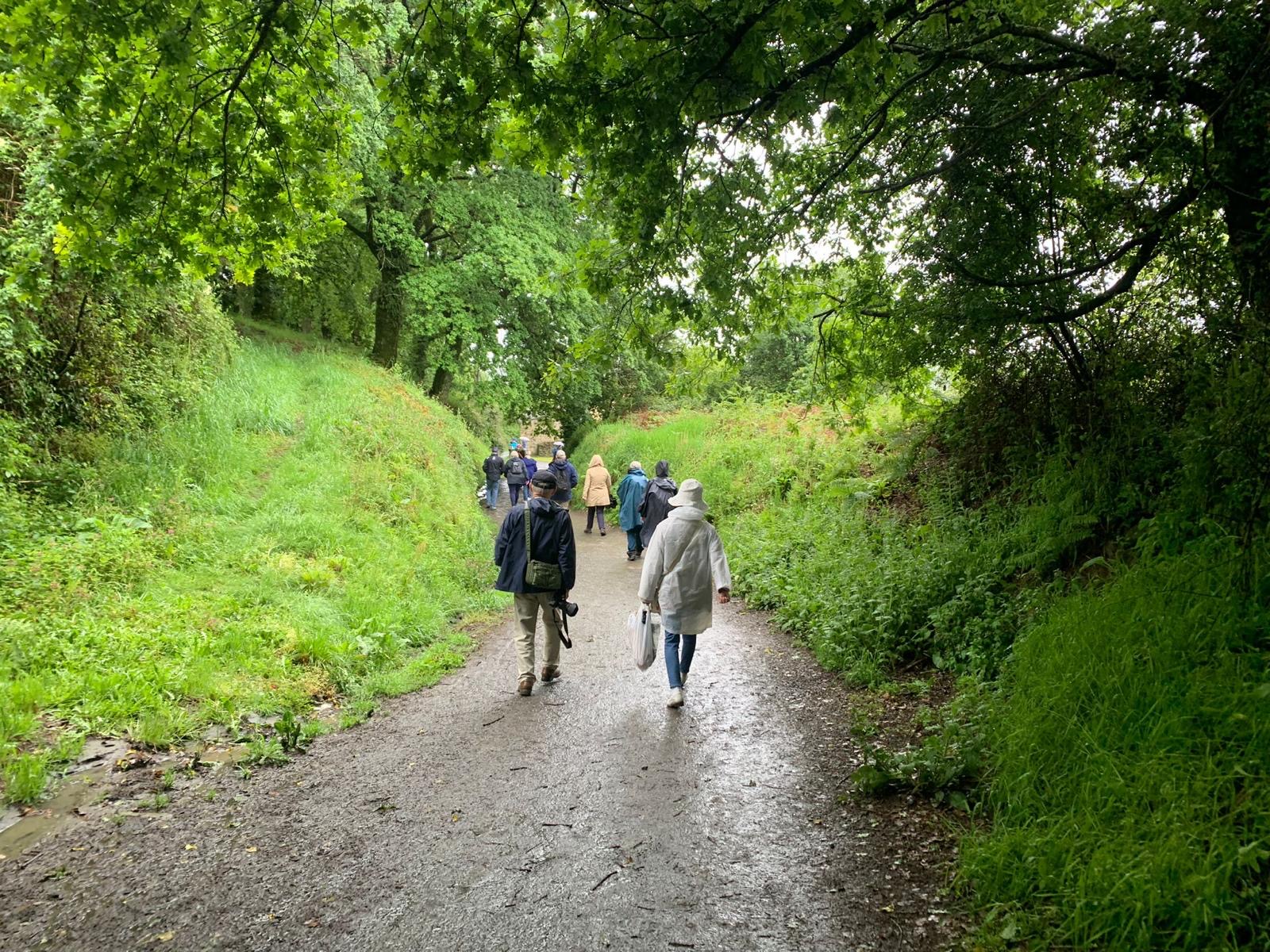
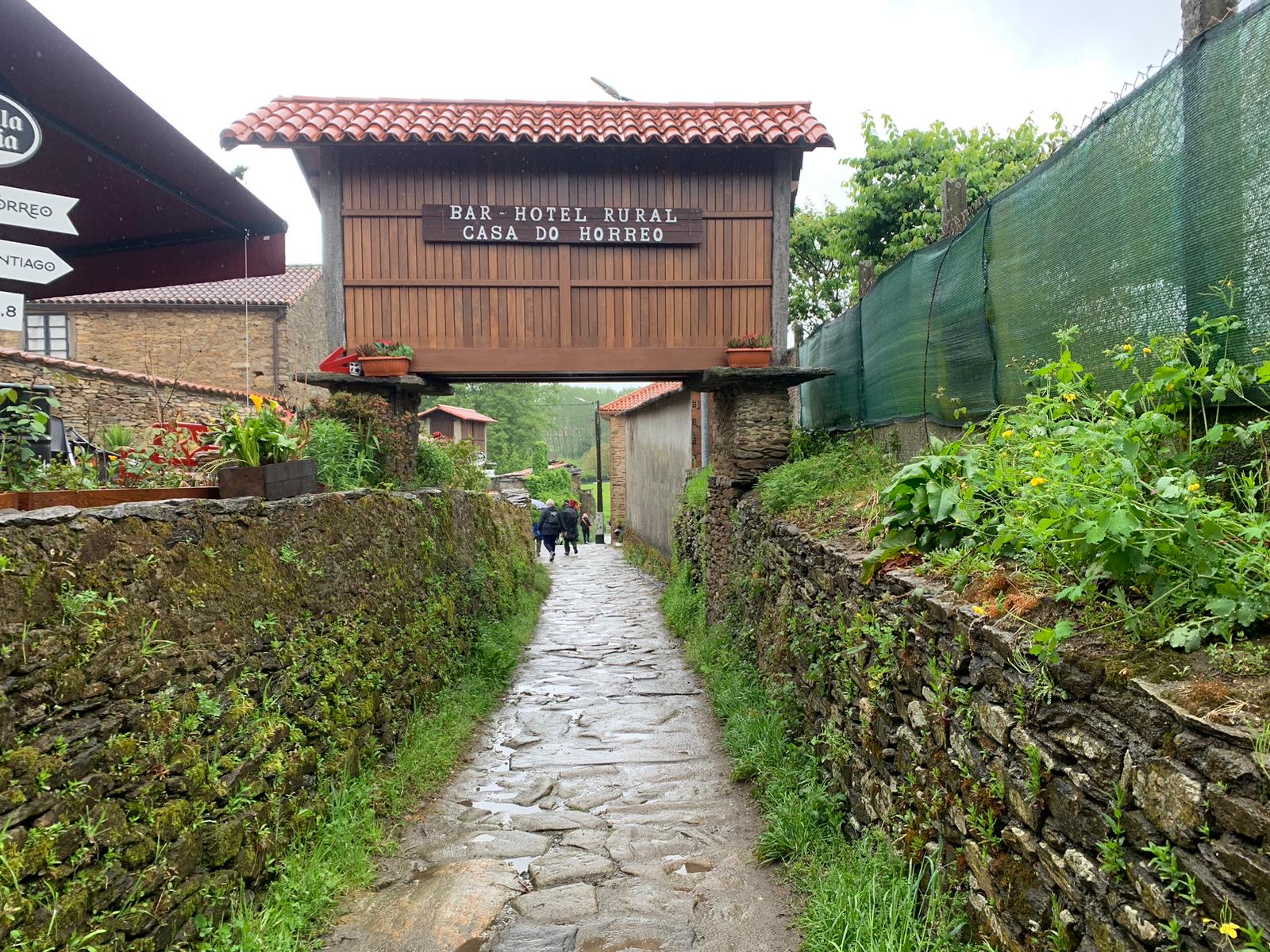
We got to our stop and all got off the coach. It had been raining all morning and continued throughout the 5 Kilometer walk. We found a couple of hundred yards away from where we were dropped, the first of these signs. It looks like a tall mile marker with a depiction of a shell on top, a yellow arrow indicating the way you should travel under that, then continuing down the marker was the number of kilometer / distance to the Cathedral, which in our case it read 32.728 Km. Under that is a UNESCO sign as the walk is protected by UNESCO and finally the word Galicia. There are various routes and Anne and her sisters will be doing the 120 Kilometer walk in September (none of the husbands are joining them)!!! The part we walked was very well signposted and consisted mostly of a 2 meter wide path through the woods, which had some wobble like stones in places but mainly it was hard pack and very muddy with small streams flowing back and forth across the path. We were mostly under the canopy of trees and it was truly beautiful despite the rain. Anne was very patient with my slow pace, but was relieved that my Heart had gone through the 5-hour operation 3 weeks ago as there is no way I could have reached the 1/2 Km mark before. In some areas we had fields on either side and in others we went through villages, crossing roads and going down (easier) and up (harder) the hills until we reached the guide and the coach. There were some half a dozen people behind us, even though I was concerned that we would be last and everyone would be waiting for us.
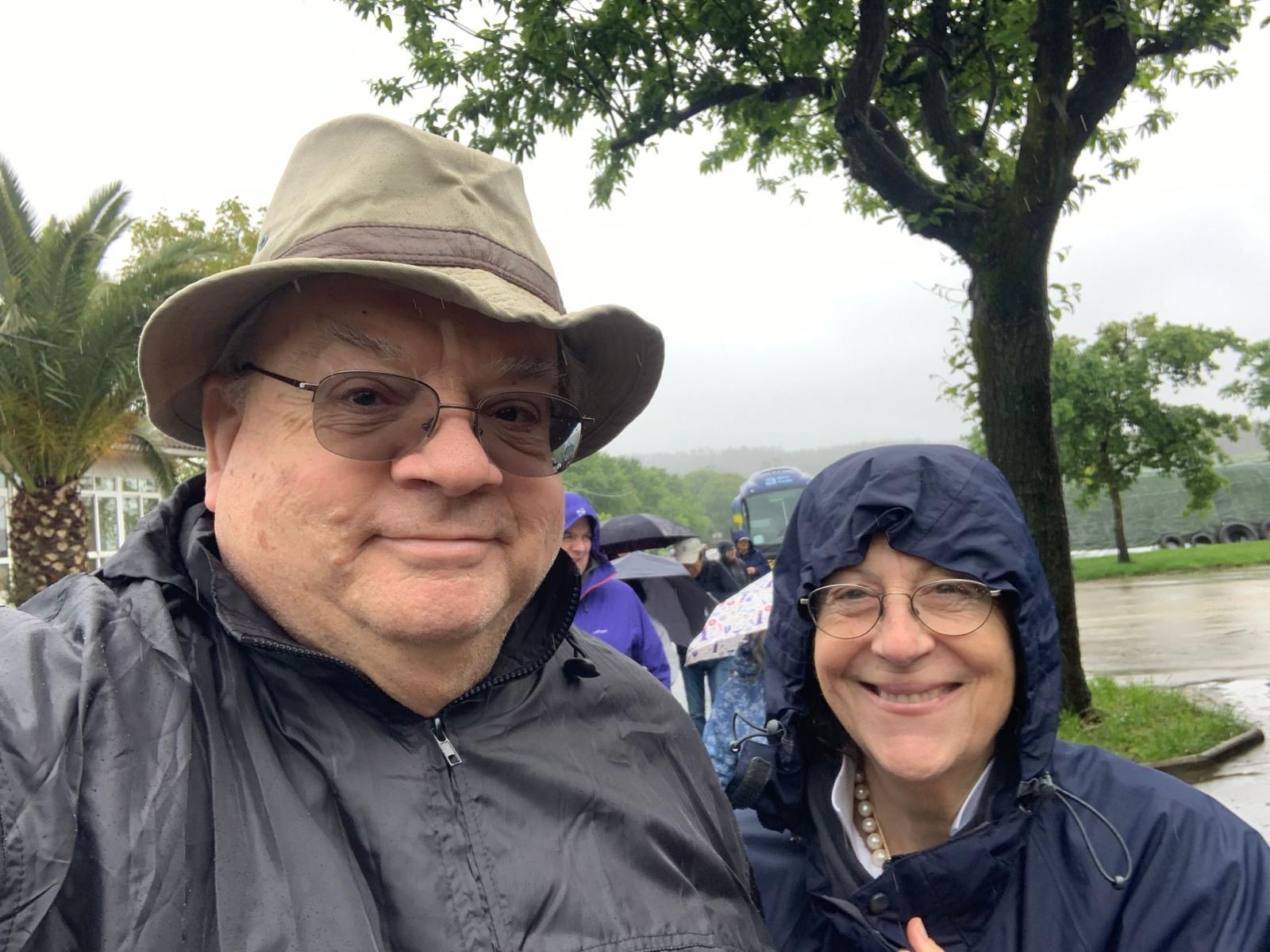
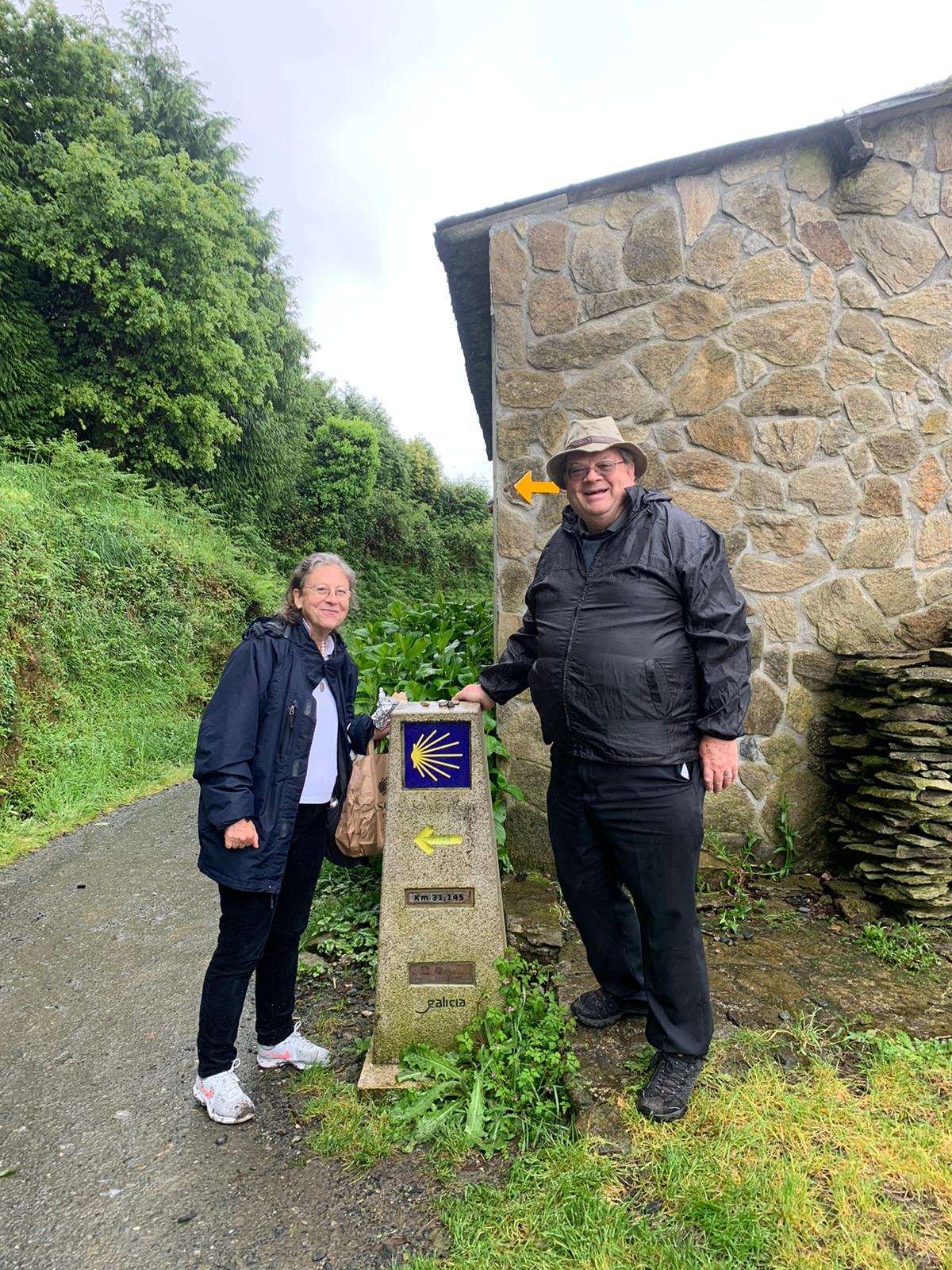
We got onto the coach, soaked with wet feet, but elated at having completed at least a very small snippet of the “Camino”. To qualify for a certificate of completion, you have to prove you walked a minimum of 60 Kilometers. The proof is via a “passport” which is blank at the start and you get it stamped along the way as you pass certain places.
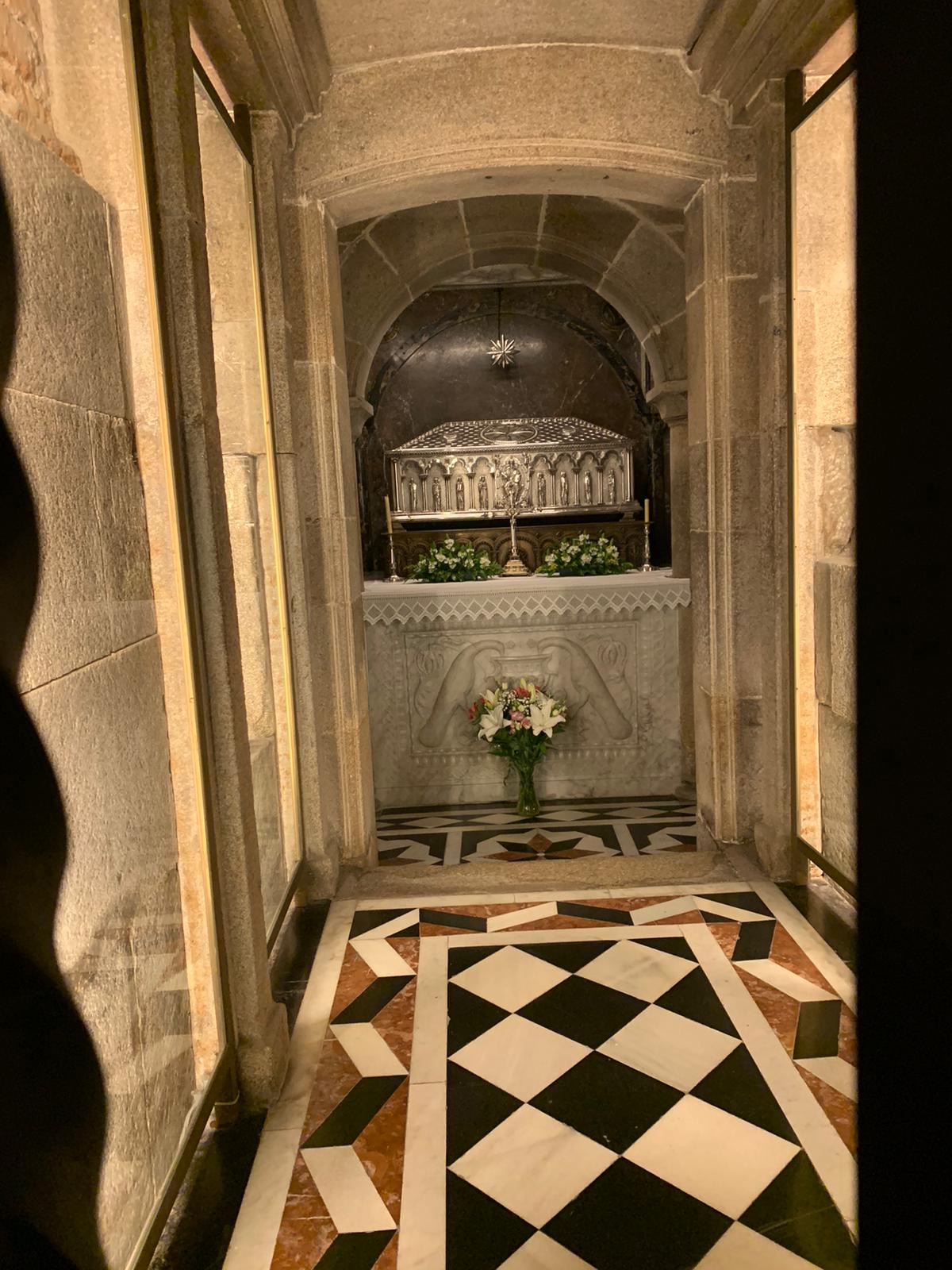
Once all were back on the coach, we drove 20 minutes to the center of Santiago de Compostela (population 100,000) where we walked to the Cathedral (consecrated in 1211) and were given about 2 hours of free time. Visiting the cathedral is very impressive with all the silver and gold, but the main point was joining the long queue to enter the crypt and visit the silver casket where St. James’s remains lie. We went down the narrow steps, stopped at the sarcophagus and then climbed back to the main level of the cathedral, before ascending the stairs behind the altar to touch the head of the statue of the head / bust of St. James, which people have been doing for centuries. No photography allowed in this area on top of and behind the altar.
After leaving the Cathedral, we wandered through the streets looking for a restaurant that had a free table. There must have been 100 restaurants (all selling octopus, which is the staple food of the area as Galicia is the 2nd largest consumer of octopus after Japan) in the area of the Cathedral, but all were full as it was 2:30 and lunch time. We eventually found a table outside and were soon served Estrella beer, Langostinos a la plancha, Gambas al ajillo, torta de batata and bread. Delicious. We soon got chatting to the man at the next table who was alone, although as other pilgrims passes by he greeted each one. He explained that he had done 240 kilometer walk in 10 days and having arrived early, had time to shower and change. He is an American living in Washington DC working for the US Government in the Justice department. We were 3/4 of the way through the delicious lunch when Anne looked at her watch saying it is 3:20PM which was the allotted time to be in the main square to meet the guide to return to the coach. We rapidly paid our bill, bid adieu to the chap at the next table and rushed to find the guide and the rest of our group, having assembled in the allotted place, now walking toward the coach. We ran and caught up with them and were in the middle of those returning to the coach.
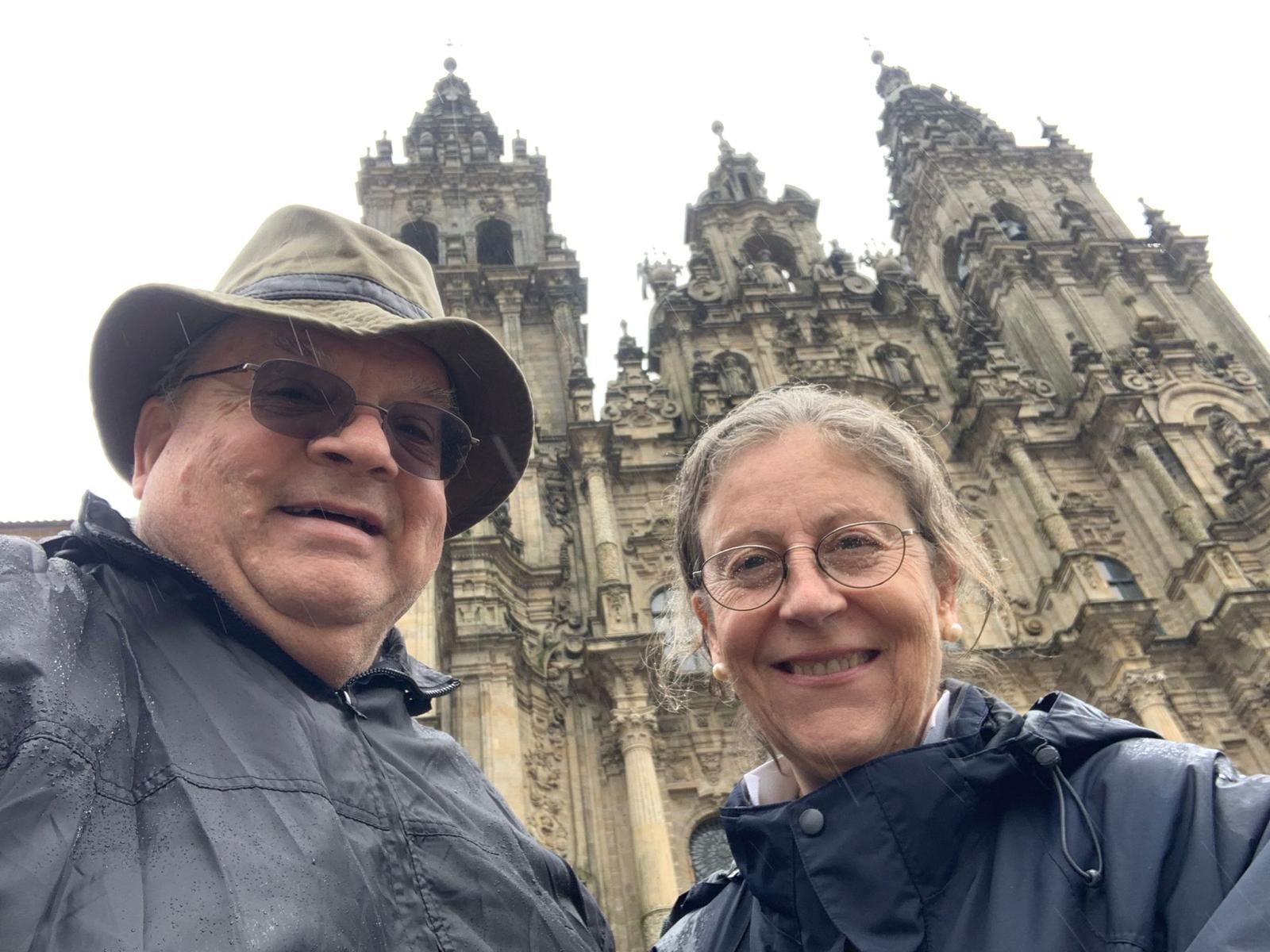
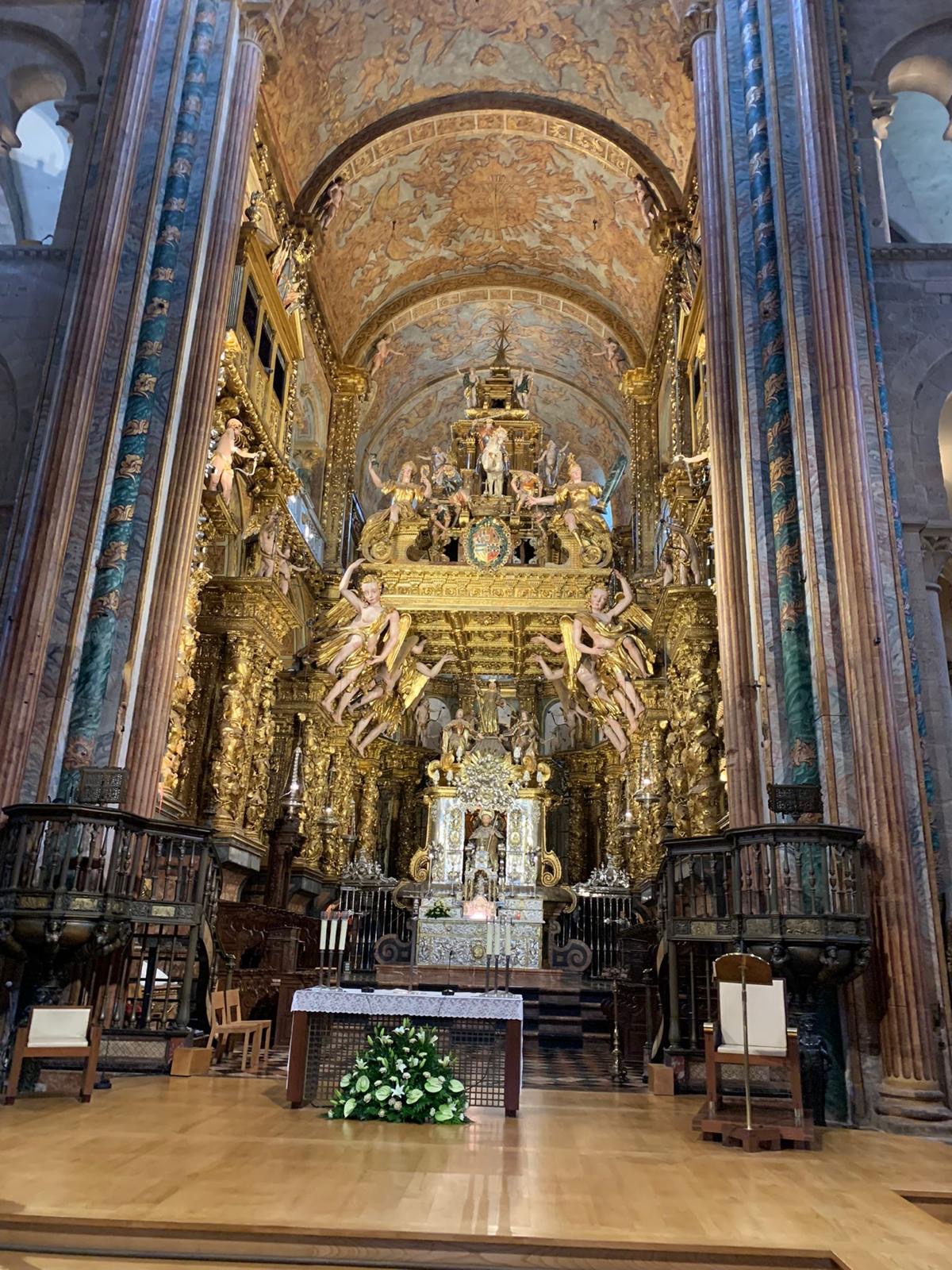

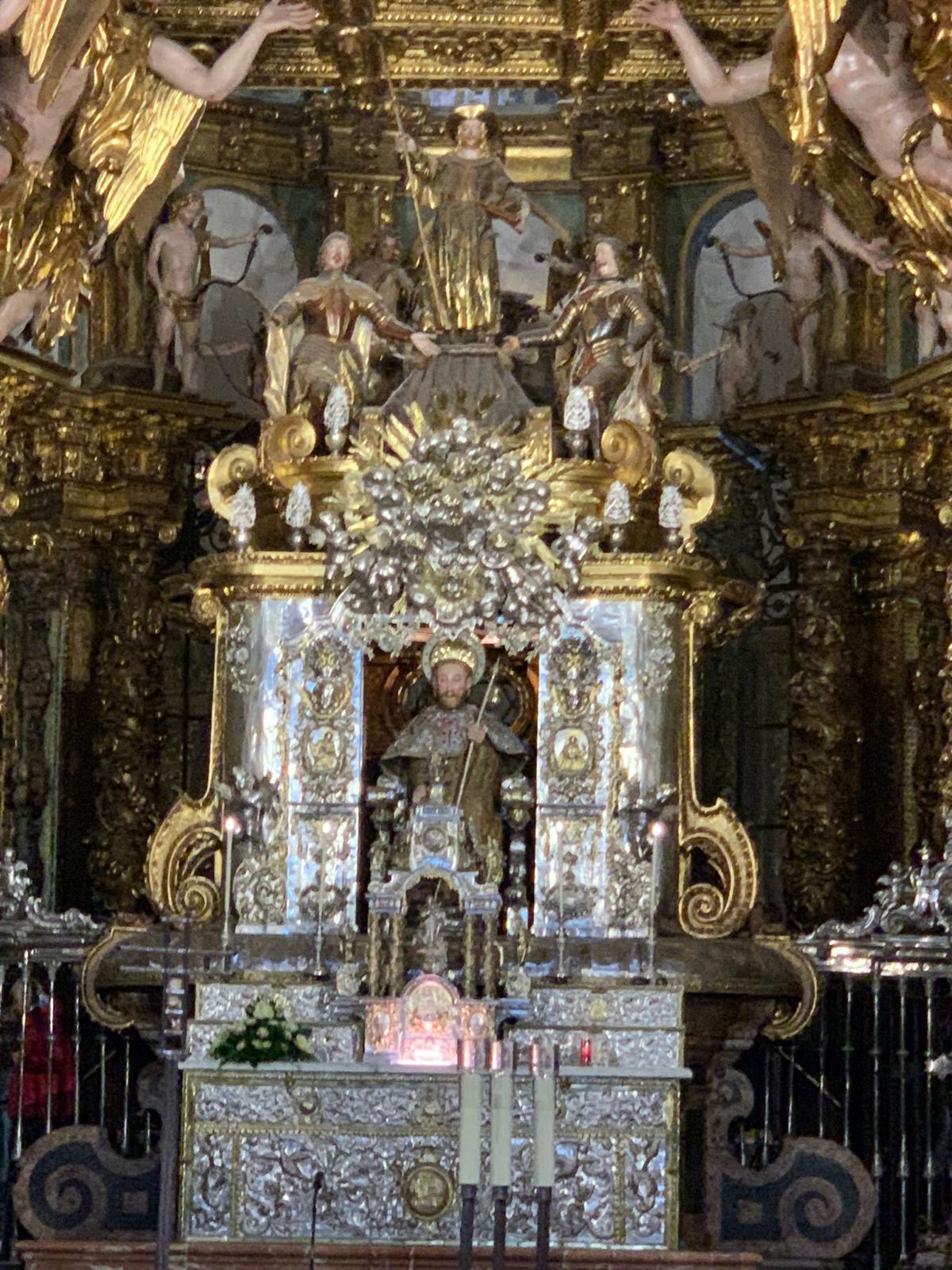
After the 1 hour return to the port, by which time it was very sunny, we boarded the ship and went to the cafeteria for a cup of tea, which then turned into dinner and then off to the theatre to hear the outstanding tenor, who also does musical theatre on the West End – Russell Watson, who will do 4 performances, two today and 2 tomorrow. All in all a really terrific day. This is the first of three stops in La Coruña that we will be making during this voyage. We move our clocks back an hour overnight. One final note of interest is that while the ship is in Spanish waters or docked at a Spanish port all beverages served on board are subject to a 10%VAT.

 Roger & Anne Travels