Tuesday May 14, 2024 – Funchal, Madeira, Portugal – Day 012
The start of a terrific 2 day stay in the volcanic island of Madeira. It is an autonomous region of Portugal and an archipelago comprising 4 islands off the coast of Africa. It is known for its fortified wine, flowers and embroidery. It is known for its spectacular fireworks display on New Year’s Eve. We were here on the Queen Elizabeth on December 31, 2017 and watched the spectacular fireworks display on that night from the ship after a formal meal with champagne. Some fireworks came from various places on the land in the city of Funchal while others were set off from boats at sea. We were between the two and is certainly a spectacle not to be missed if you can make it. From what we remember, after the display was over and the fog from all the gunpowder lifted we could make out what appeared to be a couple of fires in the gardens of houses on the mountain. The display is bigger than the one in New York.
The ship docked, Starboard to dock and we were soon aboard the coach for our tour of the Farmer’s Market and Botanical Gardens. The guide – Fernando and driver – Fidel on Bus 1 were excellent. Fernando is a French linguistics professor at the university who had an extensive knowledge of the flora of the island and whose English was impecable.
Funchal has a lot of tourism with 80 hotels and 22,000 beds which over New Year are completely booked together with various ships, inflating the population of the city (usually 110,000), by 50%. The Island population is about 1/2 million. One of the best known locals is the footballer Cristiano Ronaldo dos Santos Aviero (Feb 5, 1985 -) who was born in Funchal and has a home we passed near the port where his mother and other family members live on various floors of an apartment building totally owned by him.
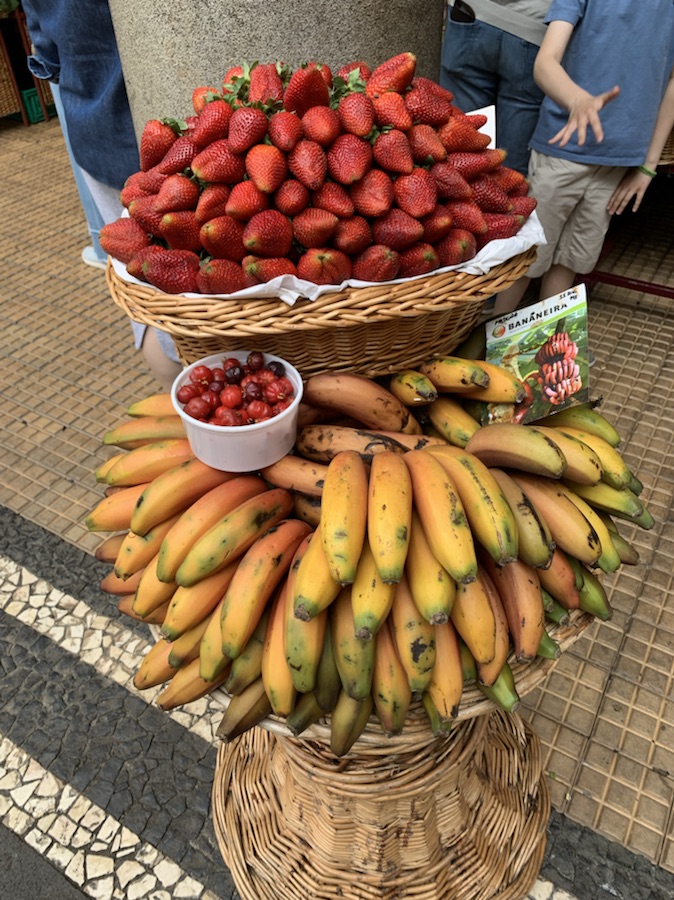
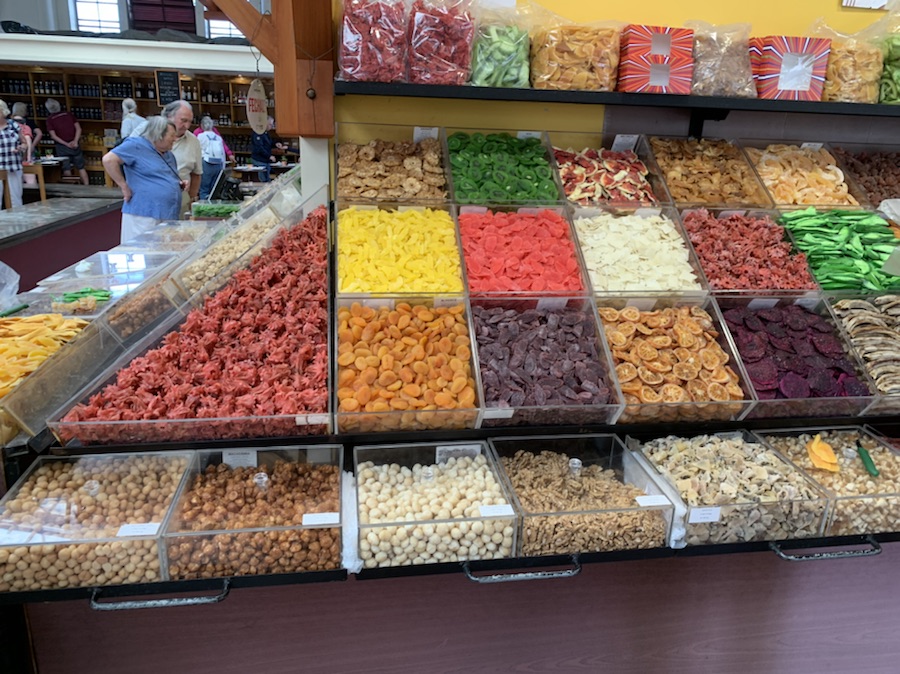
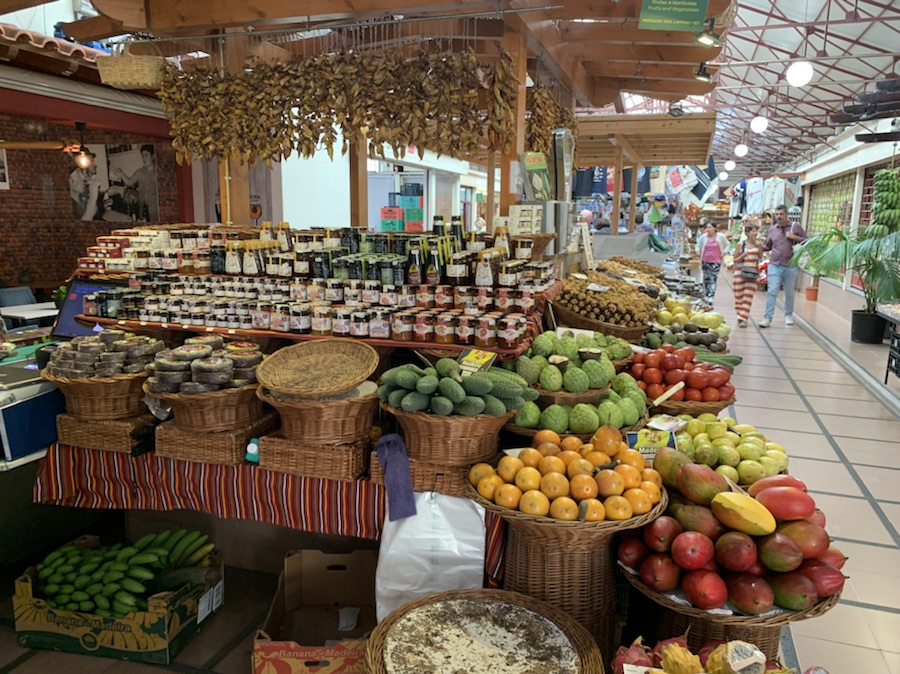
We stopped at the Farmer’s Market where the ground floor is dedicated to fish and the other two floors to vegetable, flowers, fruit and other odds and ends. After tasting some of the local fruits we had some free time to wander around the market. We found a very interesting group of stalls and purchased some fresh ginger covered in cinnamon as well as a bag of figs covered in cinnamon and other dried fruits (bananas etc). By the time we had tasted and bagged all of these, we had a cursory view of some of the rest of the market, but had to get back on the coach to go to the Botanical Gardens. Here our guide was absolutely brilliant explaining all the different varieties of plants that grow in what used to be a private home and garden of the largest sugar producer on the island, which is where Madeira first got it’s wealth. The next phase was fortified Madeira wine and finally tourism today is the fuel that drives the economy (with 22 flights a week to / from the UK and 20 to / from Lisbon). However 25,000 tons of bananas are produced locally (6 varieties) of which about 22K tons are exported to Europe. The Botanical gardens were spectacular and after much explanation from the guide we were given an hour or so to wander around the gardens. A truly “must see” if you are ever in Madeira. Madeira is very mountainous due to the volcanos , and black sandy or no beaches, so many people have weekend homes on the nearby island of Porto Santo where there are beautiful white sandy beaches.
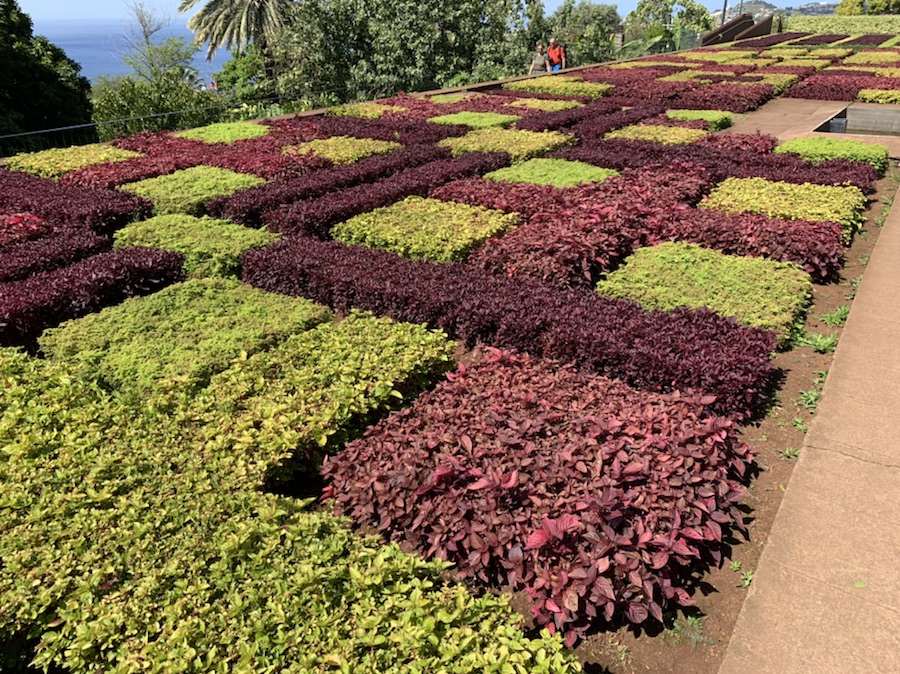
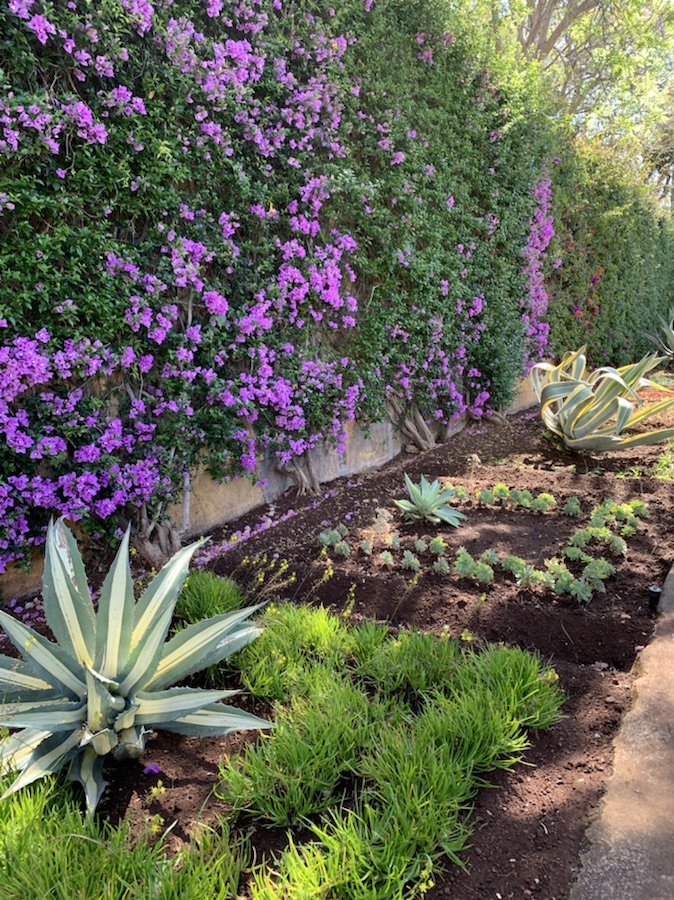
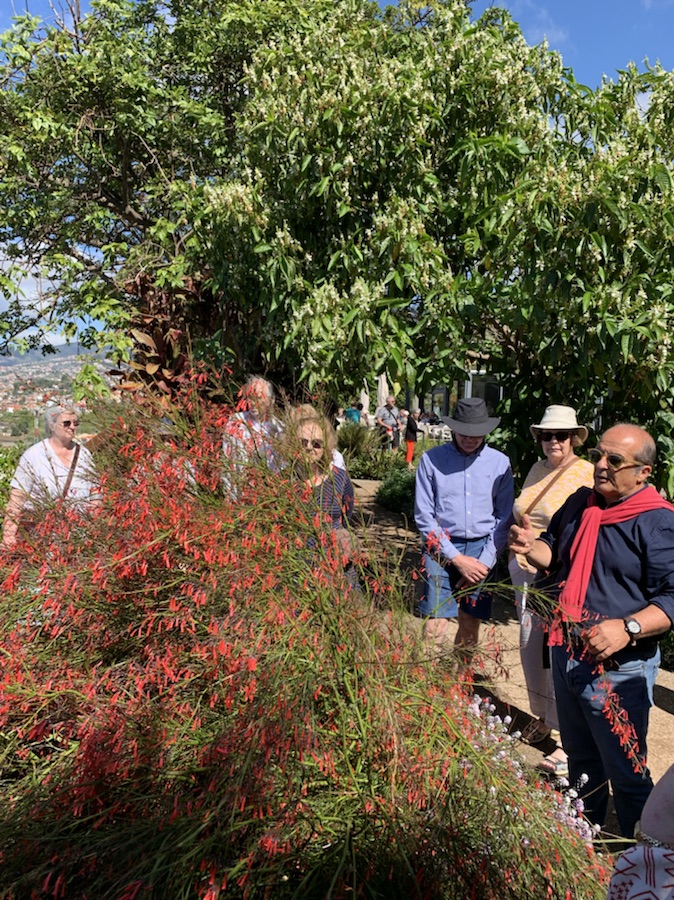
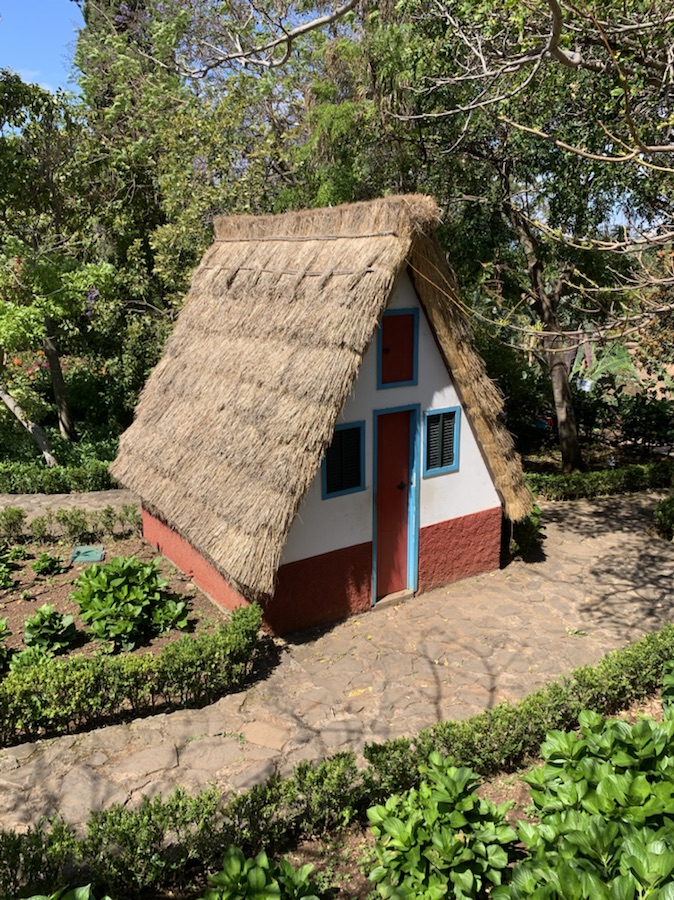
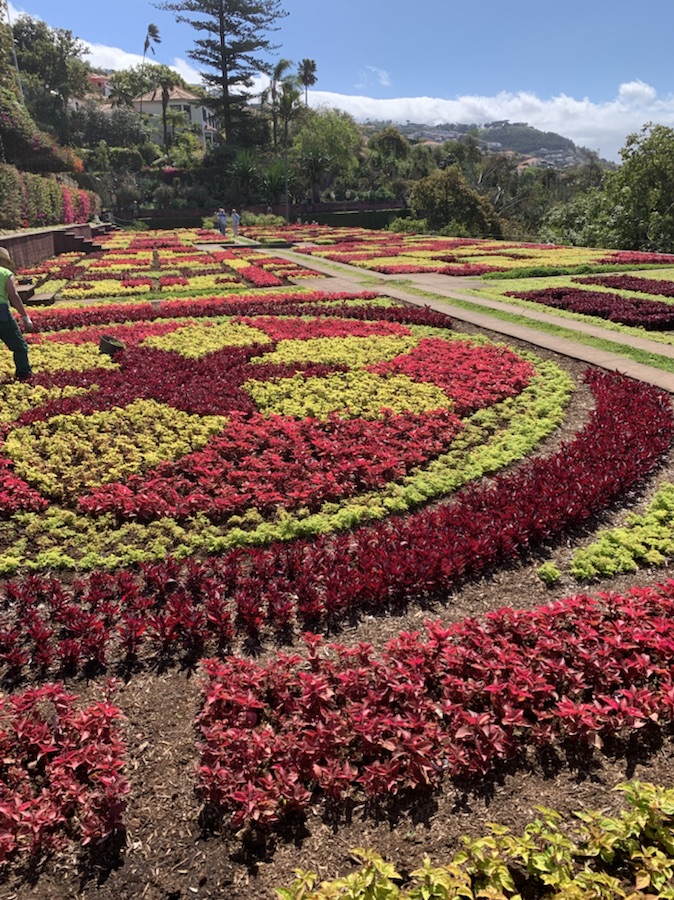
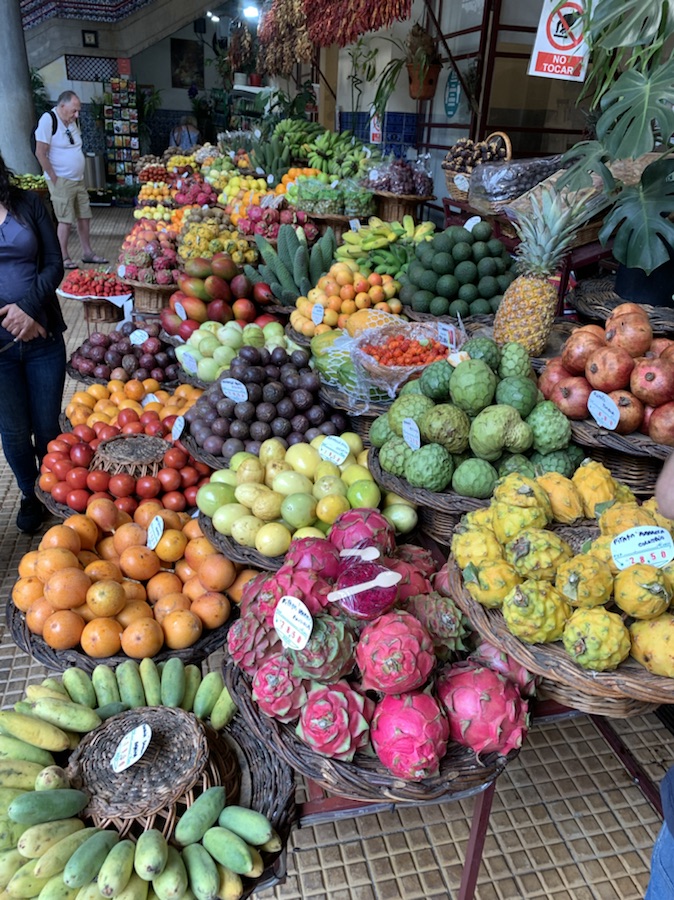
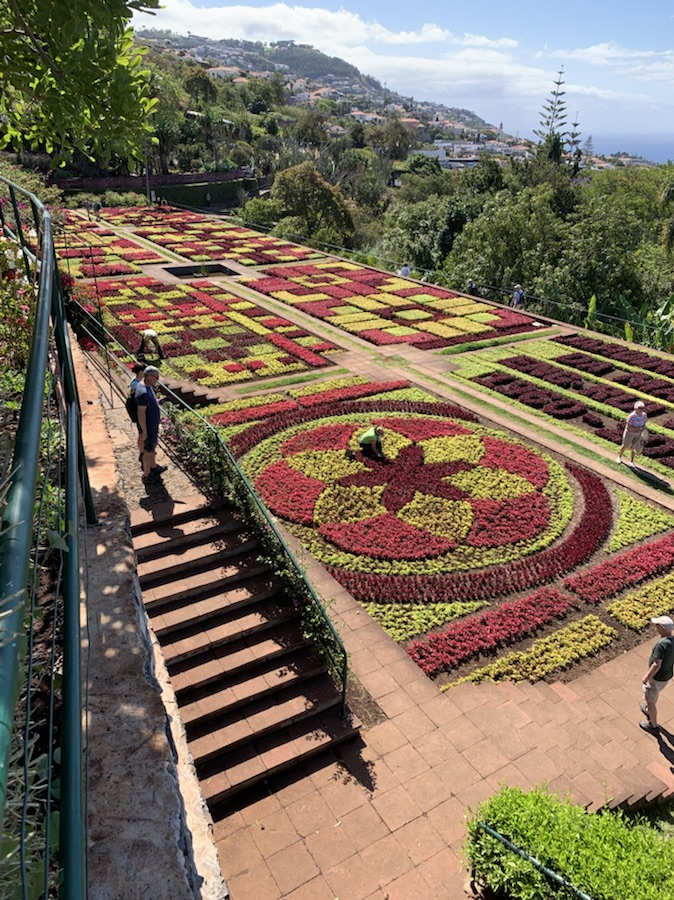
There is some clear crop stratigraphy on the island with 0-300 meters above sea level being dedicated to fruits, vegetables and bananas. 300 to 500 meters is dedicated to the grape vines for the Madeira wine, the fortification is done with distilled alcohol bringing the alcoholic content to some 20% or more. From 500 to 1,200 meters is the domain of the oaks, chestnuts and the Australian import – Eucalyptus. This eucalyptus was brought in to fuel the paper industry that thrived on the island, but they take lots of water and are an invasive species, pushing everything else out. from 1,200 to the highest peak at 1,800 meters above sea level is the domain of the heathers and other such mountainous species. The mountains are steep and driving up the very narrow sinuous roads with severe drop offs is not for the faint hearted. Although we never really got to see the Lavadas – water carrying aqueducts, it is a tremendous feat of engineering given the steepness and pervasive peaks.
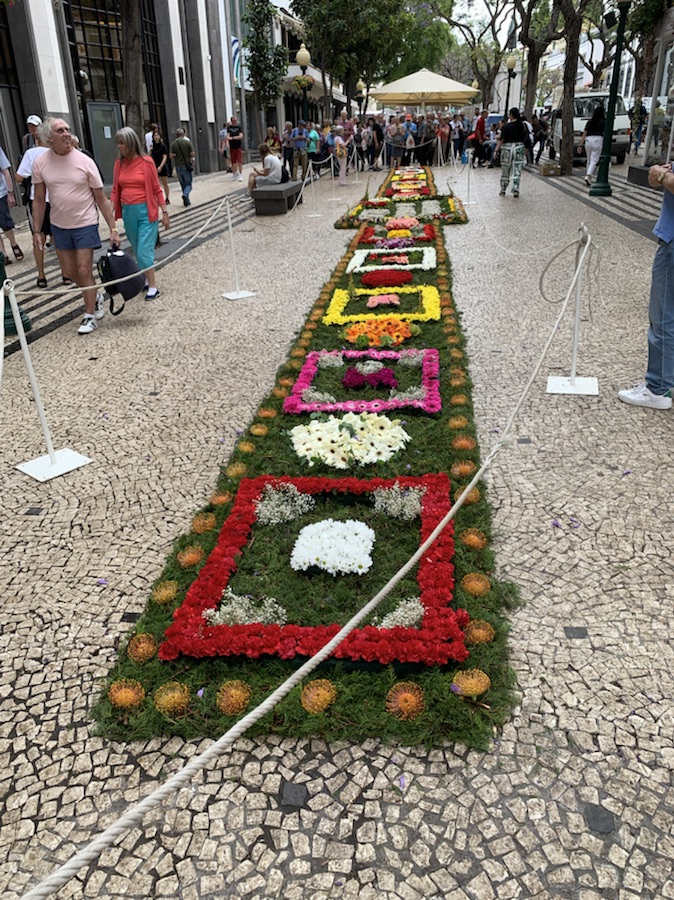
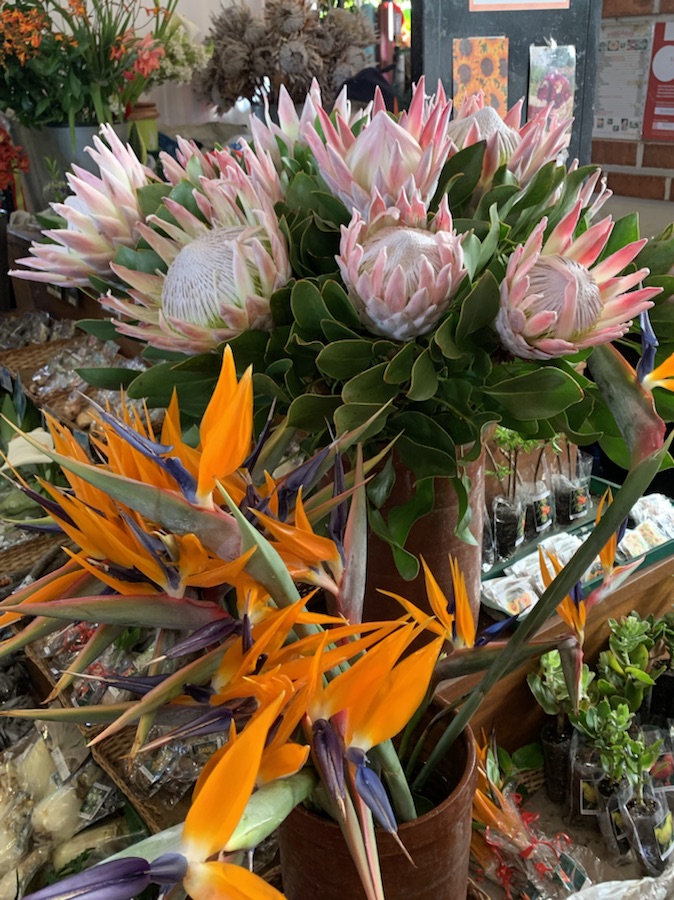
Upon our return to the ship we walked into town and found the market we had visited in the morning and looking up, we saw a restaurant with umbrellas on the top floor of a 3 story building called the “Three House” (a play on words of “Tree House” and third floor – Rua Brigadeiro Oudinot 2 – 3er Andar; 9060-209 Funchal, Madeira +351-291-208-155) as it looked as if it was in the trees and situated on the 3rd floor. The food was superb and the view from the balcony was brilliant overlooking part of the town and ocean. A young Venezuelan girl was one of the waitresses, and all were very pleasant and food came well presented and in a very reasonable amount of time. We didn’t really consider the prices of the items but were a bit surprised when we got the bill! Nevertheless, well worth while. After the nice lunch we wandered around the nearby farmers market which we had not seen in the morning and then wandered around the town, finding a Catholic Church and attended the mass in Portuguese. We found a large tent inside of which was a “pop-up” exhibit of many local flowers and plants which further enhanced our Botanical Garden visit. Another such exhibit was one of wooden handicrafts from the Laurissilva Forest which celebrated the 25th year anniversary of being placed on the UNESCO World Heritage Site list.
By this time we had walked 9 1/4 Kilometers, so it was time to walk back to the ship for the evening. We were overnight in the port so there was no pressure to be back on the ship until tomorrow at 4:30 PM.

 Roger & Anne Travels