Friday May 17, 2024 – Arrecife, Lanzarote, Canary Islands, Spain
Today we are in the town of Arecife on the island of Lanzarote (60 Km X 25 Km), which is part of the Canary Islands that are a territory of Spain. This is one of seven main islands, the others being – Tenerife, Gran Canaria, Fuerteventura, La Gomera, La Palma and El Hierro. There are several smaller islands with La Graciosa being the only one with a small population.
It is often thought that the name Canary Islands had its origin in the name of the bird the canary however, in reality it comes from the Latin word Canarius (cannis), which means dog (Island of Sea Dogs [Monk Seals]) which were abundant. The Canary Islands are a group of archipelago Islands, meaning that all were formed about the same time from volcanic eruptions under the sea. They are a group of islands just off the coast of Morocco and Western Sahara, North Africa.
Today we are in Lanzarote, which I have always felt to be my favorite. However, I have not been to some of them which I’m sure are just as beautiful. This is Anne’s first trip to Lanzarote and after a day here, I think we both felt that it is truly one of the most amazing places in the world. It feels like a lunar landscape in areas where you have black, sharp jagged rocks from the lava fields that there’s no way to walk over without being cut to shreds, and this is next to areas that seem like sand, black sand, red sand, and in a couple of places, slightly yellow sand, depending on the mineral content of the lava that created the sand. Our tour today took us to the volcano or Mountain of Fire with a couple of stops to see Aloe Vera, and a Winery, both being significant crops on the island. The Normans were the first Europeans to conquer the land that they tried to plant wine and they started the agriculture. The Guanche aboriginals were living there, they eventually were sold as slaves so that perhaps only some 300 remained on the island.
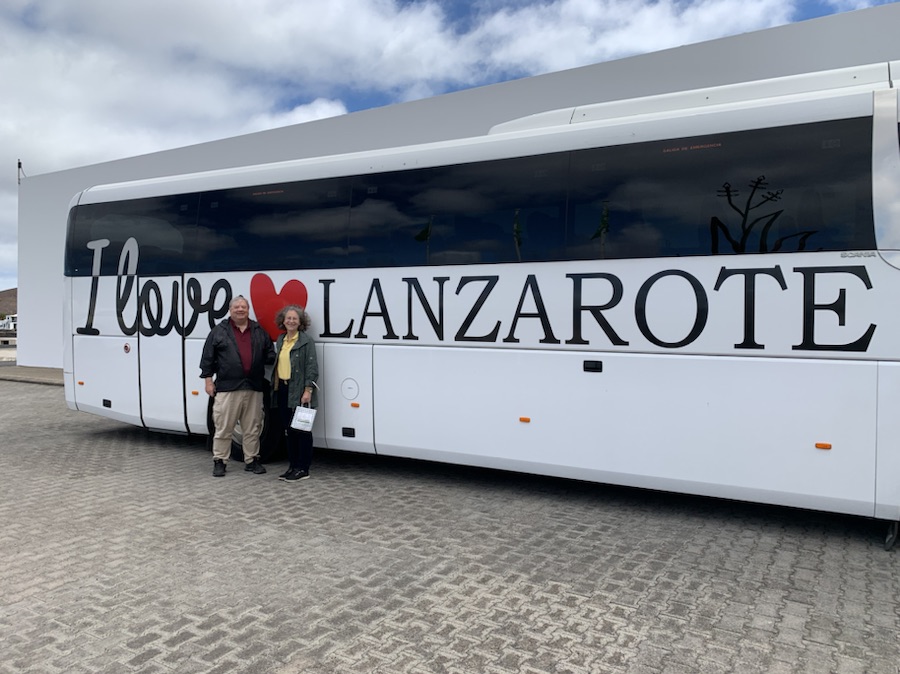
After docking the Ship port to the dock, we got onto the coach with the 45 people that were to be our fellow travelers and were greeted by an excellent guide, Nieves and driver AJose, both of whom were very amusing, lively and fun and gave lots of information, keeping things very lighthearted, really showing off their island to the best of anyone’s ability. Arrecife is in the south-west of the island and to it’s west is the National Park of the Mountains of Fire and volcanoes and more specifically “The National Park of Timanfaya” which is where we were to visit the Mountain of Fire.
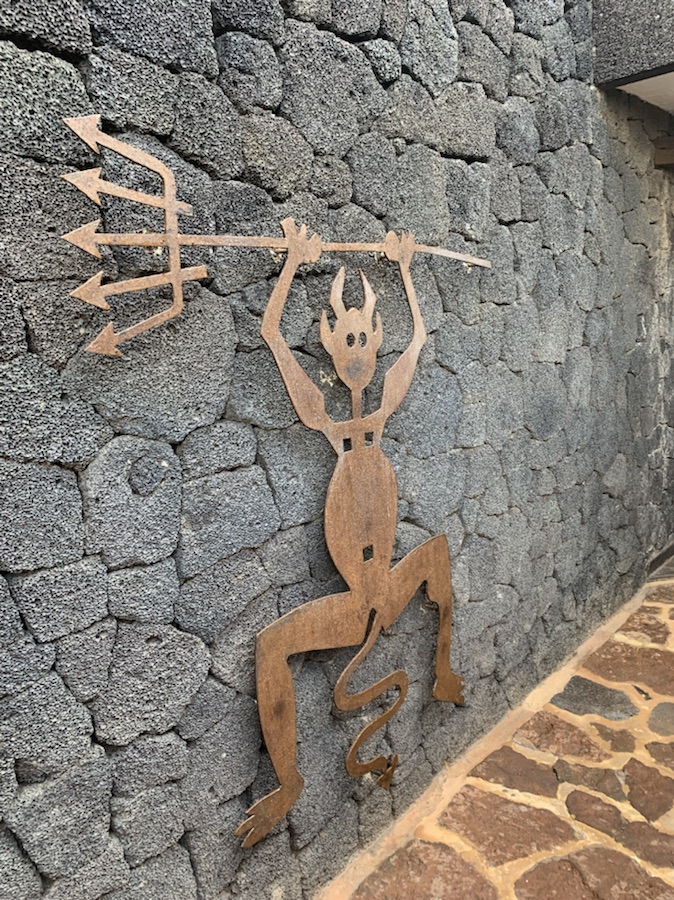
The population of Arrecife is about 60,000 and that has grown since 1852 as before that time, there were many pirates. The island is divided into seven municipalities, and it has a semi autonomous government from Spain, but answerable to the central government of the Canary Islands, which is split between our next two stops – Las Palmas, in Gran Canaria (Executive and Judiciary) and Santa Cruz de Tenerife (Executive and Legislative). The population of the whole island of Lanzarote is 163,000 but there are about 3,000,000 tourists per year that come to visit. In total, all of the Canary Islands have a population of about 2.2 million. The best weather is during the summer, when the winds are less severe – from September to November. There is a severe lack of water as there are no rivers or lakes and very little rain, as at most they get about 30 liters per square meter of rain a year, which is roughly equivalent to the volume used in taking one shower. Ever since 1964 major desalination plants have provided all of the water for the inhabitants and tourists. There are 110 volcanoes on the island and there is a ‘Trade Wind’ that goes from northeast to southwest usually blowing from about 40 to 80 km/h with March to August being the time of winds, these winds keep the temperature cool but affect daily life as we will see later with the way that the crops are grown specifically the grapes for wine making. All the houses are painted white, by law. This was in great measure due to the lobbying efforts of the artist – César Manrique Cabrera, (1919 – 1992) who was born and died in Arrecife, Lanzarote, to force the government to make sure that all houses are painted white and preserved against the black background of the sand giving a very pleasing view of each of the settlements. Inland houses have green or brown shutters whereas by the sea, they have blue shutters. We happen to see a rainbow, which is very rare as there was a light drizzle when we arrived and initially traveled on the coach. The coldest temperature that has been recorded is about 12°C. As we traveled along the coast, we passed the small island – Isla de Lobos, which has about 10 houses but only one permanent resident which is between Lanzarote and Fuerteventura, which is about 10 km away. The soil was very fertile, and used to have a lot of crops and cattle until the volcanic eruption lasting 6 years (1730 – 1736) which covered all of the area and creating 32 new volcanos. This expanded the island by 51 km² and left up to 50 meters deep lava in the fire mountain park. There is still some agriculture today really more focused on vineyards (30) and aloe vera (3 million kilos).
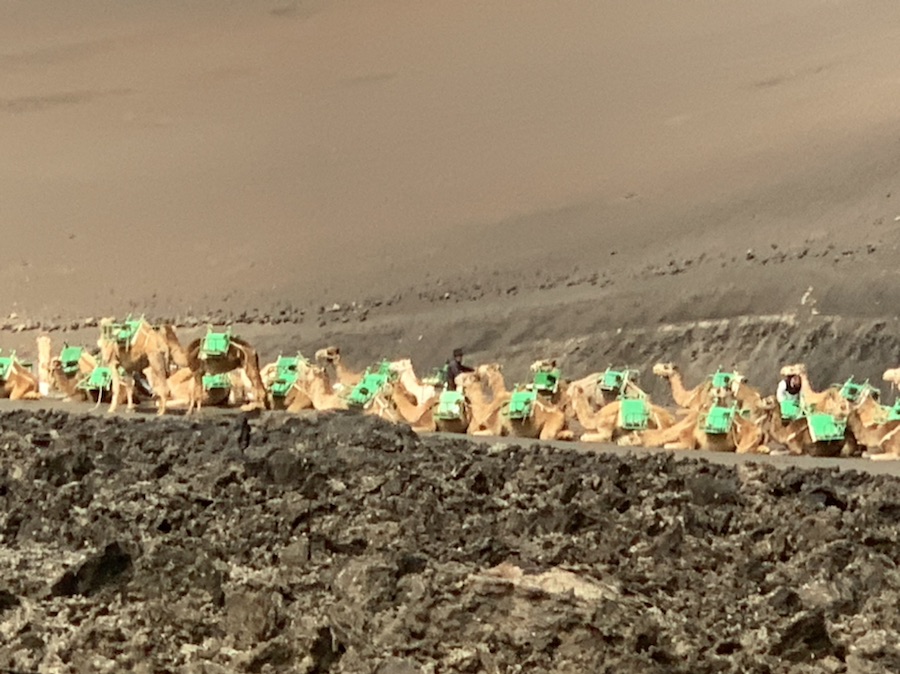
About 3,000 camels at its peak, were brought over from Africa to help with the agriculture, as it is only about 125 km from the African Continent. The camels came by boat, actually swimming behind the boat. However, once again after the latest eruptions in the 1730s, (and a smaller one in 1824) most of the agriculture has disappeared so today the camel population is about 300 and virtually all those are dedicated to tourism. We did see various people taking camel rides on a trip to fire mountain.
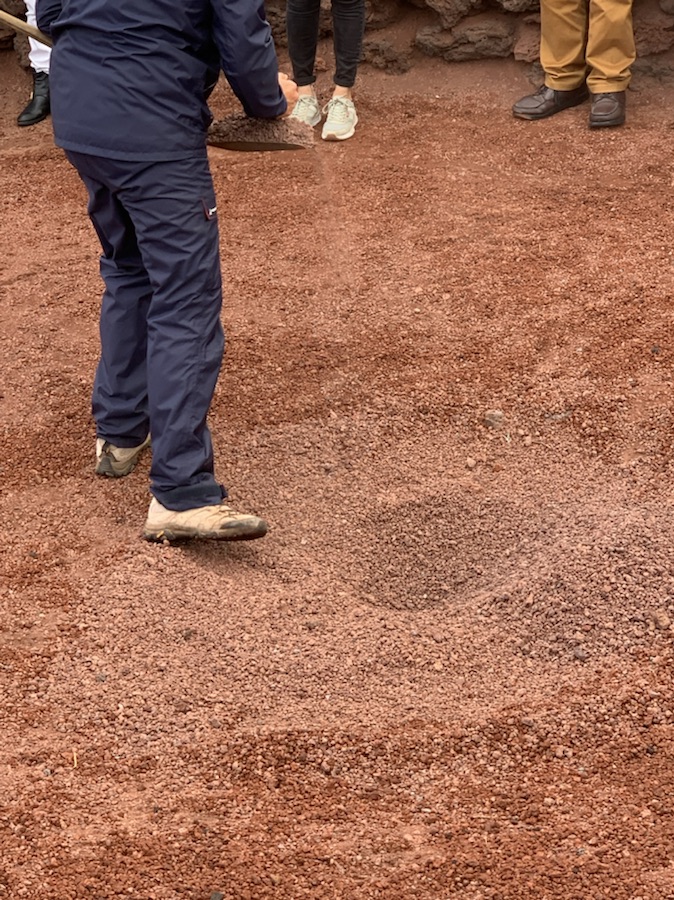
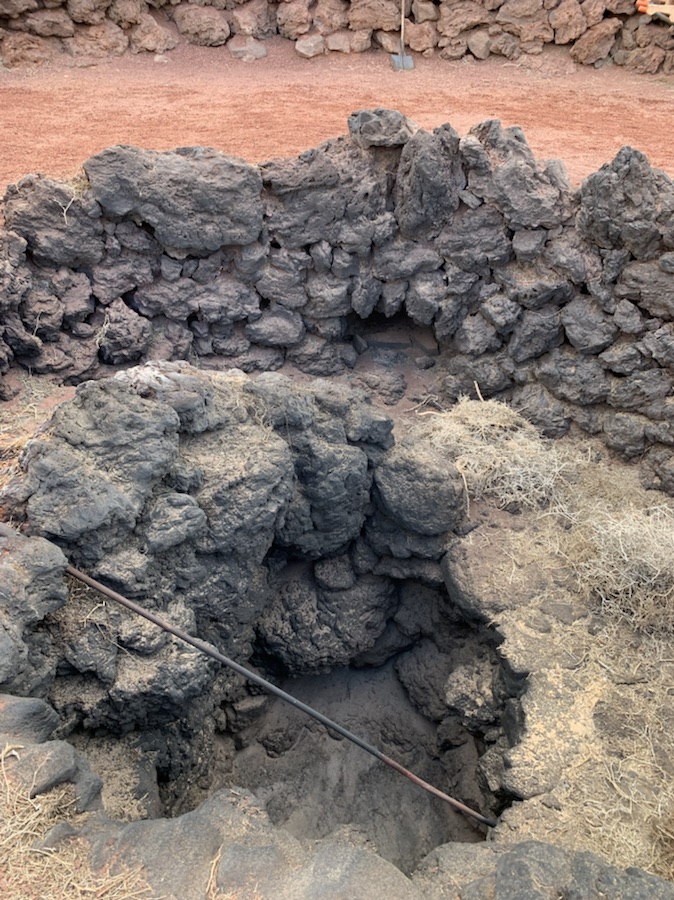
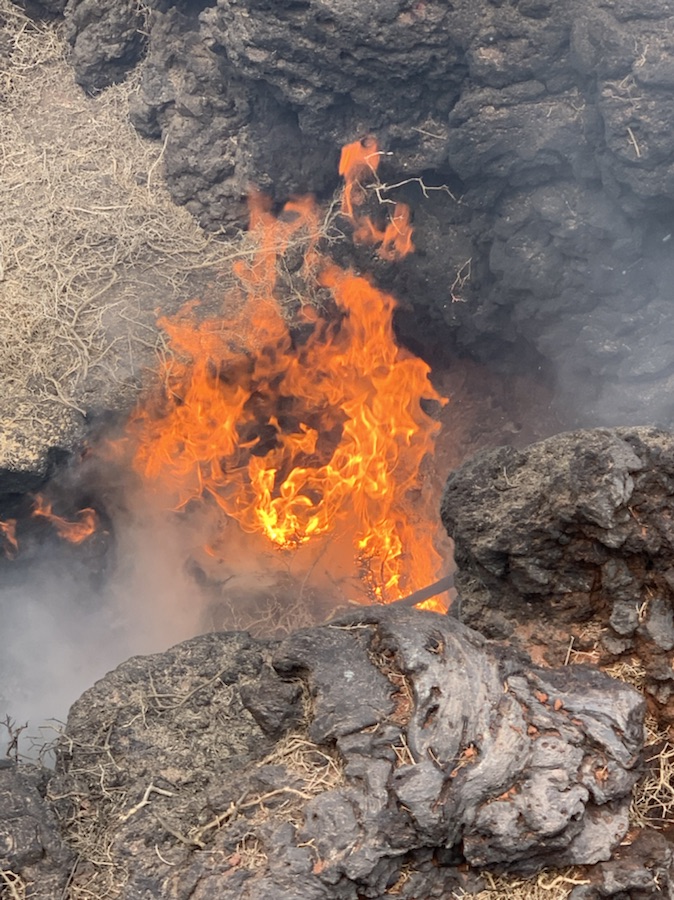
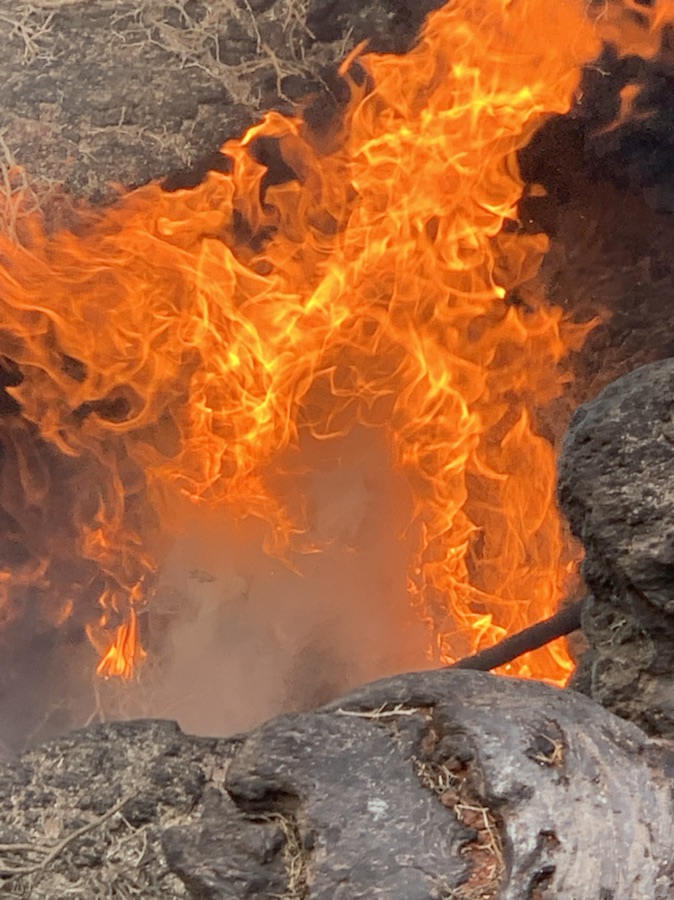
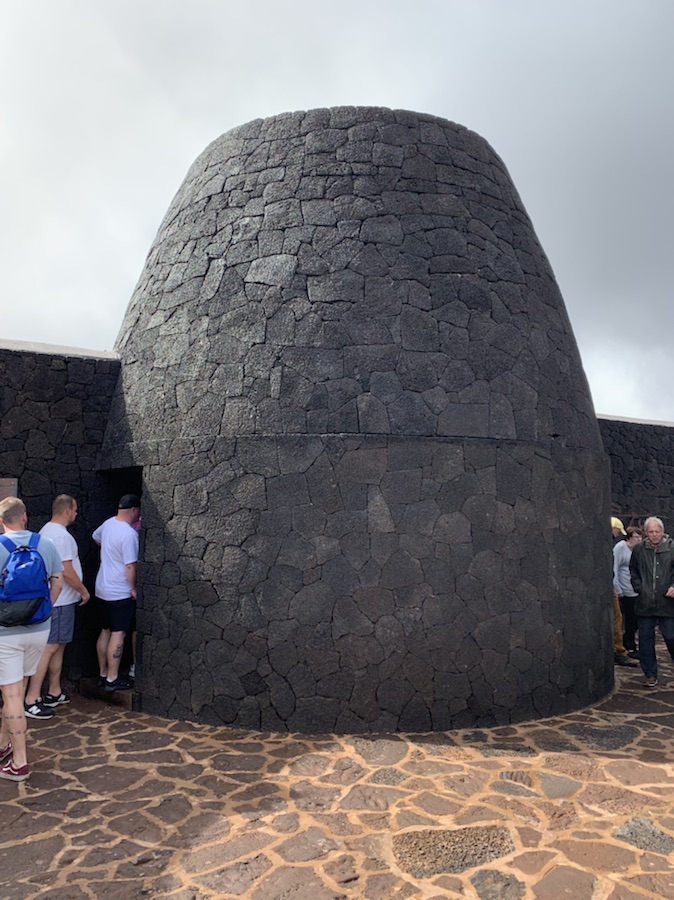
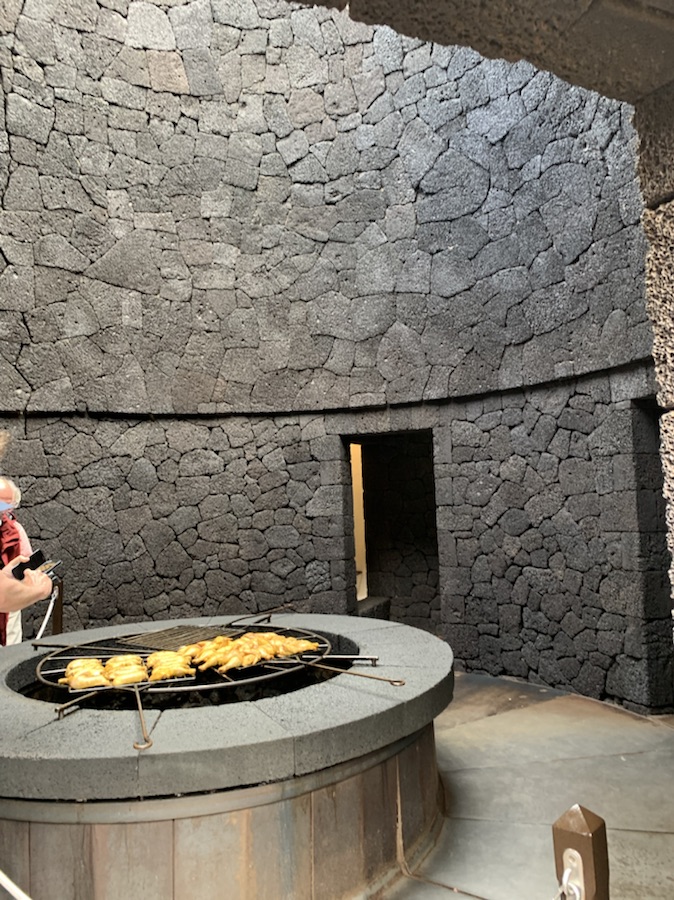
We drove through the first area of the National Park, and arrived at our first stop where the guide told us that we were to experience three separate “experiments”. 1) We stood around while a gentleman got a shovel and dug a few inches under the surface of the ground, picking up some of the reddish colored lava and handed small samples around to all the fellow coach passengers, and it was very hot. We could touch it, but it was so hot that most people after feeling it, immediately threw it on the ground. 2) The second “experiment” started with a hole that had previously been dug and was perhaps 2 meters deep. A man grabbed some dry grass (gorse) with a pitchfork and put it into the hole. Within a minute or so the entire gorse bundle was on fire, creating a major fire in the in the hole and the dry grass was rapidly consumed becoming ash. 3) The third “experiment”, as she called it, consisted of earthenware tubes that were dug into the ground to depth of some 5 meters. A man, grabbed a bucket of water and poured a little water into the tube. He waited a minute or so, and then poured the rest of the water into the tube and then immediately, a loud bang was heard and the water was instantly converted to steam creating a geezer that went up some 20 feet. All very impressive. At the stop there was a restaurant and shops, but the interesting thing was that we were ushered into the “Kitchen”. A circular building some 20 feet in diameter and some 25 feet high. There was no roof only the walls around the building. In the center there was a 4 foot wide opening with a grate suspended by 2 foot walls. On the grate there were pieces of chicken and the heating source for cooking was the molten hot lava some 4-5 meters below. Ingenious way of cooking. We saw something similar in Iceland where bread was baked in holes in the ground heated by the natural volcanic heat.
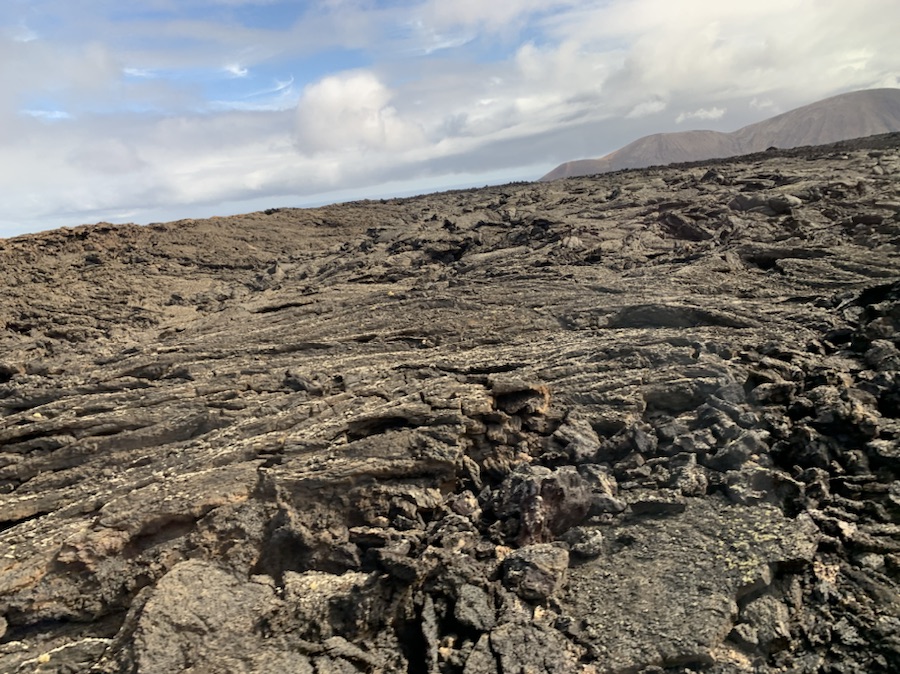
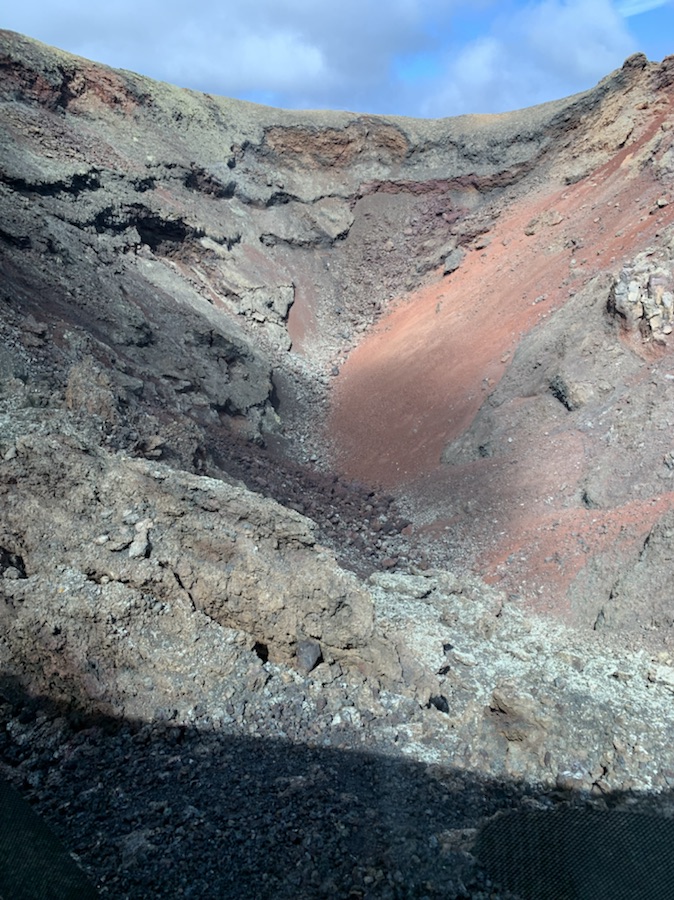

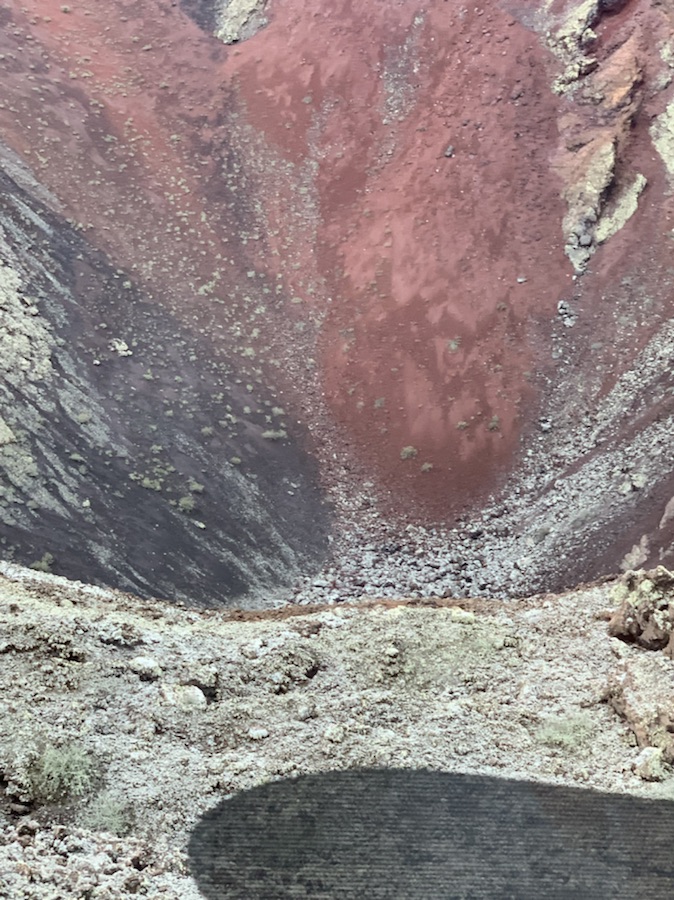
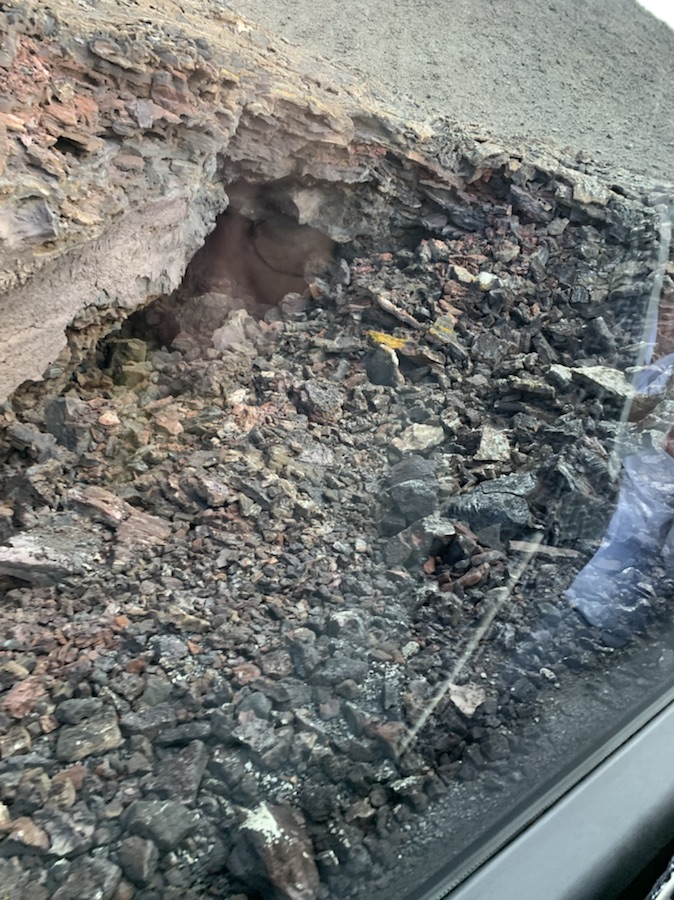
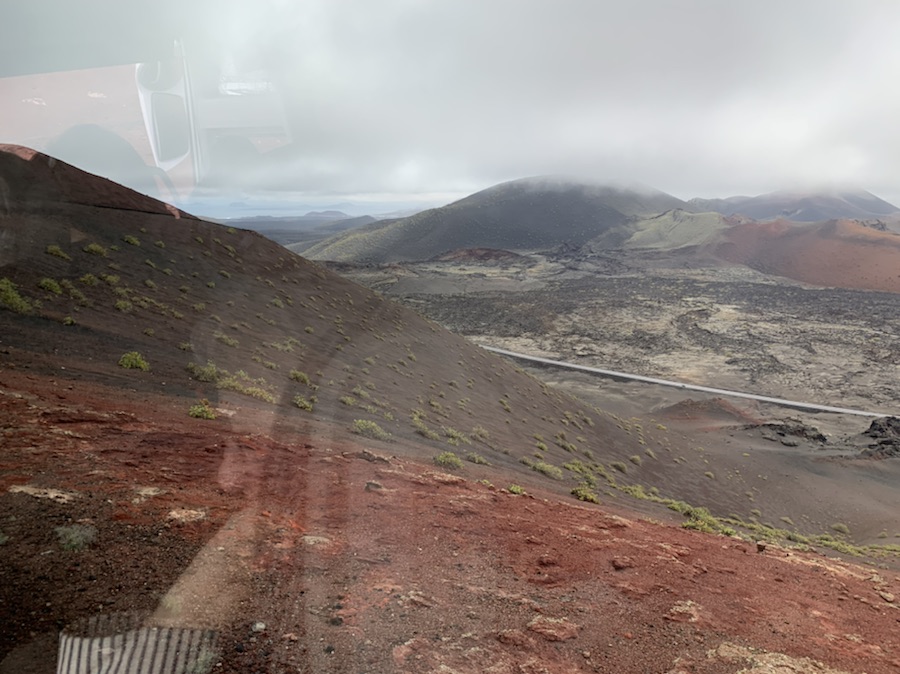
After the very interesting stop we returned to the coach where we spent the next half hour driving on a sinuous road, simulating the disparate flow pattern of lava, through the barren landscape (albeit some lichens were present) that was the lava fields, some rugged, some sandy and in shades of black and red. A truly “out-of-this-world” experience, not to be missed by anyone visiting the island. Once you have experienced that it will be firmly imprinted in your mind.
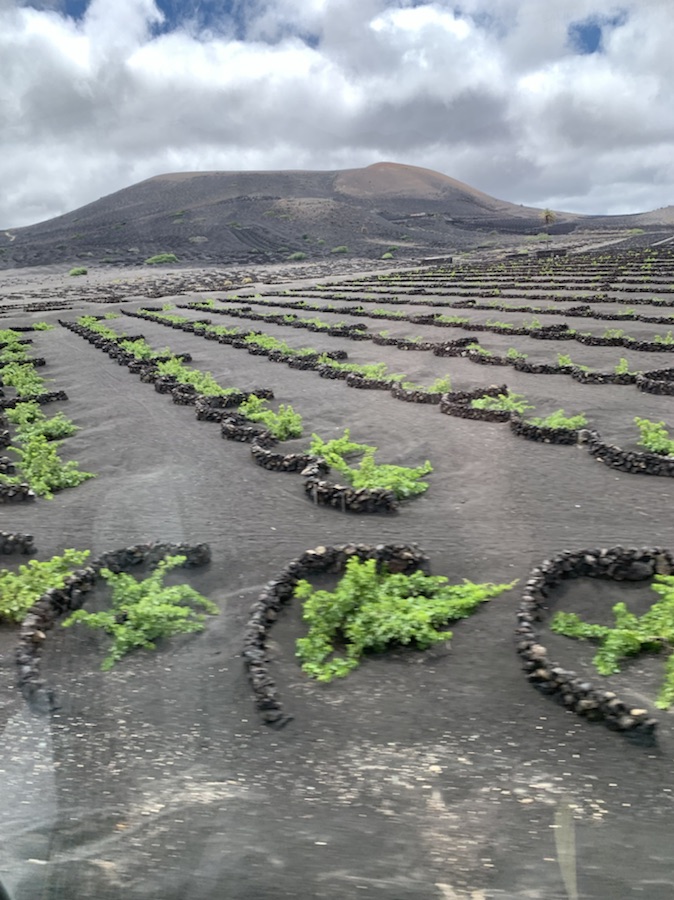
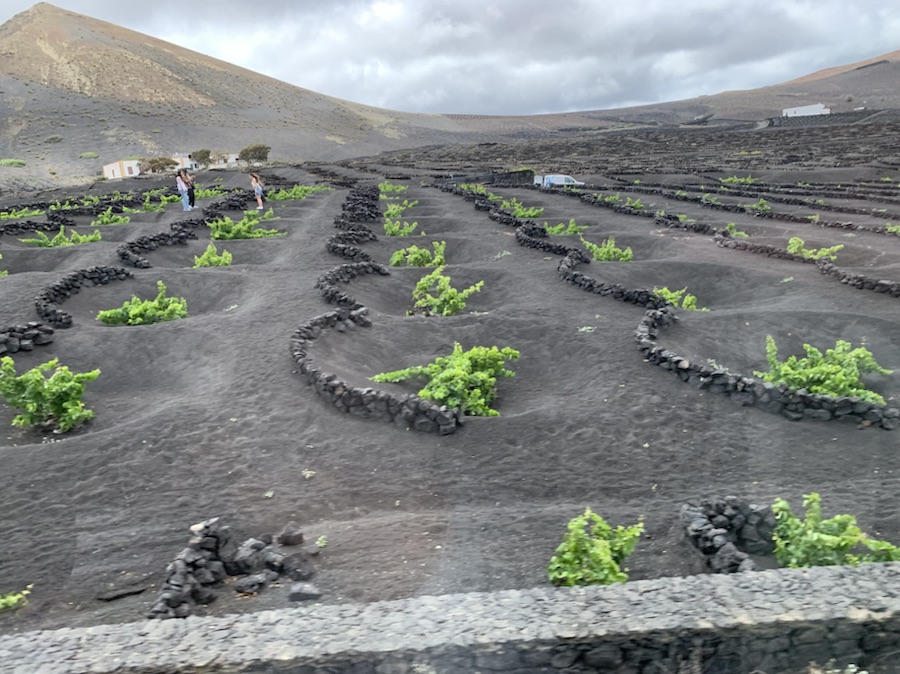
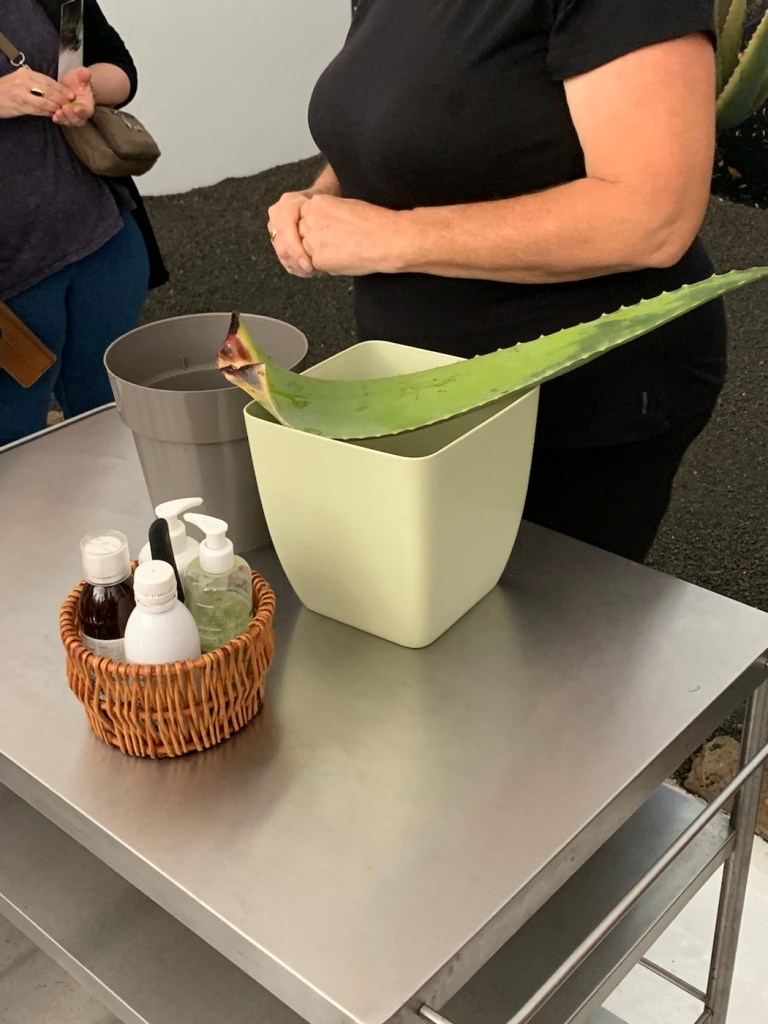
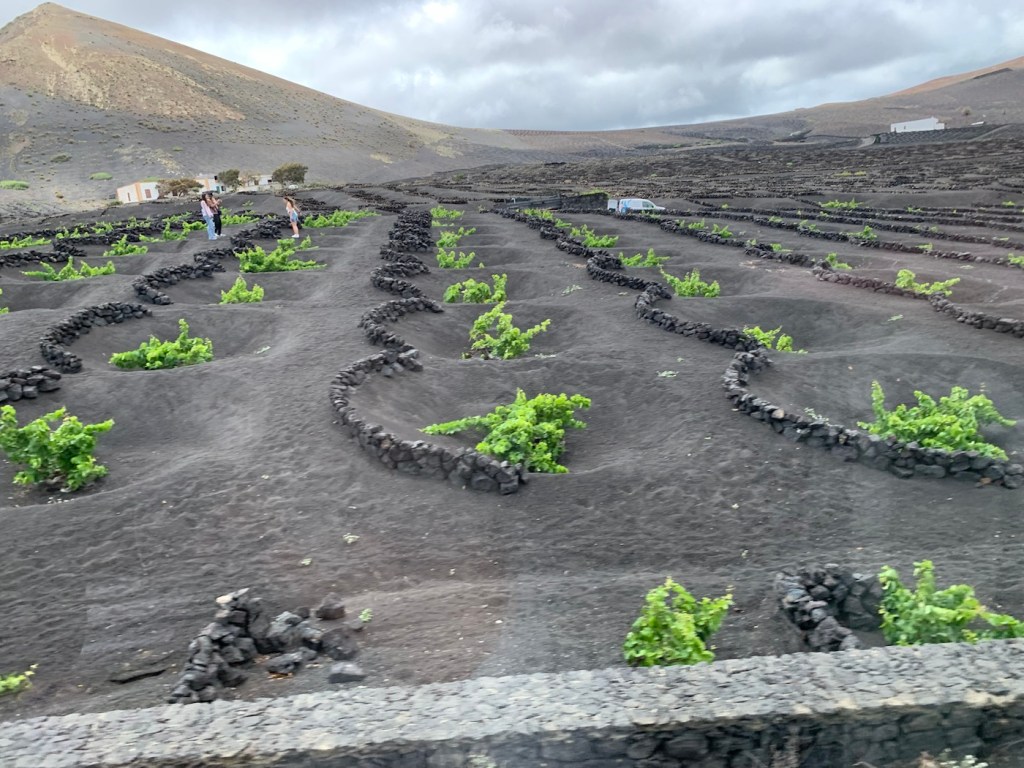
After leaving the national park, we drove to an Aloe Vera shop / explanation of how the plant is grown and used and is a sure way to increase sales of their products as they promise it will cure all ailments that one can imagine. The next stop was at the “La Geira” vineyard, where we tasted either a sweet (Moscatel grapes) or a dry wine (Malvasia grapes) and was of reasonable quality for daily consumption. The wine region has a microclimate allowing for about 30 vineyards to flourish. The interesting aspect was the way in which the grape plants were planted / grew. The traditional rows of plants on parallel wires held by stakes, does not work as the prevailing winds, destroy the plants. So a hole is dug in the lava and the plant put in to the bottom of the hole with sloping sides. Around this hole in a semicircular manner, a 3 foot high, 1-2 foot thick dry laid stone wall is built of lava rocks, which protect the plants from the prevailing winds, moving the air around the plants. Row after row of identical semicircular walls (about 10 meters in length (if they were straight) behind which green leaves come out of the hole in the ground, replace the usual rows of vines. A fascinating way of resolving what nature brings to bear on the fertile terrain!!!
We thought of going out into the town for lunch but opted to return to the ship and have a late lunch aboard. We attended the variety show in the evening of the outstanding ventriloquist Paul Zerdin and the pianist extraordinaire – Chris Hamilton. We were soon asleep, as we need to be up early tomorrow to visit our next Canary Island – Gran Canaria.

 Roger & Anne Travels