Saturday May 18, 2024 – Las Palmas, Gran Canaria, Canary Islands, Spain
Today we are in Las Palmas on the island of Gran Canaria which is one of the co-capitals of the Canary Islands together with Tenerife. Las Palmas is the judicial administrative (Office of the Presidency) capital whereas Santa Cruz de Tenerife is the legislative and the other half of the executive government of the Canary Islands.
The ship docked, port to the dock and we soon found the bus number 4 with the other 49 people to take Leisurely Gran Canaria tour with guide Jose Maria known also “Pepo” and the Driver, Lucas. From the start the guide was at best, average and was a little on automatic pilot. The city has a population of about 400,000 people and the Island has a population of about 900,000, and has grown tremendously over the last hundred years because of the construction of the Harbour. When the local people wanted to build the harbor in Gran Canaria, they asked Spain permission and financial help and were denied as Spain only wanted to have one major port in Tenerife. So they went to the British, who helped fund and engineer the project and eventually create the Harbor which has served the island very well as many cruise ships and other trading vessels are able to stop here.
One is able to walk from the ship to the town and even the old part of town is 15-20 minutes walk away. The city was founded on June 24, 1478 and considered the “De Facto” Capital until the 17th century. The island measures some 50 kilometers north to south and 30 kilometers east to west. The highest peak is some 2,000 meters high and the Island is roughly round with the north typically cloudy and the south, where most of the tourism is located, is generally sunny.
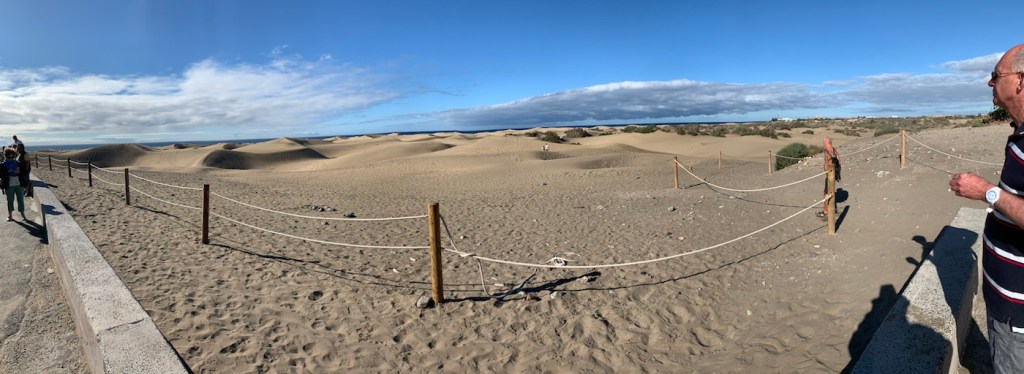
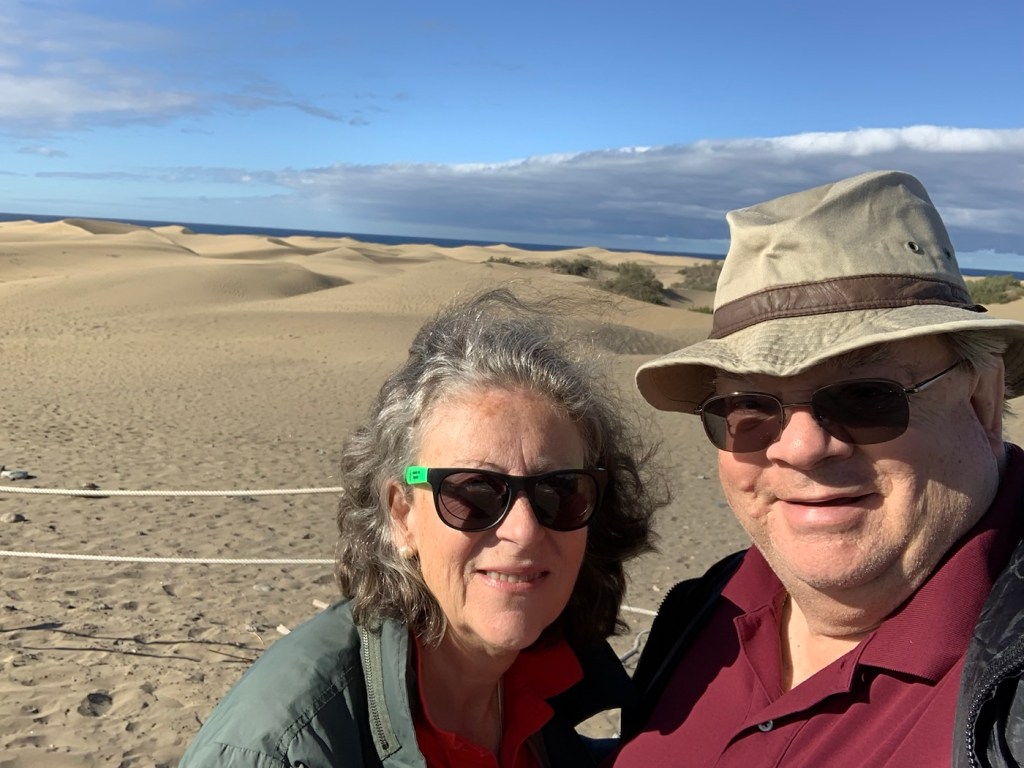
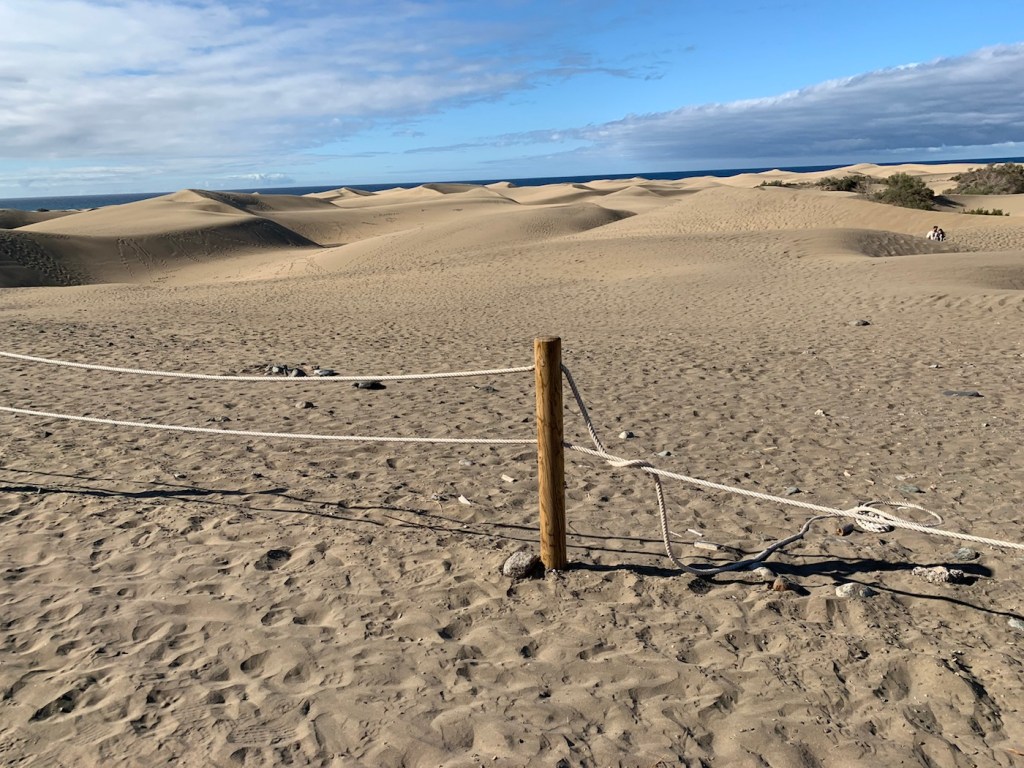
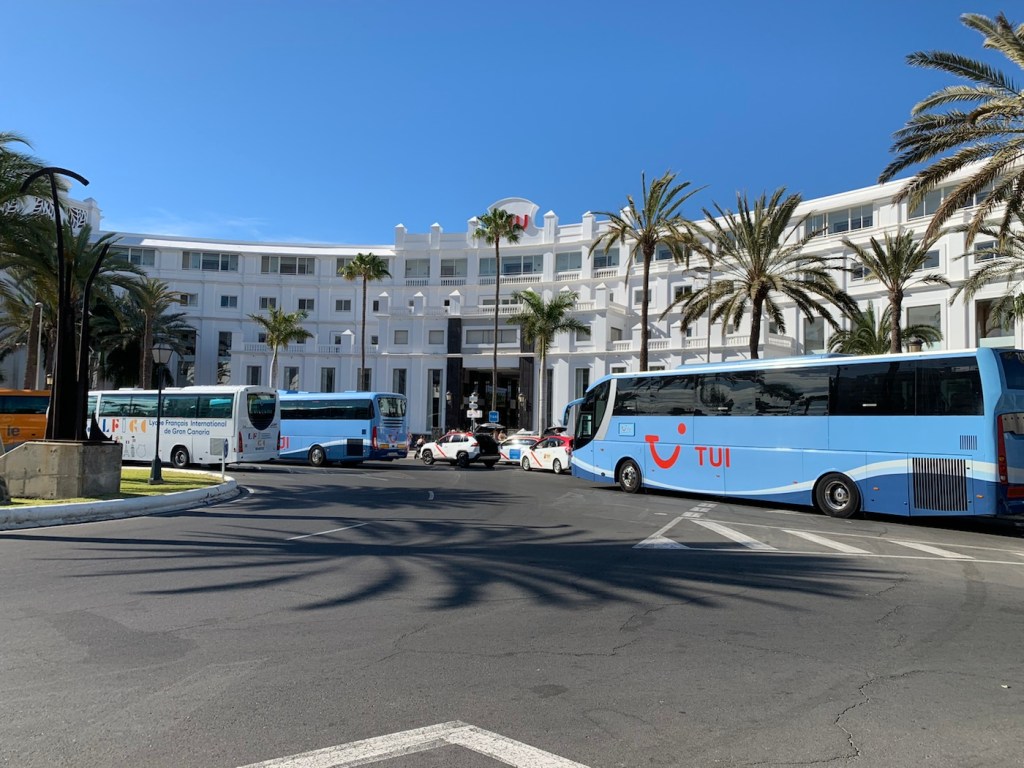
We headed to our first stop, during which time the guide relayed some general information. When we arrived all he said was – There is the arch, be back here on the bus by a given time (about 1/2 hour). We were not sure what it was we were to see, so wandered through the arch, which joins two parts of the hotel Riu Palace and leads to a wide path to the beaches and ocean. We dutifully went to the sand, saw that there were many dunes, then returned to the coach. It was not until later that we realized we were witnessing the Maspalomas Sand Dunes, which is a protected nature reserve and one of the important tourist features of the island. The guide was happy to tell us that the Government of Spain subsidies air transportation between the islands and the mainland Spain. He recently traveled to Madrid and paid a total of 10 Euros round trip. He can arrive 15 minutes before the flight, show his identification and pay 3 euros round trip to any of the other Canary Islands.
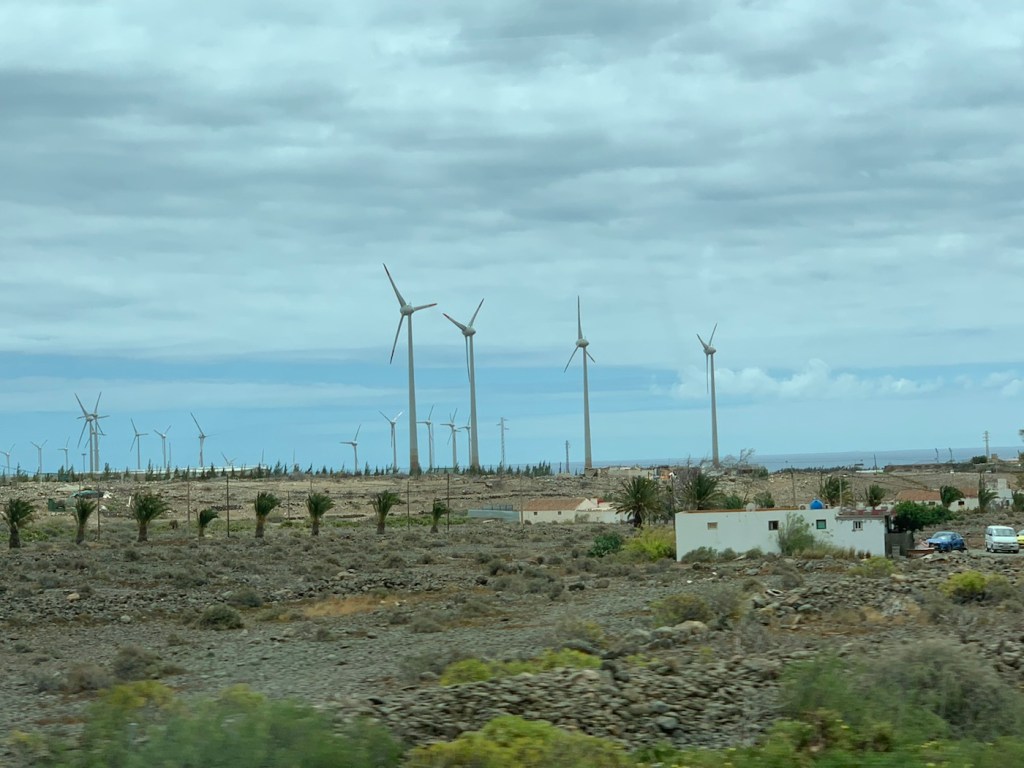
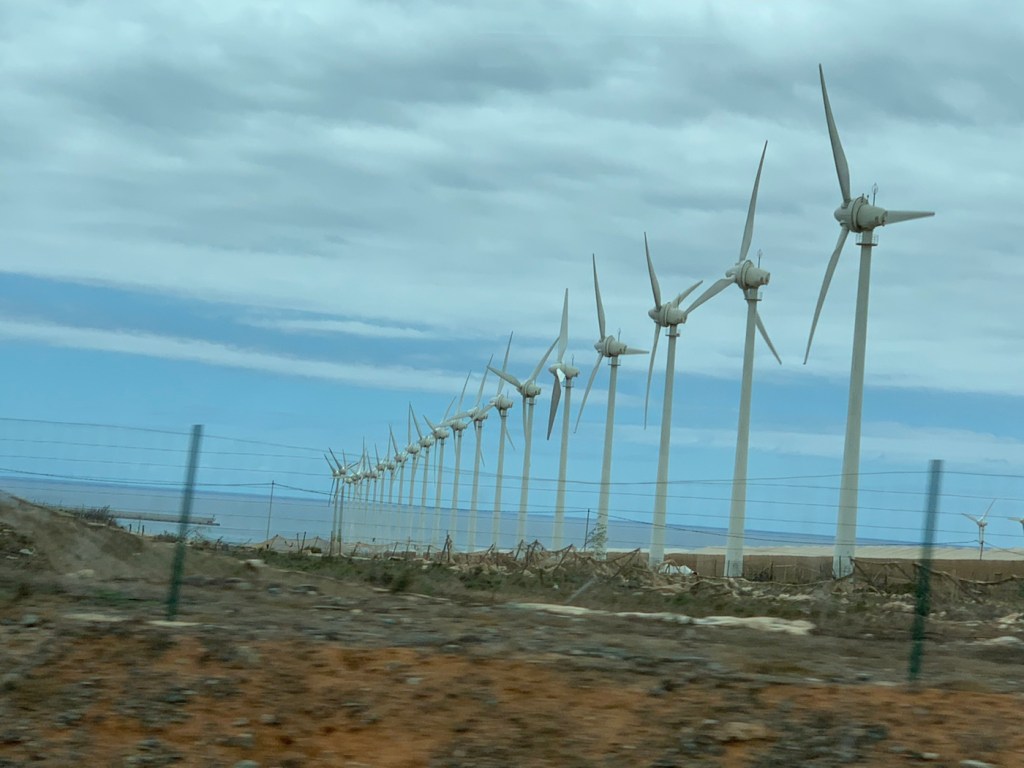
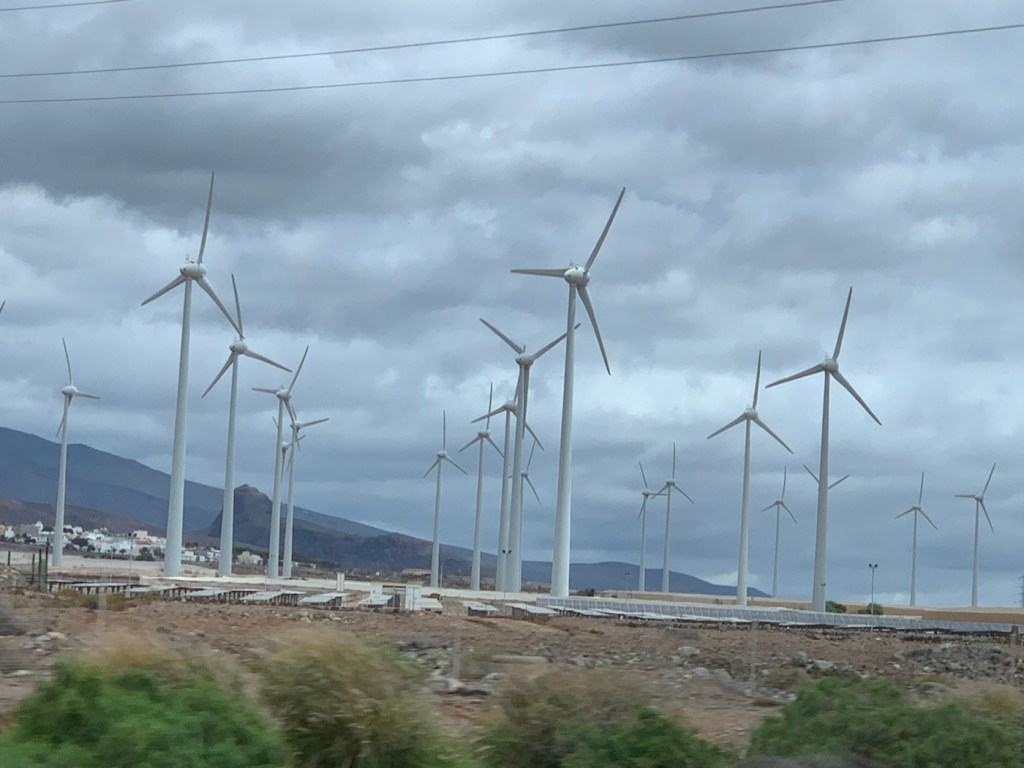
One feature which greatly interested us was the extensive use of wind power for electricity creation. In one area that is dry and windy, we saw what must have been 300 wind energy (windmill) units, which was terrific. The other thing, mainly due to lack of water, was that the crops were covered in what can best be described as massive tents covering acres. These “tents” had walls all around and a roof, some 6-8 feet above ground, all made of jute cloth. This allows dappled sunlight, keeps warmth in, allows whatever rain or atmospheric moisture to fall through the cloth while at the same time minimizing the loss of surface water through evaporation.
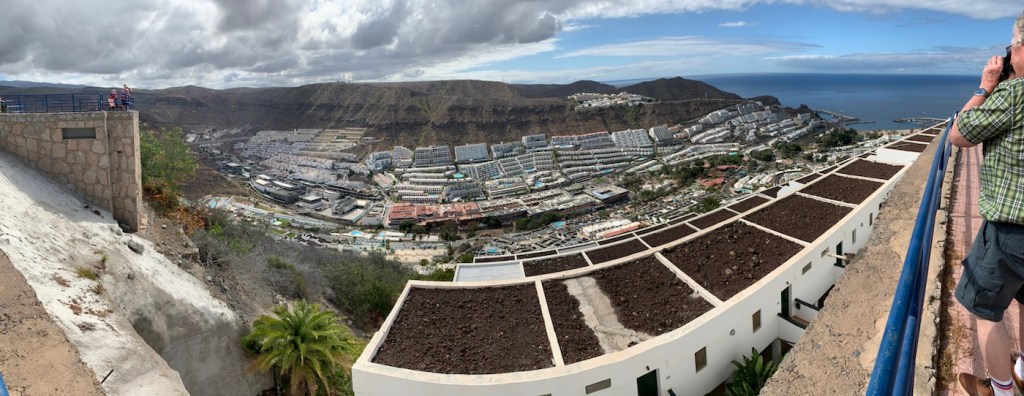
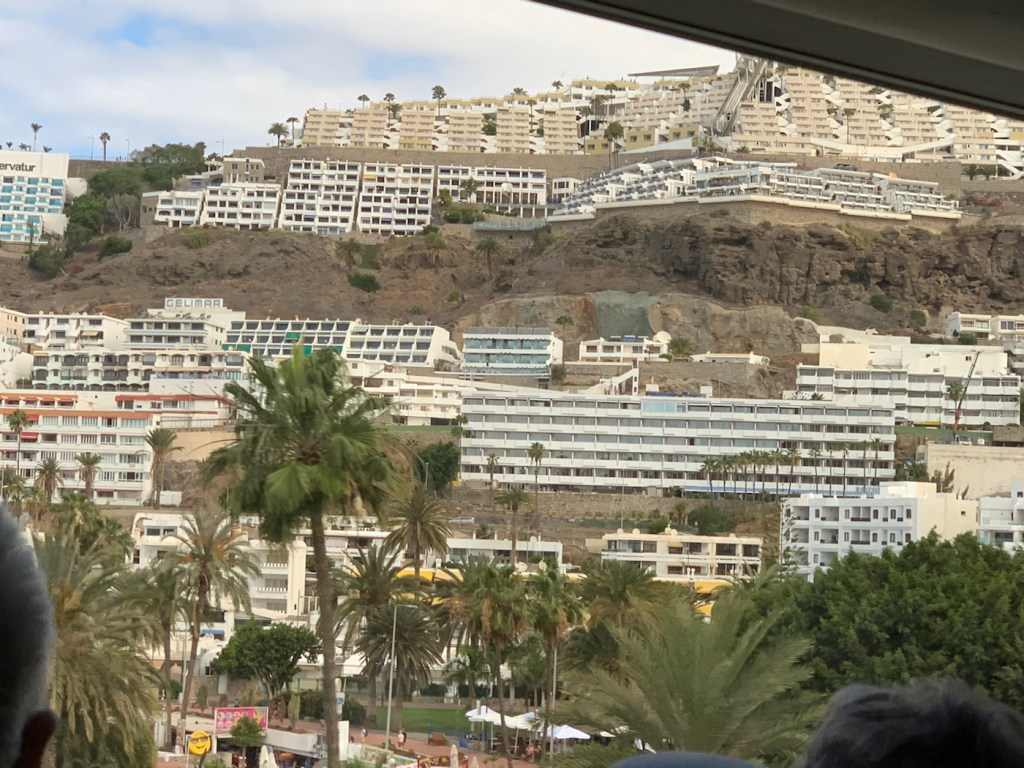
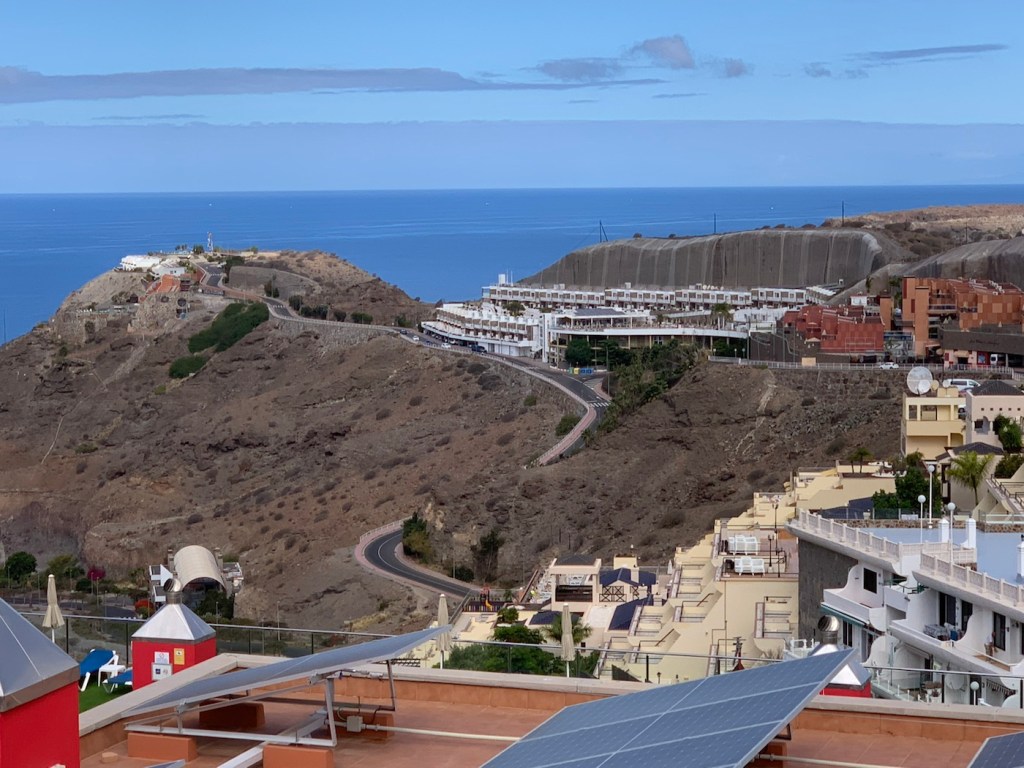
In the last 50 years there has been a tremendous influx of tourists, not only cruise and weekly tourism, but long term, second home, type tourism. Certainly we saw thousands of apartments built down the hills, all one on top of the other, some with a view of the sea, but mainly just “homes” with balconies overlooking the inlet and the similar homes on the other side of the inlet. Tunnels through the mountains took one from one of these “settlement areas” to another, almost identical “settlement area”. The oldest and largest one is around the “Playa del Inglés (Englishman’s Beach) near the Malspalomas lighthouse (1867). There are 6 Golf Courses on the island and the temperature rarely is out of the 20C-26C (68F-79F) range, making it an ideal climate. This expansion of tourism (3+ million a year) has lead to some antagonism against tourism / tourists by the locals. Many 5-star hotels are in one area where only short-stay (1-2 weeks) tourists are allowed.
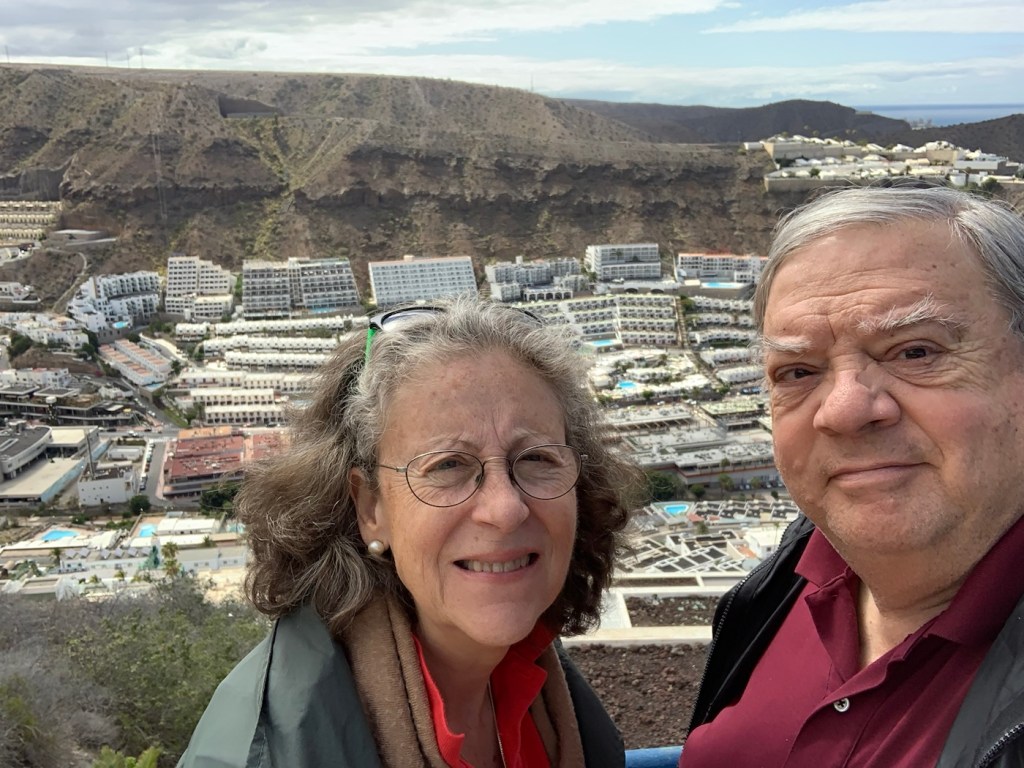
Our next stop was at the Puerto Rico viewpoint. This area is filled with White House’s built up the mountains on either side of the valley and is where some of the less affluent tourists reside. A vague view of the sea, looking down the valley is just discernible for some.
The last stop was in the town of Mogán (referred to as “Little Venice” because of its canals), where we had an hour to wander around and shop, eat or get a coffee. We were let off by a somewhat grubby bus stop and were told to return by 12:30. We wandered a bit and over a little pedestrian bridge we found a small pavement cafe where we had coffee, beer and tapas, watching the world go by.
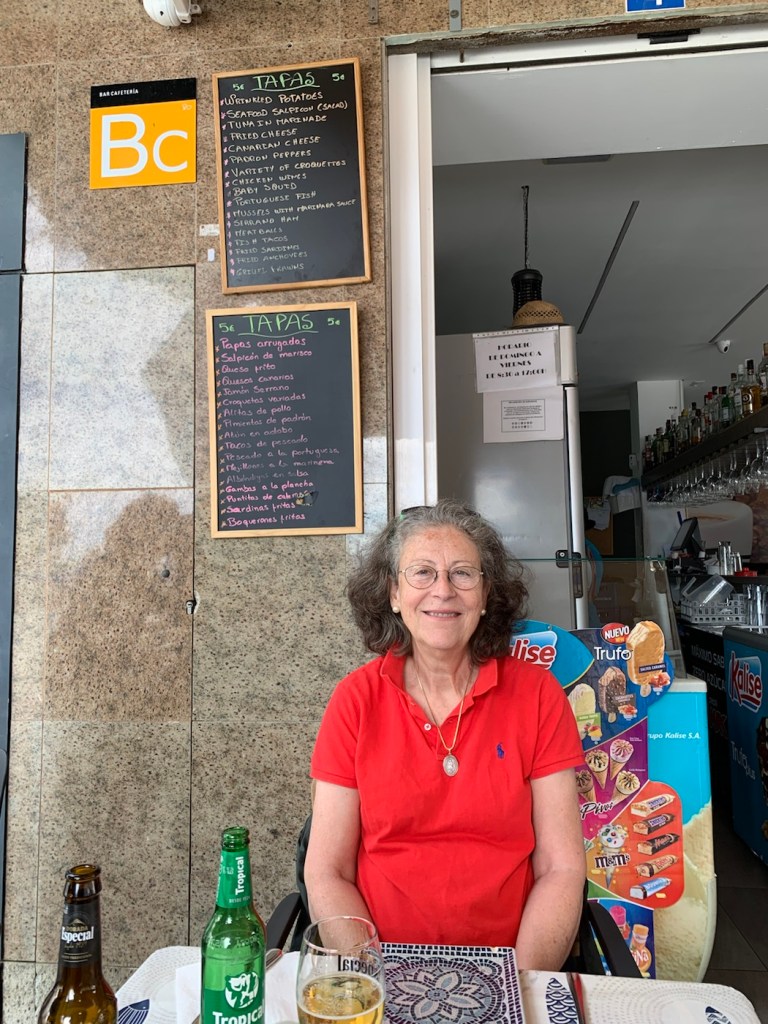
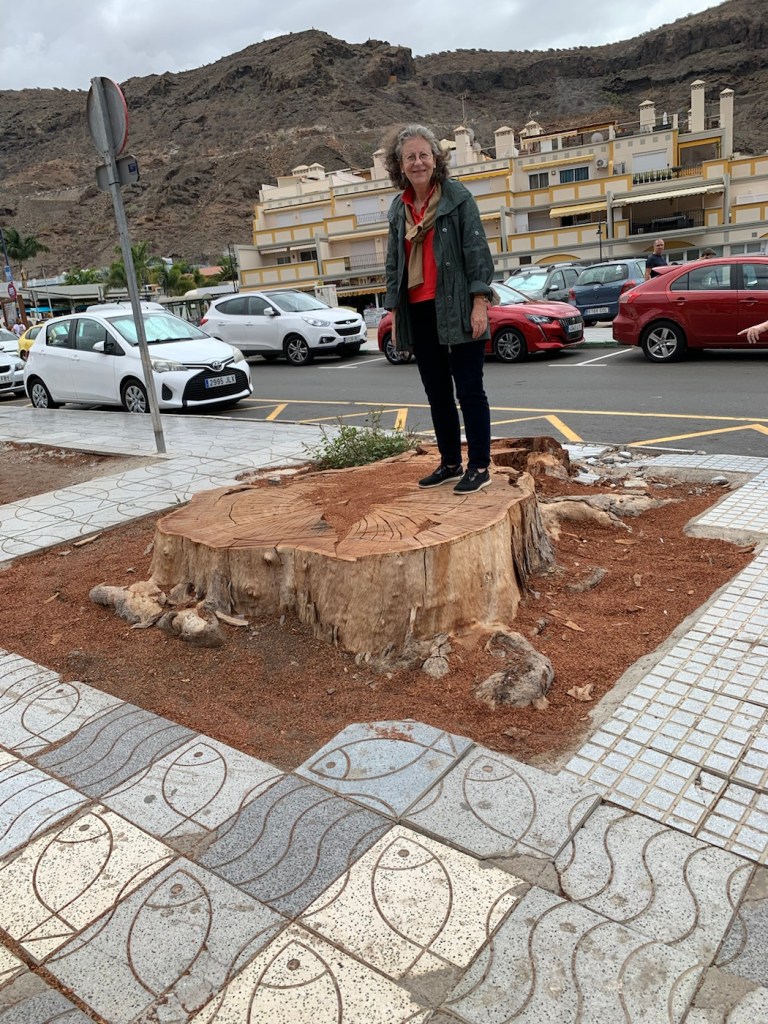


As soon as we were dropped off back at the ship, we walked into town and enjoyed more tapas and local beer followed by wandering around the town and eventually back to the ship. We walked 8.9 Kilometers today. Not an overly exciting day other than the good food and seeing a bit of another Canary Island.
The evening show was Lisa Marie Holmes, a classically trained vocalist who has done a lot of West End shows and concerts mainly based on musical theatre. She was excellent, not only portraying characters from well known shows, but also of specific artists like Barbara Streisand. She also had good “chit chat” between numbers – all in all an excellent show.

 Roger & Anne Travels