Tuesday May 28, 2024 – Kirkwall, Orkney Islands, Scotland
The ship continued its northward journey to a group of islands north of Scotland known as the Orkney Islands. There are about 70 islands of which only 20-21 are inhabited and the greatest population is on the main Island where Kirkwall is located and is the Capital. First some geography. If one goes to John O’Groats, the northern most point on the island that is comprised of England, Scotland and Wales (the southern most being Lands End in Cornwall) and you then continue by sea, north, one gets to the Orkney Islands. It is roughly on a latitude of St. Petersburg in Russia or southern Greenland. Thus in the summer, there is virtually no night and in the winter daylight hours are very short. London is closer to Rome, Italy than it is to Kirkwall, to give another dimension. We were fortunate that it was a picture perfect sunny day, not too hot or cold and not too much wind. Absolutely ideal conditions.
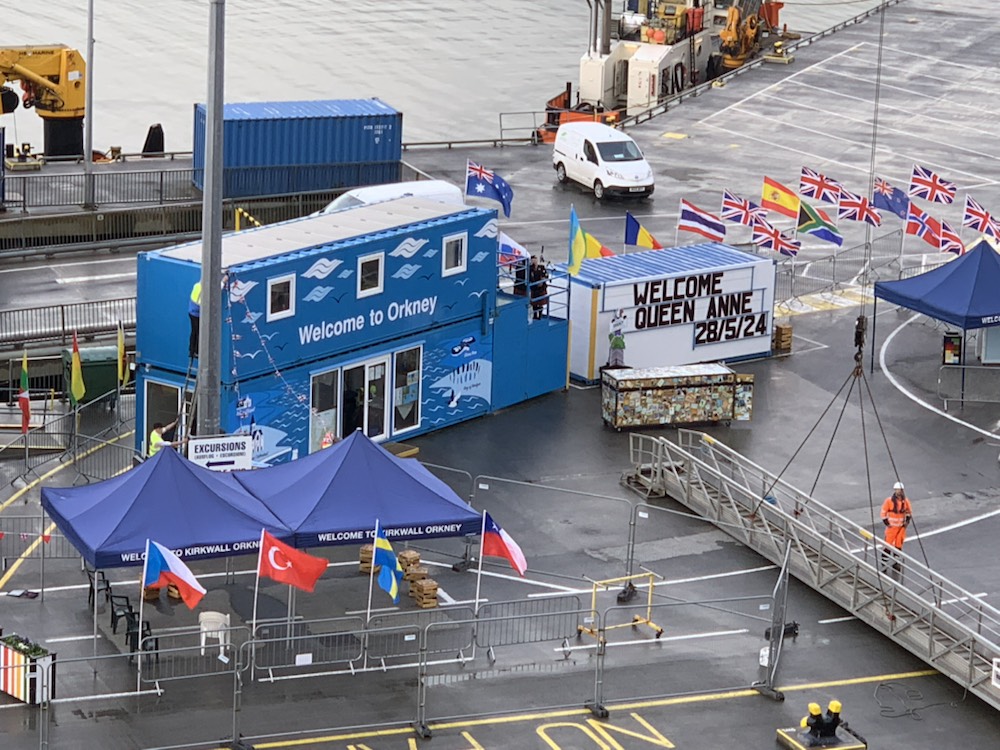
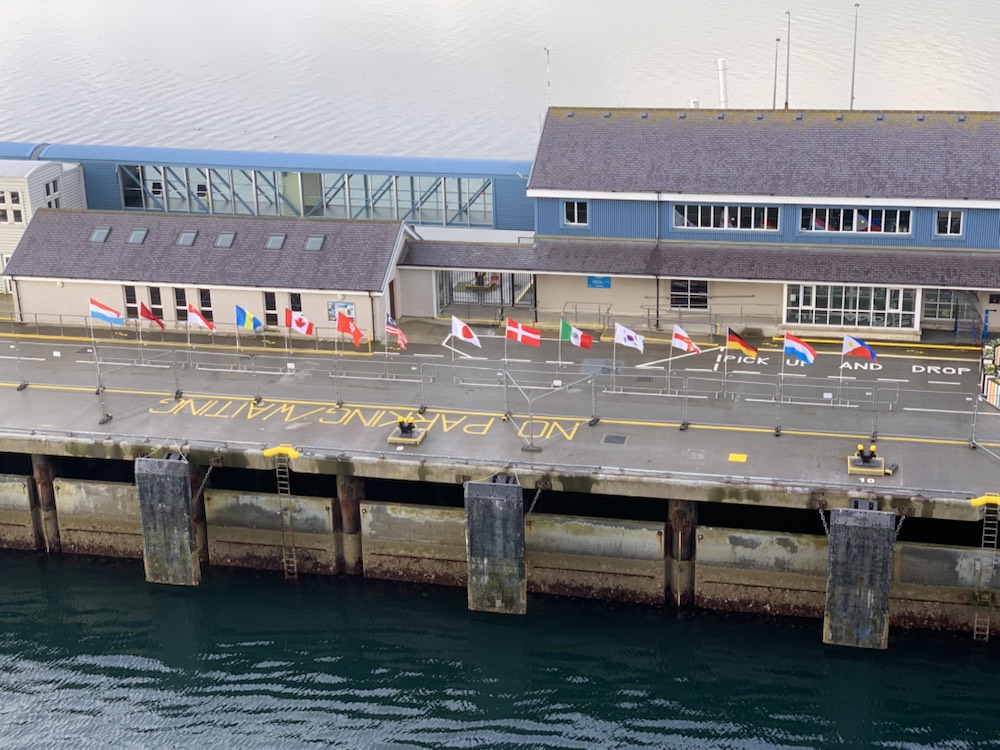
We berthed, Starboard to dock and were greeted by bagpipe music, a sign saying Welcome Queen Anne to Kirkwall. We boarded coach 11 with an Austrian young lady guide who had met a Scotsman in Canada at Divinity School, they were married and after their first child was born 11 years ago they decided to move back to Europe and her husband being a Pastor, was assigned 9 years ago to a parish in Kirkwall, where their second child was born. She knew her stories and did a very dood job of explaining things and keeping all moving along. The tour – Cliffs and Rocks was a bit misleading,but one of the key stops was at the “Ring of Brodgar”.
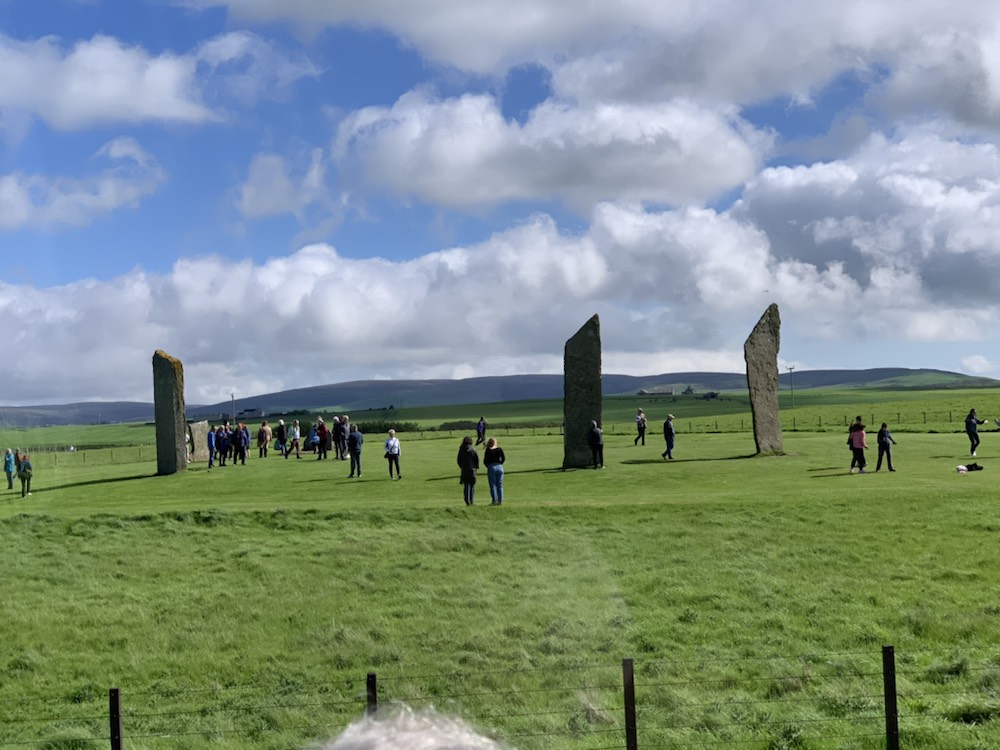
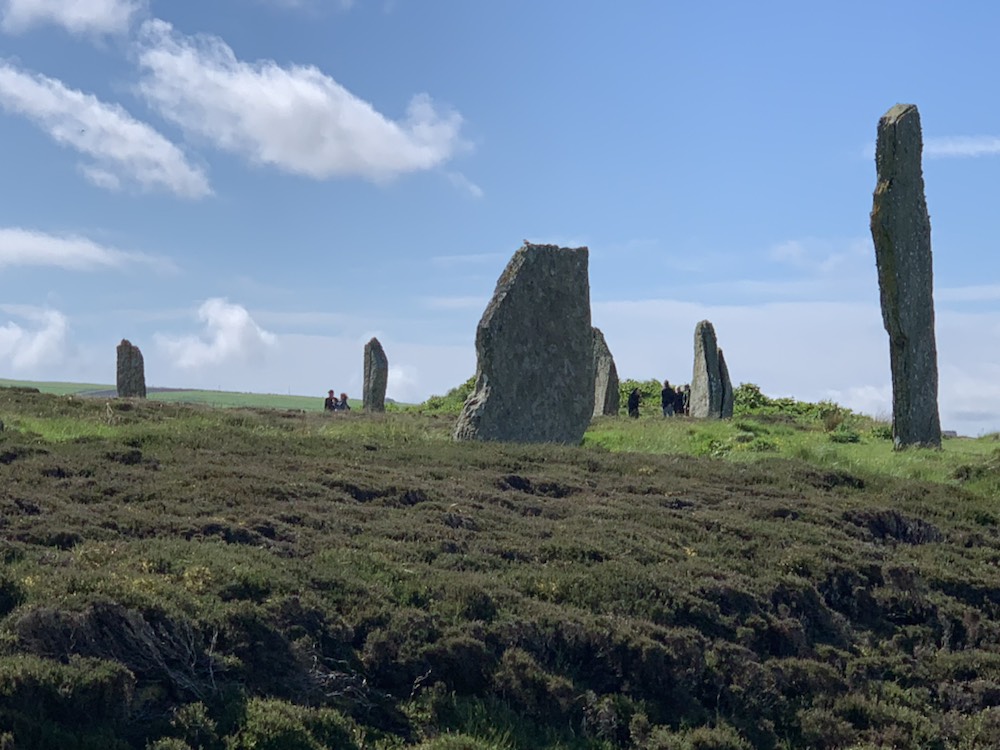
In 1999 UNESCO inscribed the area as a World Heritage Site, Neolithic Orkney. It is comprised of Skara Brae (a village with houses, stone furniture that gives an insight into daily life); Maeshowe Chambered Tomb (a chambered tomb set on a circular platform and aligned so the sun lights up the central chamber on Midwinter setting sun, and contains one of the longest Rhune texts in existence); the Standing Stones of Stenness (one of the oldest stone circles in the country dating back some 5,000 years); and the Ring of Brodgar. The ring sits in a natural amphitheater surrounded by hills and two lochs – Stenness Loch with its brackish water and Harray Loche with fresh water. It dates to the Neolithic or early Bronze Age as the only firm dates – 2600 – 2400 BCE are from the ditch that surrounds it. The ditch is 4 meters deep and 10 meters wide and took 80,000 man hours to build (100 people, 10 hours a day for 80 days) There appear to have been 60 stones or more, but today there are only 36 of which 21 are still standing. The central part is closed to visitors, but one can walk all around the outside of the circle and marvel at these rocks which despite only being burried some 1/2 to 1 meter, are not blown over by the strong winter winds.
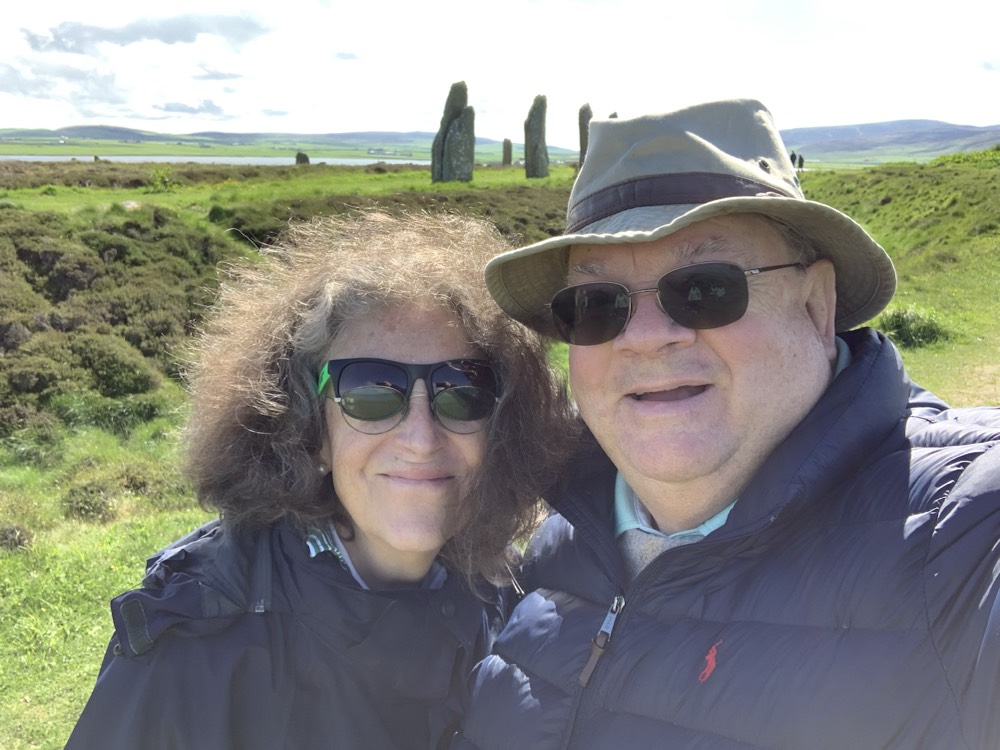
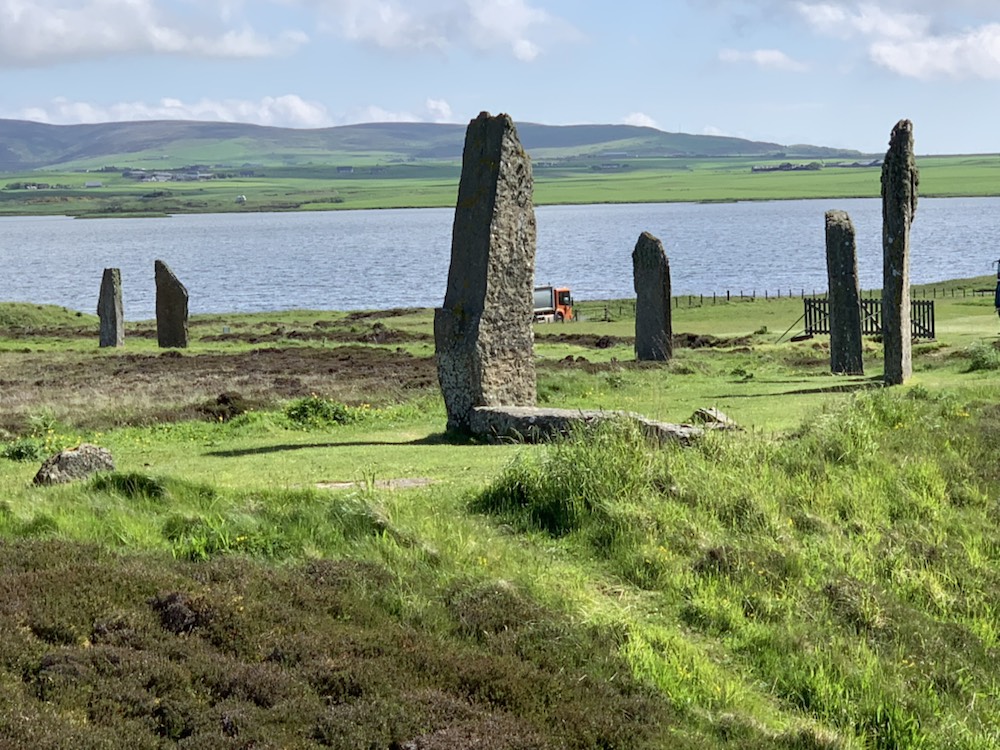
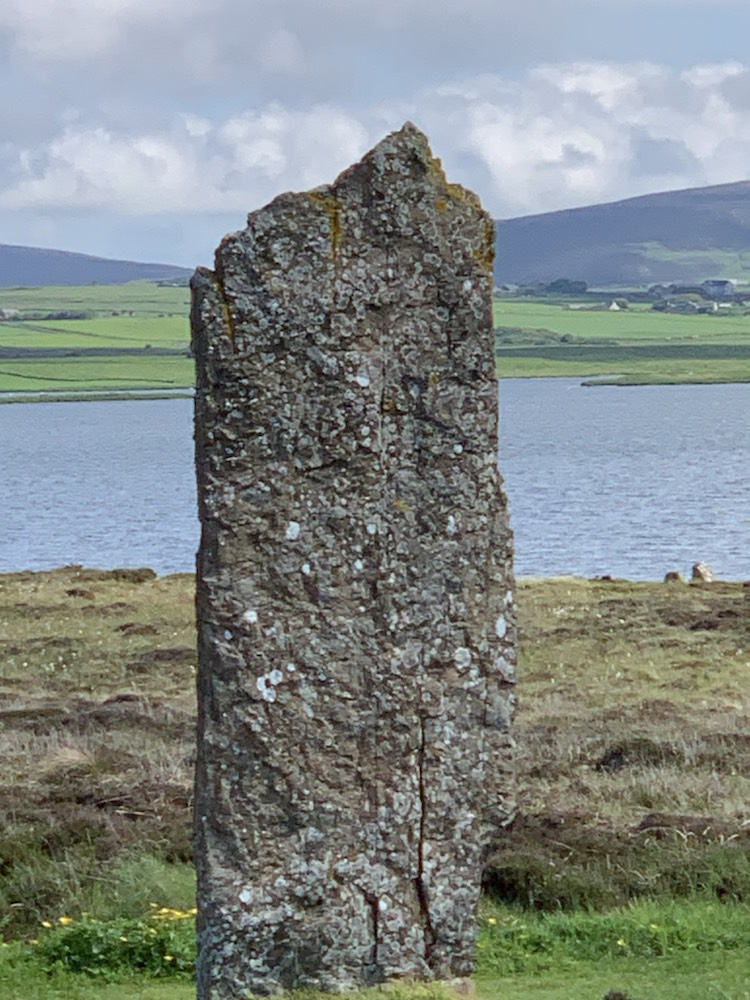
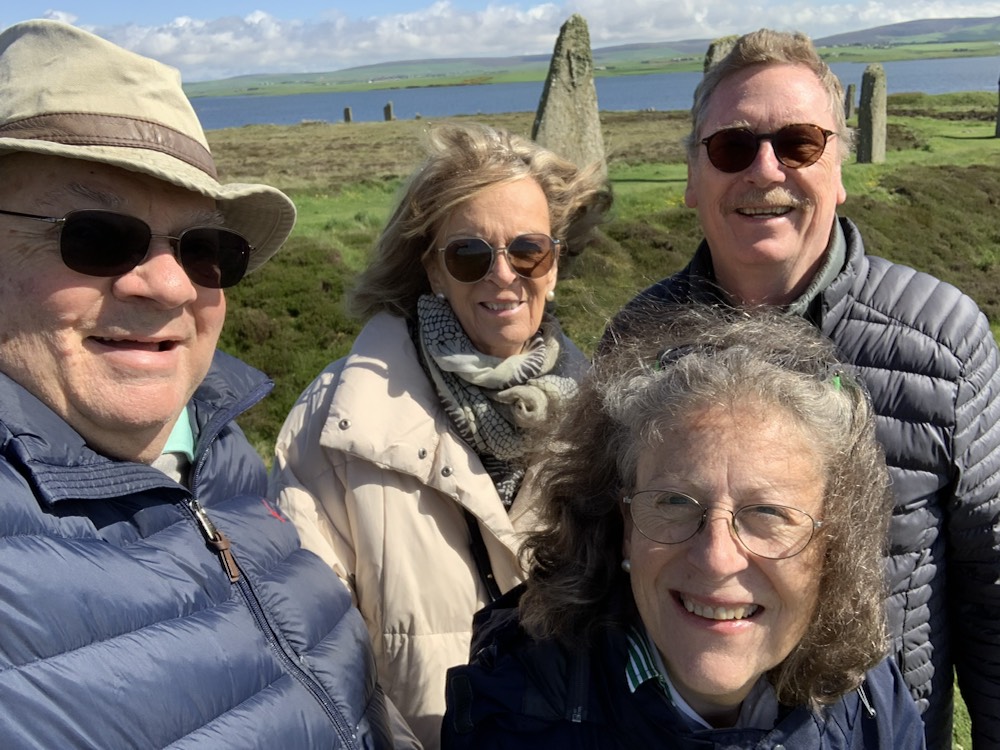
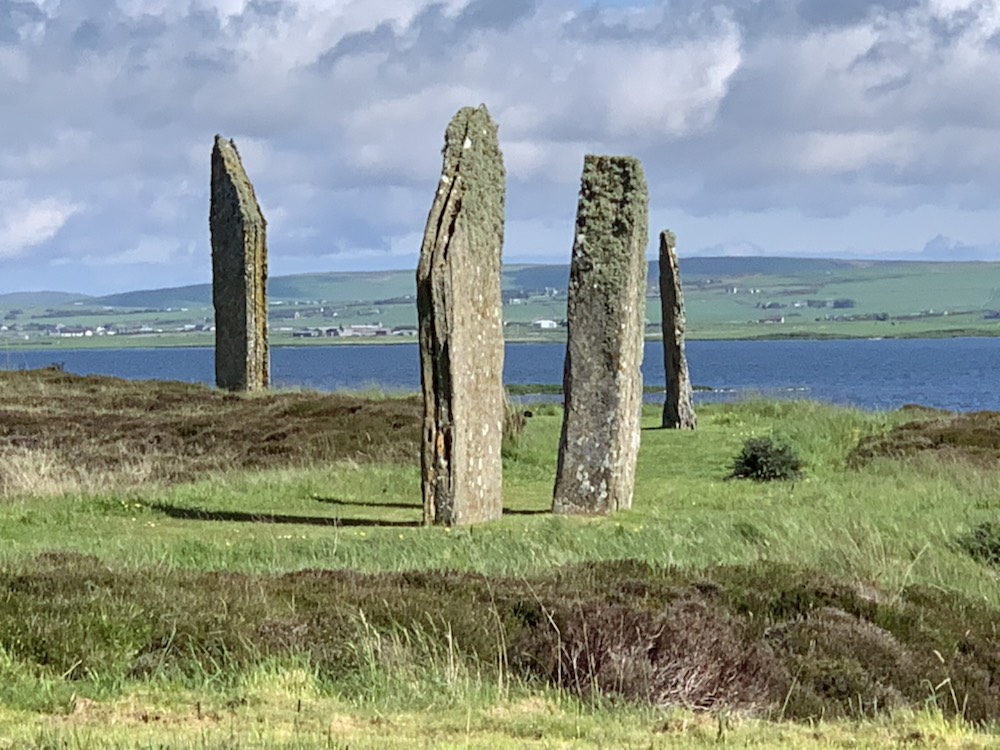
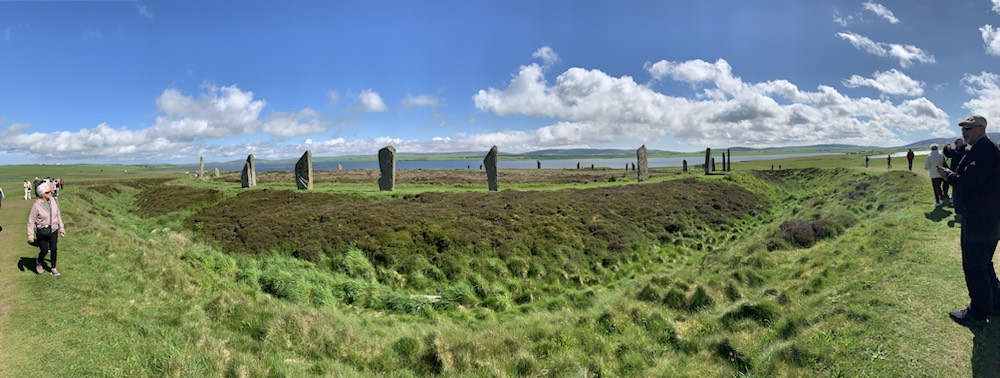
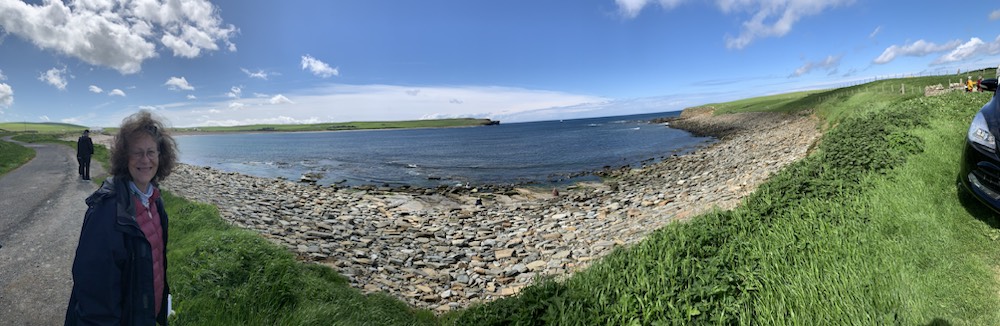
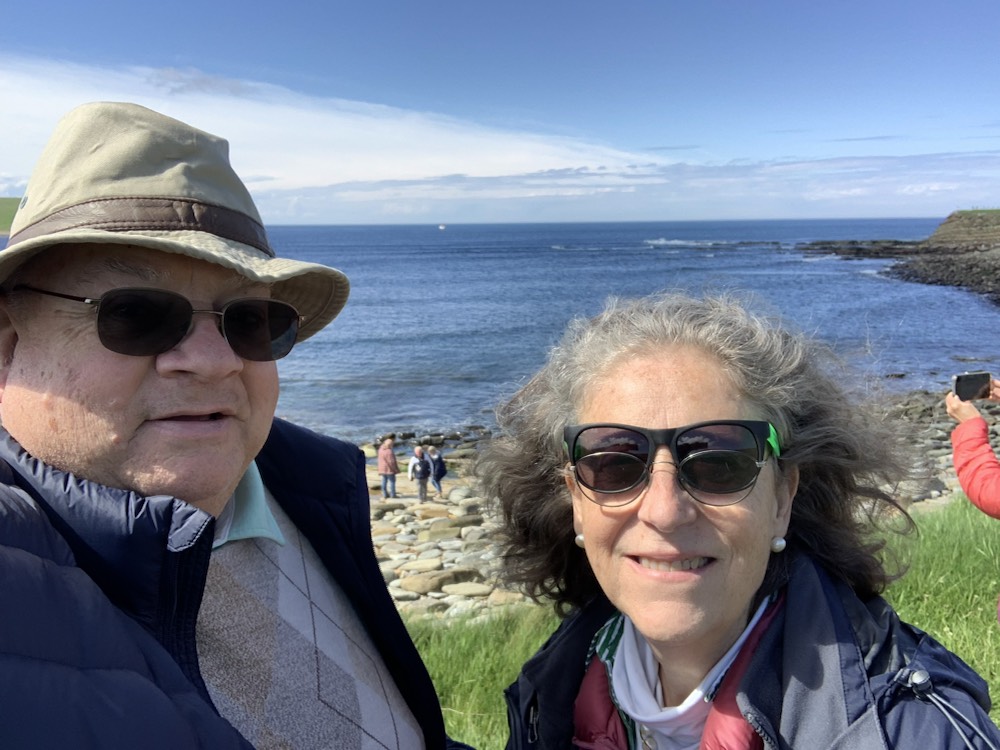
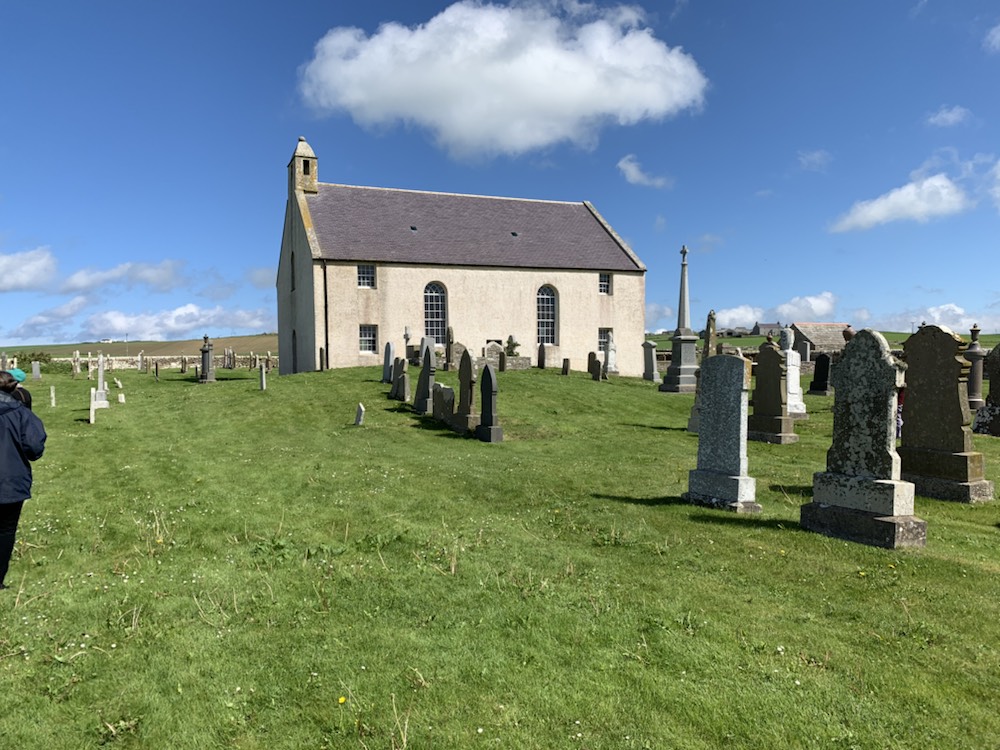
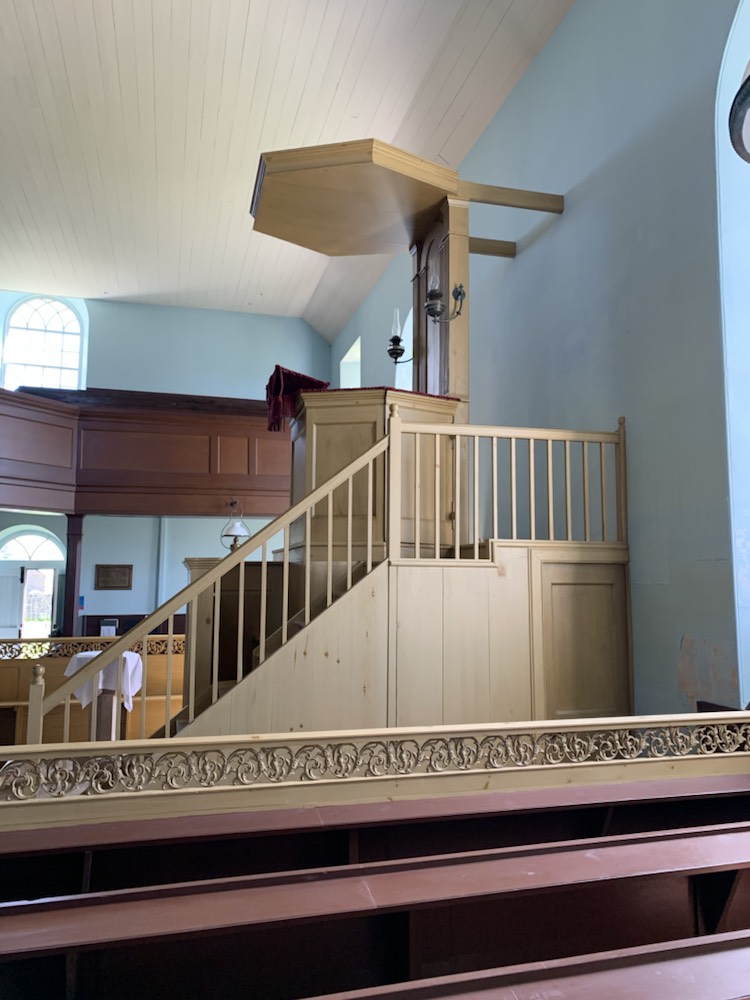
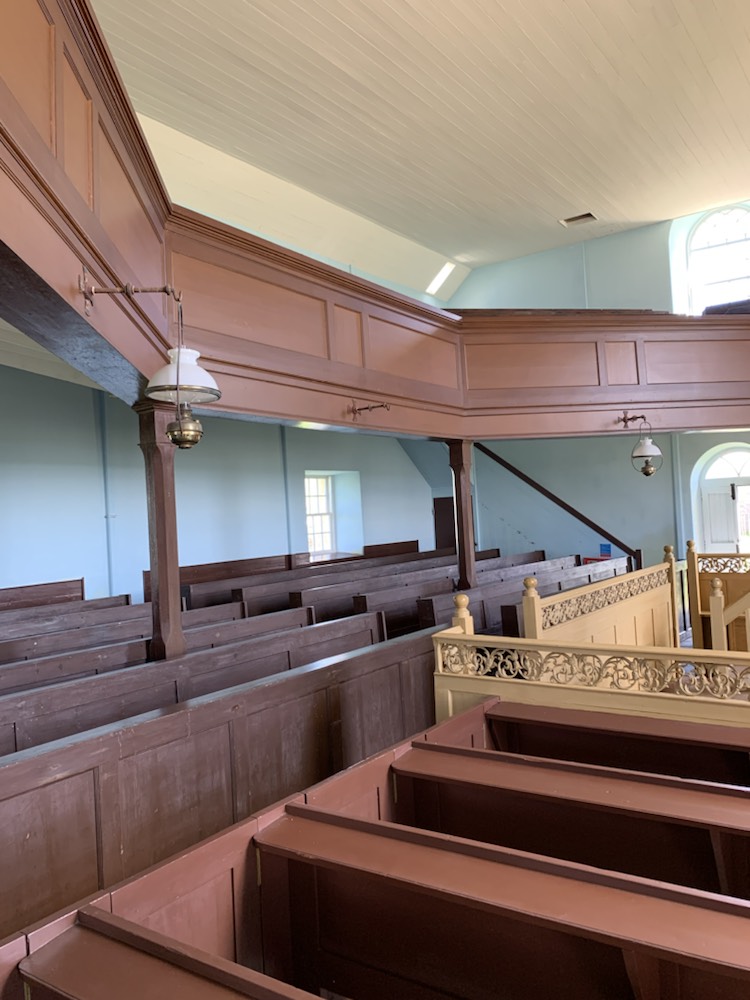
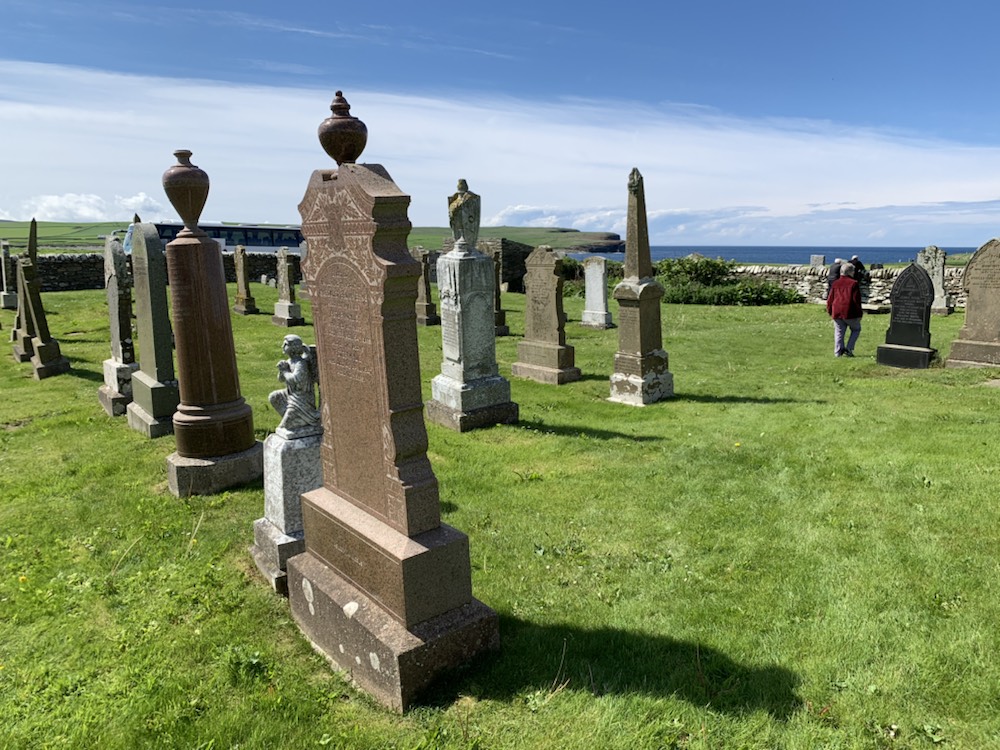
After leaving there we went to a viewpoint with cliffs and circular (stony) beach, which was beautiful and entered the Church of St. Peter in Sandwick overlooking the Bay of Skaill with its extensive graveyard, many of whom died during the world wars. It was rebuilt focusing on the raised pulpit and is now seldom if ever used.
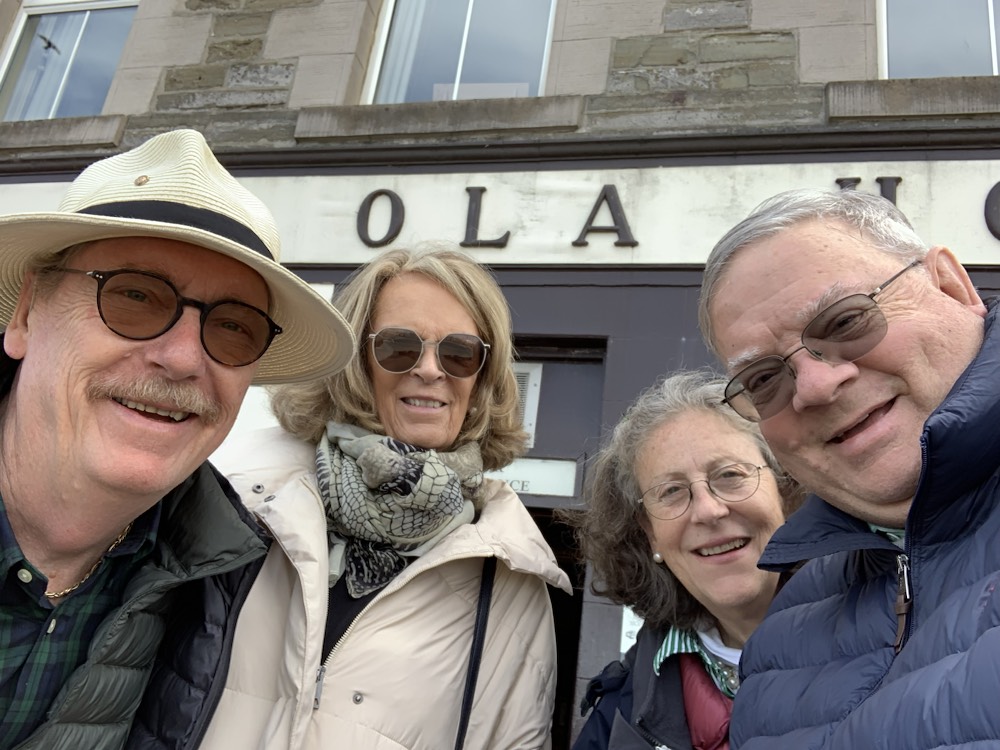
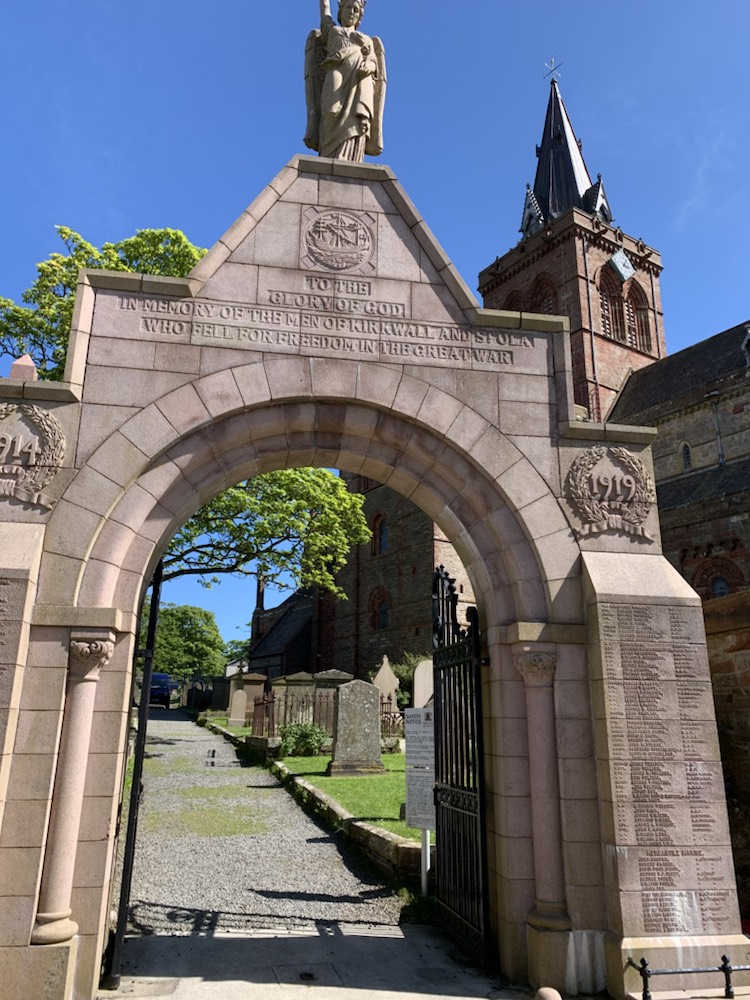
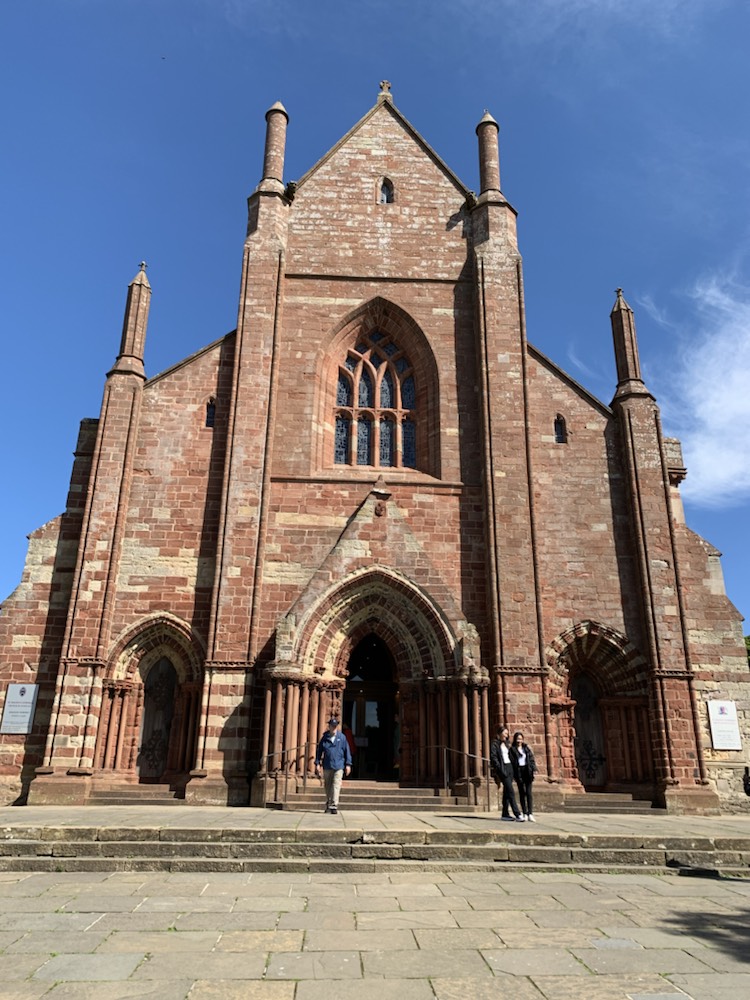
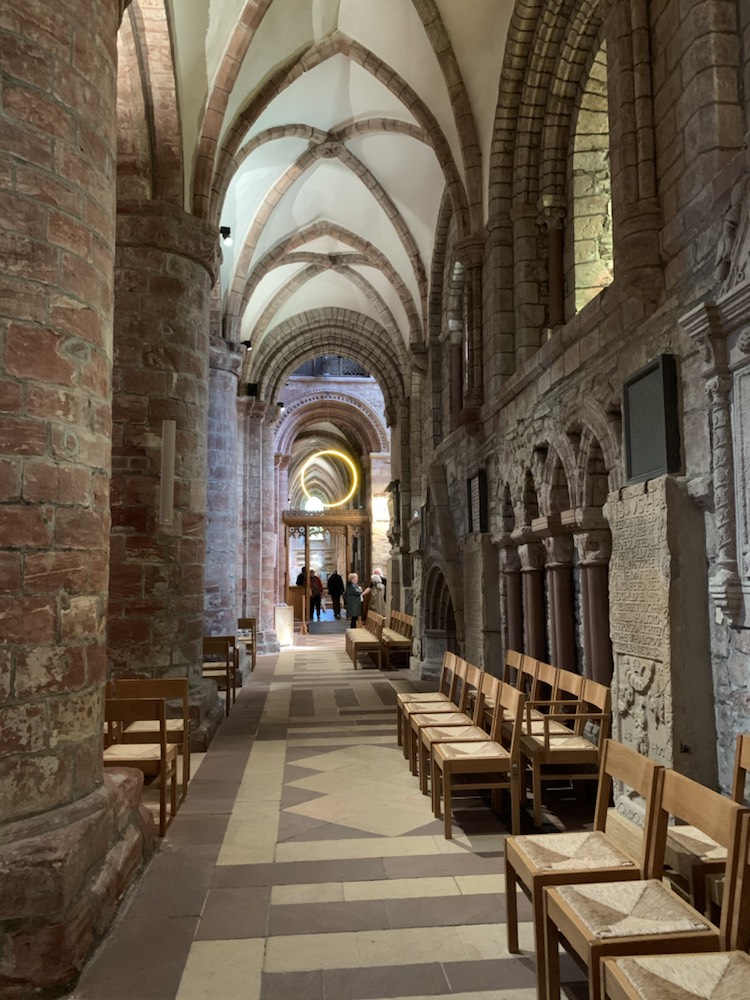
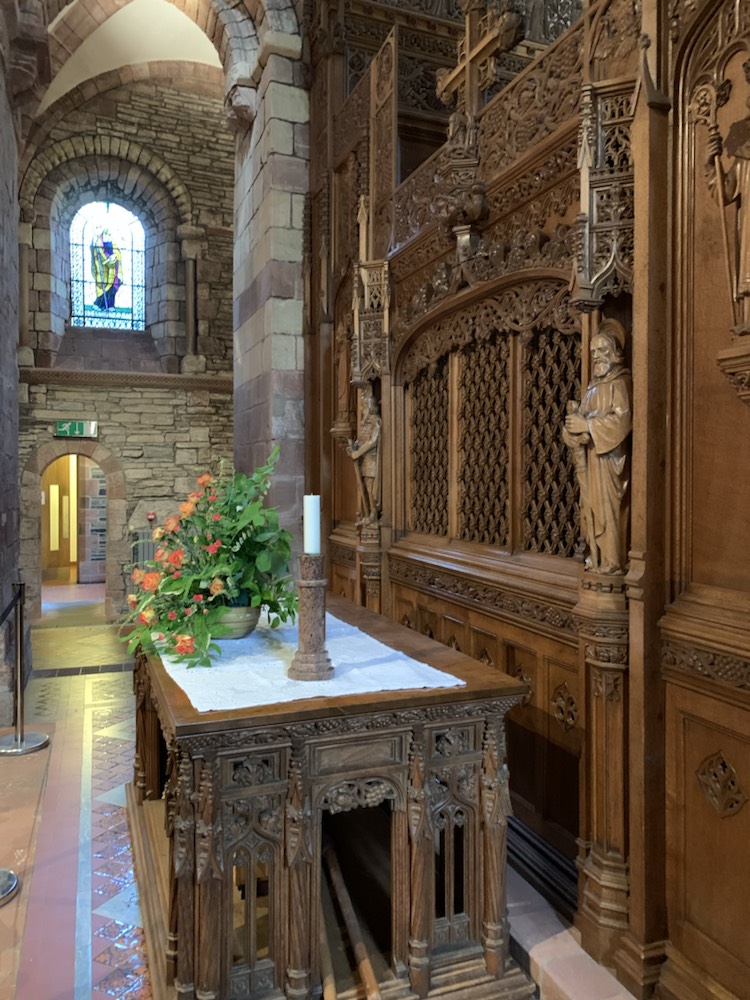
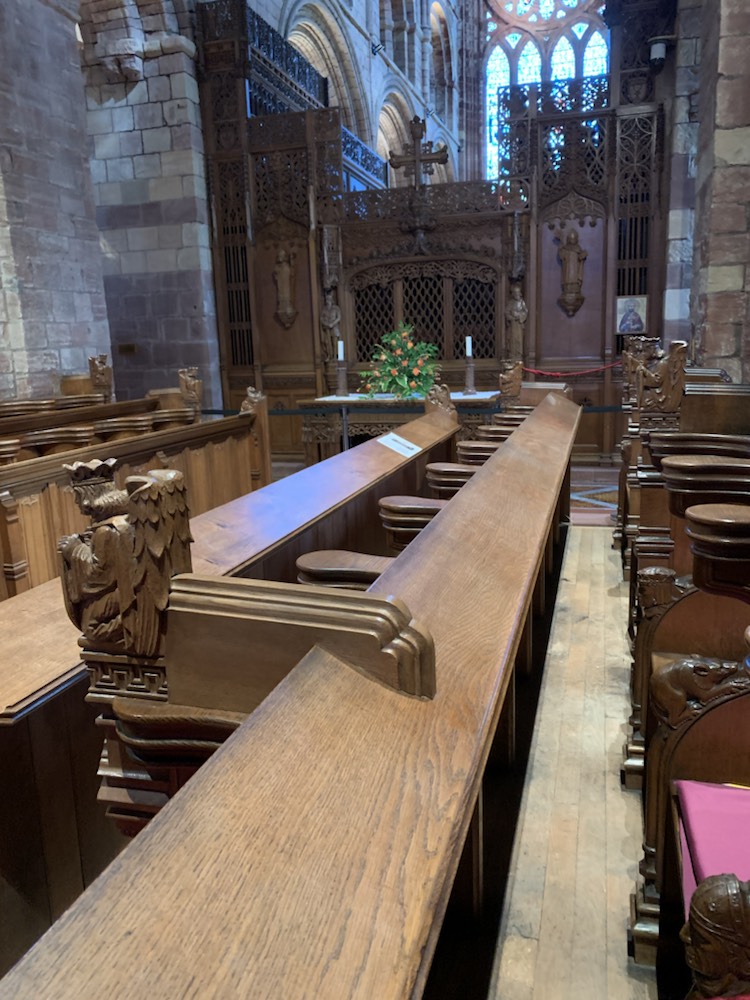
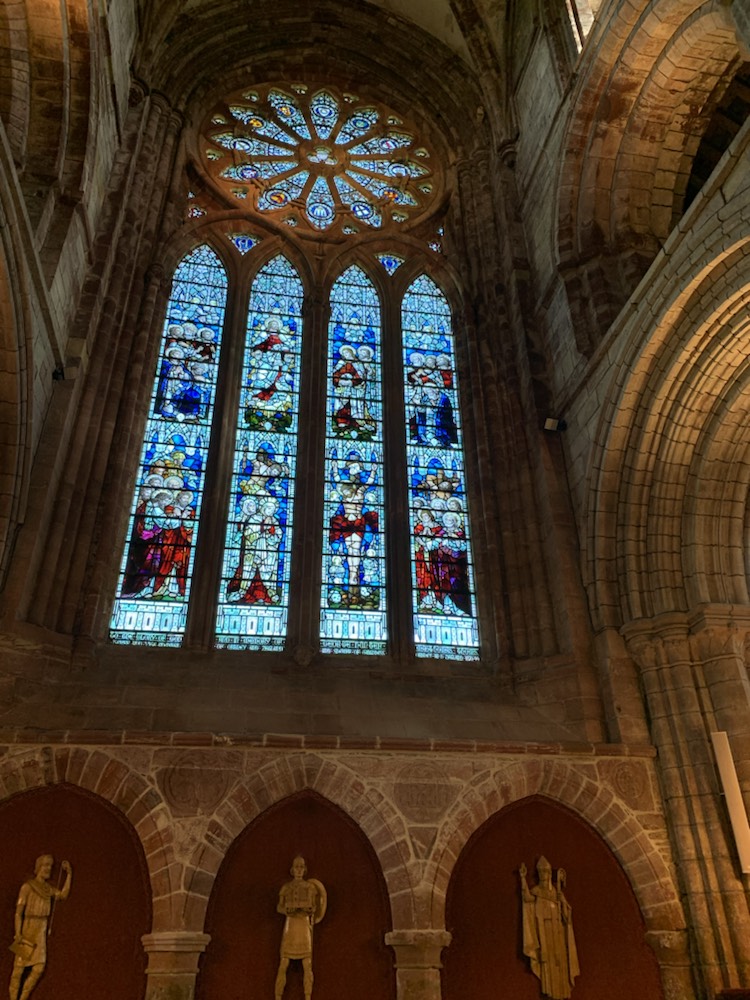
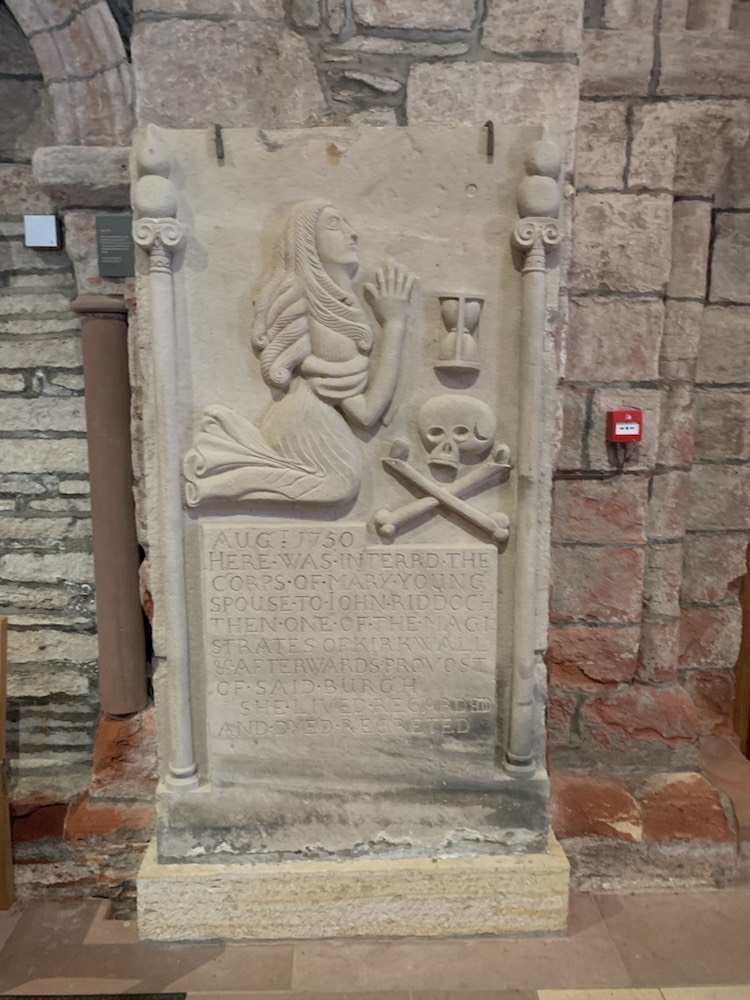
After getting back on the coach we drove past a cliff that the waves have formed a horizontal hole allowing one to see the Loch through the cliff opening. We got back to the ship and immediately took the 10 minute shuttle (4 miles) into the Town of Kirkwall where we found a nice pub – The Ola Hotel and Restaurant on the seafront and enjoyed a meal. After a bit of shopping, tasting the local ice cream (as there are so many cows – main industry other than tourism) and a visit to the St Magnus Cathedral – the most impressive sandstone building in town. Magnus Erlendsson was the Earl of Orkney in the early 1100’s which he shared with his cousin Hakon. Hakon eventually got his cook Lifolf to kill Magnus. He is buried in Birsay, and stories of miracles at his grave started. His nephew Earl Rognvald (originally Kali) came from Norway to claim his mortal remains, promising to create a “stone minster and a place of pilgrimage in honor of his Uncle”. In 1137 the cathedral was founded and the remains of Magnus were brought back to Kirkwall. A few years later, those of Rognvald (killed in 1158) were also brought and both are interred in the cathedral within the walls of the Choir. Initially the Cathederal was part of the Archdiocese of Nidaros (in Trondheim, Norway) which we visited last year. Orkney became part of Scotland in 1468 and the Cathederal was given to the people of Kirkwall by the Scottish King James III. Today it is part of the Church of Scotland, but under special arrangement can be used by any Christian denomination.
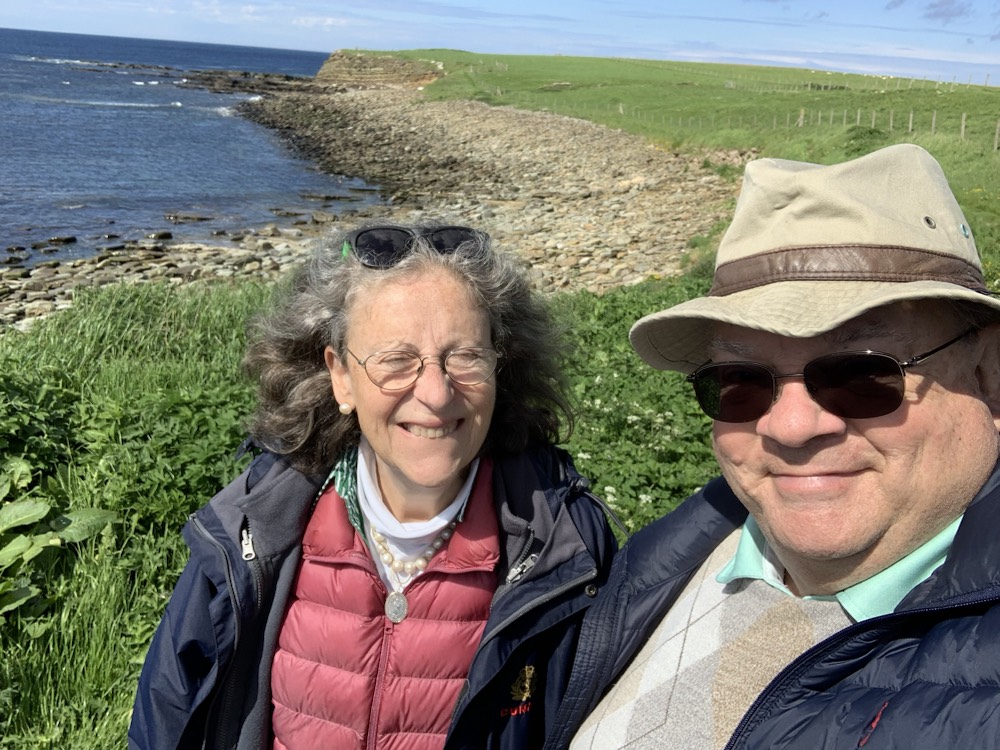
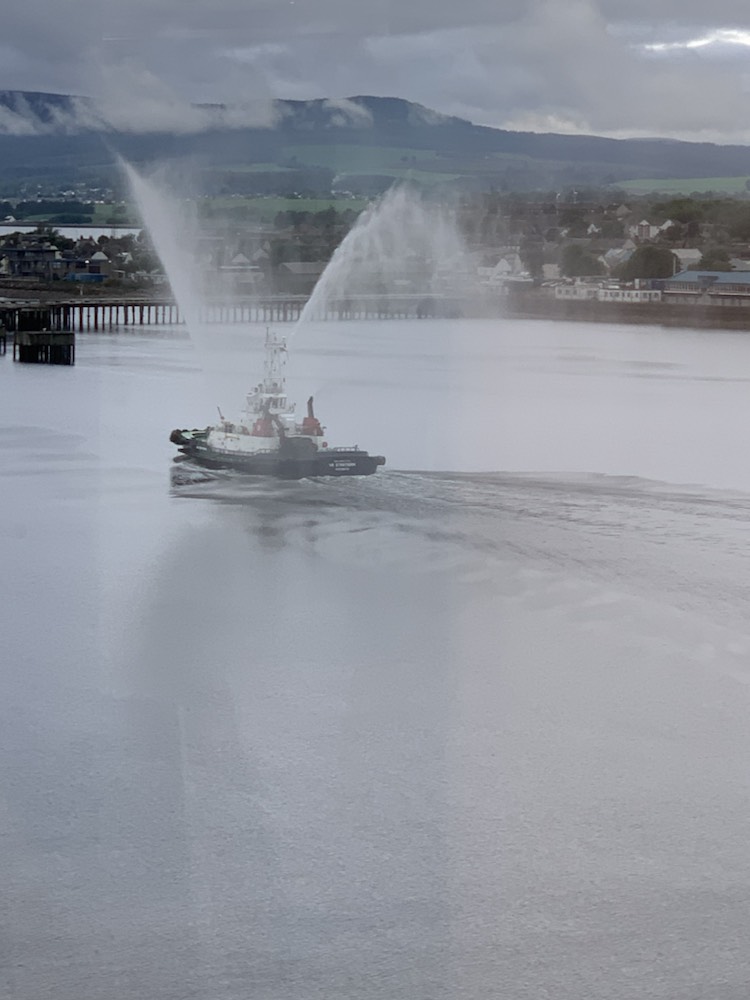
We then returned to the ship. Anne & Roger decided to take it easy for the evening as we had seen the show but Patsy and David went to see the brilliant dueling musicians playing on the same piano – Worbey and Farrell.

 Roger & Anne Travels