Saturday January 25, 2025 – Crossing the Panama Canal – New Locks
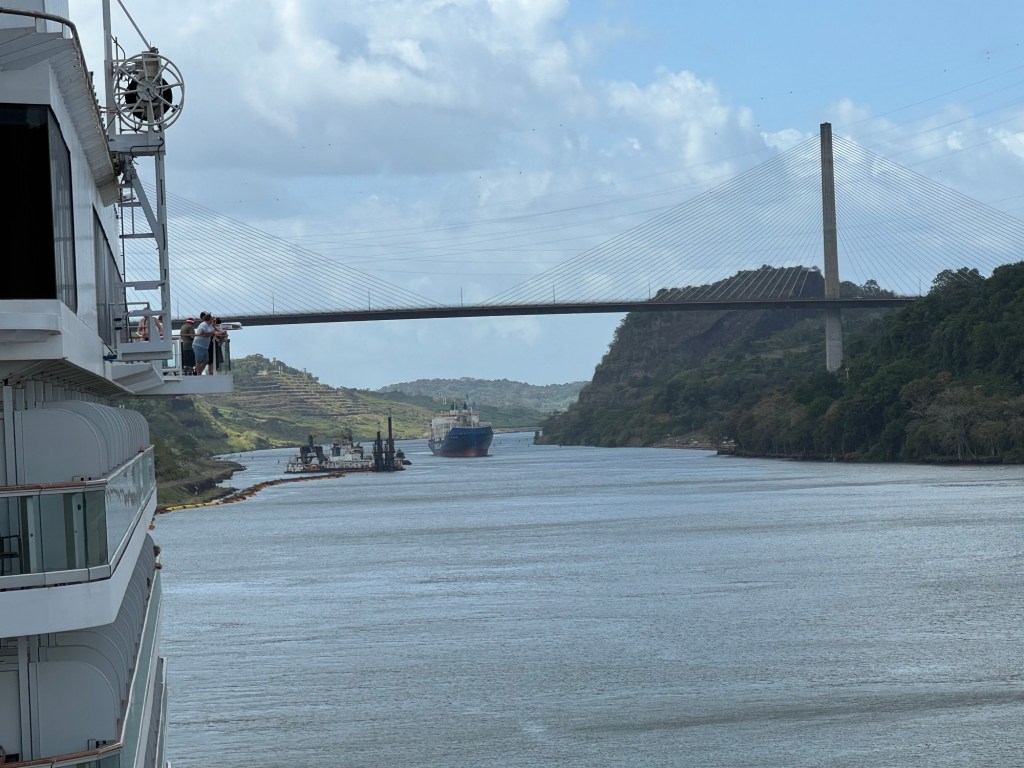
We were up early as at 6AM we were entering the Panama Canal under the Atlantic Bridge headed for the first (triple) lock of the “New” Canal – Agua Clara Locks, near Colon. The Agua Clara Locks are parallel to the (Atlantic Side) Gatún Locks of the old / original Canal and the Cocolí locks are near the original dual set of locks – the Pedro Miguel and the Miraflores locks (on the Pacific Side).
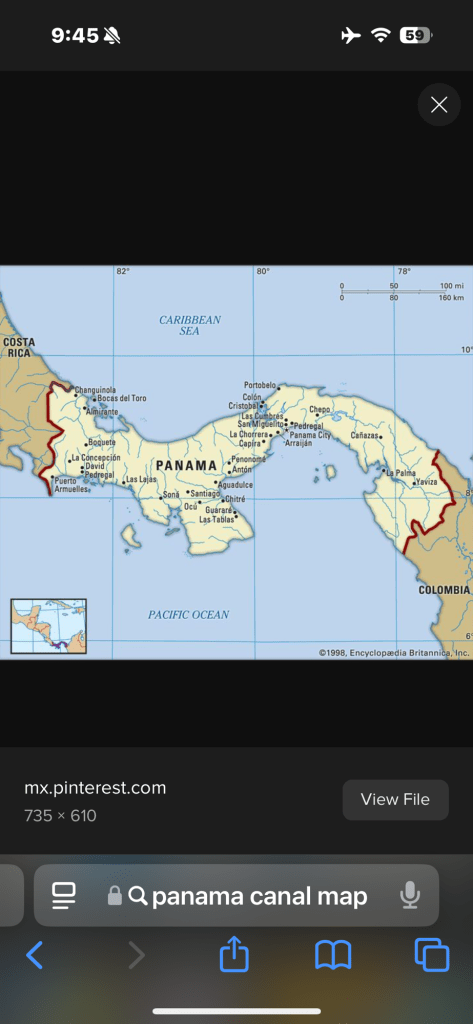
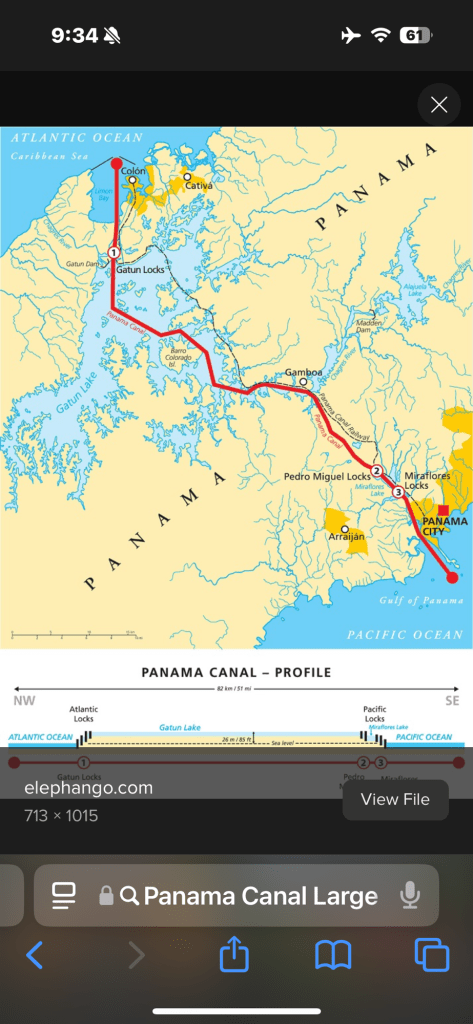
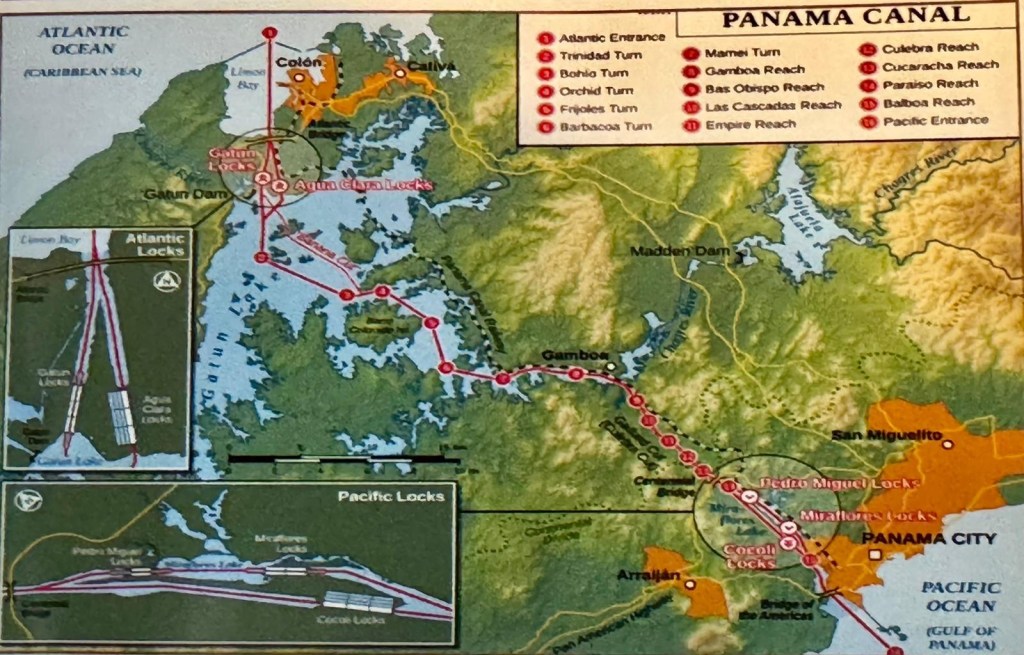

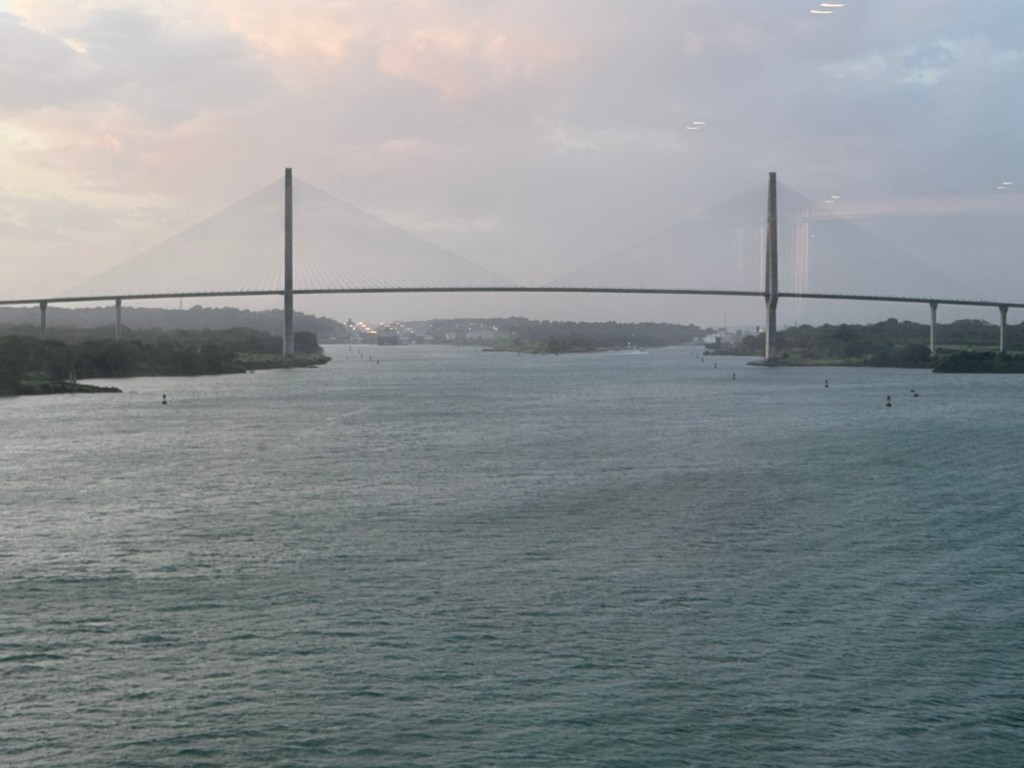
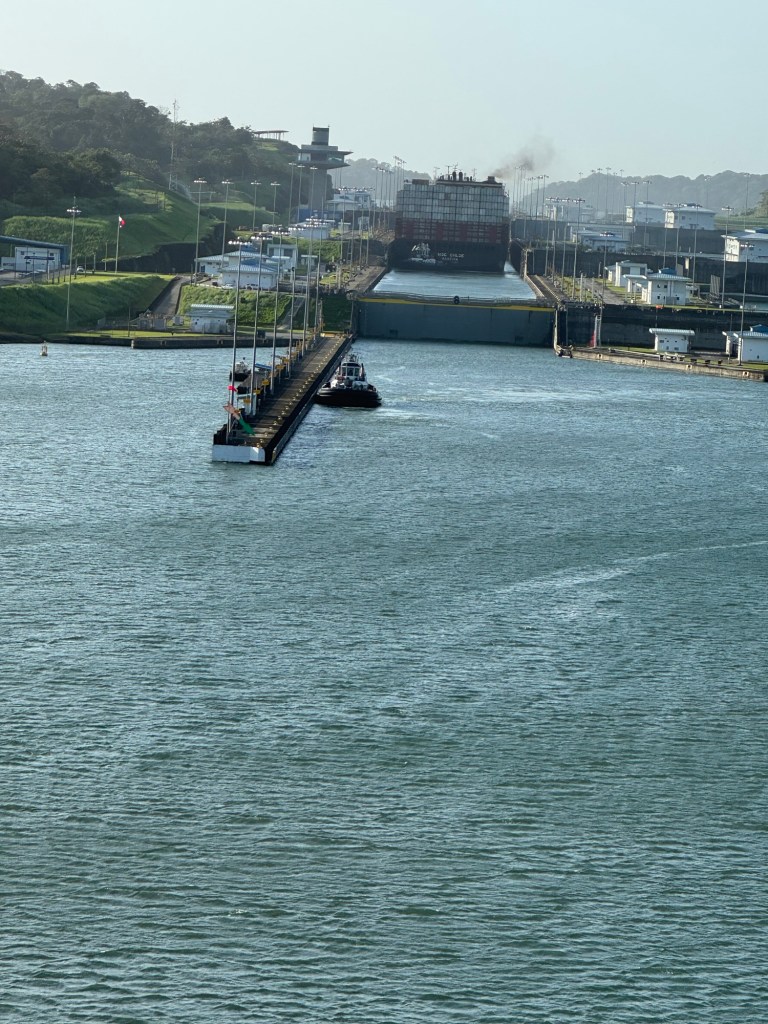
Through the day we traveled through Gatún Lake with it’s various twists and turns – Trinidad, Bahia, Orchid, Frijoles, Barbados and Martel turns, under the 3 bridges (Atlantic, Centennial and Americas) and the Gamboa, Bas Obispo, Las Cascadas, Empire, Culebra, Cucaracha, Paraíso and Balboa Reaches through the Gallardo Cut, eventually going through the Cocolí (triple) locks and under the Bridge of the Americas past Panama City and into the Pacific Ocean at 7PM.
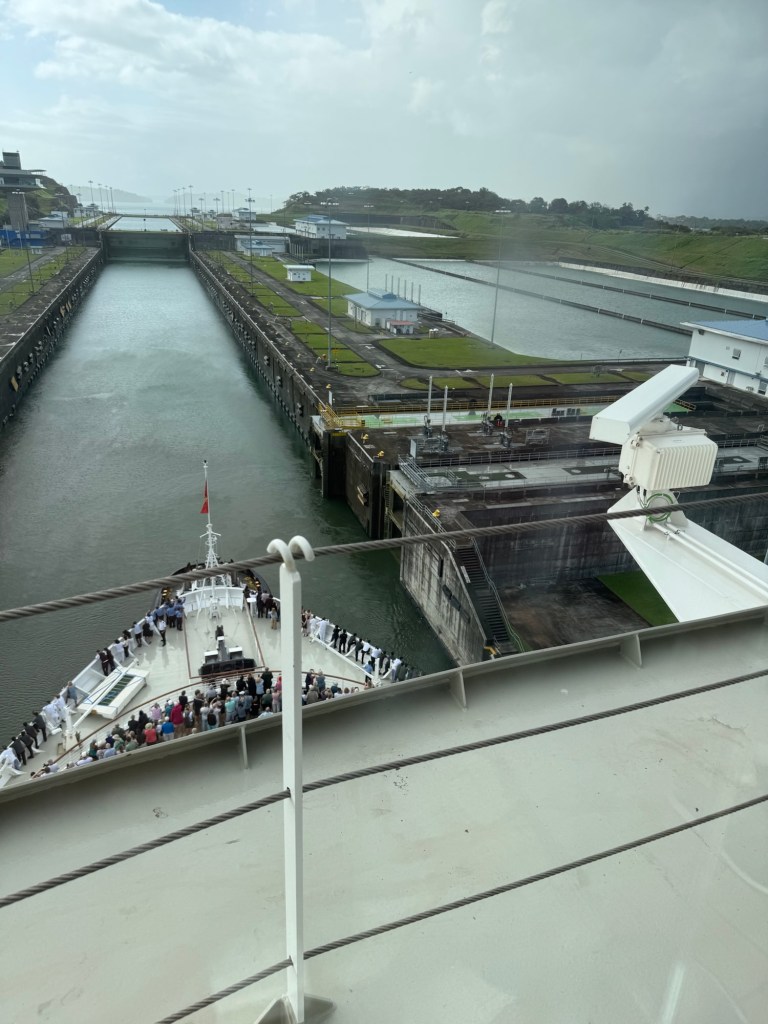
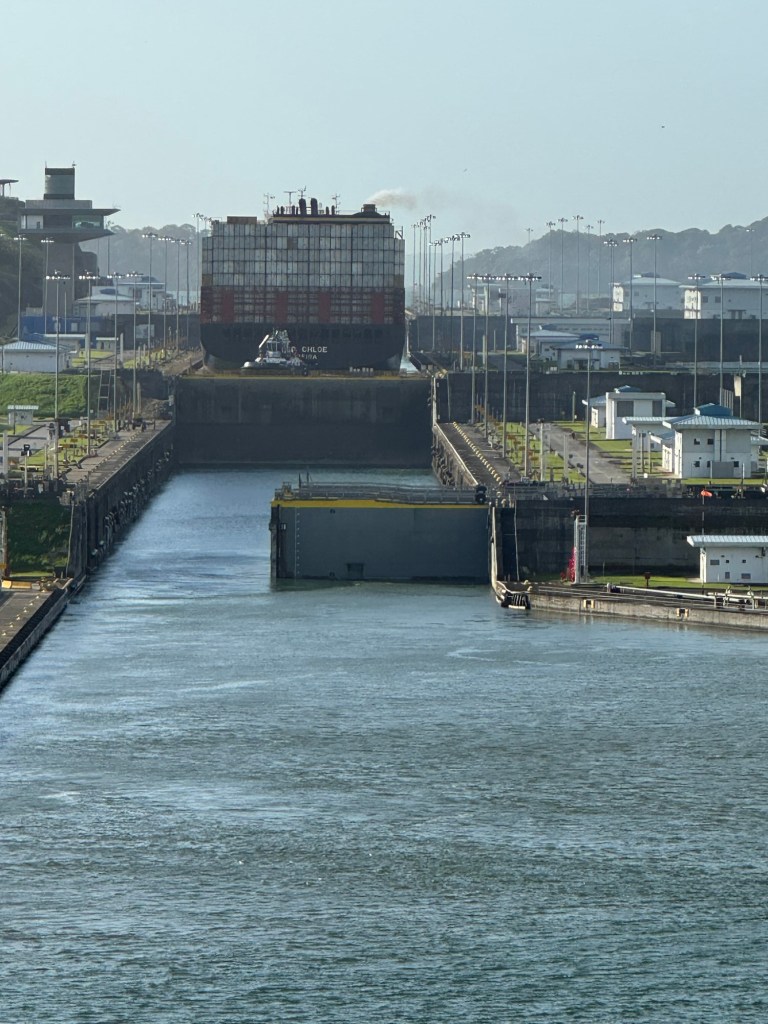
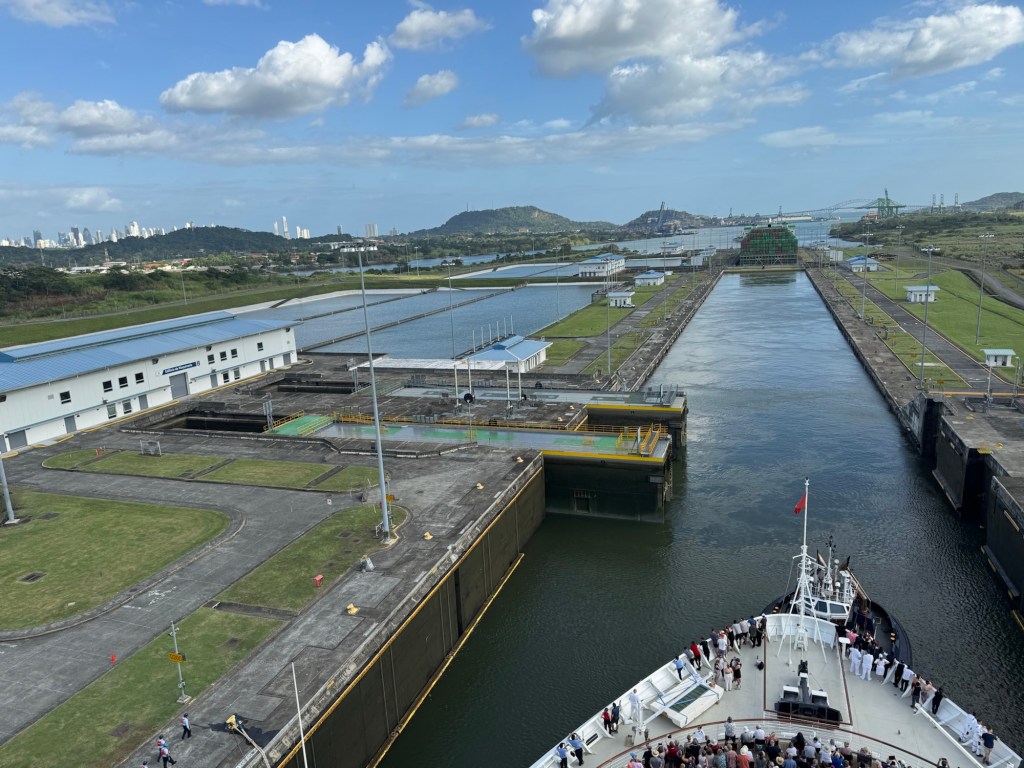
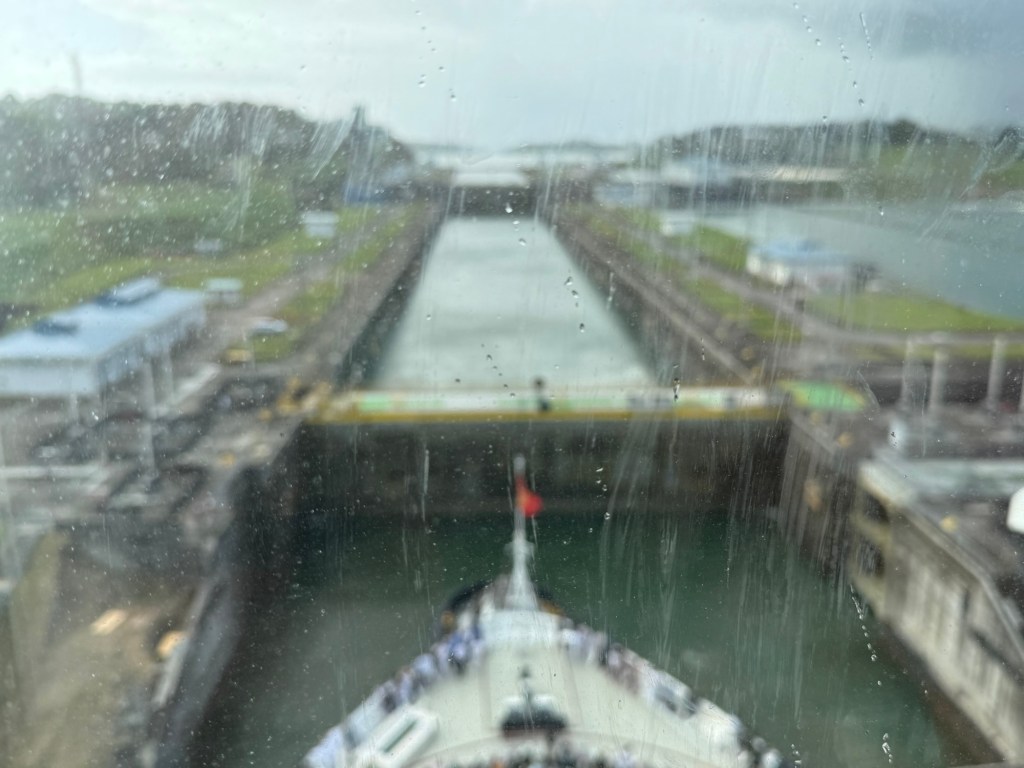
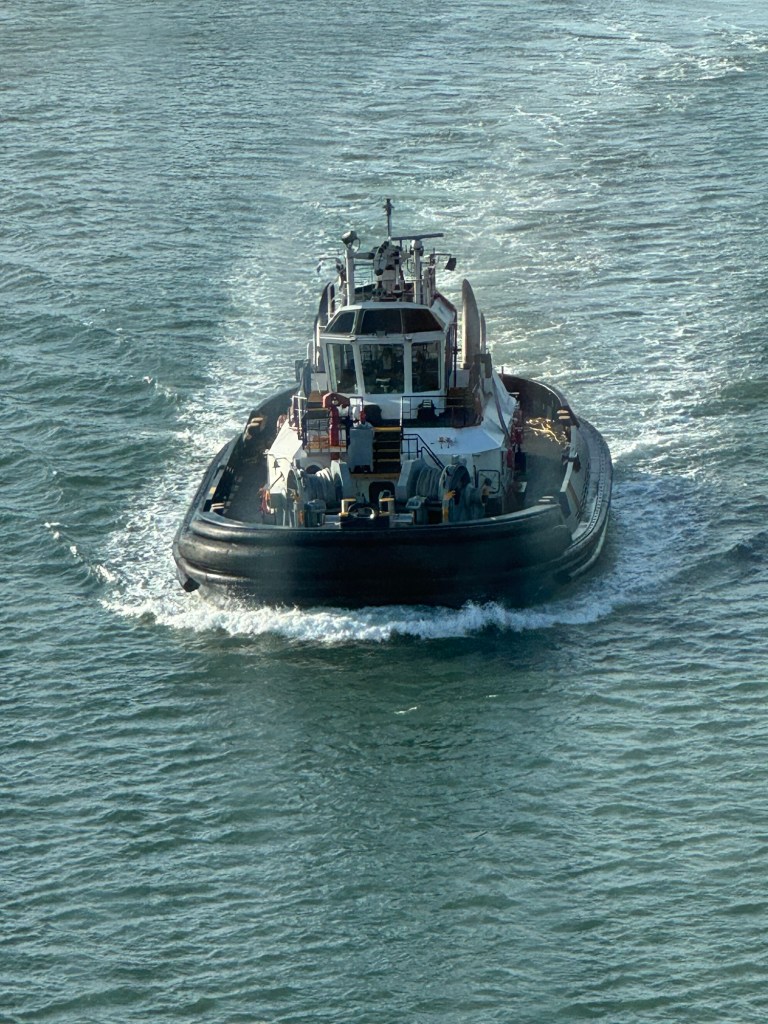
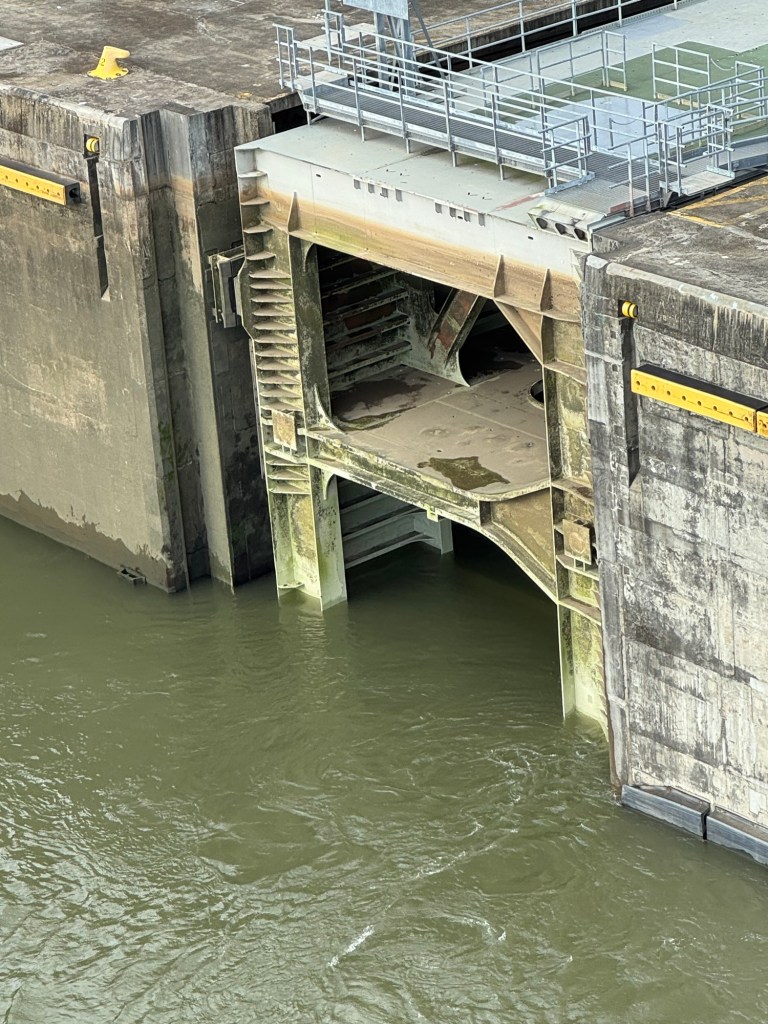
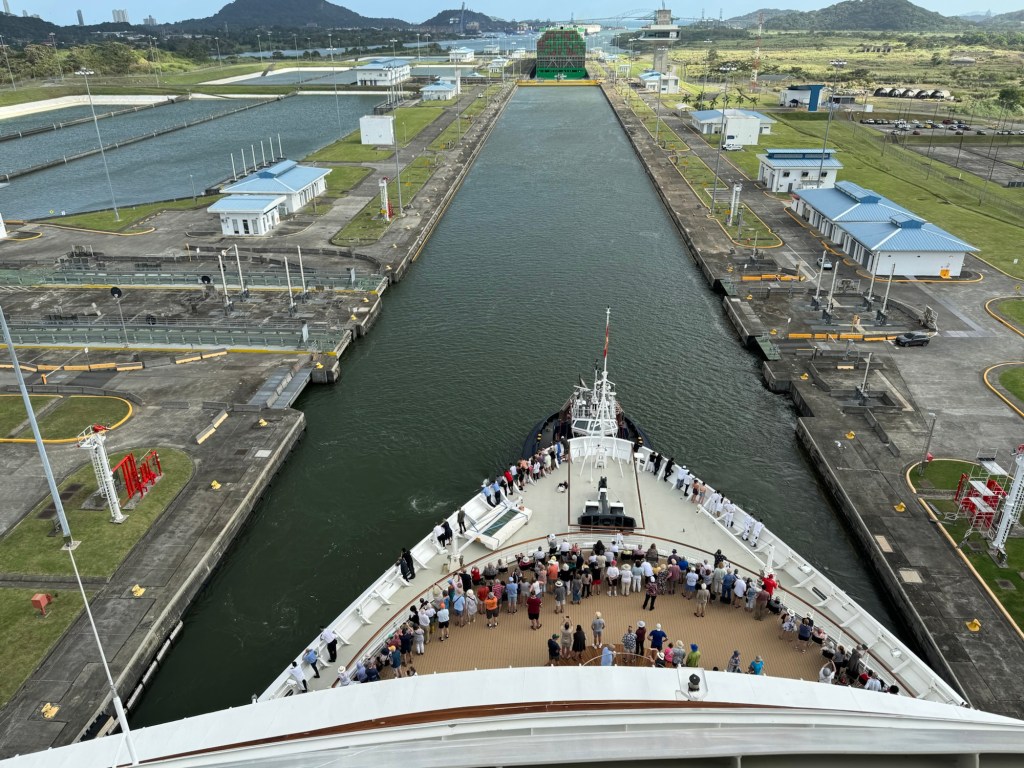
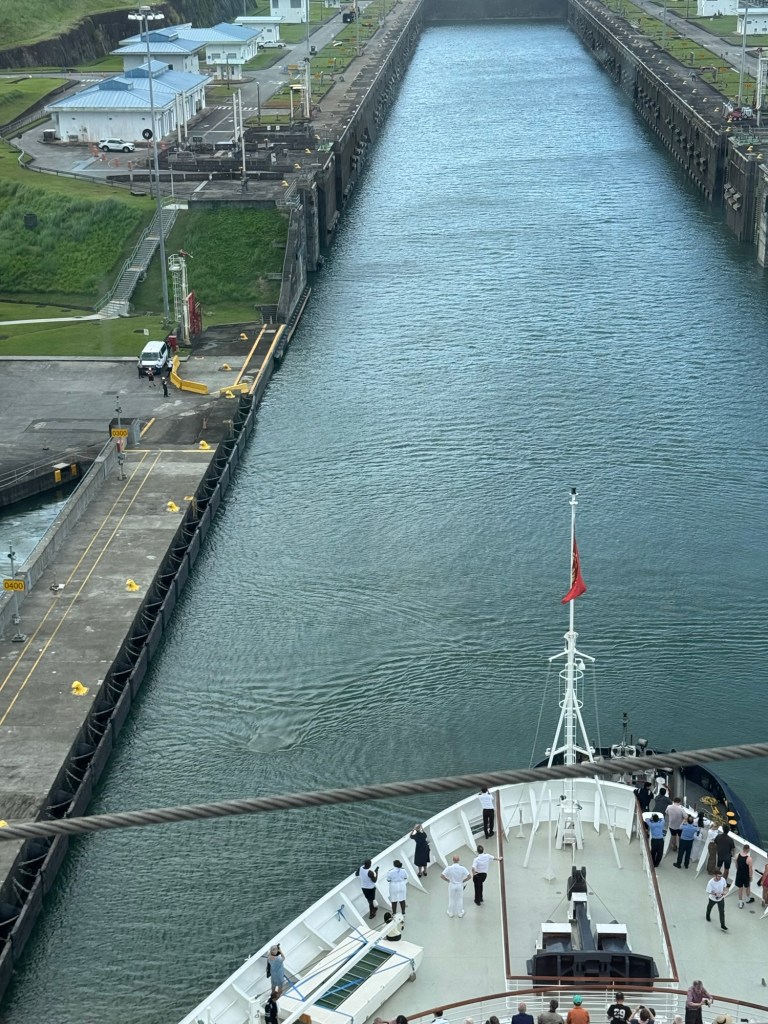
We have crossed the Canal before, but still there is a very special thrill going through both the Panama as well as the Suez Canals (we have done both of them in both directions). A hot day, particularly as one wants to be outside in the sun seeing the tropical forests and particularly the transit through the Locks. This was the first time we had been through the New Locks and it was the maiden (first time) that the Queen Anne has been through either canal. We were told that the cost to Cunard for the passage was US$425,000. This is calculated using a formula that includes the gross tonnage, displacement etc. When I used to work for Chase Manhattan Bank, now JP Morgan Chase, and had responsibility for all of Latin America, one of the areas was Panama and specifically collecting the tolls for the Panama Canal Authority. In those days (some 30+ years ago) the cost of transit used to be about US$250,000, depending on the size of the ship.
In a nutshell, dams built on the river Chagres and Lake Alajuela created the artificial lake Gatún which is 26 meters (85 feet) above sea level. Thus, ships have to be lifted up on one (Ocean) side then sailed across the lake and lowered back down to sea level on the other (Ocean) side. Under the original locks some 52 million gallons of water are wasted for each crossing. Fortunately there is a great deal of rainfall in the area and the damming of rivers and lakes allow for there to be enough water. However when the new locks were built a different, entirely gravity fed water system with adjoining reservoirs which allows for 60% or the water used, is recycled. The reason for this type of structure (as opposed to the flat Suez Canal) is to reduce the amount of excavation by creating the lake.
Originally, it was the French that decided and started to build the canal on January 1, 1881, but by 1889 they had run out of funds and there were many deaths due to the various tropical diseases. In 1904 the USA took over the project which was completed on August 15th, 1914. The US signed an agreement whereby it belonged to the US for 99 years, however after various uprisings, Omar Torrijos and Jimmy Carter (Presidents of Panama and the US) agreed to turn over the canal to Panama. So from 1977 to 1999 the handover from US to Panamanian control took place. Between September 2007 and May 2016 new larger locks were constructed at each end by the Panamanians and went into service on June 26, 2016. Panamax – the maximum size of vessels that can travel through the canal are as follows:-
Original Canal 3 lock system – Lock Size – 320 meters long X 33.5 meters wide X 12.56 meters deep; Panamax ship size – 294 m long; 32.3 m beam, 12 m draft
New Canal Lock System – Lock Size – 427 meters long X 55 meters wide X 18.3 meters deep; New Panamax ship size – 366 m long; 49 m beam, 15 m draft

 Roger & Anne Travels