Tuesday January 28, 2025 – Puerto Quetzal, Guatemala
Port to Dock, Tour Bus 2 – Antigua Guatemala,
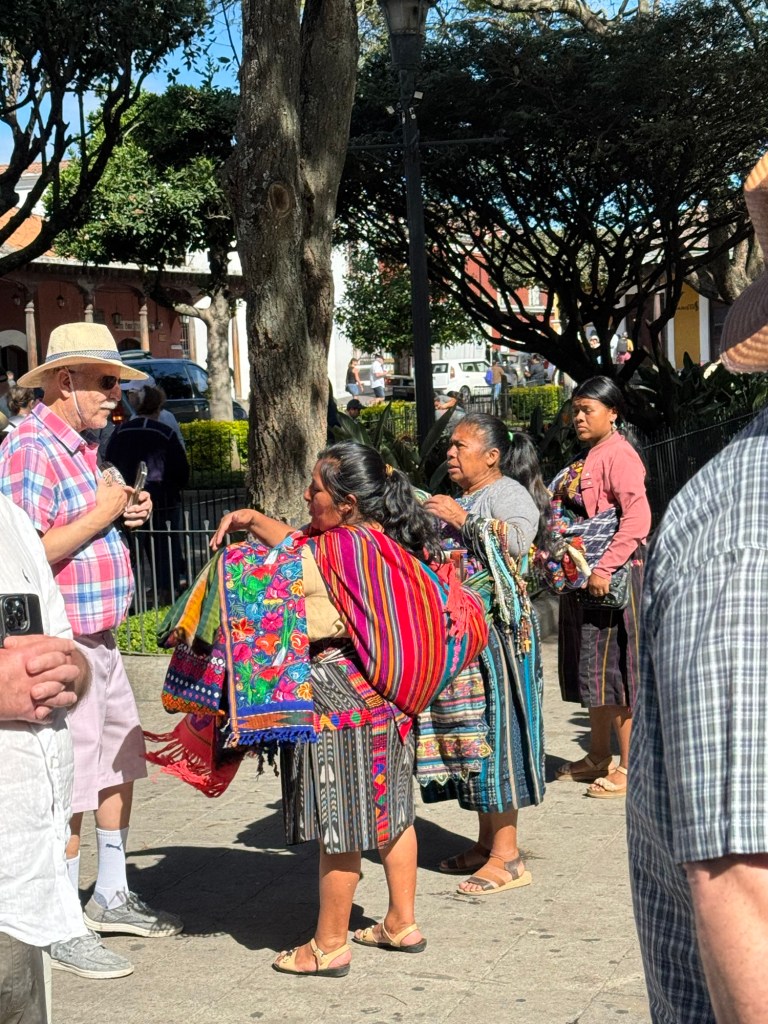
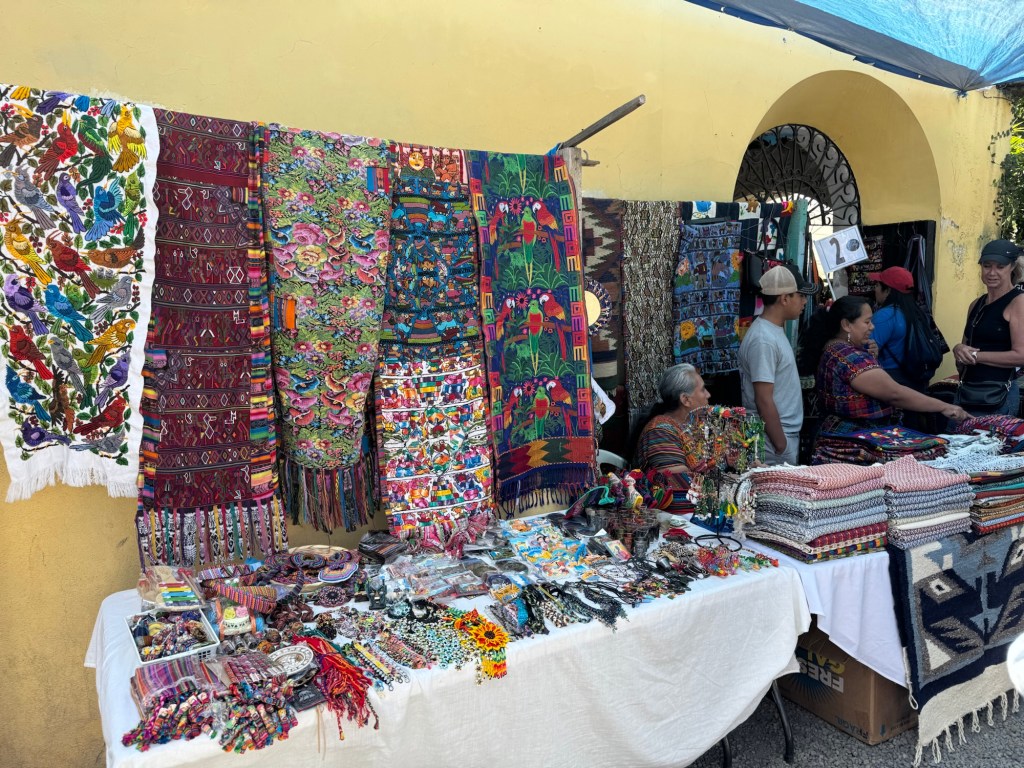
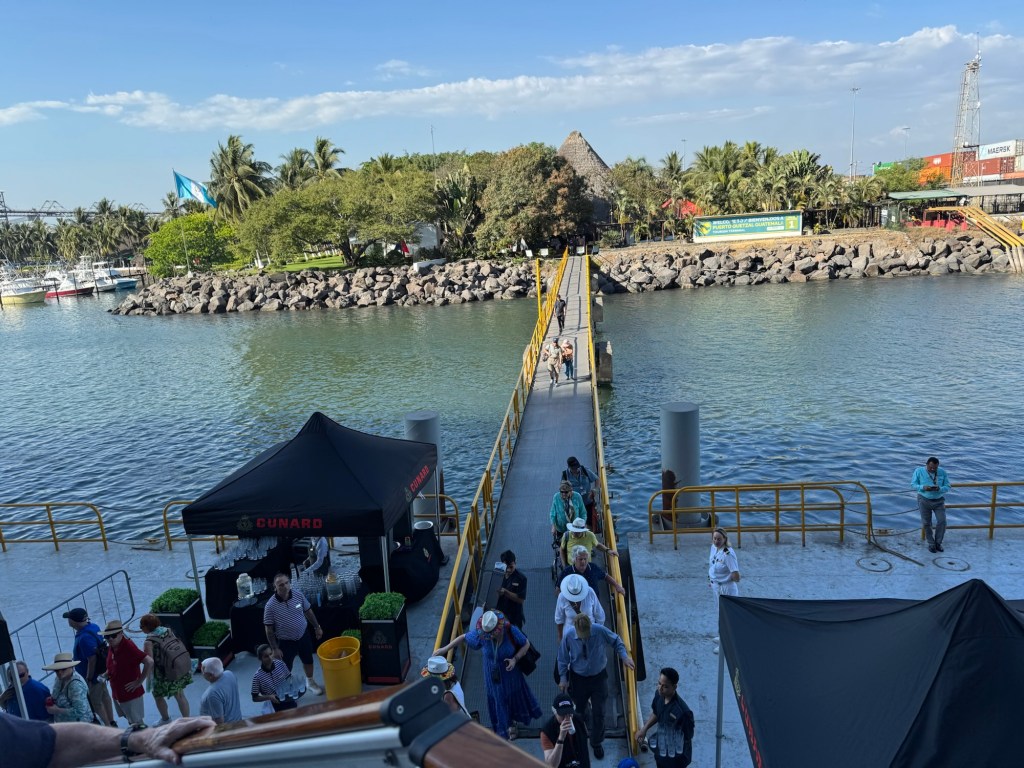
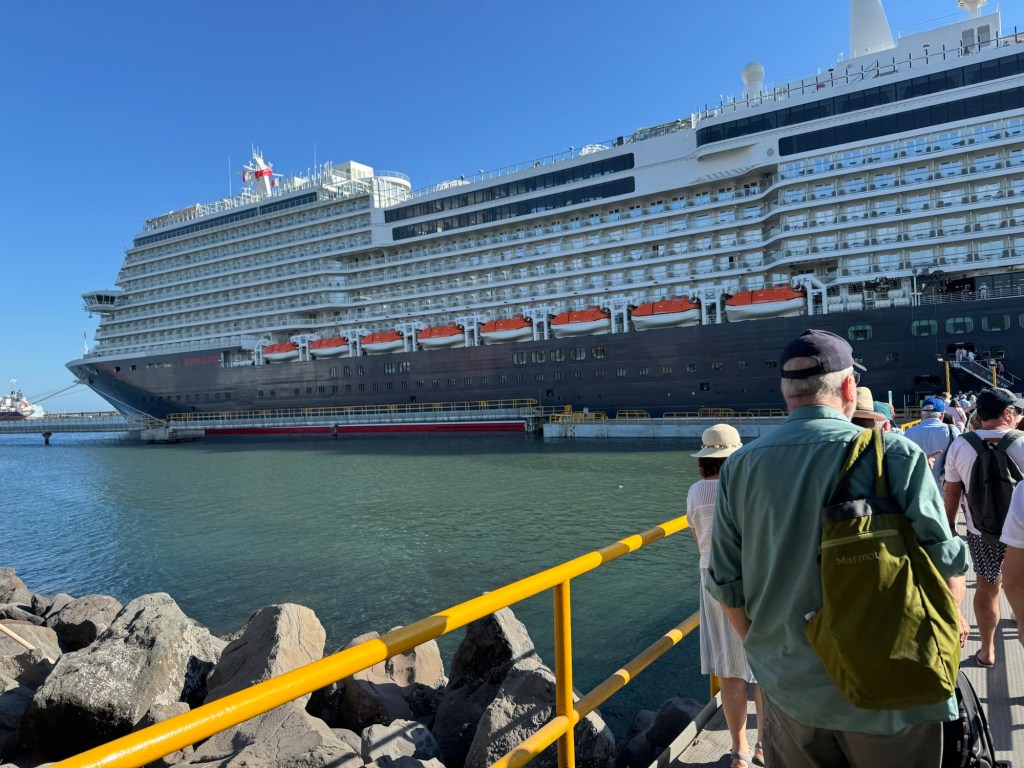
It was an early start as we had to be on the pier by the coaches by 6:45 AM for the 8 hour tour as the ship was to leave by 3:00 PM. Unfortunately, it is a port that only has space for one cruise ship and the pier is located away from the coast and the only connection was a 100 yard pedestrian bridge. Once on land one is greeted with a lush vegetation area with a myriad of shops and a central information hut. Past all of that is where the tour coaches are located. The shops have all the very colorful weaving and handicrafts of the country and the local Mayan people demonstrate their skills.
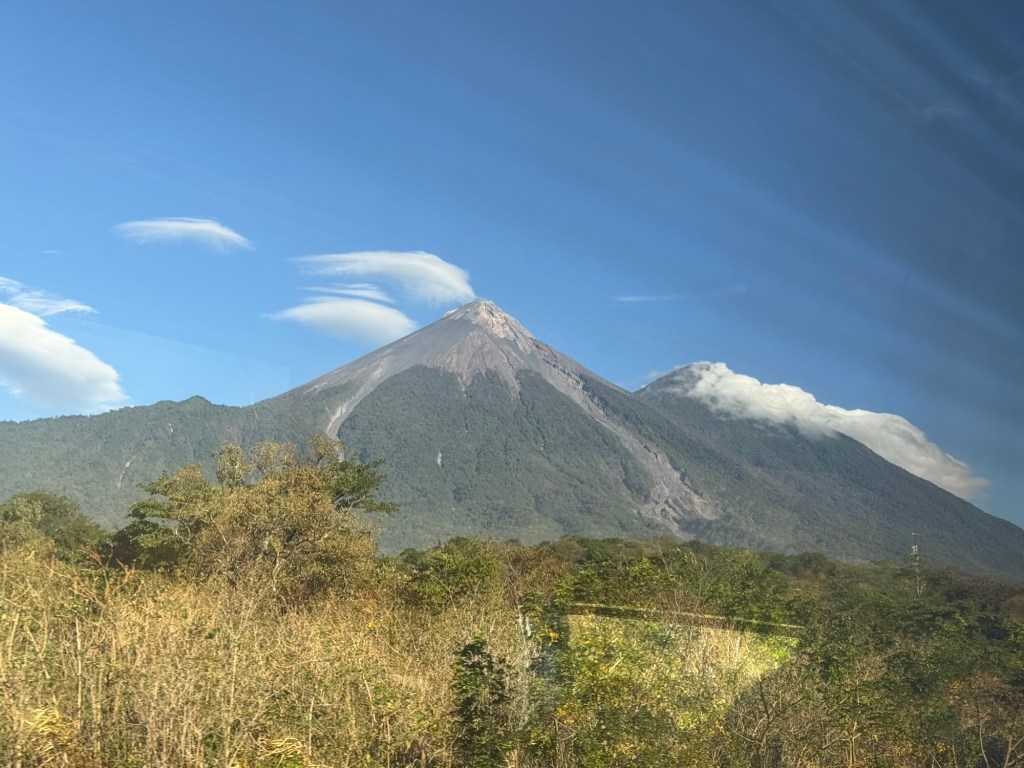
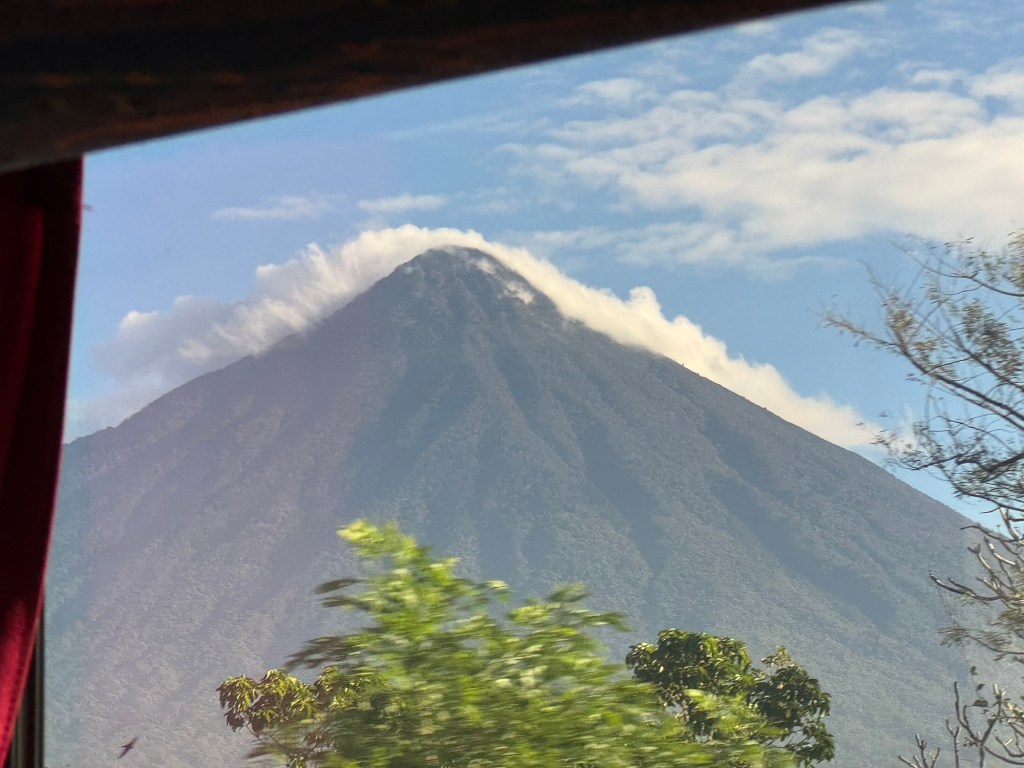
Once on the coach we were greeted by the guide – Bindy – and Driver – Cristian – and the 40 of us on the nice coach were soon off on the 100 Kilometers (2 hour + drive) to Antigua Guatemala. Historically the Capital was what is now called Ciudad Vieja (Old City), but when it was covered by lava from one of the nearby volcanos, it was moved to Antigua Guatemala. After the earthquake of 1975 where most of the capital Antigua was destroyed the Capital was again moved to the present day Guatemala City. When we lived in Guatemala City Middle 1970’s the population was about 3 million, there was a civil war going on where the majority Maya were being ruled by the minority Mestizo (of Spanish descent) class. The subjugation of the Maya was evident yet despite the open jeeps with bazookas pointing at you as you drove down the street and a military armed presence throughout the city, it was a great place to live and work. Today the population is about 18 million and the exchange rate used to have the Quetzal (local currency) pegged 1:1 against the US Dollar. Today it is between 7-8 Quetzales to the US Dollar. On the drive up we had great views of some of the many volcanoes that are present throughout the country, some still very active. Fuego (3,830 m), we witnessed sending out smoke all day, Pacaya (2,852 m), which I have climbed several times spews out a pungent sulfur. And the top is so hot that it can burn your hands if you fall. Acatenango (3,976 m) and Agua (3,768 m), also an extinct volcano, and another I climbed and walked around the summit cone, was also visible as was the Atitlan volcano (3,537 m) which is by the beautiful lake Atitlan. The tallest is Tajumulco at (4,820 m).
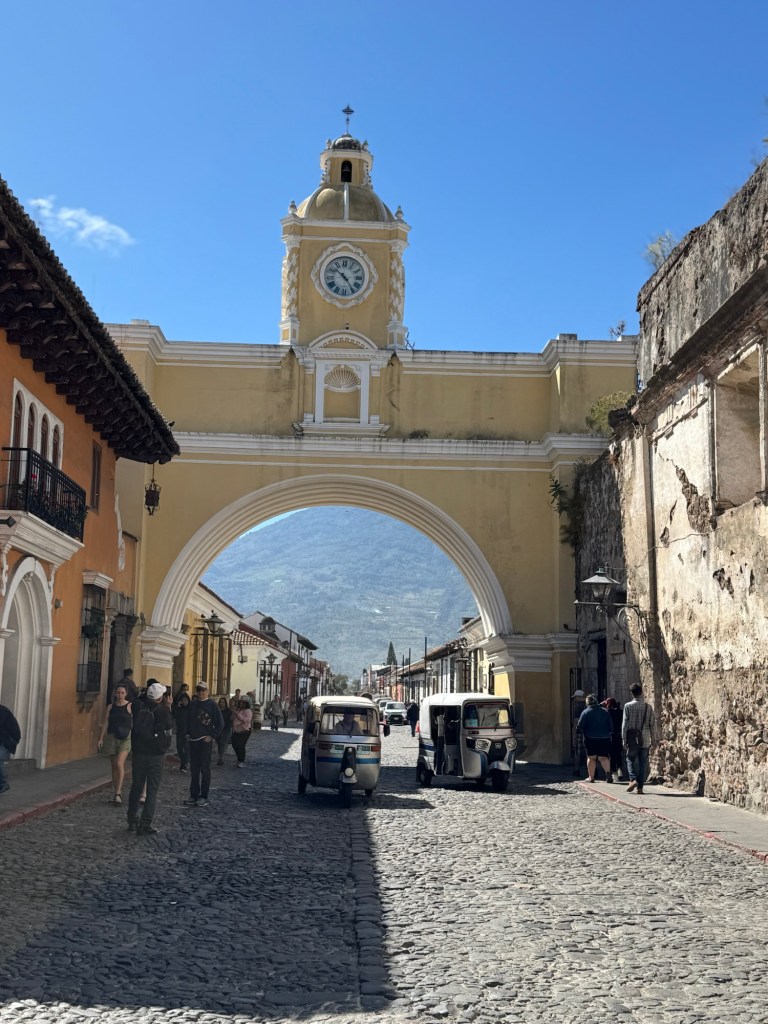
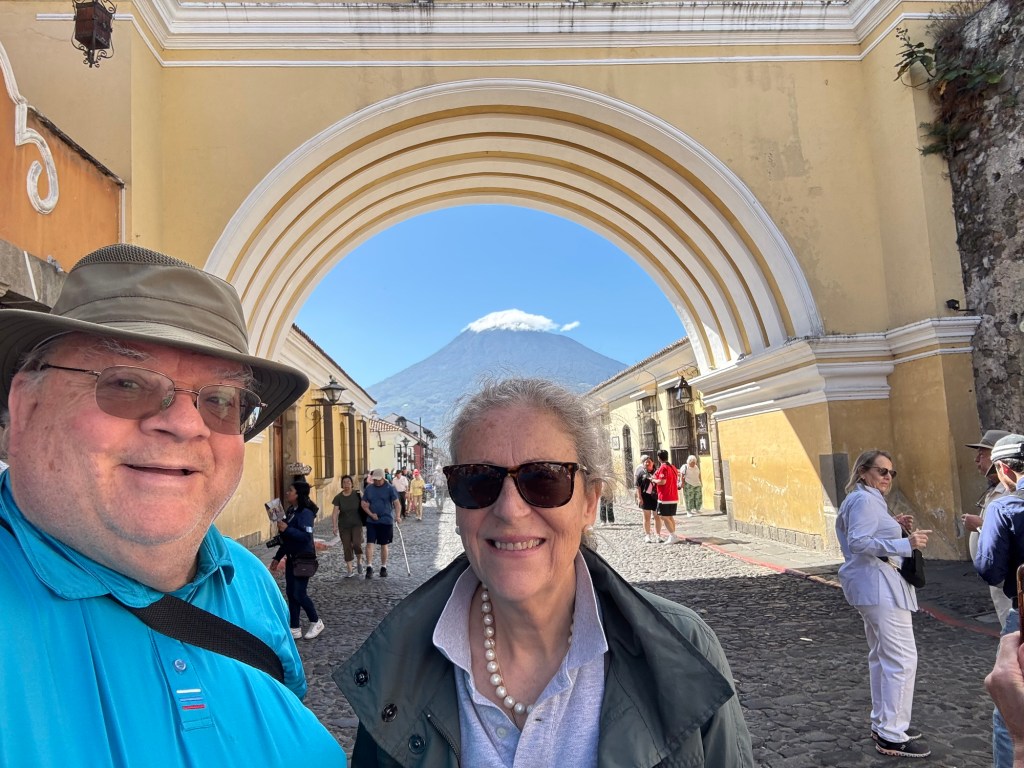
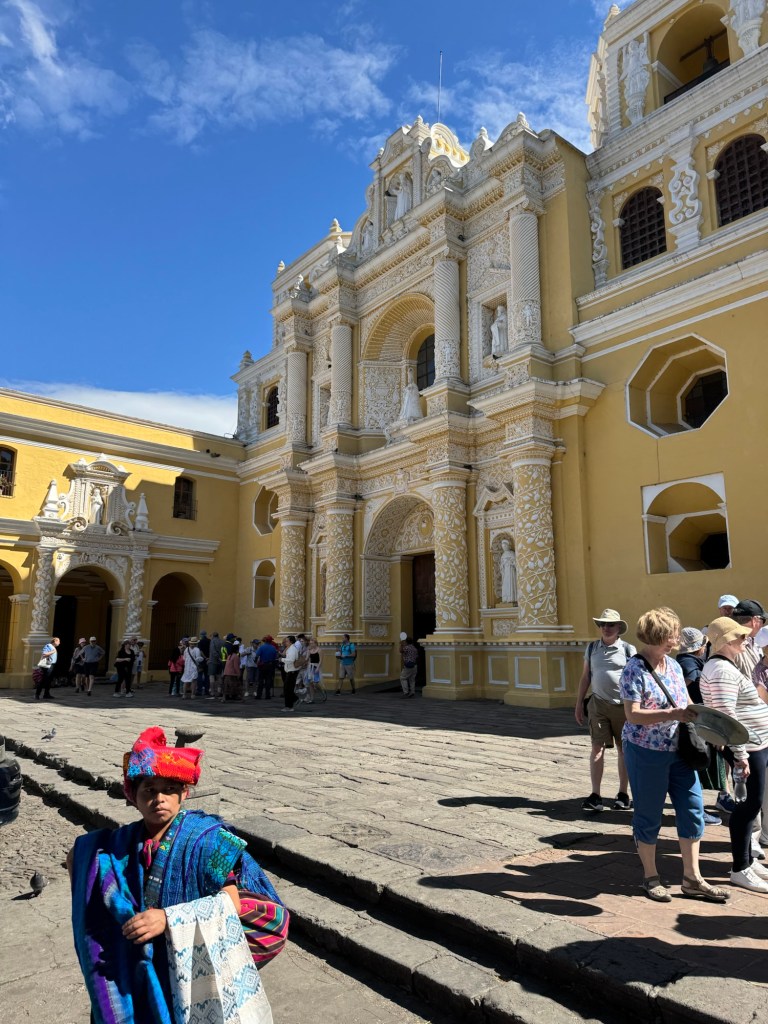
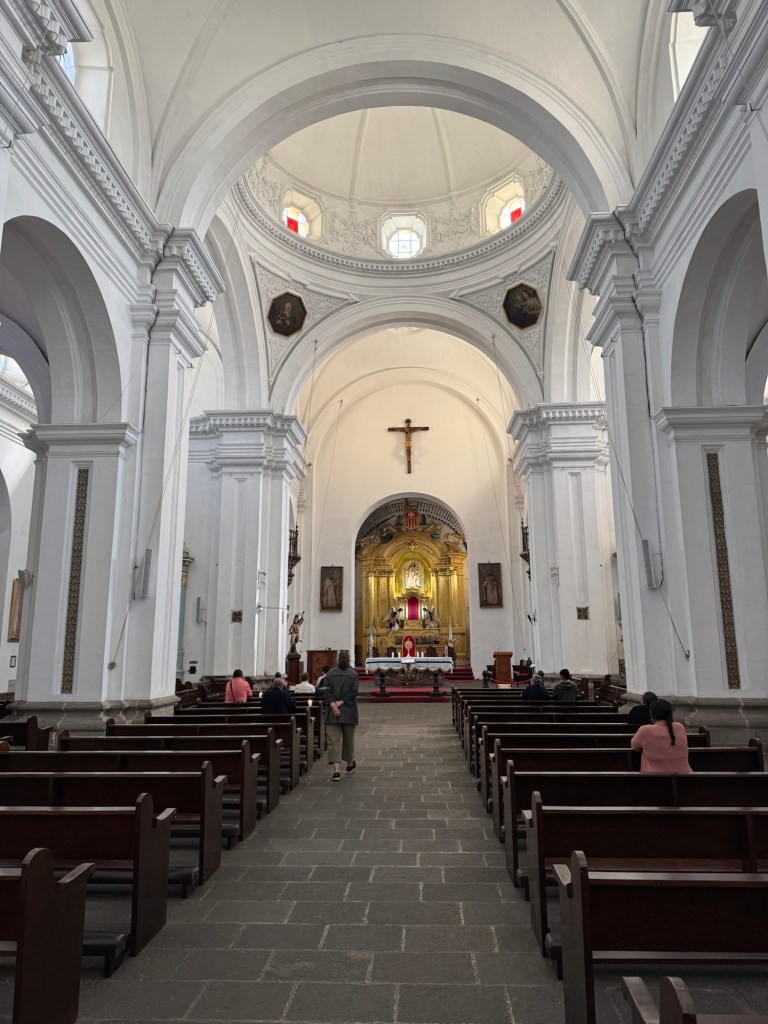
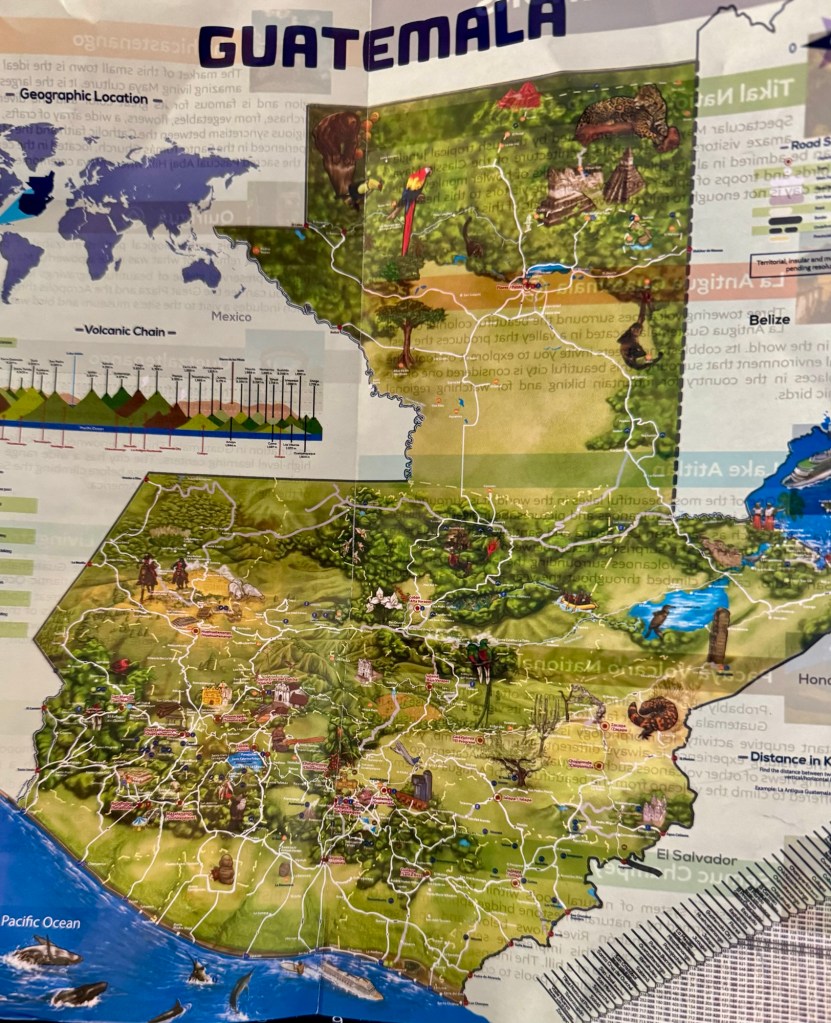
Some interesting facts about Guatemala are – the official language is Spanish however, 21 active Mayan languages (K’achikel in the Antigua area) are also spoken. There are five lakes, 37 volcanoes of which four are active, two international airports, two seaports on the Atlantic Ocean – Santo Tomás de Castillo and Puerto Barrios, and one seaport on the Pacific Ocean. There are 22 Departments or States in the country and a total population of about 18 million. Some of the key destinations in the country Tikal (or “Mutul” as the ancient Maya called it), Lake Atitlan, Pacaya volcano, Quirgua, Quetzaltenango, the area around Chichicastenango, Rio Dulce and Livingston, and finally, of course the capital Guatemala City.
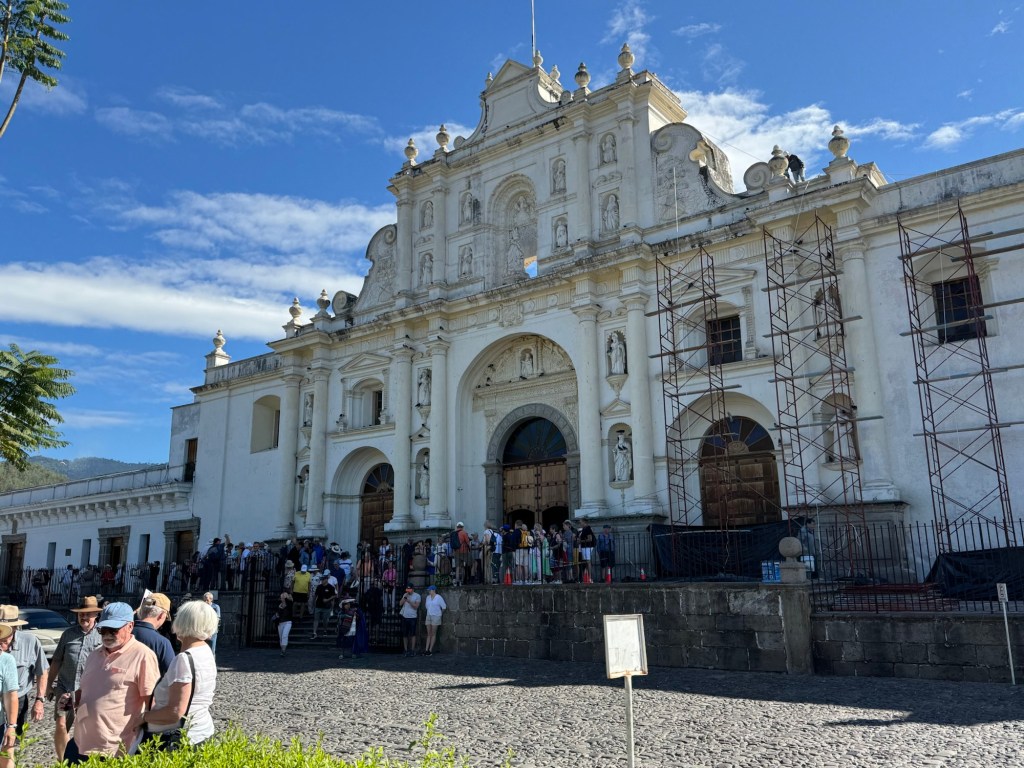
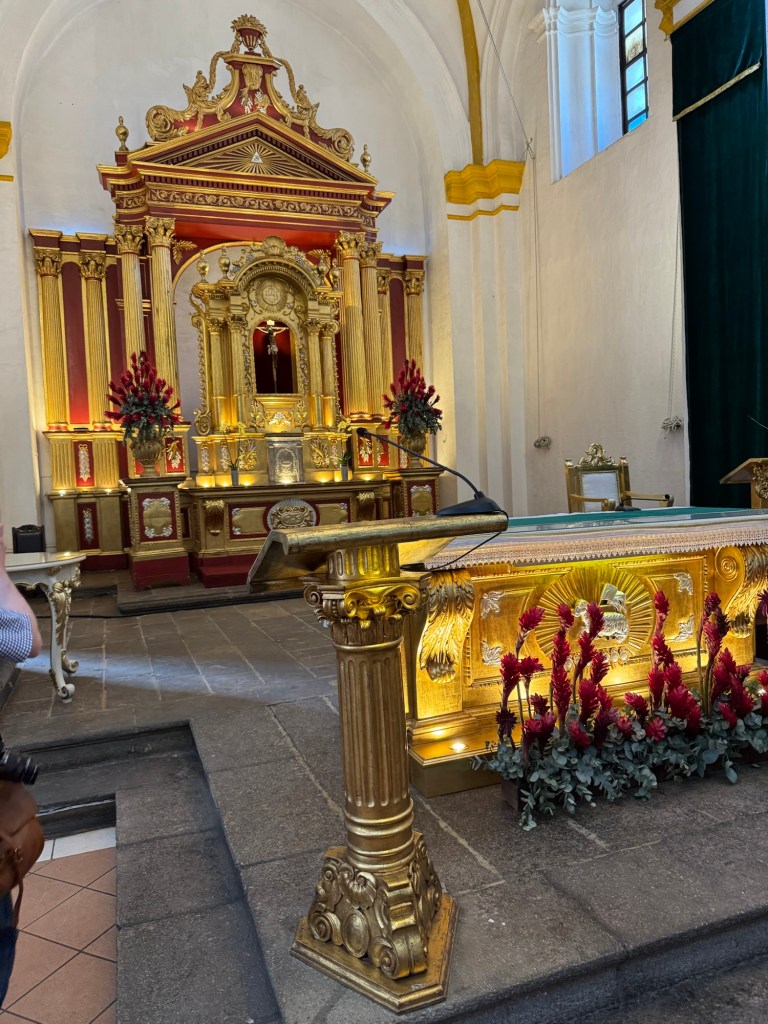
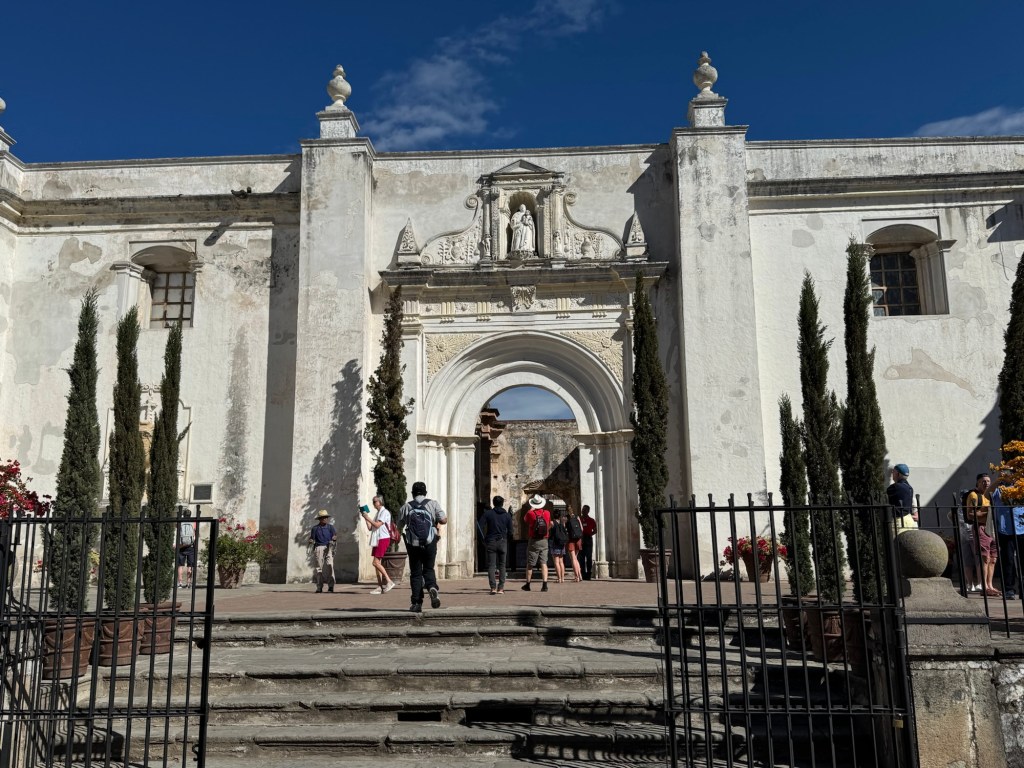
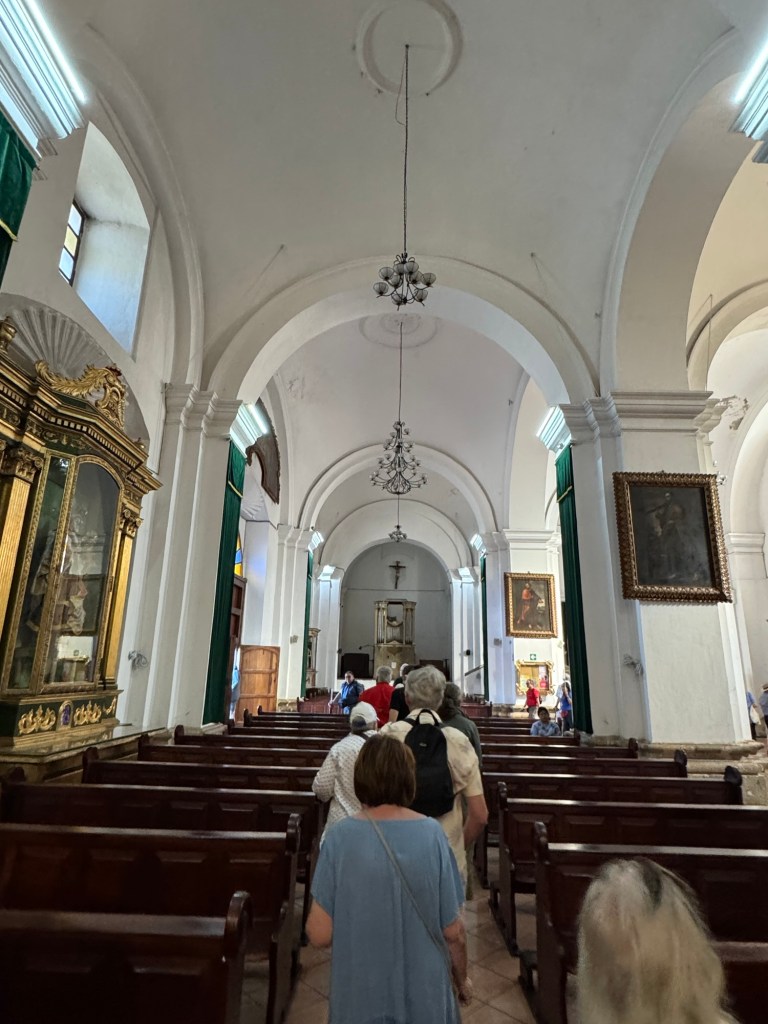
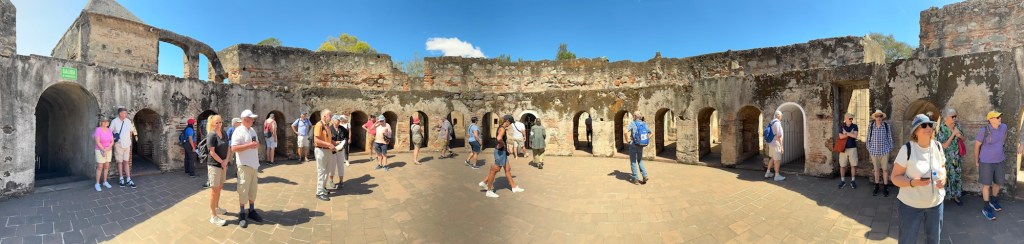
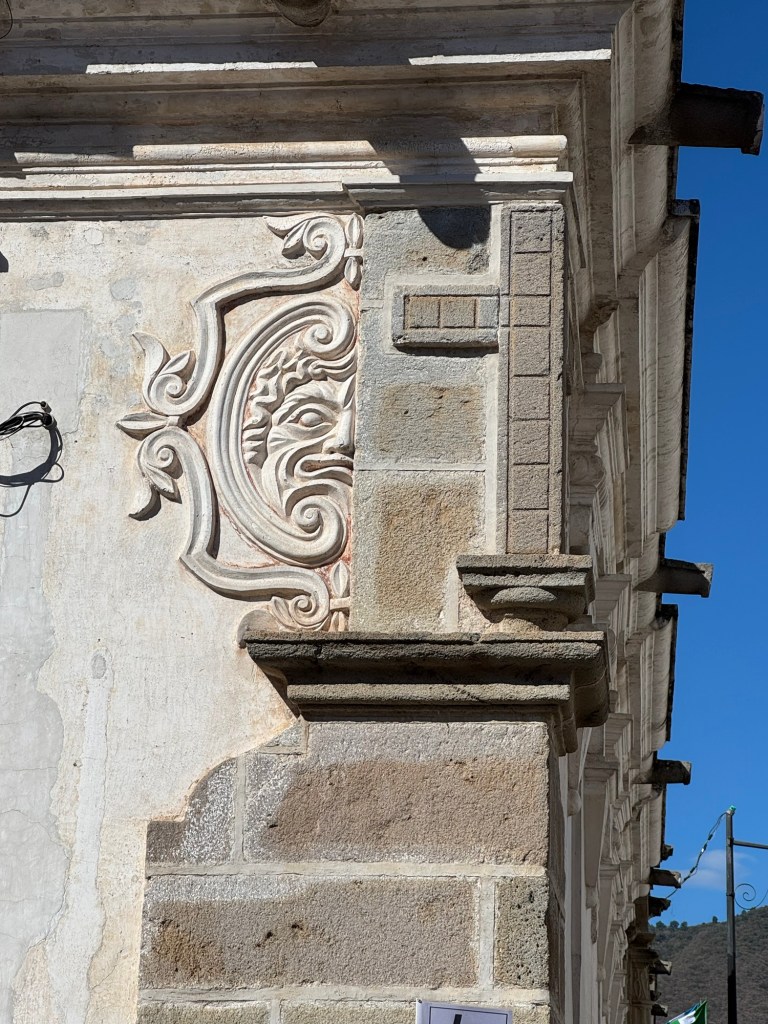
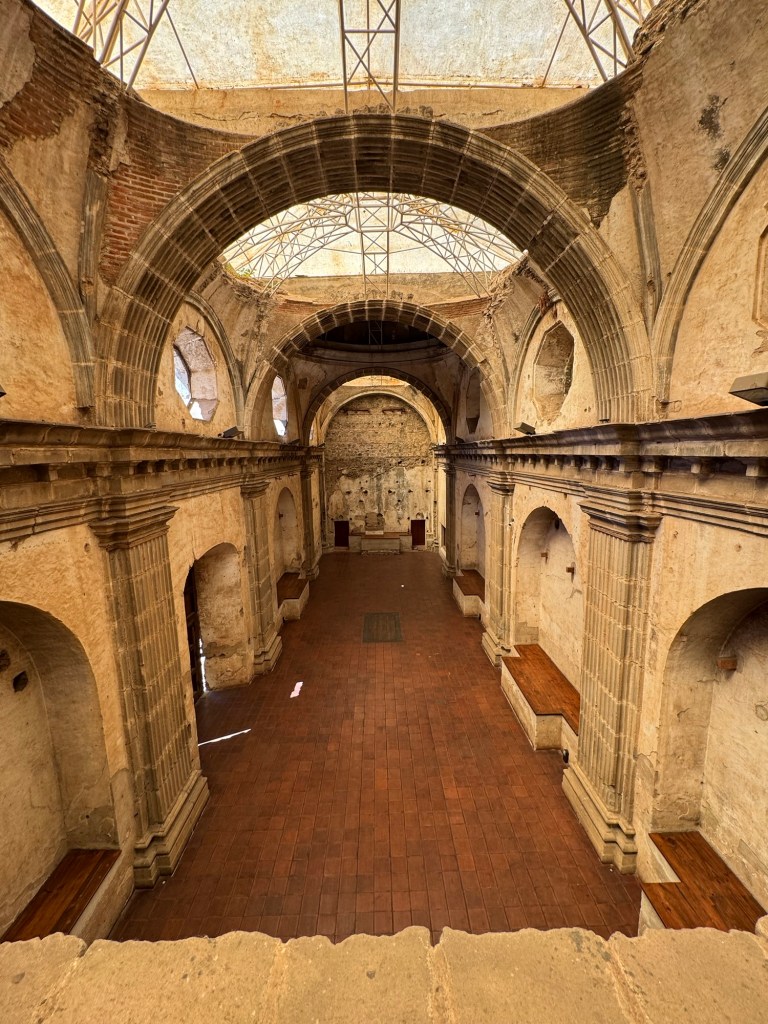
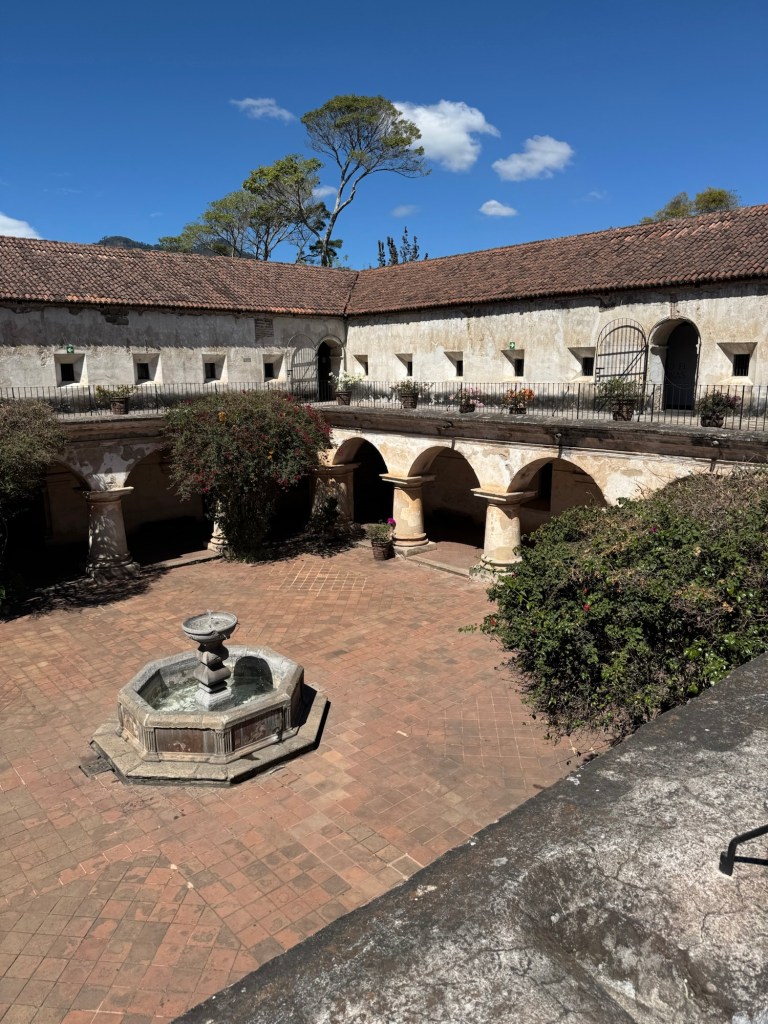
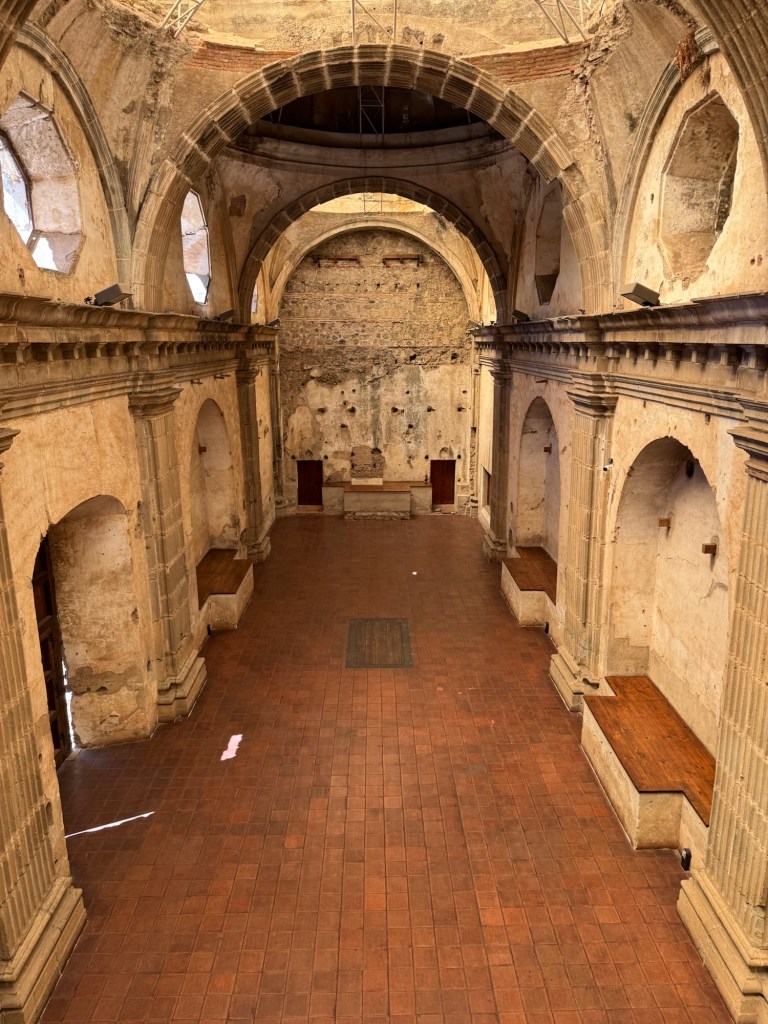
Upon arrival in Antigua, (population about 4,000), coaches (there were 40 in use today from one tour operator for our ship plus other operators) dropped us on the outskirts of town as they are not permitted in the narrow cobbled stone streets of the town. The rest of the day we were on foot walking in the hot sun, dipping in and out of churches (we visited 13 in total) and convents, plazas etc. The central portion is a grid with 8 Avenues running North / South and 8 or 9 Streets running East West. The Main Square located between 4th and 5th Street and 4th & 5th Avenue marks whether Streets and Avenues are North / South or East / West. Much like 5th Avenue in New York or Younge Street in Toronto. The main square and yellow and white cathedral were very impressive. Seeing the iconography and the subtitle ways the Spaniards used the local culture and Christian symbols to persuade the locals to be Christian. One such iconography was the Christian Cross and the Mayan K’an Cross. The La Merced church between 4th and 6th Ave N and 1st Street W although simple was very attractive. The main convent we visited – now somewhat in ruins was – the “Ex Convento de Nuestra Señora del Pilar de Zaragoza” or more commonly called the “Capuchinos” (2nd Ave N between 2nd and 1st Streets E). When the Spanish arrived in Guatemala, they soon realized that there was no gold to be taken back to Spain so they persuaded the people to build convents and the young ladies who did not want other lives would be able to enter the convent and the individual or families would pay a certain tribute, so to speak, for the ladies to be able to live in the convent. 50% of the money raised was used for food, lodging, etc. in the convent and the other 50% was typically sent back to Spain. Thus, there was a new source of revenue, which was very productive. Many such convents were formed. Some like the Capuchinos only taking in about 20 nuns, but the price they had to pay was fairly high but the cells were larger and had private bathrooms, which made it attractive to the wealthier families. Other convents might have 60 nuns, where there were two or three to a cell and we’re paying a less amount of money but they were still able to send money back to Spain. After independence all of this went down and today there are only some three Convents left in the country.
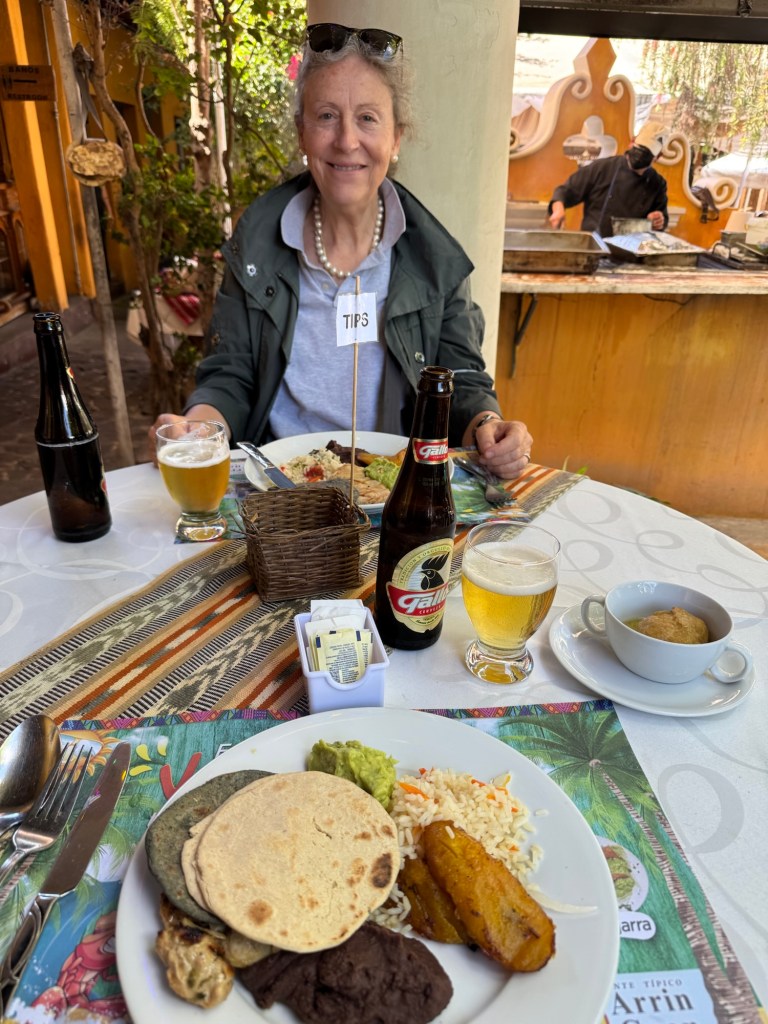
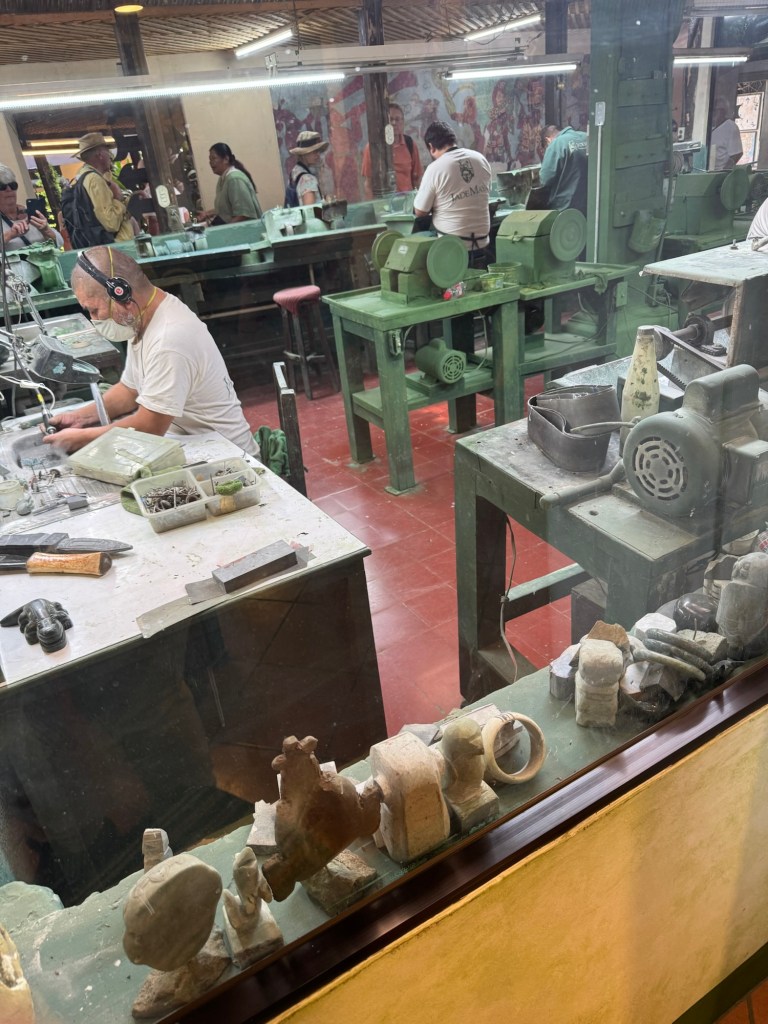
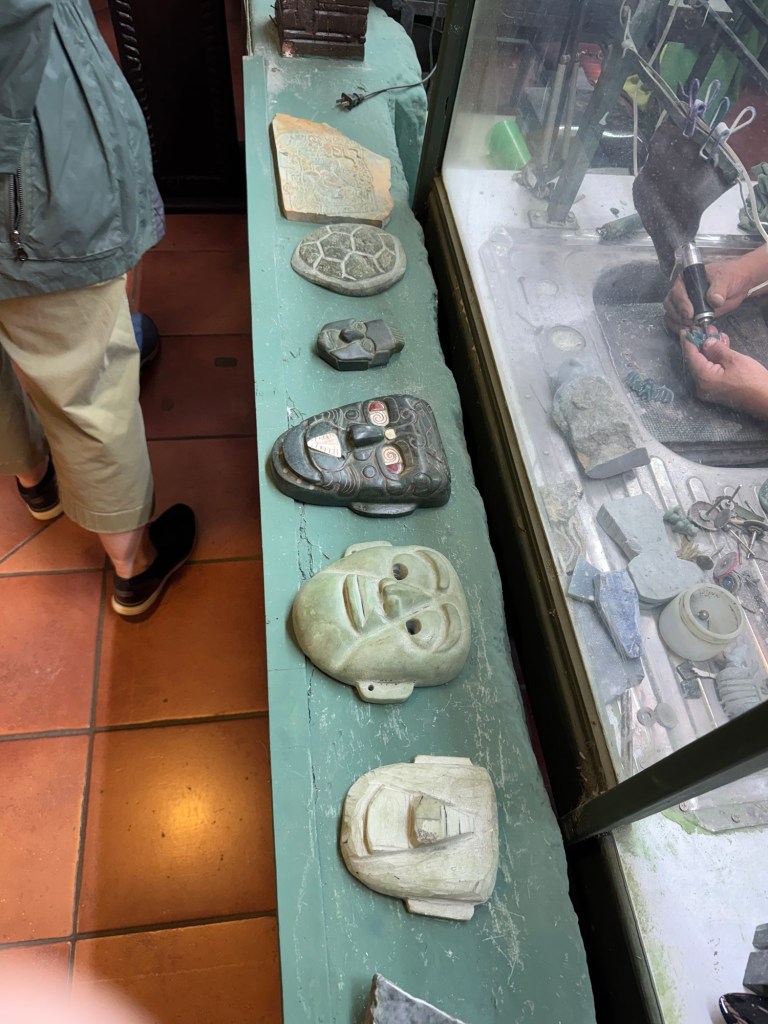
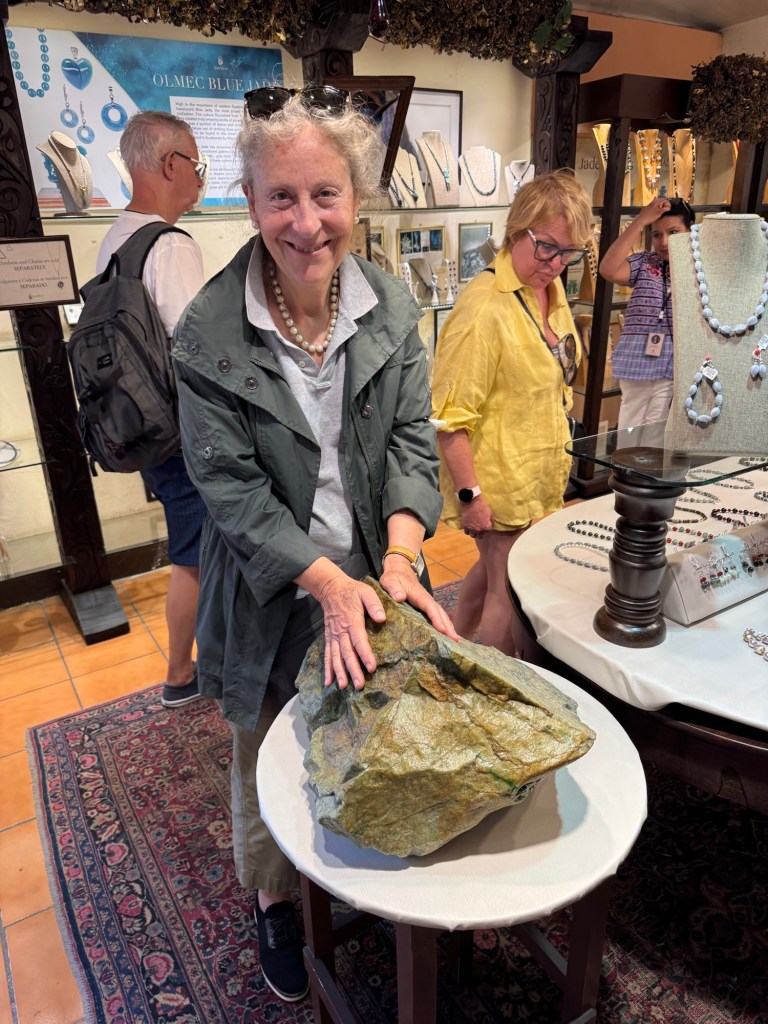
After wandering the streets for some hours, we were taken to lunch at Arrin Cuán Restaurant (Callejón La Concepcion, Antigua Guatemala, Phone (502) 7832-0831; http://www.arrincuan.com) where we had delicious Guatemalan food – Beans, Rice, Guacamole, Chicken, Black & white Corn tortillas etc. We then went down the road to the Workshop, factory, show room of the Archaeologist Mary Lou Ridinger, who found the source of the Jade the Maya used. After a brief talk, we looked around the facilities, museum and shop. Jade Maya – 4a Calle Oriente No. 34, Antigua Guatemala, Guatemala. Phone – (502)7931-2400; Fax – (502) 7832-2755 – Email gerencia@jademaya.com; http://www.jademaya.com. The coaches picked us up at the Jade Museum and we got back late, after the time the ship was supposed to have left, but other coaches were behind us, so we all were late and the ship departed about 1 to 1.5 hours late.
This evening we ate in the cafeteria and went to the show “Fizz” in the “Bright Lights Society” – an alternate performance venue where there is a cabaret style immersive theatre productions and alternate types of productions. All lots of fun.

 Roger & Anne Travels