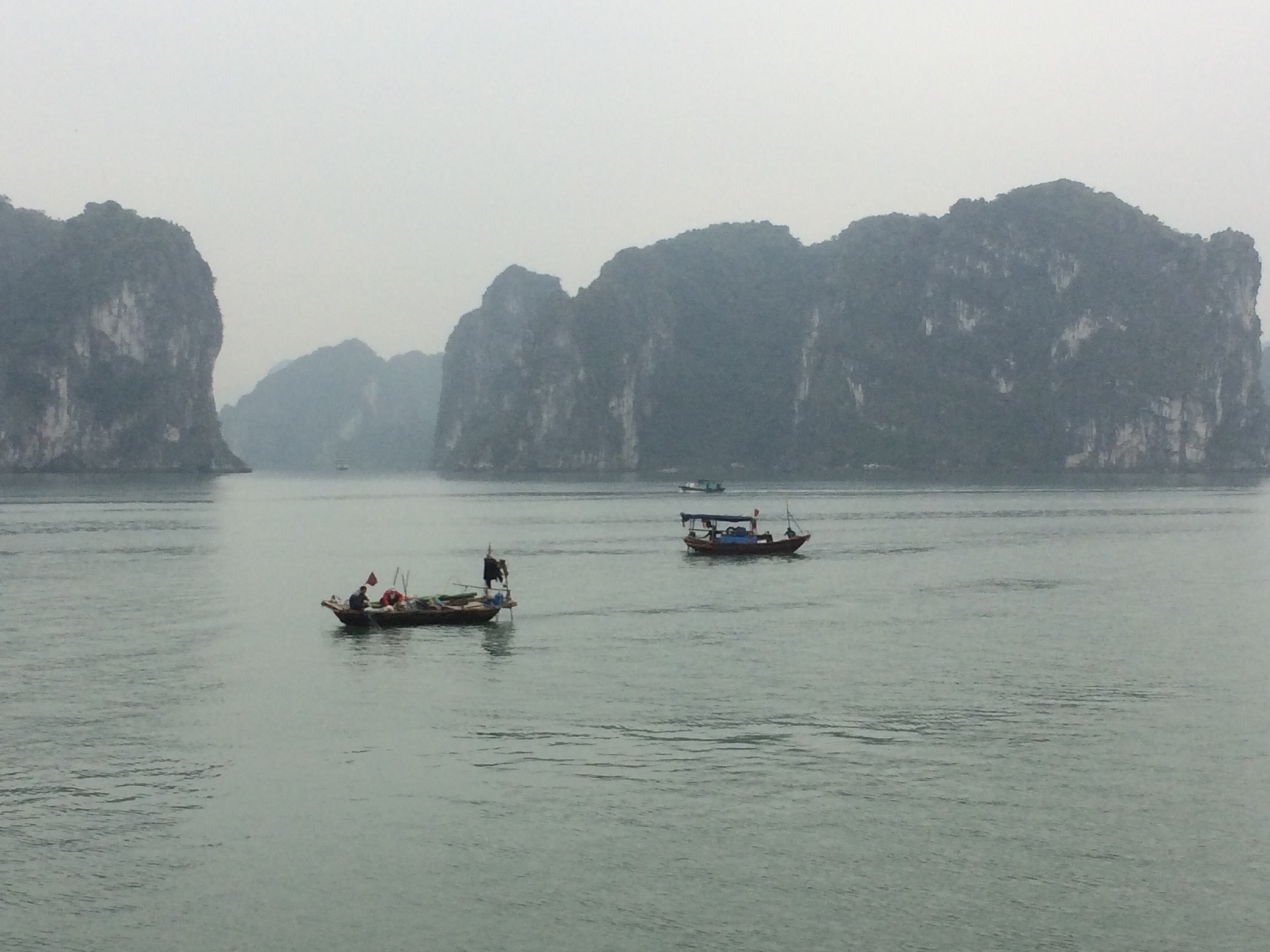
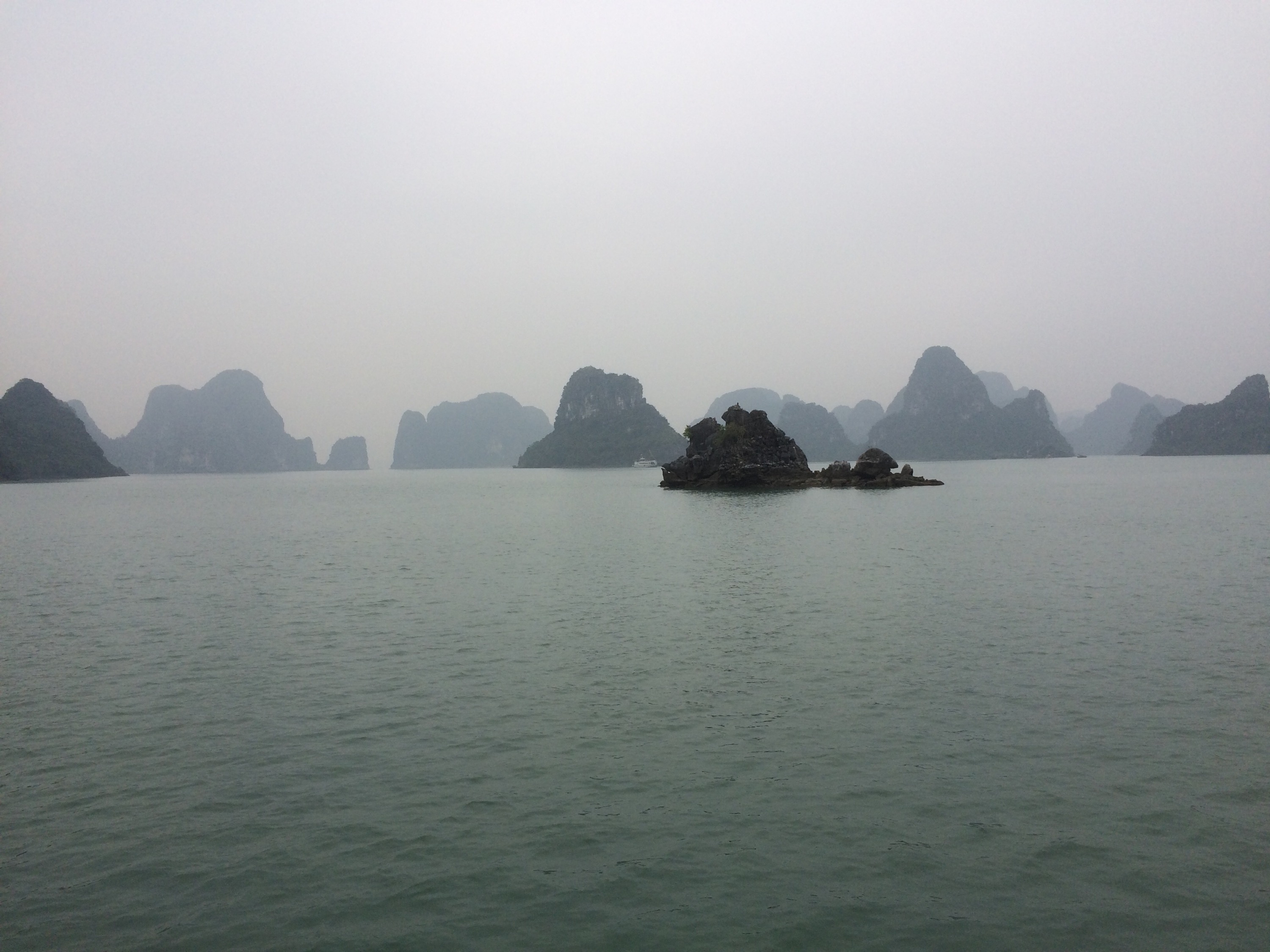
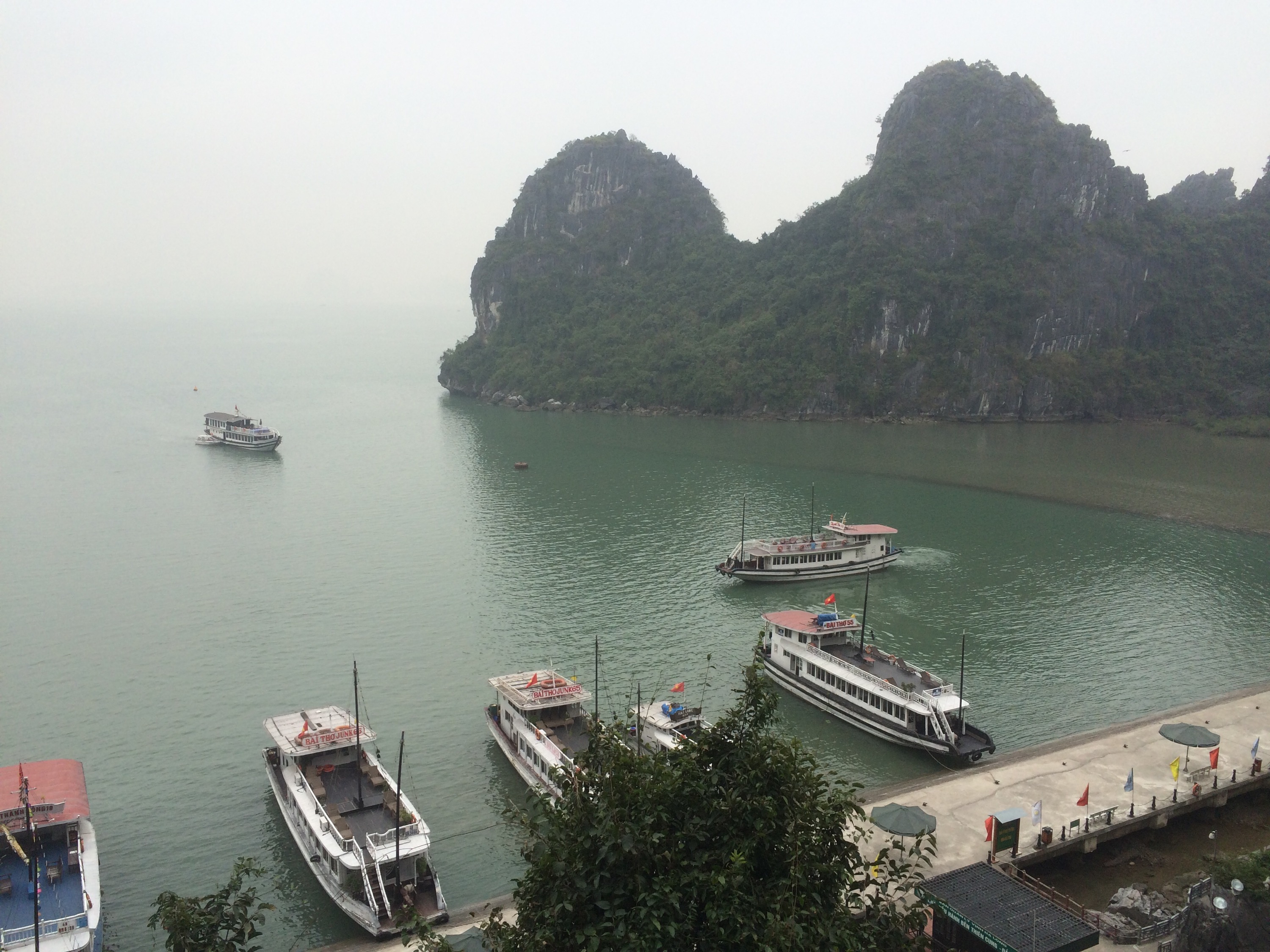
We rose early as we left the hotel at 7:15 AM to go to the natural World Heritage Site – Ha Long Bay, shown on all Vietnam tour brochures.
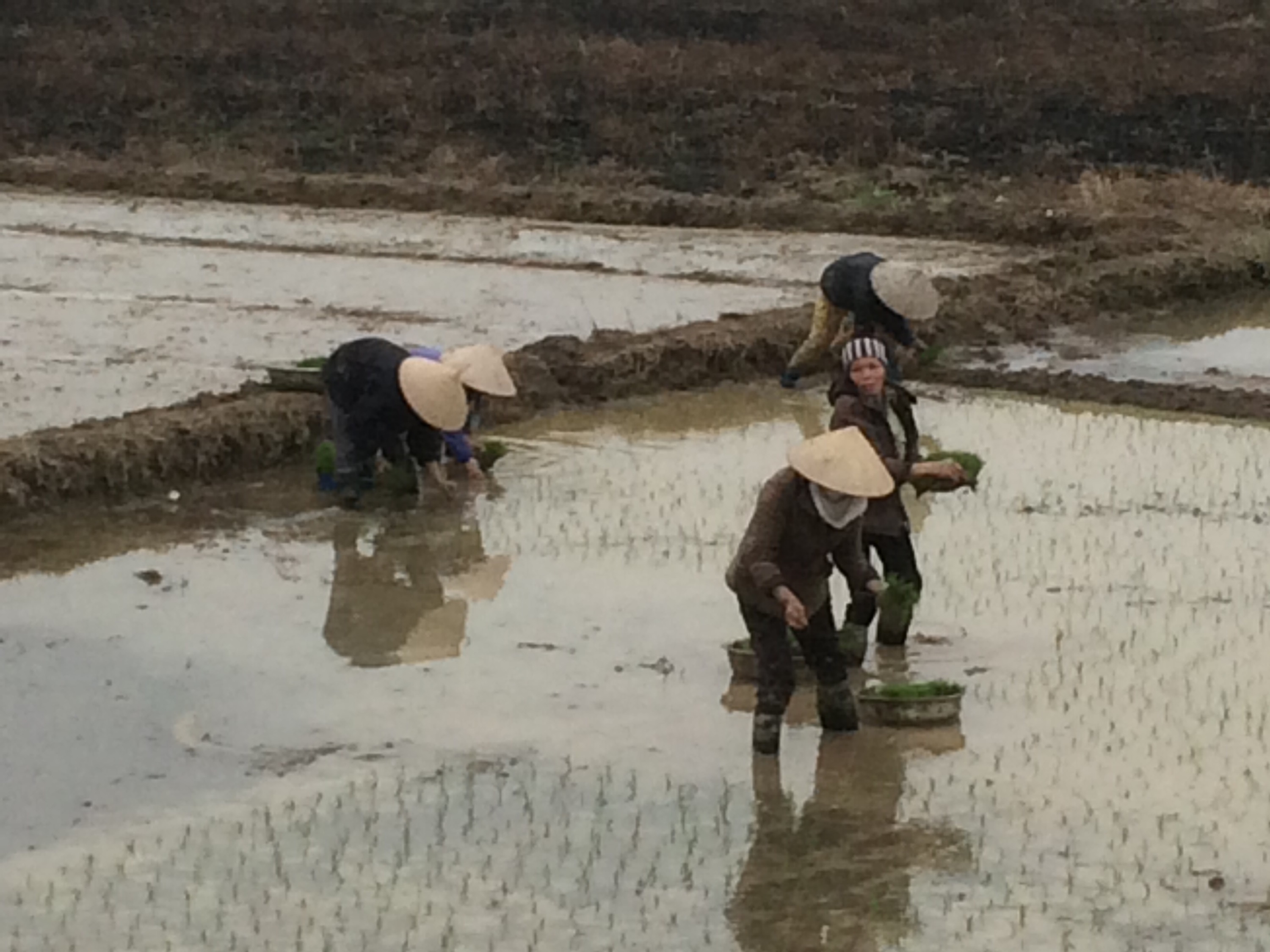
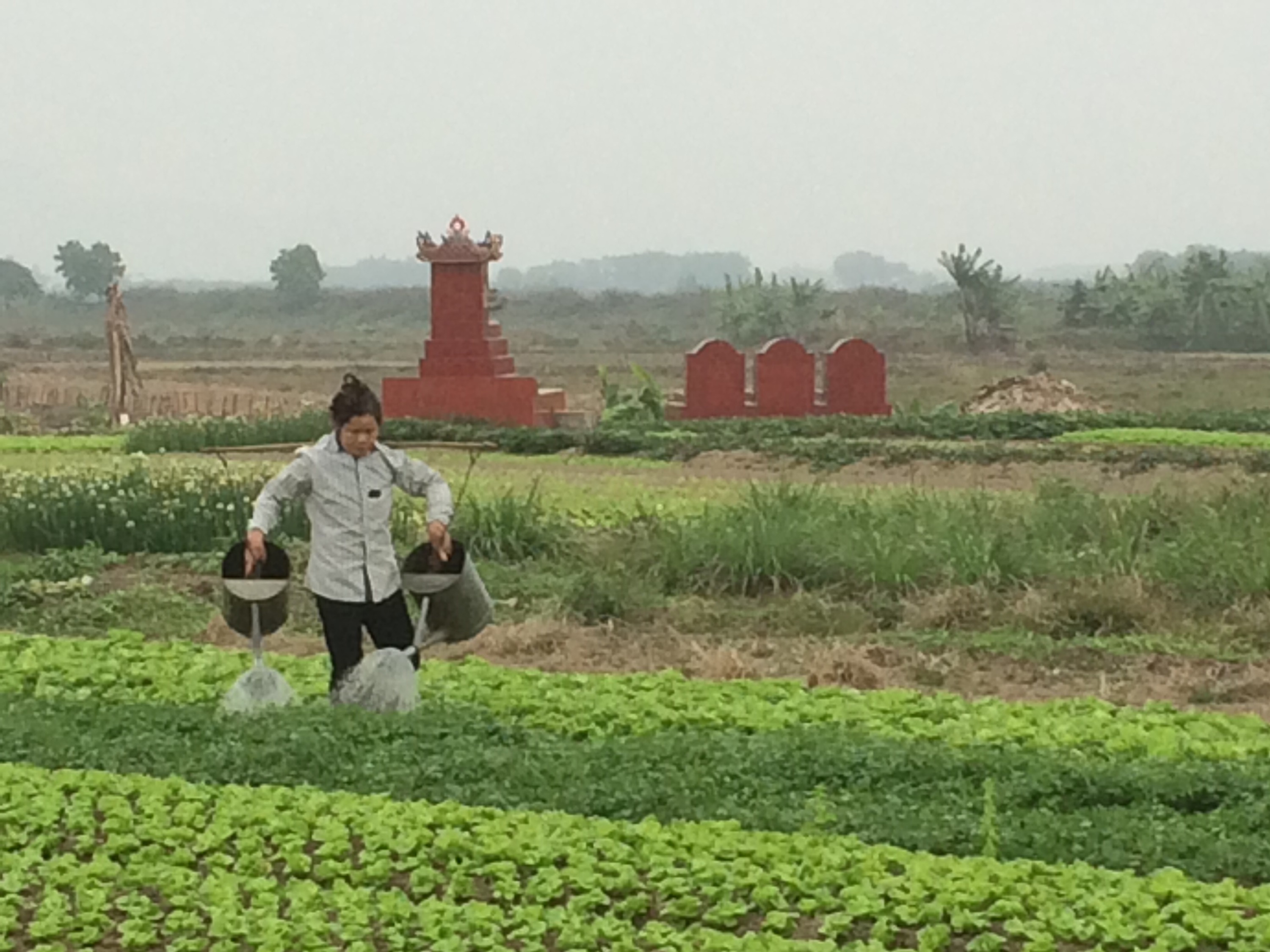
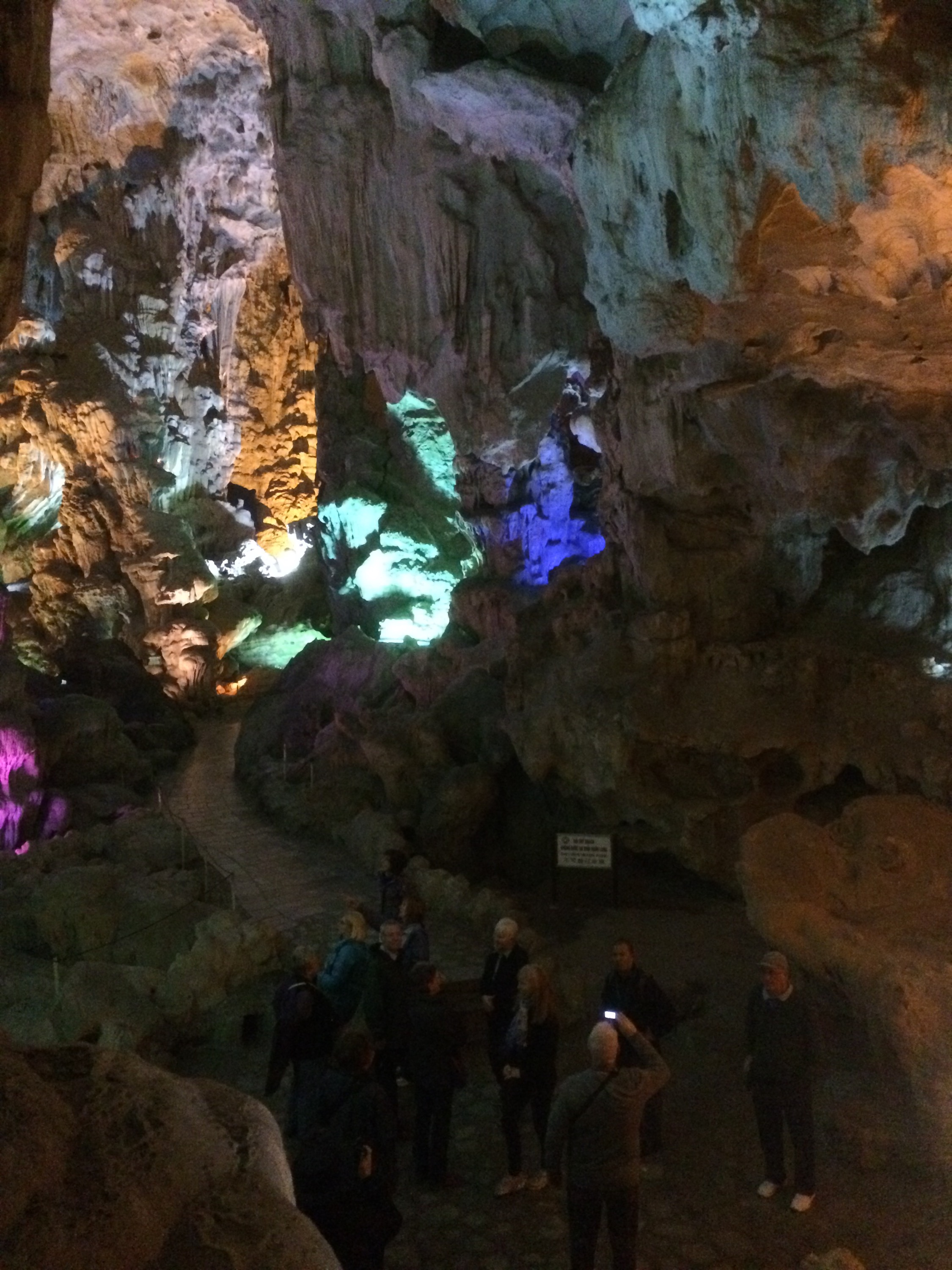
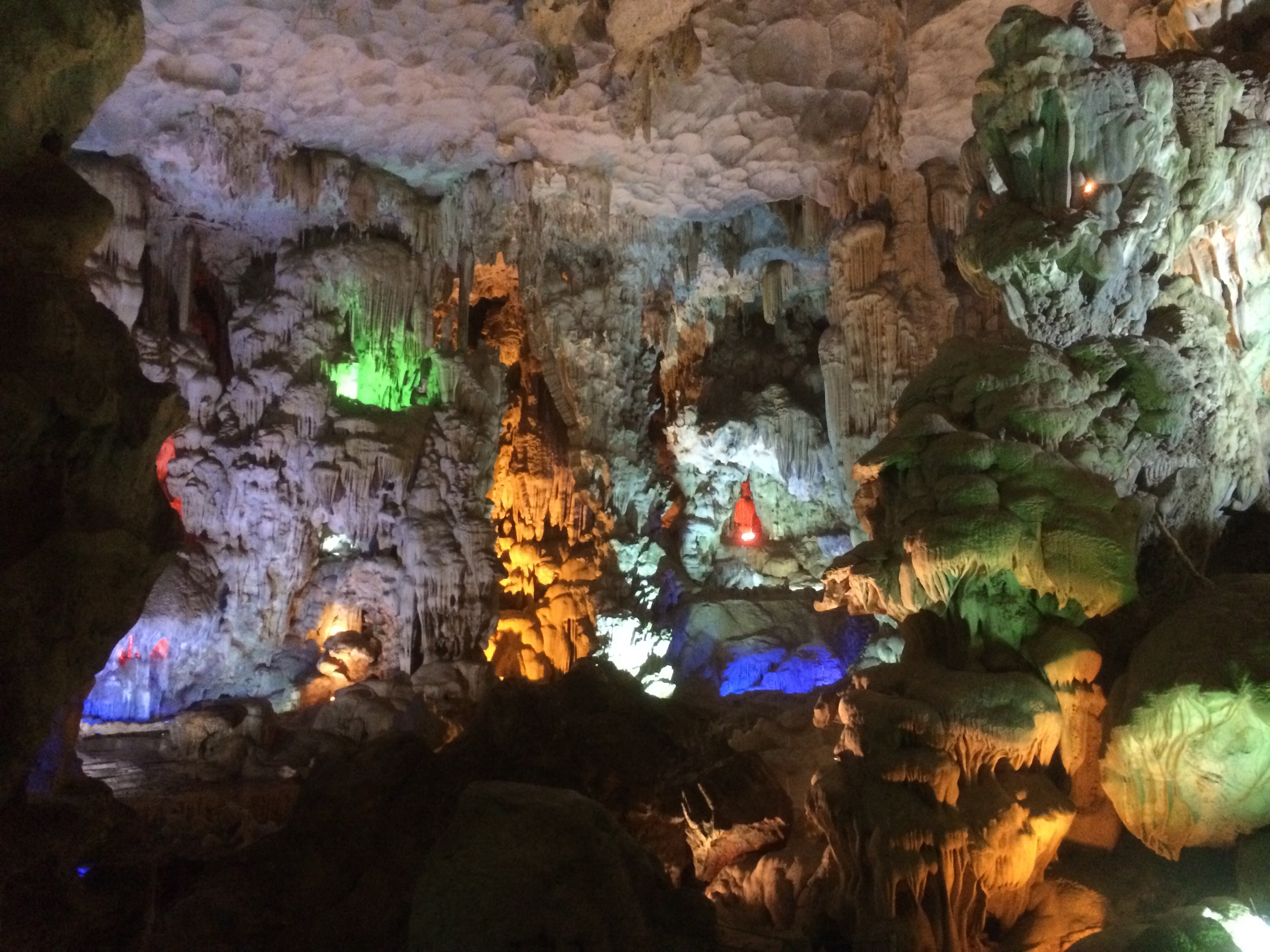
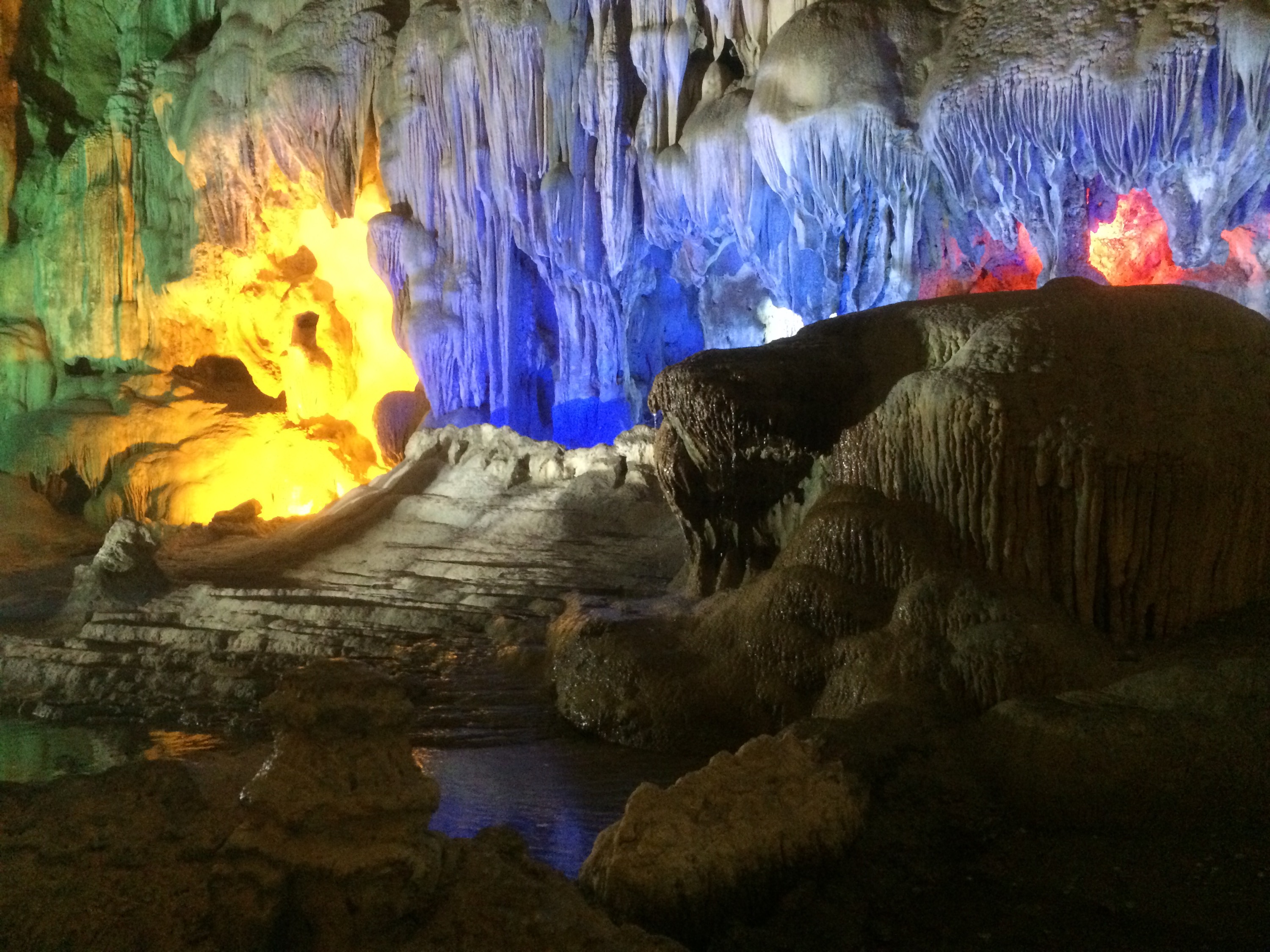
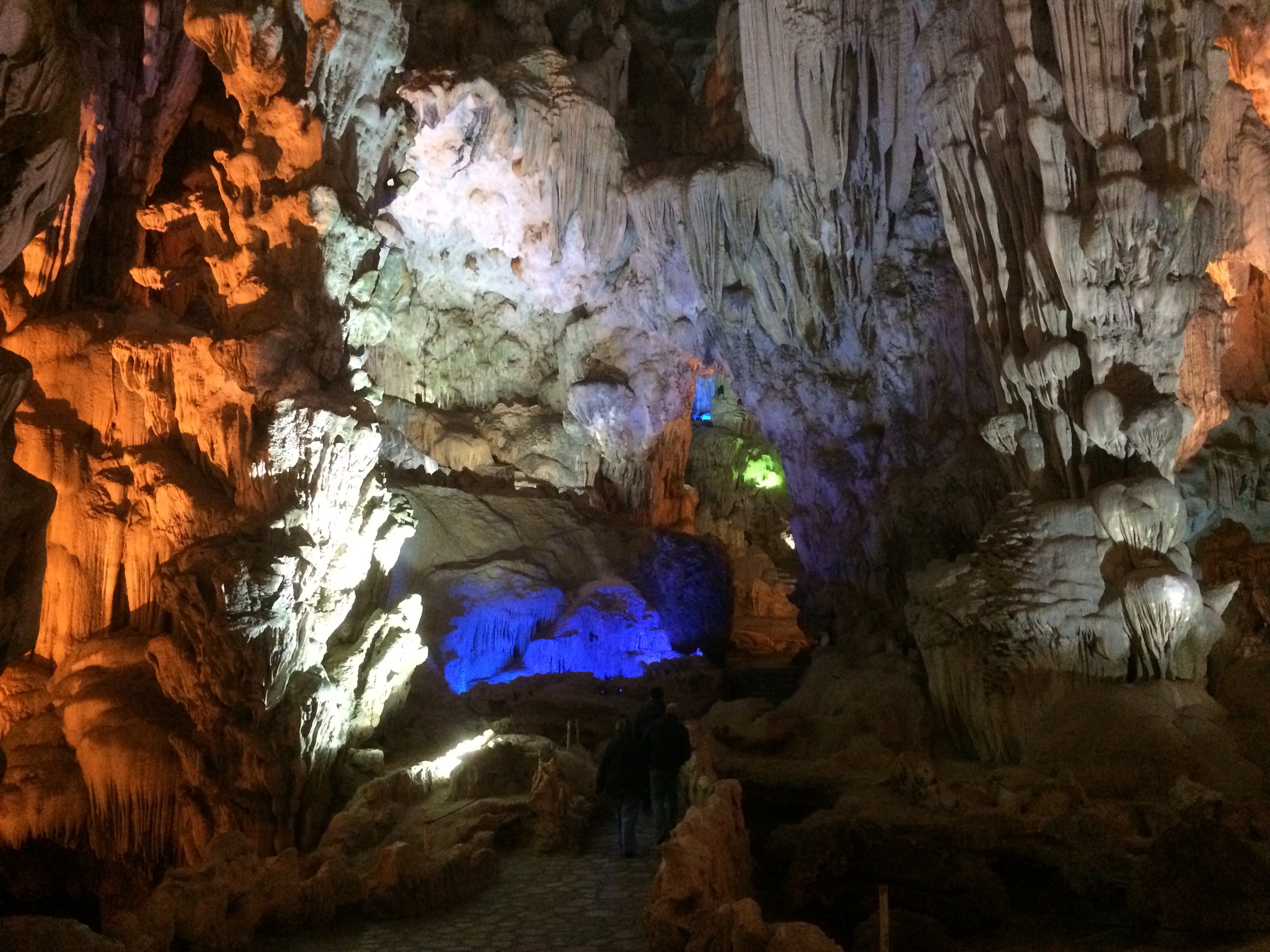
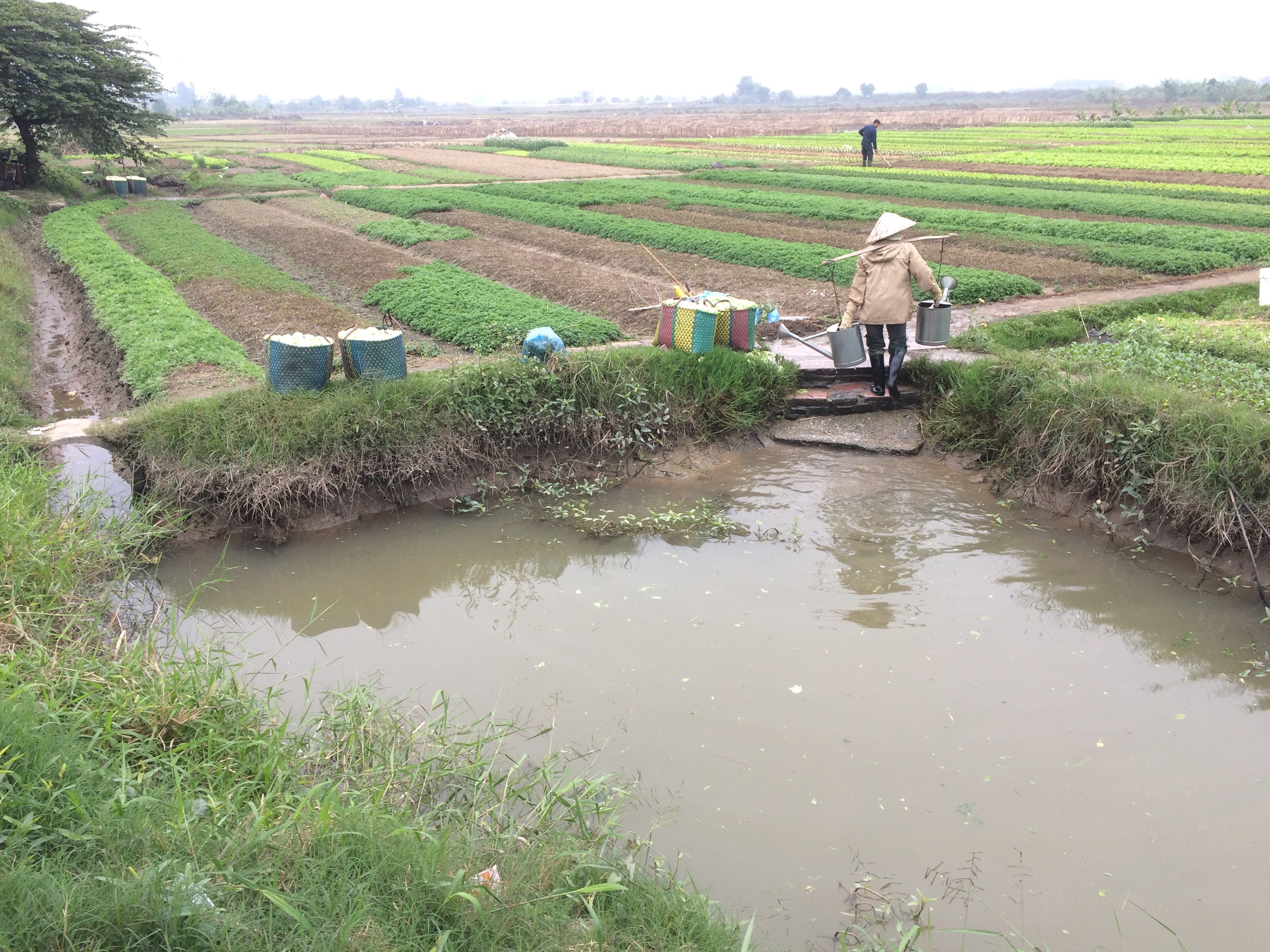
The bay in the South China Sea has hundreds of sandstone mound like mountains coming out of the sea. These were formed some 400 million years ago and are spectacular. There was a haze covering them all day, which in one way was disappointing, but in another made them more mysterious and imposing. See the pictures below. One of the stops was to go though an amazing cave (reminiscent of Cacahuamilpa in Mexico). No easy task as one had to climb 70+ steps to enter the cave, some 75 steps (up and down) inside the cave, another 75+ steps to get out of the cave, then 125+ steps to return to the boat. The Boat – Junk 66 – provided us for some 4 hours a way to view the spectacle accompanied by a really excellent seafood lunch and local wine. See the pictures also of the cave as well as the rice and agricultural practices.
On the way to the sea and boat trip we stopped at what is called the handicapped village centre at Hai Tsong. Here all types of handicapped individuals (war accidents etc) are taught a skill and work making handicrafts of all types and sizes for sale. Amazing work.
LUC (the guide) regaled us with many stories over the 8 hours in the bus, but one of the most interesting was regarding burial practices in Viet Nam. Country farming people like LUC and family have rice paddies that they work. When his father, mother and brother (the latter due to being hit by an American Cluster Bomb) died, they were first buried in a grave in their rice paddy. After 7 years, the bodies were exhumed and prepared for the second and final burial. All this is in line with local Buddhist practice throughout the country. At exactly 4 PM on the appointed day, the exhumed casket is slightly opened to allow the fumes to dissipate. At midnight the body is removed and covered in spices such as cinnamon and whiskey or rice wine. The bones are then cleaned thoroughly and placed in a stone ossuary. However before closing up the cloth wrapped bones. Items that the deceased enjoyed such as tobacco, hat etc) are placed next to the body for use in the afterlife, also money and rice are put into their mouths for use in the next world, the ossuary is then placed in a concrete tomb surrounded by river sand and pebbles to allow the spirit to escape. The gravesite is visited at least twice a year (New Year [which this year is Feb 19] and the correct lunar month. At those times a big feast is prepared for the deceased. Similar to the day of the dead in Mexico.
Some other interesting facts and figures thrown out during the drive, by LUC were:-
– Farmers pay no tax under an edict from Ho Chin Minh.
– Basic minimum wage is US$250.00 per month doctors can earn as much as US$1,000 per day.
– There are 7 bridges over the Red River into Hanoi, one of which (as well as the main Hanoi Post Office) were built by Mr Eifel (of Eifel Tower Paris fame).
– 10 million tons of rice are exported from Viet Nam each year emanating principally from the Mekong Delta. Most of the rice produced in the Hanoi / Red River Delta is for family consumption.
– Rice is always served at the very end of the meal as the host hopes you will be satisfied with the rest of the food and thus not have to eat rice to be satisfied. However, unlike China where it is considered rude and the host looses face, if the rice or noodles are eaten, in Vietnam it is ok to eat the rice.
– Home construction for the working people seems to be concrete and very narrow, but deep and up to 7 floors. Road frontage seems to be very expensive thus the shape. Usually about 10-12 feet. The ground floor is usually the shop or restaurant that may have a kitchen and / or an altar . The other floors have all the other rooms, with a second (Buddhist) altar on the top floor. Windows are only at the rear and front as the sides abut the neighbors houses.
– Petrol / Gas costs Dong 16,000 per liter or US $0.70 a liter or US$2.80 a gallon or £1.00 buys 2 liters.
– Vietnam has the death penalty and can be given if, for example one is caught with a kilo or more of drugs.
– Rice is planted in the north (Hanoi) in February (now) and the first harvest is in May, a 2 week fallow period is then observed followed by a second planting with harvest in September. 4 Million Hectares of rice are planted in the country.
– Bomb craters from the various conflicts, but principally the Vietnam war, are filled with water and made into small lakes or used as water reservoirs in the rice paddies or allotment plots.
– As there is more than 3,000 kilometers of coastline, about 10 million people earn their living in fishing.
– The last armed land conflict in which Vietnam was involved was in 1987 against the Chinese followed by a naval conflict in 1989so against the Chinese.
– For most who have read this far, it’s time to go to the pictures. However, for the few who may be interested in Linguistics, Vietnamese has no “F” but does have the letter “ph”. The use of diacritics (tone markers) is extensive. Apart from the usual – à á â ã ė ę į there a glottal stop marker which calls for an accentuated elongation of the vowel, “u” for example. There are also double diacritics such as circumflex or glottal stop markers both with grave or aigeux accents.

 Roger & Anne Travels
Looks amazing! Thanks for the updates.
LikeLike