Tuesday April 26, 2016 – The big news today was that Tachy is now fully recovered from the Norovirus and able to come out of the cabin and dinner. The other news is the confirmation that we will be going through the Suez Canal during the daytime tomorrow as opposed to nighttime which was the original plan. We are greatly looking forward to seeing the sights and told that all the exciting stuff can be seen on the Port side (where our cabins are located) of the ship, which is Egypt proper as opposed to the Starboard side which is the Sinai Peninsula and all sand. This of course is going from the Red Sea to the Mediterranean. Other than taht a quiet day catching up on pictures and blog and the thorough sanitization of the cabin for 1 1/2 hours with every surface sprayed with antiviral spray and linens changed. We had to clean up all surfaces, a major undertaking!
Wednesday April 27, 2016 – Transit through the Suez Canal. The day broke early and we were up at 5 AM to see the start of the slow movement from our anchor point just south of Suez overnight into the narrow mouth of the Suez Canal. The authorities allowed the three cruise ships through first, so there was a German liner the “Europa 2” that went first in the convoy through the Canal, followed by us the Queen Mary 2 and then our sister ship – Queen Elizabeth right behind us. She is followed by container ships and other cargo vessels. Each ship travels at a steady speed of about 8.3 Knots with a pilot and an accompanying tug boat, in case there are any problems. There are no locks as in the Panama Canal (which I have been through in 1968 and 2010), thus one travels under one’s own steam all the way. There are narrow channels that cover the majority of the Canal (but more than a few feet on either side like in the locks in the Panama Canal), and there are three lakes – Little Bitter Lake (Buheirat-Marrat-el-Sughra), Great Bitter Lake (Buheirat-Marrat-el-Kubra), and Bahra el Tumsah). The Great bitter lake permits traffic to go in both directions and it used to be that one would have to anchor to allow the convoy going in the other direction to pass. However it seems like they have very recently opened a new channel near Isma’illya on Bahra el Tumash that allows the passing and thus avoids up to a 4 hour anchoring, reducing transit time from 12 to 8 hours. There also appears to be a passing lane between stations 1 and 2. Station 0 is on the Mediterranean at Port Said and the last station (or first as we came to) is number 9 at Suez end and the Red Sea. We are told that a couple of years ago the cost for a vessel like ours to transit the Canal was UK STG 180,000 or US$ 270,000 and is probably now closer to US$300,000. This seems less than the Panama Canal as I recall before I retired 21 years ago, we at JP Morgan Chase Bank used to collect the tolls for ships going through the Panama Canal and in those days a Panamax (largest ship that could go through the canal locks) ship would cost $250,000. However there is a lot more work in Panama for the operators as there are three sets of locks that each have two multi million dollar trains to pull vessels through the locks. The other interesting difference is that going through the Panama Canal everything is jungle, green and very hot and humid (I could only stand on the deck for 10 minutes at a time), whereas here in the Suez, we all had sweaters and light jackets on as it was chilly as we first entered the canal. As the day progressed it warmed up a bit. Definitely if you ever book a passage through the Suez canal, make sure you book a cabin which faces the main part of Egypt and not the Sinai Peninsula – All the action is on this side. Thus North to South Starboard side, South to North on the Port side (North is Mediterranean and South is Red Sea).
The transit started as we entered the channel in Suez at 6AM and we arrived 163 Km (101 Miles / 88 Nautical Miles) later at the exit in the port city of Port Said in the Mediterranean at 4PM, sailing at 6 to 10 Knots all the time, with no stops. It was an amazing day with perfect weather and being on the perfect side of the ship to see all there was to see. We did go to the back and front as different things were occurring but spent the day glued to what was going on outside.
The idea of a navigable channel between the Red Sea and the Mediterranean goes back to the era of the Pharaohs in the 19th and 20th centuries BC where a way of connecting the Nile River to the Red Sea. However it was not until the 10th of April of 1859 when the current Suez canal was started with laborers pulled from all over Egypt and it opened in 1869. The efforts of the Frenchman Ferdinand de Lesseps pushed for the job and was responsible for it’s work. In 2 years 50 million Cubic Meters of sand were moved of the 75 Million required for the total work. The first ships sailed through the canal on the 17th February of 1867, however the official opening was held on the 17th November of 1869. In 1875, Egypt was beset by a financial crisis and put up for sale the rights to the canal. Benjamin Disraeli, Prime Minister of the UK, convinced Queen Victoria that it would be in Britain’s benefit to purchase the canal so as to shorten the trade ships passage to India. The Rothschild Bank was willing to loan the money and thus the canal came under British ownership together with the French and the Treaty of Constantinople in 1888, ratified by the Ottoman Empire, assured safe passage of all vessels in times of peace or war through the Canal. In 1956 President Gamal Abdel Nasser wanted Britain and the USA to finance the Aswan Dam project, but when both refused, he nationalized the Suez Canal on the 26th July, 1956. After a failed attempt to take the canal by force, Nasser sunk 40 ships in the Canal, stopping all traffic. In 1957, with the help of the UN, the European nations left and the canal reverted to Egyptian ownership, reopening the canal in the same year. A similar situation occurred during the 6 day war with Israel in 1967 and remained closed until 1975. It has remained open since then. Size restrictions are 240,000 Tons weight, 68 meters (223 feet) above water level high and 20 meters (65 feet) of draft.
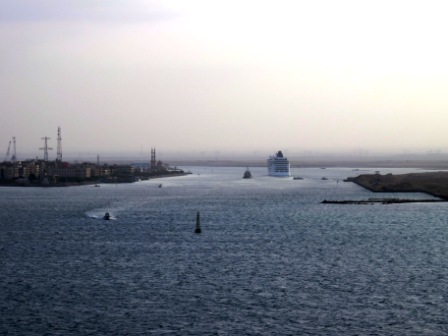
The Southern entrance at Suez of the Sues Canal
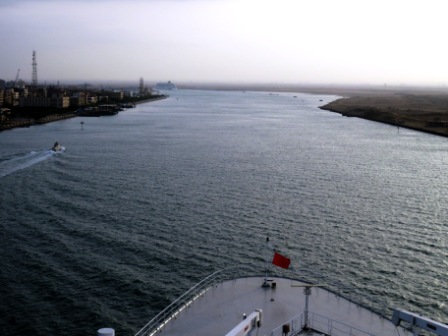
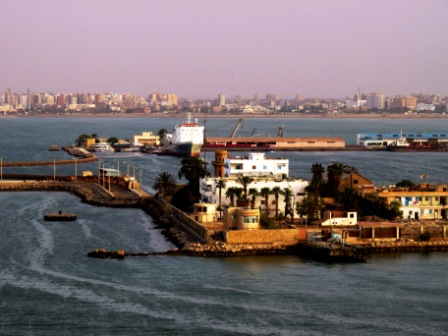
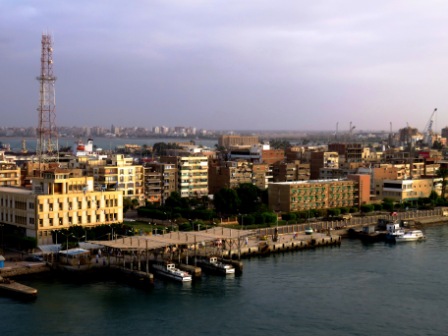
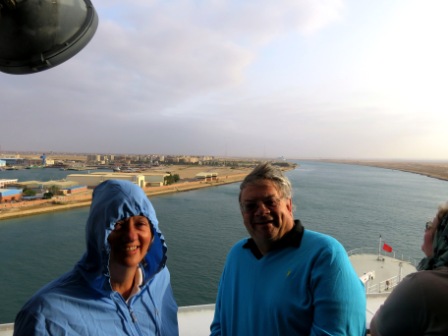
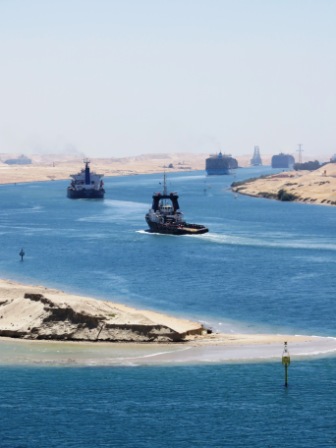
The single lane channel
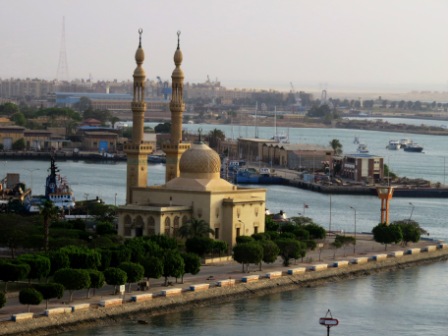
Scenes from the city of Suez
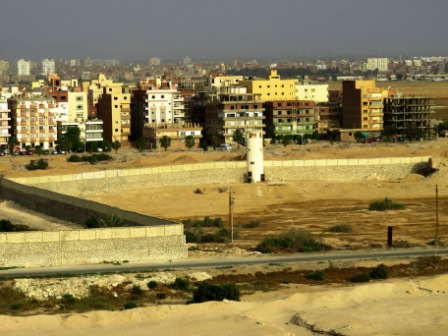
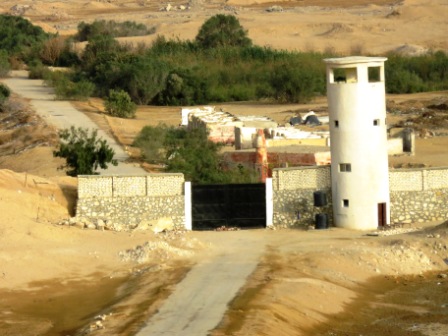
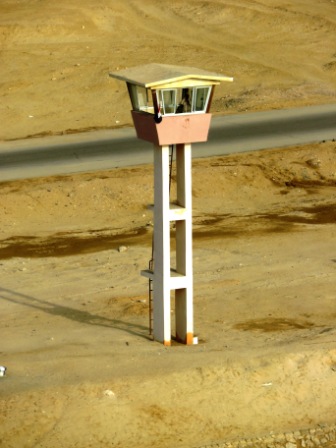
All along the canal there is a barrier wall and guard posts
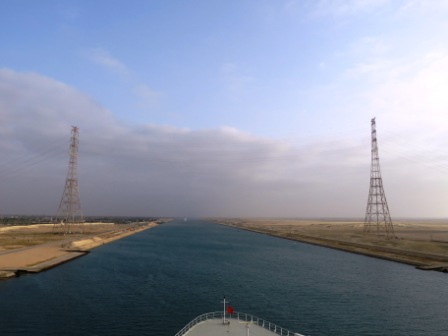
Electricity lines have to be raised very high to allow safe passage of the ships.
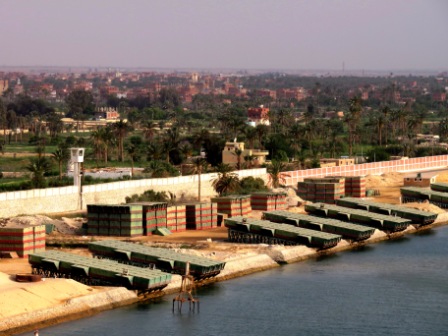
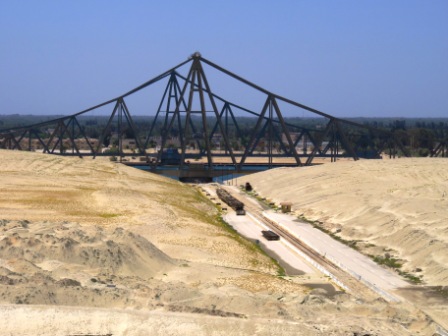
Periodically these pontoons are ready in the case of need to form a bridge between the two sides of the canal.
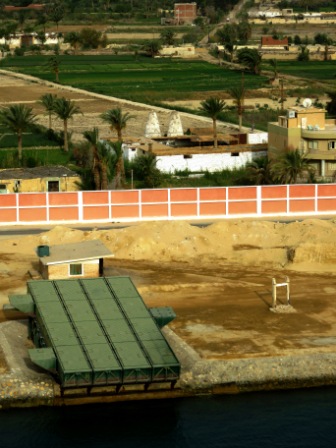
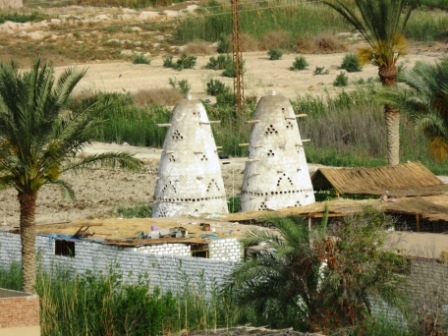
No idea what these are above but in Canada they are called “Dolly Parton’s” and used for sand / salt storage for the winter road clearing.
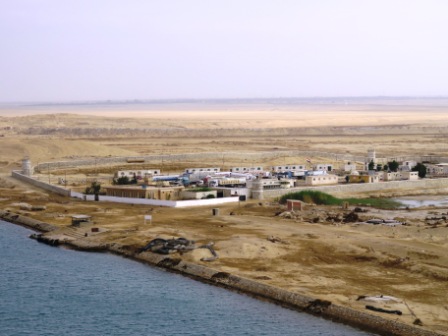
one of h few settlements on the Sinai side
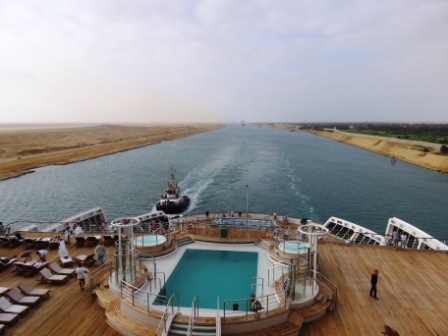
The canal from the rear with our sister ship Queen Elizabeth just barely visible behind us
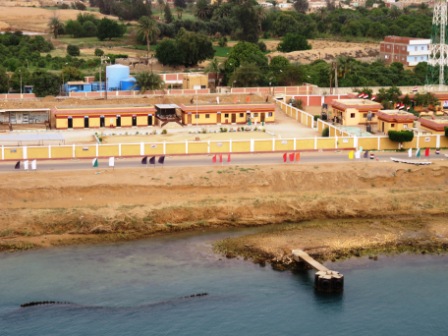
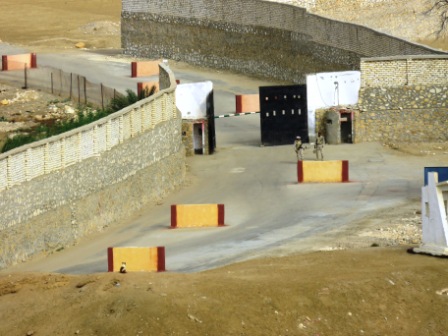
A military complex and entry into the restricted zone
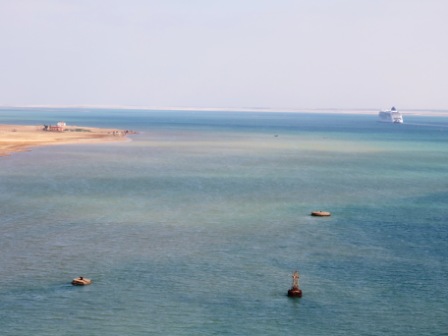
The end of the narrow first passage and into the small and large Bitter Lakes where traffic can pass each way.
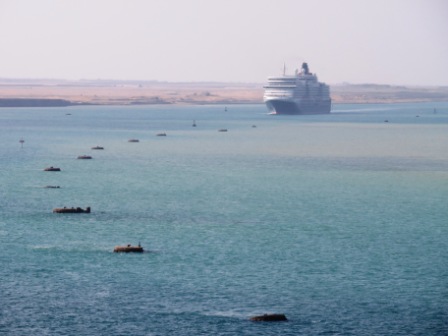
The Queen Elizabeth behind and the big lake infront
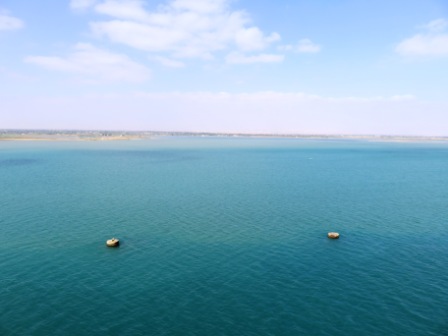
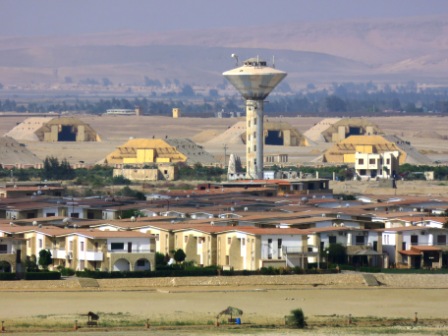
Military look out tower and bunkers in the rear for army storage.
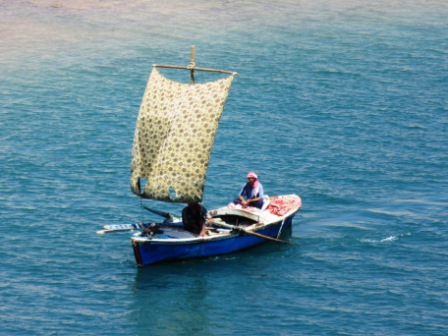
The odd smaller craft crossing the canal
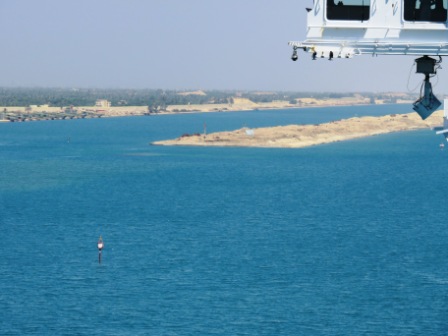
The start of the “Dual Carriageway” – two canals which permit ships to travel in both directions at the same time, reducing transit time from 12 to 8 hours and increasing the volume of traffic per day
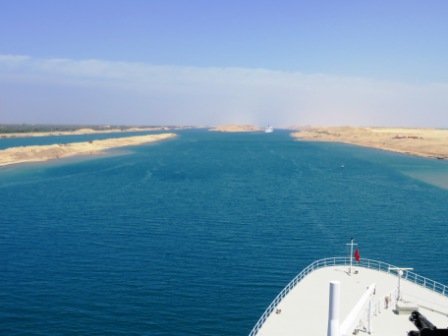
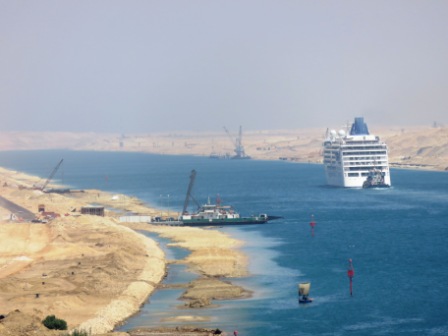
The Europa 2 in front that leads the convoy, we are he second in the queue
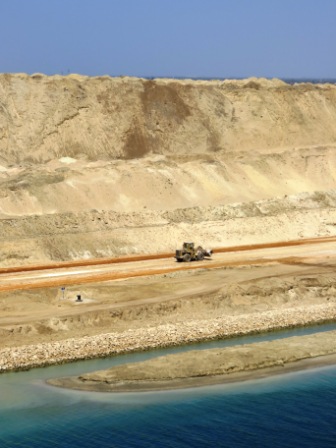
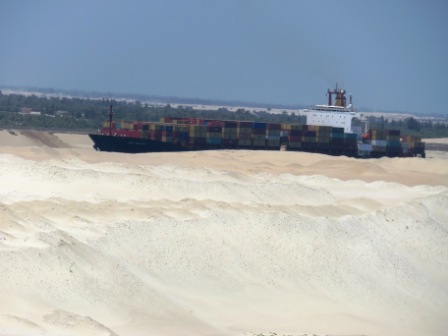
The size of the sand movement creating the channel. Look at the size of the large earth mover in comparison to the sand moved. All done in 18 months.
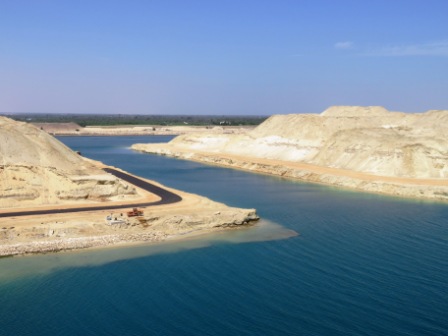
Periodically there are these cross channels going between the northbound and southbound traffic for smaller vessels to be able to move from one to the other.
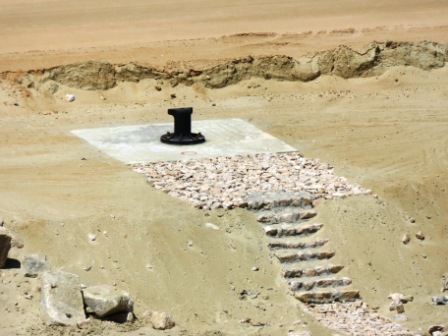
Tie down facilities all the way along in the case of an emergency, a ship has problems.
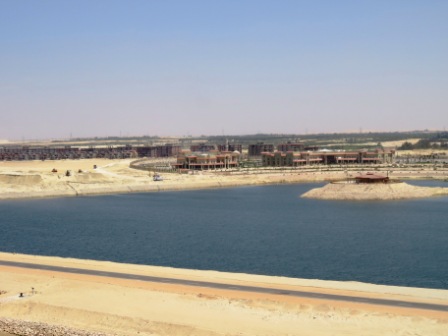
A new town being built for the workers of the canal project
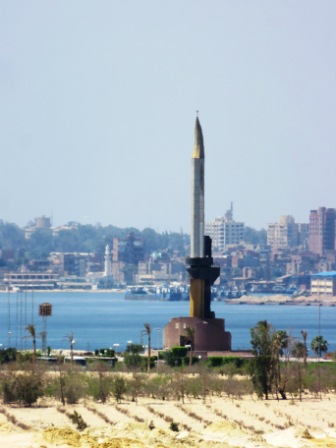
The six day war memorial
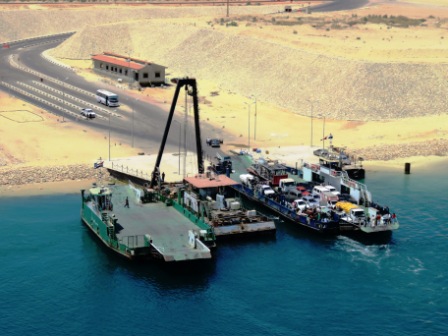
Frequent ferries cross the canal.
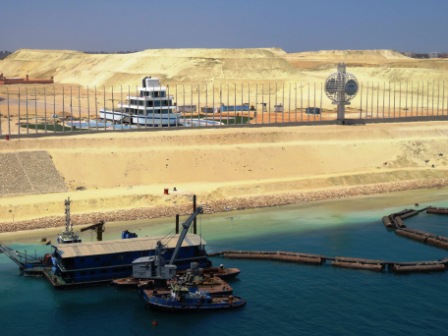
A new complex being built with globe and statues to the workers
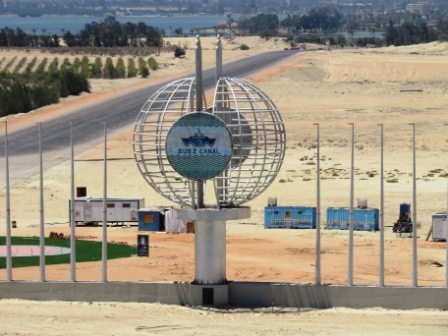
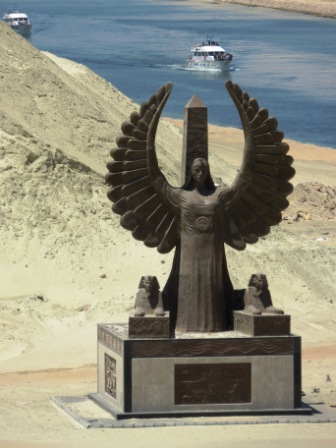

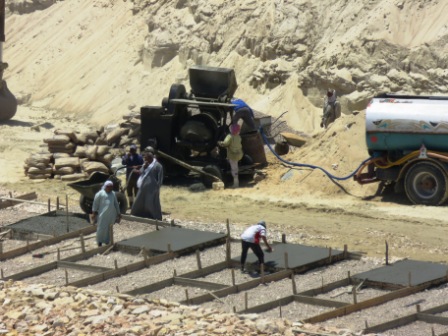
Construction and maintenance continues and will be ongoing.
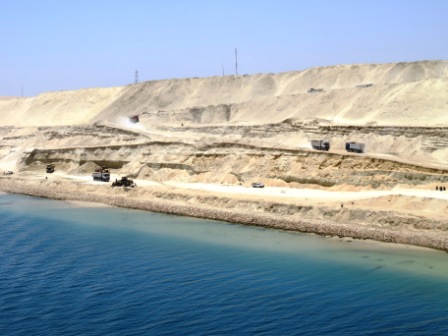
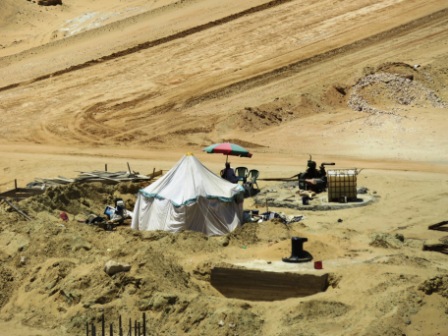
Look at the size of the earth moving equipment vs the size of the hills of sand moved to create the canal and below a Bedouin by his tent on his mobile (cell) phone!
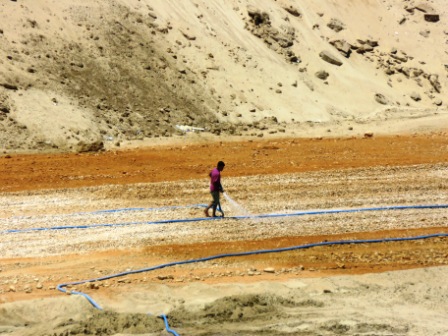
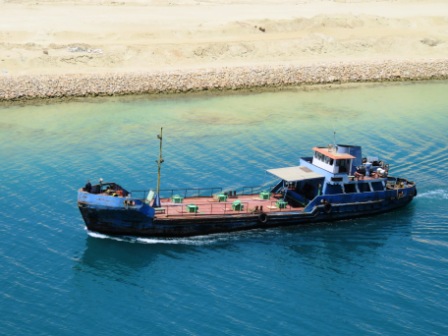
Watering down the sand and another vessel going the wrong way on our side!
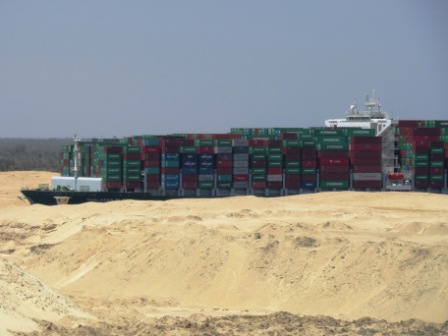
It gives one the impression that the ships in the other channel are sailing on sand – very strange!
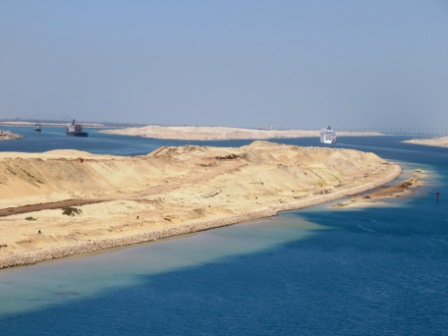
A view of the two channels and a connecting point.
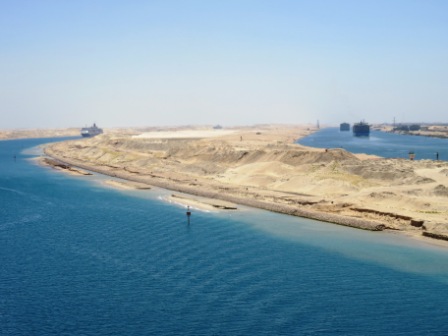
The end of the dual channel above with the Southbound convoy below
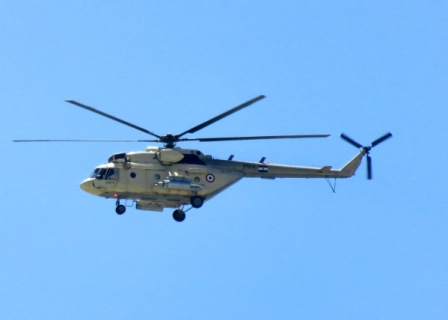
Helicopters of the Egyptian army to assure safe passage.
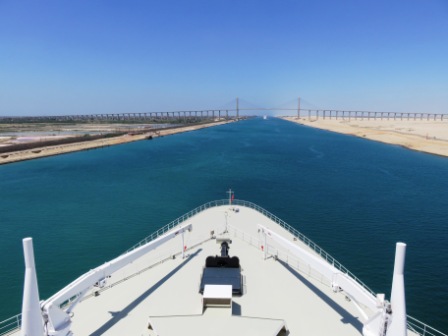
A major road bridge across the canal
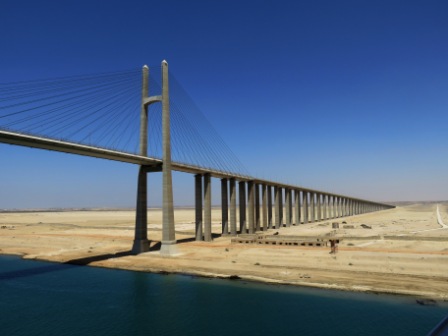
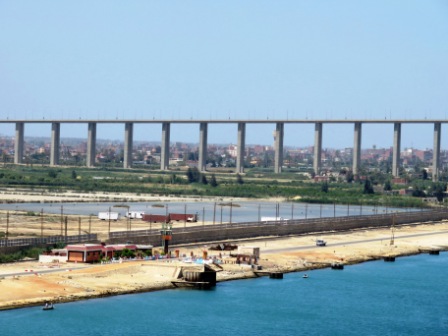
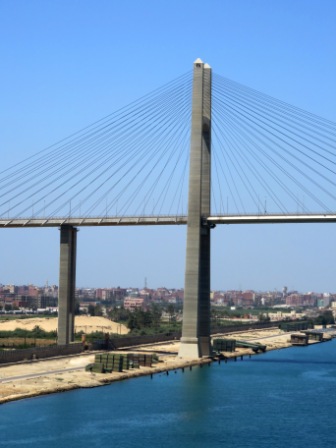

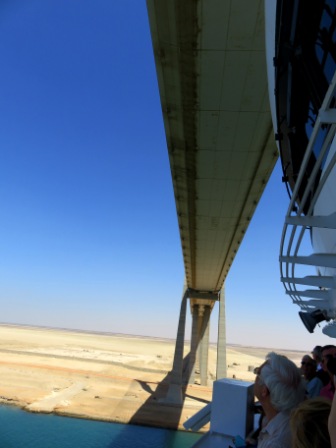
We just got underneath
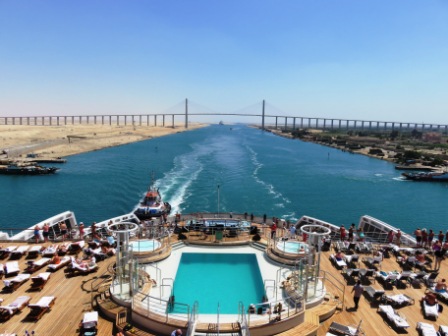 .
.
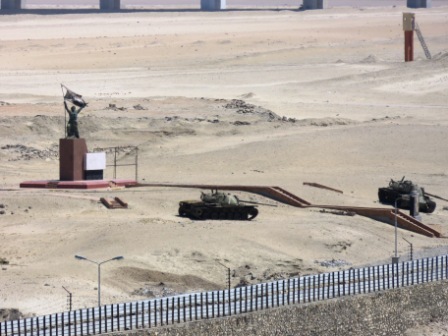
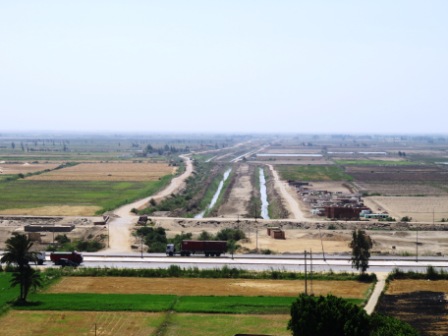
Another war memorial with two tanks above and as we progressed along the northern one way section towards the Mediterranean, the lushness of the Nile waters being used to irrigate created these fields and crops of all types
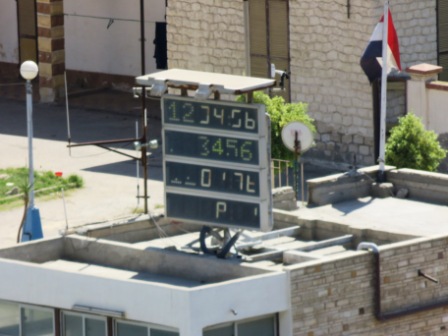
At each of the 9 stations along the way these boards would flash information for the pilot and Captain
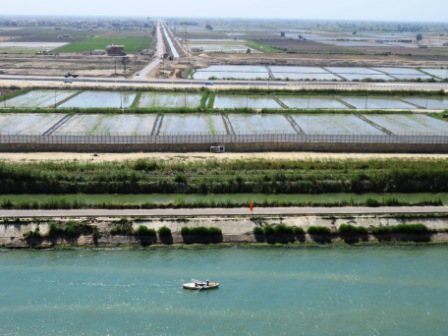
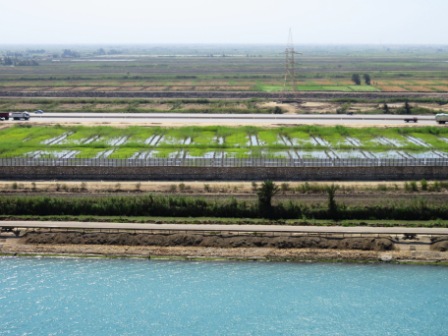
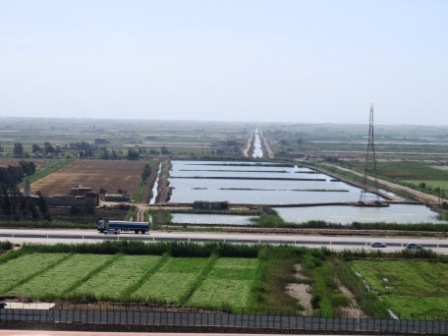
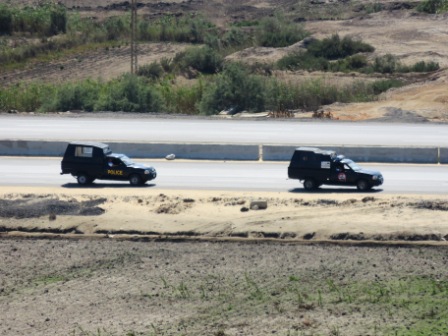
Two police cars followed us to make sure there were no problems from the land side as this area is built up with lots of activity.
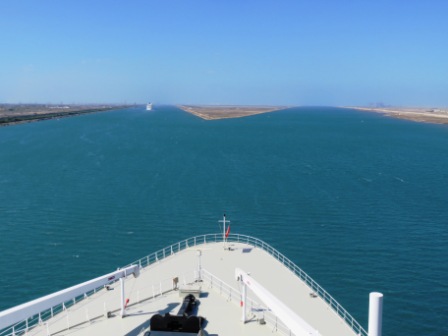
Left to Alexandria and right to Israel and Cyprus – We went right
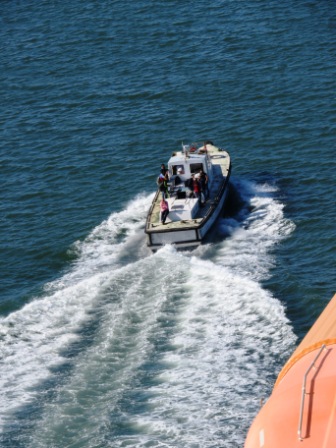
Good bye to the Pilot and engineers who were on board during the transit
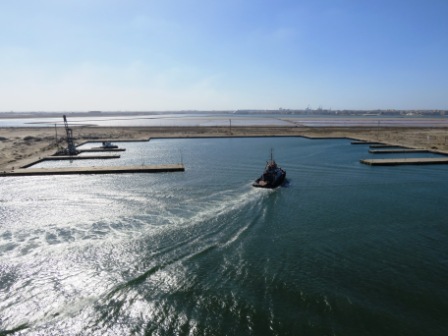
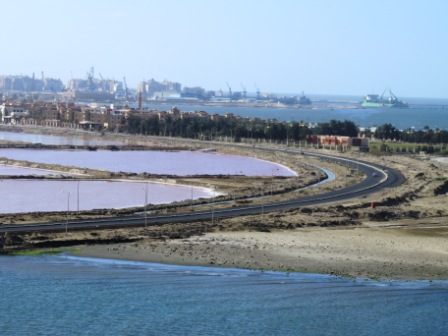
The Northern end of the Suez Canal at Port Said with the Mediterranean ahead

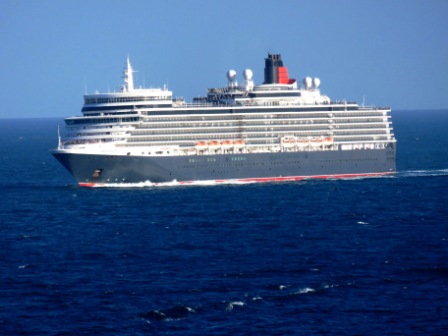
We met up and sailed alongside the Queen Elizabeth for some time hootin’ and hollerin’ and picture taking.
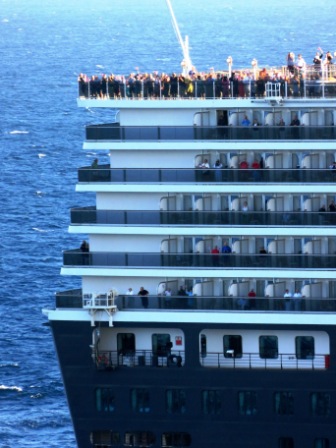
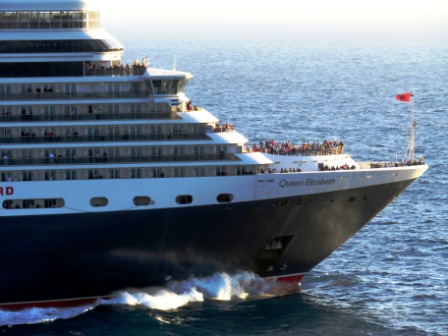
Good bye and safe trip to Istanbul, Queen Elizabeth, we are off to Limasol, Cyprus for a maiden call.

 Roger & Anne Travels
Dolly Partons. Haha
LikeLike