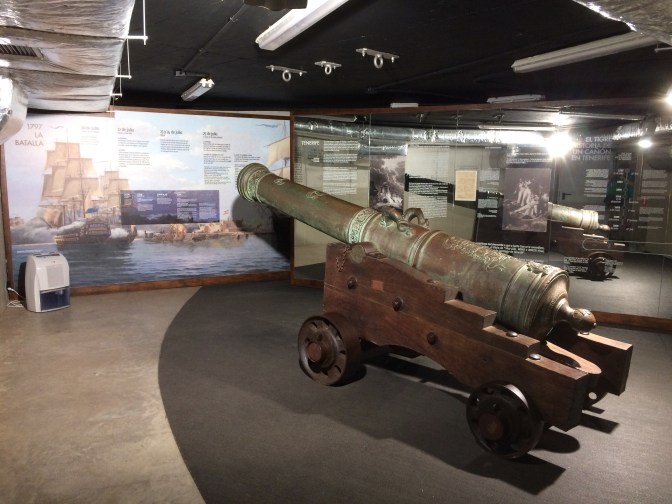
December 29 (Friday) – SANTA CRUZ DE TENERIFE, Canary Islands, Spain – [Starboard side to dock; Drive RHS 8:00-5:30] (Capital population 205,000 total Island population 890,000; land area 2,034.38 Square Kilometers (785 sq. Miles); Driver – Christian, Guide – Ignacio) – Tenerife is the largest and most populous of the Canary Islands and received 16 Million tourists this year, making it the most important tourist destination in Spain. The Carnival of Santa Cruz is one of the largest in the world. Some of the highlights of the island are the desert of the Caldera de las Cañadas, the large Pine Forest and the fertile valleys where Bougainvillea, Poinsettias and other plants like hibiscus are omnipresent. The tallest mountain (Volcano) is El Teide which is 12,178 feet (3,718 meters) above sea level (3 times higher than Mt. Snowden in Wales). The Romans called the islands the Fortunate Isles and since the 1st-2nd c BCE were inhabited by white people from North Africa – The Guanaches – Cave dwellers that mummified their dead. Today most are cremated due to the lack of space. Analyzing the DNA of the local population Tenerife peoples have on average 49% Guanache heritage, other islands the percentage is higher. Alfonso Fernandez de Lugo an Andalusian, led the Spanish forces in the 15th Century that conquered the island, and after fierce fighting the island came under the Spanish crown in 1495. The British tried to conquer Tenerife, but failed each time – 30 April 1657 Admiral Blake, 6 November 1706 during the War of Spanish Succession Admiral Jennings and 25 July 1797 Rear Admiral Horacio Nelson, we visited the “tiger” cannon where Nelson lost his right arm. In 1788 HMV Bounty stopped here to be repaired and took on lots of wine as food was scare, on it’s way to Tahiti to get breadfruit and on it’s return to England, suffered the famous mutiny. Generalissimo Francisco Franco was born here (1892-1975) and in 1936 led the forces in the Spanish Civil War that lead to his dictatorship. The prior capital until 1817 was San Cristobal de la Laguna, which is now it’s second most populous city (153,000) after Tenerife. There are ferries to Gran Canaria – 80 miles, 90 minutes by fast ferry or 30 minutes by ‘plane. Since the constitution after Franco 1978 was based on UK and Scandinavian law, education (through University, although private and Semi-private {Government pays part} University is available) and healthcare are provided by the state. Although €275 are deducted from those with paycheck for Social Security and most pay an additional € 50 a month to have semi private healthcare. After 65 years old, the government provides a pension of €700 a month. The Triangle Grid pattern of City planning was developed in La Laguna when it was the Capital then adopted in many cities around the world. Apart from tourism a lucrative part of the economy is the repair of sea Oil Rigs. We noticed that there were many of them around and it is indeed in Las Palmas, Santa Cruz and South Africa where all oil rigs are repaired that operate in this part of the world. They are typically in port for 6 months producing substantial income to the local economy. Housing costs €1,200-€1,400 per Square Meter, government indicates that average salaries are €1,300-€1,600 a month, but actual average salary is a couple of hundred less, with 22% unemployment (down from 37% and there is a 7% VAT since 1990 when the Canaries became part of the EU, 4 years after the rest of Spain. From 1853 to 1990 Santa Cruz was a Free-port.
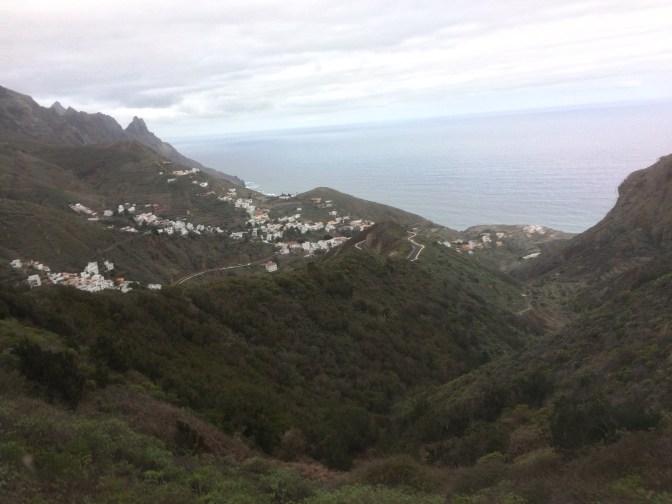
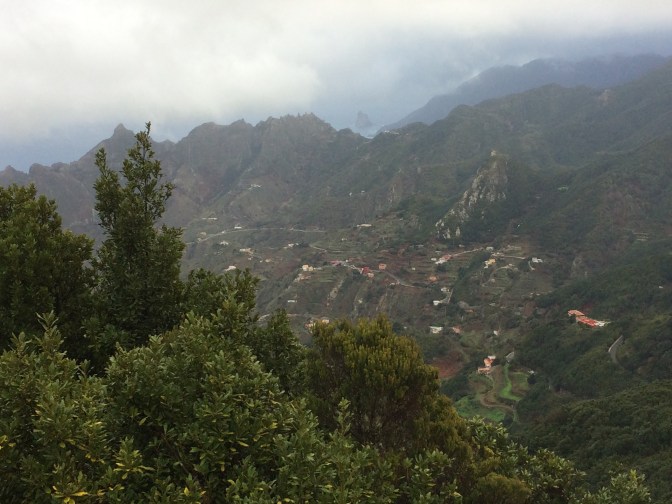
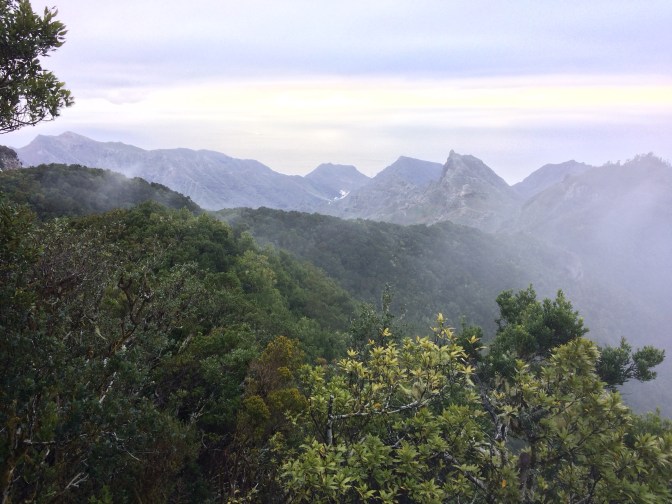
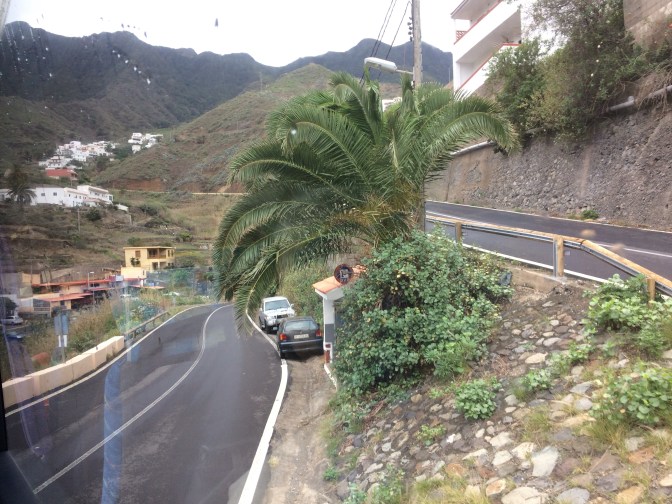
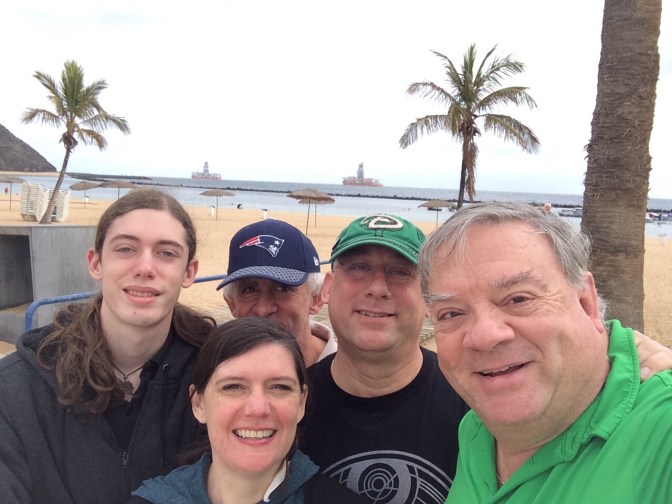
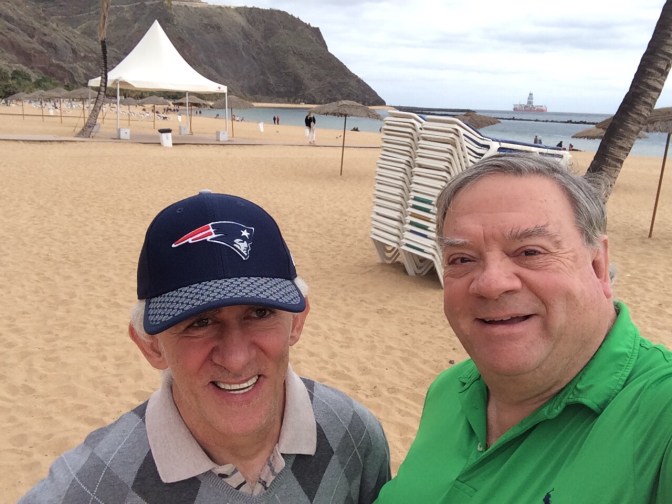
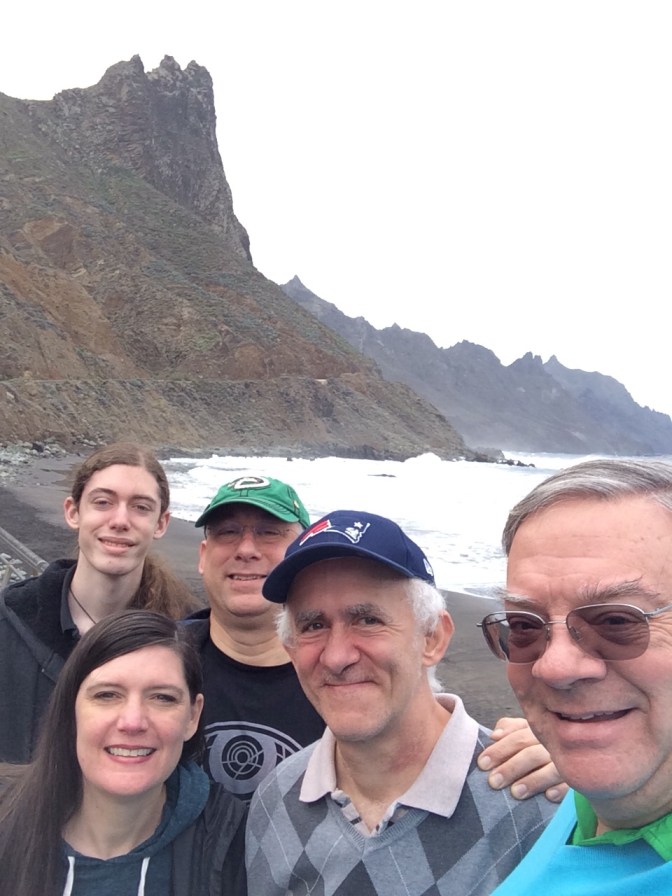
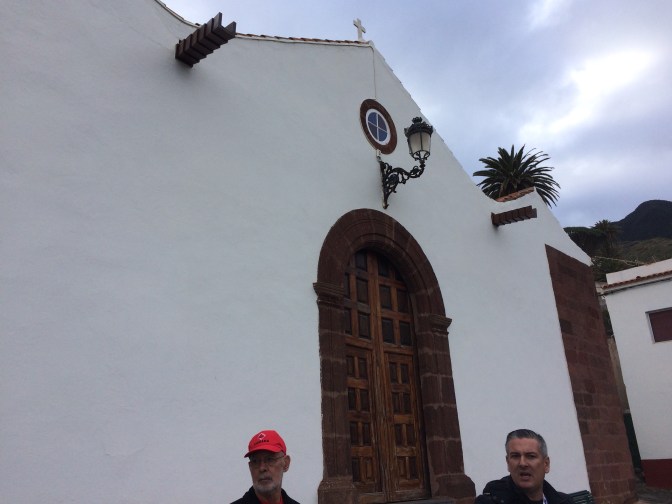
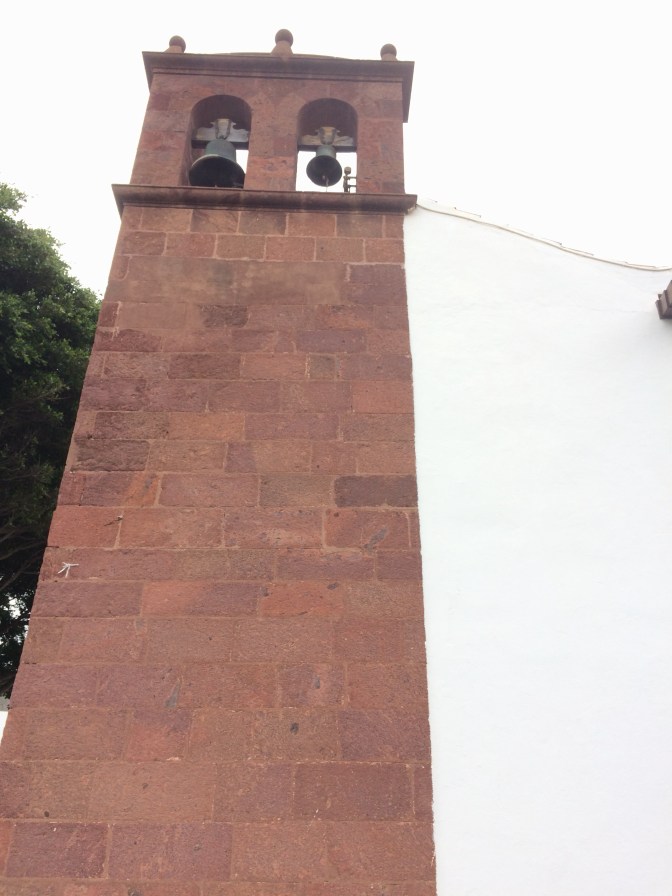
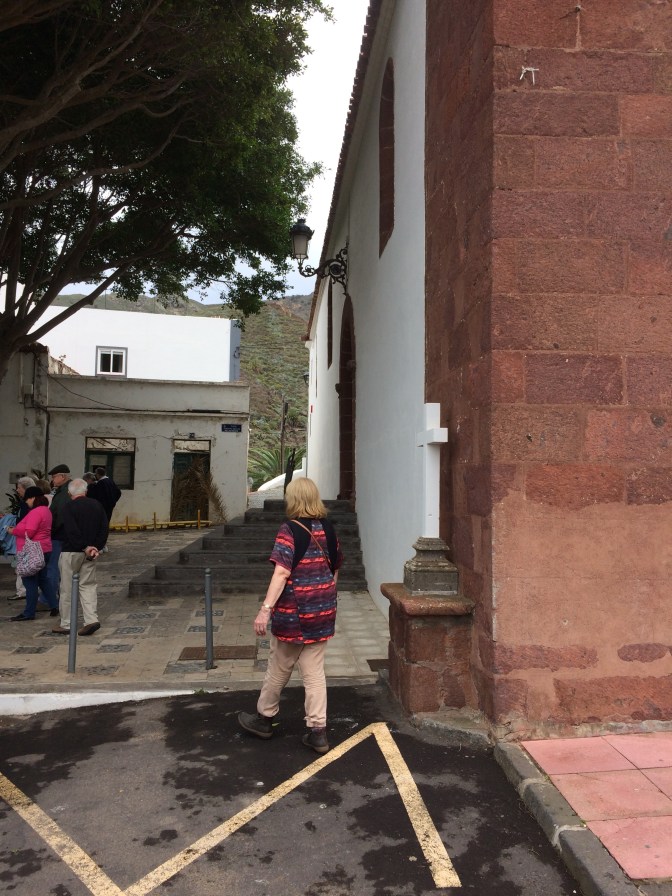
We took the Northern Panorama tour – Tenerife is considered by some to be the most beautiful of the Canary Islands. As in the others, this island’s character is based on numerous volcanic eruptions. We departed on the coach along the steep roads with numerous hairpin bends and drop-offs, towards the mountains past La Cuesta and San Cristobal La Laguna, towards Anaga, and the tropical forest / UNESCO protected 49,000 hectares Biosphere, viewing the interesting flora, of which the most locally important was the dragon tree. One of the first stops was the Mirador de Jardina overlooking the town of La Laguna and the terraces below, followed by the even higher up the mountain and impressive “Pico del Ingles” so named as a British man fell from here to his death. Mt. Taborno is 1024 meters high, back down to 933 Meters near Anaya. From there it was down to Taganana (named after the illegitimate son of the last Guanache ruler) and Roque de las Bodegas – for a taste of the local Wine and Goat cheese as well as the local coffee mixture – Paraquito – made from Condensed milk frothy cappuccino on top, then add local banana & raisin liquor and cinnamon. It was delicious but very sweet. Also served was Octopus chunks in the local red sauce that we have been having with the potatoes (papas arrugadas) made from a local Chile, garlic, pimiento, olive oil, cumin and vinegar. It is interesting that there are 6,000 varieties of Potato with 3,000 in Peru alone where the potato originated and is thus a Quechua loan word. In Spain the use of Batata in lieu of Papa is used in deference to the Pope who is known in Spanish as El Papa. As we descended and indeed all over we saw most of the agriculture is done on cultivated terraces, given the mountainous nature of the terrain. We stopped at various locations to get pictures of the stunning scenery. We returned to the neighboring village of Taganana, where we visited the church which hoses the “Our Lady of The Snows” figure. Unfortunately the Church was closed but the guide gave us an explanation of the history of the Church. Interesting that the deep gorge like valleys are “V” shape as opposed to in most other locations where they are “U” shaped due to water erosion as opposed to glacier erosion. The last Volcanic eruption on Tenerife was in 1909, however on the Island of El Hierro there was an eruption between July and October of 2011. As we descended, the guide mentioned that the cochineal was used for red coloring until an artificial alternative was found, however it is still used in lipstick, Campari, Coca-Cola, Fanta etc where it is known as colorant E360. Our next stop was at the white beach – Playa de las Teresitas with the sand all being brought from the Spanish Sahara desert.
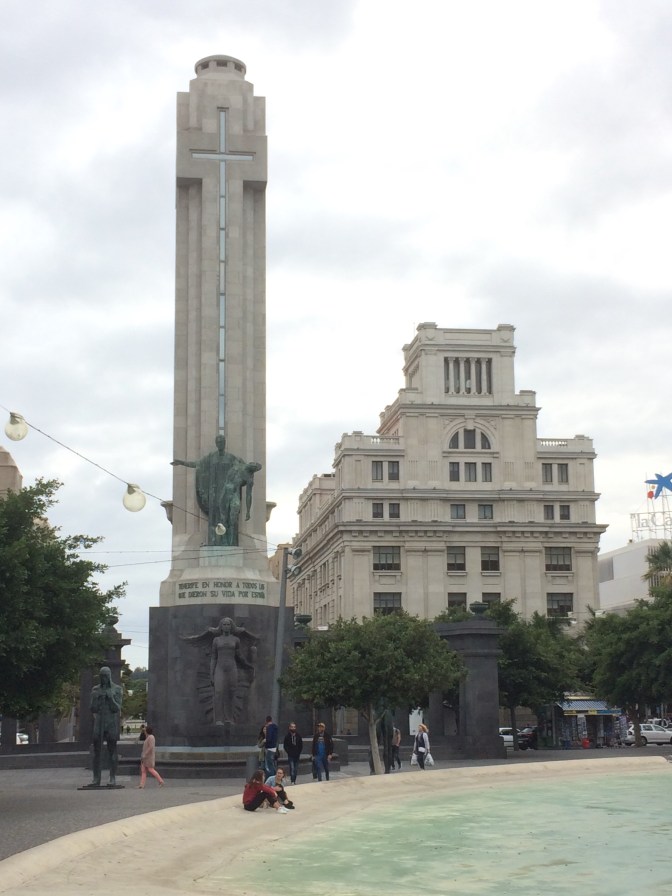
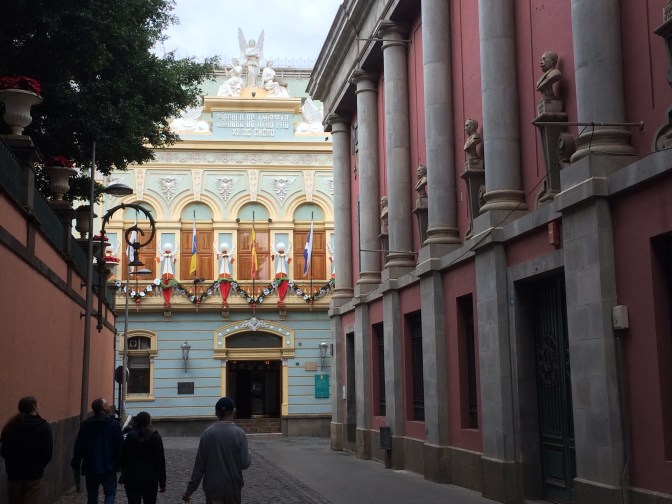
We returned via the 11 miles of flat coast through the fishing village of San Andres to Santa Cruz and the Ship. We then took the shuttle into the town center and had a nice Tapas meal at the Restaurante La Rebotica (a converted pharmacy) near the Church of San Francisco, followed by a wander around town and back to the ship for dinner and the show – A lady singer – Lorraine Brown.

 Roger & Anne Travels