December 30 (Saturday) – SAN MIGUEL DE LA PALMA, (LA PALMA) Canary Islands, Spain – [Port side to dock; Drive RHS 7:30-5:30] (Capital Santa Cruz de La Palma, population 20,000 total Island population 80,000; land area 730 Square Kilometers (282 Sq. Miles); Guide – Stephanie [monotone, but knew a lot and good explanations]) – La Palma is the world’s steepest isosceles triangles shaped island, and has at it’s center the Caldera (crater) de Taburiente with surrounding mountains (2,426 meters or 7,950 feet) and filled with rugged landscape. The most northwesterly of the Canaries and often referred to as “La Isla Bonita or La Isla Verde” (Beautiful or Green Island), due to it’s abundant rainfall and lush vegetation. Since 2002 the whole island is a UNESCO protected Biosphere, which includes not only animals, vegetation, seas but also sky – light pollution / clearest skies, which makes it home to some 16 International Astro observatories. As it is close to the equator, both the Northern as well as the Southern Hemispheres can be observed (unlike Chile) and results in a significant new sector of visitors – Astro-Tourism!
Even though there is some evidence of the existence of the island dating back to the Roman Historian Pliny the Elder, the earliest recorded history was in 1341 by the Genoese navigator Nicolosso da Reco. There was a failed attempt by the Spaniard Guillen Peraza in 1447 to conquer the island. As with the other islands the Guanaches inhabited the island before the 1492 conquest by Spain, with the official date (as with the others) 3rd of May of 1493 being the day celebrated as the conquest and thus the name of the main streets in the island capitals – 3 de Mayo (3rd of May). In 1563 Santa Cruz was burned to the ground by the French pirate François Lelercq and Francis Drake lost his flagship in a skirmish off the island. From 1830-1850 the cochineal trade flourished for red dyes until the introduction of synthetic red. At which point the banana was introduced, which is still one of the major crops. Malvasia wine, papas arrugas with green and red sauce, cigars and fish are other key gastronomic items. Apart from the usual Carnaval, Easter, Christmas and New Year festivals, one of the biggest is the festival of the “Virgen de la Nieves” (Virgin of the snows), the patron saint, which results in a 2 day parade, but actually seems to last a month, conducted every 5 years, with the next one being in 2020. Another festival is that of the wine when on November 11th the barrels of last years wine that still have some content are taken into the woods and the locals go and drink all the remnants to get rid of the old wine so the barrels can be used for the new harvest of wine. There are 1,600 kilometers of hiking trails making it a paradise for trekking.
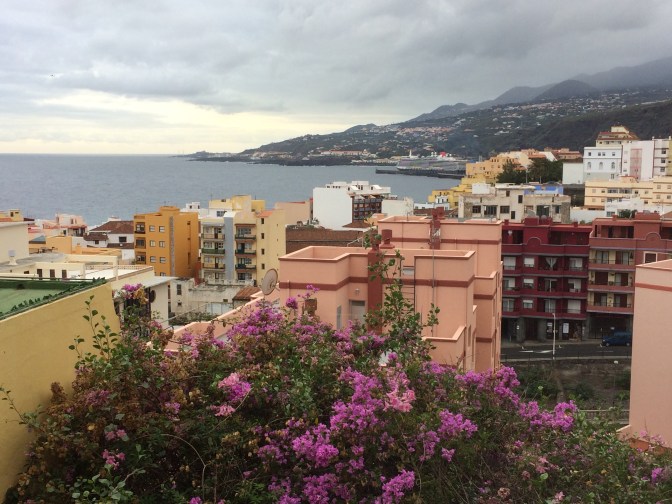
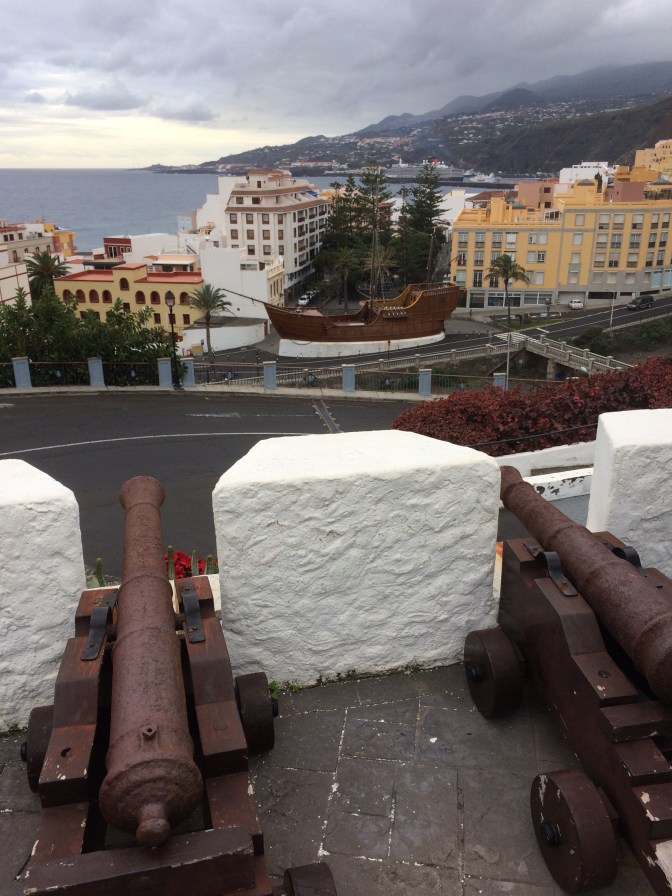
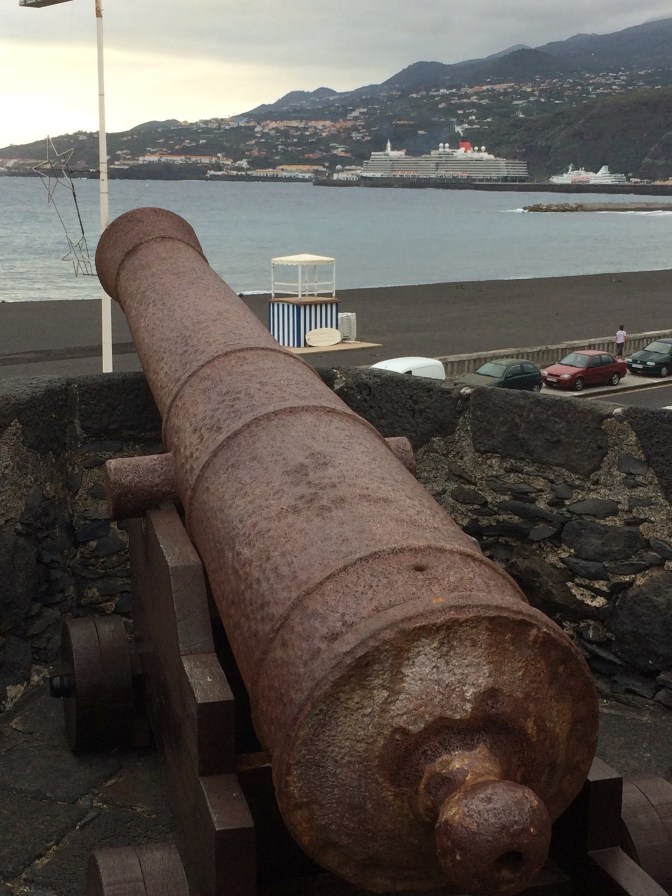
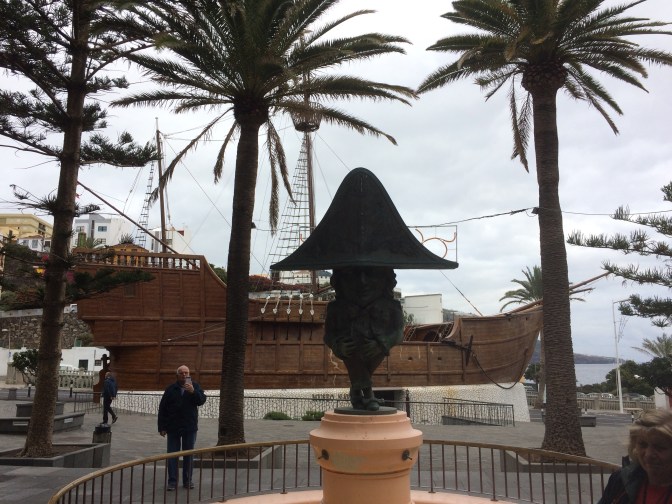
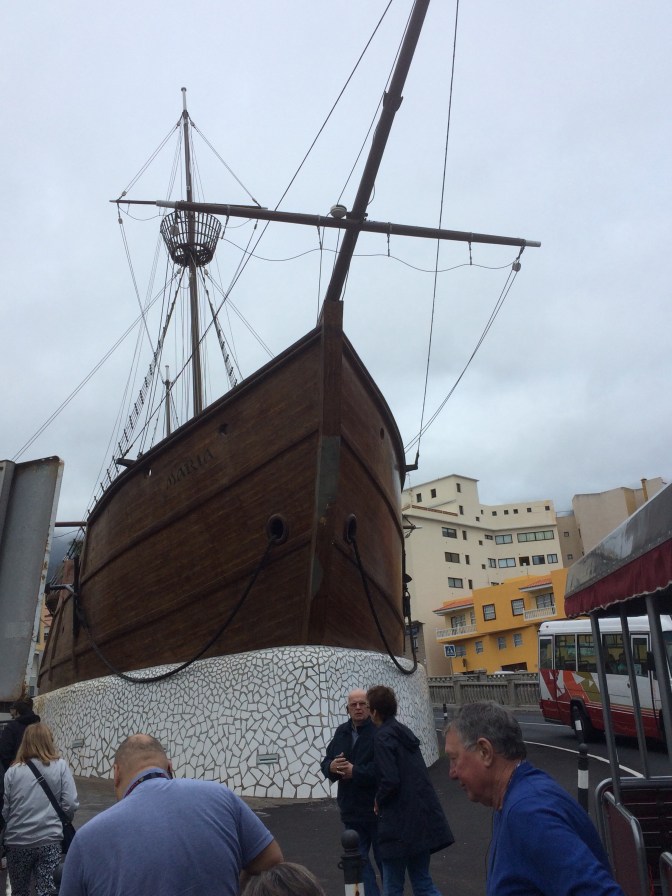
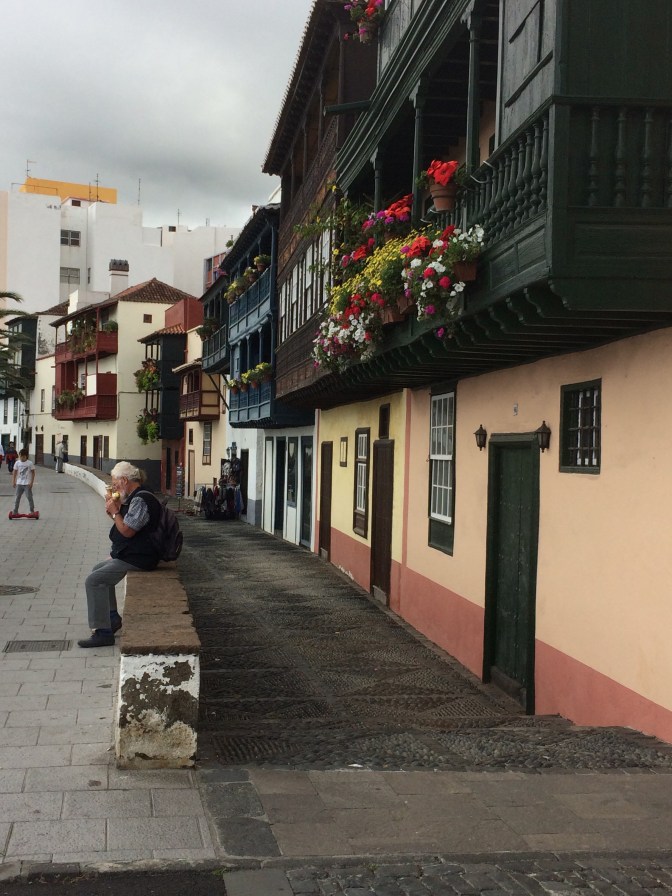
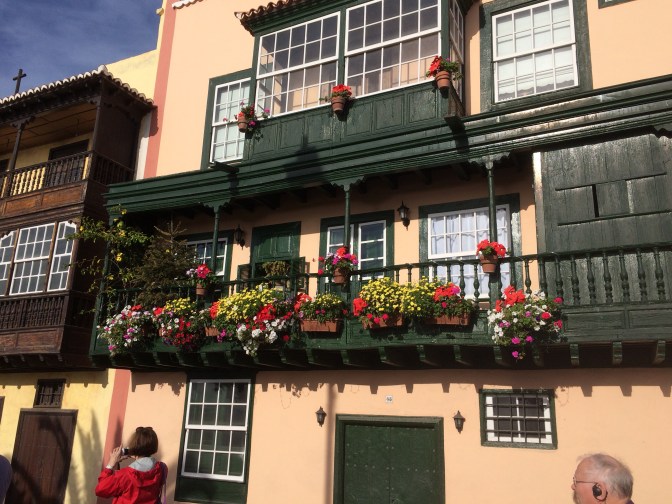
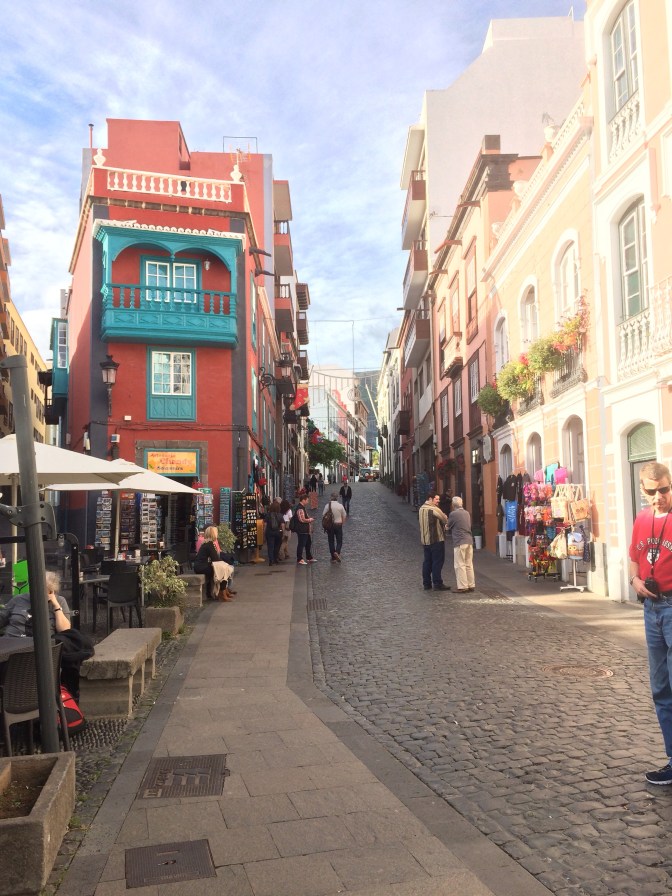
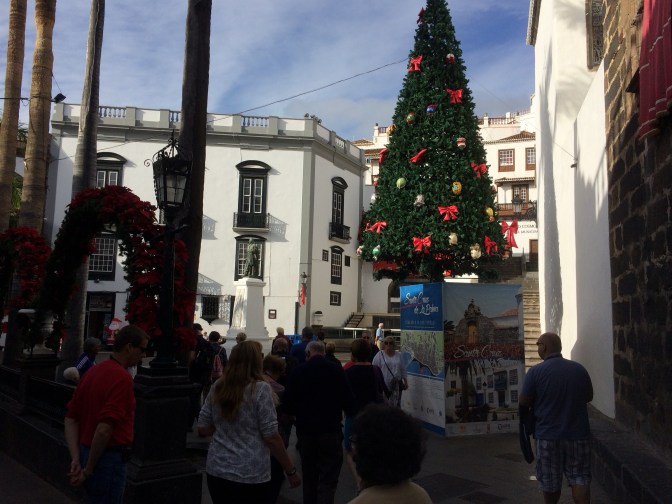
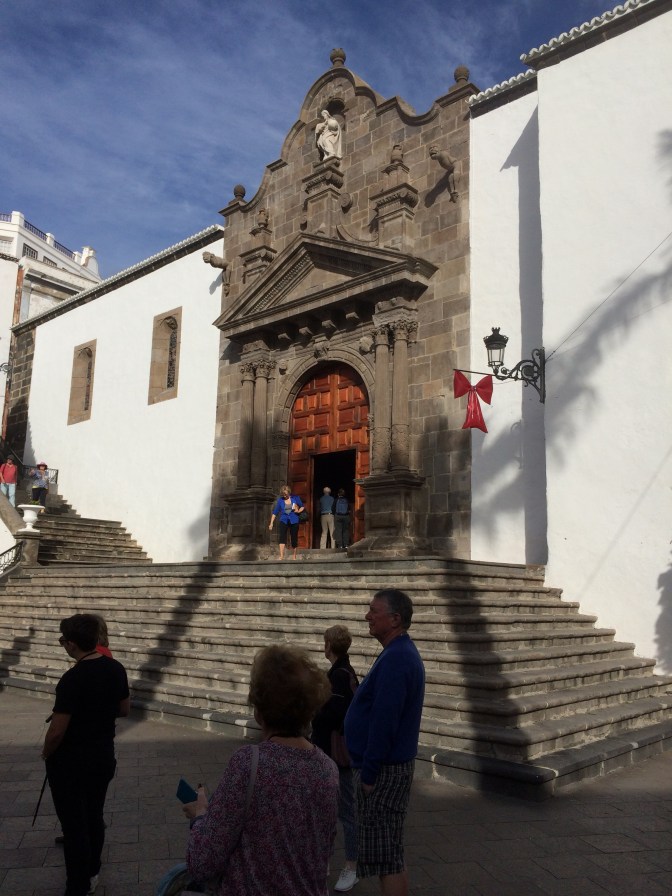
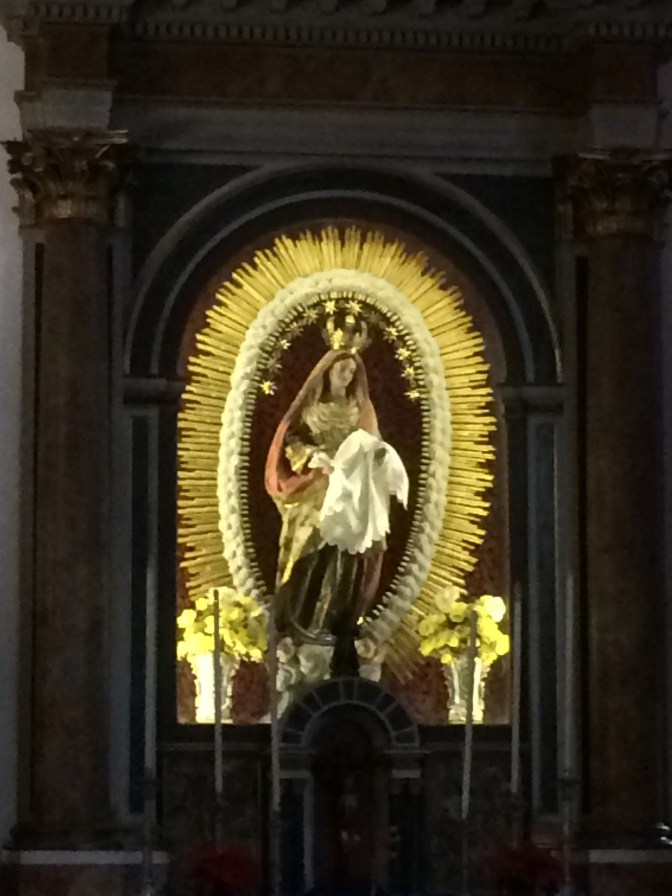
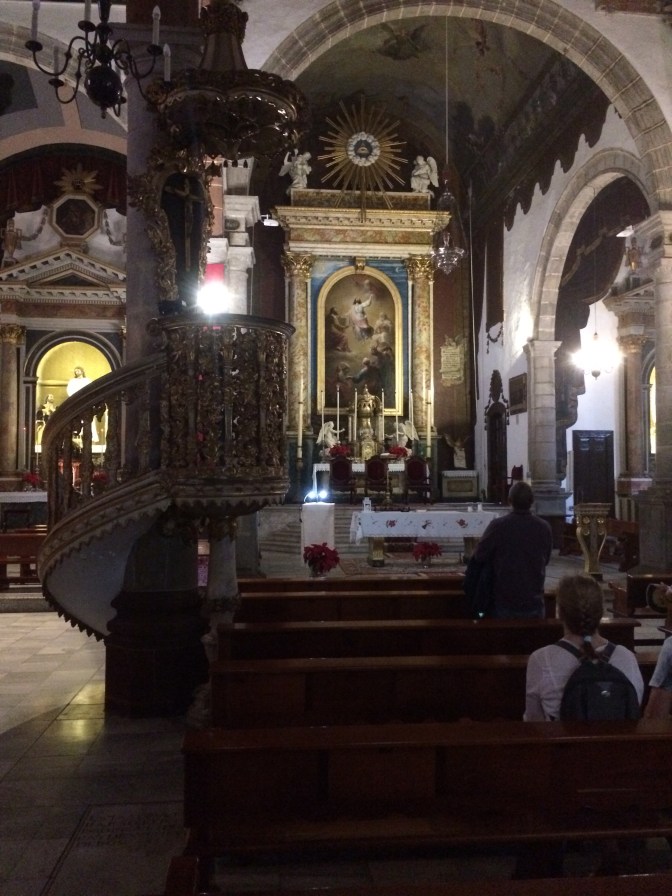
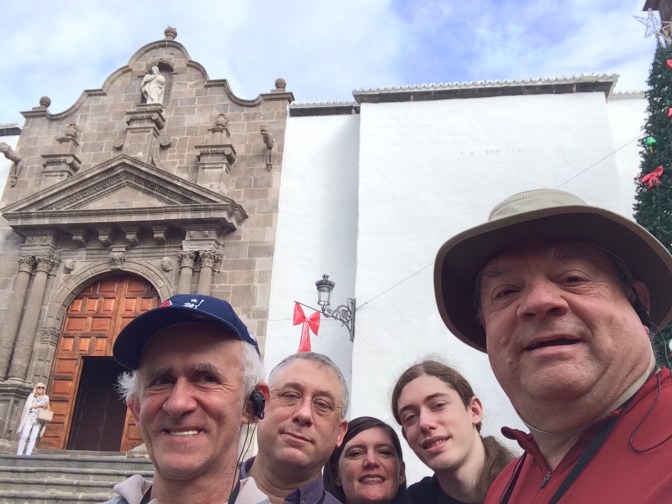
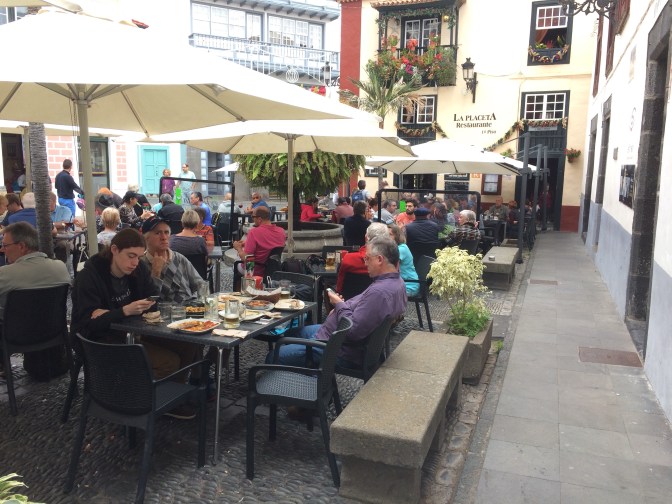
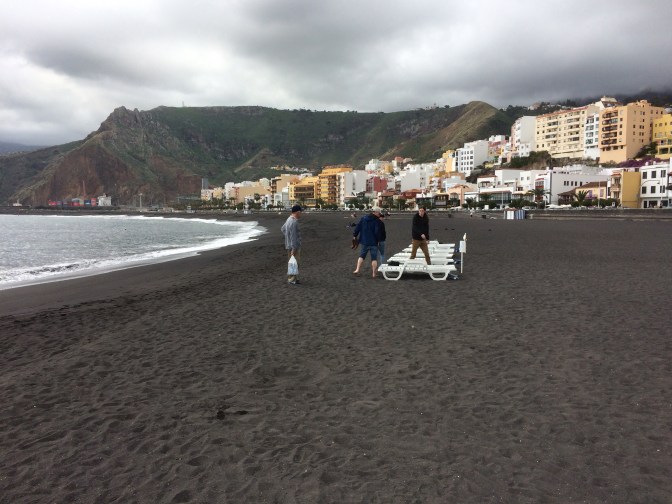
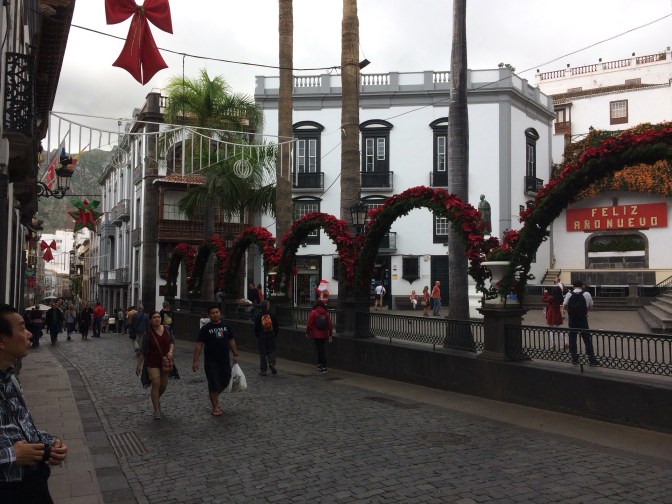
We took the Santa Cruz Trolley Train & Walk tour thus we remained in the town of Santa Cruz de La Palma where we took a short trolley train ride from the ship’s side, along the main Avenue along the shoreline – Avenida Maritima with its spectacular balconies, some decorated with flowers. We then reached the “Barco de la Virgin” (a replica of Columbus’s – Santa Maria) which is actually a brick naval museum base with the wooden structure above that resembles the ship and went up the hill to two forts. The first had “toy” cannons and was set up to resemble a rampart. The second was a true fort – the 17th century Castillo Real de Santa Catalina with major cannons, a great view of the waterfront and a mini museum that has a series of models of the fort and different structures as they originally looked. Our next stop was at “La Tabaquería” Restaurant for glasses of wine at 9AM!!! We continued wandering the cobble stoned streets with the guide pointing out various buildings, entering the interpretation center and La Jalania house museums, through various Plazas – Alameda, San Francisco, the main triangular “square” Plaza de España with it’s Ayuntamiento (town hall – 1559 to 1567) and the Placeta Borrego with it’s 17th century church – Iglesias de El Salvador (1503) and the Renaissance Town Hall. We had a nice Tapas lunch at the Gran Terraza Lolita Pluma restaurant in the Placeta Borrero. We then wandered the streets in and out of the shops and greatly enjoying the charm of the town. A walk along the fine sandy black beach with some of the family dipping their toes into the waters. All in all a beautiful place and a good island to put on the list for a return visit when rest and relaxation are the “order of the day”.