Saturday March 14, 2020 – Curaçao, Used to be Dutch Antilles.
We arrived early, Port to Dock and a short walk along the pier to the mainland then through an old Fort now a shopping mall to the town divided by a waterway over which there is a tall bridge allowing ships to come underneath. We walked over a floating pedestrian bridge getting a good view of the multicolored Dutch style row houses on either side of the waterway. We wandered to the end along the water and back through a side street stopping for a mid- morning beer!! We’re in the tropics so anything goes!!
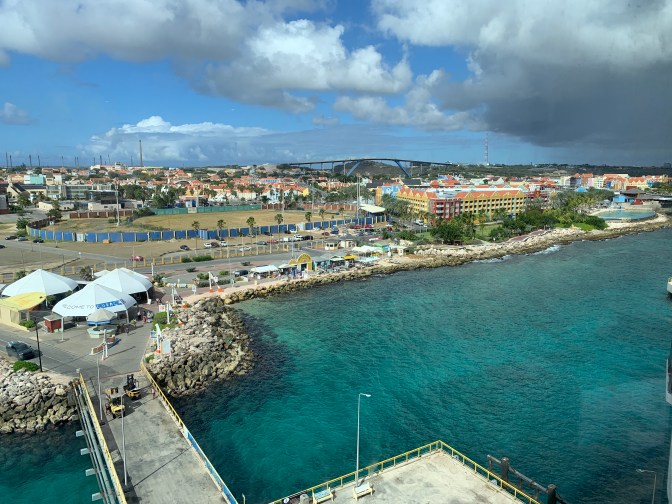
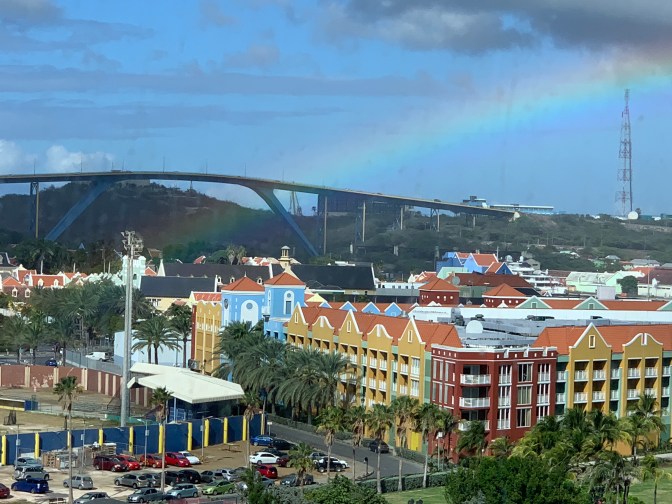
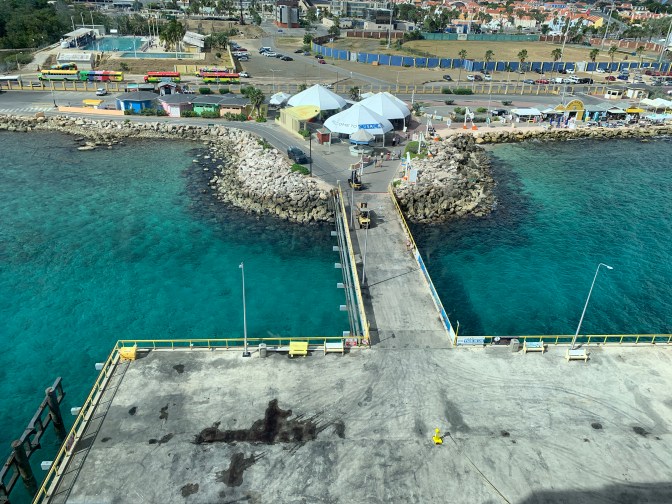
The earliest human remains found on the island date to 2,400 BCE / BC, but settlement really did not start until about AD 600 CE when Arawak Indians came via dug our canoes, from South America. They led a peaceful life until the advent of the Europeans. In 1499 Alonso de Ojeda, who sailed with Christoper Columbus, along with Amerigi Vespucci and Juan de la Costa discovered an island called “Isla de Los Gigantes”. A Portuguese cartographer blended it’s new name “Corazon” (Heart) with coraçao and curaçao healing after sailors with scurvy recovers after eating island fruits. In 1634 the Dutch lost St. Maarten to the Spanish, so to exact revenge, they captured Aruba, Bonaire and Curaçao for the Dutch East India Conpany.
Back to the ship and on to the tour. Saturday is a quiet day with most people heading for the beaches for the day and party all night. Our ebullient, experiences guide WaWa (Guialba) and Driver Liza were very good, but the coaches, with good air conditioning, were narrow, so sharing a seat was a squeeze. The 90•F+ temperature was draining.
The town of Willemstad is divided into two connected by the tallest bridge in the Carribean named after Queen Juliana. There is also the 1888 pedestrian pontoon Queen Emma wooden Bridge, on 50 pontoons which twists to open some 20 times a day to let boats through. The dock is on Potrobanda side (other side … from the Commercial part of the Island). From the top of the bridge (opened in 1974) we could see Venezuela only 38 miles away.
Crossing the bridge we entered the Salina Neighborhood – Salt Flats which was also the Slave Market. Slaves were brought over from Africa to work on the plantations. Abolition of slavery was in 1863. A movie with Danny Glover, was made about slavery in Curaçao called “Tula The Revolt”.
Curaçao was one of the 5 islands “Owned” by the Netherlands thus all Dutch citizens. While still part of the Commonwealth / Dutch protectorate, the Dutch Antilles – Aruba, Bonaire and Curaçao (the ABC islands) are independent. The other two Dutch Islands are St. Maarten and St. Eustacia. Curaçao was the capital of the ABC islands with it’s population of 160,000 and Willemstad is the capital of Curaçao. The education is free through high school and a few university faculties are on the island but most students receive a subsidy / loan to go to the Netherlands to study University then return.
Our first stop was at the distillery of Curaçao liquor. In 1515 the Spaniards introduced Valencia orange trees to the island, but the hot sun, soil and climate were too much for the sweet oranges, so they were left to wither in the wild. Over time they adapted to the island conditions but were very bitter. Over time the locals called this fruit laraha. This was then used and converted into Curaçao Liquor.
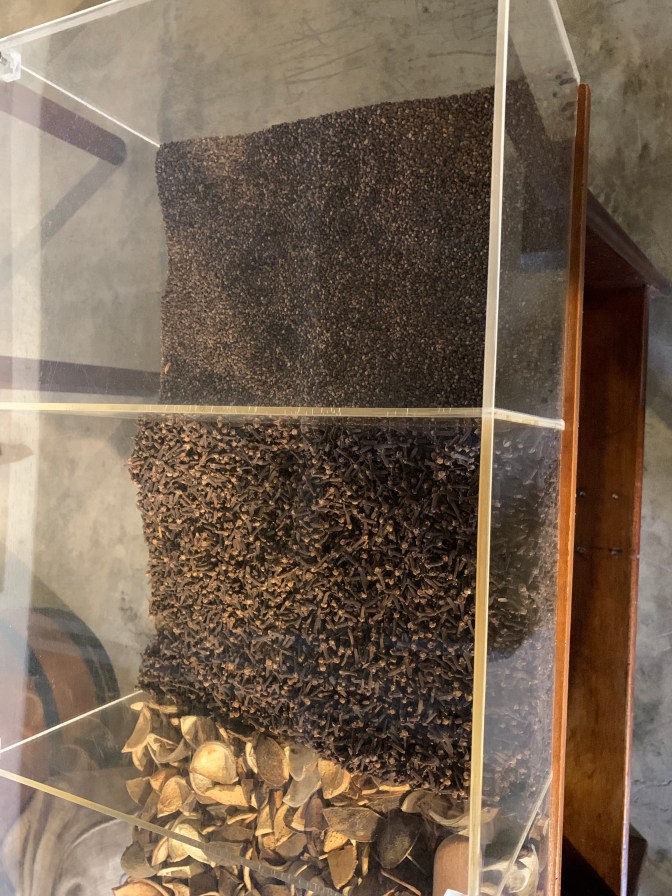
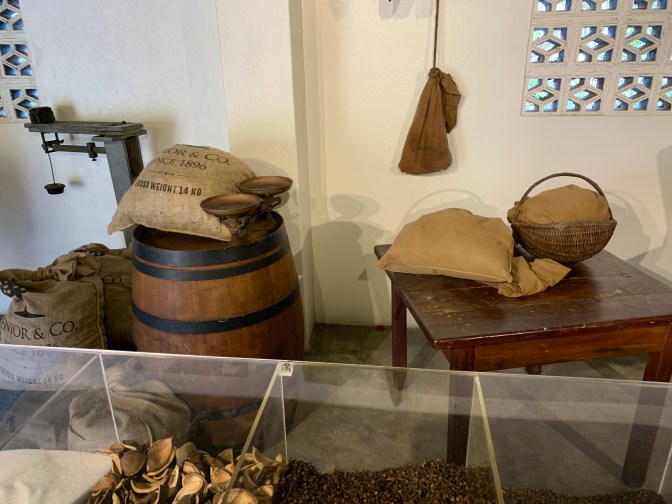
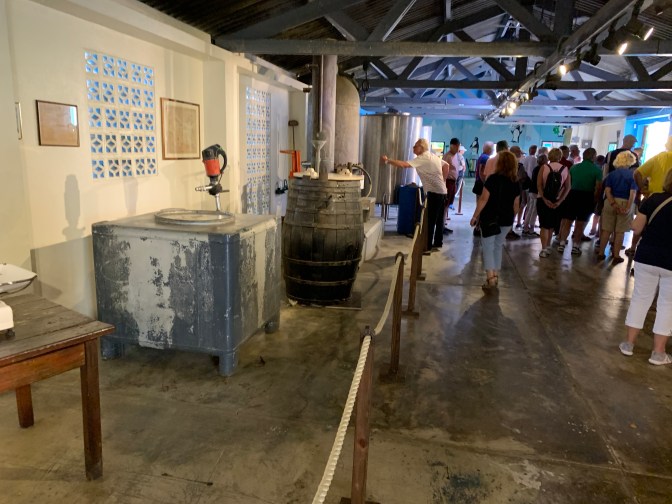
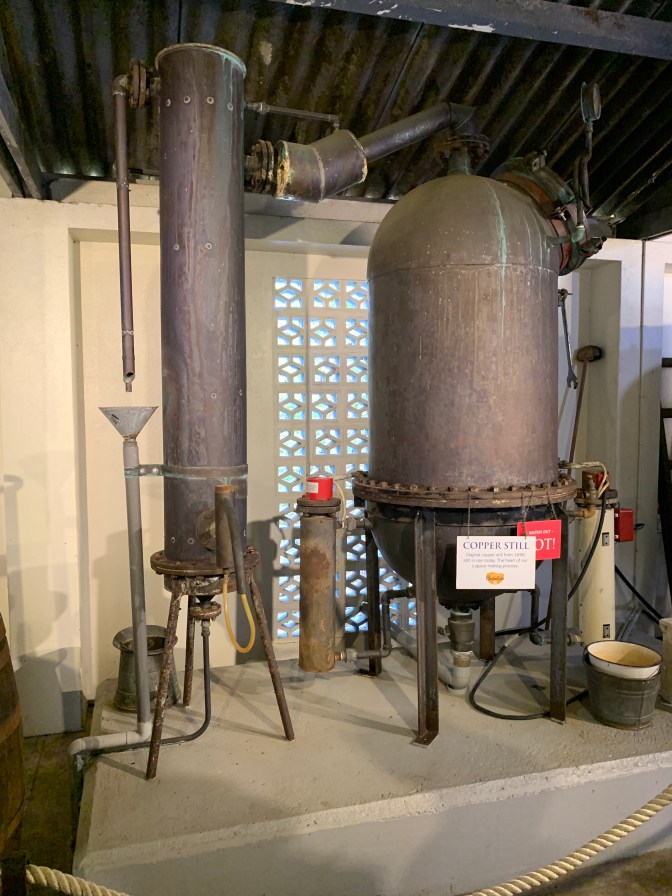
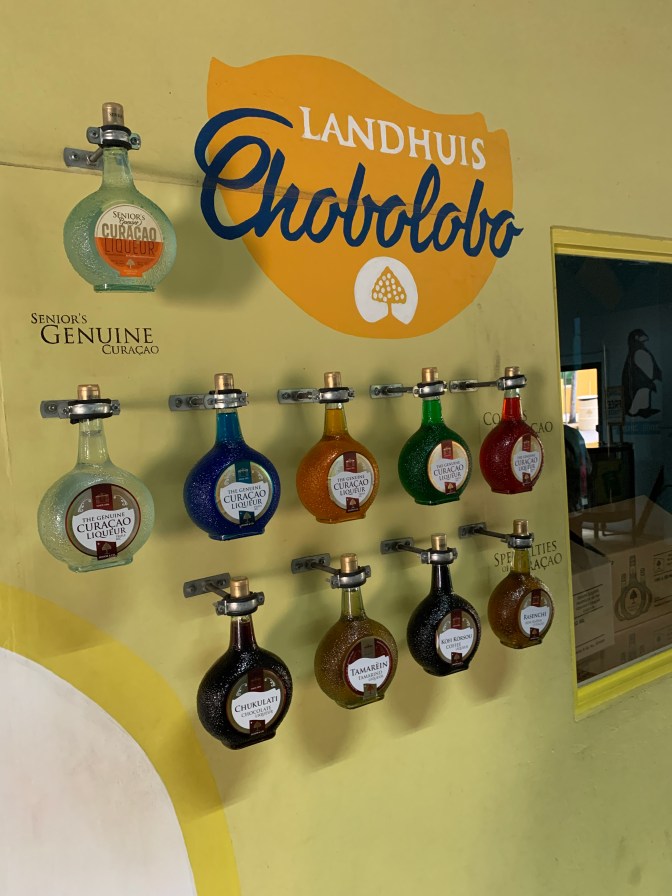
The Senior family goes back to at least the 15th century Spain where they were advisors to the Royal family. Many were Marranos – Jews converted to Christianity, but secretly practiced Judaism. Some fled to Holland and Brazil to escape the Spanish Inquisition. Several sons of Mordechai Senior (born 1620 in Amsterdam) emigrated to Curaçao. Their descendants stumbled across an idea for a liquor after stepping on a laraha Orange. Smelling the aroma of the oils in the broken peel, he experimented with exotic spices, Edgar Senior founded Senior & Company in 1896. The original still s still in use today and thus the start of the Genuine Curaçao Liquor. Many Jews followed in 1634 – 1659 and the oldest continuously operating in the Western Hemisphere – Mikvé Israel Emanuel is in Curaçao built in 1732 with a Torah from 1300’s Amsterdam. Senior obtained Kosher certification for his Liquor. We tasted three of the five flavors – The original and best know is the blue, but we tasted the tamarind and the chocolate versions.
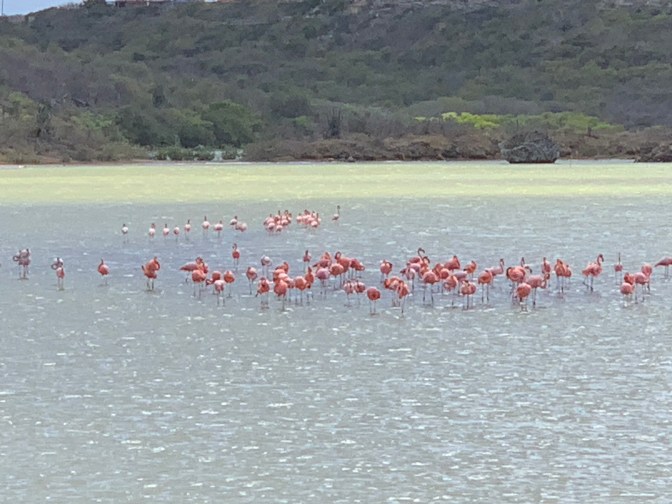
Leaving there we passed the large Jewish Cemetey, the Pink flamingos on salt flats and many bright colored houses. We travelled through the neighborhood built by Royal Dutch Shell for their workers near where from 1914 to 1985 they ran the oil refinery with oil from Venezuela.
A bit about the flag and language. The yellow stripe on the blue background represent the sun and seas respectively and the two yellow stars represent the “Big” Curaçao snd the “Small” Curaçao. Indeed there is a small island nearby that is basically a nature reserve and belongs to Curaçao. It can be visited. As far as the language is concerned, there are three “official” languages – Dutch, English and Spanish. However based on the Native Arawak, Colonizing Spanish and slave African languages mixed with Dutch and a bit of French the main spoken language is the creole Papiamento.
Since finances are always of interest, the local currency is Florins or Guilders with a 1.8 to US$1 rate. Minimum salary is US$900 a month, but the average is US$2,500 a month. The main economic drivers are the Container Port, a Dry Dock, the oil refinery, offshore banking and Tourism.
One of the issues on the island was water. Whereas this used to be all rainfall, since 1929 a reverse osmosis desalination plant has provided water for all the island. This has been supplemented with a new water plant.
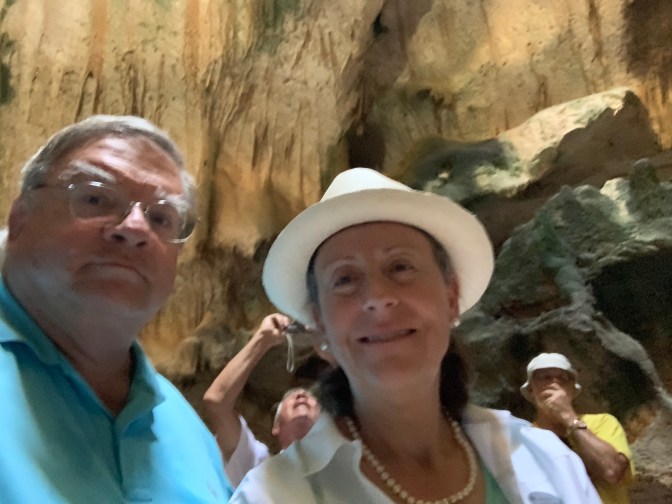
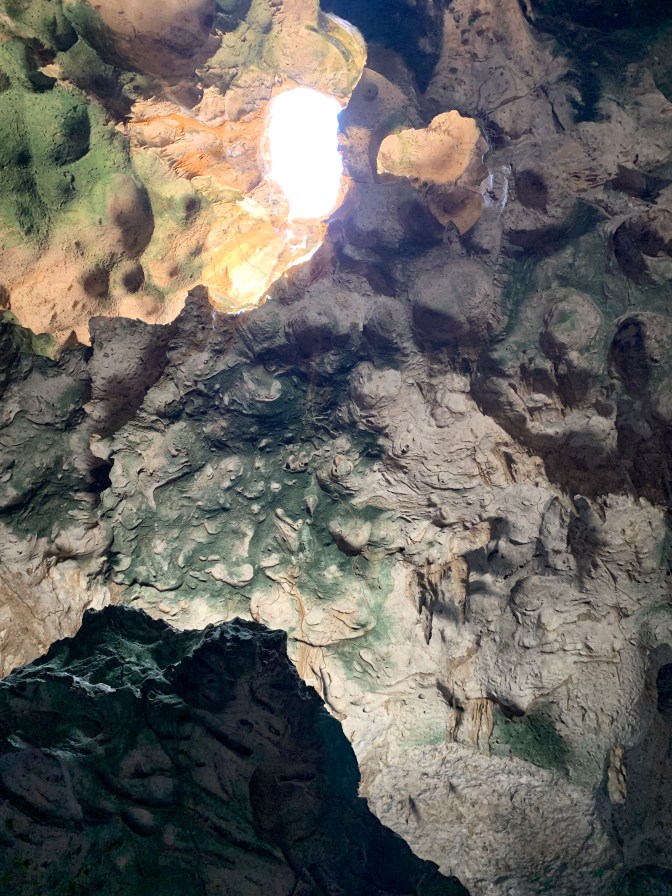
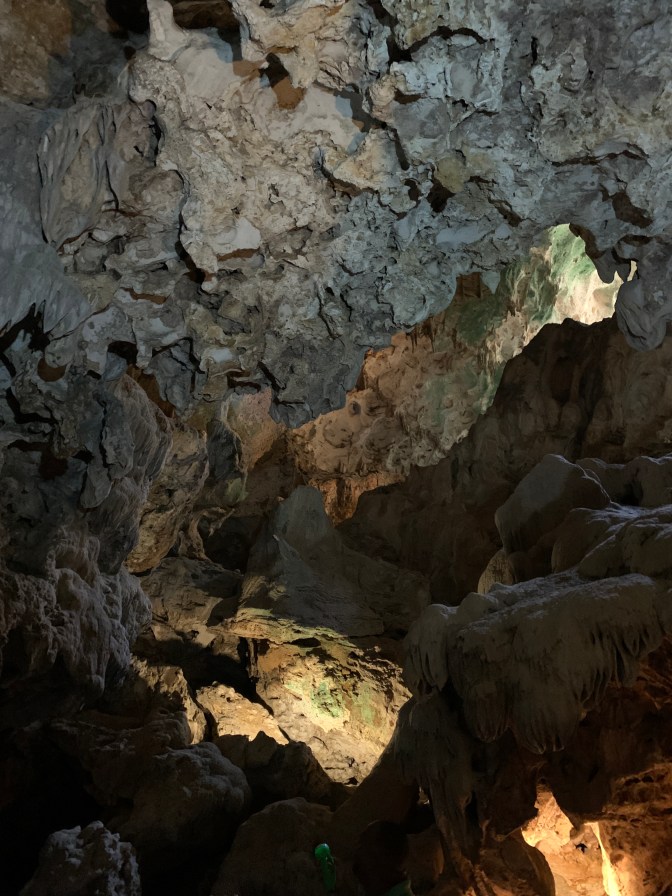
We had two other stops. The Hato Caves which were formed over 29,000 years ago and served as home to “runaway” slaves. To access the entrance of the cave one must climb 49 steps. The view over the ocean is terrific. Entering the caves is by local guide only as there was vandalism. Once inside the entrance gate is locked. Inside, there are the usual chambers, steps up and down, water ponds, bats and Stalagmite / Stalactite formations. Each looking like something that has been made up over time. One chamber was open to the sky and used for bats to come and go as well as the wrought iron entrance gate we used to access the cave system. Spectacular if you have not seen other caves, but not as impressive as Bermuda, Carlsbad and other caves around the world.
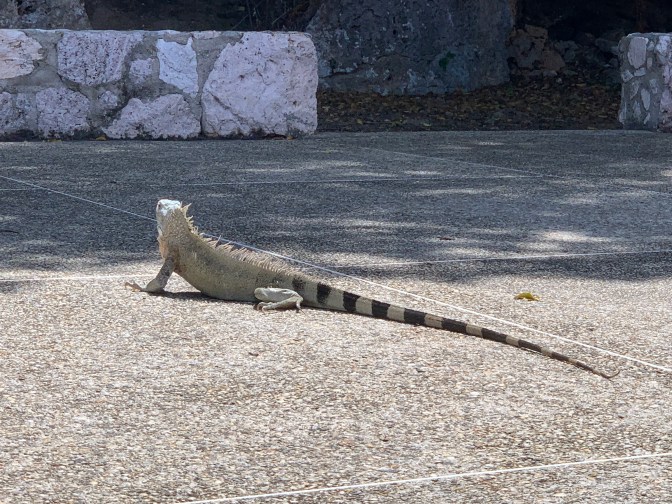
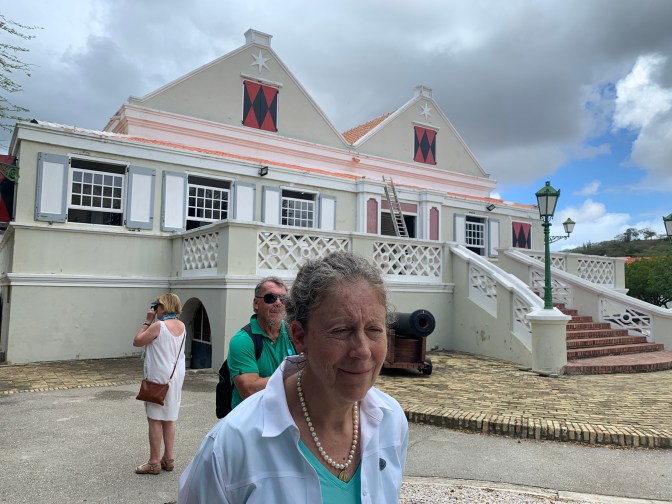
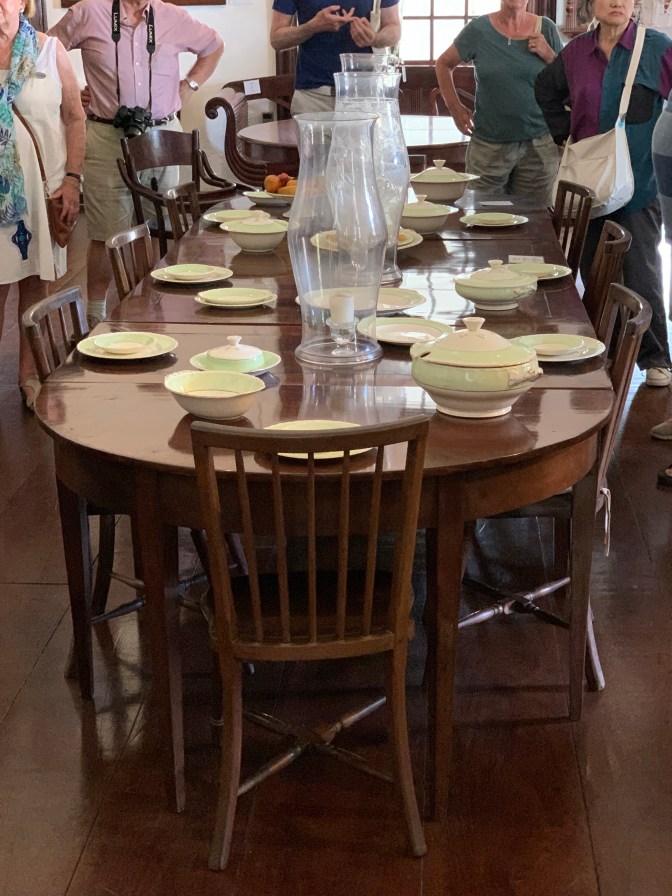
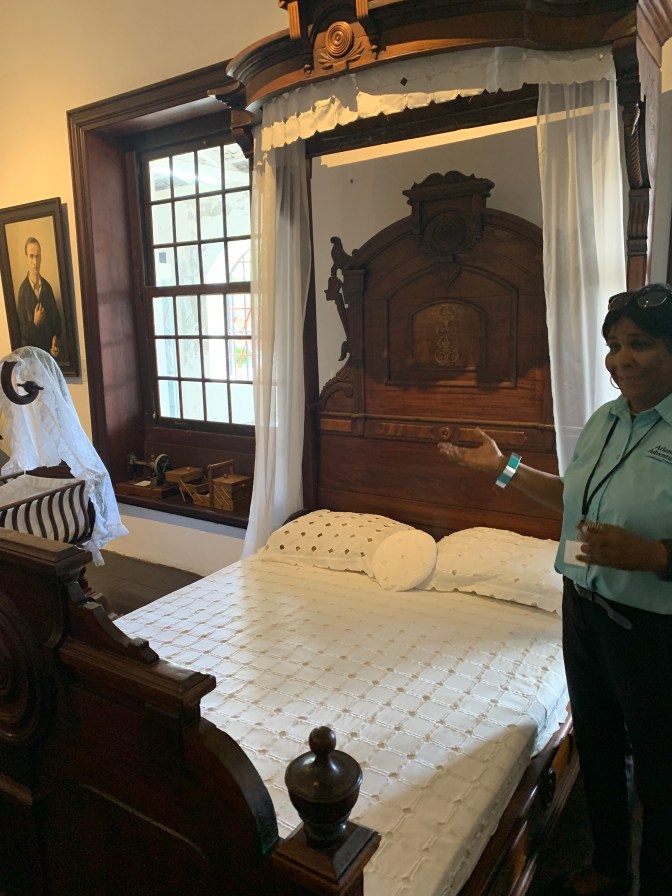
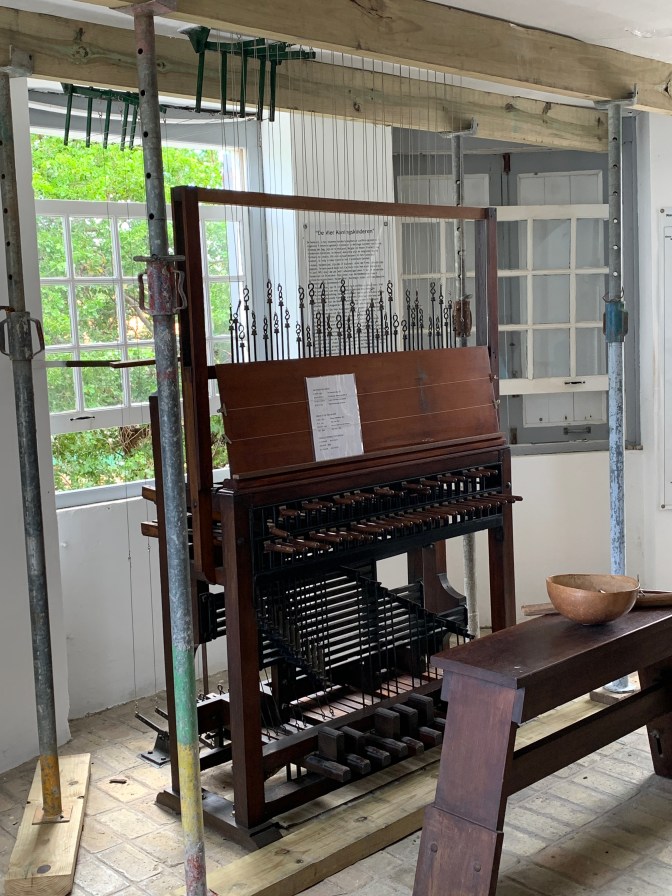
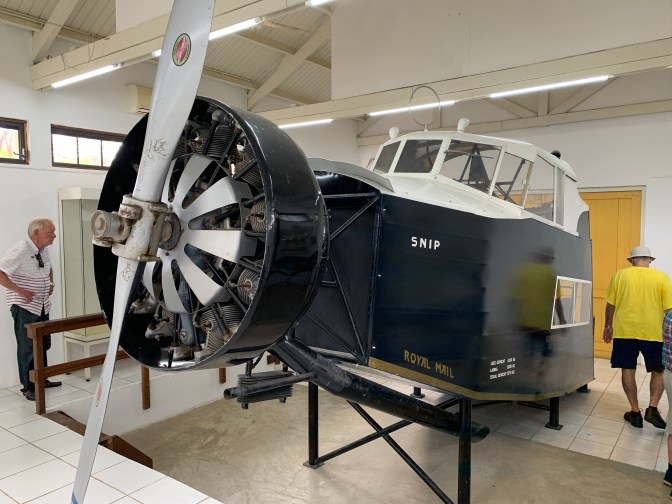
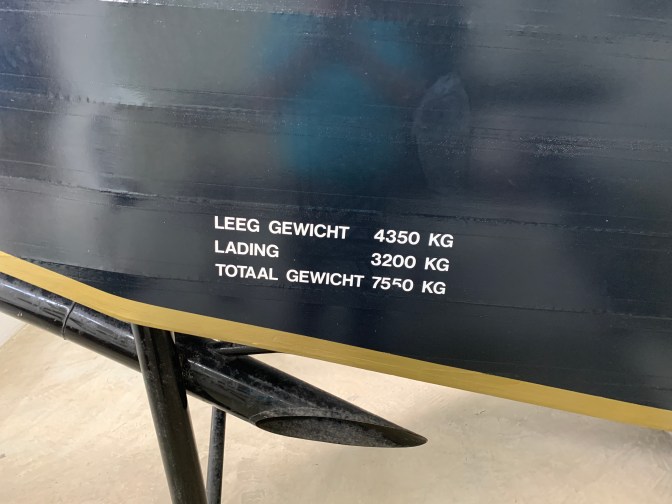
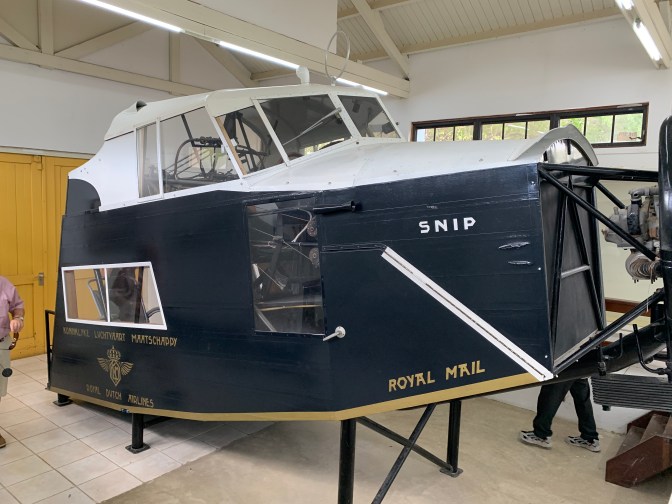
The final stop was at the Curaçao Museum which was an old plantation house, a hospital and now a museum showing life during the plantation heyday. In the rear there is another building with the front section of the original KLM airline mail delivery ‘plane that would bring mail back and forth from the Netherlands to and from Curaçao.
A fun day, albeit a half-day / afternoon tour, so no lunch, but one got a flavor of the island.
We now head back to Florida over the next couple of days and then home.
A Final Note on COVID-19.
Of interest was that the Captain announced that Cunard’s policy effective today, was to not let anyone new on-board the Queen Victoria either here in Curaçao or in Florida because of the Corona Virus. So the entertainment and other staff that were to come on board were not permitted to enter. In Florida, it seems like those of us who are to get off, will be permitted to do so, but new customers, staff and entertainers who were to get on in Florida will not be permitted to do so. One would assume that a similar situation when they drop off passengers in Southampton and Frankfurt which is the final leg of this voyage and where it started. We heard that passengers who were planning to get off in Florida and fly home to Germany or the UK were being invited to stay on-Board thus night having to be exposed to flights. As we on the ship have been in a bit of a bubble and in very hot climates, where COVID-19 does not propagate, and that since January we have all been together with few people in and out, we have been, by definition quarantined for more that 15 days. To the best of our knowledge, no-one with COVID-19 is on board nor anyone with symptoms. Thus all had been good. We live in interesting times.
This was subsequently updated and only those passengers that were to get off in Florida will be allowed off the ship. No transit passengers will be allowed off and no-one can get back on. So after the disembarking passengers are off and provisions loaded, the ship will set sail for Southampton. The 125 Hamburg passengers may be flown home and the ship will likely be off-line for a week or two. Those cruises are cancelled. During the time with no passengers they will be doing maintenance that usually can’t get done accomplished. What happens thereafter, will depend on the situation. Because of all of this, the name and anything else related to the new Cunard Ship will be postponed.

 Roger & Anne Travels
Roger
Amazing travels. Are you now safely home in the USA?
Andrew
Sent from my iPhone
>
LikeLike